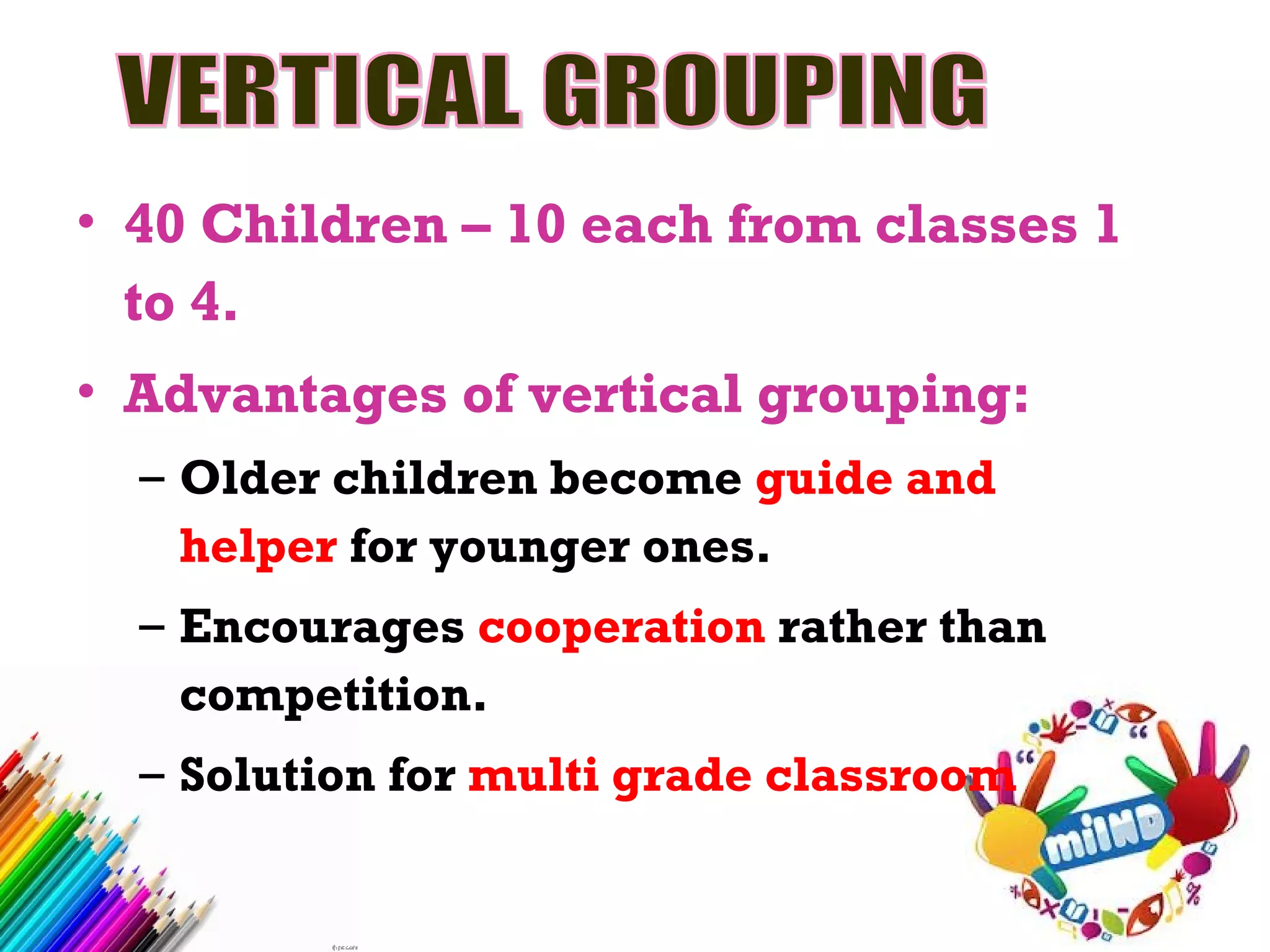
• 40 Children – 10 each from classes 1
to 4.
• Advantages of vertical grouping:
– Older children become guide and
helper for younger ones.
– Encourages cooperation rather than
competition.
– Solution for multi grade classroom
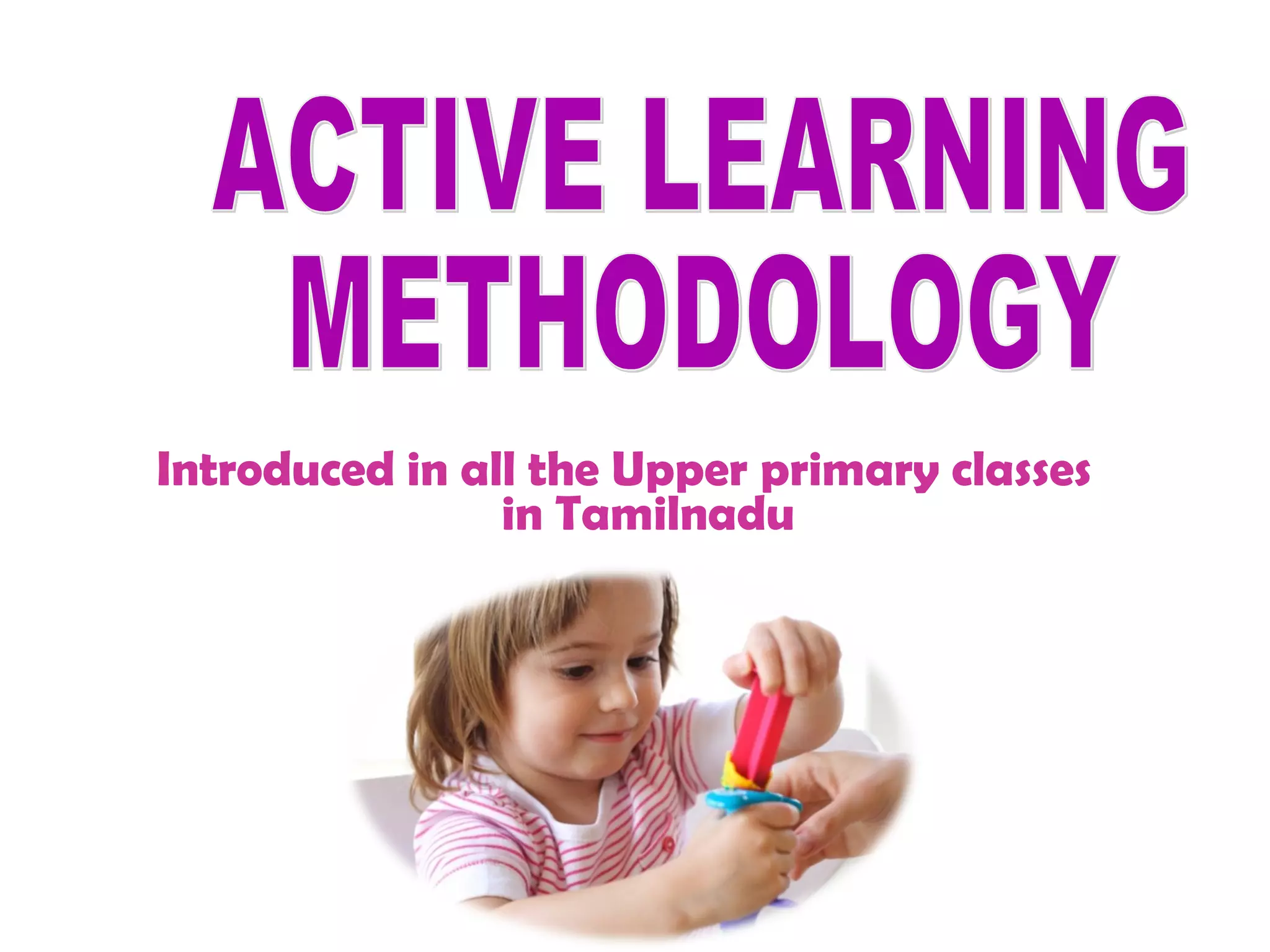
Introduced in all the Upper primary classes
in Tamilnadu
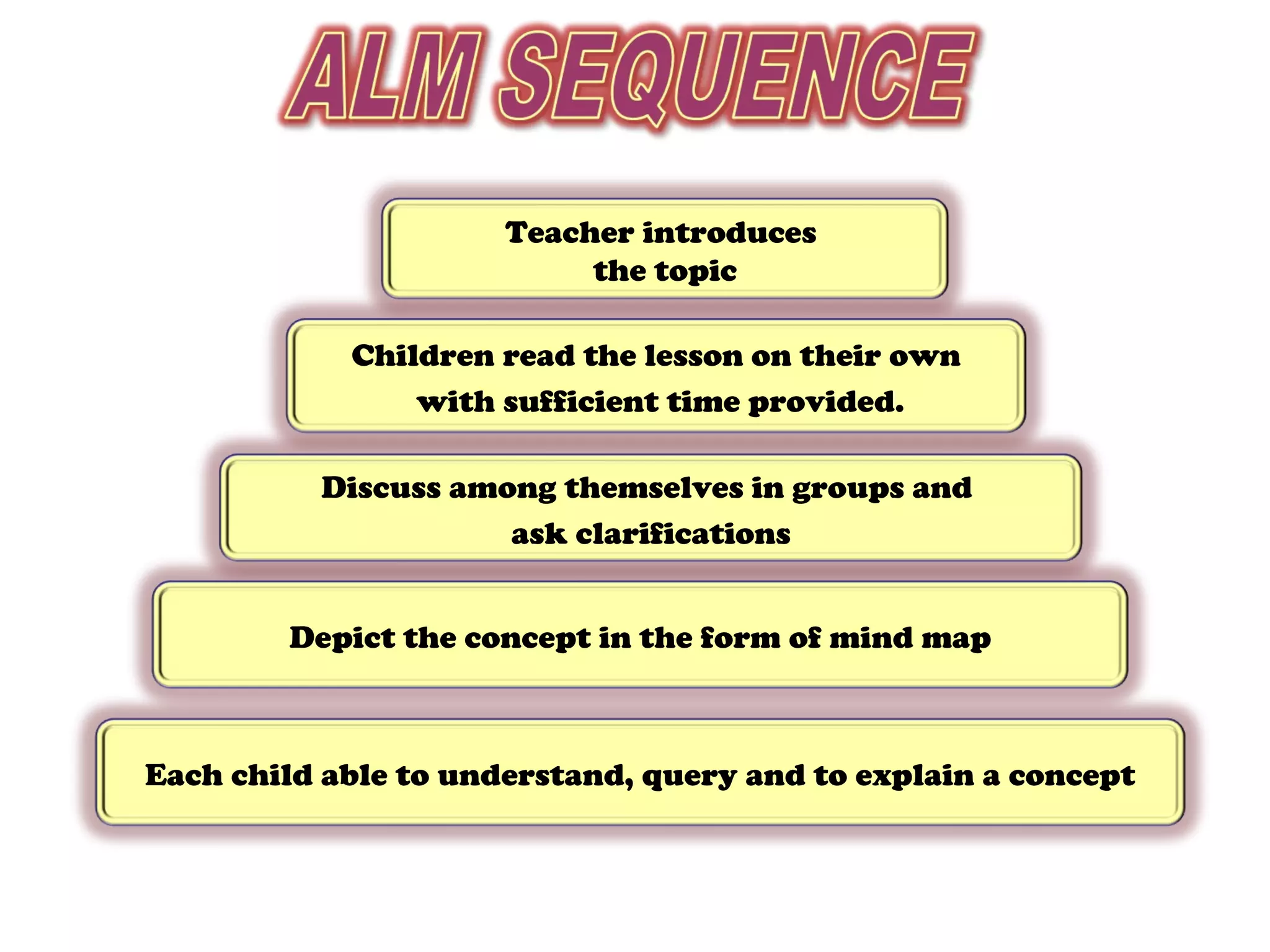
Teacher introduces
the topic
Children read the lesson on their own
with sufficient time provided.
Discuss among themselves in groups and
ask clarifications
Depict the concept in the form of mind map

Each child able to understand, query and to explain a concept
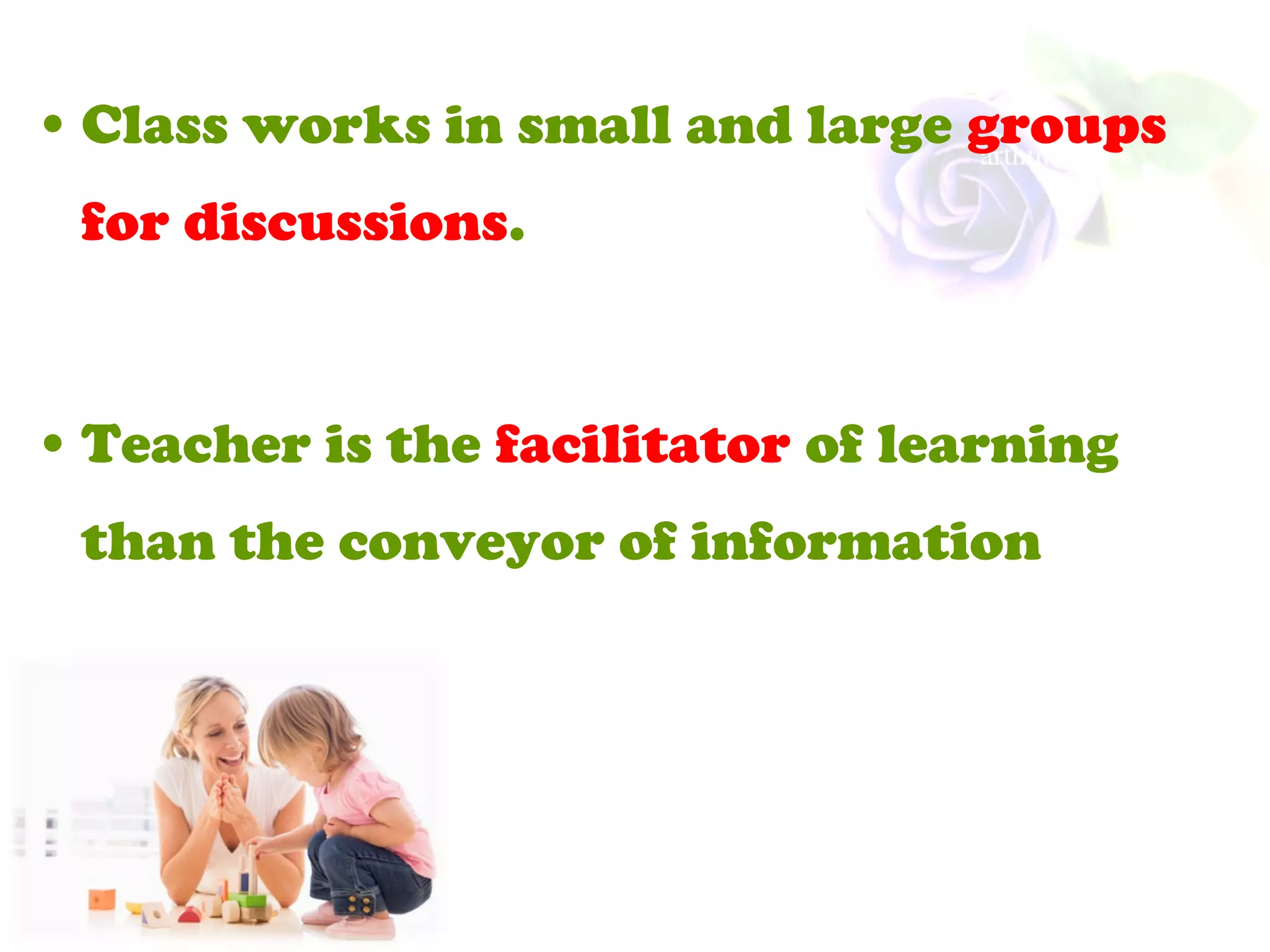
• Class works in small and large groups
for discussions.

• Teacher is the facilitator of learning
than the conveyor of information
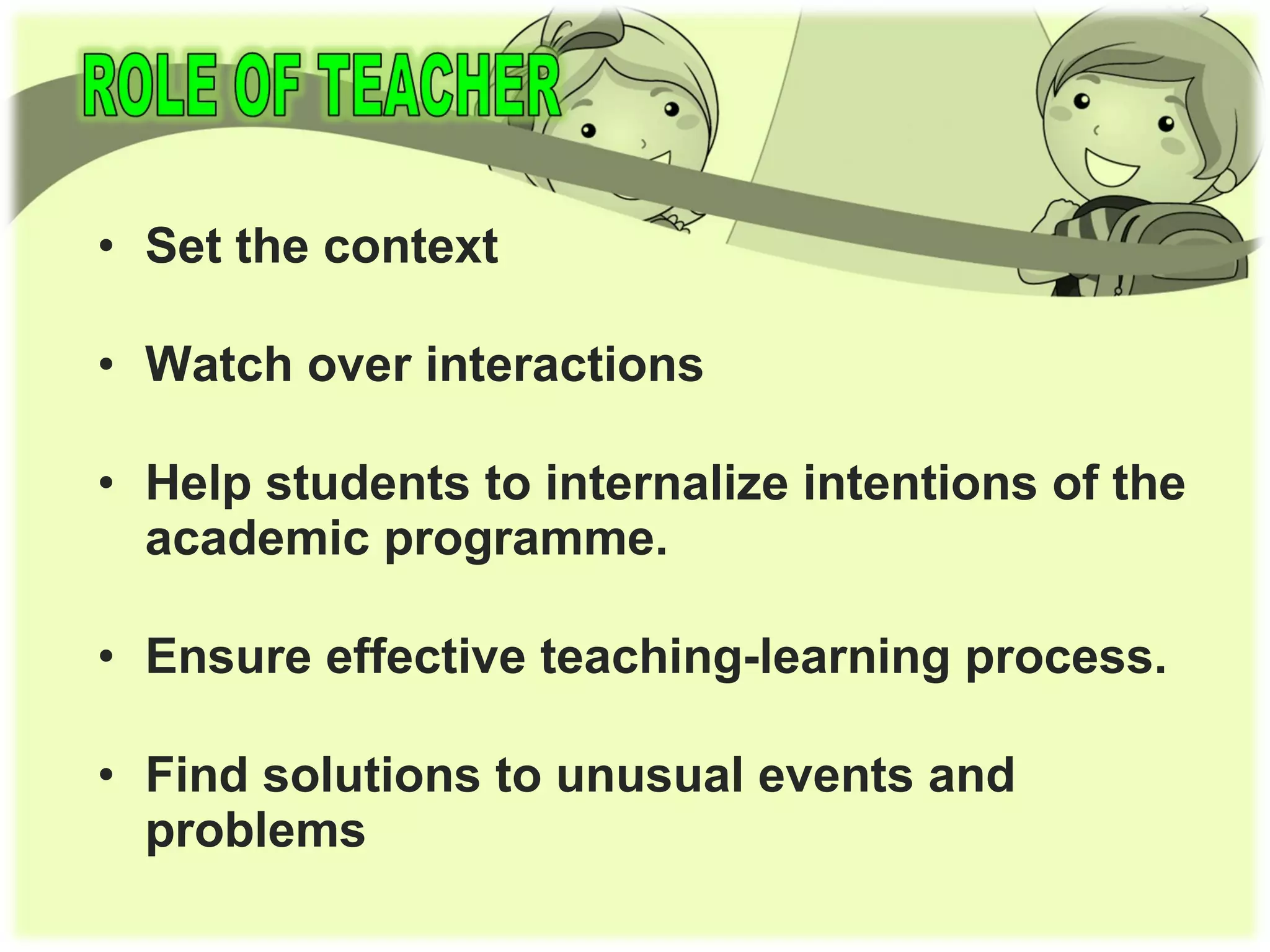
• Set the context
• Watch over interactions
• Help students to internalize intentions of the
academic programme.
• Ensure effective teaching-learning process.
• Find solutions to unusual events and
problems
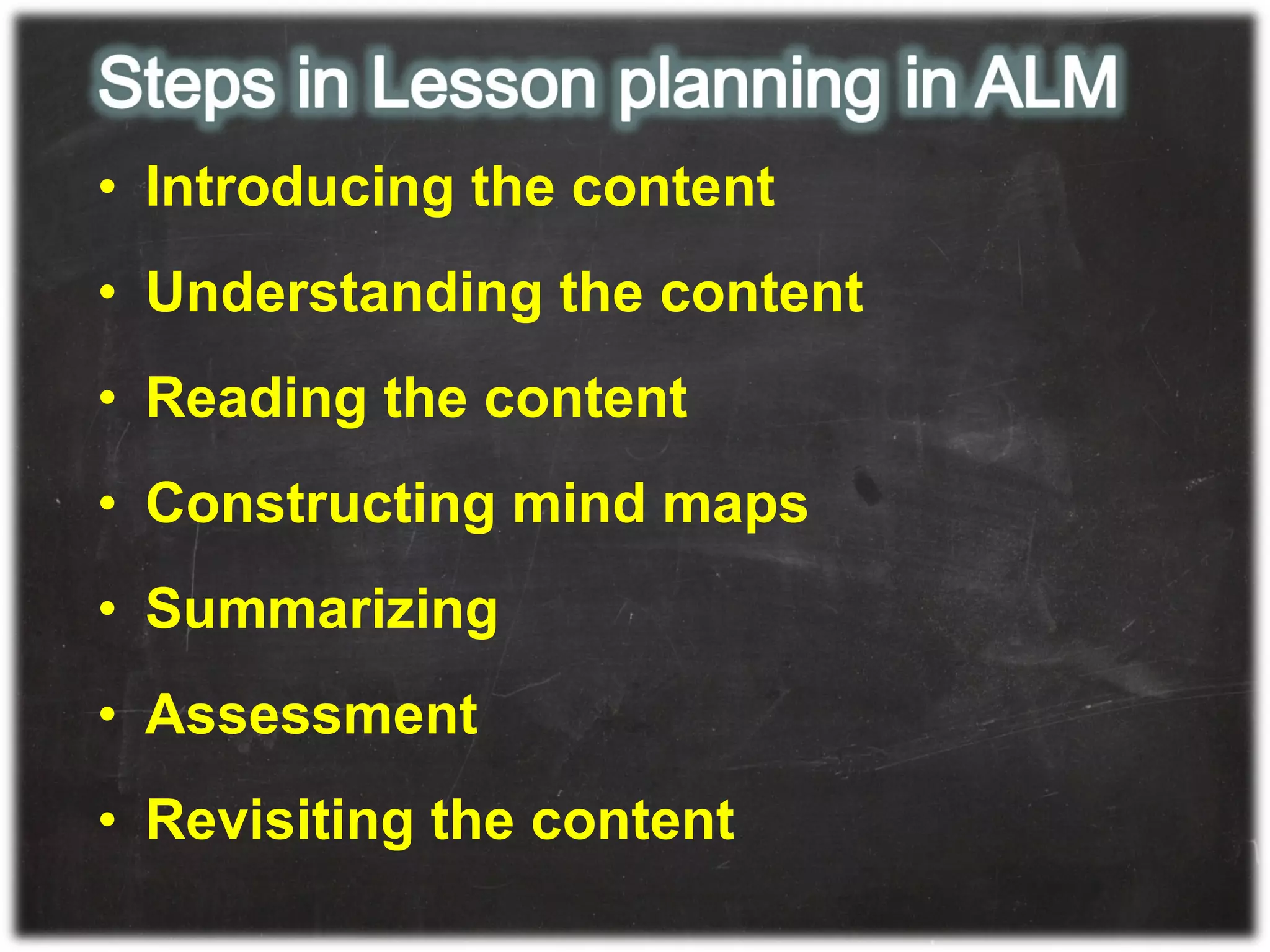
• Introducing the content
• Understanding the content
• Reading the content
• Constructing mind maps
• Summarizing
• Assessment
• Revisiting the content
Activity Based Learning & Active Learning Methodology

Activity Based Learning & Active Learning Methodology

  • 8.
    • 40 Children– 10 each from classes 1 to 4. • Advantages of vertical grouping: – Older children become guide and helper for younger ones. – Encourages cooperation rather than competition. – Solution for multi grade classroom
  • 13.
    Introduced in allthe Upper primary classes in Tamilnadu
  • 14.
    Teacher introduces the topic Childrenread the lesson on their own with sufficient time provided. Discuss among themselves in groups and ask clarifications Depict the concept in the form of mind map Each child able to understand, query and to explain a concept
  • 15.
    • Class worksin small and large groups for discussions. • Teacher is the facilitator of learning than the conveyor of information
  • 17.
    • Set thecontext • Watch over interactions • Help students to internalize intentions of the academic programme. • Ensure effective teaching-learning process. • Find solutions to unusual events and problems
  • 18.
    • Introducing thecontent • Understanding the content • Reading the content • Constructing mind maps • Summarizing • Assessment • Revisiting the content