ْ‫ح‬َّ‫الر‬ ِ‫هللا‬ ِ‫م‬ْ‫س‬ِ‫ب‬ْ‫ي‬ ِ‫ح‬َّ‫الر‬ ِ‫ن‬ ٰ‫م‬ِ‫م‬
Active learning
Made by: Afshan Dahar
Given by: madam Farzana Ansari
Active learning:
 approach to instruction that involves actively
engaging students with course material.
 discussions, problem solving, case studies, role
plays and other methods.
 This is a student center aproach in which the
responsibility for learning is placed upon the
student.
What is active learning?
Learning:
Learning is the process of acquiring new
understanding, knowledge, behaviors, skills, values,
attitudes, and preferences.
— James Ballencia
With the goal of teaching mindful learners
who actively pursue knowledge, teachers
become more actively engaged in how they
teach the curriculum and how they develop
each student's learning potential. They mix
and match a variety of ... tactics to ensure
that students not only learn more, better, and
faster -- they also learn smarter.
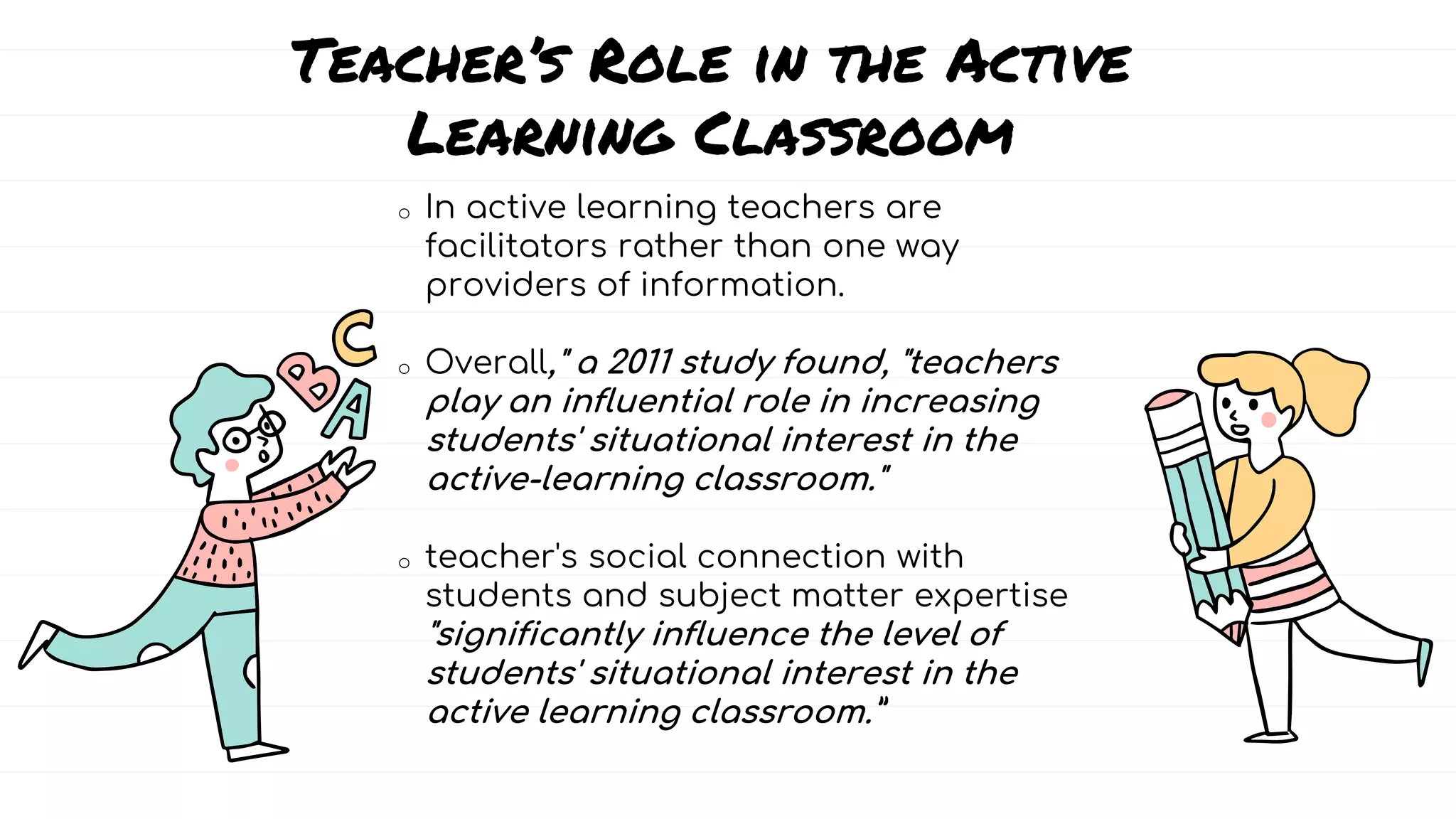
Teacher’s Role in the Active
Learning Classroom
o In active learning teachers are
facilitators rather than one way
providers of information.
o Overall," a 2011 study found, "teachers
play an influential role in increasing
students' situational interest in the
active-learning classroom."
o teacher's social connection with
students and subject matter expertise
"significantly influence the level of
students' situational interest in the
active learning classroom.”
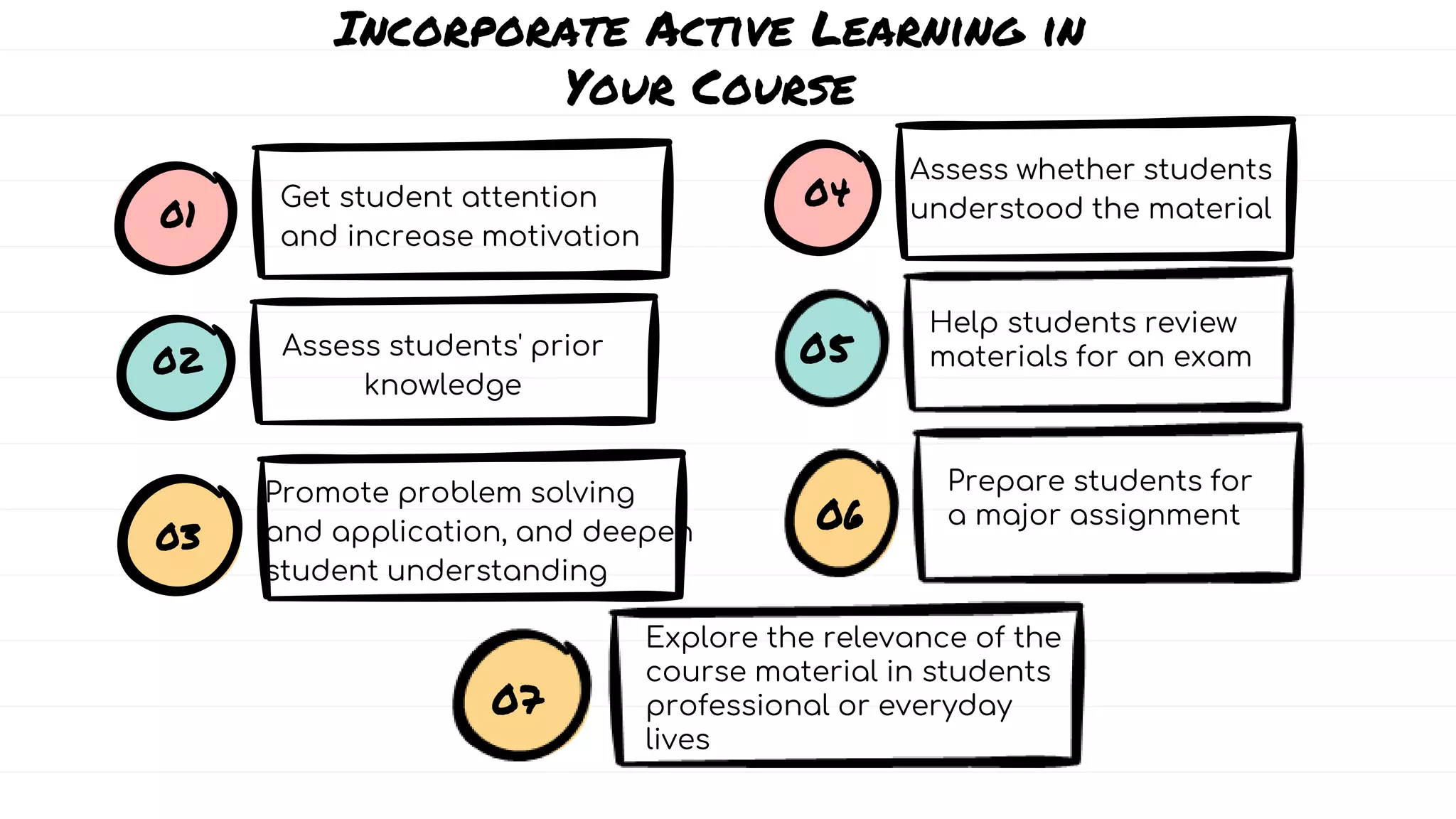
Incorporate Active Learning in
Your Course
Get student attention
and increase motivation
02 Assess students' prior
knowledge
03
Promote problem solving
and application, and deepen
student understanding
04
Assess whether students
understood the material01
Help students review
materials for an exam
Prepare students for
a major assignment
05
06
07
Explore the relevance of the
course material in students
professional or everyday
lives
 Interactive engagement
 Collaborative learning
 Problem-based learning develops positive
student
 Increased student engagement and understanding
 Better attention (breaks between lecture
segments)
 More student ownership of learning process
 Greater enjoyment of course material
 Greater retention
Advantages and disadvantages
of active learning
Advantages
 Time and topic coverage
 Preparation
 Student participation
 Lack of individual accountability
 Misconception generation
 Outside perceptions
Advantages and disadvantages
of active learning
Dis Advantages
Any
Question?
?
Thank
You!

Active learning

  • 1.
    ْ‫ح‬َّ‫الر‬ ِ‫هللا‬ ِ‫م‬ْ‫س‬ِ‫ب‬ْ‫ي‬ِ‫ح‬َّ‫الر‬ ِ‫ن‬ ٰ‫م‬ِ‫م‬
  • 2.
    Active learning Made by:Afshan Dahar Given by: madam Farzana Ansari
  • 3.
    Active learning:  approachto instruction that involves actively engaging students with course material.  discussions, problem solving, case studies, role plays and other methods.  This is a student center aproach in which the responsibility for learning is placed upon the student. What is active learning? Learning: Learning is the process of acquiring new understanding, knowledge, behaviors, skills, values, attitudes, and preferences.
  • 4.
    — James Ballencia Withthe goal of teaching mindful learners who actively pursue knowledge, teachers become more actively engaged in how they teach the curriculum and how they develop each student's learning potential. They mix and match a variety of ... tactics to ensure that students not only learn more, better, and faster -- they also learn smarter.
  • 5.
    Teacher’s Role inthe Active Learning Classroom o In active learning teachers are facilitators rather than one way providers of information. o Overall," a 2011 study found, "teachers play an influential role in increasing students' situational interest in the active-learning classroom." o teacher's social connection with students and subject matter expertise "significantly influence the level of students' situational interest in the active learning classroom.”
  • 6.
    Incorporate Active Learningin Your Course Get student attention and increase motivation 02 Assess students' prior knowledge 03 Promote problem solving and application, and deepen student understanding 04 Assess whether students understood the material01 Help students review materials for an exam Prepare students for a major assignment 05 06 07 Explore the relevance of the course material in students professional or everyday lives
  • 7.
     Interactive engagement Collaborative learning  Problem-based learning develops positive student  Increased student engagement and understanding  Better attention (breaks between lecture segments)  More student ownership of learning process  Greater enjoyment of course material  Greater retention Advantages and disadvantages of active learning Advantages
  • 8.
     Time andtopic coverage  Preparation  Student participation  Lack of individual accountability  Misconception generation  Outside perceptions Advantages and disadvantages of active learning Dis Advantages
  • 9.
  • 10.