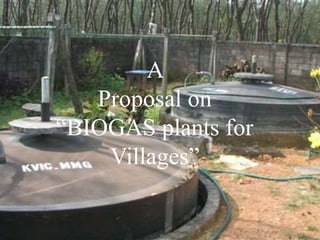
A 
Proposal on 
“BIOGAS plants for 
Villages”
Table of content 
• Introduction 
• Aim/Objective 
• Methodology 
Concept 
Design 
Calculations 
Final design 
Transport of material 
• Cashplan 
• Risk 
• Benefits 
• Conclusions 
• References
Introduction 
India is a colorful and vibrant nation richly steeped in a wide array of 
traditions and religions. However, with the second largest population of 
any country, over 1 billion and rising, India’s already strained resources 
are only going to be stretched further. Almost 42% of the population is 
below the poverty line earning less than $1.25US per day. Access to 
substantial shelter can be limited and clean drinking water is 
particularly difficult to obtain in rural areas. The compaction of these 
factors sees the life expectancy in India at 64 years at birth compared to 
81 years at birth in Australia (UNICEF, 2010) (Index Mundi, n.d) A 
common village in INDIA with a population of 358 people. Of the 86 
households spread across the town, at least 71 live below the poverty 
line. The majority of the population here are agricultural workers and 
every household owns livestock.
Aim/objective 
• Our Aim is to provide sustainable and 
renewable Energy to Rural areas 
• Statement of purpose : The purpose of 
Plantation of biogas at villages is to encourage 
them towards renewable sources of energy
Methodology 
• Concept : The concept of a biogas settler is to treat the 
waste products entering it to create a usable gas and a 
safe product to be used for fertilisation. The design of a 
biogas settler is similar to that of a septic tank, however 
the design incorporates the ability of biogas to be 
harnessed and stored.With the lack of oxygen in the 
chamber, and as the influent may take 60-80 days to 
pass through the system, most harmful pathogens are 
destroyed and the effluent liquid and slurry are able to 
be used for fertilisation of the surrounding farmland, 
reducing the waste and increasing the sanitation of the 
area. After production of gas we just need a constant 
supply in order to continous production
Methodology…. 
• Design : 
Biogas settlers involve the construction of carefully calculated 
chambers in order for them to produce the biogas efficiently. The 
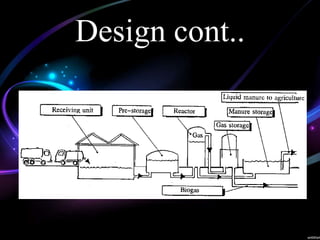
following diagram shows a good representation of the system and how 
it is hoped to be implemented..The initial design of a biogas plant, 
including all aspects- latrines, animal waste entry and chambers.The 
toilets will be placed in latrines near the villages for which people can 
use to contribute to the production of the biogas and the manure mixing 
chamber allows for farmers and villagers to dispose of their livestock 
waste into the biogas plant. Once gas begins to be produced the sludge 
can then flow into the compensation chamber and eventually into the 
drying bed, where now almost pathogen free is harmless to humans. 
Once left in the drying bed for approximately a month, it is then able to 
be used as a nutrient rich fertiliser.
Design cont..
Methodology…. 
Calculations 
As Per a normal village stats : 
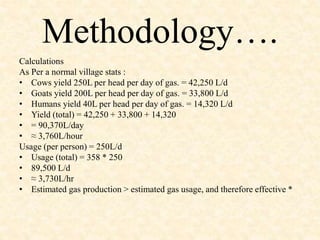
• Cows yield 250L per head per day of gas. = 42,250 L/d 
• Goats yield 200L per head per day of gas. = 33,800 L/d 
• Humans yield 40L per head per day of gas. = 14,320 L/d 
• Yield (total) = 42,250 + 33,800 + 14,320 
• = 90,370L/day 
• ≈ 3,760L/hour 
Usage (per person) = 250L/d 
• Usage (total) = 358 * 250 
• 89,500 L/d 
• ≈ 3,730L/hr 
• Estimated gas production > estimated gas usage, and therefore effective *
Methodology…. 
• Final Design :
Cash plan 
PARTS : 
Biogas Digester: 
$30,013 
DELIVERY 
$5,500 
SETUP 
$3,900 
LABOUR 
$14000 
MAINTENANCE 
$1,500/year 
SAVINGS 
$2,200/year 
TOTAL COST: $52,713
Risk 
• Education & Cultural 
How they know about its working ? 
• Geographical Conditions 
Where to Plant ? 
• Sufficient amount of disposal 
What about continous Supply ?
Solutions 
1.People in the village who have lived without using 
toilets ever since were born will require time and 
education in order for them to accept the new plan. 
This can be done by teaching the villagers the many 
possible 
2. We can’t change the structure of earth so we’ll 
choose proper land for Biogas Plantaion 
3. We’ll choose the villages with sufficient amount 
of population in order to enough production.
Benefits 
Environmental Benefits : 
• Reduction in spread of disease due to less waste left openly across 
the town 
• Reduction of greenhouse gas emissions of present fuel/energy 
sources 
• No external energy source required 
• Generation of sustainable and cleaner biogas 
• Social Benefits : 
• Post Project Employment 
• The biogas settler project would enhance villager’s ability to 
develop sustainable economic activities that are designed in such a 
way that it could reduce poverty in their community.
Conclusion 
In such over populated country such as India 
the sources of energy are going down day by 
day. 
By applying the Biogas plantation not only we 
can root out the problem of energy crisis but also 
we can create a healthy environment for 
sustainable development.

A Proposal on Bio Gas Plants for villages

  • 2.
    A Proposal on “BIOGAS plants for Villages”
  • 3.
    Table of content • Introduction • Aim/Objective • Methodology Concept Design Calculations Final design Transport of material • Cashplan • Risk • Benefits • Conclusions • References
  • 4.
    Introduction India isa colorful and vibrant nation richly steeped in a wide array of traditions and religions. However, with the second largest population of any country, over 1 billion and rising, India’s already strained resources are only going to be stretched further. Almost 42% of the population is below the poverty line earning less than $1.25US per day. Access to substantial shelter can be limited and clean drinking water is particularly difficult to obtain in rural areas. The compaction of these factors sees the life expectancy in India at 64 years at birth compared to 81 years at birth in Australia (UNICEF, 2010) (Index Mundi, n.d) A common village in INDIA with a population of 358 people. Of the 86 households spread across the town, at least 71 live below the poverty line. The majority of the population here are agricultural workers and every household owns livestock.
  • 5.
    Aim/objective • OurAim is to provide sustainable and renewable Energy to Rural areas • Statement of purpose : The purpose of Plantation of biogas at villages is to encourage them towards renewable sources of energy
  • 6.
    Methodology • Concept: The concept of a biogas settler is to treat the waste products entering it to create a usable gas and a safe product to be used for fertilisation. The design of a biogas settler is similar to that of a septic tank, however the design incorporates the ability of biogas to be harnessed and stored.With the lack of oxygen in the chamber, and as the influent may take 60-80 days to pass through the system, most harmful pathogens are destroyed and the effluent liquid and slurry are able to be used for fertilisation of the surrounding farmland, reducing the waste and increasing the sanitation of the area. After production of gas we just need a constant supply in order to continous production
  • 7.
    Methodology…. • Design: Biogas settlers involve the construction of carefully calculated chambers in order for them to produce the biogas efficiently. The following diagram shows a good representation of the system and how it is hoped to be implemented..The initial design of a biogas plant, including all aspects- latrines, animal waste entry and chambers.The toilets will be placed in latrines near the villages for which people can use to contribute to the production of the biogas and the manure mixing chamber allows for farmers and villagers to dispose of their livestock waste into the biogas plant. Once gas begins to be produced the sludge can then flow into the compensation chamber and eventually into the drying bed, where now almost pathogen free is harmless to humans. Once left in the drying bed for approximately a month, it is then able to be used as a nutrient rich fertiliser.
  • 8.
  • 9.
    Methodology…. Calculations AsPer a normal village stats : • Cows yield 250L per head per day of gas. = 42,250 L/d • Goats yield 200L per head per day of gas. = 33,800 L/d • Humans yield 40L per head per day of gas. = 14,320 L/d • Yield (total) = 42,250 + 33,800 + 14,320 • = 90,370L/day • ≈ 3,760L/hour Usage (per person) = 250L/d • Usage (total) = 358 * 250 • 89,500 L/d • ≈ 3,730L/hr • Estimated gas production > estimated gas usage, and therefore effective *
  • 10.
  • 11.
    Cash plan PARTS: Biogas Digester: $30,013 DELIVERY $5,500 SETUP $3,900 LABOUR $14000 MAINTENANCE $1,500/year SAVINGS $2,200/year TOTAL COST: $52,713
  • 12.
    Risk • Education& Cultural How they know about its working ? • Geographical Conditions Where to Plant ? • Sufficient amount of disposal What about continous Supply ?
  • 13.
    Solutions 1.People inthe village who have lived without using toilets ever since were born will require time and education in order for them to accept the new plan. This can be done by teaching the villagers the many possible 2. We can’t change the structure of earth so we’ll choose proper land for Biogas Plantaion 3. We’ll choose the villages with sufficient amount of population in order to enough production.
  • 14.
    Benefits Environmental Benefits: • Reduction in spread of disease due to less waste left openly across the town • Reduction of greenhouse gas emissions of present fuel/energy sources • No external energy source required • Generation of sustainable and cleaner biogas • Social Benefits : • Post Project Employment • The biogas settler project would enhance villager’s ability to develop sustainable economic activities that are designed in such a way that it could reduce poverty in their community.
  • 15.
    Conclusion In suchover populated country such as India the sources of energy are going down day by day. By applying the Biogas plantation not only we can root out the problem of energy crisis but also we can create a healthy environment for sustainable development.