What is Biodiesel?
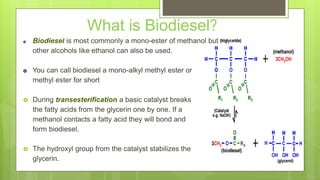
 Biodiesel is most commonly a mono-ester of methanol but
other alcohols like ethanol can also be used.
 You can call biodiesel a mono-alkyl methyl ester or
methyl ester for short
 During transesterification a basic catalyst breaks
the fatty acids from the glycerin one by one. If a
methanol contacts a fatty acid they will bond and
form biodiesel.
 The hydroxyl group from the catalyst stabilizes the
glycerin.
Properties:
 The calorific value of biodiesel is about 37.27 MJ/kg.
This is 9% lower than regular Number 2 petrodiesel.
Variations in biodiesel energy density is more
dependent on the feedstock used than the
production process.
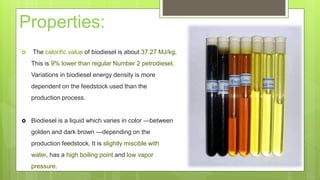
 Biodiesel is a liquid which varies in color —between
golden and dark brown —depending on the
production feedstock. It is slightly miscible with
water, has a high boiling point and low vapor
pressure.
Importance of biodiesel:
 Bio-diesel is the most valuable form of
renewable energy that can be used directly in
any existing, unmodified diesel engine. It
also helps in:
1. Energy independence.
2. Smaller trade deficit.
3. Economic Growth .
4. Cleaner Air.
5. Less Global Warming.
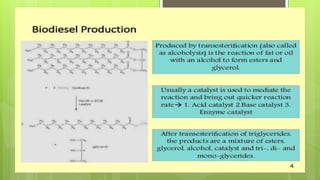
Biodiesel production:
Making the biodiesel in lab:
https://www.youtube.com/watch?v=BwkVUFs1quk
Quality tests:
There are many quality tests used to test the quality of
biodiesel including water content tests, testing oil for
acid content (Biodiesel titration), methanol purity,
Biodiesel conversion test.But we’ll use the glycerol test:
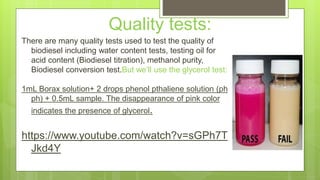
1mL Borax solution+ 2 drops phenol pthaliene solution (ph
ph) + 0.5mL sample. The disappearance of pink color
indicates the presence of glycerol.
https://www.youtube.com/watch?v=sGPh7T
Jkd4Y
Further benefit:
-We can use the glycerol produced or discarded with other waste products from the reaction in
making soap, and for cosmetic purposes.
Thank you.

Biodiesel

  • 2.
    What is Biodiesel? Biodiesel is most commonly a mono-ester of methanol but other alcohols like ethanol can also be used.  You can call biodiesel a mono-alkyl methyl ester or methyl ester for short  During transesterification a basic catalyst breaks the fatty acids from the glycerin one by one. If a methanol contacts a fatty acid they will bond and form biodiesel.  The hydroxyl group from the catalyst stabilizes the glycerin.
  • 3.
    Properties:  The calorificvalue of biodiesel is about 37.27 MJ/kg. This is 9% lower than regular Number 2 petrodiesel. Variations in biodiesel energy density is more dependent on the feedstock used than the production process.  Biodiesel is a liquid which varies in color —between golden and dark brown —depending on the production feedstock. It is slightly miscible with water, has a high boiling point and low vapor pressure.
  • 4.
    Importance of biodiesel: Bio-diesel is the most valuable form of renewable energy that can be used directly in any existing, unmodified diesel engine. It also helps in: 1. Energy independence. 2. Smaller trade deficit. 3. Economic Growth . 4. Cleaner Air. 5. Less Global Warming.
  • 6.
  • 10.
    Making the biodieselin lab: https://www.youtube.com/watch?v=BwkVUFs1quk
  • 11.
    Quality tests: There aremany quality tests used to test the quality of biodiesel including water content tests, testing oil for acid content (Biodiesel titration), methanol purity, Biodiesel conversion test.But we’ll use the glycerol test: 1mL Borax solution+ 2 drops phenol pthaliene solution (ph ph) + 0.5mL sample. The disappearance of pink color indicates the presence of glycerol. https://www.youtube.com/watch?v=sGPh7T Jkd4Y
  • 12.
    Further benefit: -We canuse the glycerol produced or discarded with other waste products from the reaction in making soap, and for cosmetic purposes.
  • 13.