 1.INTRODUCTION 
 2.STATEMENT OF PURPOSE 
 3.OBJECTIVE 
 4.RISK ANALYSIS 
 5.METHODOLOGY 
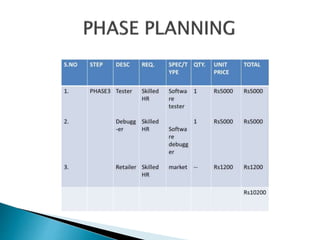
 6.PHASE PLANNING 
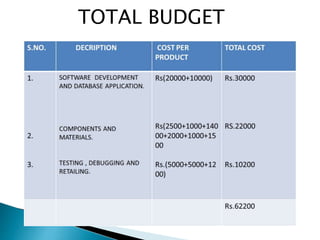
 7.BUDGET 
 8.BENEFITS 
 9.CONCLUSION 
 10.REFERENCES
AIM: Efficient migration for mobile computing in 
distributed networks and reducing security risks
INTRODUCTION 
The radical evolution of computers, especially in hardware 
(towards smaller size and weight, higher performance, 
lower power consumption, lower cost) and communications 
(wireless and satellite networks, cellular telephony, WANs, 
INTERNET), has introduced the idea of mobile computing. 
This means that users don't have to be tethered on 
expensive wired workstations in order to exchange data. All 
they need is mobile computers, that is portable computers 
communicating via wireless networks.
STATEMENT OF PURPOSE 
There are serious networkings and systems issues to be 
solved before the full benefits of mobile computing systems 
are realized in practice. One critical issue is security . 
The networks have become complex and bulky. Large 
networks increase workload which in turn increases net 
dataflow. The heavy dataflow leads to a drop in work 
efficiency.
 Our work on the security of mobile computing aims to 
address the problems pertaining to the security of 
information within the following three sub-areas of the 
mobile environment: 
 1. The security of information residing in the mobile units, 
considering device constraints. 
 2. The security of information as it travels 'over the air' 
between mobile units and mobile support stations. 
 3. The security of information within the rest network (wired 
hosts).
 Because a wireless LAN signal is not limited to the physical 
boundary of a building, potential exists for unauthorized 
access to the network from personnel outside the intended 
coverage area. Most security concerns arise from this aspect 
of a WLANs and fall into the following basic categories: 
 Limited Physical Security : Since there is no physical link 
between the nodes of the wireless network and the access 
point, the users transmit information through the “air” and 
hence anyone within the radio range can easily intercept or 
eavesdrop on the communication channels.
Constrained Network Bandwidth: 
The use of wireless communication typically implies a lower 
bandwidth than that of traditional wired networks. 
Energy Constrained Mobile Hosts: 
To support mobility and portability, mobile devices generally 
obtain their energy through batteries or other exhaustive 
means, hence they are considered as energy constrained mobile 
hosts.
We use mobile agents to provide a paradigm for distributed 
object computing and mobile objects. 
 It can communicate and interact with other agents and the 
distributed resource system on heterogeneous networks. 
A mobile agent can also decide when to migrate, and which 
nodes to access. 
 After migrating to the desired host, the mobile agent resumes 
the execution of previously broken off or awaiting tasks.
 On completing the task, the mobile agent returns the result 
to the client. 
 Therefore, the client need not be constantly connected to the 
server. This not only saves a lot of unnecessary transmission 
load, but also helps in the application of mobile calculation. 
 With this kind of entrusted distributed network management 
server, increased workload which is often brought on by 
expansion of network can be prevented.
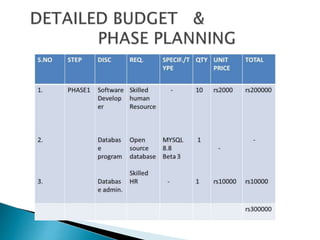
TOTAL BUDGET
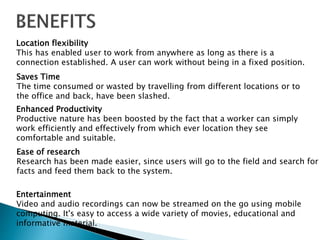
Location flexibility 
This has enabled user to work from anywhere as long as there is a 
connection established. A user can work without being in a fixed position. 
Saves Time 
The time consumed or wasted by travelling from different locations or to 
the office and back, have been slashed. 
Enhanced Productivity 
Productive nature has been boosted by the fact that a worker can simply 
work efficiently and effectively from which ever location they see 
comfortable and suitable. 
Ease of research 
Research has been made easier, since users will go to the field and search for 
facts and feed them back to the system. 
Entertainment 
Video and audio recordings can now be streamed on the go using mobile 
computing. It's easy to access a wide variety of movies, educational and 
informative material.
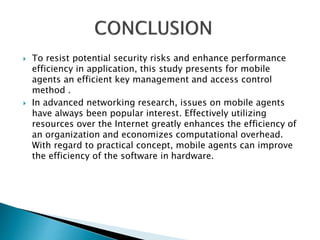
 To resist potential security risks and enhance performance 
efficiency in application, this study presents for mobile 
agents an efficient key management and access control 
method . 
 In advanced networking research, issues on mobile agents 
have always been popular interest. Effectively utilizing 
resources over the Internet greatly enhances the efficiency of 
an organization and economizes computational overhead. 
With regard to practical concept, mobile agents can improve 
the efficiency of the software in hardware.

Mobile computing

  • 2.
     1.INTRODUCTION 2.STATEMENT OF PURPOSE  3.OBJECTIVE  4.RISK ANALYSIS  5.METHODOLOGY  6.PHASE PLANNING  7.BUDGET  8.BENEFITS  9.CONCLUSION  10.REFERENCES
  • 3.
    AIM: Efficient migrationfor mobile computing in distributed networks and reducing security risks
  • 4.
    INTRODUCTION The radicalevolution of computers, especially in hardware (towards smaller size and weight, higher performance, lower power consumption, lower cost) and communications (wireless and satellite networks, cellular telephony, WANs, INTERNET), has introduced the idea of mobile computing. This means that users don't have to be tethered on expensive wired workstations in order to exchange data. All they need is mobile computers, that is portable computers communicating via wireless networks.
  • 5.
    STATEMENT OF PURPOSE There are serious networkings and systems issues to be solved before the full benefits of mobile computing systems are realized in practice. One critical issue is security . The networks have become complex and bulky. Large networks increase workload which in turn increases net dataflow. The heavy dataflow leads to a drop in work efficiency.
  • 6.
     Our workon the security of mobile computing aims to address the problems pertaining to the security of information within the following three sub-areas of the mobile environment:  1. The security of information residing in the mobile units, considering device constraints.  2. The security of information as it travels 'over the air' between mobile units and mobile support stations.  3. The security of information within the rest network (wired hosts).
  • 7.
     Because awireless LAN signal is not limited to the physical boundary of a building, potential exists for unauthorized access to the network from personnel outside the intended coverage area. Most security concerns arise from this aspect of a WLANs and fall into the following basic categories:  Limited Physical Security : Since there is no physical link between the nodes of the wireless network and the access point, the users transmit information through the “air” and hence anyone within the radio range can easily intercept or eavesdrop on the communication channels.
  • 8.
    Constrained Network Bandwidth: The use of wireless communication typically implies a lower bandwidth than that of traditional wired networks. Energy Constrained Mobile Hosts: To support mobility and portability, mobile devices generally obtain their energy through batteries or other exhaustive means, hence they are considered as energy constrained mobile hosts.
  • 9.
    We use mobileagents to provide a paradigm for distributed object computing and mobile objects.  It can communicate and interact with other agents and the distributed resource system on heterogeneous networks. A mobile agent can also decide when to migrate, and which nodes to access.  After migrating to the desired host, the mobile agent resumes the execution of previously broken off or awaiting tasks.
  • 10.
     On completingthe task, the mobile agent returns the result to the client.  Therefore, the client need not be constantly connected to the server. This not only saves a lot of unnecessary transmission load, but also helps in the application of mobile calculation.  With this kind of entrusted distributed network management server, increased workload which is often brought on by expansion of network can be prevented.
  • 14.
  • 15.
    Location flexibility Thishas enabled user to work from anywhere as long as there is a connection established. A user can work without being in a fixed position. Saves Time The time consumed or wasted by travelling from different locations or to the office and back, have been slashed. Enhanced Productivity Productive nature has been boosted by the fact that a worker can simply work efficiently and effectively from which ever location they see comfortable and suitable. Ease of research Research has been made easier, since users will go to the field and search for facts and feed them back to the system. Entertainment Video and audio recordings can now be streamed on the go using mobile computing. It's easy to access a wide variety of movies, educational and informative material.
  • 16.
     To resistpotential security risks and enhance performance efficiency in application, this study presents for mobile agents an efficient key management and access control method .  In advanced networking research, issues on mobile agents have always been popular interest. Effectively utilizing resources over the Internet greatly enhances the efficiency of an organization and economizes computational overhead. With regard to practical concept, mobile agents can improve the efficiency of the software in hardware.