The Accounting Cycle
Accounting Cycle 
It refers to a complete sequence of accounting procedures, which are required to be repeated in the same order during each accounting period. 
It is complete sequence beginning with the recording of the transaction and ending with the preparation of the final accounts. The Accounting Cycle
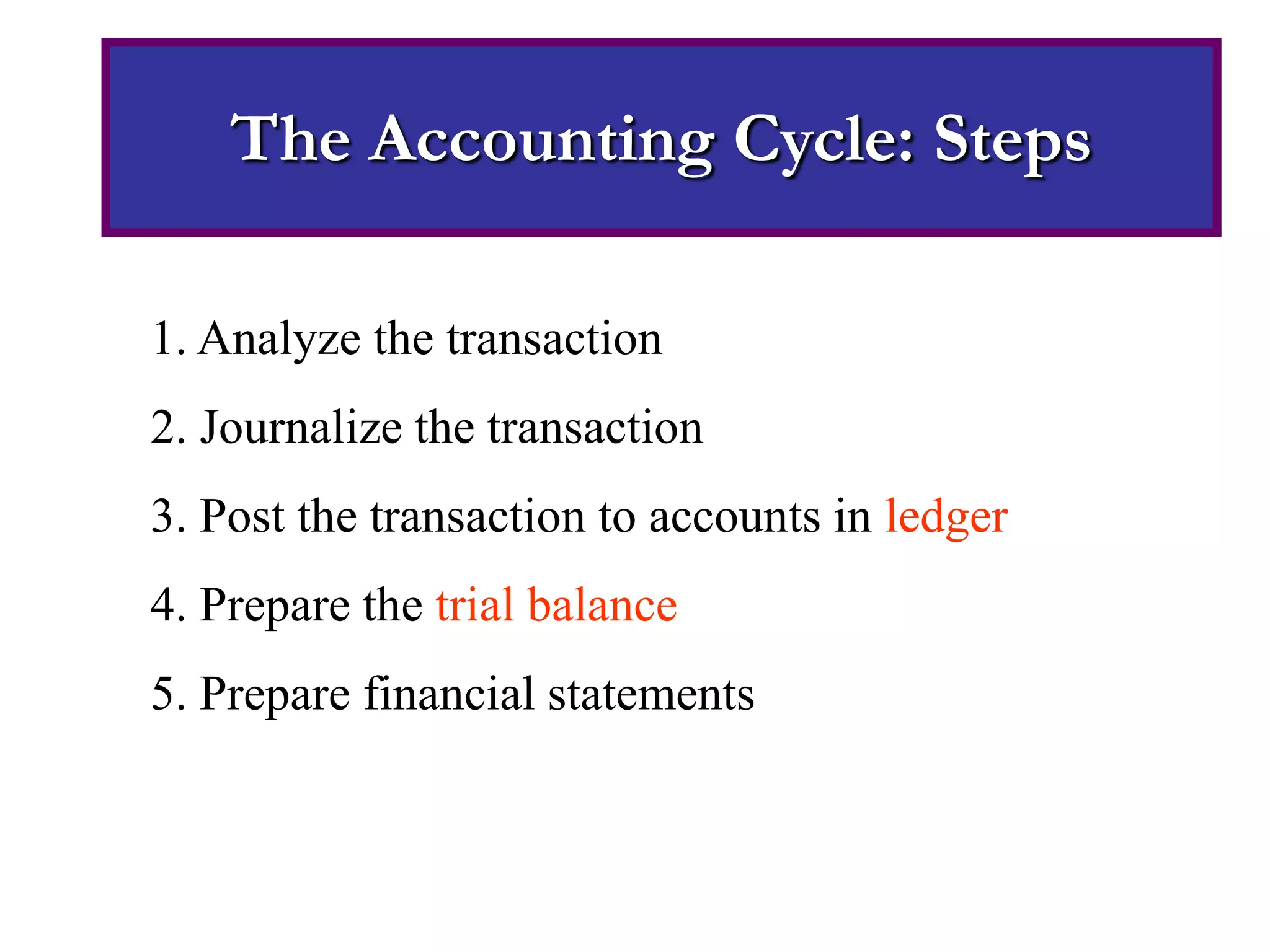
1. Analyze the transaction 2. Journalize the transaction 3. Post the transaction to accounts in ledger 4. Prepare the trial balance 5. Prepare financial statements The Accounting Cycle: Steps
Accounting Cycle 
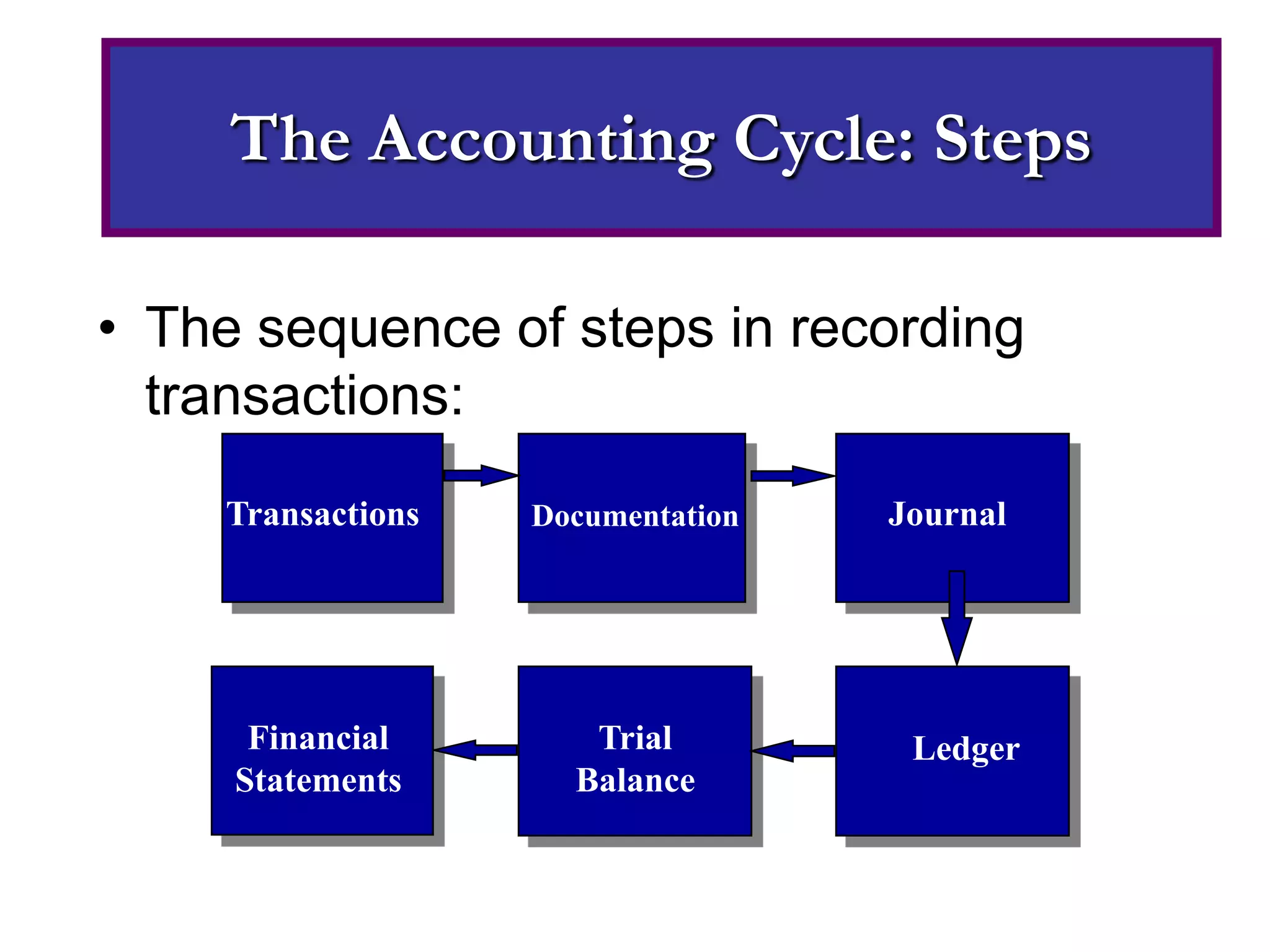
•The sequence of steps in recording transactions: 
Transactions 
Documentation 
Journal 
Financial Statements 
Trial Balance 
Ledger The Accounting Cycle: Steps
Accounting Cycle 
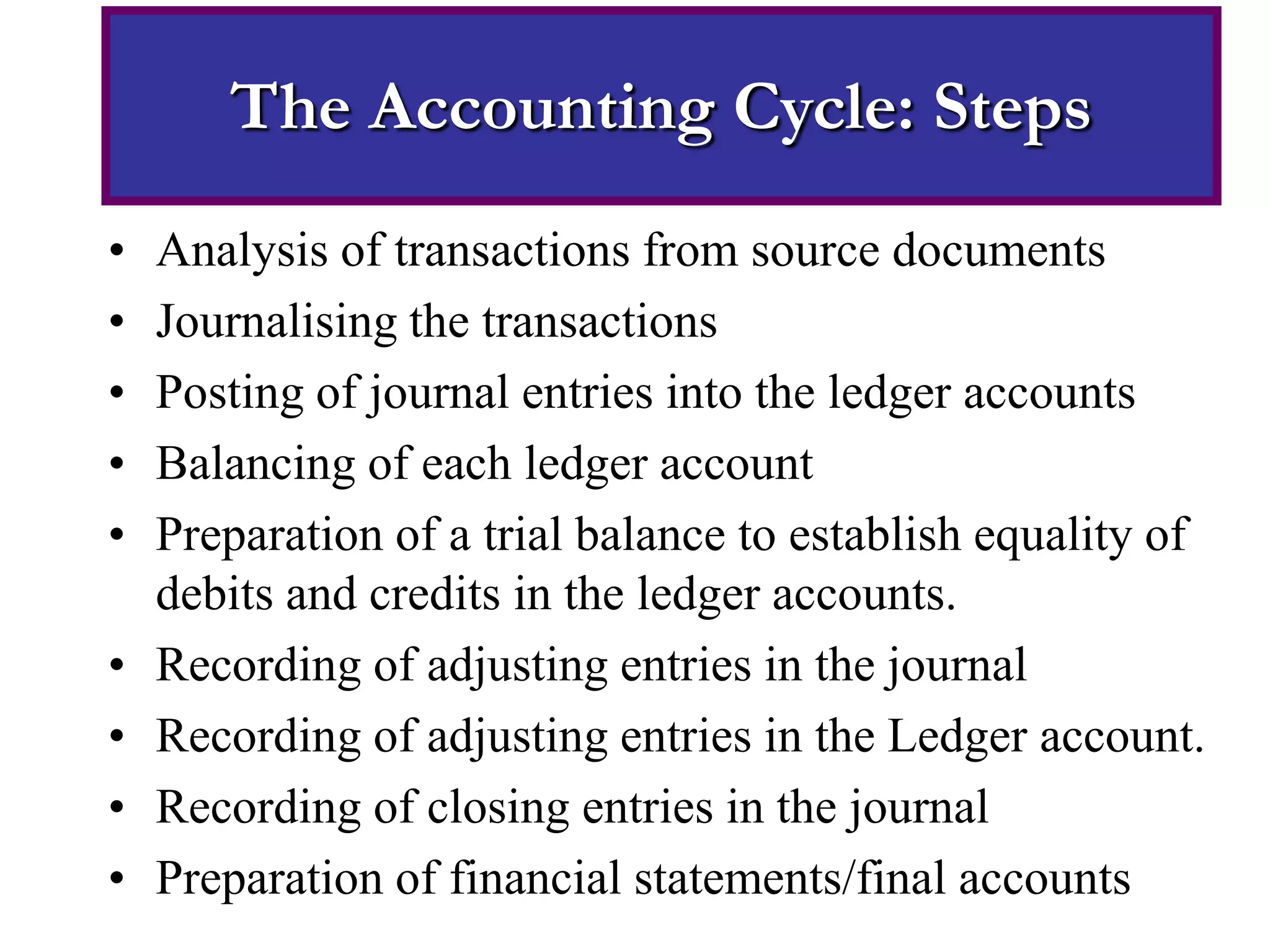
•Analysis of transactions from source documents 
•Journalising the transactions 
•Posting of journal entries into the ledger accounts 
•Balancing of each ledger account 
•Preparation of a trial balance to establish equality of debits and credits in the ledger accounts. 
•Recording of adjusting entries in the journal 
•Recording of adjusting entries in the Ledger account. 
•Recording of closing entries in the journal 
•Preparation of financial statements/final accounts 
The Accounting Cycle: Steps
Accounting Cycle 
•The process starts with source documents, which are the supporting original records of any transaction. 
–Examples are sales slips or invoices, check stubs, purchase orders, bank deposit slips, and cash receipt slips. 
1. Analyze the transaction The Accounting Cycle: Steps
2. Journalize the transaction 
• In the second step, an analysis of the 
transaction is placed in the book of 
original entry, journal, which is a 
chronological record of how the 
transactions affect the balances of 
applicable accounts. 
– The most common example is the 
general journal - a diary of all events 
(transactions) in an entity’s life. 
The Accounting Cycle: Steps
•In the third step, transactions are entered into the ledger. 
–Remember that a transaction is not entered in just one place; it must be entered in each account that it affects. 
–Depending on the nature of the organization, analysis of the transactions could occur continuously or periodically. 
3. Post the transaction to accounts in ledger The Accounting Cycle: Steps
Accounting Cycle 
• The fourth step includes the preparation 
of the trial balance, which is a simple 
listing of all accounts from the ledger 
with their balances. 
– Aids in verifying accuracy and 
in preparing the financial statements 
– Prepared periodically as necessary 
4. Prepare the trial balance 
The Accounting Cycle: Steps
Accounting Cycle 
• In the final step, the financial statements 
are prepared. 
– Financial statements may be prepared 
after each quarter of the year. 
– the companies may prepare 
financial statements at 
various other intervals to 
meet the needs of their users. 
December 2007 
5. Prepare financial statements 
The Accounting Cycle: Steps
JOURNAL
Journal 
•It is a list in chronological order of all the transactions for a business. 
What is a journal? 
•It is the book of original (first) entry
Date Particulars V.NO. L.F Debit Credit 
Format of Journal
Recording transactions in the journal.
Journalizing 
•It is the process of entering transactions into the journal
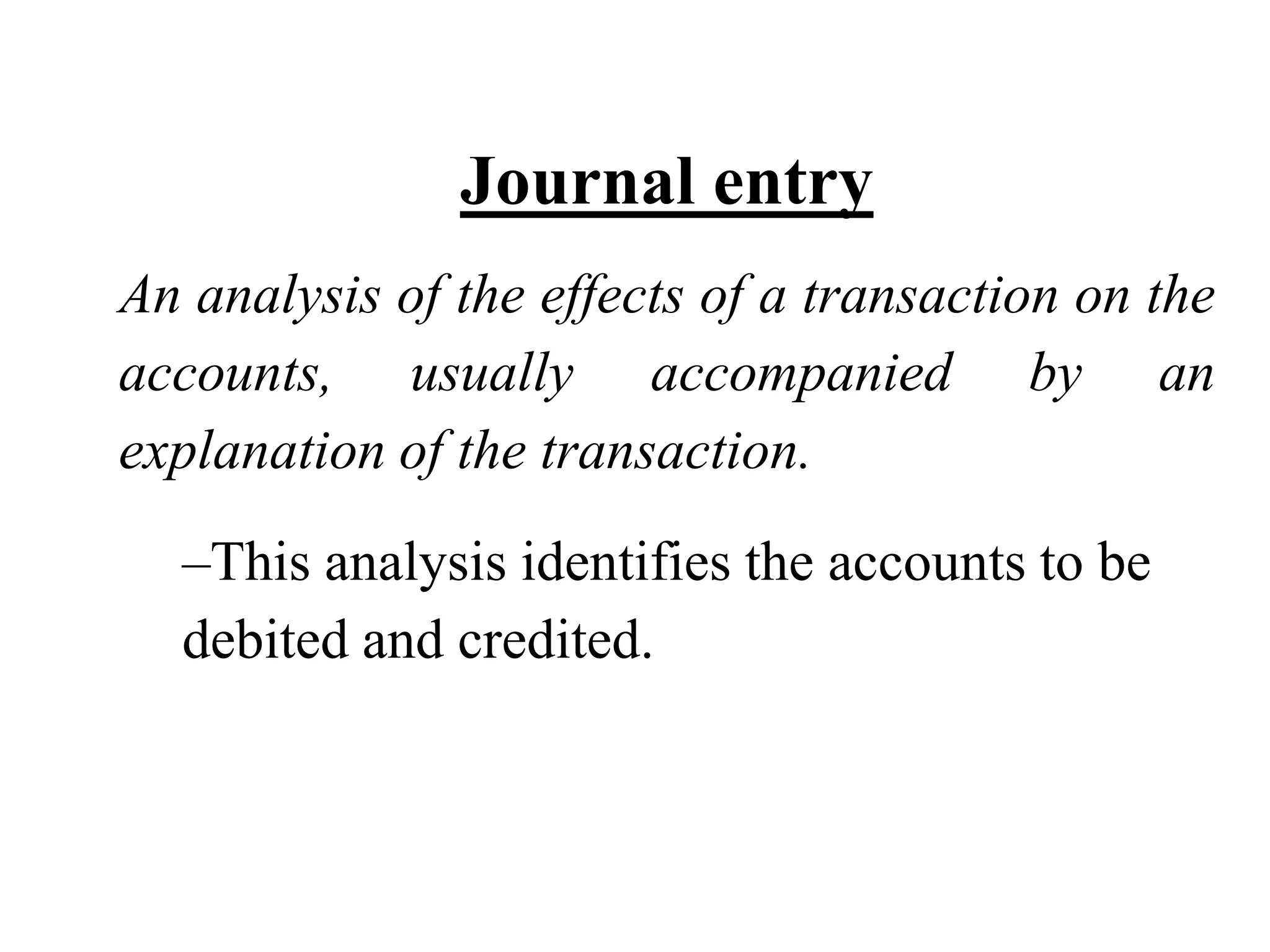
Journal entry An analysis of the effects of a transaction on the accounts, usually accompanied by an explanation of the transaction. 
–This analysis identifies the accounts to be debited and credited.
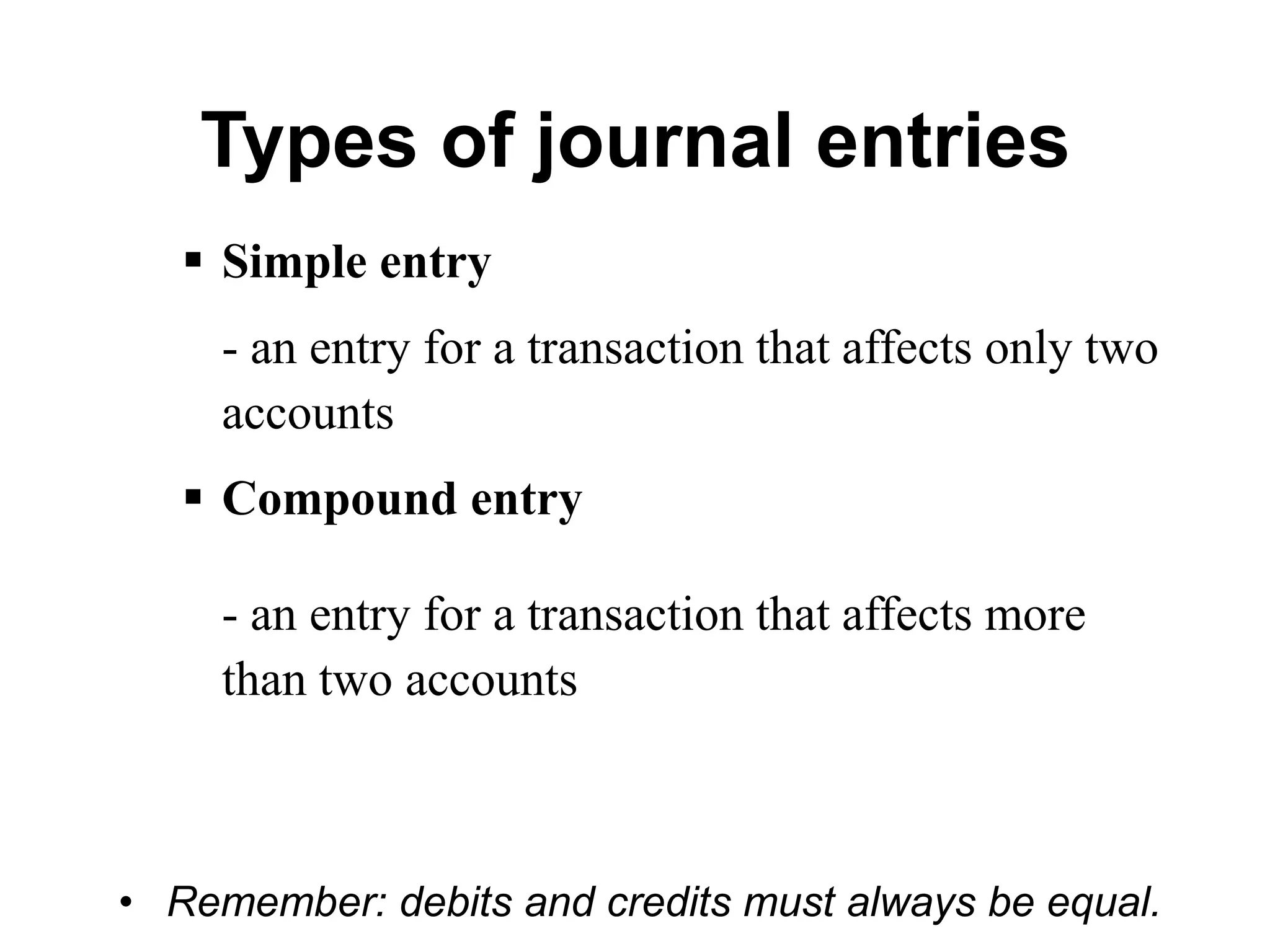
Types of journal entries 
Simple entry 
- an entry for a transaction that affects only two accounts 
Compound entry 
- an entry for a transaction that affects more than two accounts 
•Remember: debits and credits must always be equal.
Journal entry 
What does a journal entry include? 
–Date of the transaction 
–Title of the account debited 
–Title of the account credited 
–Amount of the debit and credit 
–Description of the transaction (narration)
Steps Involved in Journalizing 
•Identify transaction from source documents. 
•Specify accounts affected. 
•Apply debit/credit rules to determine which accounts are to be debited and those to be credited . 
•Record transaction with description.
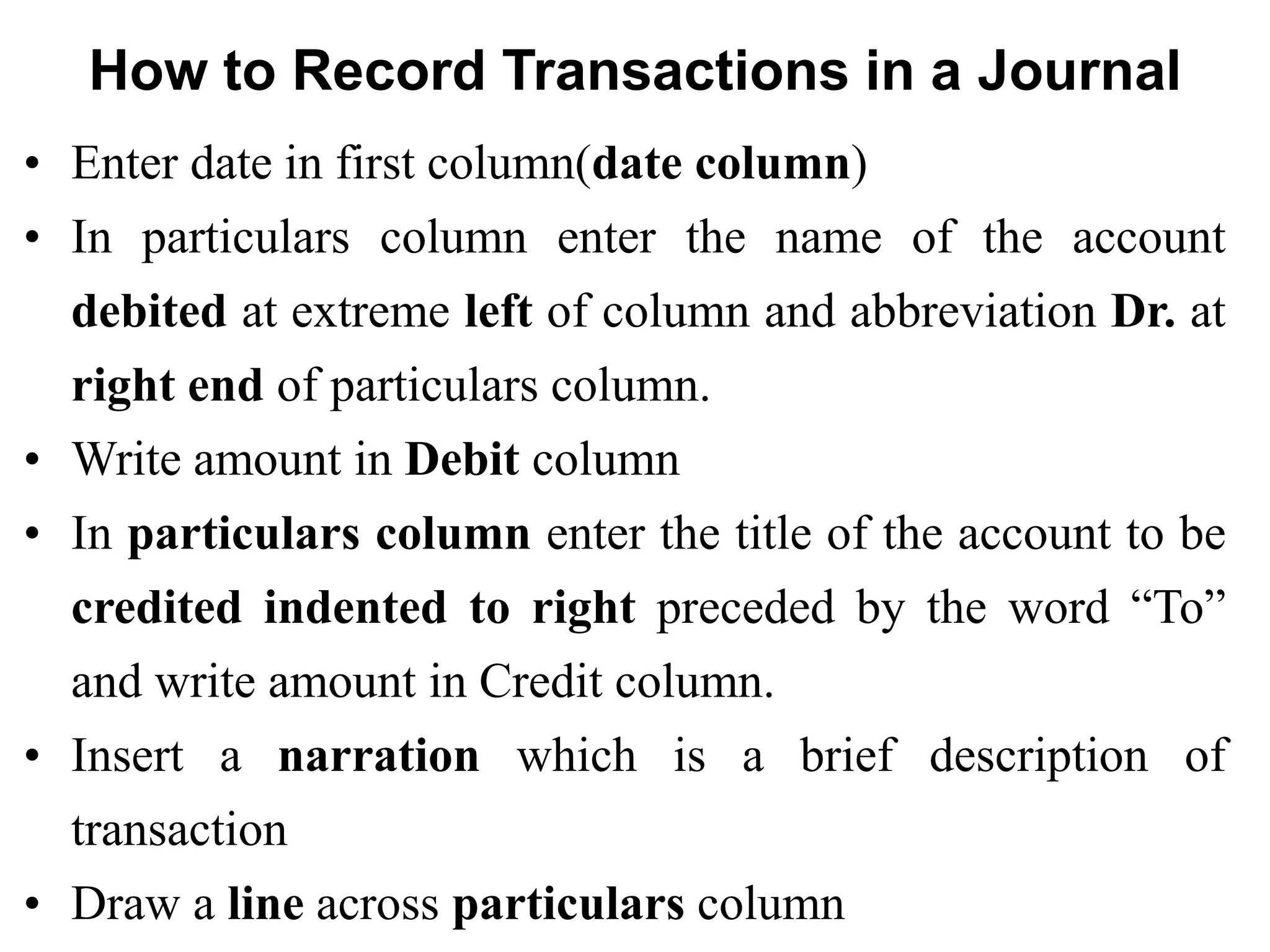
How to Record Transactions in a Journal 
•Enter date in first column(date column) 
•In particulars column enter the name of the account debited at extreme left of column and abbreviation Dr. at right end of particulars column. 
•Write amount in Debit column 
•In particulars column enter the title of the account to be credited indented to right preceded by the word “To” and write amount in Credit column. 
•Insert a narration which is a brief description of transaction 
•Draw a line across particulars column
Journalizing 
•On April 1, Garge invested Rs 30,000 in GillenTravel. Journal entry Date Particulars Debit Credit April Rs Rs 
1Cash Account Dr 30,000 To Garge Capital 30,000 (Received initial investment from owner)

4. accounting cycle short mba

  • 1.
  • 2.
    Accounting Cycle Itrefers to a complete sequence of accounting procedures, which are required to be repeated in the same order during each accounting period. It is complete sequence beginning with the recording of the transaction and ending with the preparation of the final accounts. The Accounting Cycle
  • 3.
    1. Analyze thetransaction 2. Journalize the transaction 3. Post the transaction to accounts in ledger 4. Prepare the trial balance 5. Prepare financial statements The Accounting Cycle: Steps
  • 4.
    Accounting Cycle •Thesequence of steps in recording transactions: Transactions Documentation Journal Financial Statements Trial Balance Ledger The Accounting Cycle: Steps
  • 5.
    Accounting Cycle •Analysisof transactions from source documents •Journalising the transactions •Posting of journal entries into the ledger accounts •Balancing of each ledger account •Preparation of a trial balance to establish equality of debits and credits in the ledger accounts. •Recording of adjusting entries in the journal •Recording of adjusting entries in the Ledger account. •Recording of closing entries in the journal •Preparation of financial statements/final accounts The Accounting Cycle: Steps
  • 6.
    Accounting Cycle •Theprocess starts with source documents, which are the supporting original records of any transaction. –Examples are sales slips or invoices, check stubs, purchase orders, bank deposit slips, and cash receipt slips. 1. Analyze the transaction The Accounting Cycle: Steps
  • 7.
    2. Journalize thetransaction • In the second step, an analysis of the transaction is placed in the book of original entry, journal, which is a chronological record of how the transactions affect the balances of applicable accounts. – The most common example is the general journal - a diary of all events (transactions) in an entity’s life. The Accounting Cycle: Steps
  • 8.
    •In the thirdstep, transactions are entered into the ledger. –Remember that a transaction is not entered in just one place; it must be entered in each account that it affects. –Depending on the nature of the organization, analysis of the transactions could occur continuously or periodically. 3. Post the transaction to accounts in ledger The Accounting Cycle: Steps
  • 9.
    Accounting Cycle •The fourth step includes the preparation of the trial balance, which is a simple listing of all accounts from the ledger with their balances. – Aids in verifying accuracy and in preparing the financial statements – Prepared periodically as necessary 4. Prepare the trial balance The Accounting Cycle: Steps
  • 10.
    Accounting Cycle •In the final step, the financial statements are prepared. – Financial statements may be prepared after each quarter of the year. – the companies may prepare financial statements at various other intervals to meet the needs of their users. December 2007 5. Prepare financial statements The Accounting Cycle: Steps
  • 11.
  • 12.
    Journal •It isa list in chronological order of all the transactions for a business. What is a journal? •It is the book of original (first) entry
  • 13.
    Date Particulars V.NO.L.F Debit Credit Format of Journal
  • 14.
  • 15.
    Journalizing •It isthe process of entering transactions into the journal
  • 16.
    Journal entry Ananalysis of the effects of a transaction on the accounts, usually accompanied by an explanation of the transaction. –This analysis identifies the accounts to be debited and credited.
  • 17.
    Types of journalentries Simple entry - an entry for a transaction that affects only two accounts Compound entry - an entry for a transaction that affects more than two accounts •Remember: debits and credits must always be equal.
  • 18.
    Journal entry Whatdoes a journal entry include? –Date of the transaction –Title of the account debited –Title of the account credited –Amount of the debit and credit –Description of the transaction (narration)
  • 19.
    Steps Involved inJournalizing •Identify transaction from source documents. •Specify accounts affected. •Apply debit/credit rules to determine which accounts are to be debited and those to be credited . •Record transaction with description.
  • 20.
    How to RecordTransactions in a Journal •Enter date in first column(date column) •In particulars column enter the name of the account debited at extreme left of column and abbreviation Dr. at right end of particulars column. •Write amount in Debit column •In particulars column enter the title of the account to be credited indented to right preceded by the word “To” and write amount in Credit column. •Insert a narration which is a brief description of transaction •Draw a line across particulars column
  • 21.
    Journalizing •On April1, Garge invested Rs 30,000 in GillenTravel. Journal entry Date Particulars Debit Credit April Rs Rs 1Cash Account Dr 30,000 To Garge Capital 30,000 (Received initial investment from owner)