*
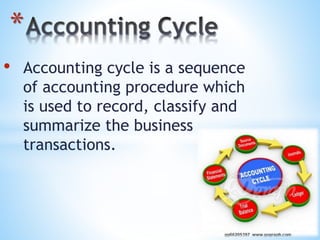
• Accounting cycle is a sequence
of accounting procedure which
is used to record, classify and
summarize the business
transactions.
*
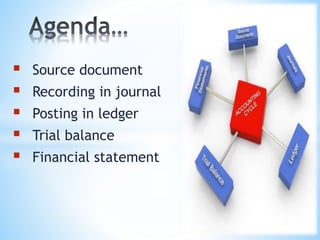
 Source document
 Recording in journal
 Posting in ledger
 Trial balance
 Financial statement
• A source document refers to includes any
document that is received and issued against
any business transactions, which is needed to
be recorded in a journal.
*
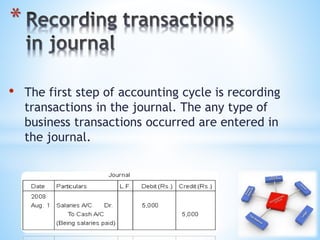
• The first step of accounting cycle is recording
transactions in the journal. The any type of
business transactions occurred are entered in
the journal.
*
• After recording the transactions in journal
the debit and credit entries in account
balances are posted from journal to ledger.
*
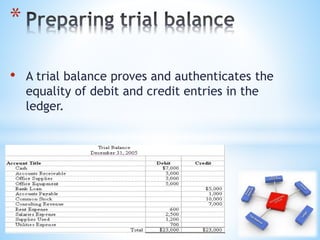
• A trial balance proves and authenticates the
equality of debit and credit entries in the
ledger.
*
Final accounts or financial statements
can be divided in two parts:-
1. Trading and profit & loss account
2. Balance sheet
*
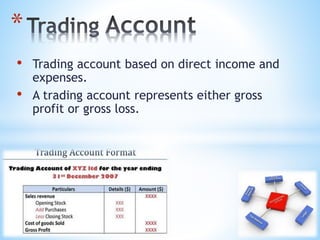
• Trading account based on direct income and
expenses.
• A trading account represents either gross
profit or gross loss.
*
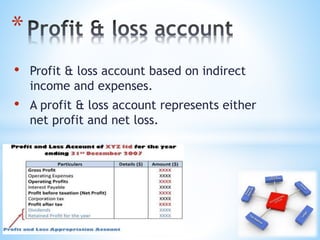
• Profit & loss account based on indirect
income and expenses.
• A profit & loss account represents either
net profit and net loss.
*
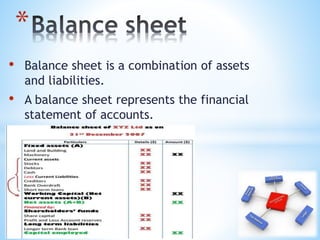
• Balance sheet is a combination of assets
and liabilities.
• A balance sheet represents the financial
statement of accounts.
*

Accounting cycle

  • 1.
  • 2.
    • Accounting cycleis a sequence of accounting procedure which is used to record, classify and summarize the business transactions. *
  • 3.
     Source document Recording in journal  Posting in ledger  Trial balance  Financial statement
  • 4.
    • A sourcedocument refers to includes any document that is received and issued against any business transactions, which is needed to be recorded in a journal. *
  • 5.
    • The firststep of accounting cycle is recording transactions in the journal. The any type of business transactions occurred are entered in the journal. *
  • 6.
    • After recordingthe transactions in journal the debit and credit entries in account balances are posted from journal to ledger. *
  • 7.
    • A trialbalance proves and authenticates the equality of debit and credit entries in the ledger. *
  • 8.
    Final accounts orfinancial statements can be divided in two parts:- 1. Trading and profit & loss account 2. Balance sheet *
  • 9.
    • Trading accountbased on direct income and expenses. • A trading account represents either gross profit or gross loss. *
  • 10.
    • Profit &loss account based on indirect income and expenses. • A profit & loss account represents either net profit and net loss. *
  • 11.
    • Balance sheetis a combination of assets and liabilities. • A balance sheet represents the financial statement of accounts. *