Syed Behroz Ali Rizvi
G.A.A.P
•
•
•
•

G generally
A accepted
A accounting
P principles
Outline
 What is G.A.A.P?
 Why these principles are necessary to
follow?
 Third party satisfaction
 Principles
 Conclusion
What is G.A.A.P?
Generally Accepted Accounting Principles are the set of
rules and regulations through firms and corporations
prepare and present their assets and liabilities and all
incomes and expenses in financial statements.
Why these principles are necessary
to follow?
These principles are necessary to follow because it helps a
lot in making long term decisions, financial decisions and
maintaining records. It makes easy to compare financial
statements of different companies.
Third Party Satisfaction
Third parties like
creditors, banks, share
holders etc must have
to rely on reported
financial statements
so it must be free of
errors, inconsistency
and bias .It could only
be possible by
following G.A.A.P.
Historical Cost Principle
It means that fixed assets must be reported in
financial statements on the cost on which they
were purchased.
Fixed assets should not be recorded on their
market value.
Book Value + Depreciation = Cost
Principle Of Prudence
In the principle of
prudence any person
should not try to
make things look
prettier than they are
originally. One must
not exaggerate any
thing.
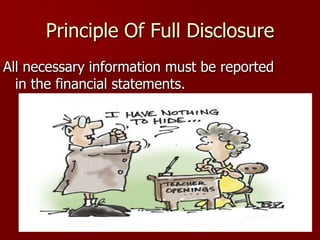
Principle Of Full Disclosure
All necessary information must be reported
in the financial statements.
Principle Of Consistency
It means that when business has fixed
a method for the treatment of an
item, so it should include all items
that follow in same manner.
Revenue Recognition Principle
According to this principle revenues are
recognized if realized or realizable or if
goods transferred or services rendered, no
matter cash is received or not.
Monetary Unit Principle
• It means that the accounting records must be

kept or defined in monetary units i.e. currency.
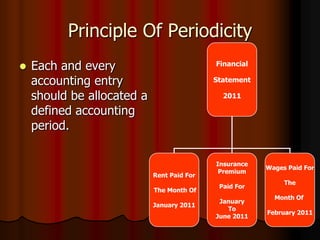
Principle Of Periodicity


Each and every
accounting entry
should be allocated a
defined accounting
period.

Financial
Statement
2011

Rent Paid For
The Month Of
January 2011

Insurance
Premium
Paid For
January
To
June 2011

Wages Paid For
The
Month Of
February 2011
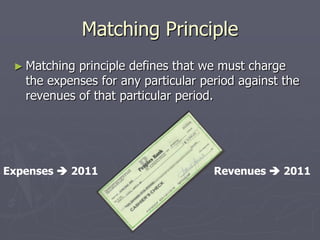
Matching Principle
► Matching

principle defines that we must charge
the expenses for any particular period against the
revenues of that particular period.

Expenses  2011

Revenues  2011
I have concluded that generally accepted accounting
principles are necessary for smooth working of
accounting work and specially helpful for
creditors, insurers and all stake holders.
Questions & Queries
Please do ask



If you have any question related to
presentation
Any ambiguity related to presentation
GAAP (Generally Accepted Accounting Principles)

GAAP (Generally Accepted Accounting Principles)

  • 1.
  • 2.
  • 3.
    Outline  What isG.A.A.P?  Why these principles are necessary to follow?  Third party satisfaction  Principles  Conclusion
  • 4.
    What is G.A.A.P? GenerallyAccepted Accounting Principles are the set of rules and regulations through firms and corporations prepare and present their assets and liabilities and all incomes and expenses in financial statements.
  • 5.
    Why these principlesare necessary to follow? These principles are necessary to follow because it helps a lot in making long term decisions, financial decisions and maintaining records. It makes easy to compare financial statements of different companies.
  • 6.
    Third Party Satisfaction Thirdparties like creditors, banks, share holders etc must have to rely on reported financial statements so it must be free of errors, inconsistency and bias .It could only be possible by following G.A.A.P.
  • 7.
    Historical Cost Principle Itmeans that fixed assets must be reported in financial statements on the cost on which they were purchased. Fixed assets should not be recorded on their market value. Book Value + Depreciation = Cost
  • 8.
    Principle Of Prudence Inthe principle of prudence any person should not try to make things look prettier than they are originally. One must not exaggerate any thing.
  • 9.
    Principle Of FullDisclosure All necessary information must be reported in the financial statements.
  • 10.
    Principle Of Consistency Itmeans that when business has fixed a method for the treatment of an item, so it should include all items that follow in same manner.
  • 11.
    Revenue Recognition Principle Accordingto this principle revenues are recognized if realized or realizable or if goods transferred or services rendered, no matter cash is received or not.
  • 12.
    Monetary Unit Principle •It means that the accounting records must be kept or defined in monetary units i.e. currency.
  • 13.
    Principle Of Periodicity  Eachand every accounting entry should be allocated a defined accounting period. Financial Statement 2011 Rent Paid For The Month Of January 2011 Insurance Premium Paid For January To June 2011 Wages Paid For The Month Of February 2011
  • 14.
    Matching Principle ► Matching principledefines that we must charge the expenses for any particular period against the revenues of that particular period. Expenses  2011 Revenues  2011
  • 15.
    I have concludedthat generally accepted accounting principles are necessary for smooth working of accounting work and specially helpful for creditors, insurers and all stake holders.
  • 16.
    Questions & Queries Pleasedo ask   If you have any question related to presentation Any ambiguity related to presentation