HEPATITISHEPATITIS A
HEPATITIS B
HEPATITIS CKAMARULZAMAN BIN MUZAINI2008402286
What Is Hepatitis?Hepatitis is an inflammation of the liver. It may be caused by drugs, alcohol use, or certain medical conditions. But in most cases, it's caused by a virus that infects the liver. This is known as viral hepatitis, and the most common forms are hepatitis A, B, and Cintroduction
Hepatitis A virus is a small, RNA-containing enterovirus (piconavirus)Hepatocyte is the only site of viral replicationHAV is identified in stool and liver preparationsIt can be destroyed by boiling in water for 20-30 min, dry heat, formalin, chlorine and UV radiationHepatitis AHEPATITIS A VIRUS
Fecal-oral transmissionClose personal contact (e.g., household contact, child day care centers)Contaminated food and water (e.g., infected food handlers, raw shellfish)Blood exposure (rare) (e.g., injecting drug use, transfusion)HEPATITIS A VIRUS TRANSMISSION
IP:4 weeks (range 2-6 weeks)Oral cavity -> GI tract  (replicates in the alimentary tract and spreads to infect the liver via blood)Replicates in hepatocytes and released via bile to intestines 7-10 days prior to clinical symptomsLiver damage and clinical syndrome result of immune response and not direct effect of virus.HEPATITIS A:PATHOGENESIS
Clinical features of hepatitis A, B & C are much or more likely same:Jaundice	vomiting, nausea and feverLost of apetitePain in area of liver (RUQ)fatigueSevere vomiting can lead to dehydrationMost cases resolve spontaneously in 2-4 weeksComplete recovery 99%HEPATITIS A:CLINICAL FEATURESJaundice in newbornDark urine
SPECIMENStool      infective -> shedding the virus (before the onset of the symptoms)SerumLiver function test- serum alaninetransferase (ALT)                                       - serum aspartatetransferase (AST)                                       - Serum bilirubinWBC- leucopenia followed by lymphocytosisImmune electrone microscope- viral particle in feces of patientDetection of IgM antibodyIgG positive 1-3 weeks later suggests prior infection or vaccinationHEPATITIS A: LAB DIAGNOSIS
Hepatitis A almost always goes away on its own, and no medication is neededSupportive treatment ( relieve symptoms)- no specific role of antiviral therapy Drink water or juice to stay hydrated. And avoid strenuous exercise until symptoms start to improve.Lifelong immunity likely after infection or vaccinationHEPATITIS A: TREATMENT
General measures- prevention of fecal contamination of food , water and other sources by infected patientsPersonal hygiene- hand washing before/after meals and after toiletUse of disinfectants to prevent spread of HAVHealth educationVaccination – Harvix , contain no live virus and are very safe.HEPATITIS A: PREVENTION AND CONTROL
Serum hepatitis or long IP hepatitisIt is an enveloped, DNA, hepadnaviridae family 3 important antigens- surface antigen (HBsAg)                                            - core antigen (HBc Ag)                                            - e antigen (HBe Ag)IP- 6weeks to 6 monthsHEPATITIS B
SexualParenteral (IVDU)Perinatal (Mothers who are HBeAg positive are much more likely to transmit to their offspring than those who are not)HEPATITIS B VIRUS: MODE OF TRANSMISSION
Virus enters hepatocytes via bloodSensitized Immune response (cytotoxic T cell) to viral antigens that expressed on hepatocyte cell surface responsible for clinical syndromeThe virus persists in the hepatocytes and on-going liver damage occurs because of the host immune response against the infected liver cells.5% become chronic carrierHigher rate of hepatocellular carcinoma in chronic carriers, especially those who are “e” antigen positiveHepatitis B surface antibody likely confers lifelong immunityHEPATITIS B: PATHOGENESIS
 Acute hepatitis b infection95% of infant-acquired infections   ↓  3-5% of adult-acquired infectionsChronic HBV infection↓Chronic hepatitis                                                      ↓  12-25% in 5 yrsCirrhosis            6-15% in 5 yrs ↙                       ↘20-23%in 5 yrsHepatocellular carcinoma                Liver failure                       ↙              ↘                               ↙        ↘                  Death                 Liver transplant               DeathHEPATITIS B: POSSIBLE OUTCOMES
SPECIMENBlood samplingFor screening- HBsAg                       - Anti HBcAb (IgM, IgG)For monitoring infectivity- Hbe Ag, HbeAbFor assessing immunity- Anti-HBsAbSUPPORTIVE MEASSURESClinical chemical profileEnzyme: ALT, AST ↑Serum bilirubin: vary with severitySerum proteinProthrombin timeHistologic evidence      liver biopsy- for tissue diagnosisHEPATITIS B: LAB DIAGNOSIS
 RADIOLOGICAL INVESTIGATION
USG
CT Scan
MRILiver cirrhosisHepatocellular carcinoma
Lamivudine (reverse transcriptase inhibitor)AdefovirInterferon alfa-2b (inhibit viral growth)HEPATITIS B: TREATMENTS
In infants, several options that depend on status of the motherIf mother HBsAg negative: birth, 1-2months, 6-18Months
If mother HBsAg positive: HBV vaccine and Hep B immune globulin within 12 hours of birth, 1-2 months, < 6 monthsHEPATITIS B: VACCINE
Avoidance of high-risk behavior such as multiple sex partners, homosexualScreening of women in late pregnancy for HBVActive immunization with Hep B vaccine (hepavaxx B)Passive immunization with Hep B Ig before/after exposure 		-Hepatitis B Immunoglobulin - HBIG may be used to protect persons who are 	exposed to hepatitis B. It is particular efficacious within 48 hours of the 	incident. It may also be given to neonates who are at increased risk of 	contracting hepatitis B i.e. whose mothers are HBsAg and HBeAg positive. Other measures - screening of blood donors, blood and body fluid precautions.HEPATITIS B: PREVENTION
Small enveloped,single stranded RNA virus, members of flavivirus familyMost new infections are subclinicalMajority patients develop chronic hepatitis are at risk of progressing to chronic active hepatitis, cirrhosis and high risk of hepatocellular carcinomaHEPATITIS C
Injecting drug useTransfusion, transplant from infected donor Occupational exposure to blood (mostly needle sticks)Iatrogenic Birth to HCV-infected motherHEPATITIS C: TRANSMISSION
Blood-borne pathogen that infects hepatocytesMuch like Hep B, liver damage and clinical illness due to more to elicit immune response as opposed to direct cytopathic effect of the virusLikely cytotoxic T cells that mediate most of the damageLike other chronic liver diseases (Hep B and chronic alcoholism), can cause  HCCHEPATITIS C: PATHOGENESIS
Acute infection asymptomatic in over 80% of patients, when present , acute illness usually mildAcute symptoms include jaundice, nausea, abdominal pain, loss of appetite, dark urineHepatitis C virus  acute infection15%↙                             ↘85%                  Recovery and clearance        Persistent infection                                                                            ↓                                                           Chronic Hepatitis                                              ↙             ↓                  ↘                              Liver Failure        Cirrhosis           Hepatocellular caHEPATITIS C: CLINICAL FEATURES
ELISACONFIRMATORY TESTINGPCR( positive 1-2 weeks post infection)
Recombinant immunoblot assay (RIBA)- looks for 2 or more antibodies to HCV viral antigensHEPATITIS C: DIAGNOSIS
Screening and test of donor’s  blood or organsImplementation and maintenance of infection control practices in healthcare settings- sterilization of medical and dental equipmentsPromotion of behavior changes among the general public and health workers to injections and to use safe injection practicesRisk reduction counseling for sexual practicesNo vaccine for HCVHEPATITIS C: PREVENTION
The most common treatment for chronic hepatitis C is a combination of antiviral medications called  		*Pegylatedinterfronalfa		*RibavirinHEPATITIS C: TREATMENT
Tuberculosis
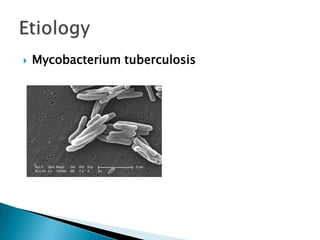
Etiology Mycobacterium tuberculosis
TransmissionRespiratory droplets  becomes airborne: coughs, sneezes, laughs, sighs or breathesdroplet nuclei (dried infected droplet)Vertical transmission (congenital TB)Rare, but suspected if infant born to TB mother fails to thrive or is symptomaticBreast milk is not a source of infectionInfective TB mother X breastfeed, but expressed breast milk can be given.
Risk FactorsImmunosuppresssede.g. HIV (+)veExposure to sputum (+)ve TB patient (adult)Malnutrition e.g. in worm infestation Reasons why children with TB are less infectious:
 NO sputum production (>12yrs old only able to expectorate sputum)
 lack tussive force necessary to suspend infectious particles of the correct size in the air
 lower infectious loadPathophysiologyFigure 1Pathophysiology of tuberculosis: inhalation of bacilli (A), containment in a granuloma (B), and breakdown of the granuloma in less immunocompetent individuals (C).
Clinical FeaturesNearly half of infants and 90% of older children – minimal signs & symptoms of infection.Latent – my develop into active disease at later time (reduce in immunityMantoux test – may become positive initiate treamentSystemic symptoms (due to CMI):FeverAnorexia & weight loss coughFailure to thirveNight sweatsPrimary pulmonary TBHilarlympadenopathy (Ghon complex) : 	compress bronchia or trachea cause bronchial obstruction, collapse & consolidation of affected lungDyspnea, Progressive primary diseasePrimary pneumonia  pulmonary disease/ disseminated miliary diseaseCNS granulomas  meningitisMost common in 1st year of lifeReactivation pulmonary tuberculosisCommon in adolescent, typical in adultFever, night sweats, malaise, & weight lossProductive cough & hemoptysis often herald cavitation & bronchial erosion
Extrapulmonary TB Meningitis TB – low grade fever, headache, subtle personality change, photophobiaTuberculosis pericarditisLymphadenopathyMiliary TBSkeletal TB - hunchbackAbdominal TB Urogenital TB – dysuria, frequency, urgency, hematuria, ‘sterile’ pyuria
InvestigationsPulmonary TBChest radiographearly morning gastric aspiratesSputum (>12yrs old)Pleural fluid/ biopsyCNS TBCXRCSF for AFB smear & TB cultureCT head with contrastTB adenitisCXRExcisional biopsy or FNAAbdominal TBCXRCT abdomen with contrastBiopsy of mass/ mesentric LNsTB osteomyelitisCXRCT/MRI of affected limbBiopsy of affected siteMiliary/ Disseminated TBAs for pulmonary TBEarly morning urineCSF
DiagnosisDiagnosis in children is usually difficult.Confirmatory of diagnosis:isolation of M.tuberculosis by culture from appropriate specimensFeatures suggestive of TB:Recent contact with person (usually adult) with active TBS&S suggestive of TB :	Infants – nonspecific symptoms ; low grade fever, cough, weight loss, failure to thrive & signs like wheezing, reduced breath sounds, tachypneoa & occasionally frank respiratory distressPositive Mantoux testSuggestive X-ray:Enlarged hilar lymph nodes +/- localized obstructive emphysemaPersistent segmental collapse consolidation not responding to conventional antibioticsPleural effusionCalcification of LNs, usually >6mnths after infectionLaboratory test:Presence of AFB on smears of clinical specimens & positive histopathology or cytology on tissue specimens
Tuberculin skin test response to tuberculin antigen is a manifestation of T cell-mediated delayed hypersensitivity. (+)ve : 2-6 weeks after onse of infection (occasionally 3mnths) & during symptomatic illnessPositive Mantoux Test (2units): >10mm induration (no BCG given)
 > 15mm induration (BCG given)Implies active infection; sufficient evident to start treatment.False negative: early in the disease
  inactivated antigen; poor storage, inadequate administration
immunosuppression
TreatmentDOTS (directly observed therapy)Short course therapy (6mnths):For pulmonary TB, non-severe extrapulmonary TB [LN disease, unilateral pleural effusion, skin & bone/ joint (single site) excluding spine], x drug resistant TB Intensive phase (2mnths):Daily isoniazid, Rifampicin & Pyrazinamide4th drug (Ethambutol/ Streptomycin) is added if + initial drug resistance or high burden of organismMaitenance phase (4mnths):Isoniazid & RifampicinDaily (preferred) / biweekly/ thrice weeklySevere extrapulmonary TBIncludes: meningeal, CNS & spinal TB, abdominal TB, bilateral pleural or pericardial effusion, bone & joint TB (>1site) & miliary TBSimilar intensive phase (2mnths), diff continuation phase; for 7-10mnths
CorticosteroidsIndicated : children with TB meningitisOthers: pleural & pericardial effusion, severe miliary disease (if hypoxic) & endobronchial diseaseOnly given with appropriate anti-TB therapyMonitoring of drug toxicityBaseline & routine monitoring of serum transaminases & bilirubin only if:Severe TB diseaseUnderlying hepatic diseaseOther hepatotoxic drugs (anticonvulsant)Clinical symptoms of hepatotoxicityHIV infectionEthambutol: Monitor visual acqutiy & colour discrimination
PreventionContact tracing Screening of family membersChemoprophylaxis: e.g. Isoniazid  & Rifampicin for 3mnthsBCG (BacilleCalmette-Guerin) immunization:C/I: immunocompromisedpx; HIV (+)veX full protection ;
HIV / AIDS in Paediatrics and Adolescents
HIVThe human immunodeficiency virus (HIV) is a retrovirus that infects cells of the immune system, destroying or impairing their function. As the infection progresses, the immune system becomes weaker, and the person becomes more susceptible to infections. The most advanced stage of HIV infection is acquired immunodeficiency syndrome (AIDS).
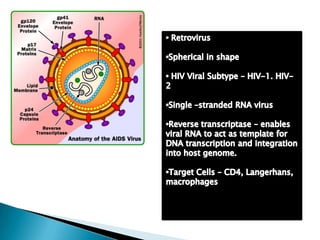
Retrovirus
Spherical in shape
 HIV Viral Subtype – HIV-1. HIV-2
Single –stranded RNA virus
Reverse transcriptase – enables viral RNA to act as template for DNA transcription and integration into host genome.
Target Cells – CD4, Langerhans, macrophages
5 groups of drugs use in HIV patients.
HIV Effect to CD4 cell.Depletion of CD4 lymphocytes due to :-Direct cytotoxic effects of HIV replicationCell-mediated immune cytotoxicThymic damage that impairs lymphocyte productionInfected CD4 cells have shorter half live (2days)If CD4 count drop < 200/microL can cause variety of opportunistic pathogen and cause clinical disease.
Modes Of Transmission	HorizontaLUnprotected heterosexual/homosexual contactIV drug useContact of abraded skin/mucosa with body secretions  eg. blood, semenBlood tranfusionTransplantationVERTICALMother to child transplacentally during utero, during birth or breast feeding. (25-30%)Risk factor of perinatal transmission – prematurity, rupture of membranes more than 4 hours and high maternal HIV load
Reduction of vertical transmission Elective caesarean sectionTotal substitution of breastfeeding    with infant formula.Antiretroviral(ARV) prophylaxis
NEW !!!2010 WHO infant Feeding GuidelinesMothers known to be HIV-infected should be provided with lifelong antiretroviral therapy  or antiretroviral prophylaxis interventions to reduce HIV transmission through breastfeedingcontinue breastfeeding for the first 12 months of life.Exclusive breastfeeding for 6 months. Mixed (complementary) feed after 6 months.
Pediatric classification system : immunology categories.
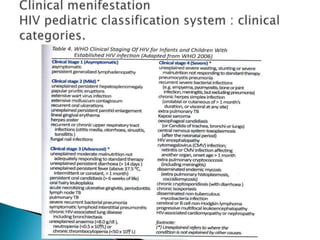
Clinical menifestationHIV pediatric classification system : clinical categories.
Primary infectionAcute retroviral syndromeIncubation period : 2-6 weekLasting for 3-14daysMay be misdiagnosed as                                    mononucleosis or     nonspecific viral syndromeSymptom:-FeverMalaiseWeight lossGeneral lymphadenopathyAseptic meningitisClinical menifestation
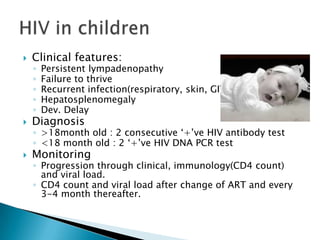
HIV in childrenClinical features:Persistent lympadenopathyFailure to thriveRecurrent infection(respiratory, skin, GIT)HepatosplenomegalyDev. DelayDiagnosis>18month old : 2 consecutive ‘+’ve HIV antibody test<18 month old : 2 ‘+’ve HIV DNA PCR testMonitoringProgression through clinical, immunology(CD4 count) and viral load.CD4 count and viral load after change of ART and every 3-4 month thereafter.
Treatments.There are treatments provided to HIV patient BUT it is not  a cure. drugs action is to stop people to become more ill for many years.The drug’s aim is to keep the viral amount at the lower level.Drug always reffered to:-antiretroviralsanti-HIV or anti-AIDS drugsHIV antiviral drugsARVs
5 groups of drugs use in HIV patients.
Treatments.(continued)typically three or four, are taken in combination, the approach is known as Highly Active Antiretroviral Therapy, or HAART

3.chronic infection

  • 1.
  • 2.
  • 3.
  • 4.
    What Is Hepatitis?Hepatitisis an inflammation of the liver. It may be caused by drugs, alcohol use, or certain medical conditions. But in most cases, it's caused by a virus that infects the liver. This is known as viral hepatitis, and the most common forms are hepatitis A, B, and Cintroduction
  • 5.
    Hepatitis A virusis a small, RNA-containing enterovirus (piconavirus)Hepatocyte is the only site of viral replicationHAV is identified in stool and liver preparationsIt can be destroyed by boiling in water for 20-30 min, dry heat, formalin, chlorine and UV radiationHepatitis AHEPATITIS A VIRUS
  • 6.
    Fecal-oral transmissionClose personalcontact (e.g., household contact, child day care centers)Contaminated food and water (e.g., infected food handlers, raw shellfish)Blood exposure (rare) (e.g., injecting drug use, transfusion)HEPATITIS A VIRUS TRANSMISSION
  • 7.
    IP:4 weeks (range2-6 weeks)Oral cavity -> GI tract (replicates in the alimentary tract and spreads to infect the liver via blood)Replicates in hepatocytes and released via bile to intestines 7-10 days prior to clinical symptomsLiver damage and clinical syndrome result of immune response and not direct effect of virus.HEPATITIS A:PATHOGENESIS
  • 8.
    Clinical features ofhepatitis A, B & C are much or more likely same:Jaundice vomiting, nausea and feverLost of apetitePain in area of liver (RUQ)fatigueSevere vomiting can lead to dehydrationMost cases resolve spontaneously in 2-4 weeksComplete recovery 99%HEPATITIS A:CLINICAL FEATURESJaundice in newbornDark urine
  • 9.
    SPECIMENStool infective -> shedding the virus (before the onset of the symptoms)SerumLiver function test- serum alaninetransferase (ALT) - serum aspartatetransferase (AST) - Serum bilirubinWBC- leucopenia followed by lymphocytosisImmune electrone microscope- viral particle in feces of patientDetection of IgM antibodyIgG positive 1-3 weeks later suggests prior infection or vaccinationHEPATITIS A: LAB DIAGNOSIS
  • 10.
    Hepatitis A almostalways goes away on its own, and no medication is neededSupportive treatment ( relieve symptoms)- no specific role of antiviral therapy Drink water or juice to stay hydrated. And avoid strenuous exercise until symptoms start to improve.Lifelong immunity likely after infection or vaccinationHEPATITIS A: TREATMENT
  • 11.
    General measures- preventionof fecal contamination of food , water and other sources by infected patientsPersonal hygiene- hand washing before/after meals and after toiletUse of disinfectants to prevent spread of HAVHealth educationVaccination – Harvix , contain no live virus and are very safe.HEPATITIS A: PREVENTION AND CONTROL
  • 12.
    Serum hepatitis orlong IP hepatitisIt is an enveloped, DNA, hepadnaviridae family 3 important antigens- surface antigen (HBsAg) - core antigen (HBc Ag) - e antigen (HBe Ag)IP- 6weeks to 6 monthsHEPATITIS B
  • 13.
    SexualParenteral (IVDU)Perinatal (Motherswho are HBeAg positive are much more likely to transmit to their offspring than those who are not)HEPATITIS B VIRUS: MODE OF TRANSMISSION
  • 14.
    Virus enters hepatocytesvia bloodSensitized Immune response (cytotoxic T cell) to viral antigens that expressed on hepatocyte cell surface responsible for clinical syndromeThe virus persists in the hepatocytes and on-going liver damage occurs because of the host immune response against the infected liver cells.5% become chronic carrierHigher rate of hepatocellular carcinoma in chronic carriers, especially those who are “e” antigen positiveHepatitis B surface antibody likely confers lifelong immunityHEPATITIS B: PATHOGENESIS
  • 15.
    Acute hepatitisb infection95% of infant-acquired infections ↓ 3-5% of adult-acquired infectionsChronic HBV infection↓Chronic hepatitis ↓ 12-25% in 5 yrsCirrhosis 6-15% in 5 yrs ↙ ↘20-23%in 5 yrsHepatocellular carcinoma Liver failure ↙ ↘ ↙ ↘ Death Liver transplant DeathHEPATITIS B: POSSIBLE OUTCOMES
  • 16.
    SPECIMENBlood samplingFor screening-HBsAg - Anti HBcAb (IgM, IgG)For monitoring infectivity- Hbe Ag, HbeAbFor assessing immunity- Anti-HBsAbSUPPORTIVE MEASSURESClinical chemical profileEnzyme: ALT, AST ↑Serum bilirubin: vary with severitySerum proteinProthrombin timeHistologic evidence liver biopsy- for tissue diagnosisHEPATITIS B: LAB DIAGNOSIS
  • 17.
  • 18.
  • 19.
  • 20.
  • 21.
    Lamivudine (reverse transcriptaseinhibitor)AdefovirInterferon alfa-2b (inhibit viral growth)HEPATITIS B: TREATMENTS
  • 22.
    In infants, severaloptions that depend on status of the motherIf mother HBsAg negative: birth, 1-2months, 6-18Months
  • 23.
    If mother HBsAgpositive: HBV vaccine and Hep B immune globulin within 12 hours of birth, 1-2 months, < 6 monthsHEPATITIS B: VACCINE
  • 24.
    Avoidance of high-riskbehavior such as multiple sex partners, homosexualScreening of women in late pregnancy for HBVActive immunization with Hep B vaccine (hepavaxx B)Passive immunization with Hep B Ig before/after exposure -Hepatitis B Immunoglobulin - HBIG may be used to protect persons who are exposed to hepatitis B. It is particular efficacious within 48 hours of the incident. It may also be given to neonates who are at increased risk of contracting hepatitis B i.e. whose mothers are HBsAg and HBeAg positive. Other measures - screening of blood donors, blood and body fluid precautions.HEPATITIS B: PREVENTION
  • 25.
    Small enveloped,single strandedRNA virus, members of flavivirus familyMost new infections are subclinicalMajority patients develop chronic hepatitis are at risk of progressing to chronic active hepatitis, cirrhosis and high risk of hepatocellular carcinomaHEPATITIS C
  • 26.
    Injecting drug useTransfusion,transplant from infected donor Occupational exposure to blood (mostly needle sticks)Iatrogenic Birth to HCV-infected motherHEPATITIS C: TRANSMISSION
  • 27.
    Blood-borne pathogen thatinfects hepatocytesMuch like Hep B, liver damage and clinical illness due to more to elicit immune response as opposed to direct cytopathic effect of the virusLikely cytotoxic T cells that mediate most of the damageLike other chronic liver diseases (Hep B and chronic alcoholism), can cause HCCHEPATITIS C: PATHOGENESIS
  • 28.
    Acute infection asymptomaticin over 80% of patients, when present , acute illness usually mildAcute symptoms include jaundice, nausea, abdominal pain, loss of appetite, dark urineHepatitis C virus acute infection15%↙ ↘85% Recovery and clearance Persistent infection ↓ Chronic Hepatitis ↙ ↓ ↘ Liver Failure Cirrhosis Hepatocellular caHEPATITIS C: CLINICAL FEATURES
  • 29.
  • 30.
    Recombinant immunoblot assay(RIBA)- looks for 2 or more antibodies to HCV viral antigensHEPATITIS C: DIAGNOSIS
  • 31.
    Screening and testof donor’s blood or organsImplementation and maintenance of infection control practices in healthcare settings- sterilization of medical and dental equipmentsPromotion of behavior changes among the general public and health workers to injections and to use safe injection practicesRisk reduction counseling for sexual practicesNo vaccine for HCVHEPATITIS C: PREVENTION
  • 32.
    The most commontreatment for chronic hepatitis C is a combination of antiviral medications called  *Pegylatedinterfronalfa *RibavirinHEPATITIS C: TREATMENT
  • 33.
  • 34.
  • 35.
    TransmissionRespiratory droplets becomes airborne: coughs, sneezes, laughs, sighs or breathesdroplet nuclei (dried infected droplet)Vertical transmission (congenital TB)Rare, but suspected if infant born to TB mother fails to thrive or is symptomaticBreast milk is not a source of infectionInfective TB mother X breastfeed, but expressed breast milk can be given.
  • 36.
    Risk FactorsImmunosuppresssede.g. HIV(+)veExposure to sputum (+)ve TB patient (adult)Malnutrition e.g. in worm infestation Reasons why children with TB are less infectious:
  • 37.
    NO sputumproduction (>12yrs old only able to expectorate sputum)
  • 38.
    lack tussiveforce necessary to suspend infectious particles of the correct size in the air
  • 39.
    lower infectiousloadPathophysiologyFigure 1Pathophysiology of tuberculosis: inhalation of bacilli (A), containment in a granuloma (B), and breakdown of the granuloma in less immunocompetent individuals (C).
  • 41.
    Clinical FeaturesNearly halfof infants and 90% of older children – minimal signs & symptoms of infection.Latent – my develop into active disease at later time (reduce in immunityMantoux test – may become positive initiate treamentSystemic symptoms (due to CMI):FeverAnorexia & weight loss coughFailure to thirveNight sweatsPrimary pulmonary TBHilarlympadenopathy (Ghon complex) : compress bronchia or trachea cause bronchial obstruction, collapse & consolidation of affected lungDyspnea, Progressive primary diseasePrimary pneumonia  pulmonary disease/ disseminated miliary diseaseCNS granulomas  meningitisMost common in 1st year of lifeReactivation pulmonary tuberculosisCommon in adolescent, typical in adultFever, night sweats, malaise, & weight lossProductive cough & hemoptysis often herald cavitation & bronchial erosion
  • 42.
    Extrapulmonary TB MeningitisTB – low grade fever, headache, subtle personality change, photophobiaTuberculosis pericarditisLymphadenopathyMiliary TBSkeletal TB - hunchbackAbdominal TB Urogenital TB – dysuria, frequency, urgency, hematuria, ‘sterile’ pyuria
  • 43.
    InvestigationsPulmonary TBChest radiographearlymorning gastric aspiratesSputum (>12yrs old)Pleural fluid/ biopsyCNS TBCXRCSF for AFB smear & TB cultureCT head with contrastTB adenitisCXRExcisional biopsy or FNAAbdominal TBCXRCT abdomen with contrastBiopsy of mass/ mesentric LNsTB osteomyelitisCXRCT/MRI of affected limbBiopsy of affected siteMiliary/ Disseminated TBAs for pulmonary TBEarly morning urineCSF
  • 44.
    DiagnosisDiagnosis in childrenis usually difficult.Confirmatory of diagnosis:isolation of M.tuberculosis by culture from appropriate specimensFeatures suggestive of TB:Recent contact with person (usually adult) with active TBS&S suggestive of TB : Infants – nonspecific symptoms ; low grade fever, cough, weight loss, failure to thrive & signs like wheezing, reduced breath sounds, tachypneoa & occasionally frank respiratory distressPositive Mantoux testSuggestive X-ray:Enlarged hilar lymph nodes +/- localized obstructive emphysemaPersistent segmental collapse consolidation not responding to conventional antibioticsPleural effusionCalcification of LNs, usually >6mnths after infectionLaboratory test:Presence of AFB on smears of clinical specimens & positive histopathology or cytology on tissue specimens
  • 45.
    Tuberculin skin testresponse to tuberculin antigen is a manifestation of T cell-mediated delayed hypersensitivity. (+)ve : 2-6 weeks after onse of infection (occasionally 3mnths) & during symptomatic illnessPositive Mantoux Test (2units): >10mm induration (no BCG given)
  • 46.
    > 15mminduration (BCG given)Implies active infection; sufficient evident to start treatment.False negative: early in the disease
  • 47.
    inactivatedantigen; poor storage, inadequate administration
  • 48.
  • 49.
    TreatmentDOTS (directly observedtherapy)Short course therapy (6mnths):For pulmonary TB, non-severe extrapulmonary TB [LN disease, unilateral pleural effusion, skin & bone/ joint (single site) excluding spine], x drug resistant TB Intensive phase (2mnths):Daily isoniazid, Rifampicin & Pyrazinamide4th drug (Ethambutol/ Streptomycin) is added if + initial drug resistance or high burden of organismMaitenance phase (4mnths):Isoniazid & RifampicinDaily (preferred) / biweekly/ thrice weeklySevere extrapulmonary TBIncludes: meningeal, CNS & spinal TB, abdominal TB, bilateral pleural or pericardial effusion, bone & joint TB (>1site) & miliary TBSimilar intensive phase (2mnths), diff continuation phase; for 7-10mnths
  • 50.
    CorticosteroidsIndicated : childrenwith TB meningitisOthers: pleural & pericardial effusion, severe miliary disease (if hypoxic) & endobronchial diseaseOnly given with appropriate anti-TB therapyMonitoring of drug toxicityBaseline & routine monitoring of serum transaminases & bilirubin only if:Severe TB diseaseUnderlying hepatic diseaseOther hepatotoxic drugs (anticonvulsant)Clinical symptoms of hepatotoxicityHIV infectionEthambutol: Monitor visual acqutiy & colour discrimination
  • 51.
    PreventionContact tracing Screeningof family membersChemoprophylaxis: e.g. Isoniazid & Rifampicin for 3mnthsBCG (BacilleCalmette-Guerin) immunization:C/I: immunocompromisedpx; HIV (+)veX full protection ;
  • 52.
    HIV / AIDSin Paediatrics and Adolescents
  • 53.
    HIVThe human immunodeficiencyvirus (HIV) is a retrovirus that infects cells of the immune system, destroying or impairing their function. As the infection progresses, the immune system becomes weaker, and the person becomes more susceptible to infections. The most advanced stage of HIV infection is acquired immunodeficiency syndrome (AIDS).
  • 54.
  • 55.
  • 56.
    HIV ViralSubtype – HIV-1. HIV-2
  • 57.
  • 58.
    Reverse transcriptase –enables viral RNA to act as template for DNA transcription and integration into host genome.
  • 59.
    Target Cells –CD4, Langerhans, macrophages
  • 61.
    5 groups ofdrugs use in HIV patients.
  • 62.
    HIV Effect toCD4 cell.Depletion of CD4 lymphocytes due to :-Direct cytotoxic effects of HIV replicationCell-mediated immune cytotoxicThymic damage that impairs lymphocyte productionInfected CD4 cells have shorter half live (2days)If CD4 count drop < 200/microL can cause variety of opportunistic pathogen and cause clinical disease.
  • 63.
    Modes Of Transmission HorizontaLUnprotectedheterosexual/homosexual contactIV drug useContact of abraded skin/mucosa with body secretions eg. blood, semenBlood tranfusionTransplantationVERTICALMother to child transplacentally during utero, during birth or breast feeding. (25-30%)Risk factor of perinatal transmission – prematurity, rupture of membranes more than 4 hours and high maternal HIV load
  • 64.
    Reduction of verticaltransmission Elective caesarean sectionTotal substitution of breastfeeding with infant formula.Antiretroviral(ARV) prophylaxis
  • 65.
    NEW !!!2010 WHOinfant Feeding GuidelinesMothers known to be HIV-infected should be provided with lifelong antiretroviral therapy or antiretroviral prophylaxis interventions to reduce HIV transmission through breastfeedingcontinue breastfeeding for the first 12 months of life.Exclusive breastfeeding for 6 months. Mixed (complementary) feed after 6 months.
  • 66.
    Pediatric classification system: immunology categories.
  • 67.
    Clinical menifestationHIV pediatricclassification system : clinical categories.
  • 69.
    Primary infectionAcute retroviralsyndromeIncubation period : 2-6 weekLasting for 3-14daysMay be misdiagnosed as mononucleosis or nonspecific viral syndromeSymptom:-FeverMalaiseWeight lossGeneral lymphadenopathyAseptic meningitisClinical menifestation
  • 70.
    HIV in childrenClinicalfeatures:Persistent lympadenopathyFailure to thriveRecurrent infection(respiratory, skin, GIT)HepatosplenomegalyDev. DelayDiagnosis>18month old : 2 consecutive ‘+’ve HIV antibody test<18 month old : 2 ‘+’ve HIV DNA PCR testMonitoringProgression through clinical, immunology(CD4 count) and viral load.CD4 count and viral load after change of ART and every 3-4 month thereafter.
  • 71.
    Treatments.There are treatmentsprovided to HIV patient BUT it is not a cure. drugs action is to stop people to become more ill for many years.The drug’s aim is to keep the viral amount at the lower level.Drug always reffered to:-antiretroviralsanti-HIV or anti-AIDS drugsHIV antiviral drugsARVs
  • 72.
    5 groups ofdrugs use in HIV patients.
  • 73.
    Treatments.(continued)typically three orfour, are taken in combination, the approach is known as Highly Active Antiretroviral Therapy, or HAART