Classification of Reptiles
Presented by: Aqib Iqbal
Introduction to Reptiles
The word ‘Reptilia’ came from latin word ‘Reptum’ which means ‘creep’. They have evolved from
the Amphibians and in turn, give raise to the birds and mammals. As a group, the reptiles can be
separated from the amphibians by their dry confined skin and from the bird by the absence of
feather and from mammal by the absence of hair. From the fossil evidence it is believed that reptiles
originated during the carboniferous period around 300-260 million years ago. During the Mesozoic
era (Triassic to upper Cretaceous) they were the dominant vertebrates. At the end of the Cretaceous
reptiles started to decline. Now most of the species are disappeared and only 4 of 16 orders survive.
Only 8734 living reptiles are found all over the world. In Bangladesh 153 species of reptiles are found.
Inour presentation we will classify theclass Reptilia upto order.
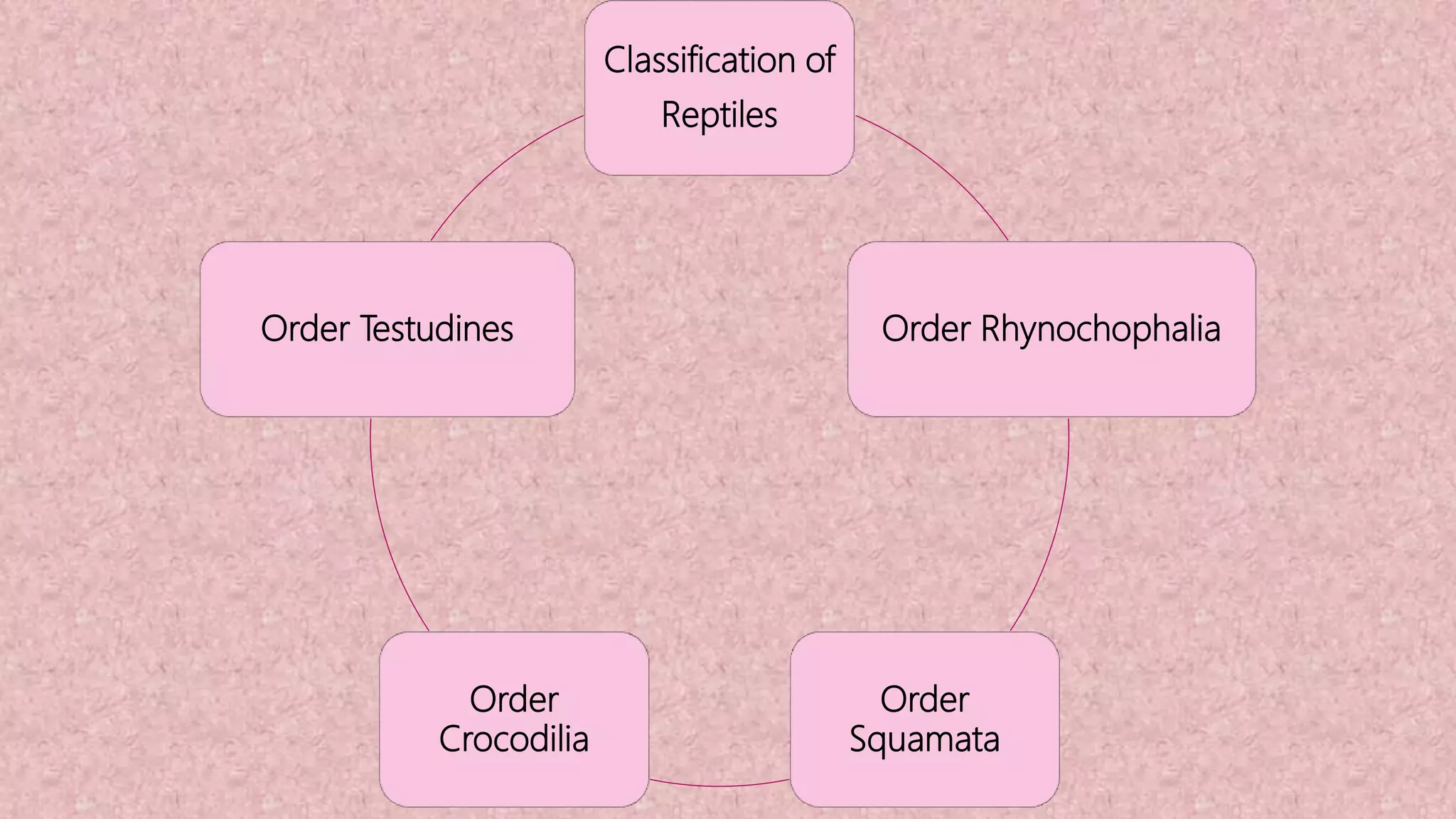
Classification of
Reptiles
Order Rhynochophalia
Order
Squamata
Order
Crocodilia
Order Testudines
Order Testudines
 They have a bony part of the shell ,
 but some have a softy ,
 leathery covering.
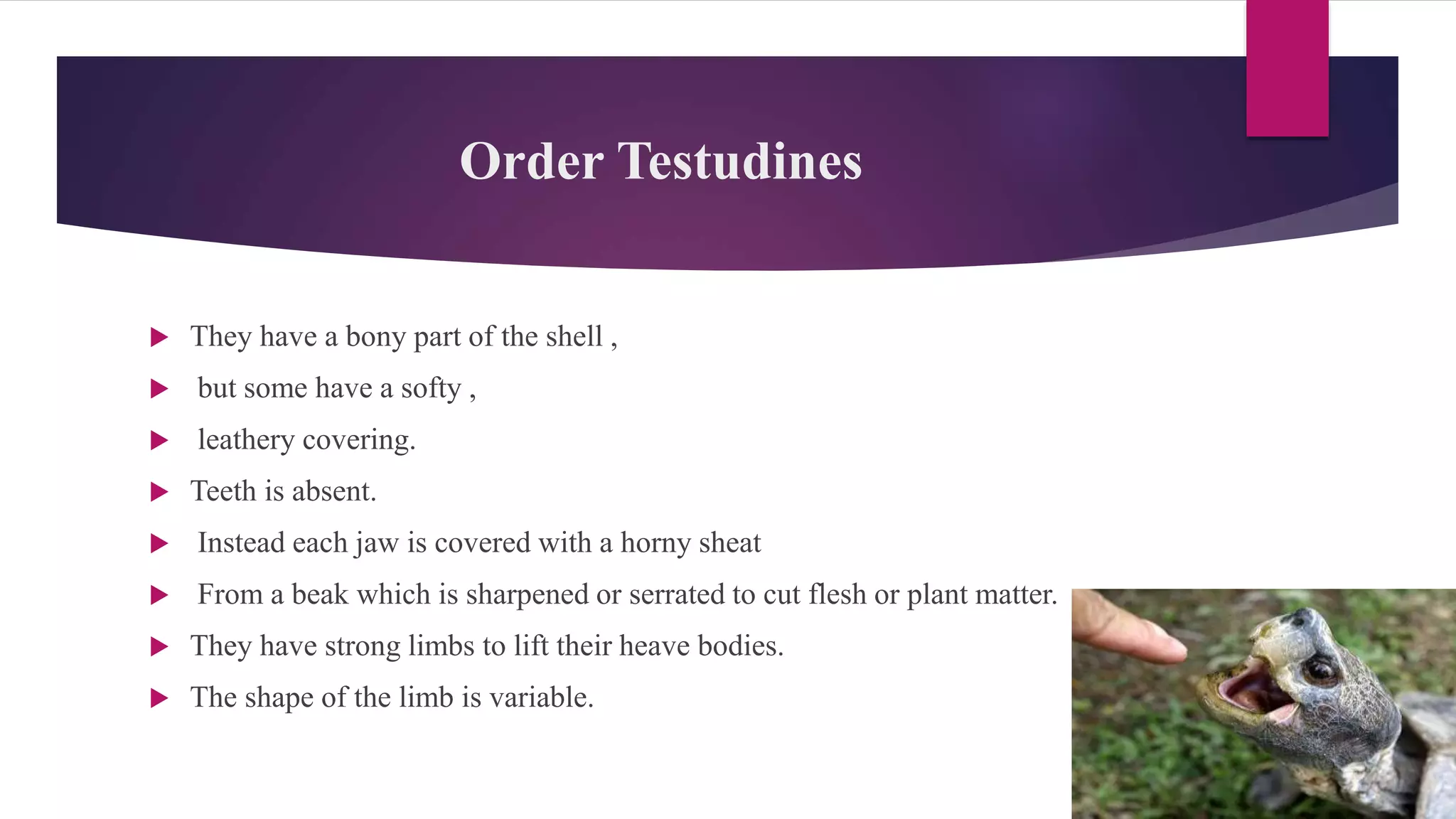
 Teeth is absent.
 Instead each jaw is covered with a horny sheat
 From a beak which is sharpened or serrated to cut flesh or plant matter.
 They have strong limbs to lift their heave bodies.
 The shape of the limb is variable.
Conti…..
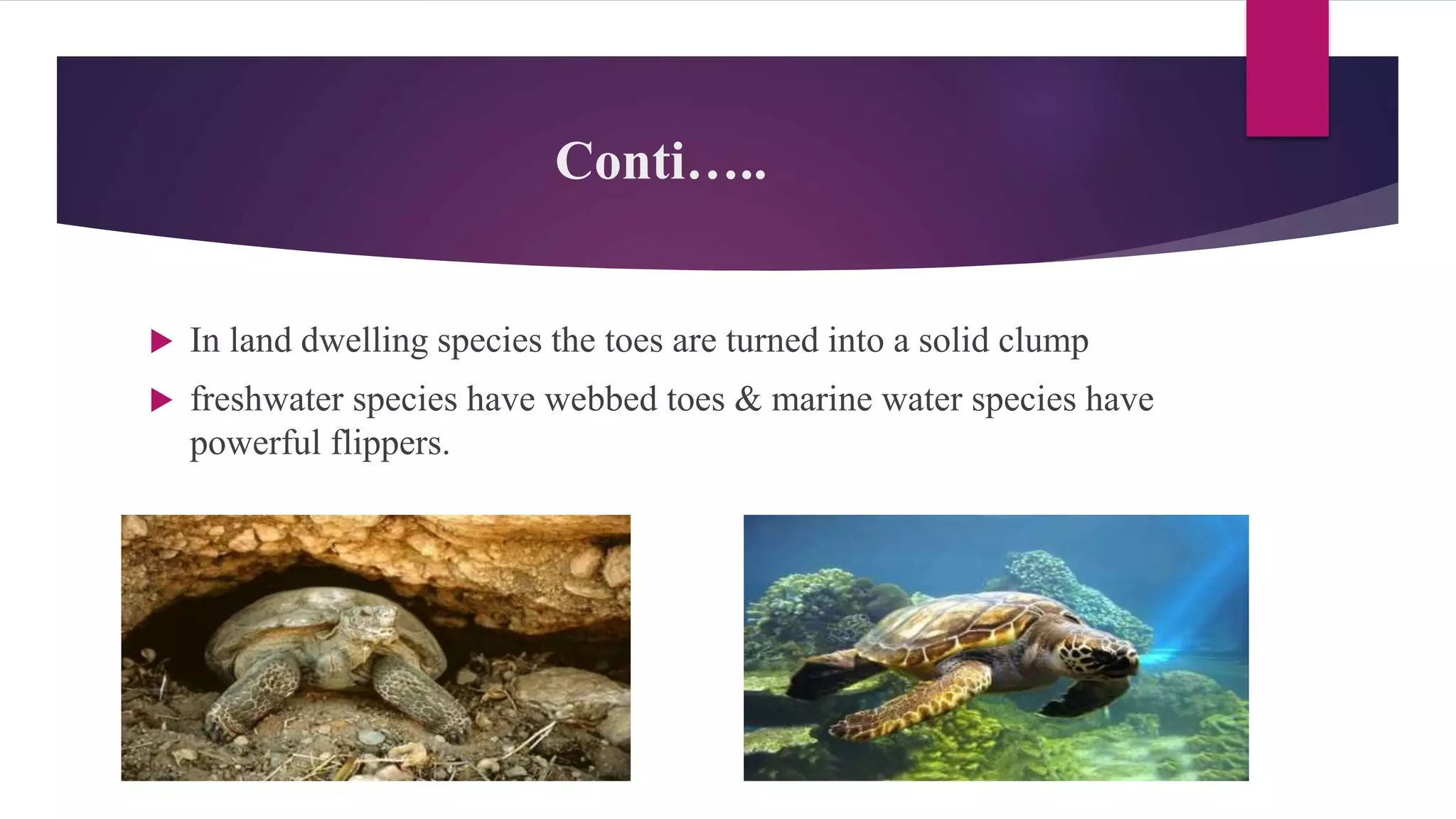
 In land dwelling species the toes are turned into a solid clump
 freshwater species have webbed toes & marine water species have
powerful flippers.
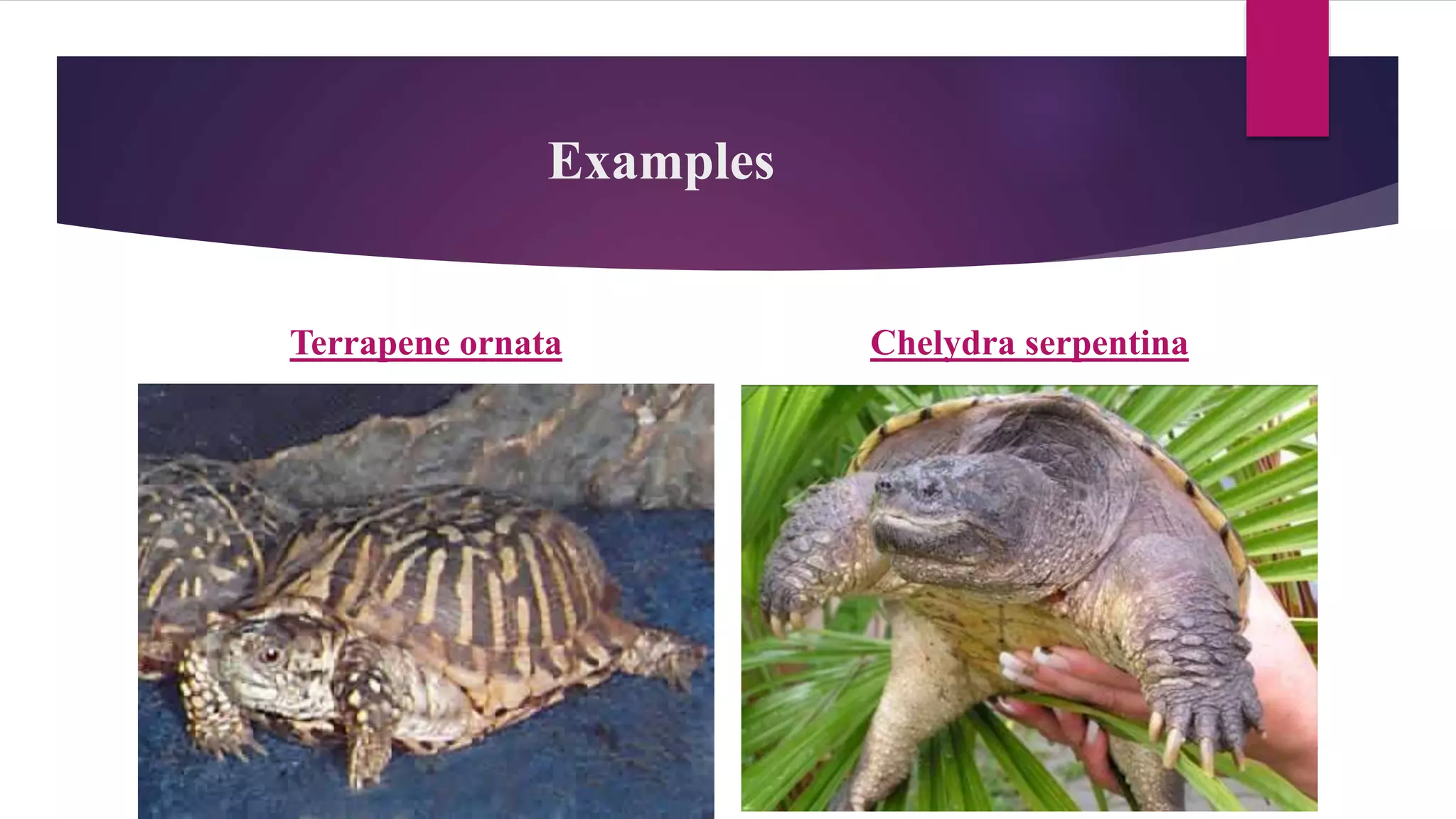
Examples
Terrapene ornata Chelydra serpentina
Order Rhynochophalia
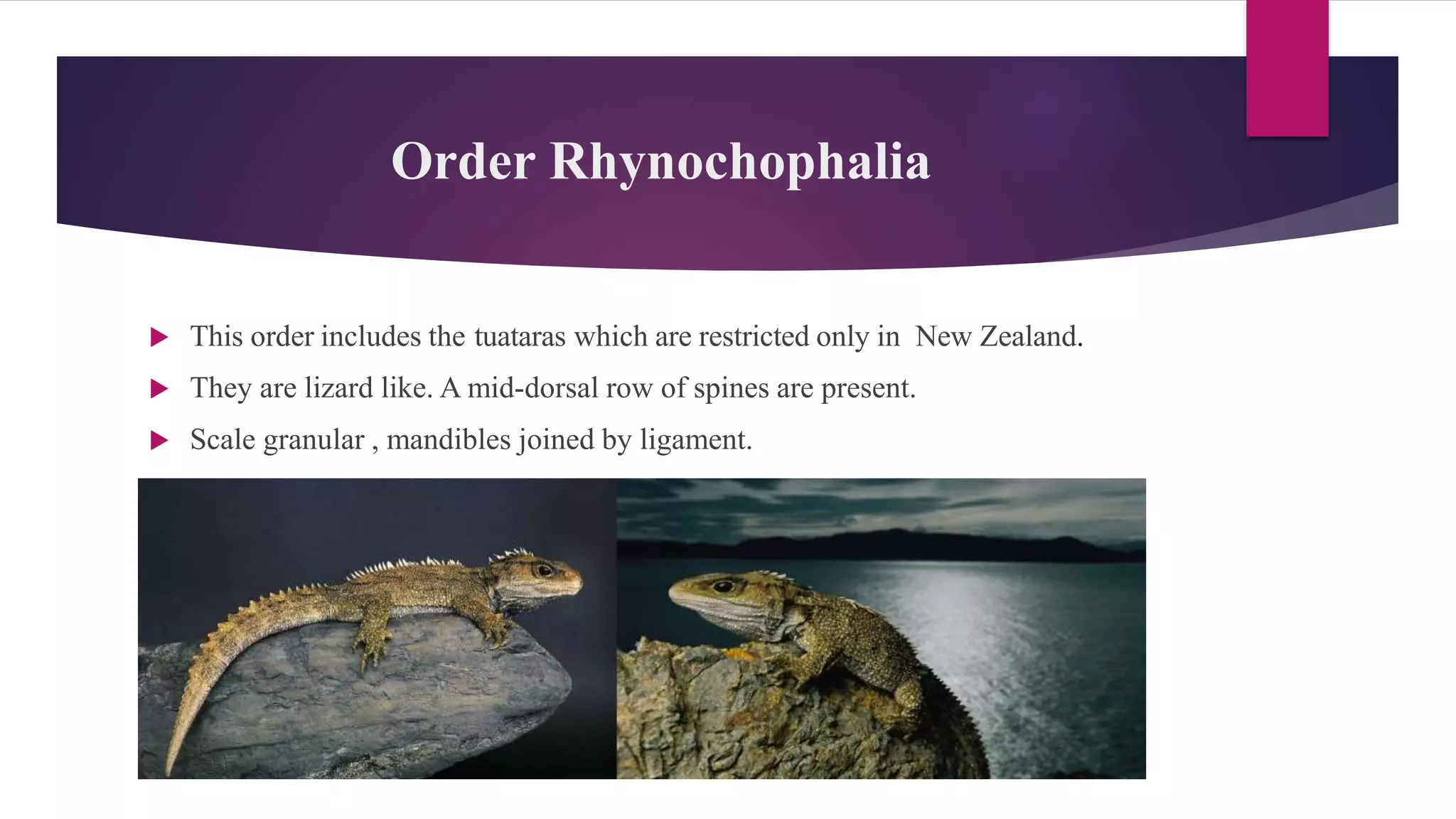
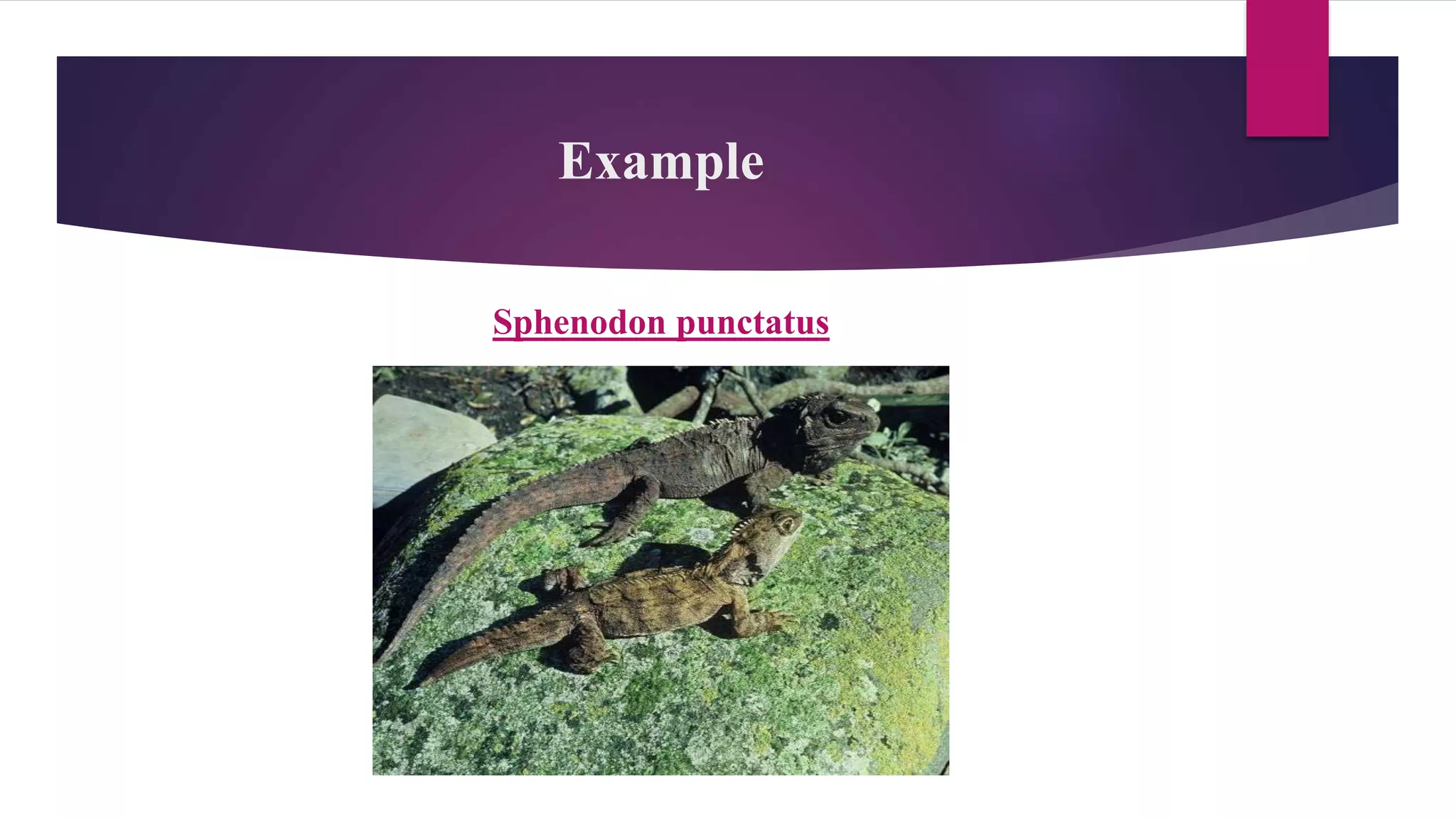
 This order includes the tuataras which are restricted only in New Zealand.
 They are lizard like. A mid-dorsal row of spines are present.
 Scale granular , mandibles joined by ligament.
Conti…..
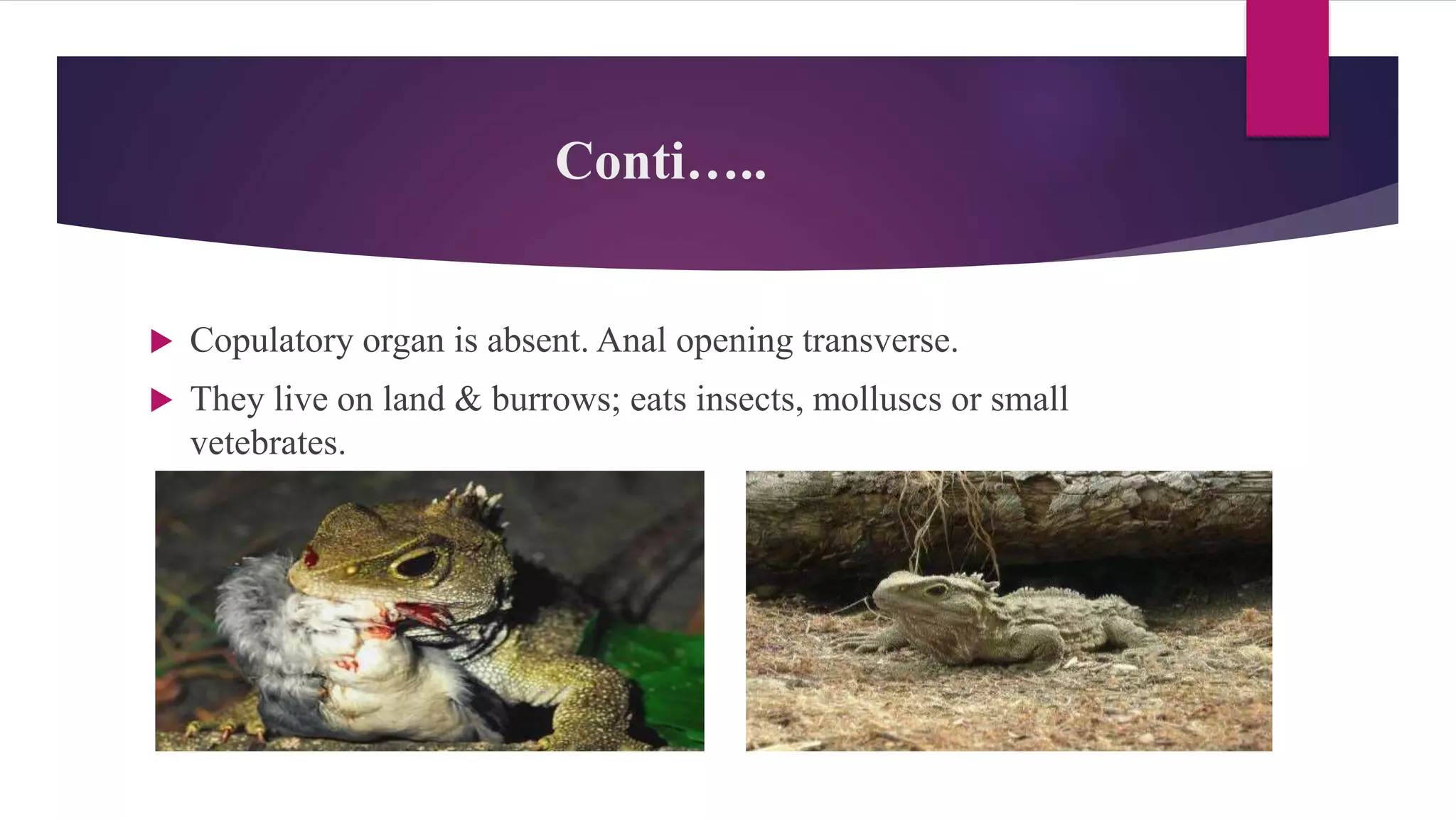
 Copulatory organ is absent. Anal opening transverse.
 They live on land & burrows; eats insects, molluscs or small
vetebrates.
Conti….
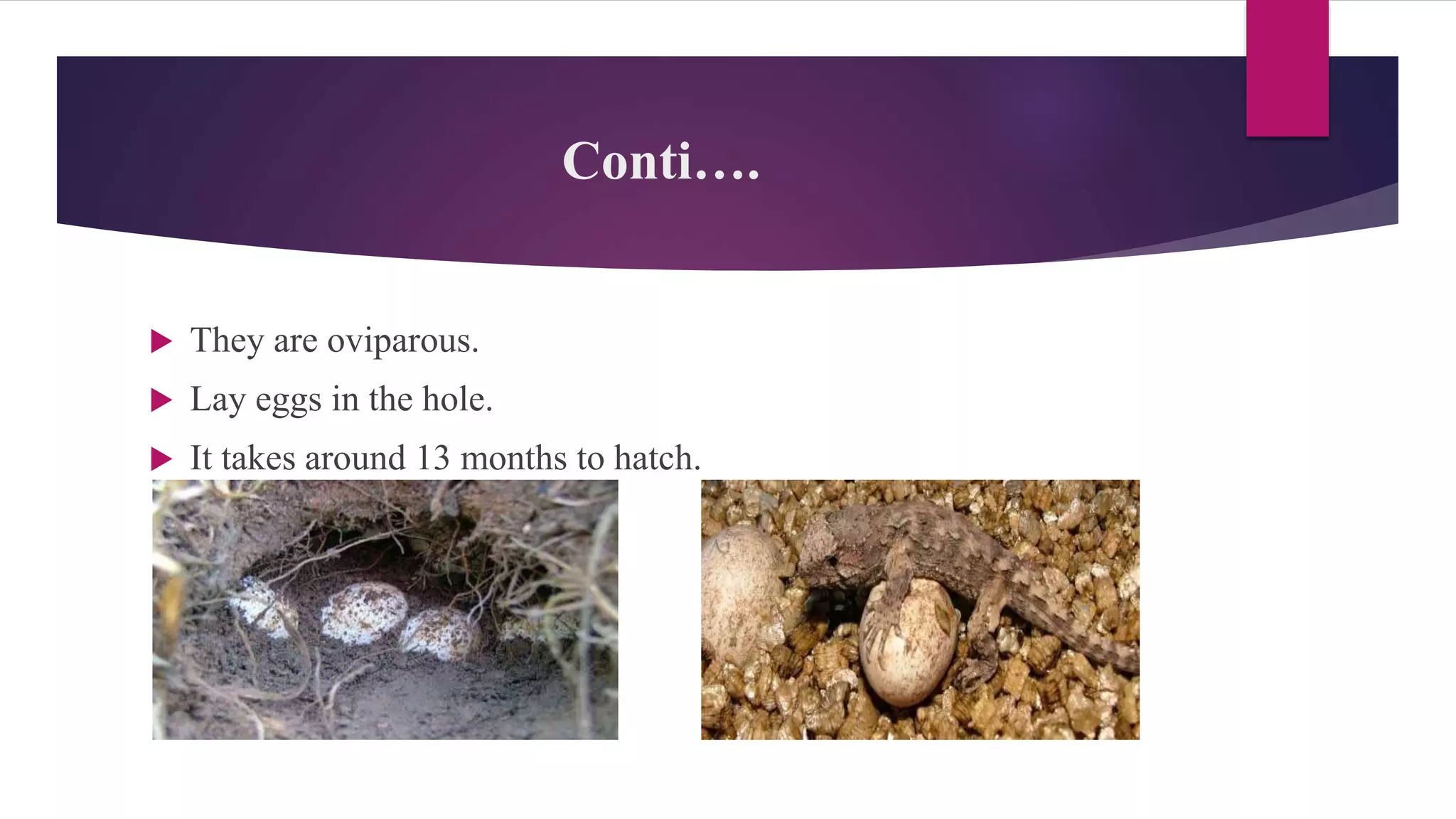
 They are oviparous.
 Lay eggs in the hole.
 It takes around 13 months to hatch.
Example
Sphenodon punctatus
Order Crocodilia
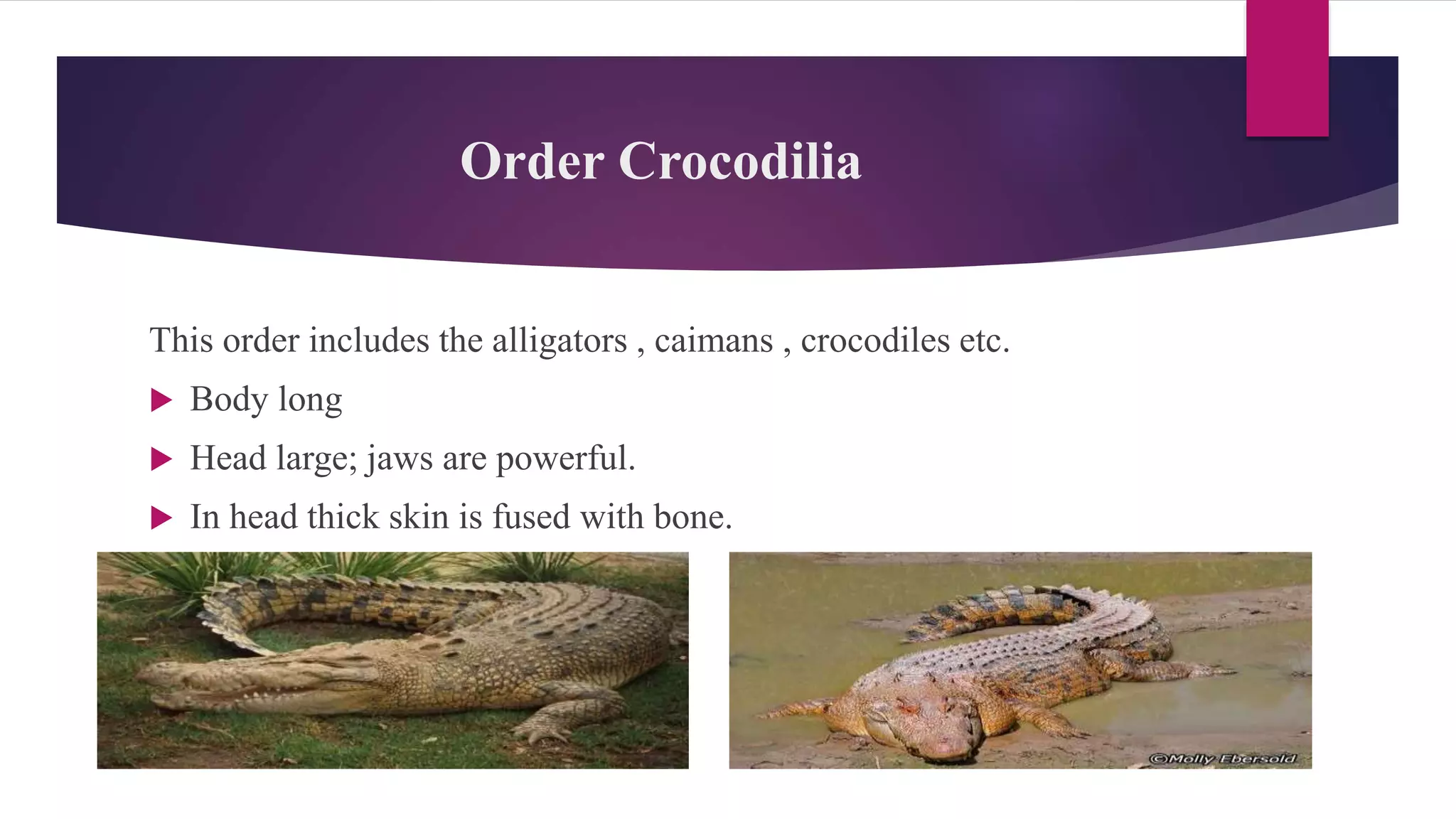
This order includes the alligators , caimans , crocodiles etc.
 Body long
 Head large; jaws are powerful.
 In head thick skin is fused with bone.
Conti….
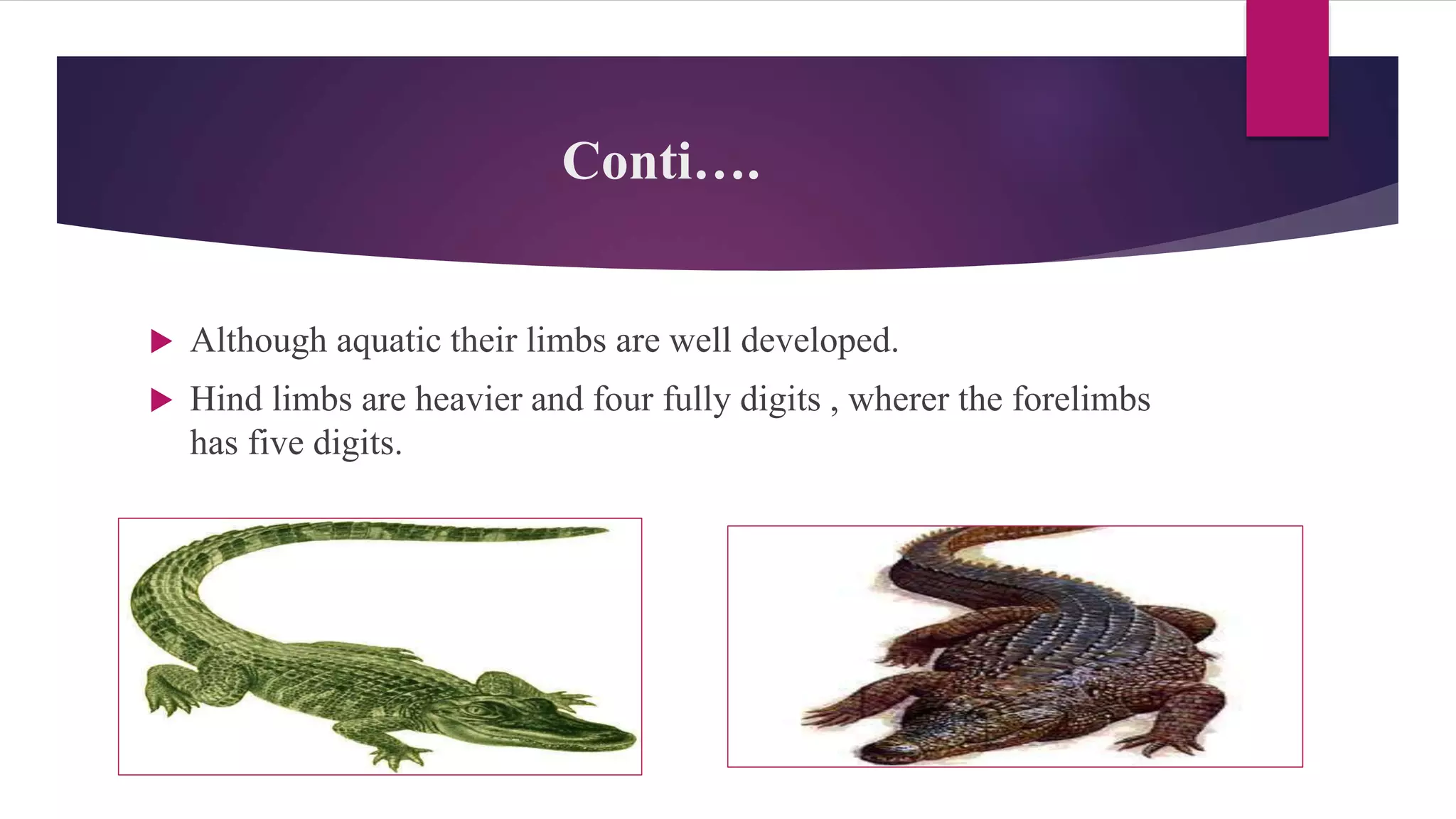
 Although aquatic their limbs are well developed.
 Hind limbs are heavier and four fully digits , wherer the forelimbs
has five digits.
Conti….
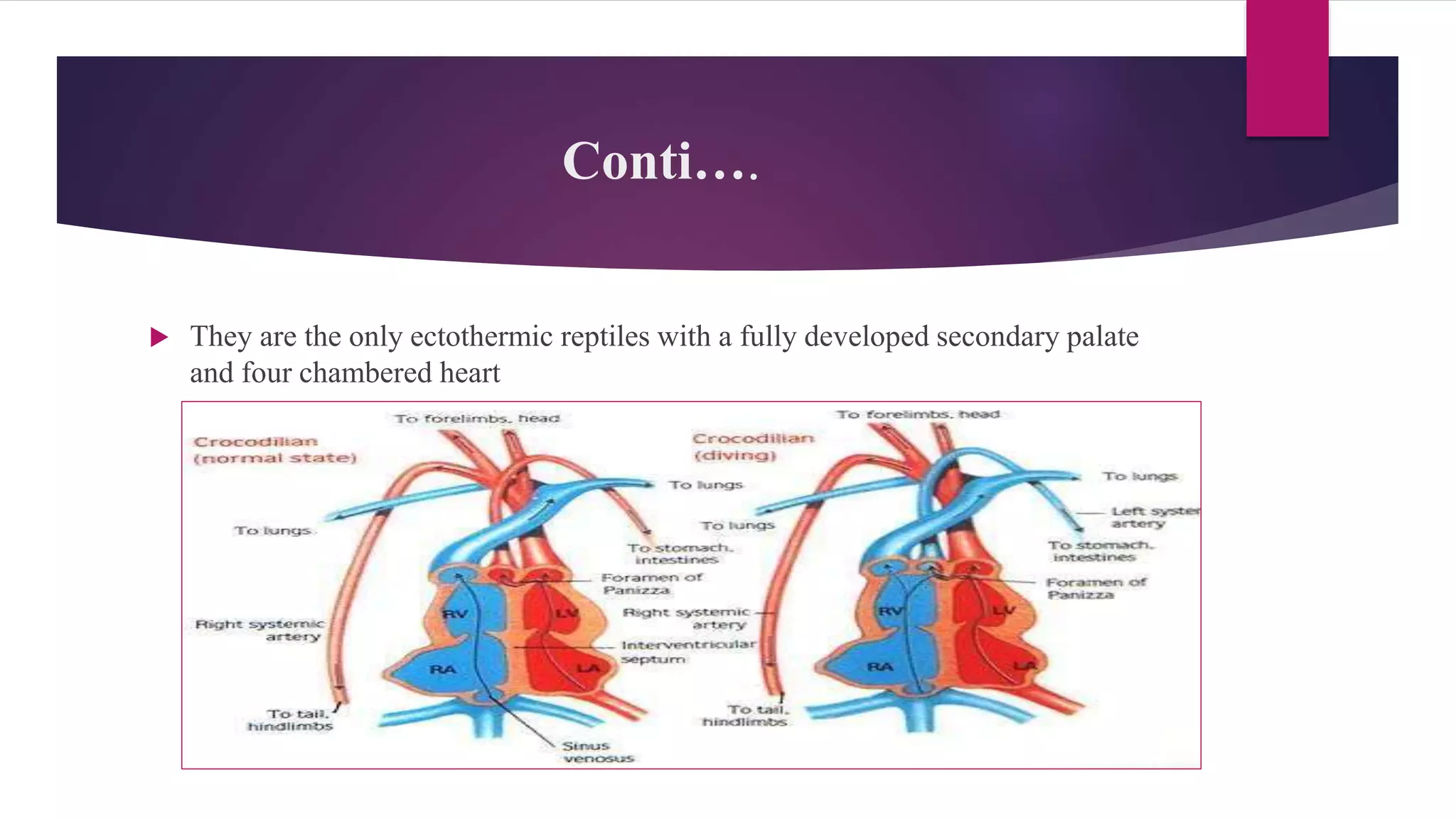
 They are the only ectothermic reptiles with a fully developed secondary palate
and four chambered heart
Conti….
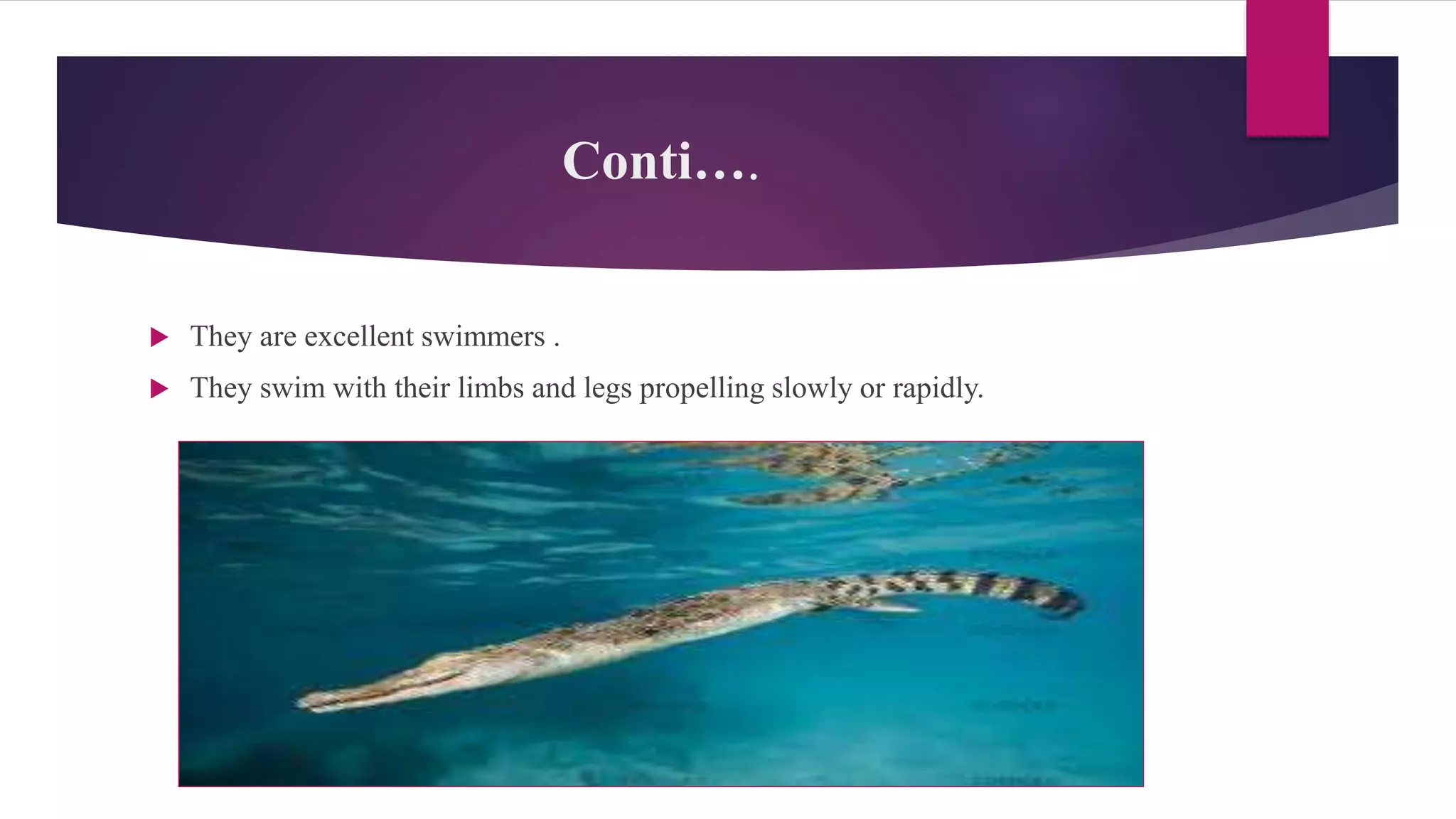
 They are excellent swimmers .
 They swim with their limbs and legs propelling slowly or rapidly.
Conti….
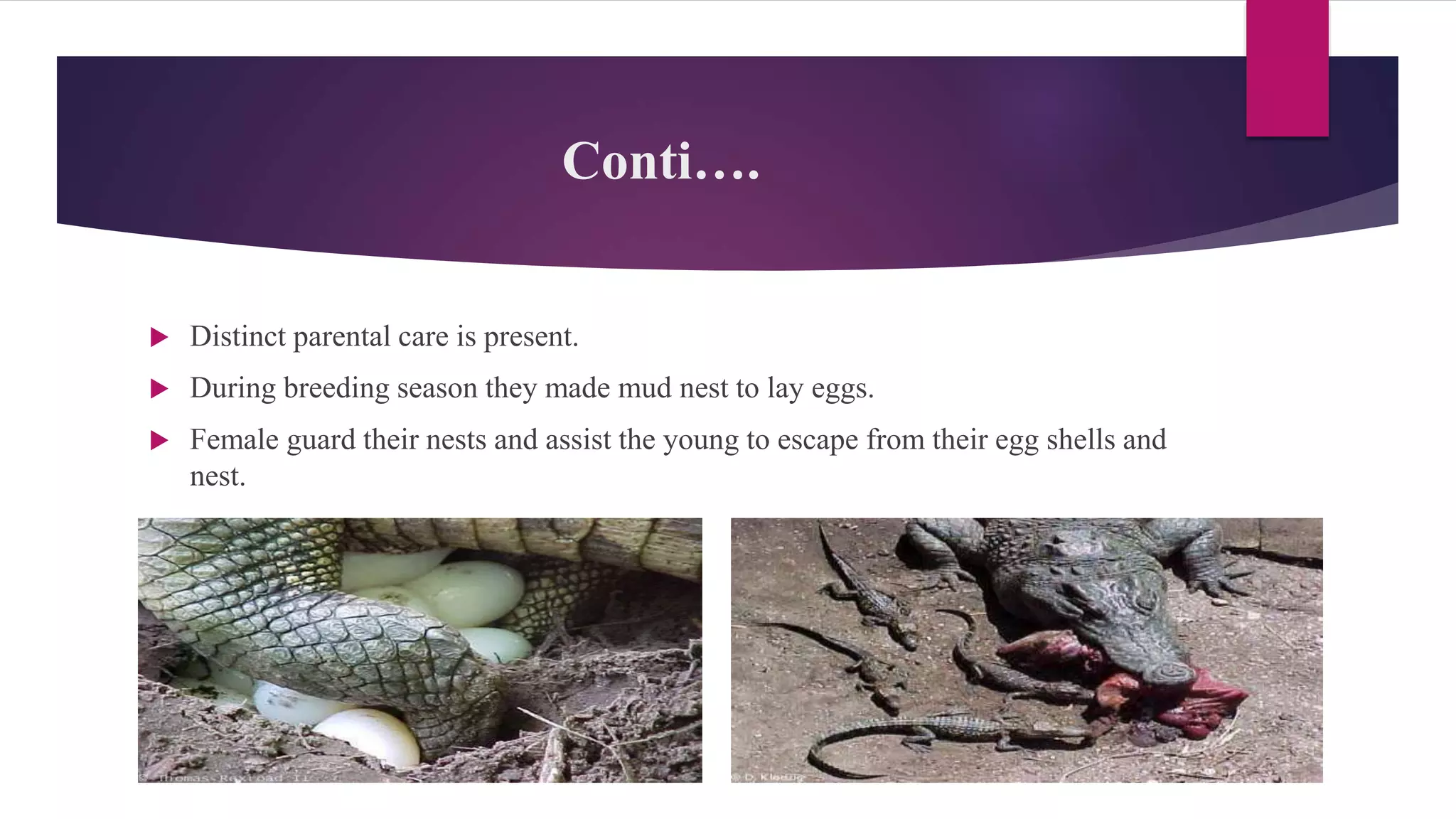
 Distinct parental care is present.
 During breeding season they made mud nest to lay eggs.
 Female guard their nests and assist the young to escape from their egg shells and
nest.
Examples
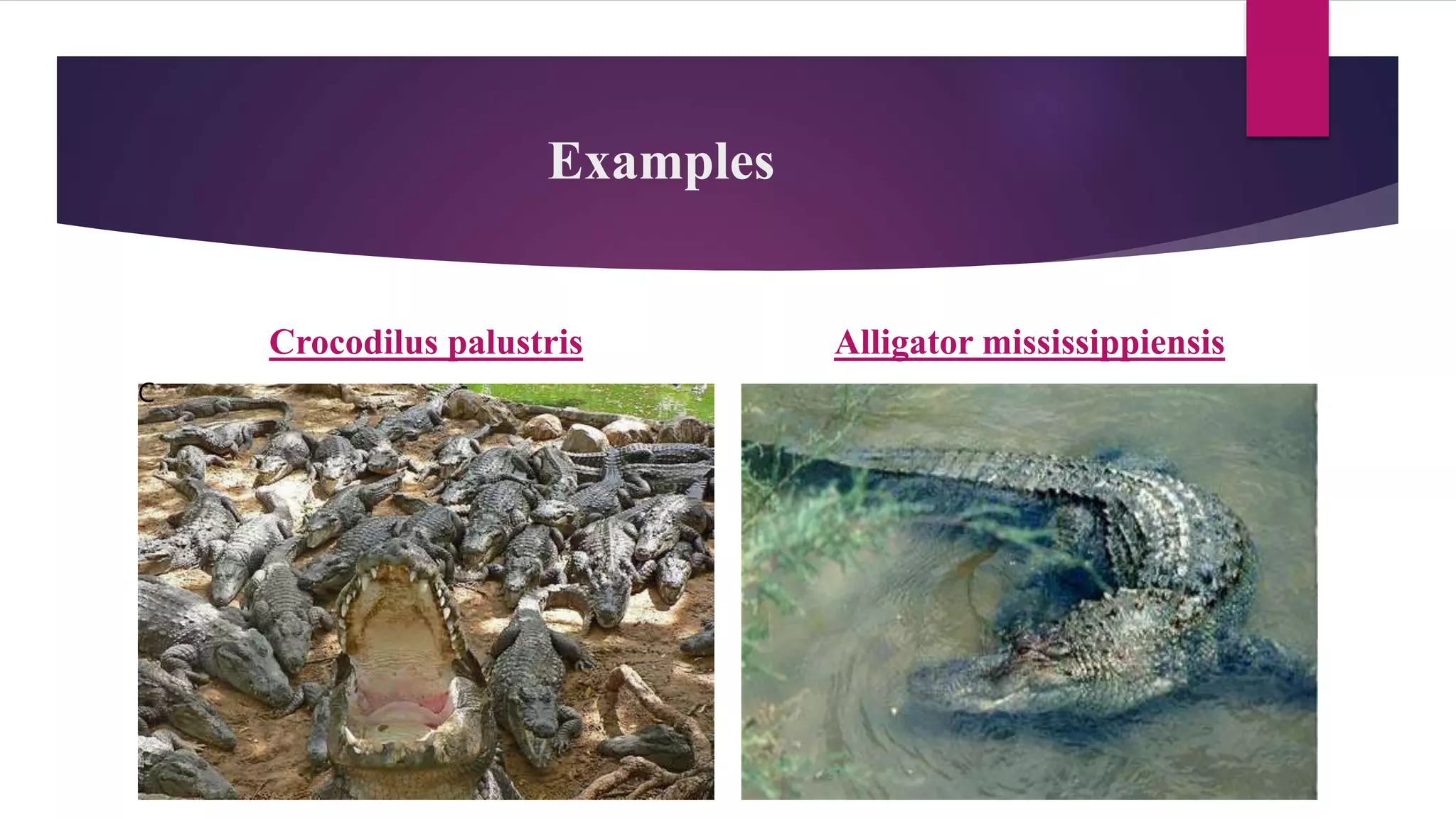
Crocodilus palustris Alligator mississippiensis
C
Order Squamata
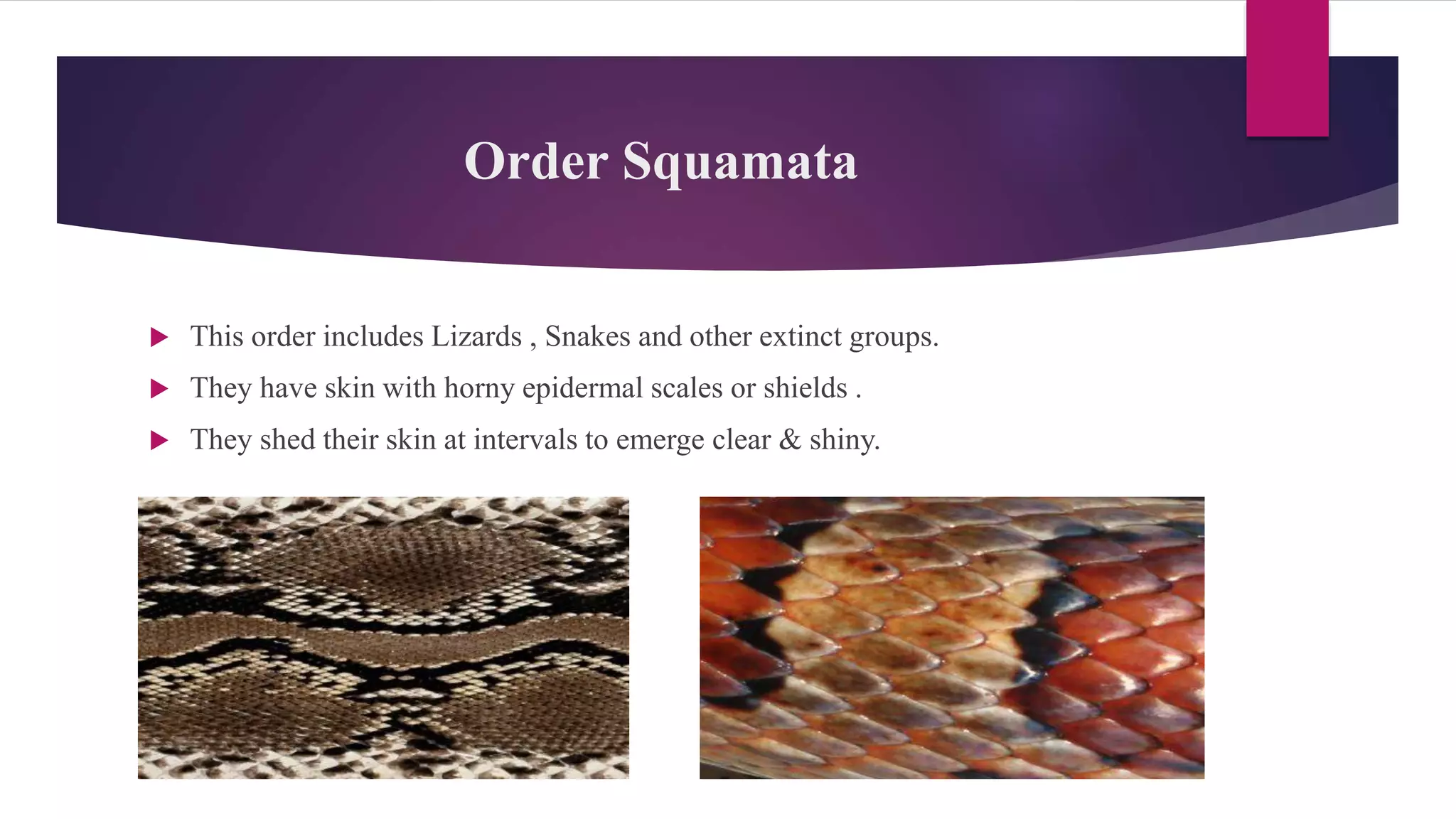
 This order includes Lizards , Snakes and other extinct groups.
 They have skin with horny epidermal scales or shields .
 They shed their skin at intervals to emerge clear & shiny.
Conti….
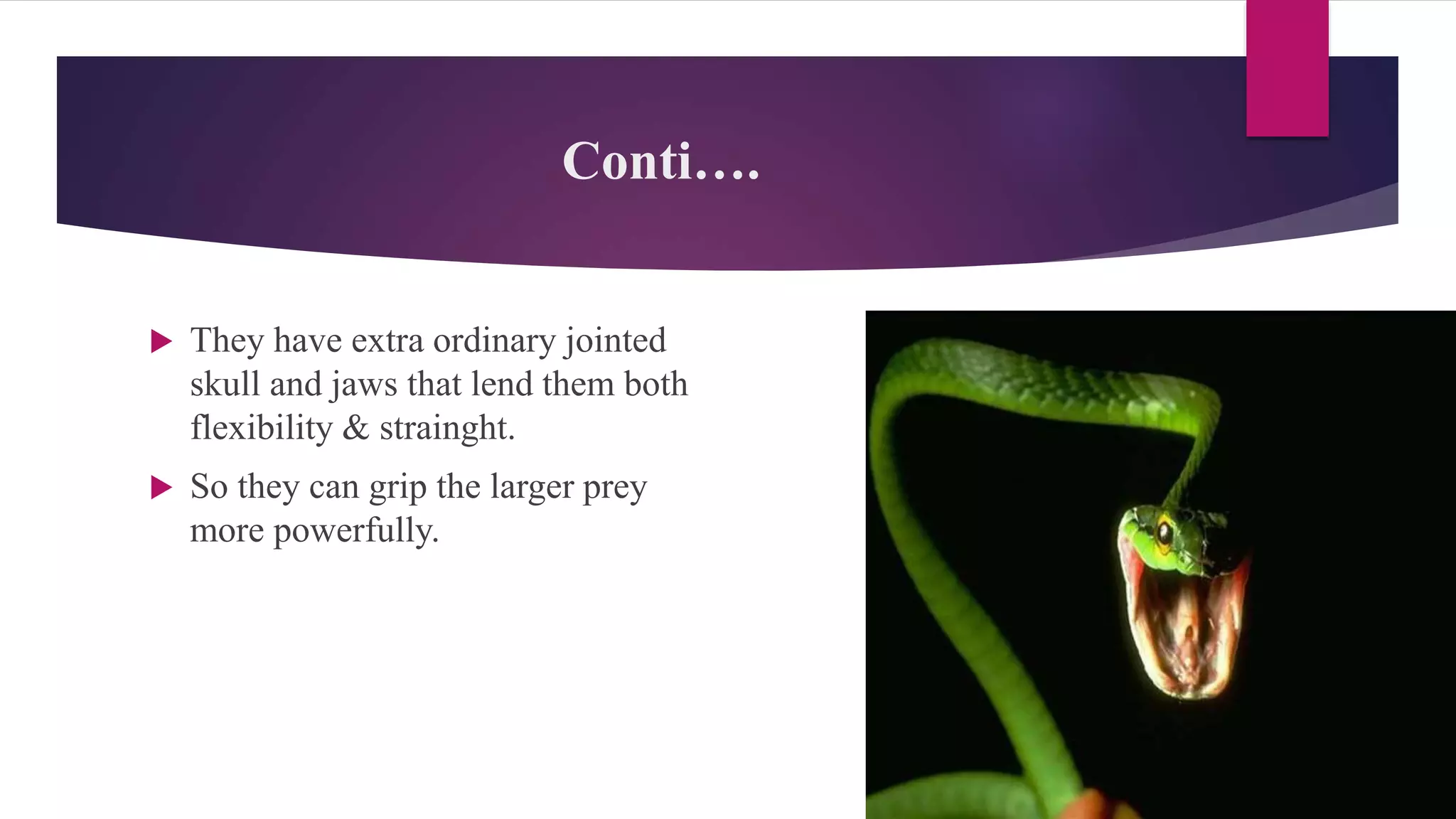
 They have extra ordinary jointed
skull and jaws that lend them both
flexibility & strainght.
 So they can grip the larger prey
more powerfully.
Conti….
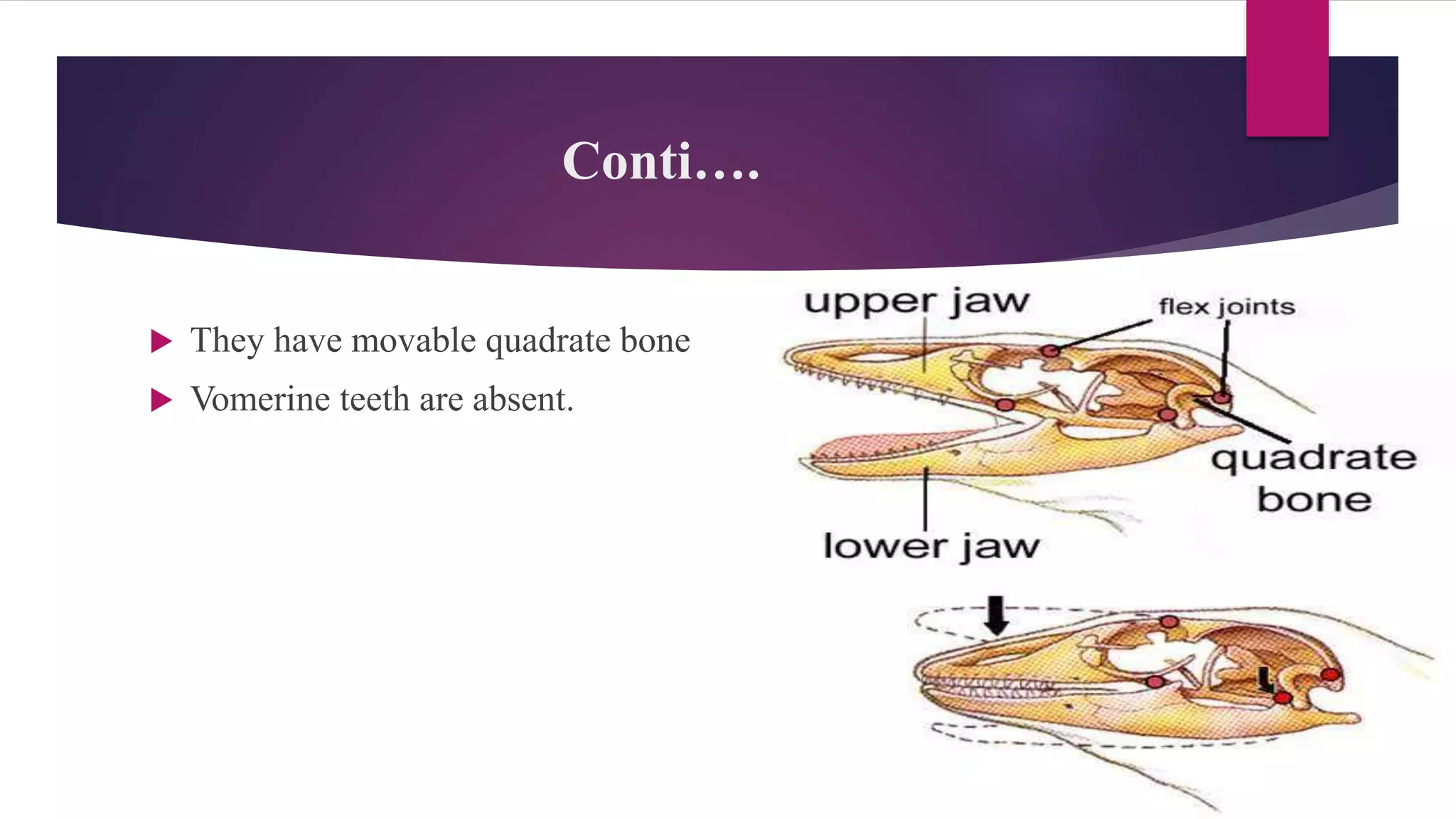
 They have movable quadrate bone
 Vomerine teeth are absent.
Conti…..
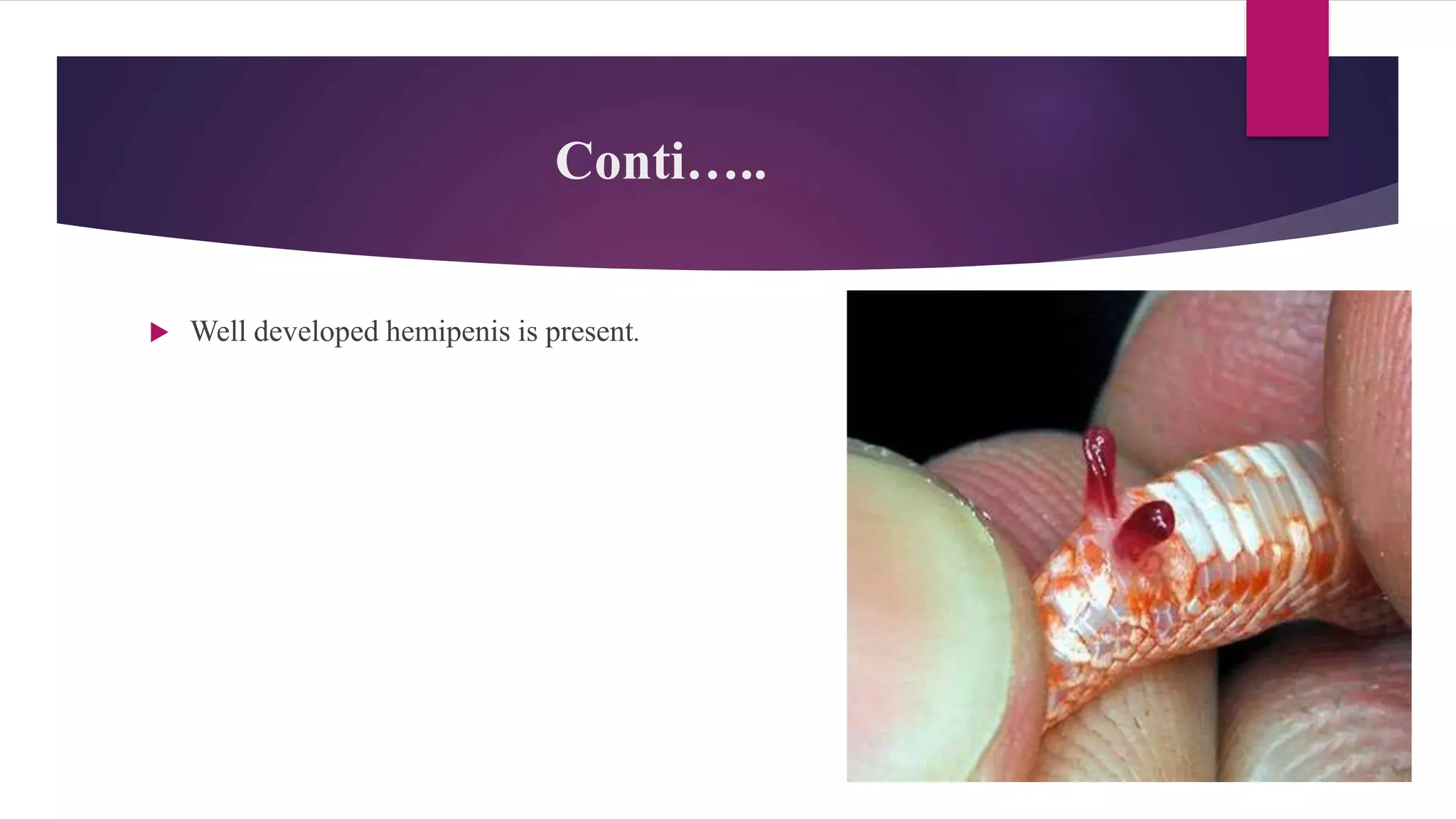
 Well developed hemipenis is present.
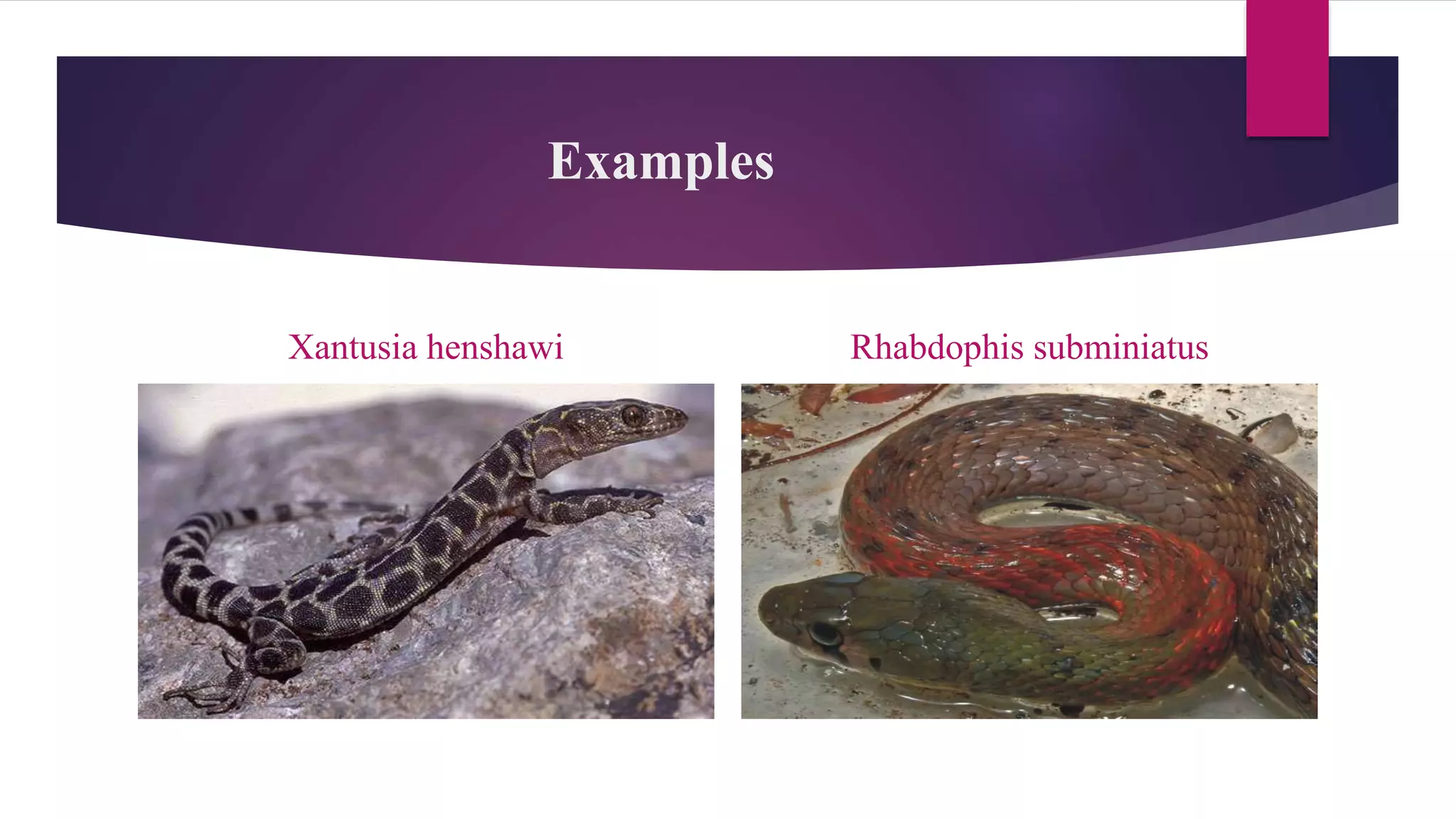
Examples
Xantusia henshawi Rhabdophis subminiatus
Classification of reptiles

Classification of reptiles

  • 1.
  • 2.
    Introduction to Reptiles Theword ‘Reptilia’ came from latin word ‘Reptum’ which means ‘creep’. They have evolved from the Amphibians and in turn, give raise to the birds and mammals. As a group, the reptiles can be separated from the amphibians by their dry confined skin and from the bird by the absence of feather and from mammal by the absence of hair. From the fossil evidence it is believed that reptiles originated during the carboniferous period around 300-260 million years ago. During the Mesozoic era (Triassic to upper Cretaceous) they were the dominant vertebrates. At the end of the Cretaceous reptiles started to decline. Now most of the species are disappeared and only 4 of 16 orders survive. Only 8734 living reptiles are found all over the world. In Bangladesh 153 species of reptiles are found. Inour presentation we will classify theclass Reptilia upto order.
  • 3.
  • 4.
    Order Testudines  Theyhave a bony part of the shell ,  but some have a softy ,  leathery covering.  Teeth is absent.  Instead each jaw is covered with a horny sheat  From a beak which is sharpened or serrated to cut flesh or plant matter.  They have strong limbs to lift their heave bodies.  The shape of the limb is variable.
  • 5.
    Conti…..  In landdwelling species the toes are turned into a solid clump  freshwater species have webbed toes & marine water species have powerful flippers.
  • 6.
  • 7.
    Order Rhynochophalia  Thisorder includes the tuataras which are restricted only in New Zealand.  They are lizard like. A mid-dorsal row of spines are present.  Scale granular , mandibles joined by ligament.
  • 8.
    Conti…..  Copulatory organis absent. Anal opening transverse.  They live on land & burrows; eats insects, molluscs or small vetebrates.
  • 9.
    Conti….  They areoviparous.  Lay eggs in the hole.  It takes around 13 months to hatch.
  • 10.
  • 11.
    Order Crocodilia This orderincludes the alligators , caimans , crocodiles etc.  Body long  Head large; jaws are powerful.  In head thick skin is fused with bone.
  • 12.
    Conti….  Although aquatictheir limbs are well developed.  Hind limbs are heavier and four fully digits , wherer the forelimbs has five digits.
  • 13.
    Conti….  They arethe only ectothermic reptiles with a fully developed secondary palate and four chambered heart
  • 14.
    Conti….  They areexcellent swimmers .  They swim with their limbs and legs propelling slowly or rapidly.
  • 15.
    Conti….  Distinct parentalcare is present.  During breeding season they made mud nest to lay eggs.  Female guard their nests and assist the young to escape from their egg shells and nest.
  • 16.
  • 17.
    Order Squamata  Thisorder includes Lizards , Snakes and other extinct groups.  They have skin with horny epidermal scales or shields .  They shed their skin at intervals to emerge clear & shiny.
  • 18.
    Conti….  They haveextra ordinary jointed skull and jaws that lend them both flexibility & strainght.  So they can grip the larger prey more powerfully.
  • 19.
    Conti….  They havemovable quadrate bone  Vomerine teeth are absent.
  • 20.
    Conti…..  Well developedhemipenis is present.
  • 21.