Animal Body Systems
1. Range from Unicellular to Multicellular
2. Autotrophic and/or heterotrophic
3. Life-sustaining functions (energy production, waste
removal) range from intracellular means to
organelles to structured systems.
Living Organisms:
1) Multicellular organisms
2) Cells form tissues, tissues form organs, organs form
organ systems
3) Heterotrophic – must ingest nutrients
4) Aerobic respiration is used
5) Tissue layers that include ectoderm, endoderm, and
sometimes mesoderm
What defines an animal?
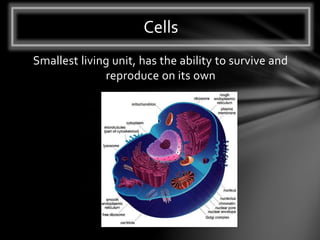
Smallest living unit, has the ability to survive and
reproduce on its own
Cells
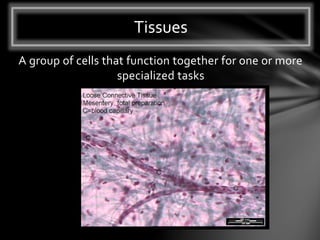
A group of cells that function together for one or more
specialized tasks
Tissues
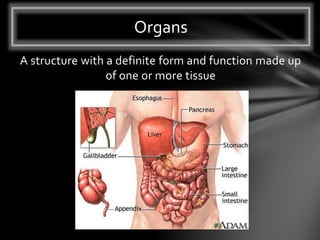
A structure with a definite form and function made up
of one or more tissue
Organs
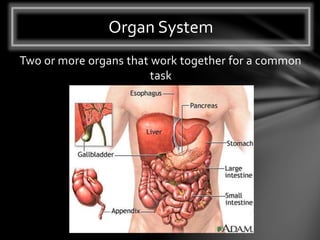
Two or more organs that work together for a common
task
Organ System
A means to study the evolution, history and lineages of
living organisms
What is Comparative Anatomy?
An adaptation is a change in the genotype (genes) and
potentially the phenotype (physical expression of the
genes) that enables an organism to survive better
Result of a DNA mutation
Adaptations
Similarities between structures or functions of
structures represent either a common ancestor
(common evolutionary path) or a similar adaptation to
an environment
Evolution
“The Survival of the Fittest”
Those that have adaptations that enable a higher rate
of survival will live to reproduce and thus pass on the
desirable trait. Over time these changes/adaptations
can lead to new species.
Natural Selection
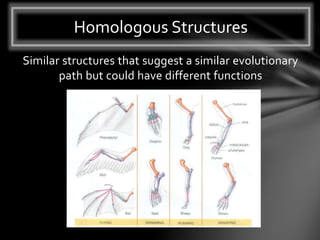
Similar structures that suggest a similar evolutionary
path but could have different functions
Homologous Structures
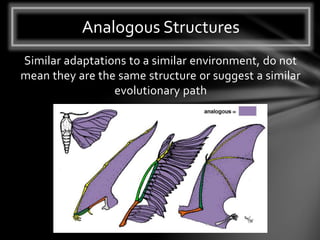
Similar adaptations to a similar environment, do not
mean they are the same structure or suggest a similar
evolutionary path
Analogous Structures
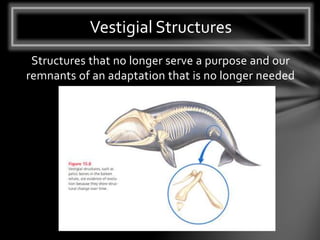
Structures that no longer serve a purpose and our
remnants of an adaptation that is no longer needed
Vestigial Structures
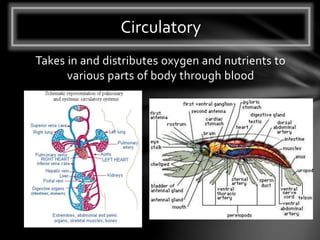
Takes in and distributes oxygen and nutrients to
various parts of body through blood
Circulatory
Transportation of nutrients and wastes can occur by:
a. Osmosis and diffusion through cell membranes
(unicellular and simple organisms)
b. Closed (blood in vessels) and open (blood pumped
by heart but diffuses through cells)
c. Water Vascular system – a system of using water
and canals to move nutrients
Variations:
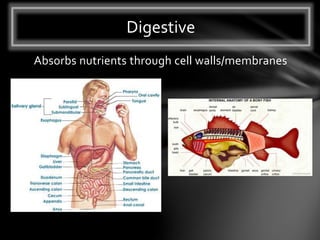
Absorbs nutrients through cell walls/membranes
Digestive
From simple to complex organisms: intracellular to a
simple digestive chamber to formal stomachs to
digestive organs (i.e. intestines)
Digestive Evolution
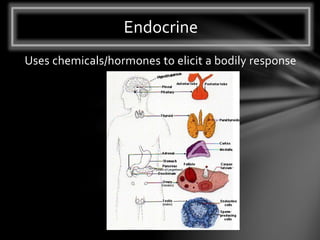
Uses chemicals/hormones to elicit a bodily response
Endocrine
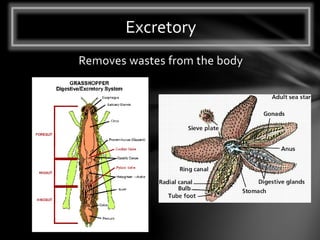
Removes wastes from the body
Excretory
From simple to complex:
Diffusion and/or exocytosis through cell membrane to
single opening digestive chambers to development of
the anus to specialized structures and organs
Excretory Evolution:
Stops and destroys foreign bodies from entering the
body and causing damage or sickness
Immune System
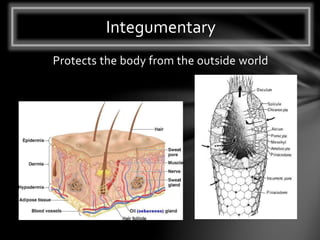
Protects the body from the outside world
Integumentary
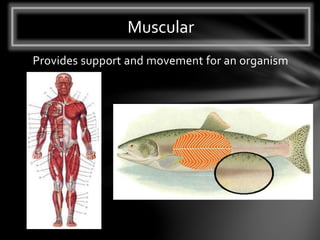
Provides support and movement for an organism
Muscular
Movement mechanisms:
a) Cell based – flagellum, cilia
b) Water Vascular System – water used to “pressurize”
canals and chambers
c) Muscles – from single celled muscles to muscle
groups
Muscular System Evolution:
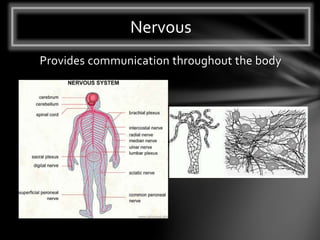
Provides communication throughout the body
Nervous
From simple to complex:
Unknown pathways to nerve nets to centralized
systems including a brain and nerve cord
Nervous System Evolution
Allows for the replication of the species and thus allows the genes to
remain in the population
Asexual Reproduction:
- Simple organisms
- Results in genetically identical offspring via budding, binary
fission, and autonomy
Sexual Reproduction:
- More complex organisms
- Results in genetically diverse offspring
- Development of secondary sex characteristics
Reproductive
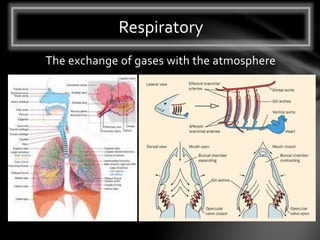
The exchange of gases with the atmosphere
Respiratory
Developed from exchange of gases across cell
membranes to gills to pseudo lungs to lungs
Respiratory Evolution:
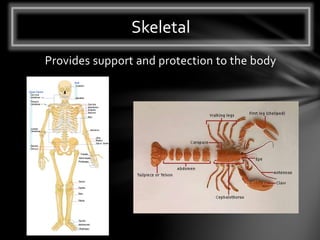
Provides support and protection to the body
Skeletal
- Hardened structures found within (spicules in
sponges)
- Complete lack of (jellyfish)
- Secreted shells
- Endoskeleton vs. Exoskeleton
SkeletalVariation:

Comparative Anatomy Notes

  • 1.
  • 2.
    1. Range fromUnicellular to Multicellular 2. Autotrophic and/or heterotrophic 3. Life-sustaining functions (energy production, waste removal) range from intracellular means to organelles to structured systems. Living Organisms:
  • 3.
    1) Multicellular organisms 2)Cells form tissues, tissues form organs, organs form organ systems 3) Heterotrophic – must ingest nutrients 4) Aerobic respiration is used 5) Tissue layers that include ectoderm, endoderm, and sometimes mesoderm What defines an animal?
  • 4.
    Smallest living unit,has the ability to survive and reproduce on its own Cells
  • 5.
    A group ofcells that function together for one or more specialized tasks Tissues
  • 6.
    A structure witha definite form and function made up of one or more tissue Organs
  • 7.
    Two or moreorgans that work together for a common task Organ System
  • 8.
    A means tostudy the evolution, history and lineages of living organisms What is Comparative Anatomy?
  • 9.
    An adaptation isa change in the genotype (genes) and potentially the phenotype (physical expression of the genes) that enables an organism to survive better Result of a DNA mutation Adaptations
  • 10.
    Similarities between structuresor functions of structures represent either a common ancestor (common evolutionary path) or a similar adaptation to an environment Evolution
  • 11.
    “The Survival ofthe Fittest” Those that have adaptations that enable a higher rate of survival will live to reproduce and thus pass on the desirable trait. Over time these changes/adaptations can lead to new species. Natural Selection
  • 12.
    Similar structures thatsuggest a similar evolutionary path but could have different functions Homologous Structures
  • 13.
    Similar adaptations toa similar environment, do not mean they are the same structure or suggest a similar evolutionary path Analogous Structures
  • 14.
    Structures that nolonger serve a purpose and our remnants of an adaptation that is no longer needed Vestigial Structures
  • 15.
    Takes in anddistributes oxygen and nutrients to various parts of body through blood Circulatory
  • 16.
    Transportation of nutrientsand wastes can occur by: a. Osmosis and diffusion through cell membranes (unicellular and simple organisms) b. Closed (blood in vessels) and open (blood pumped by heart but diffuses through cells) c. Water Vascular system – a system of using water and canals to move nutrients Variations:
  • 17.
    Absorbs nutrients throughcell walls/membranes Digestive
  • 18.
    From simple tocomplex organisms: intracellular to a simple digestive chamber to formal stomachs to digestive organs (i.e. intestines) Digestive Evolution
  • 19.
    Uses chemicals/hormones toelicit a bodily response Endocrine
  • 20.
    Removes wastes fromthe body Excretory
  • 21.
    From simple tocomplex: Diffusion and/or exocytosis through cell membrane to single opening digestive chambers to development of the anus to specialized structures and organs Excretory Evolution:
  • 22.
    Stops and destroysforeign bodies from entering the body and causing damage or sickness Immune System
  • 23.
    Protects the bodyfrom the outside world Integumentary
  • 24.
    Provides support andmovement for an organism Muscular
  • 25.
    Movement mechanisms: a) Cellbased – flagellum, cilia b) Water Vascular System – water used to “pressurize” canals and chambers c) Muscles – from single celled muscles to muscle groups Muscular System Evolution:
  • 26.
  • 27.
    From simple tocomplex: Unknown pathways to nerve nets to centralized systems including a brain and nerve cord Nervous System Evolution
  • 28.
    Allows for thereplication of the species and thus allows the genes to remain in the population Asexual Reproduction: - Simple organisms - Results in genetically identical offspring via budding, binary fission, and autonomy Sexual Reproduction: - More complex organisms - Results in genetically diverse offspring - Development of secondary sex characteristics Reproductive
  • 29.
    The exchange ofgases with the atmosphere Respiratory
  • 30.
    Developed from exchangeof gases across cell membranes to gills to pseudo lungs to lungs Respiratory Evolution:
  • 31.
    Provides support andprotection to the body Skeletal
  • 32.
    - Hardened structuresfound within (spicules in sponges) - Complete lack of (jellyfish) - Secreted shells - Endoskeleton vs. Exoskeleton SkeletalVariation: