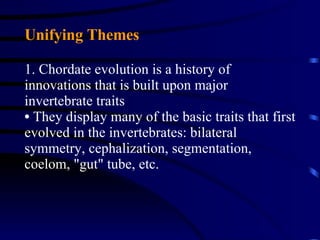
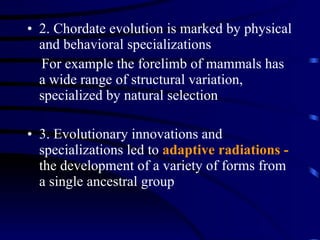
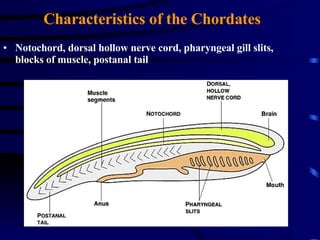
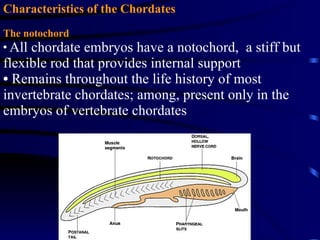
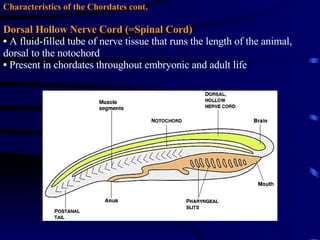
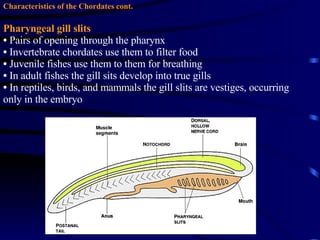
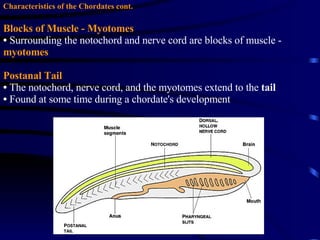
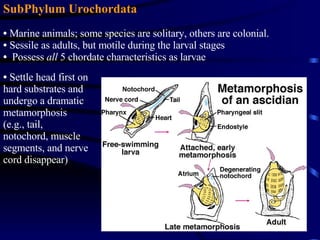
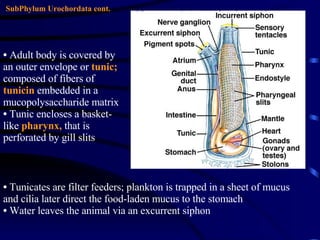
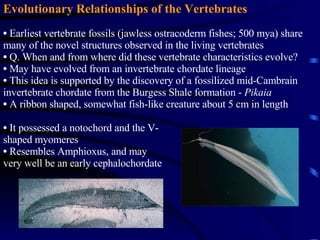
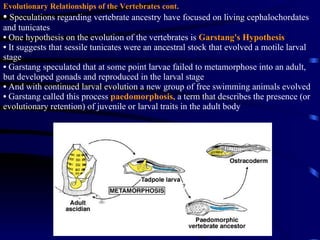

1. The document introduces the phylum Chordata and discusses its key characteristics including a notochord, dorsal nerve cord, pharyngeal gill slits, blocks of muscle, and postanal tail. 2. It describes the three subphyla: Urochordata, Cephalochordata, and Vertebrata. Urochordates are filter-feeding marine animals that lose their chordate features as adults. Cephalochordates are also marine and retain chordate characteristics as adults. 3. Vertebrates exhibit chordate traits and have an endoskeleton, brain, senses, and closed circulatory system. They evolved from early invertebrate chord


![Getting Started with Apache Spark: Big Data Made Simple [Free Meetup]](https://cdn.slidesharecdn.com/ss_thumbnails/apachesparkgettingstarted-260203175547-8361bcc3-thumbnail.jpg?width=640&height=640&fit=bounds)


