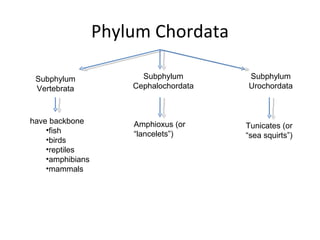
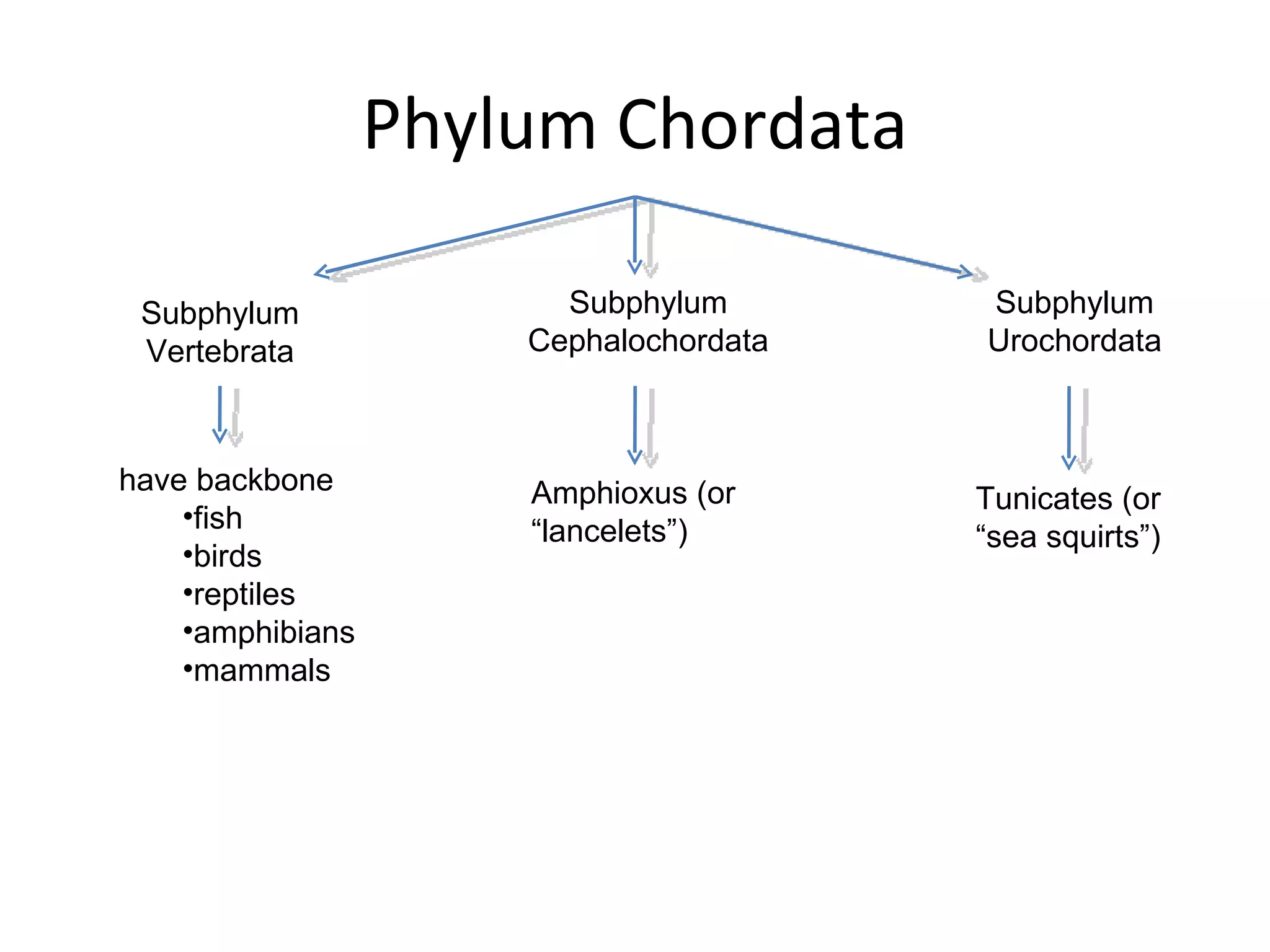
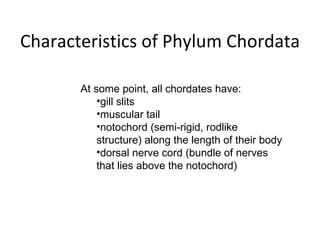
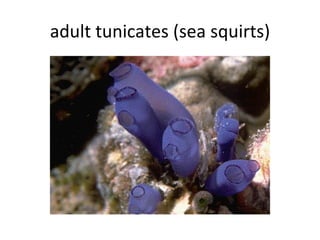
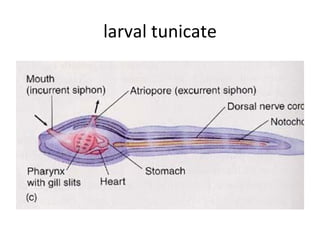
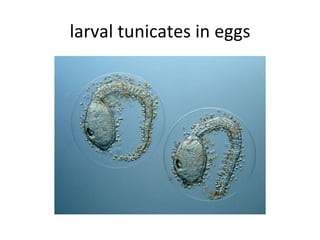
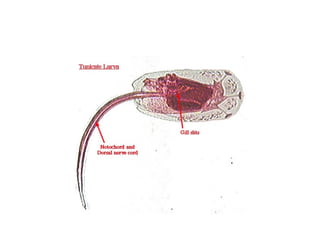
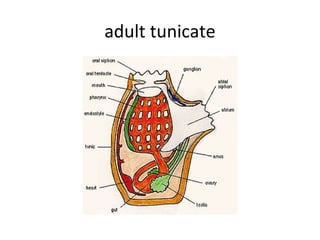
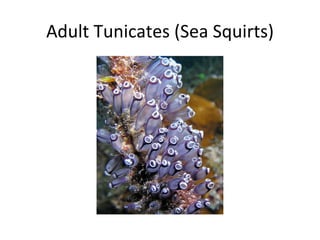
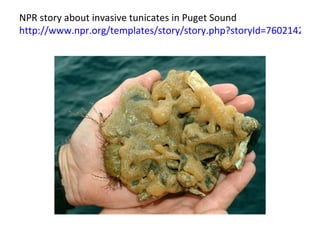
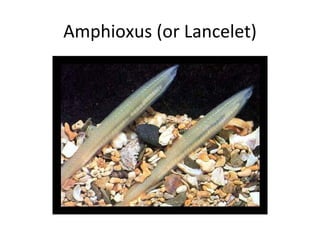
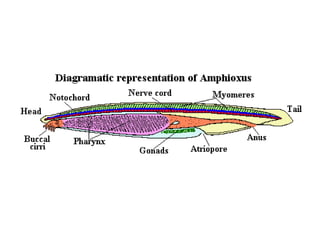
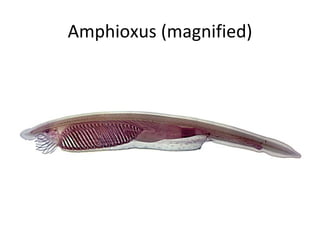

The document discusses the characteristics of the phylum Chordata. It notes that all chordates possess a notochord, dorsal nerve cord, and gill slits at some point in their development. It describes two subphyla: Cephalochordata, which includes Amphioxus/lancelets, and Urochordata, which includes Tunicates/sea squirts. Tunicates are filter feeders that have a notochord and nerve cord as larvae but lose these traits as adults, while Amphioxus retains its notochord throughout life but never develops a backbone.


