Heart Failure Department of Cardiology, 2nd Affiliated Hospital Deng-feng Geng
Heart failure  is the pathological process in which the systolic or/and diastolic function of the heart is impaired, and as a result, cardiac output decreases and is unable to meet the metabolic demands of the body. Definition
Prevalence 5 million Americans have heart failure. 500,000 new cases diagnosed each year in US HF is the reason for at least 20% of all hospital admissions among persons older than 65.
Prevalence The prevalence of heart failure rises from below 1% in individuals below 60 years to nearly 10% in those over age 80 years. Symptomatic HF has a worse prognosis than the majority of cancers,with one-year mortality of approximately 45%.
Pathophysiology Systolic functions of the heart is governed by four major determinants: The contractile state of the myocardium The preload of the ventricle The afterload applied to the ventricle The heart rate
Etiological causes Dysfunction of myocardium   Myocardial damage:   myocardial infarction; Cardiomyopathy;  Myocarditis  Metabolic disturbance ischemia and hypoxia; beriberi
Etiological causes Overload for myocardium Pressure overload (afterload) Hypertension, aortic stenosis; Pulmonary hypertension Volume overload (preload) Mitral regurgitation Restriction of cardiac dilation Pericardial effusion
The precipitating causes Infection especially, lung infection Arrhythmia Tachycardia: atrial fibrillation Bradycardia
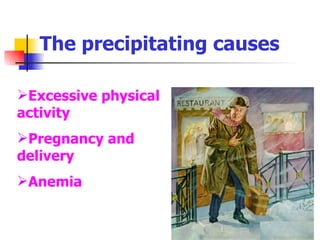
The precipitating causes Excessive physical activity Pregnancy and delivery Anemia
Administration of inappropriate drug Medication noncompliance Excess fluid intake thyrotoxicosis The precipitating causes
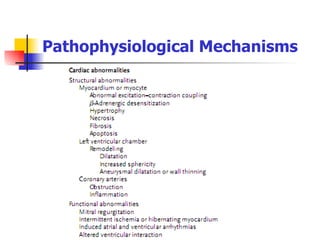
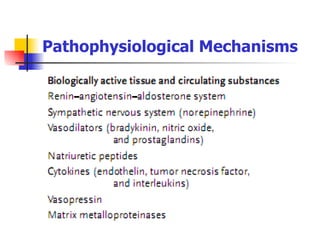
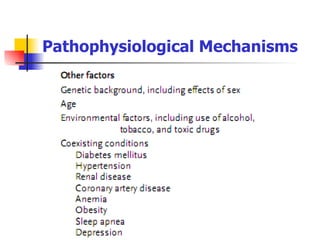
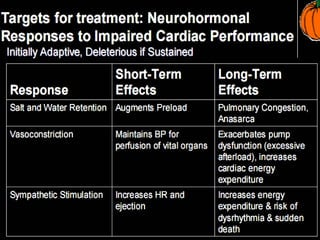
Pathophysiological Mechanisms
 
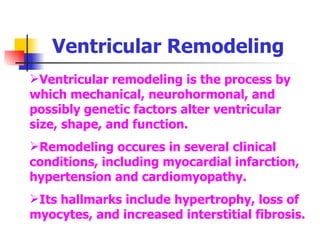
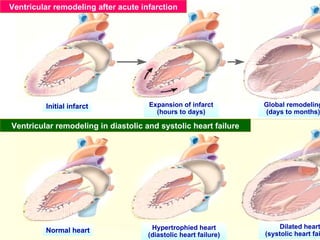
Ventricular Remodeling Ventricular remodeling is the process by which mechanical, neurohormonal, and possibly genetic factors alter ventricular size, shape, and function. Remodeling occures in several clinical conditions, including myocardial infarction, hypertension and cardiomyopathy. Its hallmarks include hypertrophy, loss of myocytes, and increased interstitial fibrosis.
Mitral regurgitation A potential deleterious outcome of remodeling As the LV dilates and the heart assumes a more globular shape, the geometric relation between the papillary muscles and the mitral leaflets changes, causing MR. The presence of MR results in an increasing volume overload on the overburdened LV that further contributes to remodeling, the progression of disease, and symptoms.
Ventricular Remodeling Ventricular remodeling after acute infarction Ventricular remodeling in diastolic and systolic heart failure Initial infarct Expansion of infarct (hours to days) Global remodeling (days to months) Normal heart Hypertrophied heart (diastolic heart failure) Dilated heart (systolic heart failure)
Clinical classification According to the course of disease Acute HF  Chronic HF According to the cardiac output (CO)     Low-output HF    High-output HF According to the location of heart failure Left -side heart failure (LHF) Right-side heart failure (RHF) Biventricular failure (whole heart failure) According to the function impaired Systolic failure  Diastolic failure
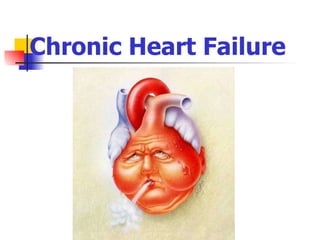
Chronic Heart Failure
Left ventricular failure Pulmonary congestion +  low cardiac output
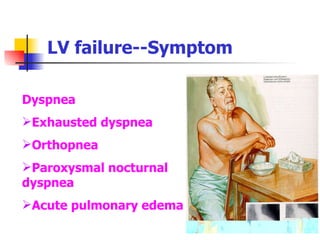
LV failure--Symptom Dyspnea Exhausted dyspnea Orthopnea  Paroxysmal nocturnal  dyspnea Acute pulmonary edema
LV failure--Symptom Cough Fatigue Symptom of urinary system
LV failure--Sign Cardiac sign Enlargement of LV gallop rhythm Systolic murmur in apex Pulmonary sign Dry rales Moist rales
Right ventricular failure Symptom of gastro-intestinal Symptom of Renal Pain in hepatic area Dyspnea
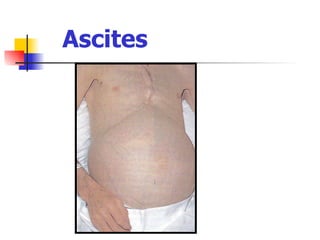
RV failure--Sign Hepatojugular reflux Hepatomegaly Edema pleural fluid and ascites
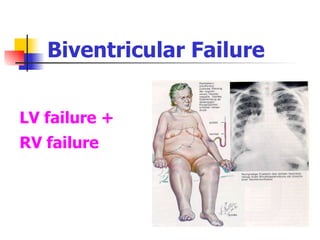
Biventricular Failure LV failure + RV failure
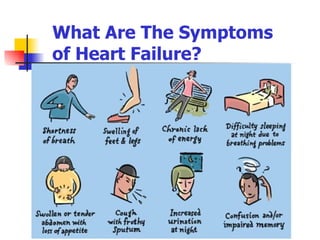
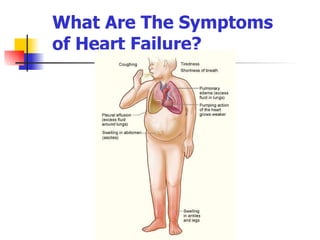
What Are The Symptoms  of Heart Failure? Think  FACES ... F atigue A ctivities limited C hest congestion E dema or ankle swelling S hortness of breath
What Are The Symptoms  of Heart Failure?
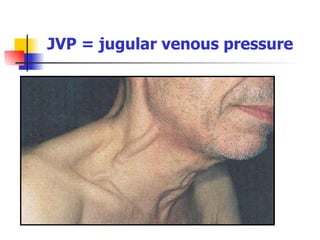
JVP = jugular venous pressure
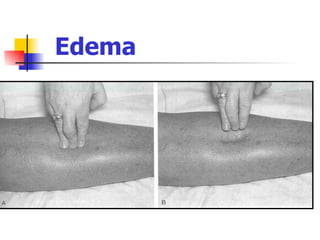
Edema
Ascites
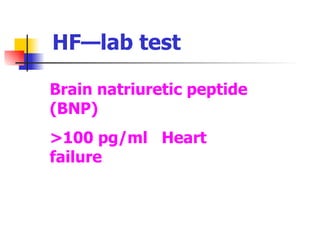
HF—lab test Brain natriuretic peptide (BNP) >100 pg/ml  Heart failure
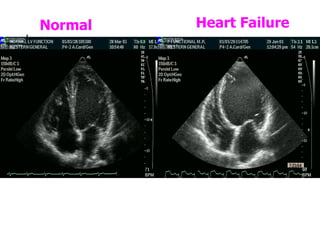
Normal Heart Failure
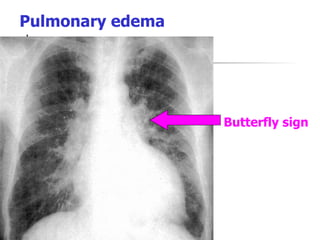
Pulmonary edema Butterfly sign
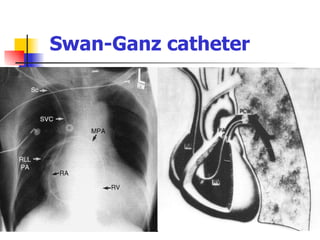
Swan-Ganz catheter
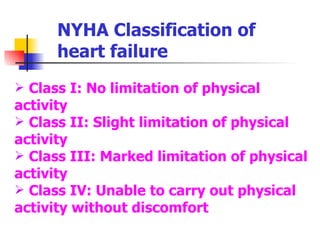
NYHA Classification of heart failure Class I: No limitation of physical activity Class II: Slight limitation of physical activity Class III: Marked limitation of physical activity Class IV: Unable to carry out physical activity without discomfort
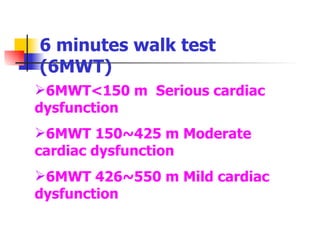
6 minutes walk test (6MWT) 6MWT<150 m  Serious cardiac dysfunction 6MWT 150~425 m Moderate cardiac dysfunction 6MWT 426~550 m Mild cardiac dysfunction
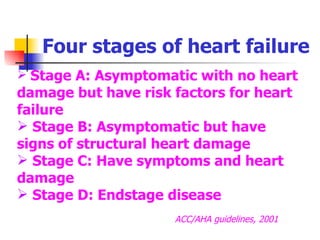
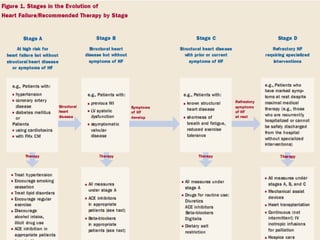
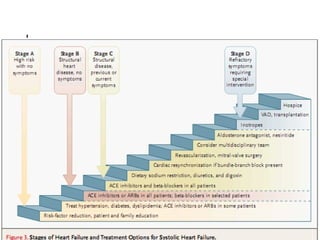
Four stages of heart failure Stage A: Asymptomatic with no heart damage but have risk factors for heart failure Stage B: Asymptomatic but have signs of structural heart damage Stage C: Have symptoms and heart damage Stage D: Endstage disease ACC/AHA guidelines, 2001
 
 
Treatment Strategies of HF
Treatment Strategies of HF etiology therapy Treatment of etiology causes Treatment of  precipitating causes Improve life-style
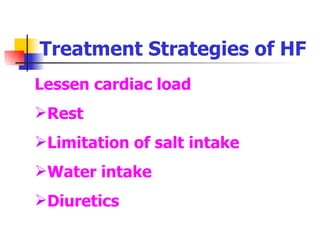
Treatment Strategies of HF Lessen cardiac load Rest Limitation of salt intake Water intake Diuretics
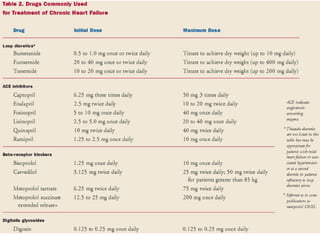
Diuretics Indicated in patients with symptoms of heart failure who have evidence of fluid retention Enhance response to other drugs in heart failure such as beta-blockers and ACE inhibitors Therapy initiated with low doses followed by increments in dosage until urine output increases and weight decreases by 0.5-1kg daily
Diuretics in HF Benefits: Improves symptoms of congestion Can improve cardiac output Improved neurohormonal milieu No inherit nephrotoxicity limitations Excessive volume depletion Electrolyte disturbance  Unknow effects on mortality ototoxicity
positive inotropic agents Digitalis Dopamine and Dobutamine Milrinone
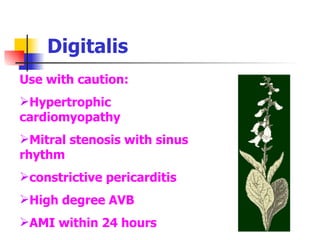
Digitalis Enhances LV function, normalizes baroreceptor-mediated reflexes and increases cardiac output at rest and during exercise Recommended to improve clinical status of patients with heart failure due to LV dysfunction and should be used in conjunction with diuretics, ACE inhibitors and beta-blockers Also recommended in patients with heart failure who have  atrial fibrillation Adverse effects include cardiac arrhythmias, GI symptoms and neurological complaints (eg. visual disturbances, confusion)
Digitalis Use with caution: Hypertrophic cardiomyopathy Mitral stenosis with sinus rhythm constrictive pericarditis High degree AVB AMI within 24 hours
ACE Inhibitors:  clinical benefits Increases exercise capacity improves functional class attenuation of LV remodeling post MI decrease in the progression of chronic HF decreased hospitalization enhanced quality of life improved survival
ACE Inhibitor All patients with symptomatic heart failure and those in functional class I with significantly reduced left ventricular function should be treated with an ACE inhibitor, unless contraindicated or not tolerated ACE inhibitors should be continued indefinitely It is important to titrate to the dosage regimen used in the clinical trials … in the absence of symptoms or adverse effects on end-organ perfusion
Effects of SNS Activation in Heart Failure Dysfunction/death of cardiac  myocytes Provokes myocardial ischemia Provokes arrhythmias Impairs cardiac performance
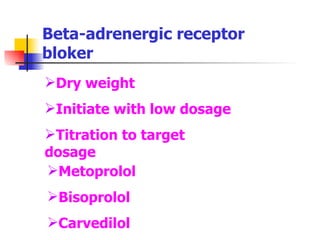
Beta-adrenergic receptor bloker Dry weight Initiate with low dosage Titration to target dosage Metoprolol Bisoprolol Carvedilol
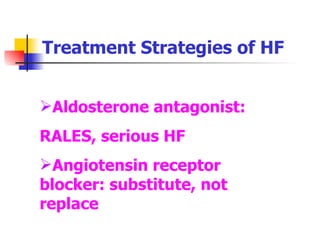
Aldosterone antagonist:  RALES, serious HF Angiotensin receptor blocker: substitute, not replace Treatment Strategies of HF
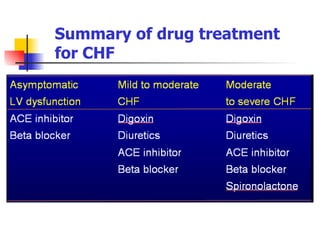
Summary of drug treatment for CHF
 
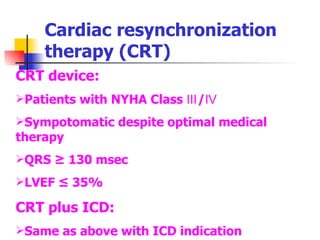
Cardiac resynchronization therapy (CRT) CRT device: Patients with NYHA Class Ⅲ/Ⅳ Sympotomatic despite optimal medical therapy QRS ≥ 130 msec LVEF ≤ 35% CRT plus ICD: Same as above with ICD indication
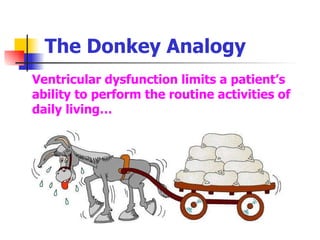
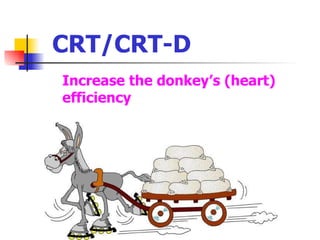
The Donkey Analogy Ventricular dysfunction limits a patient’s ability to perform the routine activities of daily living…
Diuretics, ACE inhibitors Reduce the number of sacks on the wagon
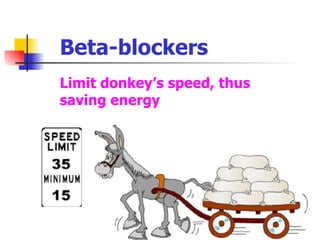
Beta-blockers Limit donkey’s speed, thus saving energy
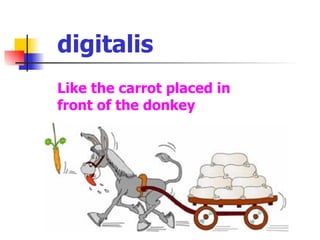
digitalis Like the carrot placed in front of the donkey
CRT/CRT-D Increase the donkey’s (heart) efficiency
Heart failure: More than just drugs. Dietary counseling Patient education Physical activity Medication compliance Aggressive follow-up Sudden death assessment
Take home message Heart failure is clinical diagnosis ACEI should be titrated to highest dose tolerable Beta-blockers should be used universally but must titrated slowly Spironolactone should be used in NYHA Ⅲ/Ⅳ patients Digoxin can be used to reduce morbidity Role of ARB remains to be determined in patient intolerating ACEI Preventive therapy or patient education is the key to reduction of burden
Questions to determine therapeutic strategy in patients presenting with HF Is heart failure present? What caused the problem? What precipitated deterioration? How severe is the heart failure? What is the prognosis? What is the best acute therapeutic strategy? What is the best chronic therapeutic strategy? Can the initiating/precipitating problem be cured, and can the state of HF be attenuated?
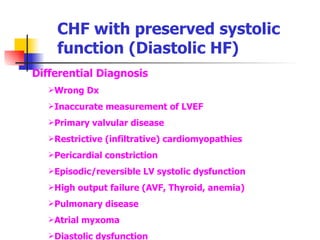
CHF with preserved systolic function (Diastolic HF) Differential Diagnosis Wrong Dx Inaccurate measurement of LVEF Primary valvular disease Restrictive (infiltrative) cardiomyopathies Pericardial constriction Episodic/reversible LV systolic dysfunction High output failure (AVF, Thyroid, anemia) Pulmonary disease  Atrial myxoma Diastolic dysfunction
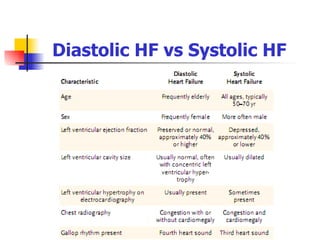
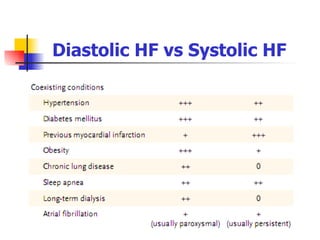
Diastolic HF vs Systolic HF
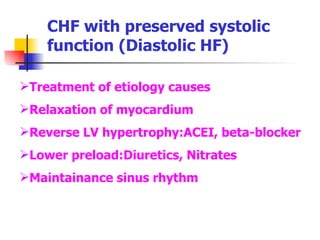
CHF with preserved systolic function (Diastolic HF) Treatment of etiology causes Relaxation of myocardium Reverse LV hypertrophy:ACEI, beta-blocker Lower preload:Diuretics, Nitrates Maintainance sinus rhythm
Acute Heart Failure Typical causes of acute HF Acute myocardial infarction or severe ischemia Exacerbation of chronic HF Acute volume overload of left ventricle (valvular regurgitation)  Mitral stenosis
Acute Heart Failure Clinical findings: Severe dyspnea pink and frothy sputum Cyanosis Orthopnea Moist Rales, wheezing
Acute Heart Failure Body position: a sitting position with legs dangling over the side of the bed Oxygen Oxygen delivered by mask Noninvasive pressure support ventilation Mechanical ventilation morphine  Increasing venous capacitance Lowering left atrial pressure Relieving anxiety
Acute Heart Failure Diuretics: venodilation prior to the onset of diuresis Vasodilator:Nitroprusside, Nitroglycerin  Reducing blood pressure Reducing LV filling pressure Digitalis aminophylline
Thank you for your attention !

11 heart failure

  • 1.
    Heart Failure Departmentof Cardiology, 2nd Affiliated Hospital Deng-feng Geng
  • 2.
    Heart failure is the pathological process in which the systolic or/and diastolic function of the heart is impaired, and as a result, cardiac output decreases and is unable to meet the metabolic demands of the body. Definition
  • 3.
    Prevalence 5 millionAmericans have heart failure. 500,000 new cases diagnosed each year in US HF is the reason for at least 20% of all hospital admissions among persons older than 65.
  • 4.
    Prevalence The prevalenceof heart failure rises from below 1% in individuals below 60 years to nearly 10% in those over age 80 years. Symptomatic HF has a worse prognosis than the majority of cancers,with one-year mortality of approximately 45%.
  • 5.
    Pathophysiology Systolic functionsof the heart is governed by four major determinants: The contractile state of the myocardium The preload of the ventricle The afterload applied to the ventricle The heart rate
  • 6.
    Etiological causes Dysfunctionof myocardium Myocardial damage: myocardial infarction; Cardiomyopathy; Myocarditis Metabolic disturbance ischemia and hypoxia; beriberi
  • 7.
    Etiological causes Overloadfor myocardium Pressure overload (afterload) Hypertension, aortic stenosis; Pulmonary hypertension Volume overload (preload) Mitral regurgitation Restriction of cardiac dilation Pericardial effusion
  • 8.
    The precipitating causesInfection especially, lung infection Arrhythmia Tachycardia: atrial fibrillation Bradycardia
  • 9.
    The precipitating causesExcessive physical activity Pregnancy and delivery Anemia
  • 10.
    Administration of inappropriatedrug Medication noncompliance Excess fluid intake thyrotoxicosis The precipitating causes
  • 11.
  • 12.
  • 13.
  • 14.
  • 15.
    Ventricular Remodeling Ventricularremodeling is the process by which mechanical, neurohormonal, and possibly genetic factors alter ventricular size, shape, and function. Remodeling occures in several clinical conditions, including myocardial infarction, hypertension and cardiomyopathy. Its hallmarks include hypertrophy, loss of myocytes, and increased interstitial fibrosis.
  • 16.
    Mitral regurgitation Apotential deleterious outcome of remodeling As the LV dilates and the heart assumes a more globular shape, the geometric relation between the papillary muscles and the mitral leaflets changes, causing MR. The presence of MR results in an increasing volume overload on the overburdened LV that further contributes to remodeling, the progression of disease, and symptoms.
  • 17.
    Ventricular Remodeling Ventricularremodeling after acute infarction Ventricular remodeling in diastolic and systolic heart failure Initial infarct Expansion of infarct (hours to days) Global remodeling (days to months) Normal heart Hypertrophied heart (diastolic heart failure) Dilated heart (systolic heart failure)
  • 18.
    Clinical classification Accordingto the course of disease Acute HF Chronic HF According to the cardiac output (CO)   Low-output HF   High-output HF According to the location of heart failure Left -side heart failure (LHF) Right-side heart failure (RHF) Biventricular failure (whole heart failure) According to the function impaired Systolic failure Diastolic failure
  • 19.
  • 20.
    Left ventricular failurePulmonary congestion + low cardiac output
  • 21.
    LV failure--Symptom DyspneaExhausted dyspnea Orthopnea Paroxysmal nocturnal dyspnea Acute pulmonary edema
  • 22.
    LV failure--Symptom CoughFatigue Symptom of urinary system
  • 23.
    LV failure--Sign Cardiacsign Enlargement of LV gallop rhythm Systolic murmur in apex Pulmonary sign Dry rales Moist rales
  • 24.
    Right ventricular failureSymptom of gastro-intestinal Symptom of Renal Pain in hepatic area Dyspnea
  • 25.
    RV failure--Sign Hepatojugularreflux Hepatomegaly Edema pleural fluid and ascites
  • 26.
    Biventricular Failure LVfailure + RV failure
  • 27.
    What Are TheSymptoms of Heart Failure? Think FACES ... F atigue A ctivities limited C hest congestion E dema or ankle swelling S hortness of breath
  • 28.
    What Are TheSymptoms of Heart Failure?
  • 29.
    What Are TheSymptoms of Heart Failure?
  • 30.
    JVP = jugularvenous pressure
  • 31.
  • 32.
  • 33.
    HF—lab test Brainnatriuretic peptide (BNP) >100 pg/ml Heart failure
  • 34.
  • 35.
  • 36.
  • 37.
    NYHA Classification ofheart failure Class I: No limitation of physical activity Class II: Slight limitation of physical activity Class III: Marked limitation of physical activity Class IV: Unable to carry out physical activity without discomfort
  • 38.
    6 minutes walktest (6MWT) 6MWT<150 m Serious cardiac dysfunction 6MWT 150~425 m Moderate cardiac dysfunction 6MWT 426~550 m Mild cardiac dysfunction
  • 39.
    Four stages ofheart failure Stage A: Asymptomatic with no heart damage but have risk factors for heart failure Stage B: Asymptomatic but have signs of structural heart damage Stage C: Have symptoms and heart damage Stage D: Endstage disease ACC/AHA guidelines, 2001
  • 40.
  • 41.
  • 42.
  • 43.
    Treatment Strategies ofHF etiology therapy Treatment of etiology causes Treatment of precipitating causes Improve life-style
  • 44.
    Treatment Strategies ofHF Lessen cardiac load Rest Limitation of salt intake Water intake Diuretics
  • 45.
    Diuretics Indicated inpatients with symptoms of heart failure who have evidence of fluid retention Enhance response to other drugs in heart failure such as beta-blockers and ACE inhibitors Therapy initiated with low doses followed by increments in dosage until urine output increases and weight decreases by 0.5-1kg daily
  • 46.
    Diuretics in HFBenefits: Improves symptoms of congestion Can improve cardiac output Improved neurohormonal milieu No inherit nephrotoxicity limitations Excessive volume depletion Electrolyte disturbance Unknow effects on mortality ototoxicity
  • 47.
    positive inotropic agentsDigitalis Dopamine and Dobutamine Milrinone
  • 48.
    Digitalis Enhances LVfunction, normalizes baroreceptor-mediated reflexes and increases cardiac output at rest and during exercise Recommended to improve clinical status of patients with heart failure due to LV dysfunction and should be used in conjunction with diuretics, ACE inhibitors and beta-blockers Also recommended in patients with heart failure who have atrial fibrillation Adverse effects include cardiac arrhythmias, GI symptoms and neurological complaints (eg. visual disturbances, confusion)
  • 49.
    Digitalis Use withcaution: Hypertrophic cardiomyopathy Mitral stenosis with sinus rhythm constrictive pericarditis High degree AVB AMI within 24 hours
  • 50.
    ACE Inhibitors: clinical benefits Increases exercise capacity improves functional class attenuation of LV remodeling post MI decrease in the progression of chronic HF decreased hospitalization enhanced quality of life improved survival
  • 51.
    ACE Inhibitor Allpatients with symptomatic heart failure and those in functional class I with significantly reduced left ventricular function should be treated with an ACE inhibitor, unless contraindicated or not tolerated ACE inhibitors should be continued indefinitely It is important to titrate to the dosage regimen used in the clinical trials … in the absence of symptoms or adverse effects on end-organ perfusion
  • 52.
    Effects of SNSActivation in Heart Failure Dysfunction/death of cardiac myocytes Provokes myocardial ischemia Provokes arrhythmias Impairs cardiac performance
  • 53.
    Beta-adrenergic receptor blokerDry weight Initiate with low dosage Titration to target dosage Metoprolol Bisoprolol Carvedilol
  • 54.
    Aldosterone antagonist: RALES, serious HF Angiotensin receptor blocker: substitute, not replace Treatment Strategies of HF
  • 55.
    Summary of drugtreatment for CHF
  • 56.
  • 57.
    Cardiac resynchronization therapy(CRT) CRT device: Patients with NYHA Class Ⅲ/Ⅳ Sympotomatic despite optimal medical therapy QRS ≥ 130 msec LVEF ≤ 35% CRT plus ICD: Same as above with ICD indication
  • 58.
    The Donkey AnalogyVentricular dysfunction limits a patient’s ability to perform the routine activities of daily living…
  • 59.
    Diuretics, ACE inhibitorsReduce the number of sacks on the wagon
  • 60.
    Beta-blockers Limit donkey’sspeed, thus saving energy
  • 61.
    digitalis Like thecarrot placed in front of the donkey
  • 62.
    CRT/CRT-D Increase thedonkey’s (heart) efficiency
  • 63.
    Heart failure: Morethan just drugs. Dietary counseling Patient education Physical activity Medication compliance Aggressive follow-up Sudden death assessment
  • 64.
    Take home messageHeart failure is clinical diagnosis ACEI should be titrated to highest dose tolerable Beta-blockers should be used universally but must titrated slowly Spironolactone should be used in NYHA Ⅲ/Ⅳ patients Digoxin can be used to reduce morbidity Role of ARB remains to be determined in patient intolerating ACEI Preventive therapy or patient education is the key to reduction of burden
  • 65.
    Questions to determinetherapeutic strategy in patients presenting with HF Is heart failure present? What caused the problem? What precipitated deterioration? How severe is the heart failure? What is the prognosis? What is the best acute therapeutic strategy? What is the best chronic therapeutic strategy? Can the initiating/precipitating problem be cured, and can the state of HF be attenuated?
  • 66.
    CHF with preservedsystolic function (Diastolic HF) Differential Diagnosis Wrong Dx Inaccurate measurement of LVEF Primary valvular disease Restrictive (infiltrative) cardiomyopathies Pericardial constriction Episodic/reversible LV systolic dysfunction High output failure (AVF, Thyroid, anemia) Pulmonary disease Atrial myxoma Diastolic dysfunction
  • 67.
    Diastolic HF vsSystolic HF
  • 68.
    Diastolic HF vsSystolic HF
  • 69.
    CHF with preservedsystolic function (Diastolic HF) Treatment of etiology causes Relaxation of myocardium Reverse LV hypertrophy:ACEI, beta-blocker Lower preload:Diuretics, Nitrates Maintainance sinus rhythm
  • 70.
    Acute Heart FailureTypical causes of acute HF Acute myocardial infarction or severe ischemia Exacerbation of chronic HF Acute volume overload of left ventricle (valvular regurgitation) Mitral stenosis
  • 71.
    Acute Heart FailureClinical findings: Severe dyspnea pink and frothy sputum Cyanosis Orthopnea Moist Rales, wheezing
  • 72.
    Acute Heart FailureBody position: a sitting position with legs dangling over the side of the bed Oxygen Oxygen delivered by mask Noninvasive pressure support ventilation Mechanical ventilation morphine Increasing venous capacitance Lowering left atrial pressure Relieving anxiety
  • 73.
    Acute Heart FailureDiuretics: venodilation prior to the onset of diuresis Vasodilator:Nitroprusside, Nitroglycerin Reducing blood pressure Reducing LV filling pressure Digitalis aminophylline
  • 74.
    Thank you foryour attention !