Seminar for postgraduate
Adult Nursing
‫الجامعي‬ ‫الممرض‬ ‫إعداد‬
‫الحمداني‬ ‫نزار‬ ‫صالح‬
Congestive Heart Failure
Congestive heart failure
Definition
(The heart does not pump efficiently with fluid
collect around the heart)
Organs in the body do not get enough oxygen rich
blood that they need to work well
Causes of Heart Failure
♥ Coronary Artery Disease
♥ Untreated High Blood Pressure (neglected)
♥ Defect Heart Valves
♥ Cardiomyopathy
♥ Lung Disease
♥ Diabetes
♥ Infections
♥ (Bad life Style) eg. Smoking & Alcohol
♥ Toxic Drugs
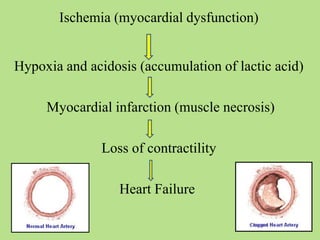
Ischemia (myocardial dysfunction)
Hypoxia and acidosis (accumulation of lactic acid)
Myocardial infarction (muscle necrosis)
Loss of contractility
Heart Failure
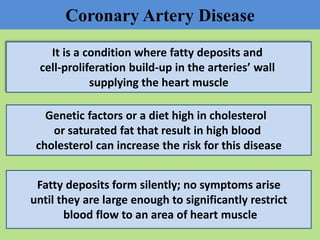
Coronary Artery Disease
It is a condition where fatty deposits and
cell-proliferation build-up in the arteries’ wall
supplying the heart muscle
Genetic factors or a diet high in cholesterol
or saturated fat that result in high blood
cholesterol can increase the risk for this disease
Fatty deposits form silently; no symptoms arise
until they are large enough to significantly restrict
blood flow to an area of heart muscle
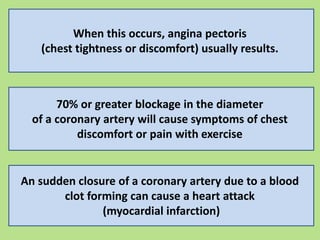
When this occurs, angina pectoris
(chest tightness or discomfort) usually results.
70% or greater blockage in the diameter
of a coronary artery will cause symptoms of chest
discomfort or pain with exercise
An sudden closure of a coronary artery due to a blood
clot forming can cause a heart attack
(myocardial infarction)
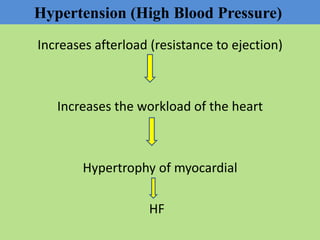
Hypertension (High Blood Pressure)
Increases afterload (resistance to ejection)
Increases the workload of the heart
Hypertrophy of myocardial
HF
Heart Failure and Lungs
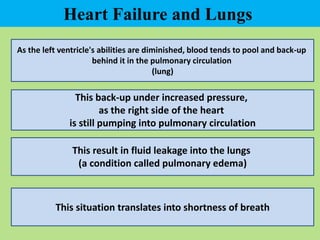
As the left ventricle's abilities are diminished, blood tends to pool and back-up
behind it in the pulmonary circulation
(lung)
This back-up under increased pressure,
as the right side of the heart
is still pumping into pulmonary circulation
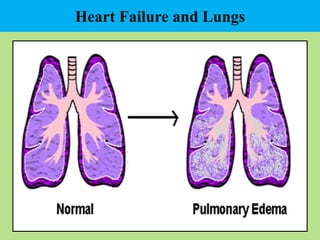
This result in fluid leakage into the lungs
(a condition called pulmonary edema)
This situation translates into shortness of breath
Heart Failure and Lungs
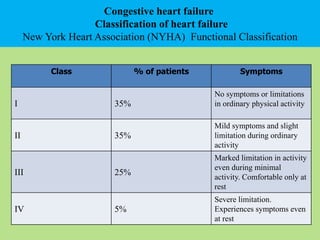
Congestive heart failure
Classification of heart failure
New York Heart Association (NYHA) Functional Classification
Symptoms% of patientsClass
No symptoms or limitations
in ordinary physical activity35%I
Mild symptoms and slight
limitation during ordinary
activity
35%II
Marked limitation in activity
even during minimal
activity. Comfortable only at
rest
25%III
Severe limitation.
Experiences symptoms even
at rest
5%IV
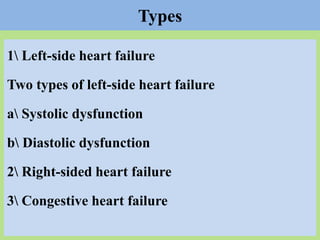
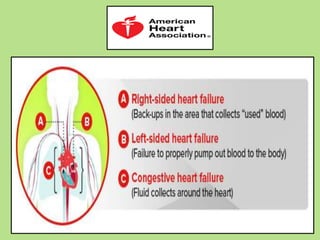
Types
1 Left-side heart failure
Two types of left-side heart failure
a Systolic dysfunction
b Diastolic dysfunction
2 Right-sided heart failure
3 Congestive heart failure
Congestive heart failure
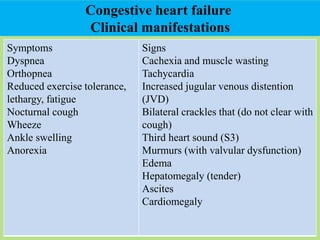
Clinical manifestations
Signs
Cachexia and muscle wasting
Tachycardia
Increased jugular venous distention
(JVD)
Bilateral crackles that (do not clear with
cough)
Third heart sound (S3)
Murmurs (with valvular dysfunction)
Edema
Hepatomegaly (tender)
Ascites
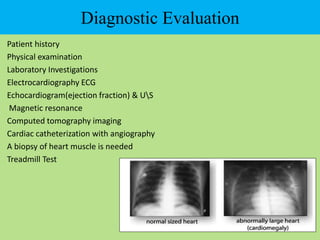
Cardiomegaly
Symptoms
Dyspnea
Orthopnea
Reduced exercise tolerance,
lethargy, fatigue
Nocturnal cough
Wheeze
Ankle swelling
Anorexia
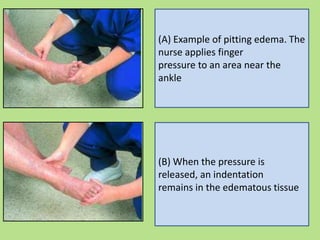
(B) When the pressure is
released, an indentation
remains in the edematous tissue
(A) Example of pitting edema. The
nurse applies finger
pressure to an area near the
ankle
Diagnostic Evaluation
Patient history
Physical examination
Laboratory Investigations
Electrocardiography ECG
Echocardiogram(ejection fraction) & US
Magnetic resonance
Computed tomography imaging
Cardiac catheterization with angiography
A biopsy of heart muscle is needed
Treadmill Test
Treatment
♥ Medications management
♥ Oxygen
♥ Angiotensin-converting enzyme (ACE) inhibitors
♥ Beta-blockers
♥ vasodilators
♥ Cardiac glycosides (digoxin)
♥ Diuretics
♥ Anticoagulants (heparin)
♥ Opioids (morphine) to relieve anxiety
♥ Positive inotropic drugs (drugs that make muscle contract more
forcefully) (dopamine)
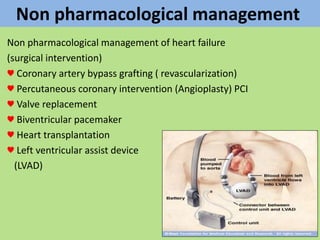
Non pharmacological management
Non pharmacological management of heart failure
(surgical intervention)
♥ Coronary artery bypass grafting ( revascularization)
♥ Percutaneous coronary intervention (Angioplasty) PCI
♥ Valve replacement
♥ Biventricular pacemaker
♥ Heart transplantation
♥ Left ventricular assist device
(LVAD)
Nursing care of patients
with congestive heart failure
♥ High fowler's position
♥ Oxygen supply
♥ Elevate extremities except when the patient is in acute distress
♥ Frequently monitor vital signs
♥ Change position frequently
♥ Monitor Fluids intake and output
♥ Daily weight
♥ Restrict salt and fluids as ordered
♥ Teach the patient and family and provide emotional support (life
style change)
♥ Explain the side effect of medications like ( side effects of diuretics
include electrolyte imbalance, symptomatic hypotension)
♥ Use aseptic procedures when caring for invasive lines
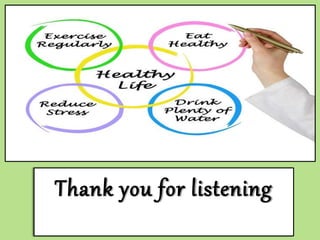
Thank you for listening

Congestive Heart Failure

  • 1.
    Seminar for postgraduate AdultNursing ‫الجامعي‬ ‫الممرض‬ ‫إعداد‬ ‫الحمداني‬ ‫نزار‬ ‫صالح‬ Congestive Heart Failure
  • 2.
    Congestive heart failure Definition (Theheart does not pump efficiently with fluid collect around the heart) Organs in the body do not get enough oxygen rich blood that they need to work well
  • 3.
    Causes of HeartFailure ♥ Coronary Artery Disease ♥ Untreated High Blood Pressure (neglected) ♥ Defect Heart Valves ♥ Cardiomyopathy ♥ Lung Disease ♥ Diabetes ♥ Infections ♥ (Bad life Style) eg. Smoking & Alcohol ♥ Toxic Drugs
  • 4.
    Ischemia (myocardial dysfunction) Hypoxiaand acidosis (accumulation of lactic acid) Myocardial infarction (muscle necrosis) Loss of contractility Heart Failure
  • 5.
    Coronary Artery Disease Itis a condition where fatty deposits and cell-proliferation build-up in the arteries’ wall supplying the heart muscle Genetic factors or a diet high in cholesterol or saturated fat that result in high blood cholesterol can increase the risk for this disease Fatty deposits form silently; no symptoms arise until they are large enough to significantly restrict blood flow to an area of heart muscle
  • 6.
    When this occurs,angina pectoris (chest tightness or discomfort) usually results. 70% or greater blockage in the diameter of a coronary artery will cause symptoms of chest discomfort or pain with exercise An sudden closure of a coronary artery due to a blood clot forming can cause a heart attack (myocardial infarction)
  • 7.
    Hypertension (High BloodPressure) Increases afterload (resistance to ejection) Increases the workload of the heart Hypertrophy of myocardial HF
  • 8.
    Heart Failure andLungs As the left ventricle's abilities are diminished, blood tends to pool and back-up behind it in the pulmonary circulation (lung) This back-up under increased pressure, as the right side of the heart is still pumping into pulmonary circulation This result in fluid leakage into the lungs (a condition called pulmonary edema) This situation translates into shortness of breath
  • 9.
  • 10.
    Congestive heart failure Classificationof heart failure New York Heart Association (NYHA) Functional Classification Symptoms% of patientsClass No symptoms or limitations in ordinary physical activity35%I Mild symptoms and slight limitation during ordinary activity 35%II Marked limitation in activity even during minimal activity. Comfortable only at rest 25%III Severe limitation. Experiences symptoms even at rest 5%IV
  • 11.
    Types 1 Left-side heartfailure Two types of left-side heart failure a Systolic dysfunction b Diastolic dysfunction 2 Right-sided heart failure 3 Congestive heart failure
  • 13.
    Congestive heart failure Clinicalmanifestations Signs Cachexia and muscle wasting Tachycardia Increased jugular venous distention (JVD) Bilateral crackles that (do not clear with cough) Third heart sound (S3) Murmurs (with valvular dysfunction) Edema Hepatomegaly (tender) Ascites Cardiomegaly Symptoms Dyspnea Orthopnea Reduced exercise tolerance, lethargy, fatigue Nocturnal cough Wheeze Ankle swelling Anorexia
  • 14.
    (B) When thepressure is released, an indentation remains in the edematous tissue (A) Example of pitting edema. The nurse applies finger pressure to an area near the ankle
  • 15.
    Diagnostic Evaluation Patient history Physicalexamination Laboratory Investigations Electrocardiography ECG Echocardiogram(ejection fraction) & US Magnetic resonance Computed tomography imaging Cardiac catheterization with angiography A biopsy of heart muscle is needed Treadmill Test
  • 16.
    Treatment ♥ Medications management ♥Oxygen ♥ Angiotensin-converting enzyme (ACE) inhibitors ♥ Beta-blockers ♥ vasodilators ♥ Cardiac glycosides (digoxin) ♥ Diuretics ♥ Anticoagulants (heparin) ♥ Opioids (morphine) to relieve anxiety ♥ Positive inotropic drugs (drugs that make muscle contract more forcefully) (dopamine)
  • 17.
    Non pharmacological management Nonpharmacological management of heart failure (surgical intervention) ♥ Coronary artery bypass grafting ( revascularization) ♥ Percutaneous coronary intervention (Angioplasty) PCI ♥ Valve replacement ♥ Biventricular pacemaker ♥ Heart transplantation ♥ Left ventricular assist device (LVAD)
  • 18.
    Nursing care ofpatients with congestive heart failure ♥ High fowler's position ♥ Oxygen supply ♥ Elevate extremities except when the patient is in acute distress ♥ Frequently monitor vital signs ♥ Change position frequently ♥ Monitor Fluids intake and output ♥ Daily weight ♥ Restrict salt and fluids as ordered ♥ Teach the patient and family and provide emotional support (life style change) ♥ Explain the side effect of medications like ( side effects of diuretics include electrolyte imbalance, symptomatic hypotension) ♥ Use aseptic procedures when caring for invasive lines
  • 19.
    Thank you forlistening