Pathophysiology Of
Congestive Heart
Failure

M. Rajesh Kumar
Contents
•
•
•
•
•
•
•
•
•
•
•

Definition
Types
Etiology
Epidemiology
Risk Factors
Pathophysiology
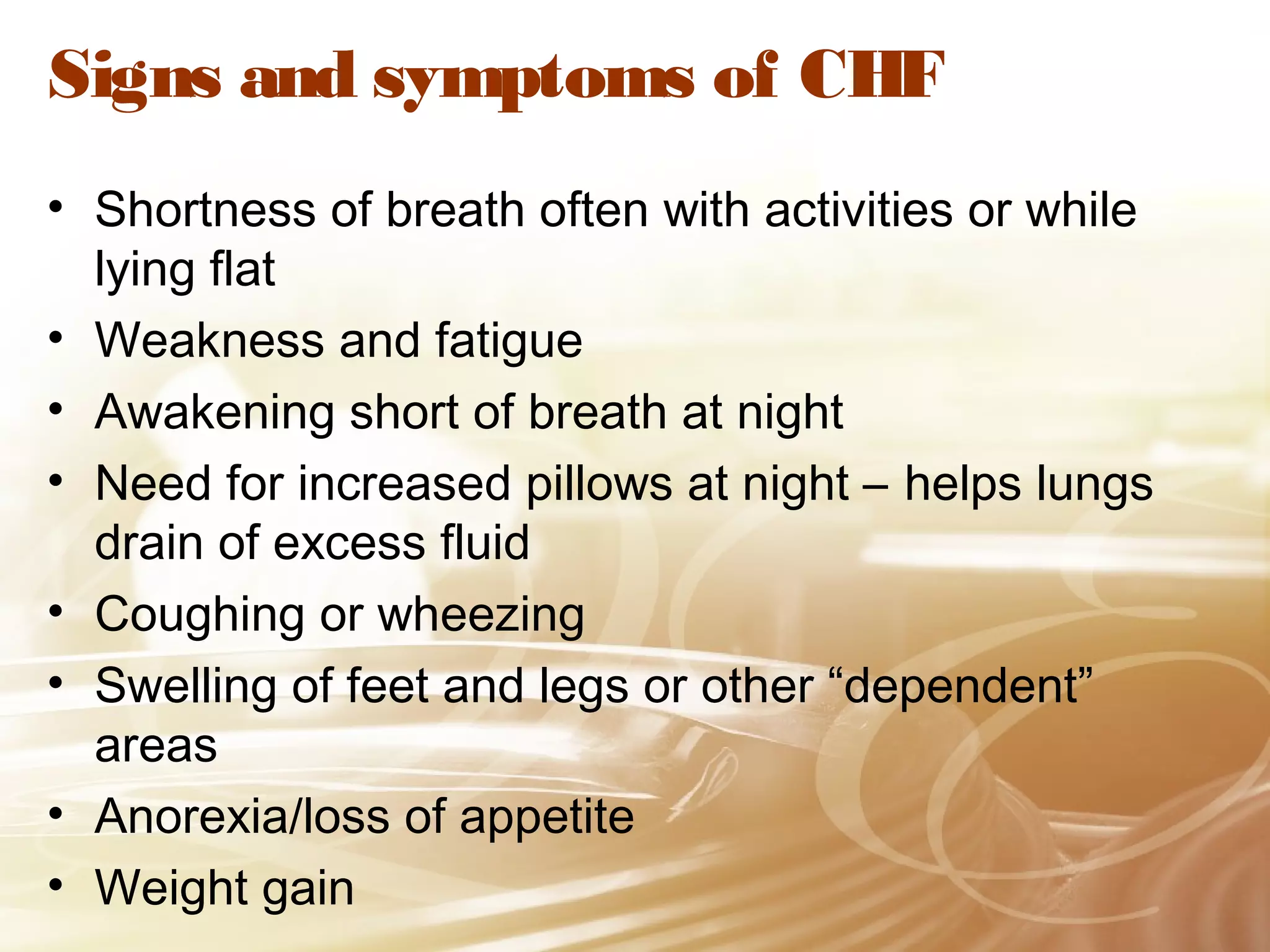
Signs and symptoms
Complications
Diagnosis
Treatment
Patient counseling
Definition
HF is a complex clinical syndrome
that can result from any structural or
functional cardiac disorder that impairs the
ability of the ventricle to fill with or eject
blood.
Congestive Heart Failure
describes a condition where the heart
muscle is weakened and cannot pump as
strongly as before.
Heart Failure
• This means less oxygen is reaching the
organs and muscles which can make feel
tired and short of breath.
• CONGESTIVE HEART FAILURE – refers to
the state in which abnormal circulatory
congestion exists a result of heart failure
Types of Heart Failure
• Low-Output Heart Failure
• Systolic Heart Failure:
• decreased cardiac output
• Decreased Left ventricular ejection fraction
• Diastolic Heart Failure:
• Elevated Left and Right ventricular end-diastolic
pressures
• May have normal Left ventricular ejection fraction
• High-Output Heart Failure
• Seen with peripheral shunting, low-systemic
vascular resistance, hyperthyroidism, beriberi,
carcinoid, anemia
• Often have normal cardiac output
• Right-Ventricular Failure
Types of Heart Failure
• Systolic Dysfunction
• Coronary Artery Disease
• Hypertension
• Valvular Heart Disease
• Diastolic Dysfunction
• Hypertension
• Coronary artery disease
• Hypertrophic obstructive cardiomyopathy
(HCM)
• Restrictive cardiomyopathy
Etiology
• Heart failure is caused by systemic hypertension in 75% of
cases.
• Structural heart changes, such as valvular dysfunction,
cause pressure or volume overload on the heart.
• Heart is unable to pump enough blood to meet tissues O 2
requirements
• Congenital heart defects
• Severe lung disease
• Diabetes
• Severe anemia
• Overactive thyroid gland (hyperthyroidism)
• Abnormal heart rhythms
Etiology
•
•

Increase in Pulmonary pressure results fluid in alveoli
(PULMONARY EDEMA)
Increase in Systemic pressure results in fluid in tissues
(PERIPHERAL EDEMA)
Health conditions that either damage the heart or make it
work too hard
Coronary artery disease
Heart attack
Heart muscle diseases (cardiomyopathy)
Heart inflammation (myocarditis)
Epidemiology
•
•
•
•
•
•
•
•

Five millions Americans have CHF
550,000 New cases every year
800,000 Patients with CHF hospitalized every year
250,000 die every year
50% Patients die with in five years
150% increase in the last 20 year
2.6% total population has this disease
Incidence and associated morbidity and mortality is
expected to increase in future
Risk Factors
•
•
•
•

Hypotension
Fluid retention & worsening CHF
Bradycardia & heart block
Contraindication in pts with CHF
exacerbation
Pathophysiology
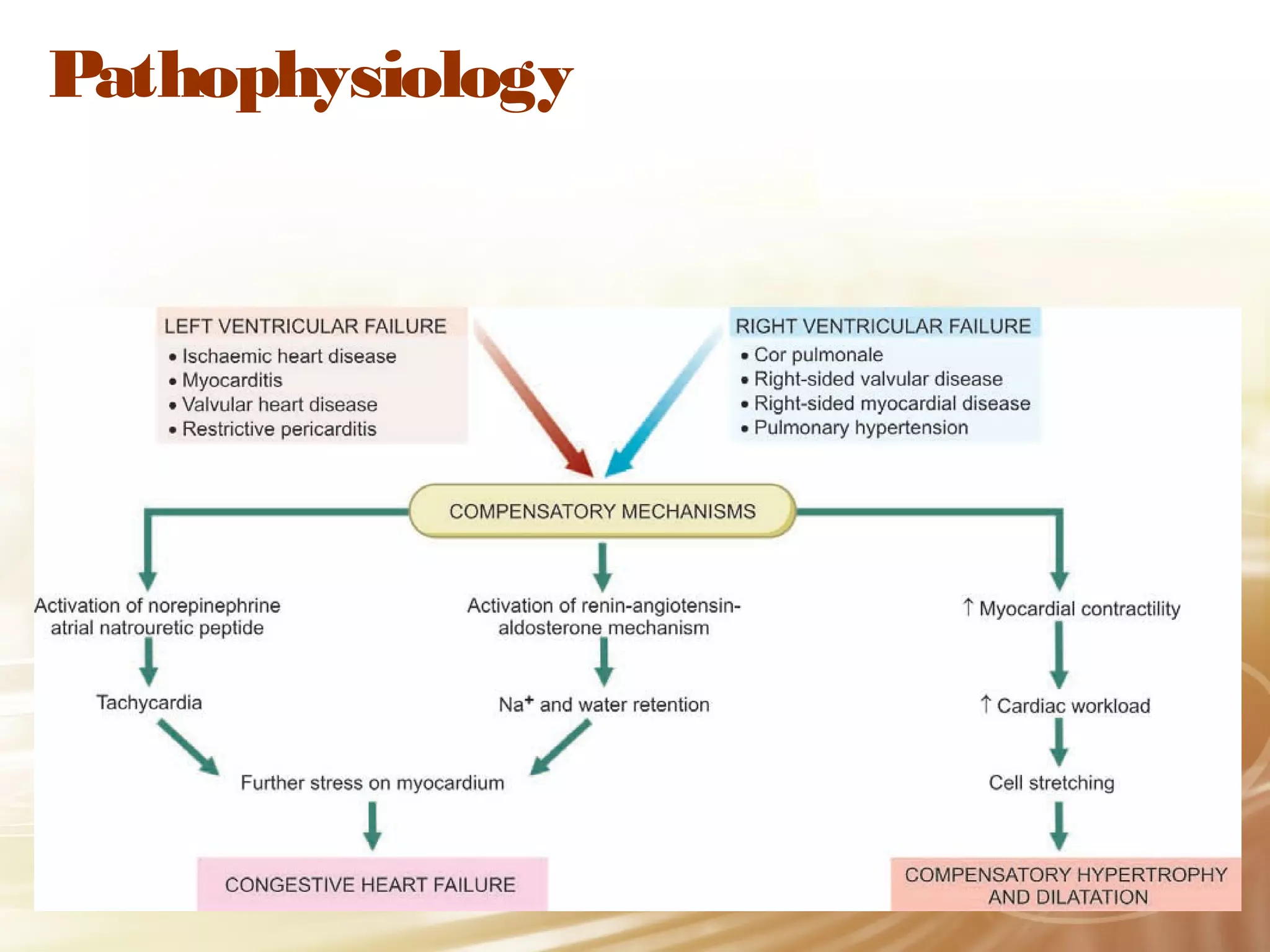
• In order to maintain normal cardiac output, several
compensatory mechanisms play a role as under:
Compensatory enlargement in the form of cardiac
hypertrophy, cardiac dilatation, or both.
• Tachycardia (i. e . inc re a s e d he a rt ra te ) d ue to
a c tiva tio n o f neurohumoral system e.g. release of
norepinephrine and atrial natrouretic peptide,
activation of renin-angiotensin aldosterone
mechanism.
Pathophysiology
• STARLING’S LAW
Within limits, the force of ventricular contraction
is a function of the end-diastolic length of the
cardiac muscle, which in turn is closely related to
the ventricular end-diastolic volume.

• This is achieved by increasing the length of
sarcomeres in dilated heart
• Increases the myocardial contractility and
thereby attempts to maintain stroke volume.
Pathophysiology
• Heart failure results in DEPRESSION of
the ventricular function curve
• COMPENSATION in the form of stretching
of myocardial fibers results
• Stretching leads to cardiac dilatation which
occurs when the left ventricle fails to eject
its normal end diastolic volume
Compensatory Mechanisms
• Sympathetic nervous system stimulation
• Renin-angiotensin system activation
• Myocardial hypertrophy
• Altered cardiac Rhythm
Pathophysiology
Pathophysiology
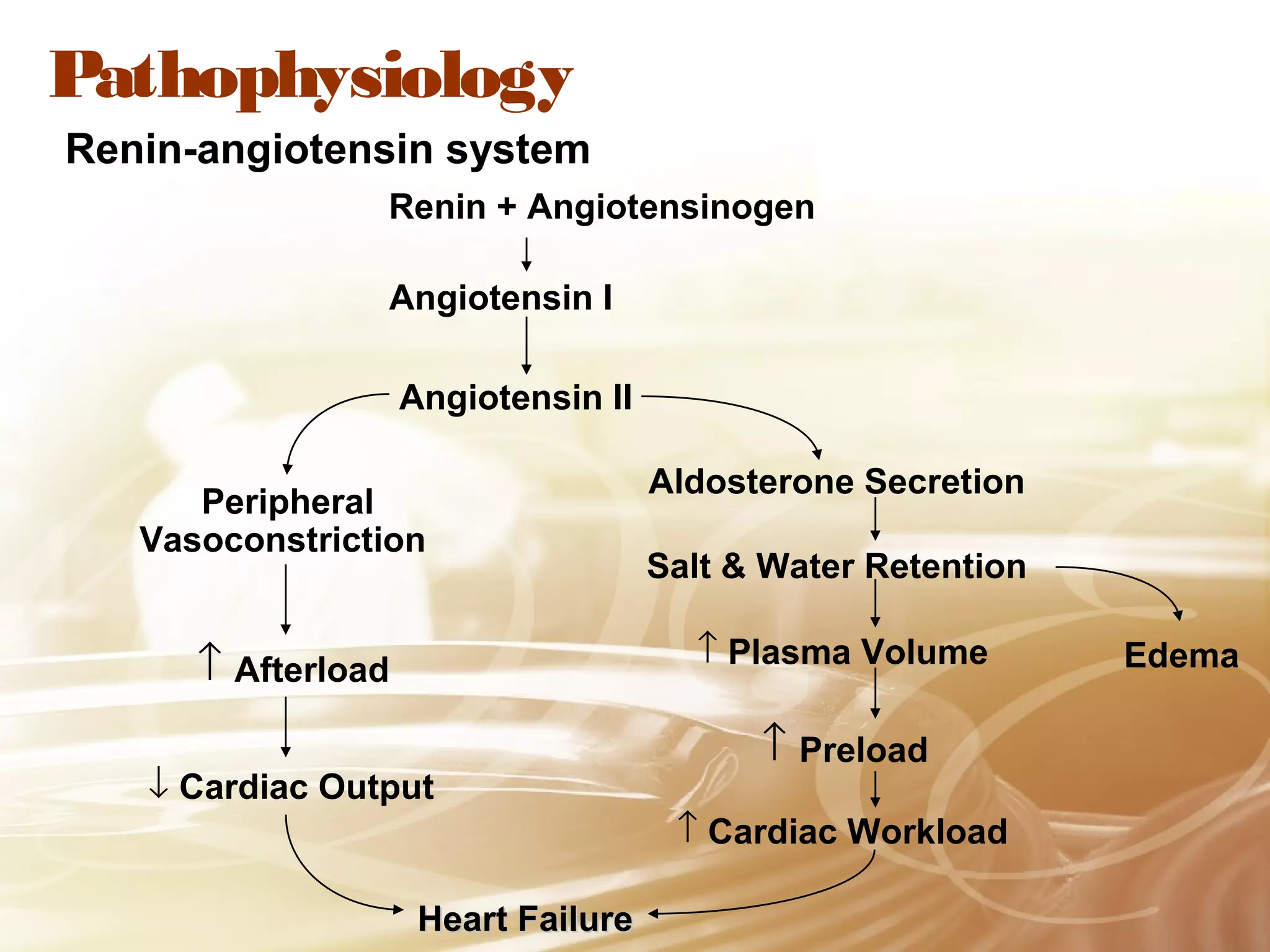
Renin-angiotensin system
Renin + Angiotensinogen
Angiotensin I
Angiotensin II
Peripheral
Vasoconstriction

Aldosterone Secretion
Salt & Water Retention
↑ Plasma Volume

↑ Afterload
↓ Cardiac Output

Heart Failure

↑ Preload
↑ Cardiac Workload

Edema
Pathophysiology
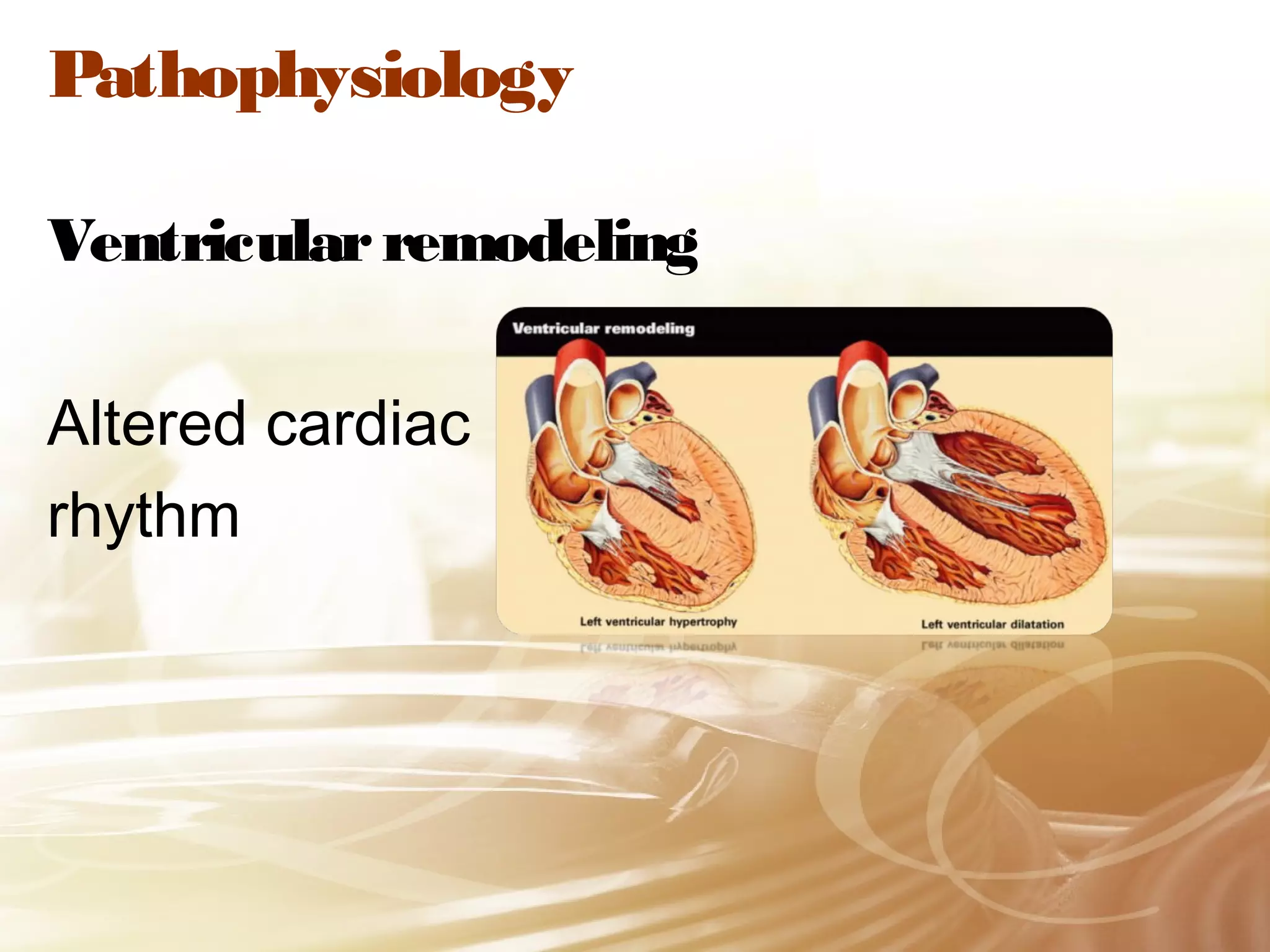
Ventricular remodeling
Altered cardiac
rhythm
Signs and symptoms of CHF
• Shortness of breath often with activities or while
lying flat
• Weakness and fatigue
• Awakening short of breath at night
• Need for increased pillows at night – helps lungs
drain of excess fluid
• Coughing or wheezing
• Swelling of feet and legs or other “dependent”
areas
• Anorexia/loss of appetite
• Weight gain
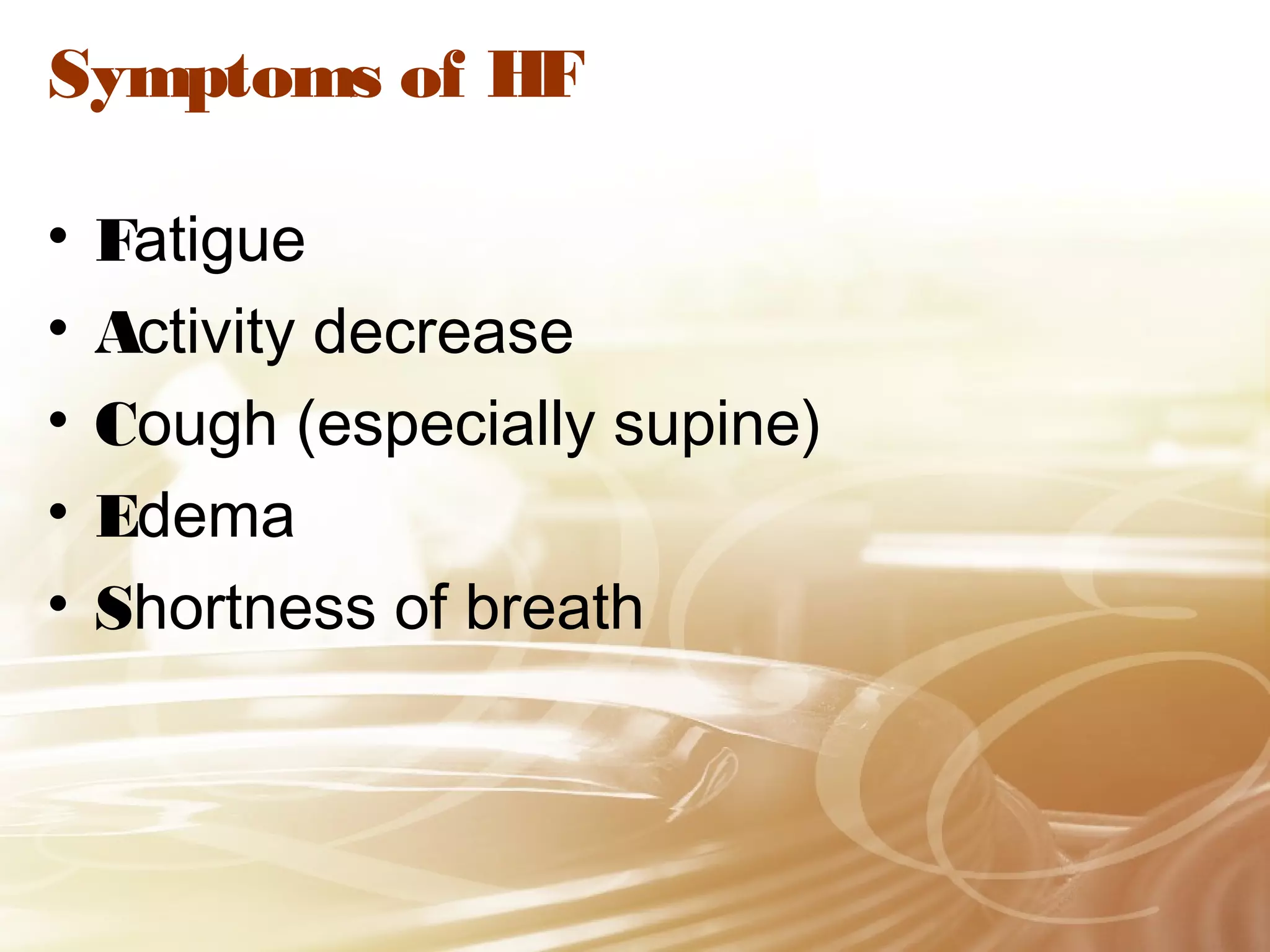
Symptoms of HF
•
•
•
•
•

Fatigue
Activity decrease
Cough (especially supine)
Edema
Shortness of breath
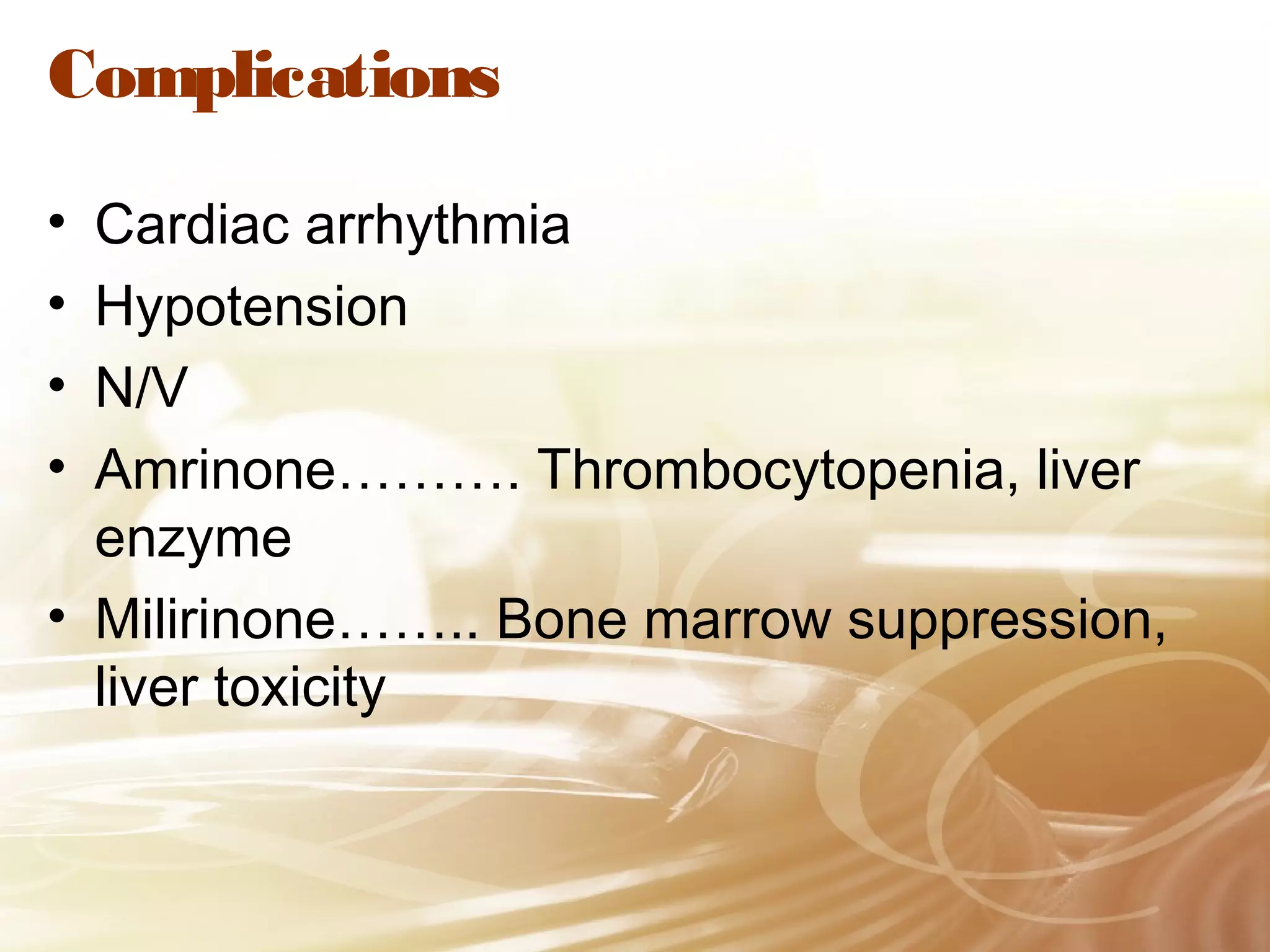
Complications
•
•
•
•

Cardiac arrhythmia
Hypotension
N/V
Amrinone………. Thrombocytopenia, liver
enzyme
• Milirinone…….. Bone marrow suppression,
liver toxicity
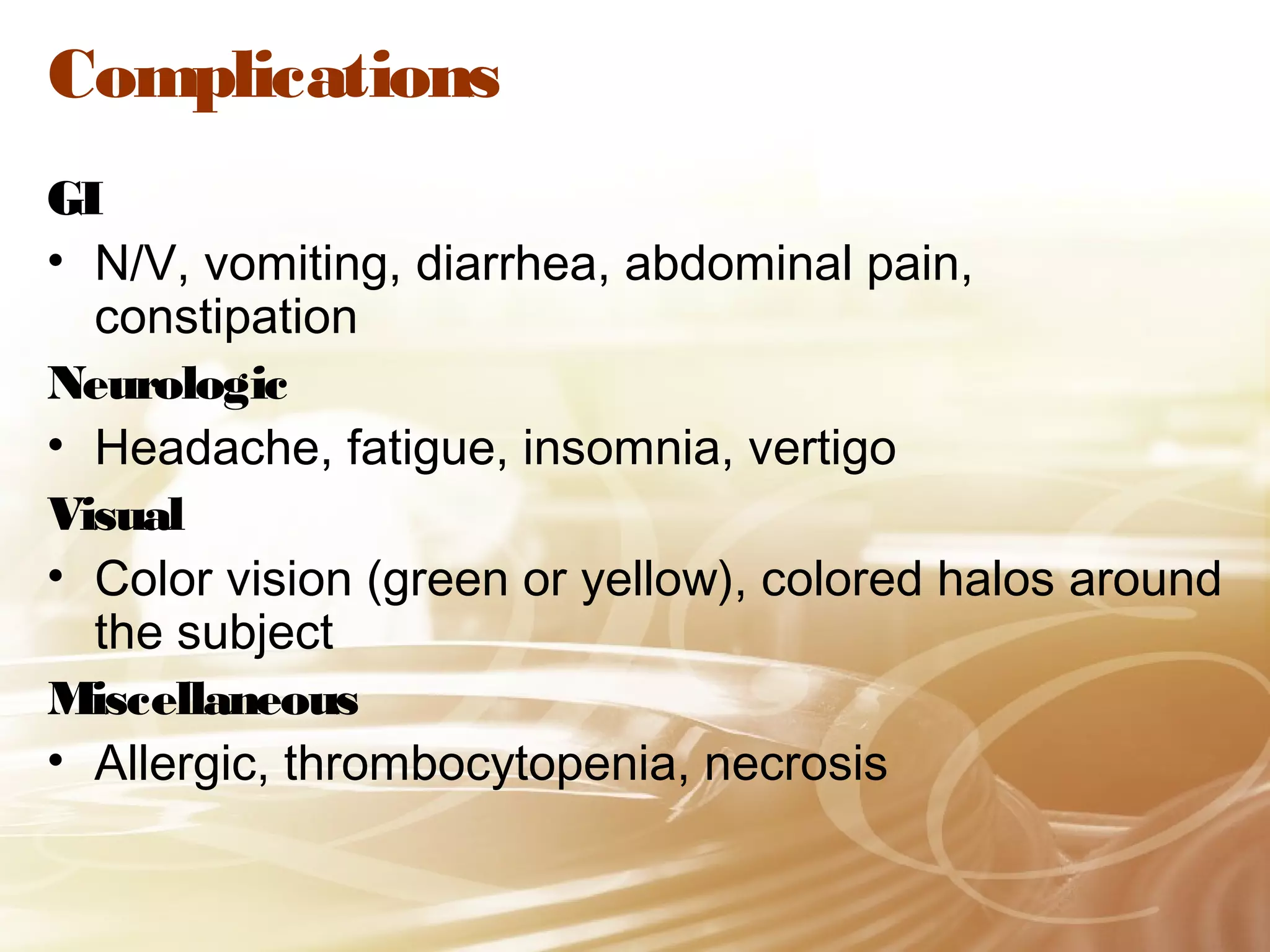
Complications
GI
• N/V, vomiting, diarrhea, abdominal pain,
constipation
Neurologic
• Headache, fatigue, insomnia, vertigo
Visual
• Color vision (green or yellow), colored halos around
the subject
Miscellaneous
• Allergic, thrombocytopenia, necrosis
Complications
Heart
• SA and AV node suppression
• AV block
• Atrial arrhythmia
• Ventricular arrhythmia
Diagnosis
•
•
•
•
•
•

Electrocardiogram (ECG, “EKG”)
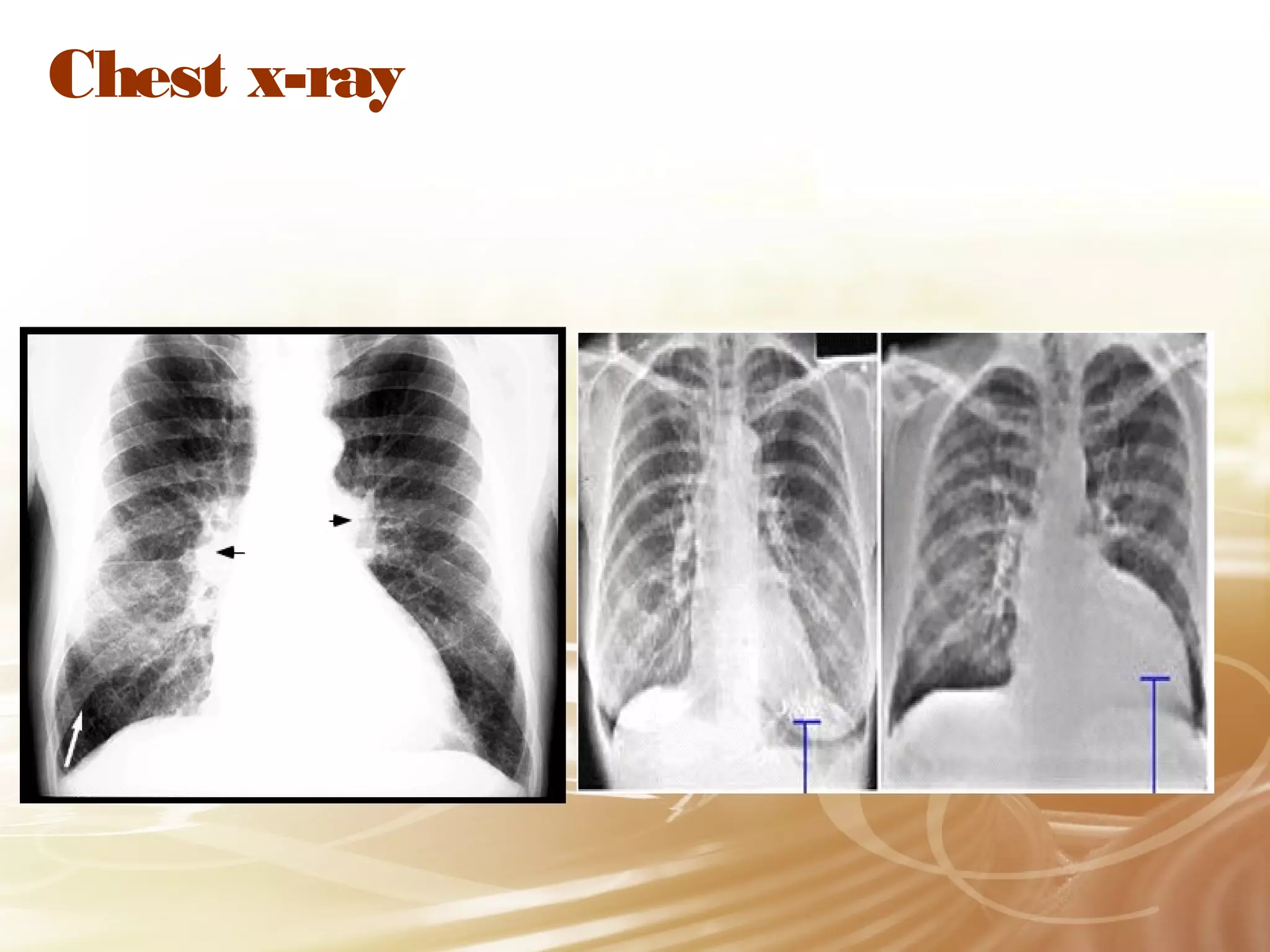
Chest x-ray
Echocardiography (“Echo”)
Heart catheterization
Stress test
Blood tests
Chest x-ray
DIE Approach W Heart Failure
T
ith

• Diagnose

• E
ducate

– Etiology
– Diet
– Severity (LV dysfunction)
– Exercise
• Initiate
– Lifestyle
– Diuretic/ACE inhibitor
– CV Risk
β-blocker
• Titrate
– Spirololactone
– Optimize ACE
– Digoxin
inhibitor
– Optimize βblocker
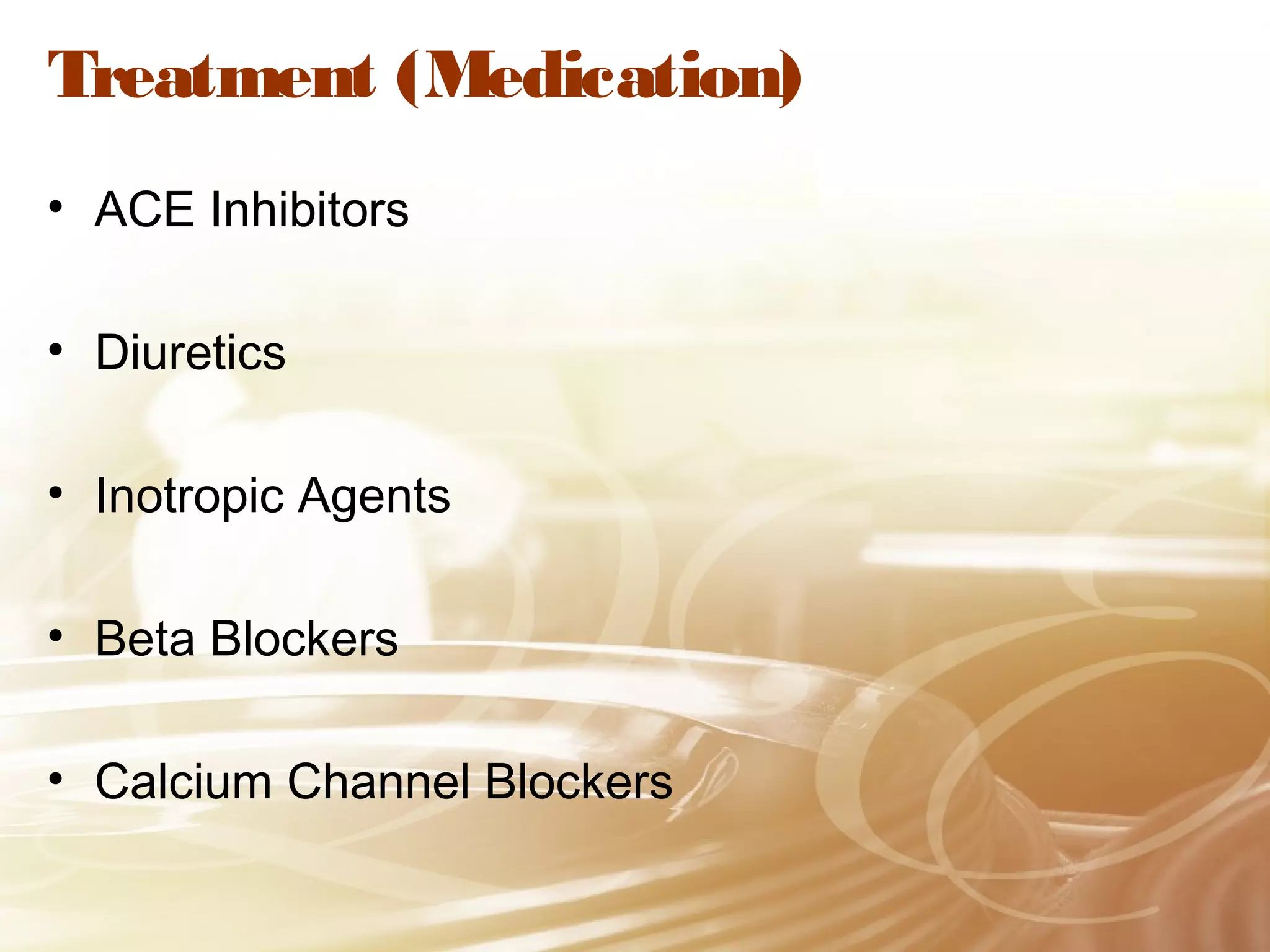
Treatment (Medication)
• ACE Inhibitors
• Diuretics
• Inotropic Agents
• Beta Blockers
• Calcium Channel Blockers
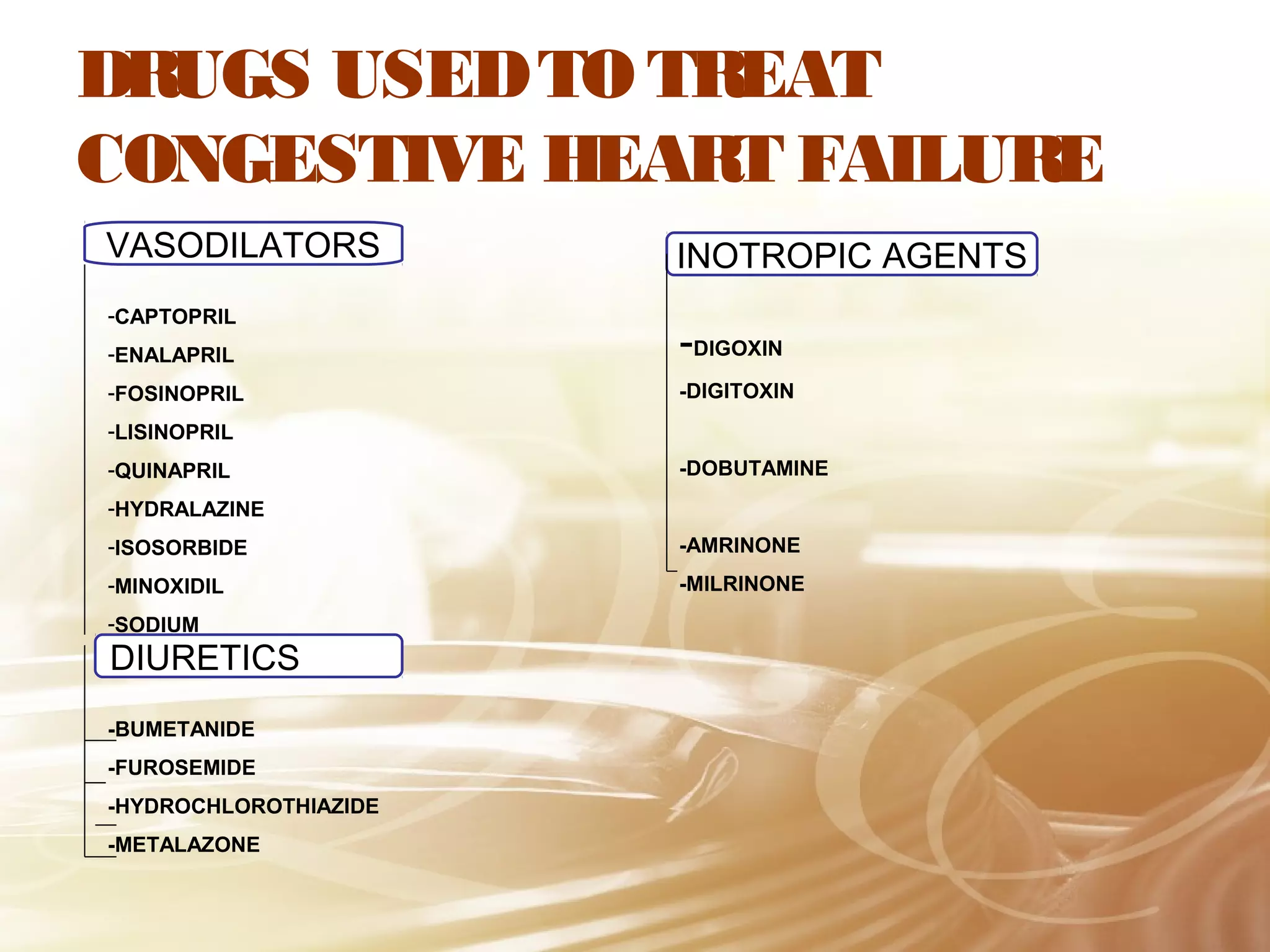
DRUGS USED TO TREAT
CONGESTIVE HEART FAILURE
VASODILATORS
-CAPTOPRIL

INOTROPIC AGENTS

-ENALAPRIL

-DIGOXIN

-FOSINOPRIL

-DIGITOXIN

-LISINOPRIL
-QUINAPRIL

-DOBUTAMINE

-HYDRALAZINE
-ISOSORBIDE

-AMRINONE

-MINOXIDIL

-MILRINONE

-SODIUM
NIITROPRUSSIDE

DIURETICS

-BUMETANIDE
-FUROSEMIDE
-HYDROCHLOROTHIAZIDE
-METALAZONE
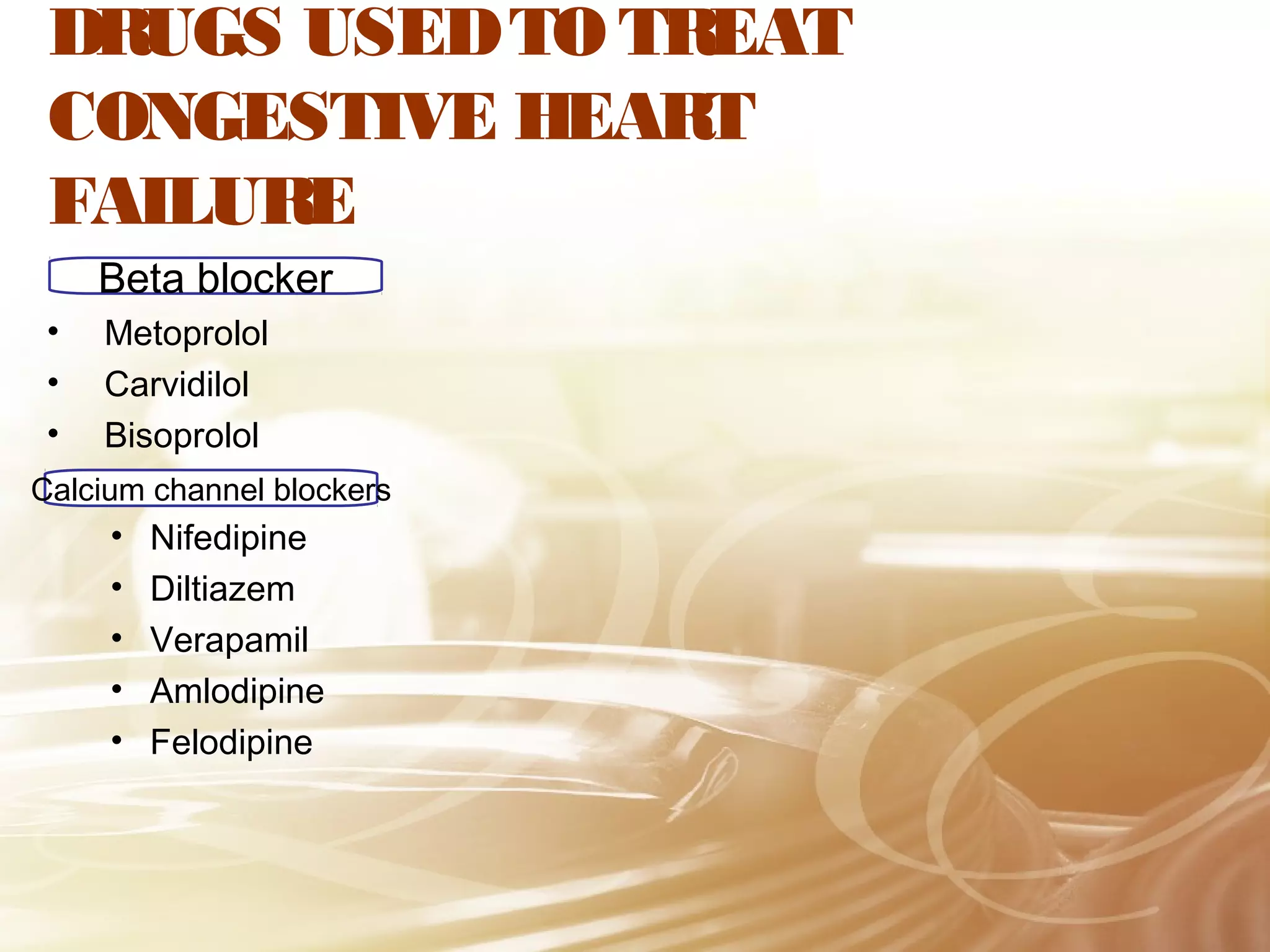
DRUGS USED TO TREAT
CONGESTIVE HEART
FAILURE
Beta blocker
•
•
•

Metoprolol
Carvidilol
Bisoprolol

Calcium channel blockers

•
•
•
•
•

Nifedipine
Diltiazem
Verapamil
Amlodipine
Felodipine
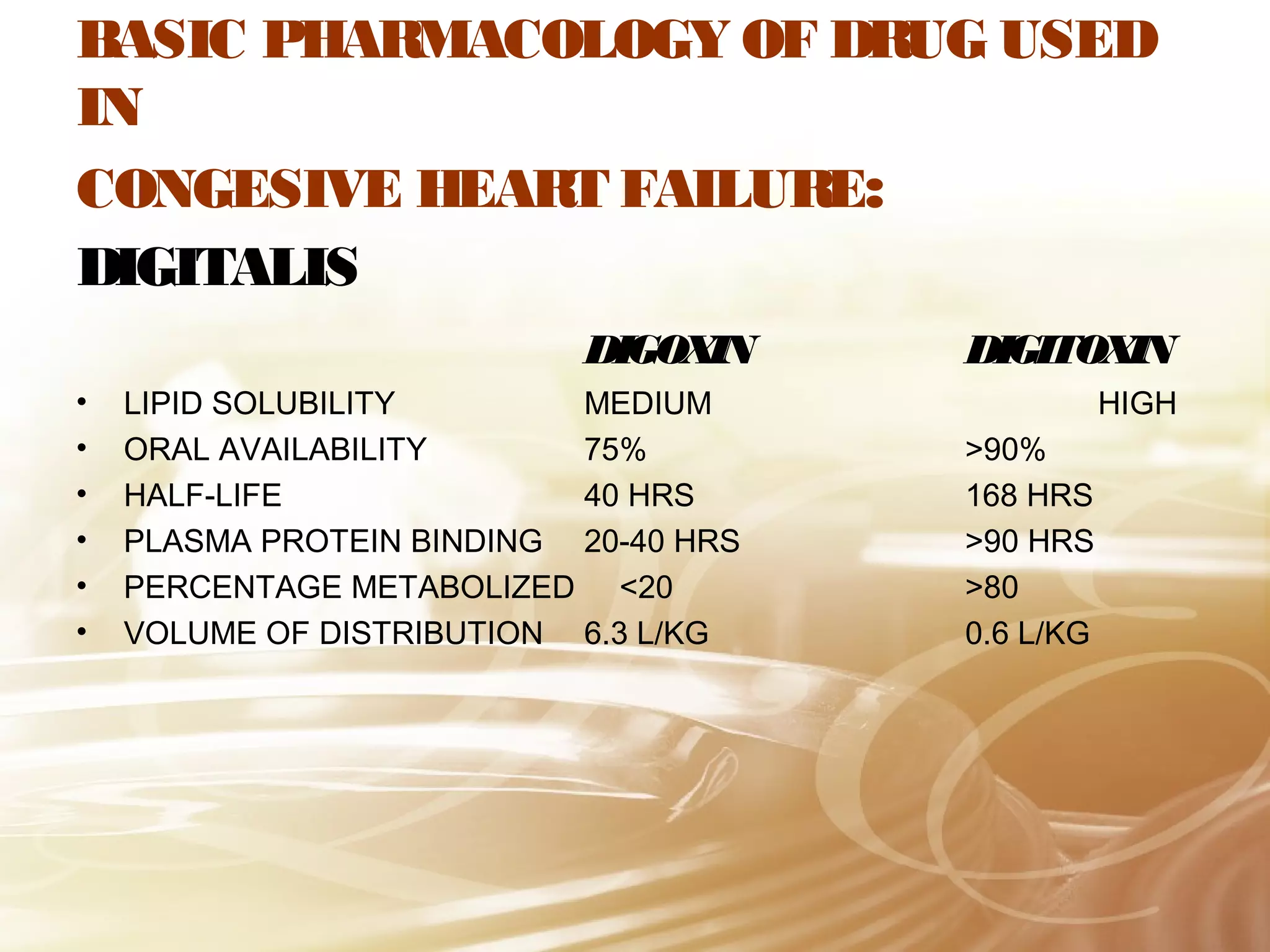
BASIC PHARMACOLOGY OF DRUG USED
IN
CONGESIVE HEART FAILURE:
DIGITALIS
DIGOX
IN
•
•
•
•
•
•

LIPID SOLUBILITY
MEDIUM
ORAL AVAILABILITY
75%
HALF-LIFE
40 HRS
PLASMA PROTEIN BINDING 20-40 HRS
PERCENTAGE METABOLIZED <20
VOLUME OF DISTRIBUTION 6.3 L/KG

DIGITOX
IN
HIGH
>90%
168 HRS
>90 HRS
>80
0.6 L/KG
Treating Congestive Heart
failure
•
•
•
•
•
•

Upright position
Nitrates
Lasix
Oxygen
ACE inhibitors
Digoxin

•
•
•
•

Fluids(decrease)
After load (decrease)
Sodium retention
Test (Dig level, ABG’s, Potassium level)
Patient counseling
• Lifestyle changes
• Monitoring for changes
• Medications
• Surgery
Patient counseling
Lifestyle changes
• Stop smoking
• Loose weight
• Avoid or limit alcohol
• Avoid or limit caffeine
• Eat a low-fat, low-sodium diet
• Exercise
Patient counseling
• Reduce stress
• Keep track of symptoms and weight
and report any changes or concern to
the doctor
• Limit fluid intake
• See the doctor more frequently
Conclusion
“PREVENTION IS BETTER THAN CURE”.
• Newer device therapies are showing promise for
symptom relief and improved survival
– Biventricular pacing.

• Transplants remain rare, but technology for
mechanical assist devices continues to improvestay tuned.
References
• A TEXTBOOK OF PATHOLOGY by HARSH
MOHAN 6th edition.

• ESSENTIALS OF MEDICAL PHARMACOLOGY by
KD TRIPATI 6th edition.

• DIPIRO PHARMACOTHERAPY 8th edition.
• http://www.google.co.in/search?hl=en&q=congestive
%20heart%20failure&gbv=2&um=1&ie=UTF8&tbm=isch&source=og&sa=N&tab=wi
• http://www.google.co.in/search?
q=congestive+heart+failure+x+ray&um=1&hl=en&gbv=2&tb
m=isch&ei=-Pt1Uu6vK8GKrQeoiYHIAQ&start=20&sa=N
Thank
you……

Pathophysiology of congestive heart failure

  • 1.
  • 2.
  • 3.
    Definition HF is acomplex clinical syndrome that can result from any structural or functional cardiac disorder that impairs the ability of the ventricle to fill with or eject blood. Congestive Heart Failure describes a condition where the heart muscle is weakened and cannot pump as strongly as before.
  • 4.
    Heart Failure • Thismeans less oxygen is reaching the organs and muscles which can make feel tired and short of breath. • CONGESTIVE HEART FAILURE – refers to the state in which abnormal circulatory congestion exists a result of heart failure
  • 5.
    Types of HeartFailure • Low-Output Heart Failure • Systolic Heart Failure: • decreased cardiac output • Decreased Left ventricular ejection fraction • Diastolic Heart Failure: • Elevated Left and Right ventricular end-diastolic pressures • May have normal Left ventricular ejection fraction • High-Output Heart Failure • Seen with peripheral shunting, low-systemic vascular resistance, hyperthyroidism, beriberi, carcinoid, anemia • Often have normal cardiac output • Right-Ventricular Failure
  • 6.
    Types of HeartFailure • Systolic Dysfunction • Coronary Artery Disease • Hypertension • Valvular Heart Disease • Diastolic Dysfunction • Hypertension • Coronary artery disease • Hypertrophic obstructive cardiomyopathy (HCM) • Restrictive cardiomyopathy
  • 7.
    Etiology • Heart failureis caused by systemic hypertension in 75% of cases. • Structural heart changes, such as valvular dysfunction, cause pressure or volume overload on the heart. • Heart is unable to pump enough blood to meet tissues O 2 requirements • Congenital heart defects • Severe lung disease • Diabetes • Severe anemia • Overactive thyroid gland (hyperthyroidism) • Abnormal heart rhythms
  • 8.
    Etiology • • Increase in Pulmonarypressure results fluid in alveoli (PULMONARY EDEMA) Increase in Systemic pressure results in fluid in tissues (PERIPHERAL EDEMA) Health conditions that either damage the heart or make it work too hard Coronary artery disease Heart attack Heart muscle diseases (cardiomyopathy) Heart inflammation (myocarditis)
  • 9.
    Epidemiology • • • • • • • • Five millions Americanshave CHF 550,000 New cases every year 800,000 Patients with CHF hospitalized every year 250,000 die every year 50% Patients die with in five years 150% increase in the last 20 year 2.6% total population has this disease Incidence and associated morbidity and mortality is expected to increase in future
  • 10.
    Risk Factors • • • • Hypotension Fluid retention& worsening CHF Bradycardia & heart block Contraindication in pts with CHF exacerbation
  • 11.
    Pathophysiology • In orderto maintain normal cardiac output, several compensatory mechanisms play a role as under: Compensatory enlargement in the form of cardiac hypertrophy, cardiac dilatation, or both. • Tachycardia (i. e . inc re a s e d he a rt ra te ) d ue to a c tiva tio n o f neurohumoral system e.g. release of norepinephrine and atrial natrouretic peptide, activation of renin-angiotensin aldosterone mechanism.
  • 12.
    Pathophysiology • STARLING’S LAW Withinlimits, the force of ventricular contraction is a function of the end-diastolic length of the cardiac muscle, which in turn is closely related to the ventricular end-diastolic volume. • This is achieved by increasing the length of sarcomeres in dilated heart • Increases the myocardial contractility and thereby attempts to maintain stroke volume.
  • 13.
    Pathophysiology • Heart failureresults in DEPRESSION of the ventricular function curve • COMPENSATION in the form of stretching of myocardial fibers results • Stretching leads to cardiac dilatation which occurs when the left ventricle fails to eject its normal end diastolic volume
  • 14.
    Compensatory Mechanisms • Sympatheticnervous system stimulation • Renin-angiotensin system activation • Myocardial hypertrophy • Altered cardiac Rhythm
  • 15.
  • 16.
    Pathophysiology Renin-angiotensin system Renin +Angiotensinogen Angiotensin I Angiotensin II Peripheral Vasoconstriction Aldosterone Secretion Salt & Water Retention ↑ Plasma Volume ↑ Afterload ↓ Cardiac Output Heart Failure ↑ Preload ↑ Cardiac Workload Edema
  • 17.
  • 18.
    Signs and symptomsof CHF • Shortness of breath often with activities or while lying flat • Weakness and fatigue • Awakening short of breath at night • Need for increased pillows at night – helps lungs drain of excess fluid • Coughing or wheezing • Swelling of feet and legs or other “dependent” areas • Anorexia/loss of appetite • Weight gain
  • 19.
    Symptoms of HF • • • • • Fatigue Activitydecrease Cough (especially supine) Edema Shortness of breath
  • 20.
    Complications • • • • Cardiac arrhythmia Hypotension N/V Amrinone………. Thrombocytopenia,liver enzyme • Milirinone…….. Bone marrow suppression, liver toxicity
  • 21.
    Complications GI • N/V, vomiting,diarrhea, abdominal pain, constipation Neurologic • Headache, fatigue, insomnia, vertigo Visual • Color vision (green or yellow), colored halos around the subject Miscellaneous • Allergic, thrombocytopenia, necrosis
  • 22.
    Complications Heart • SA andAV node suppression • AV block • Atrial arrhythmia • Ventricular arrhythmia
  • 23.
    Diagnosis • • • • • • Electrocardiogram (ECG, “EKG”) Chestx-ray Echocardiography (“Echo”) Heart catheterization Stress test Blood tests
  • 24.
  • 25.
    DIE Approach WHeart Failure T ith • Diagnose • E ducate – Etiology – Diet – Severity (LV dysfunction) – Exercise • Initiate – Lifestyle – Diuretic/ACE inhibitor – CV Risk β-blocker • Titrate – Spirololactone – Optimize ACE – Digoxin inhibitor – Optimize βblocker
  • 26.
    Treatment (Medication) • ACEInhibitors • Diuretics • Inotropic Agents • Beta Blockers • Calcium Channel Blockers
  • 27.
    DRUGS USED TOTREAT CONGESTIVE HEART FAILURE VASODILATORS -CAPTOPRIL INOTROPIC AGENTS -ENALAPRIL -DIGOXIN -FOSINOPRIL -DIGITOXIN -LISINOPRIL -QUINAPRIL -DOBUTAMINE -HYDRALAZINE -ISOSORBIDE -AMRINONE -MINOXIDIL -MILRINONE -SODIUM NIITROPRUSSIDE DIURETICS -BUMETANIDE -FUROSEMIDE -HYDROCHLOROTHIAZIDE -METALAZONE
  • 28.
    DRUGS USED TOTREAT CONGESTIVE HEART FAILURE Beta blocker • • • Metoprolol Carvidilol Bisoprolol Calcium channel blockers • • • • • Nifedipine Diltiazem Verapamil Amlodipine Felodipine
  • 29.
    BASIC PHARMACOLOGY OFDRUG USED IN CONGESIVE HEART FAILURE: DIGITALIS DIGOX IN • • • • • • LIPID SOLUBILITY MEDIUM ORAL AVAILABILITY 75% HALF-LIFE 40 HRS PLASMA PROTEIN BINDING 20-40 HRS PERCENTAGE METABOLIZED <20 VOLUME OF DISTRIBUTION 6.3 L/KG DIGITOX IN HIGH >90% 168 HRS >90 HRS >80 0.6 L/KG
  • 30.
    Treating Congestive Heart failure • • • • • • Uprightposition Nitrates Lasix Oxygen ACE inhibitors Digoxin • • • • Fluids(decrease) After load (decrease) Sodium retention Test (Dig level, ABG’s, Potassium level)
  • 31.
    Patient counseling • Lifestylechanges • Monitoring for changes • Medications • Surgery
  • 32.
    Patient counseling Lifestyle changes •Stop smoking • Loose weight • Avoid or limit alcohol • Avoid or limit caffeine • Eat a low-fat, low-sodium diet • Exercise
  • 33.
    Patient counseling • Reducestress • Keep track of symptoms and weight and report any changes or concern to the doctor • Limit fluid intake • See the doctor more frequently
  • 34.
    Conclusion “PREVENTION IS BETTERTHAN CURE”. • Newer device therapies are showing promise for symptom relief and improved survival – Biventricular pacing. • Transplants remain rare, but technology for mechanical assist devices continues to improvestay tuned.
  • 35.
    References • A TEXTBOOKOF PATHOLOGY by HARSH MOHAN 6th edition. • ESSENTIALS OF MEDICAL PHARMACOLOGY by KD TRIPATI 6th edition. • DIPIRO PHARMACOTHERAPY 8th edition. • http://www.google.co.in/search?hl=en&q=congestive %20heart%20failure&gbv=2&um=1&ie=UTF8&tbm=isch&source=og&sa=N&tab=wi • http://www.google.co.in/search? q=congestive+heart+failure+x+ray&um=1&hl=en&gbv=2&tb m=isch&ei=-Pt1Uu6vK8GKrQeoiYHIAQ&start=20&sa=N
  • 36.