Peptic ulcer Chen  Jie Department of gastroenterology, The first affiliated hospital of Sun Yat-sen university
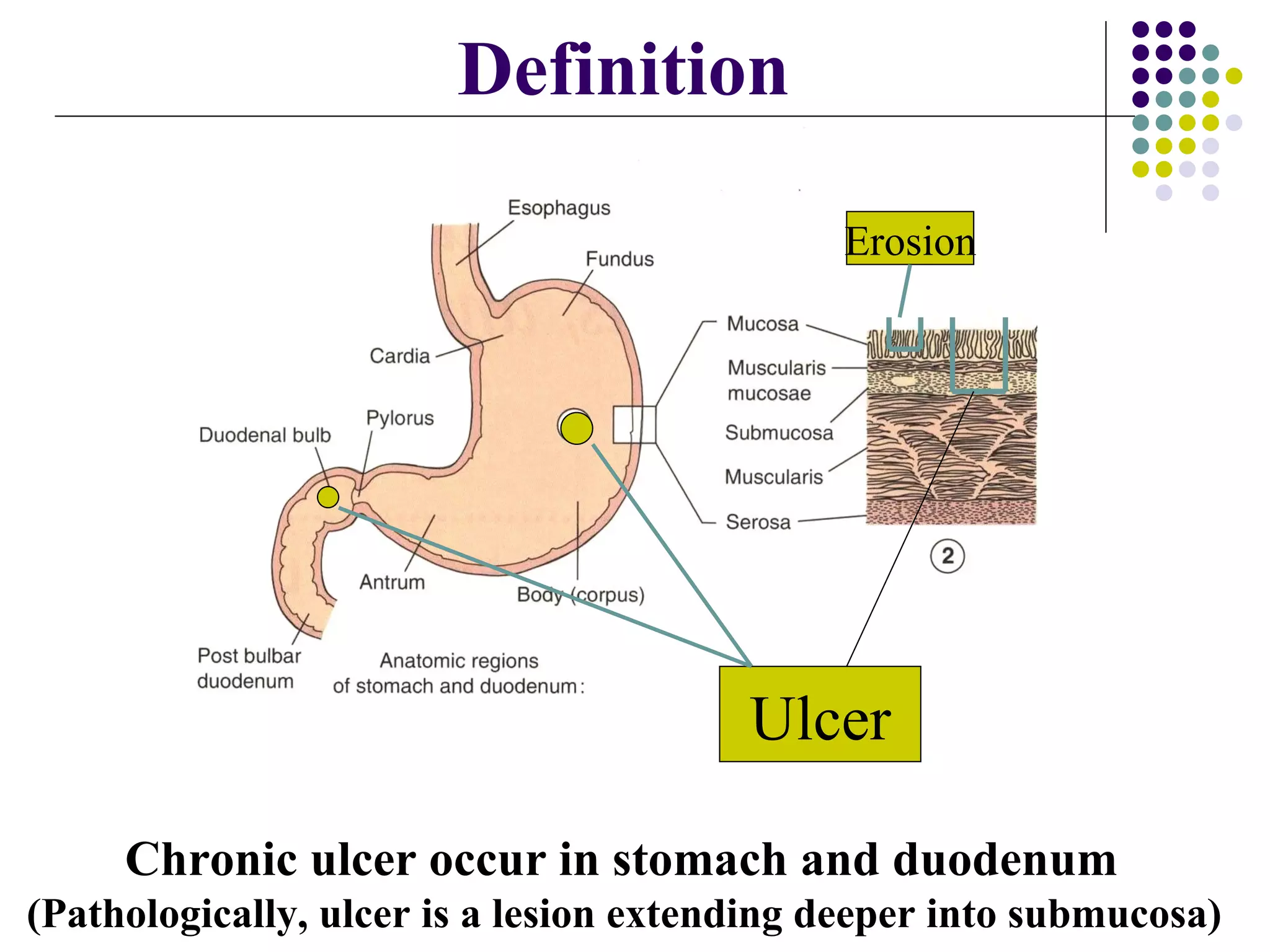
Ulcer Erosion Definition Chronic ulcer occur in stomach and duodenum (Pathologically, ulcer is a lesion extending deeper into submucosa)
Epidemiology A common disease in digestive  system No data are available about the exact  incidence of peptic ulcer  worldwide
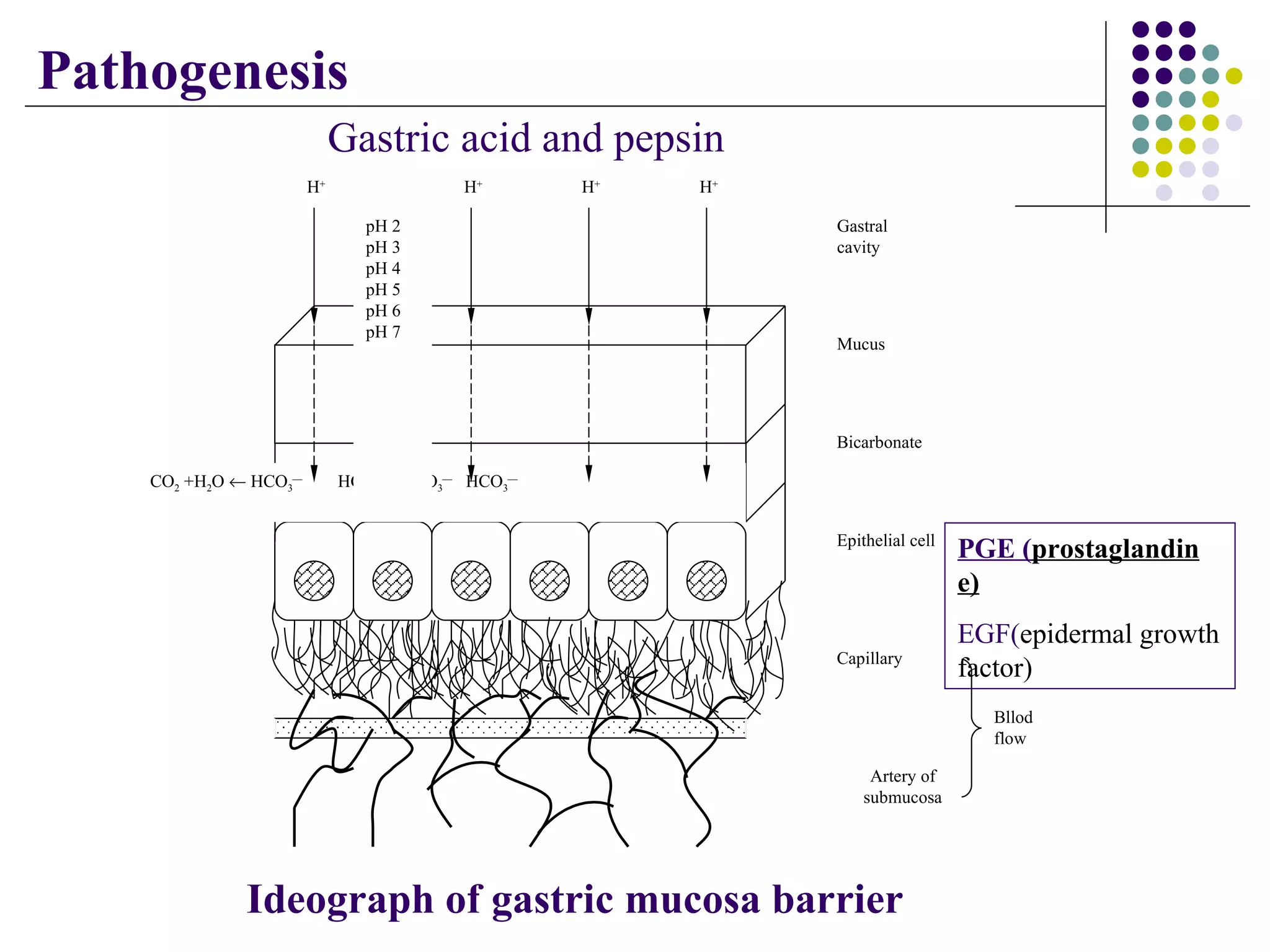
Ideograph of gastric mucosa barrier PGE ( prostaglandin e) EGF( epidermal growth factor) Gastric acid and pepsin Pathogenesis CO 2  +H 2 O    HCO 3    HCO 3    HCO 3    HCO 3  pH 2 pH 3 pH 4 pH 5 pH 6 pH 7 H + H + H + H + Mucus Bicarbonate Epithelial cell Bllod flow Capillary Artery of submucosa Gastral cavity
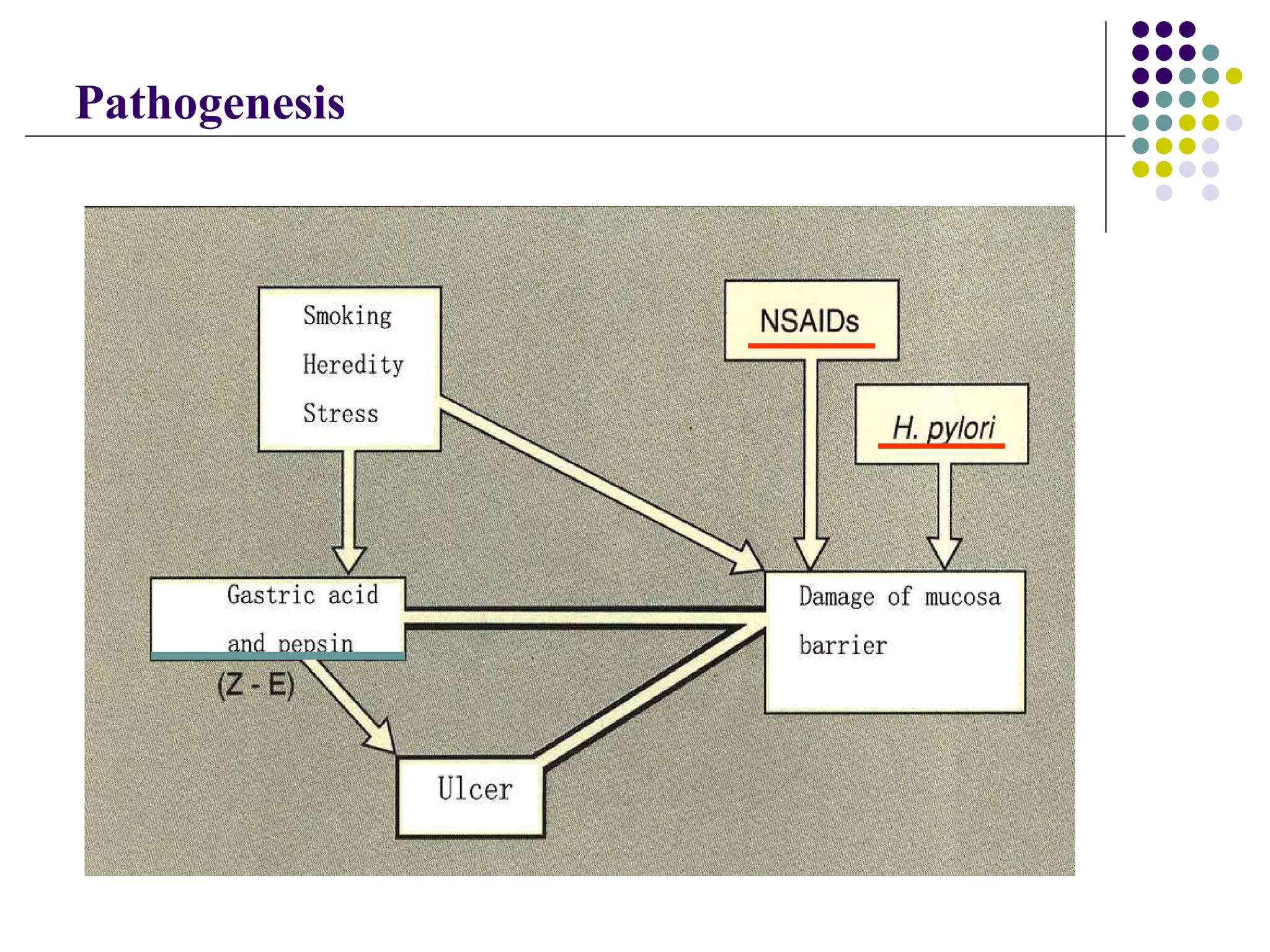
Pathogenesis
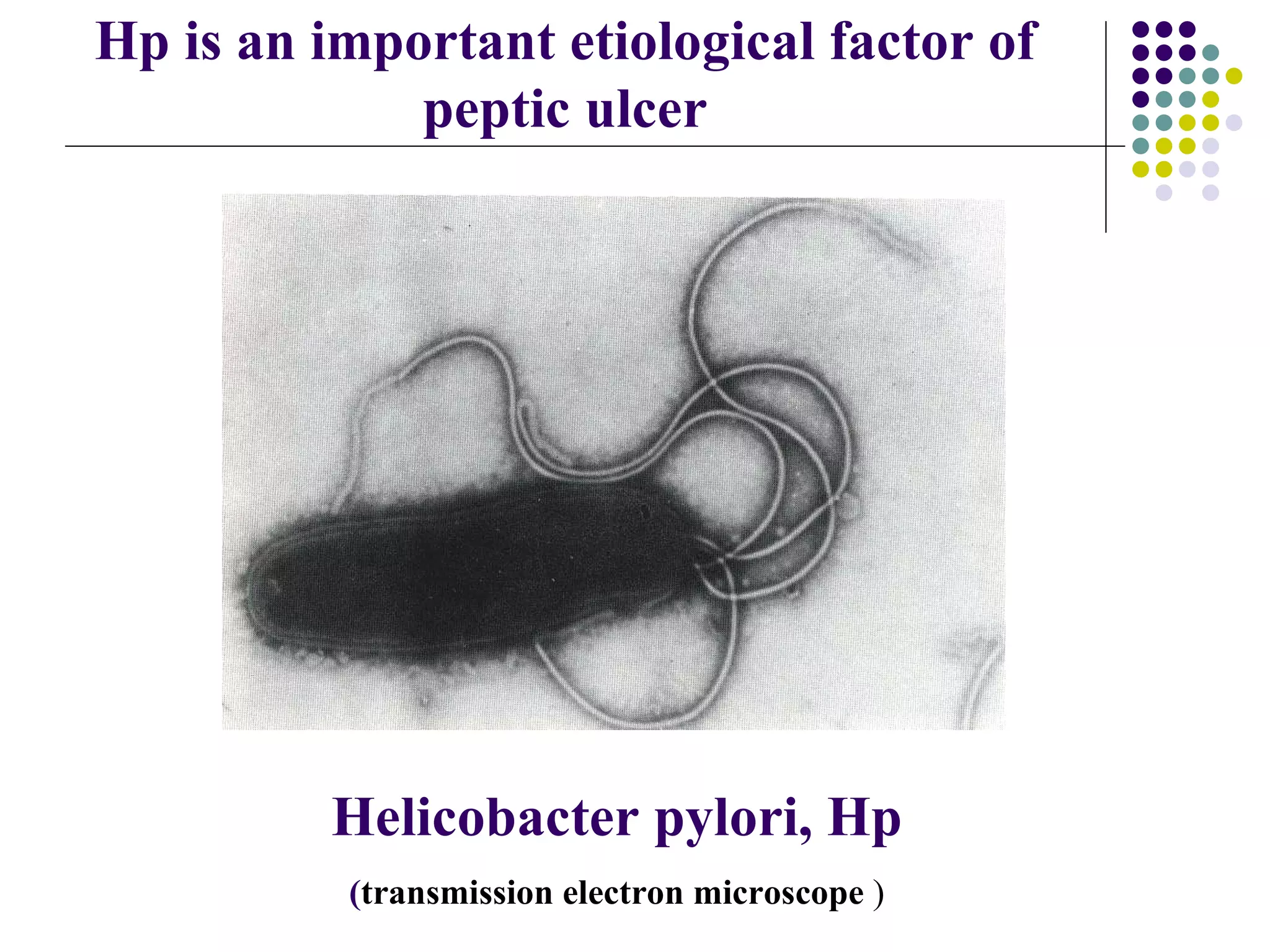
Helicobacter pylori, Hp ( transmission electron microscope  ) Hp is an important etiological factor of peptic ulcer
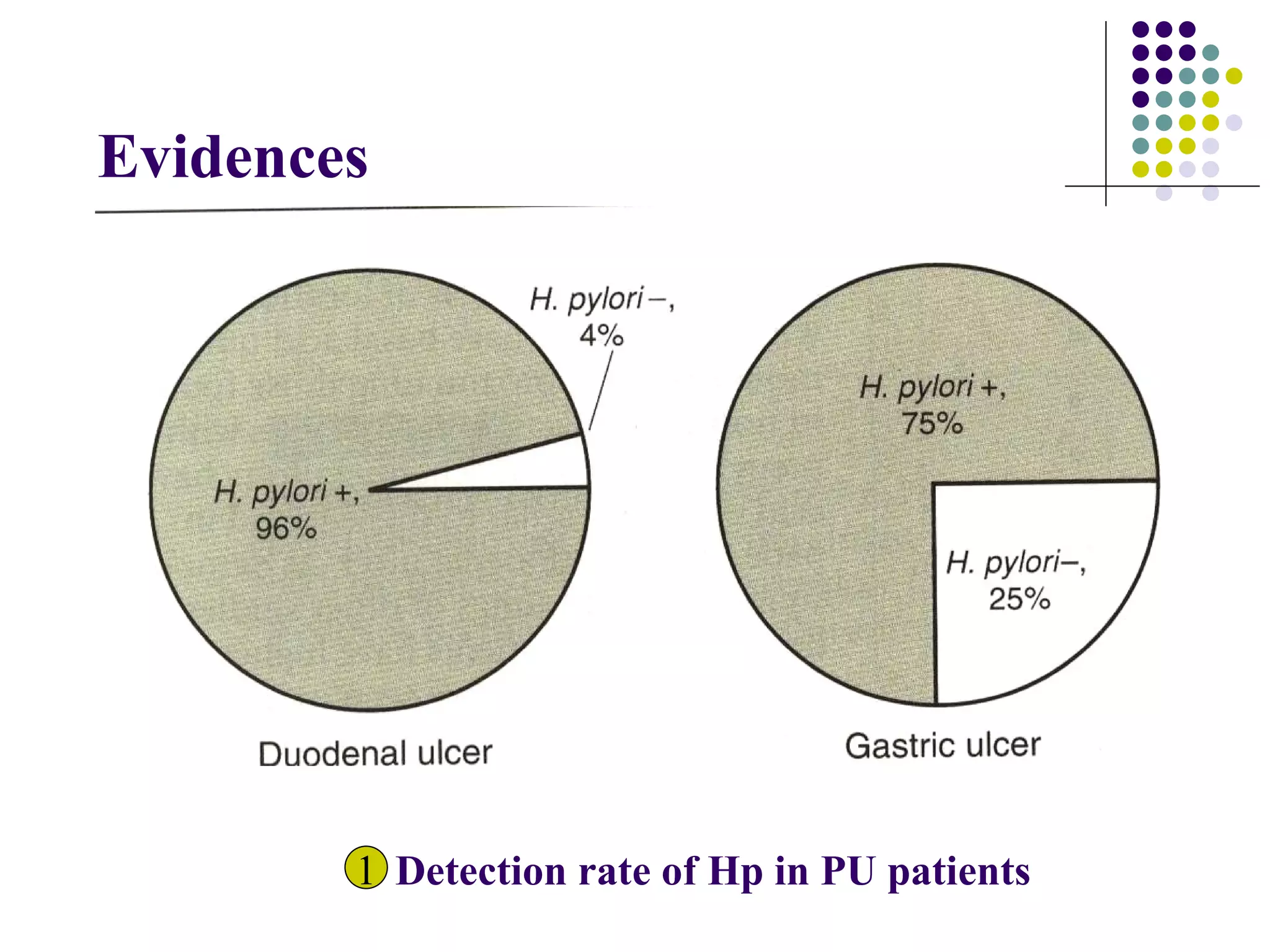
Evidences Detection rate of Hp in PU patients 1
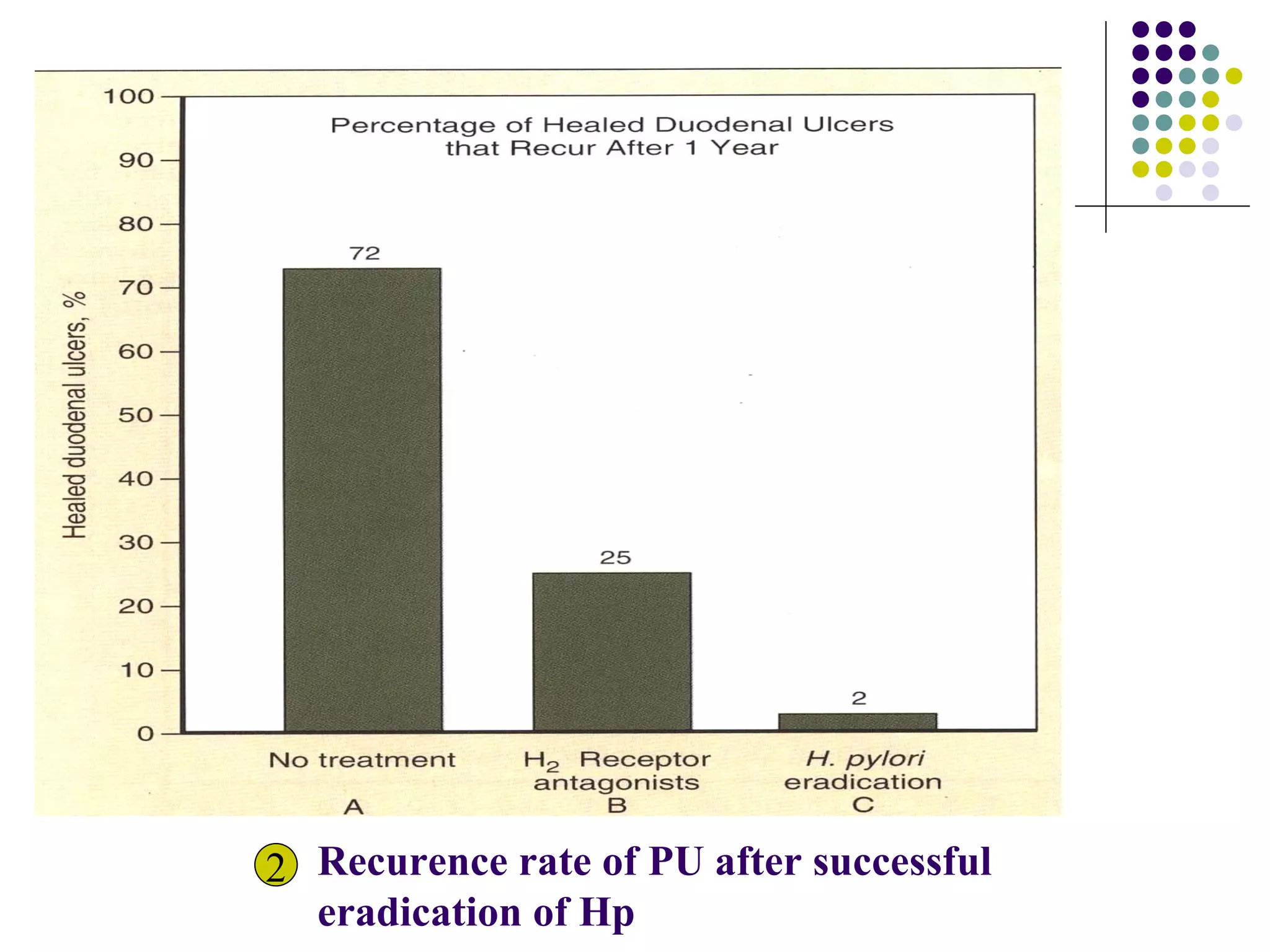
Recurence rate of PU after successful eradication of Hp 2
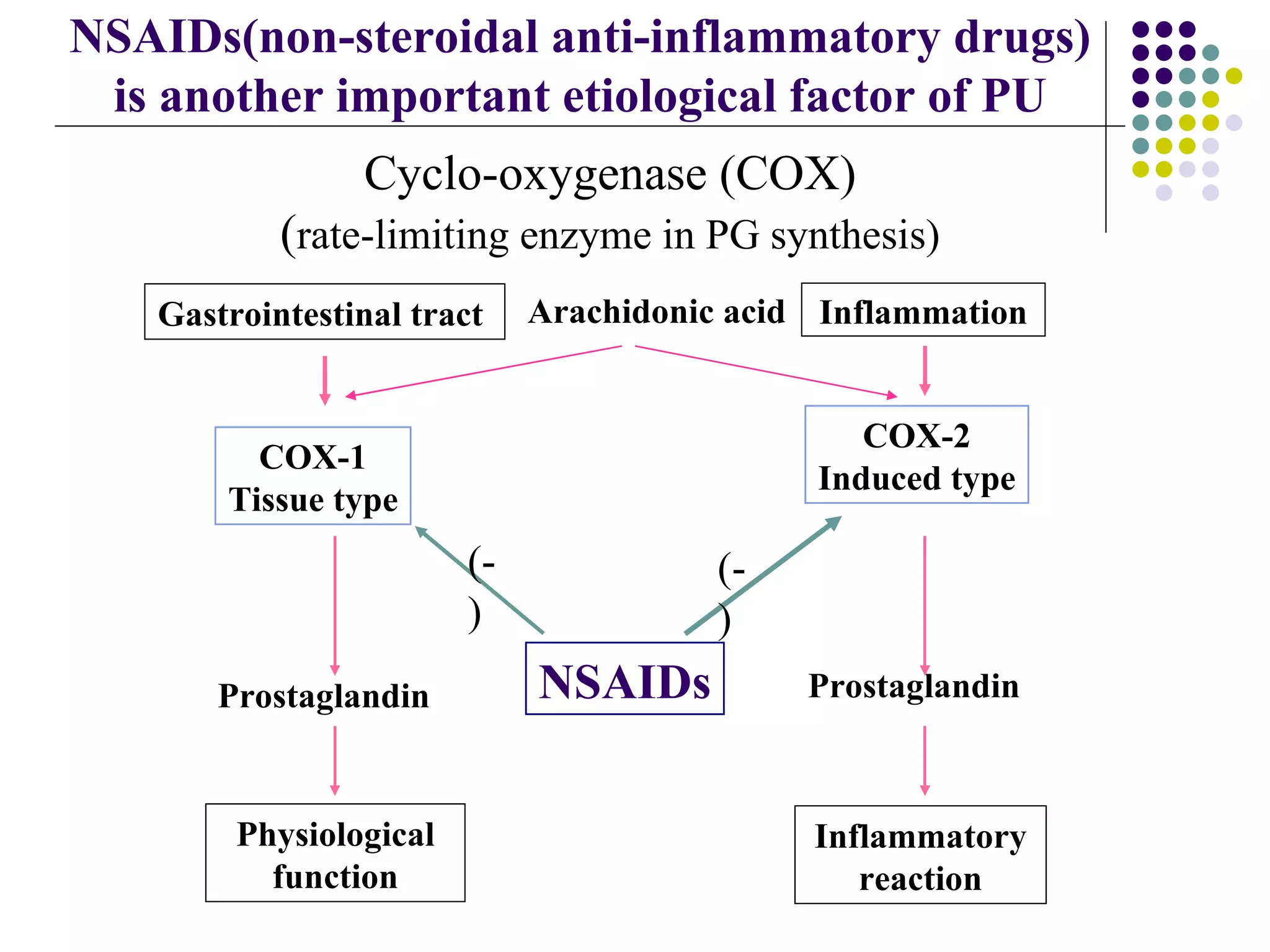
Cyclo-oxygenase  (COX) ( rate-limiting enzyme in PG synthesis) Arachidonic acid COX-1 Tissue type COX-2 Induced type NSAIDs Prostaglandin NSAIDs(non-steroidal anti-inflammatory drugs) is another important etiological factor of PU (-) (-) Prostaglandin Gastrointestinal tract  Physiological function Inflammation Inflammatory reaction
“ No acid, no ulcer ” ---  Key role of gastric acid in the formation of peptic ulcer Because the activation of pepsin is pH-dependent (pH<4) Gastric acid and pepsin
Diagnosis and differential diagnosis Symptom is the most important clue for clinical diagnosis Typical   upper abdominal pain:   Chronic, periodic and rhythmical pain Relieve after food eating or antacid using (Attention: Symptomless or un-typical  ulcer)
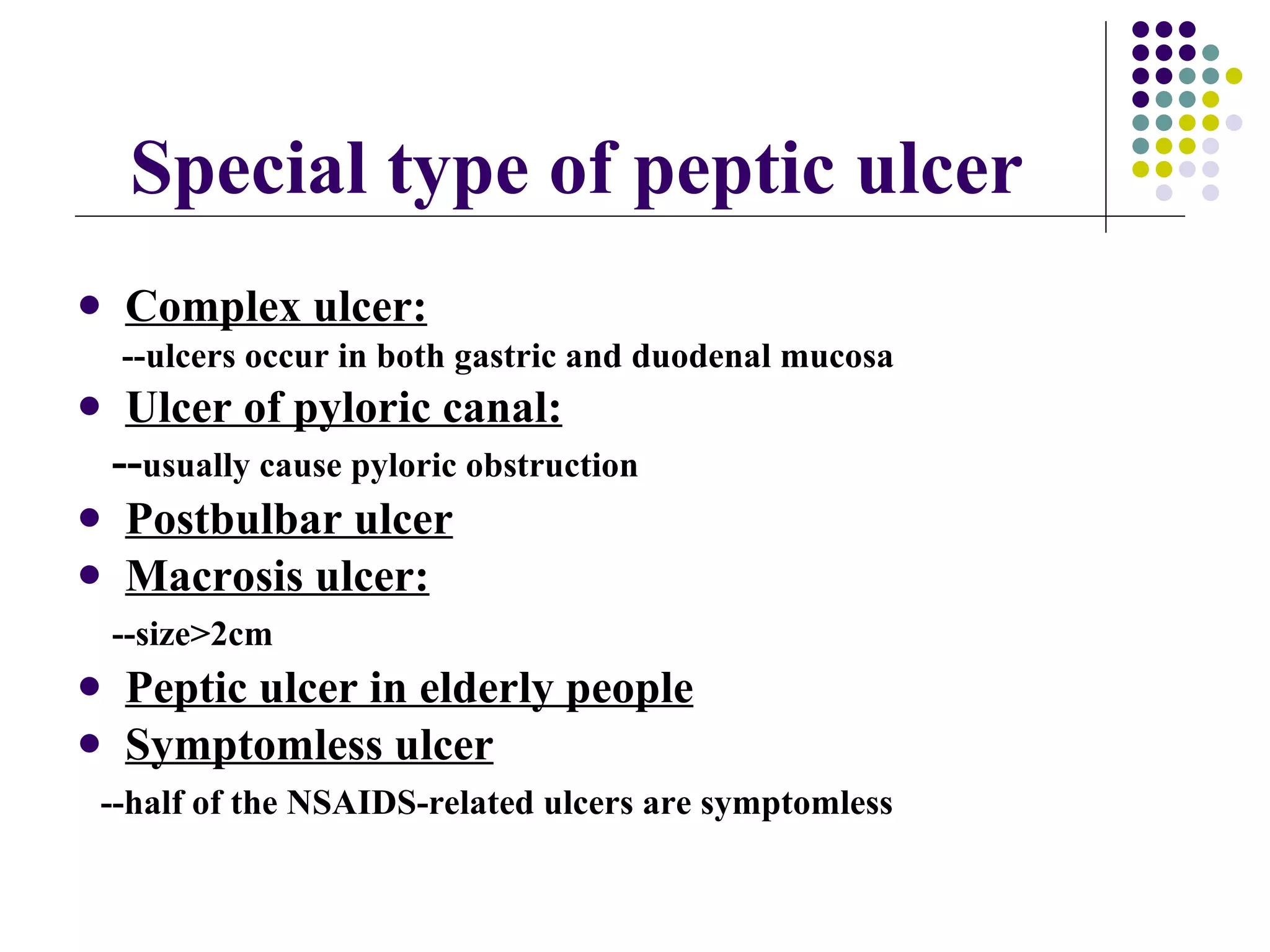
Complex ulcer: --ulcers occur in both gastric and duodenal mucosa Ulcer of pyloric canal: -- usually cause pyloric obstruction Postbulbar ulcer Macrosis ulcer: --size>2cm Peptic ulcer in elderly people Symptomless ulcer --half of the NSAIDS-related ulcers are symptomless Special type of peptic ulcer
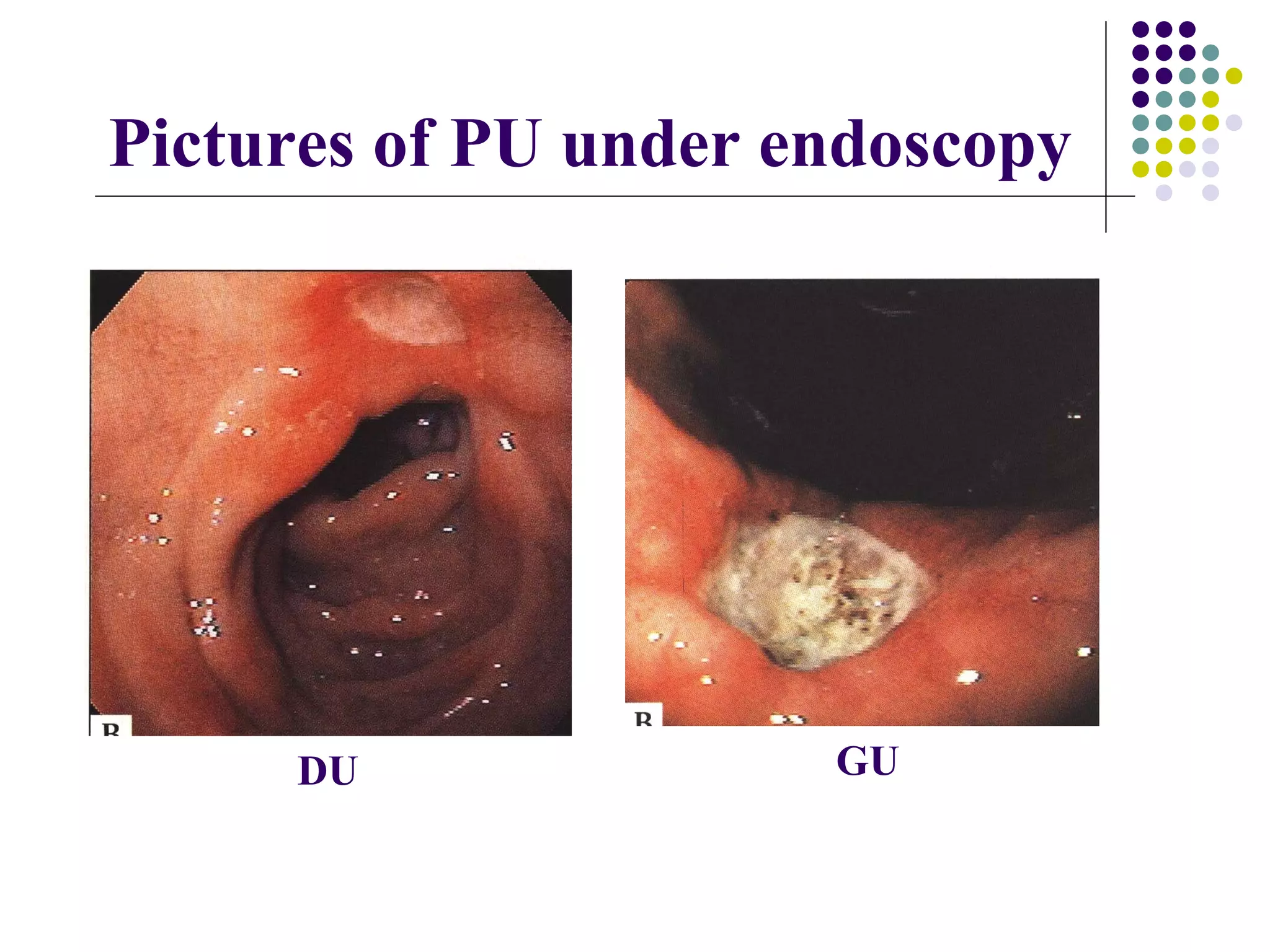
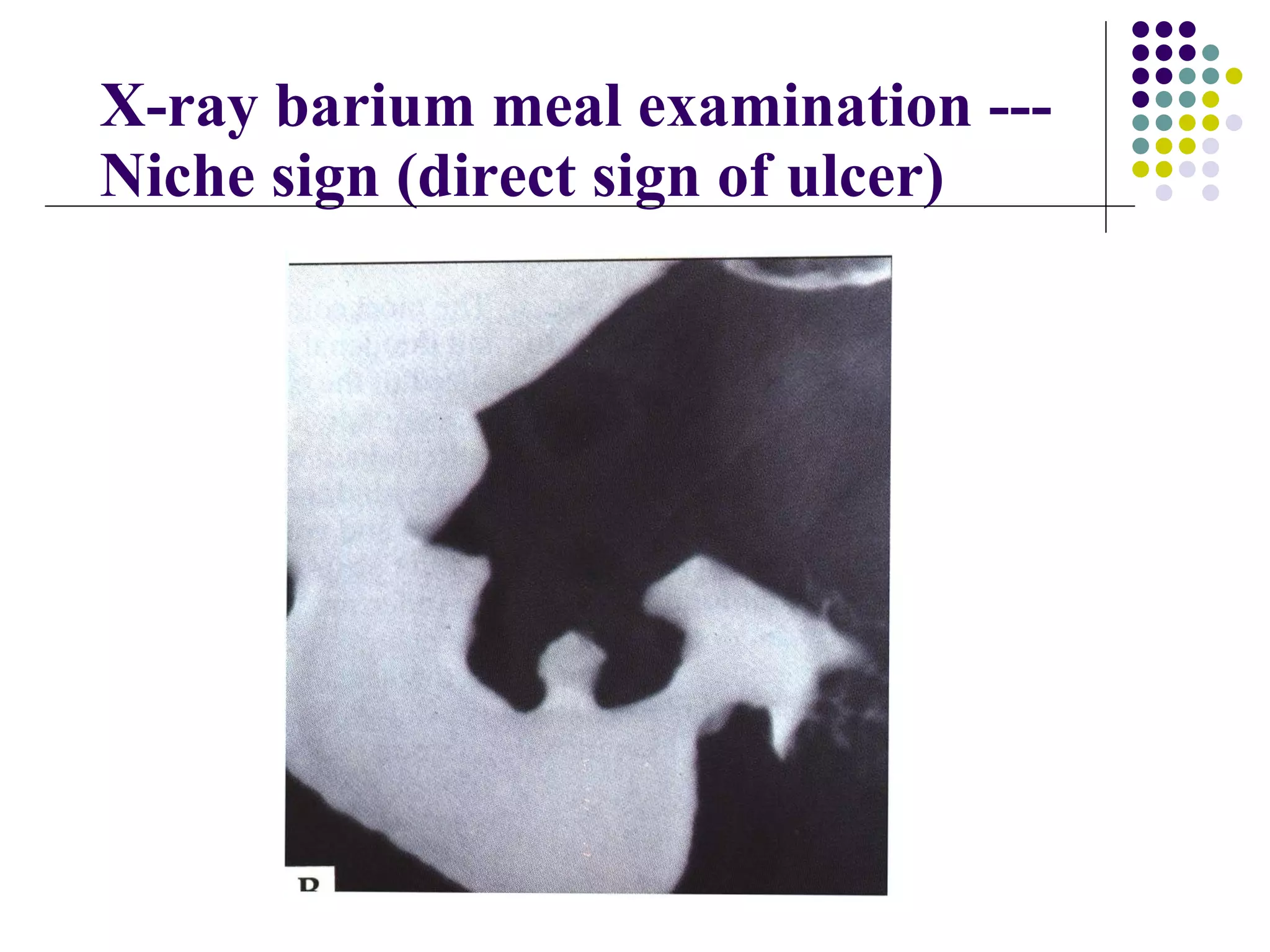
Definite diagnosis of peptic ulcer depends on endoscopy examination: --- may observe ulcer, take biopsy and  detect  HP infection Niche sign observed by X-ray barium meal examination may also provide evidence for definite diagnosis of peptic ulcer ---not as accurate as endoscopy  detection
Pictures of PU under endoscopy DU GU
X-ray barium meal examination --- Niche sign (direct sign of ulcer)
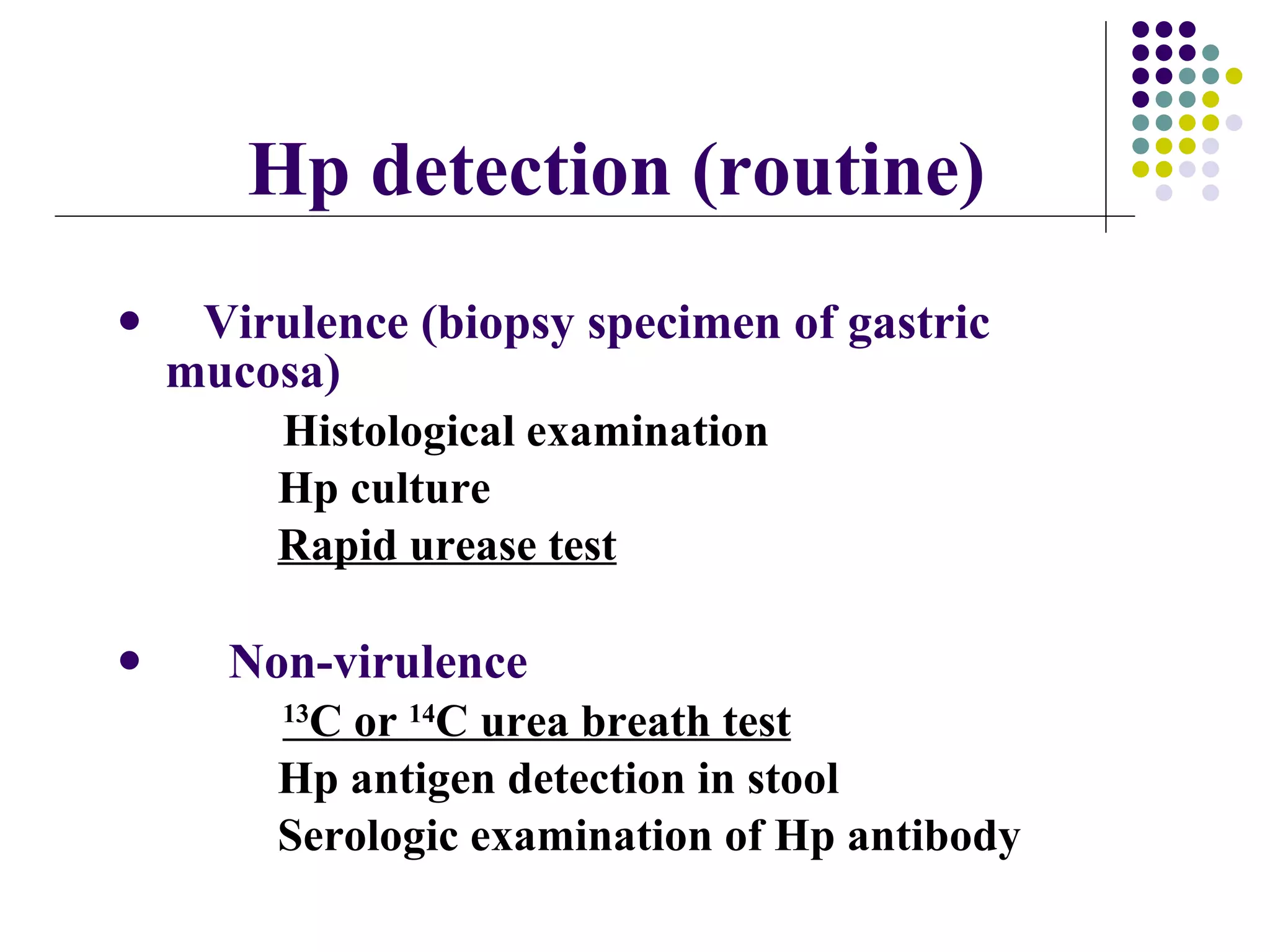
Virulence (biopsy specimen of gastric mucosa)   Histological examination Hp culture Rapid urease test Non-virulence  13 C or  14 C urea breath test Hp antigen detection in stool Serologic examination of Hp antibody Hp detection (routine)
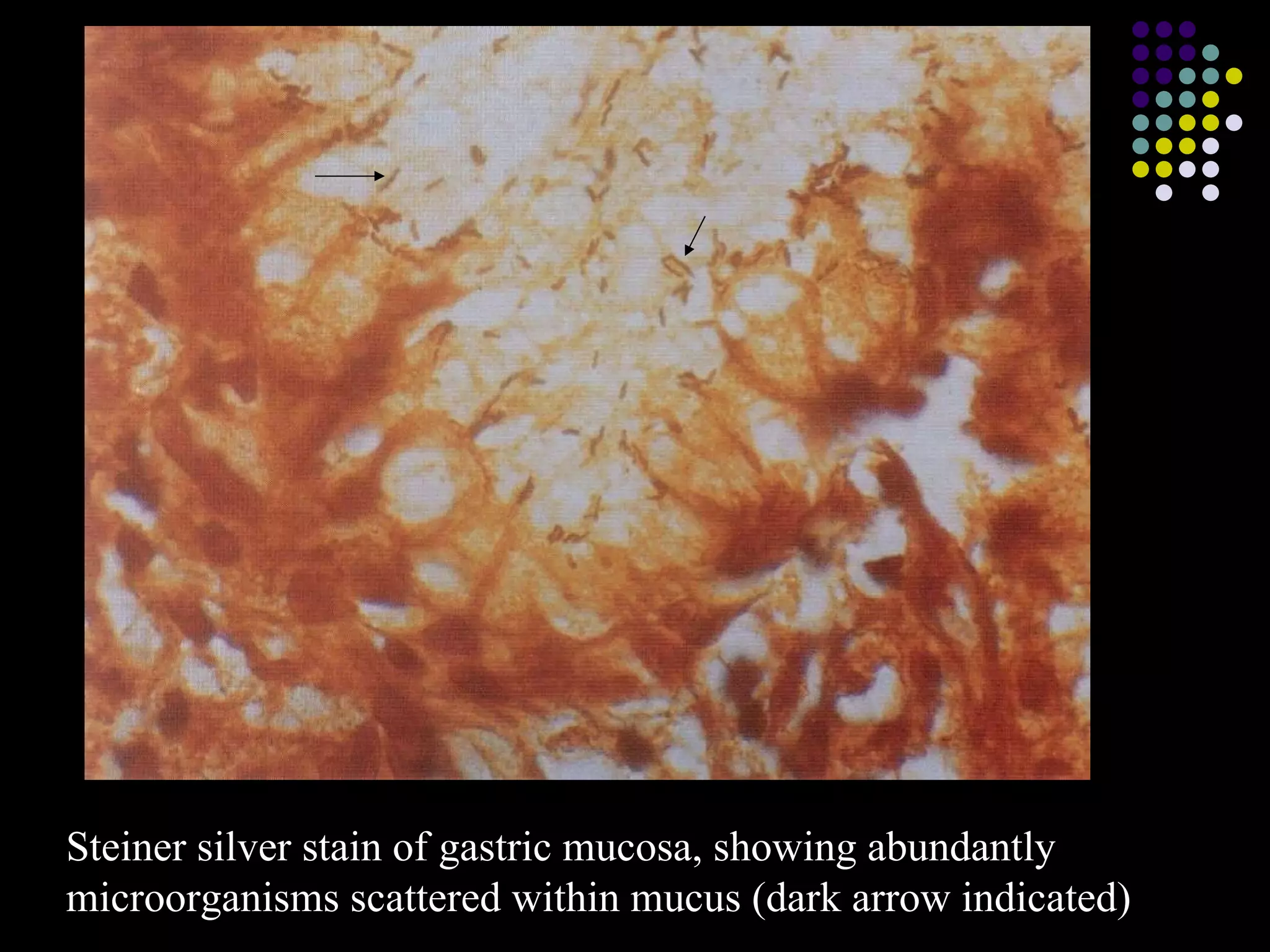
Steiner silver stain of gastric mucosa, showing abundantly  microorganisms scattered within mucus (dark arrow indicated)
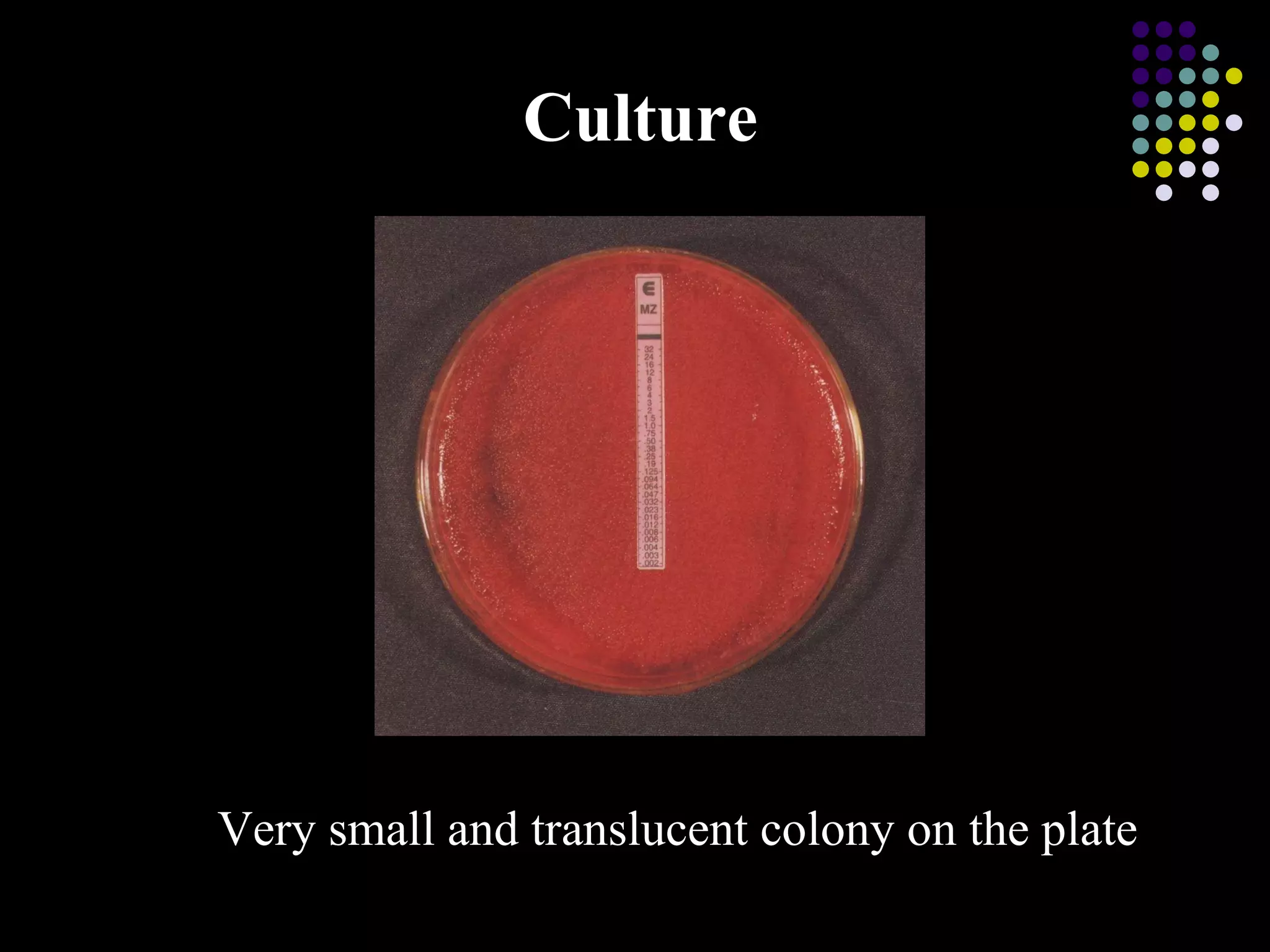
Culture Very small and translucent colony on the plate
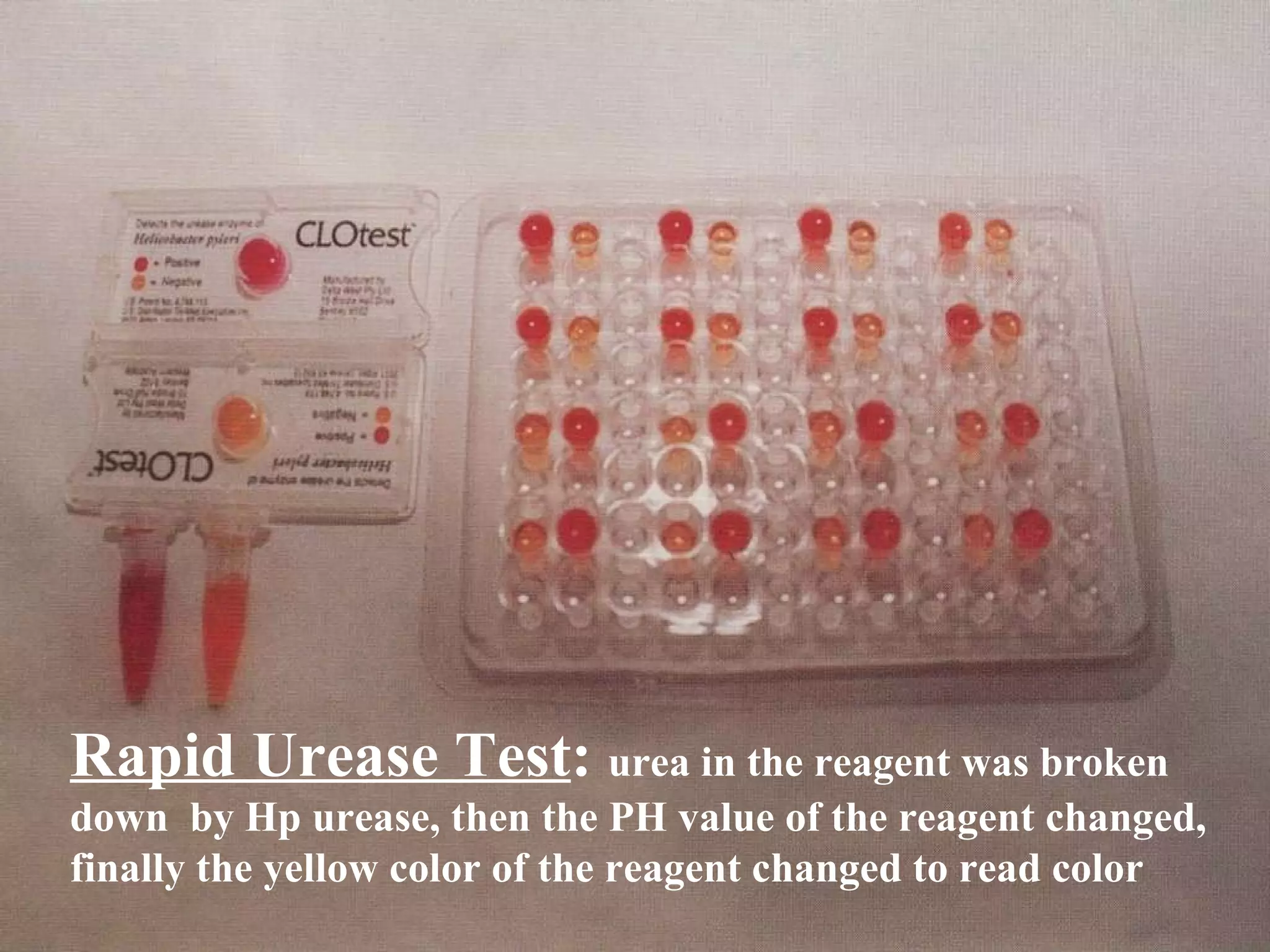
Rapid Urease Test :  urea in the reagent was broken down  by Hp urease, then the PH value of the reagent changed, finally the yellow color of the reagent changed to read color
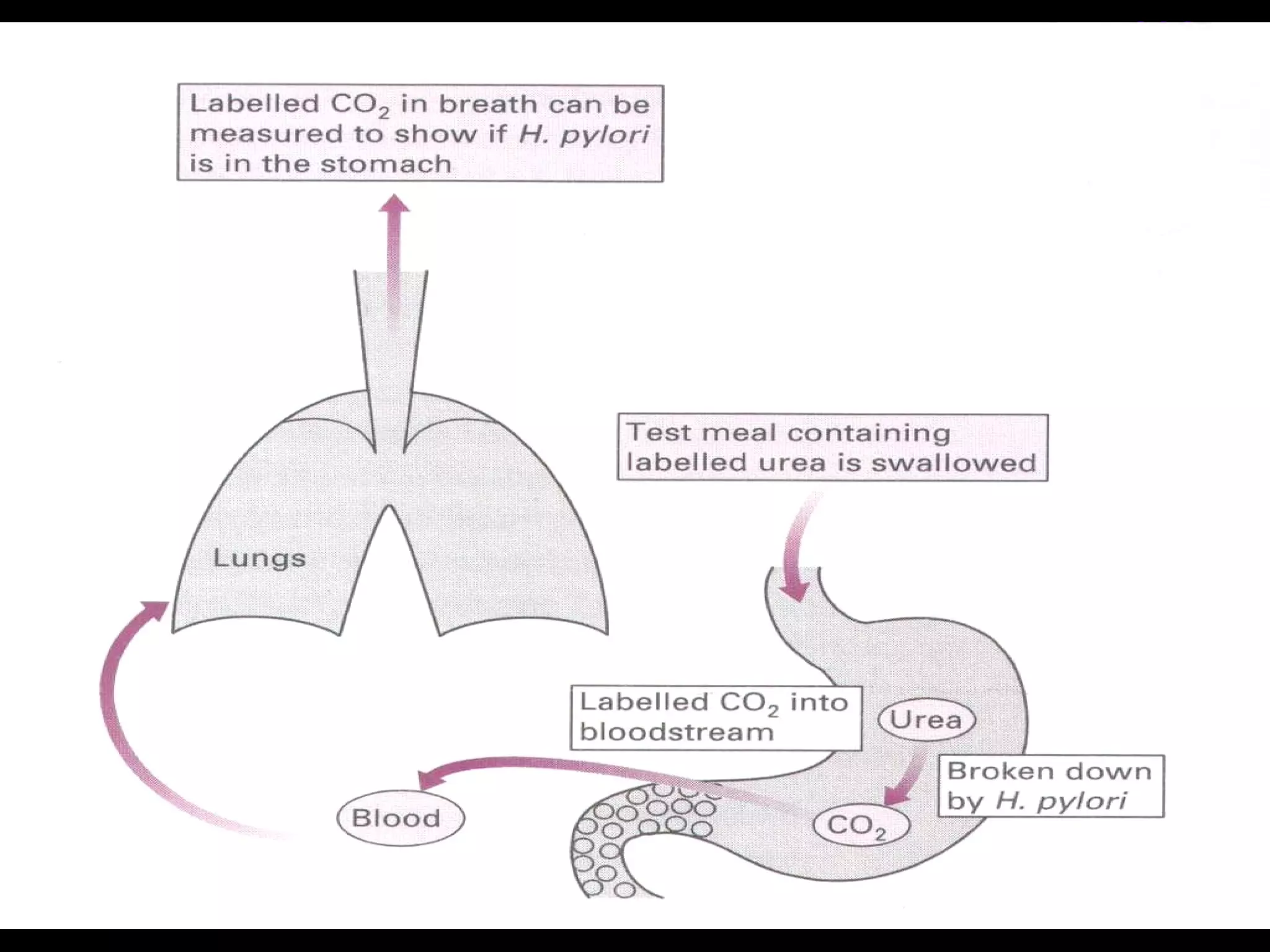
13C Urea Breath Test (UBT)
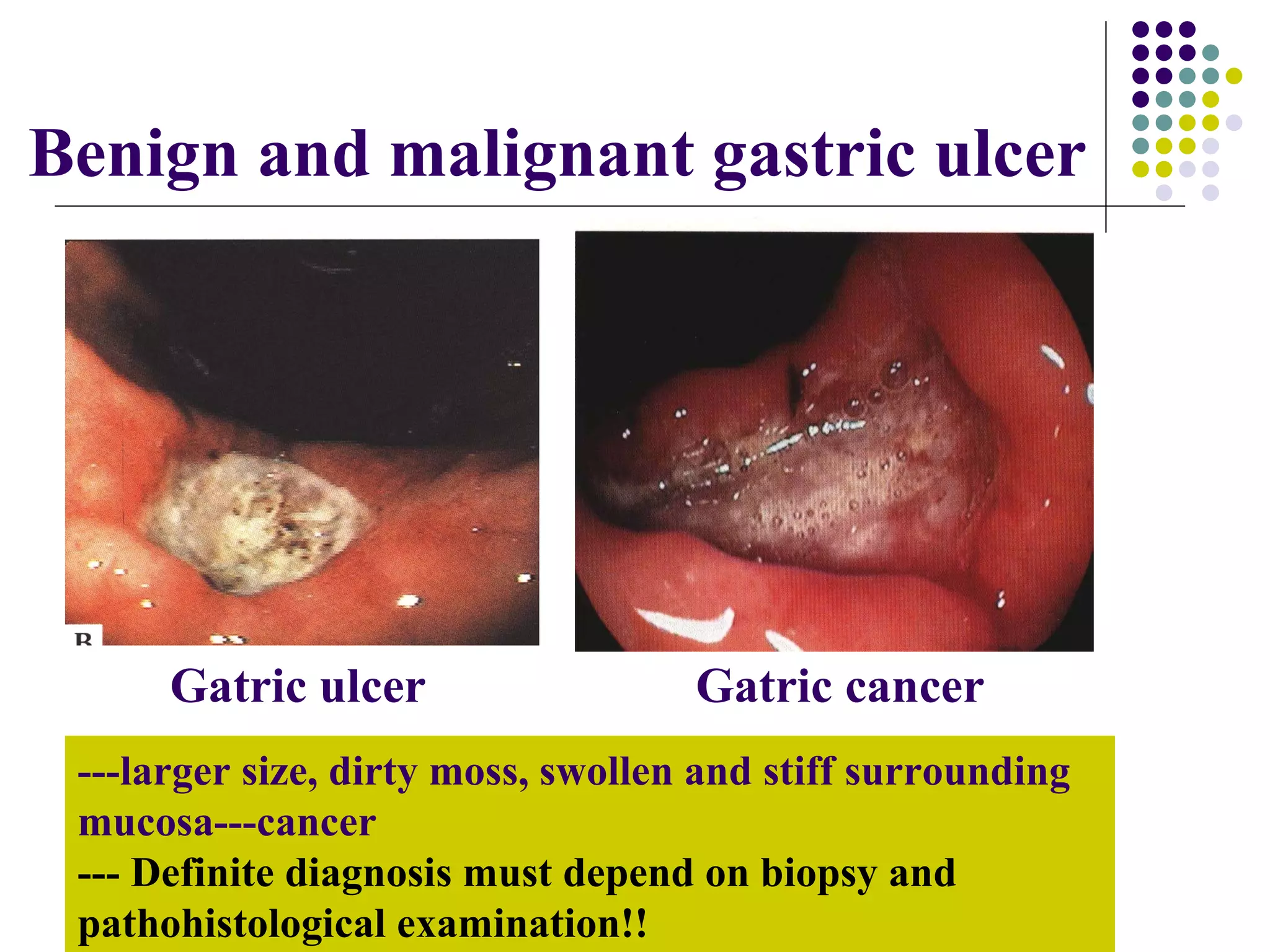
Differential diagnosis Peptic ulcer need to be differentiated from diseases with chronic upper abdominal pain Diseases of  liver, gallbladder and pancreas,  functional dyspepsia After the ulcer has been detected by endoscopy examination The differential diagnosis of   benign and malignant gastric ulcer is very important
---larger size, dirty moss, swollen and stiff surrounding   mucosa---cancer --- Definite diagnosis must depend on biopsy and pathohistological examination!! Gatric ulcer  Gatric cancer Benign and malignant gastric ulcer
Complications Bleeding  The most common complication The most common cause of massive hemorrhage of gastrointestinal tract  Perforation Pyloric obstruction Canceration (GU, 1%)
Pyloric obstruction   (DU 、 pyloric canal ulcer) Temporary obstruction  (caused by pyloric dropsy or pylorospasm during the active stage of ulcer) Chronic obstruction (cicatricial pyloric obstruction)  (caused by shrink of scar during the healing stage of ulcer) Symptoms  (abdominal pain, nausea, vomit, et al) Confirmed by gastroscope or X-ray barium meal examination
Treatment Principles Eliminate etiological factors (Hp eradication, stop using NSAIDs) Relieve symptoms, facilitate ulcer healing (antiulcer drugs) Prevent ulcer recurrence, and prevent or treat complications
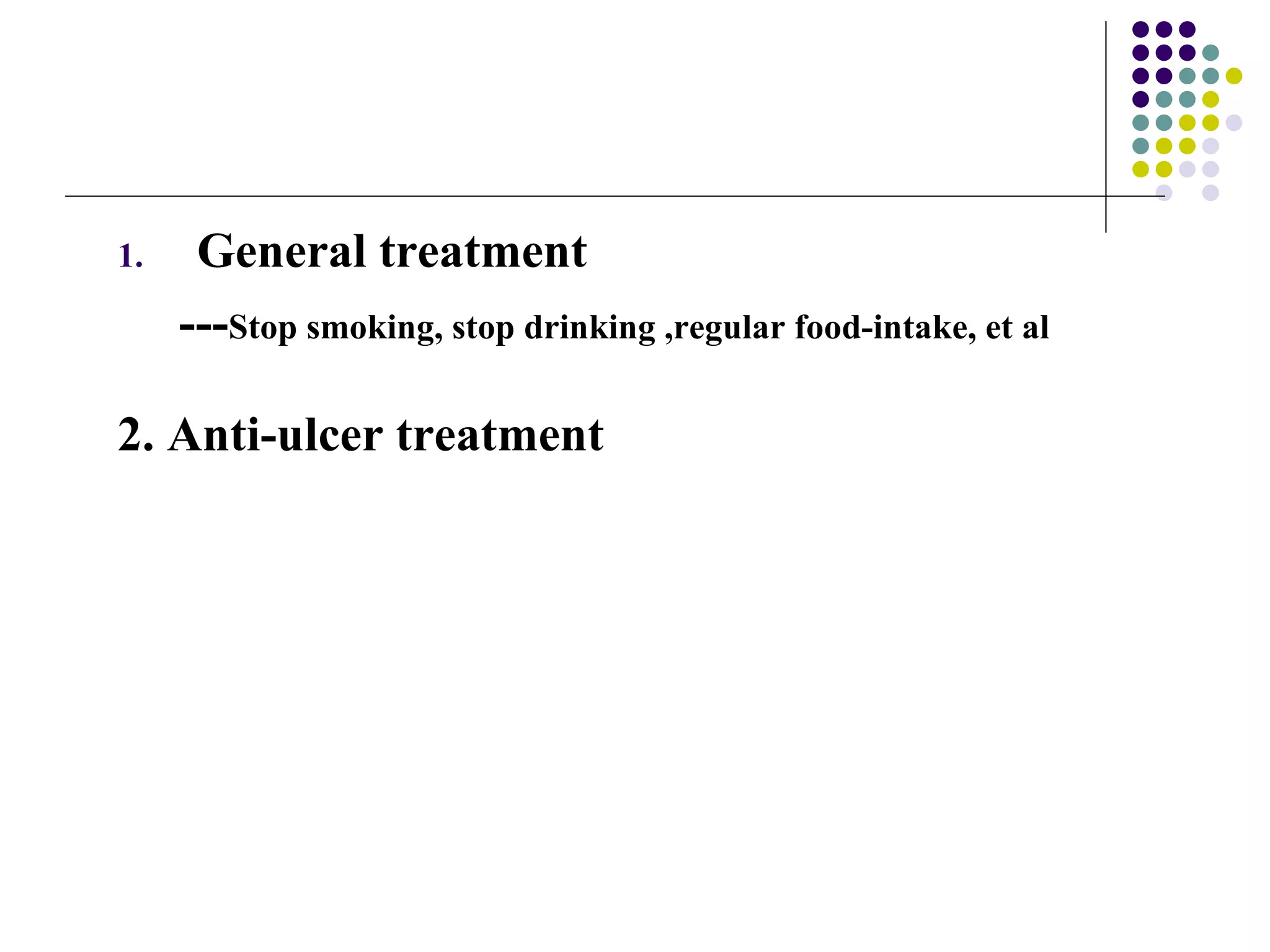
General treatment --- Stop smoking, stop drinking ,regular food-intake, et al 2. Anti-ulcer treatment
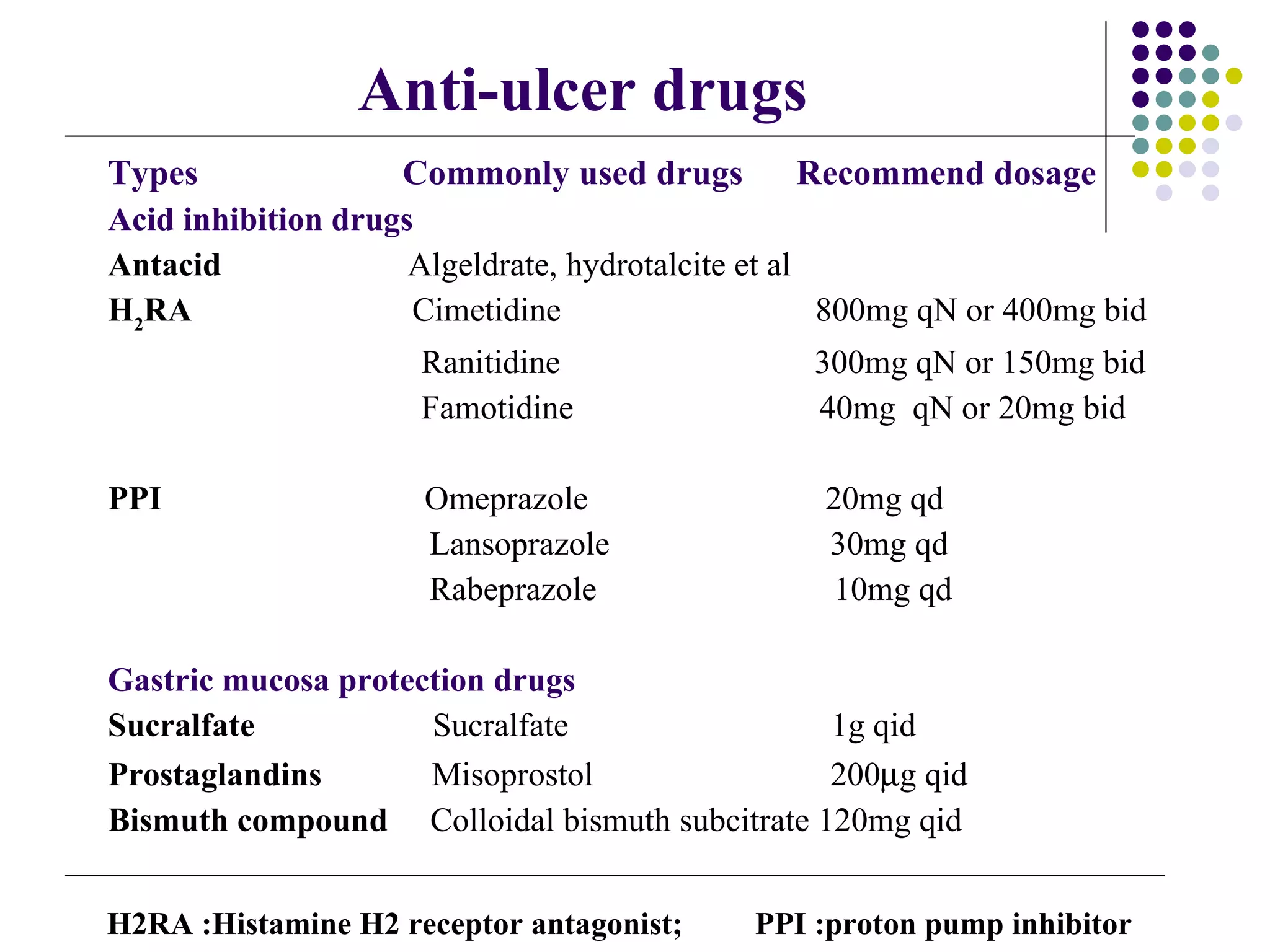
Types  Commonly used drugs  Recommend dosage Acid inhibition drugs Antacid   Algeldrate, hydrotalcite et al H 2 RA   Cimetidine  800mg qN or 400mg bid Ranitidine  300mg qN or 150mg bid Famotidine  40mg  qN or 20mg bid PPI  Omeprazole  20mg qd Lansoprazole  30mg qd Rabeprazole  10mg qd Gastric mucosa protection drugs Sucralfate   Sucralfate  1g qid Prostaglandins   Misoprostol  200  g qid Bismuth compound   Colloidal bismuth subcitrate 120mg qid Anti-ulcer drugs H2RA :Histamine H2 receptor antagonist;  PPI :proton pump inhibitor
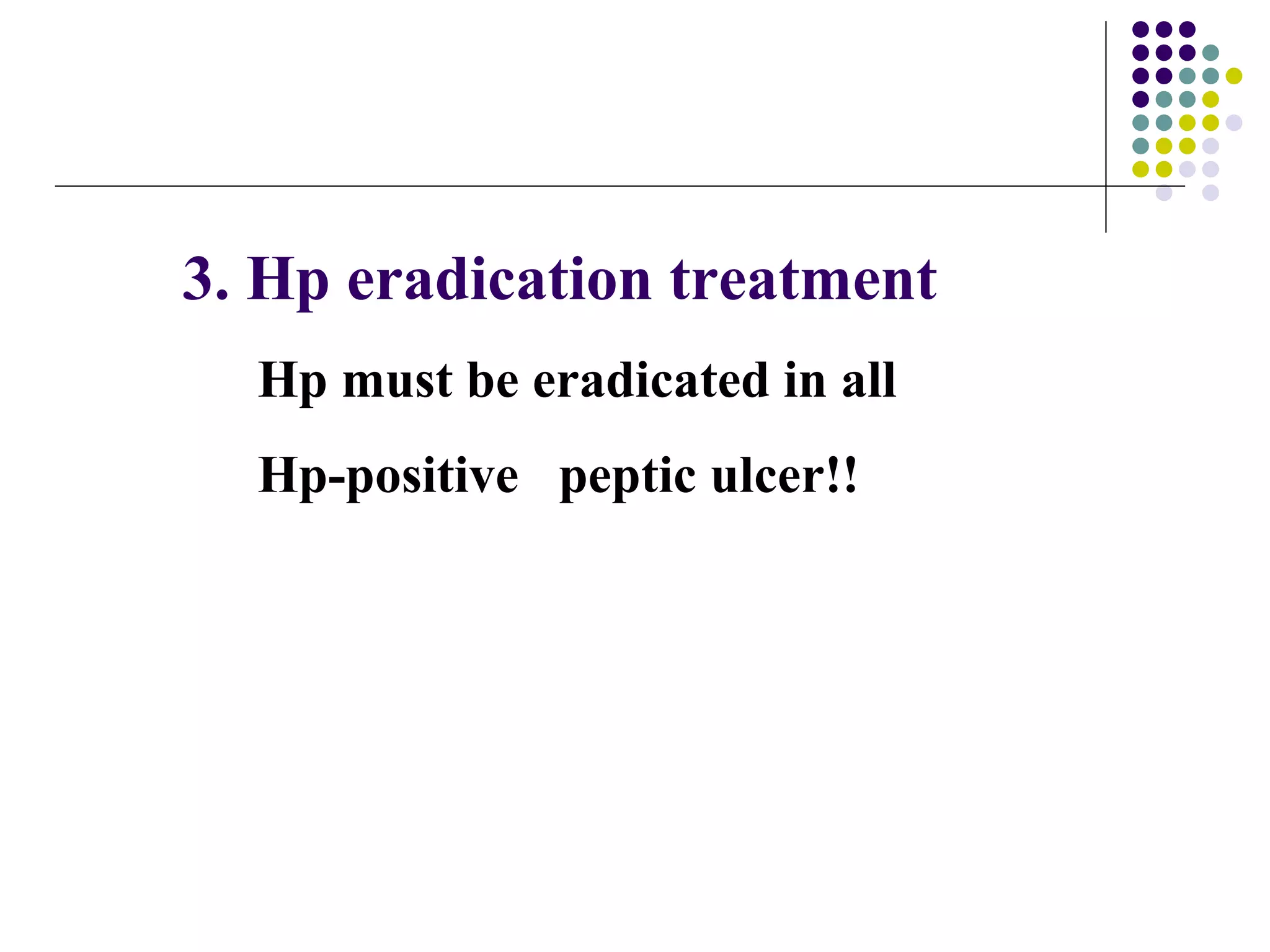
3. Hp eradication treatment Hp must be eradicated in all  Hp-positive  peptic ulcer!!
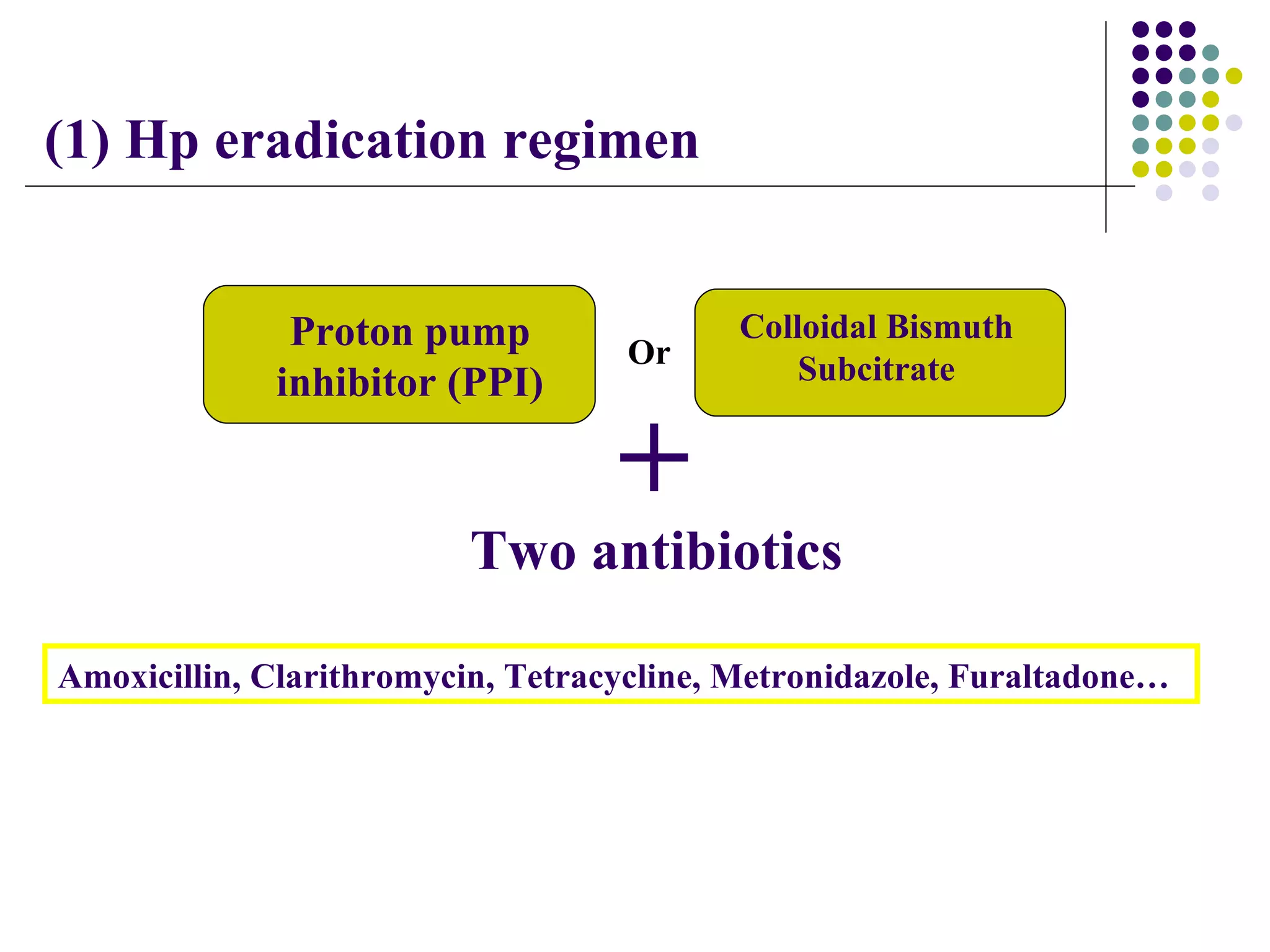
Proton pump inhibitor (PPI) Two antibiotics Colloidal Bismuth Subcitrate Amoxicillin ,  Clarithromycin ,  Tetracycline ,  Metronidazole ,  Furaltadone … + (1)  Hp eradication regimen   Or
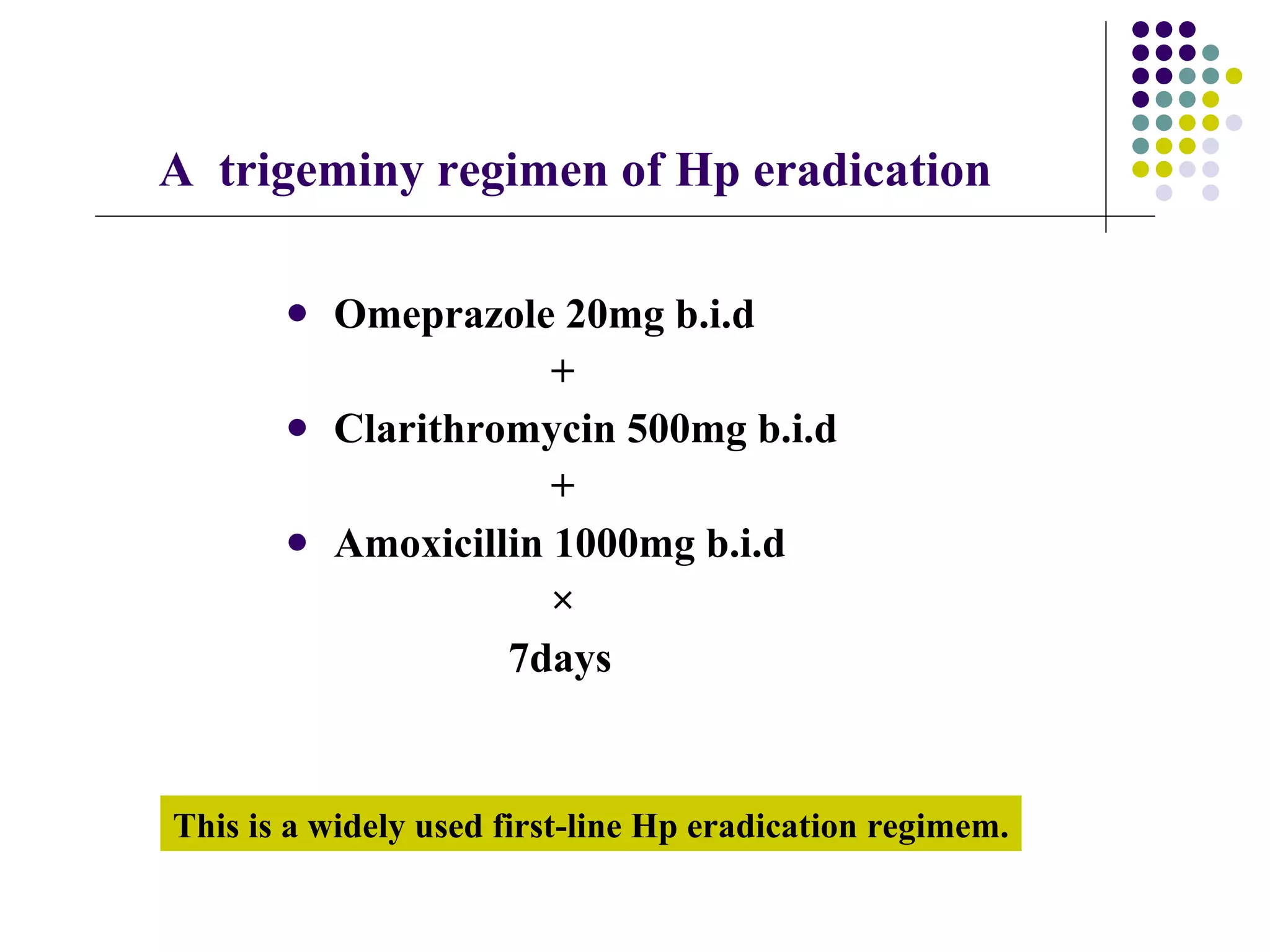
Omeprazole 20mg b.i.d + Clarithromycin 500mg b.i.d + Amoxicillin 1000mg b.i.d × 7days A  trigeminy regimen of Hp eradication This is a widely used first-line Hp eradication regimem.
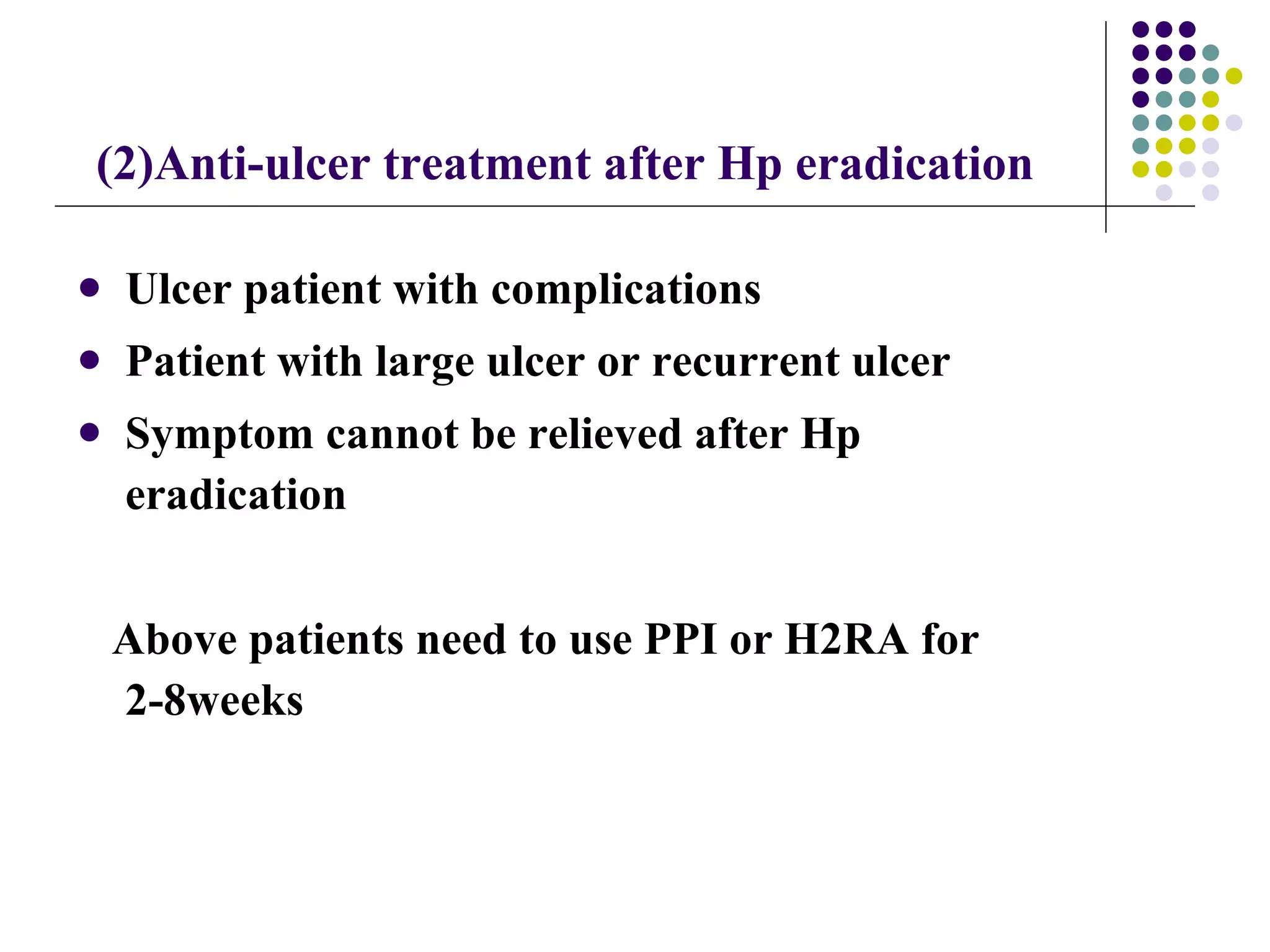
Ulcer patient with complications Patient with large ulcer or recurrent ulcer  Symptom cannot be relieved after Hp eradication Above patients need to use PPI or  H2RA  for 2-8weeks (2)Anti-ulcer treatment after Hp eradication
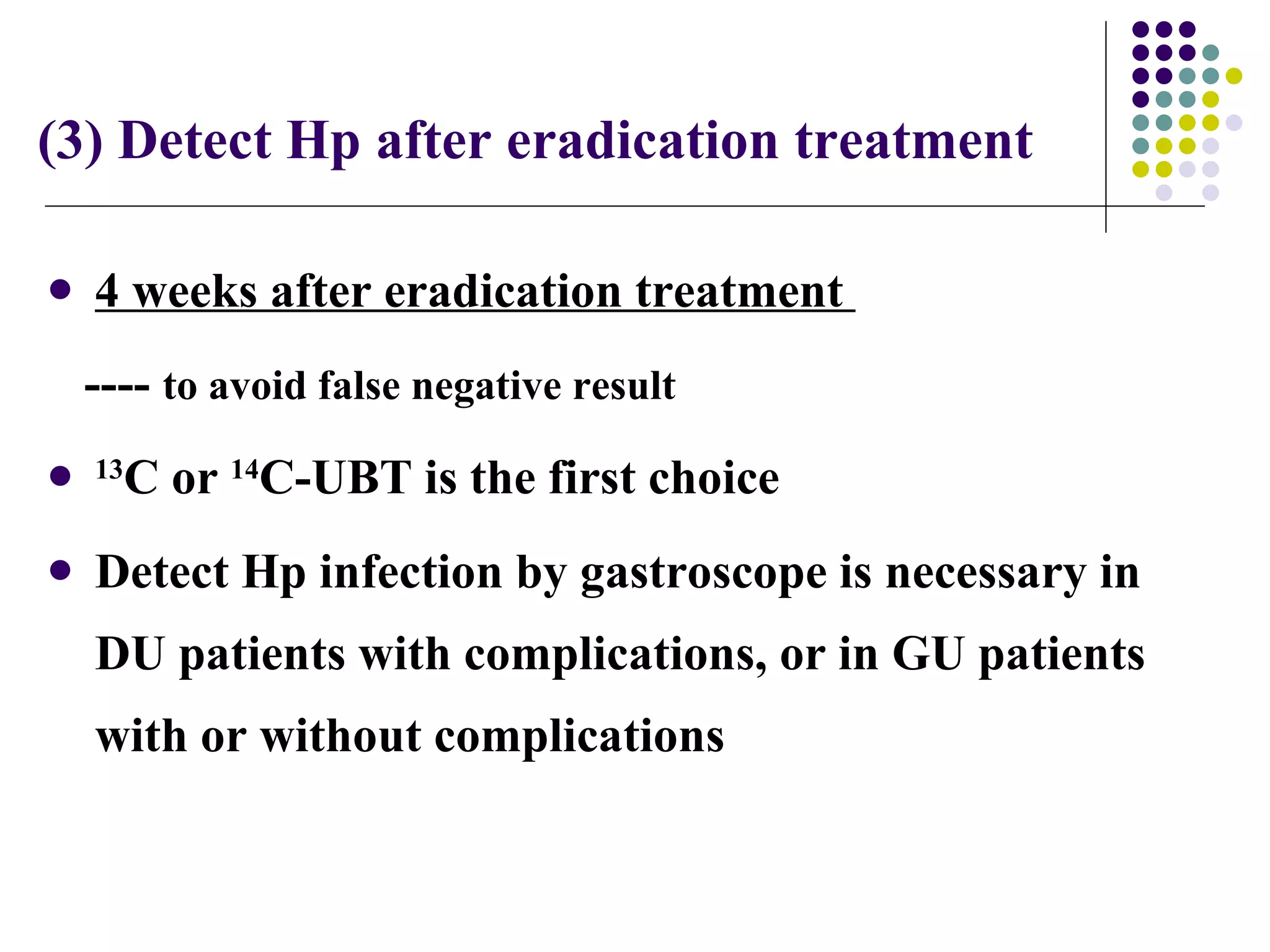
(3) Detect Hp after eradication treatment  4 weeks after  eradication treatment  ----  to avoid false negative result 13 C or  14 C-UBT is the first choice Detect Hp infection by gastroscope is necessary in DU patients with complications, or in GU patients with or without complications
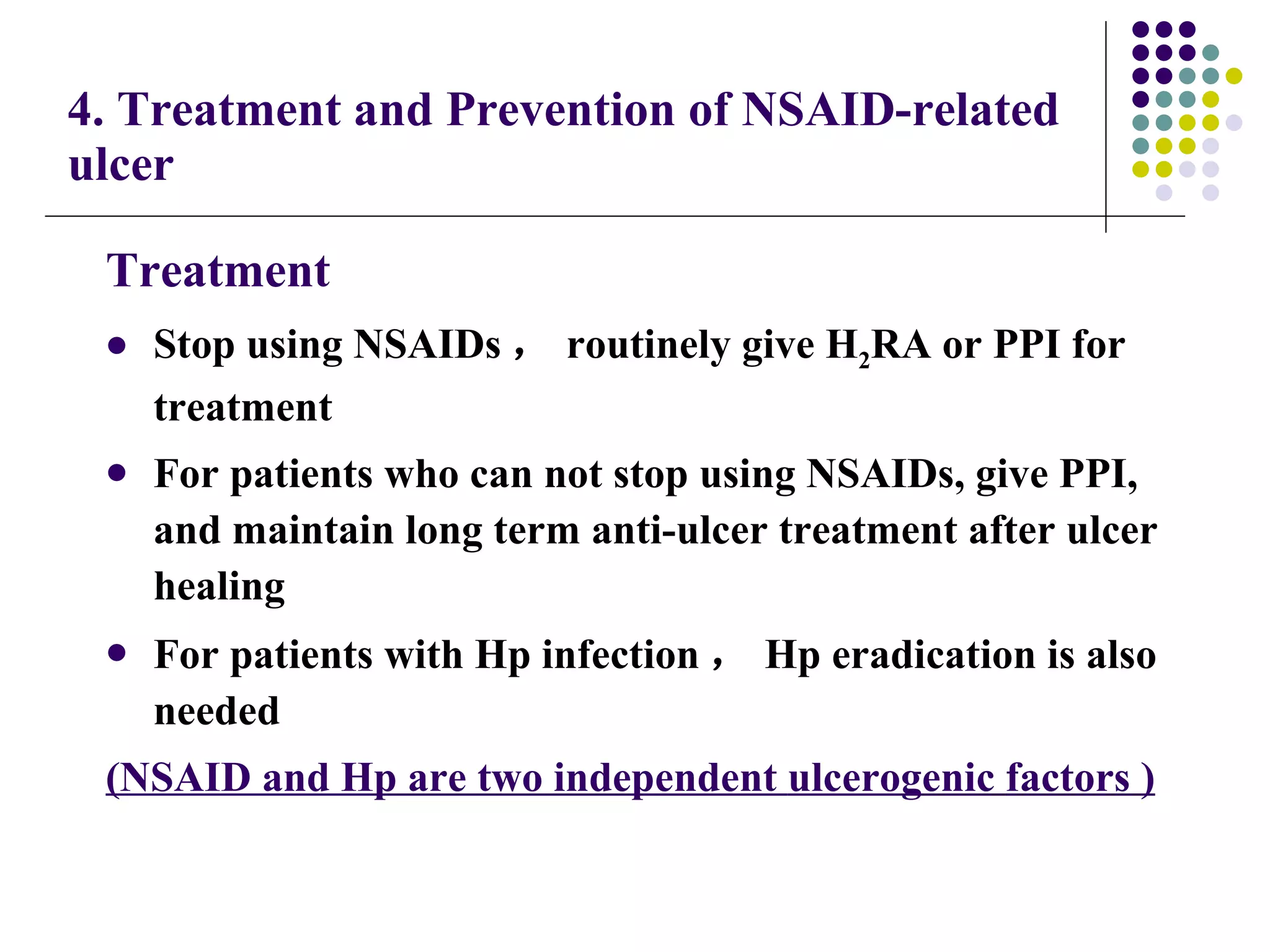
4. Treatment and Prevention of NSAID-related ulcer Treatment Stop using NSAIDs , routinely give H 2 RA or PPI for treatment For patients who can not stop using NSAIDs, give PPI, and maintain long term anti-ulcer treatment after ulcer healing  For patients with Hp infection , Hp eradication is also needed (NSAID and Hp are two independent  ulcerogenic  factors )
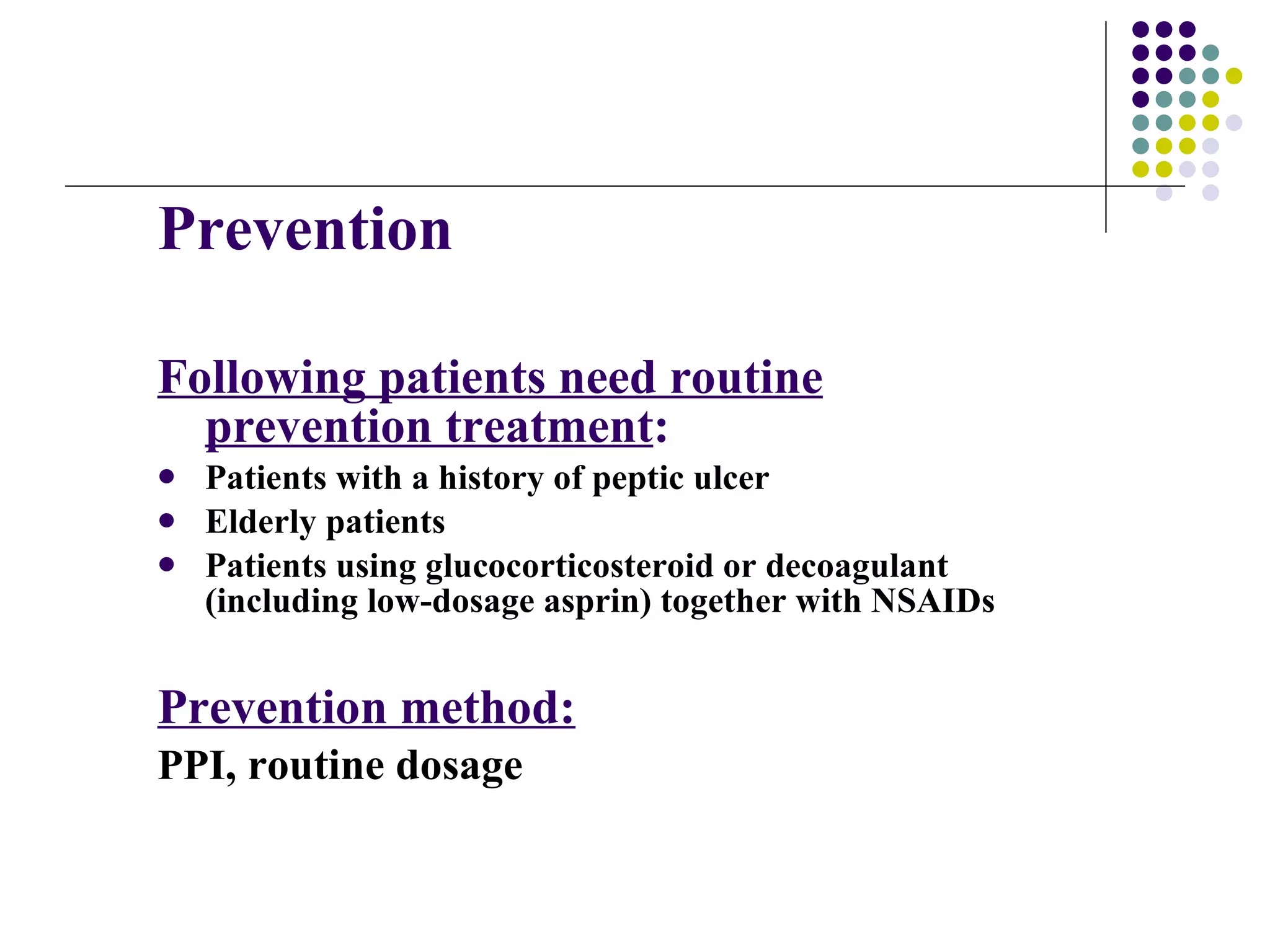
Prevention Following patients need routine prevention treatment : Patients with a history of peptic ulcer Elderly patients  Patients using glucocorticosteroid or decoagulant (including low-dosage asprin) together with NSAIDs Prevention method: PPI , routine dosage
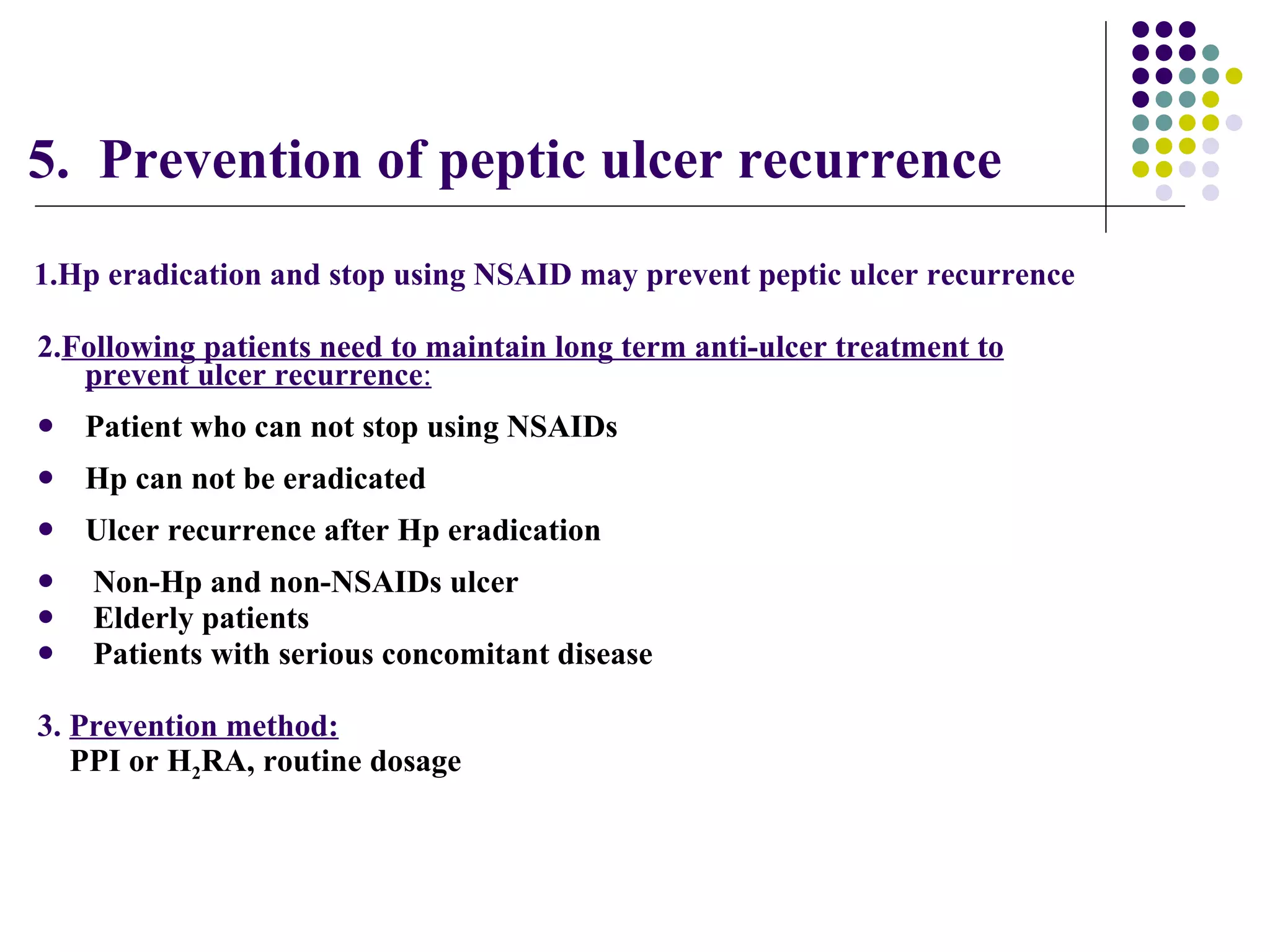
5.  Prevention of peptic ulcer recurrence  2. Following patients need to maintain long term anti-ulcer treatment to prevent ulcer recurrence : Patient who can not stop using NSAIDs Hp can not be eradicated Ulcer recurrence after Hp eradication  Non-Hp and non-NSAIDs ulcer Elderly patients Patients with serious concomitant disease 3.  Prevention method: PPI or H 2 RA, routine dosage 1.Hp eradication and stop using NSAID may prevent peptic ulcer recurrence
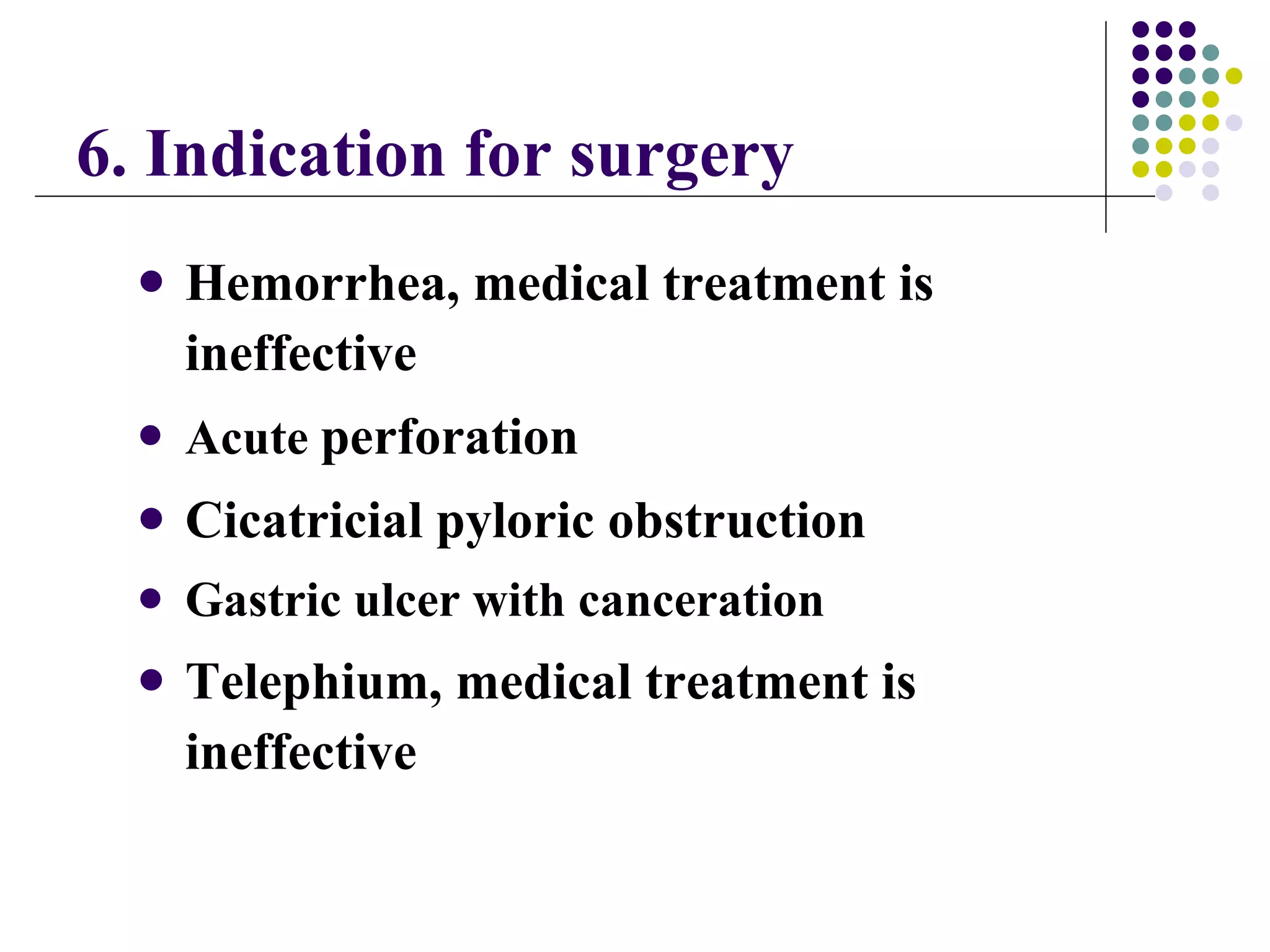
6. Indication for surgery Hemorrhea, medical treatment is ineffective Acute  perforation Cicatricial pyloric obstruction Gastric ulcer with canceration Telephium, medical treatment is ineffective
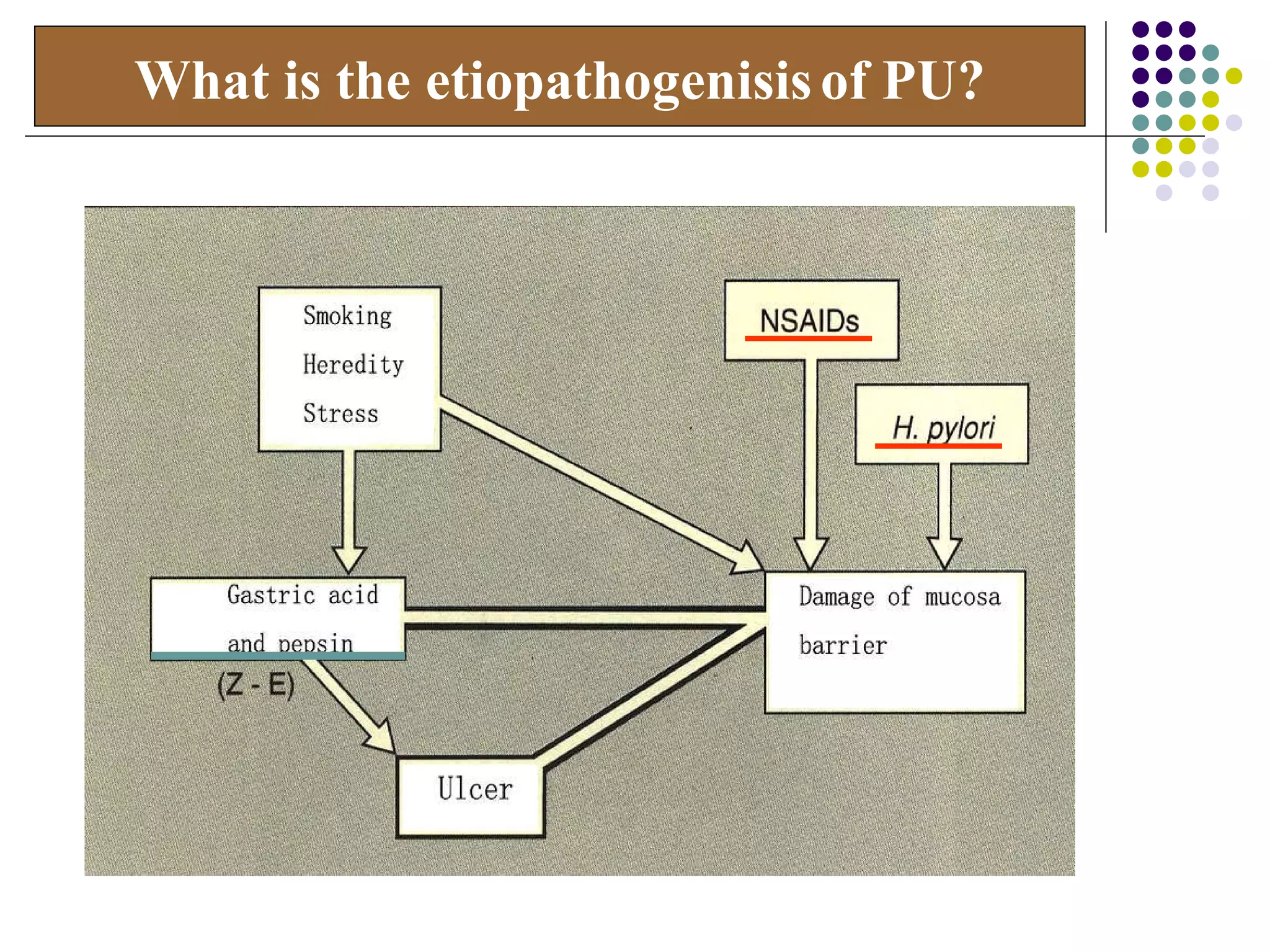
What is the etiopathogenisis   of PU?
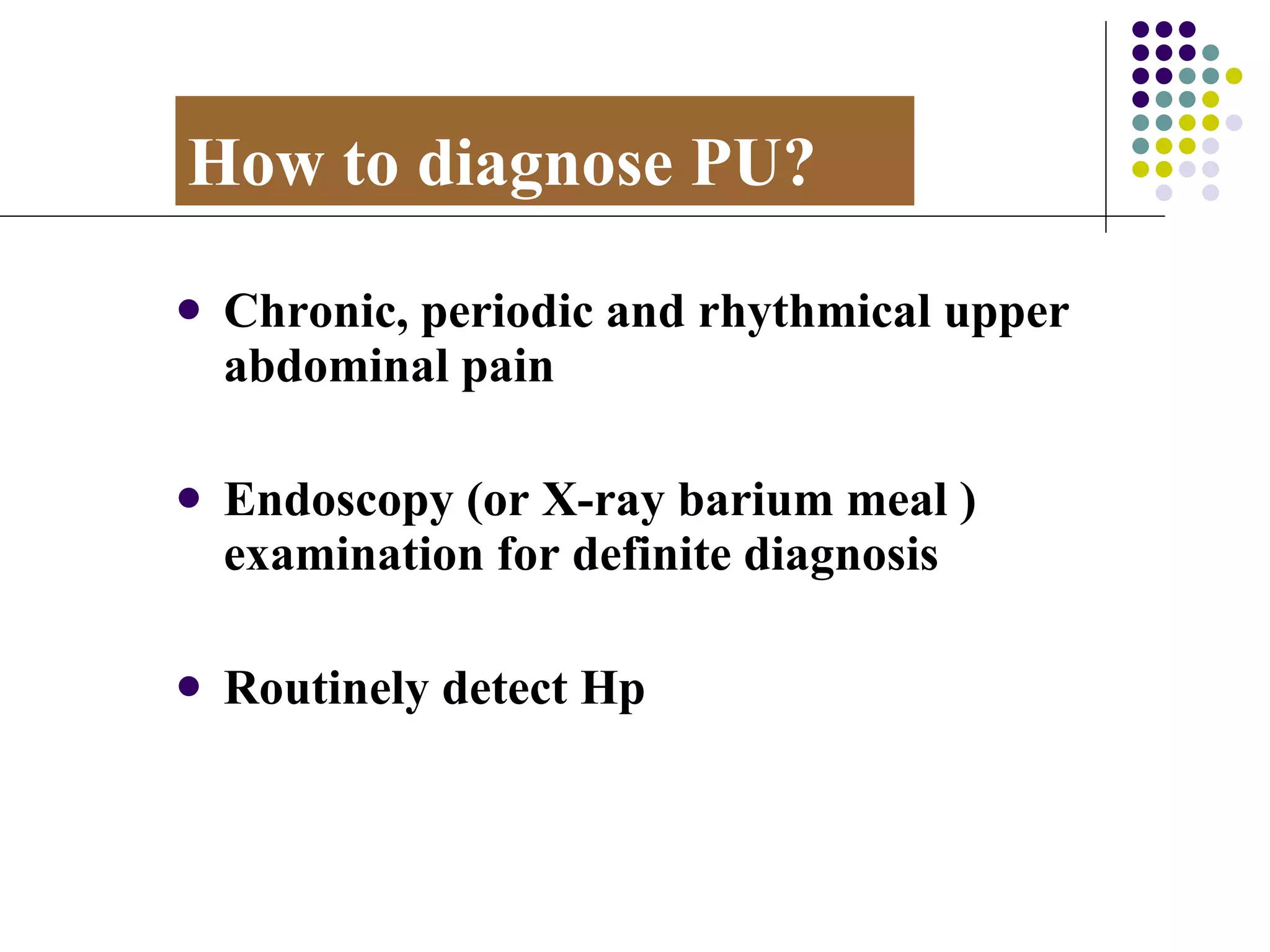
How to diagnose PU? Chronic, periodic and rhythmical upper abdominal pain Endoscopy (or X-ray barium meal ) examination for definite diagnosis Routinely detect Hp
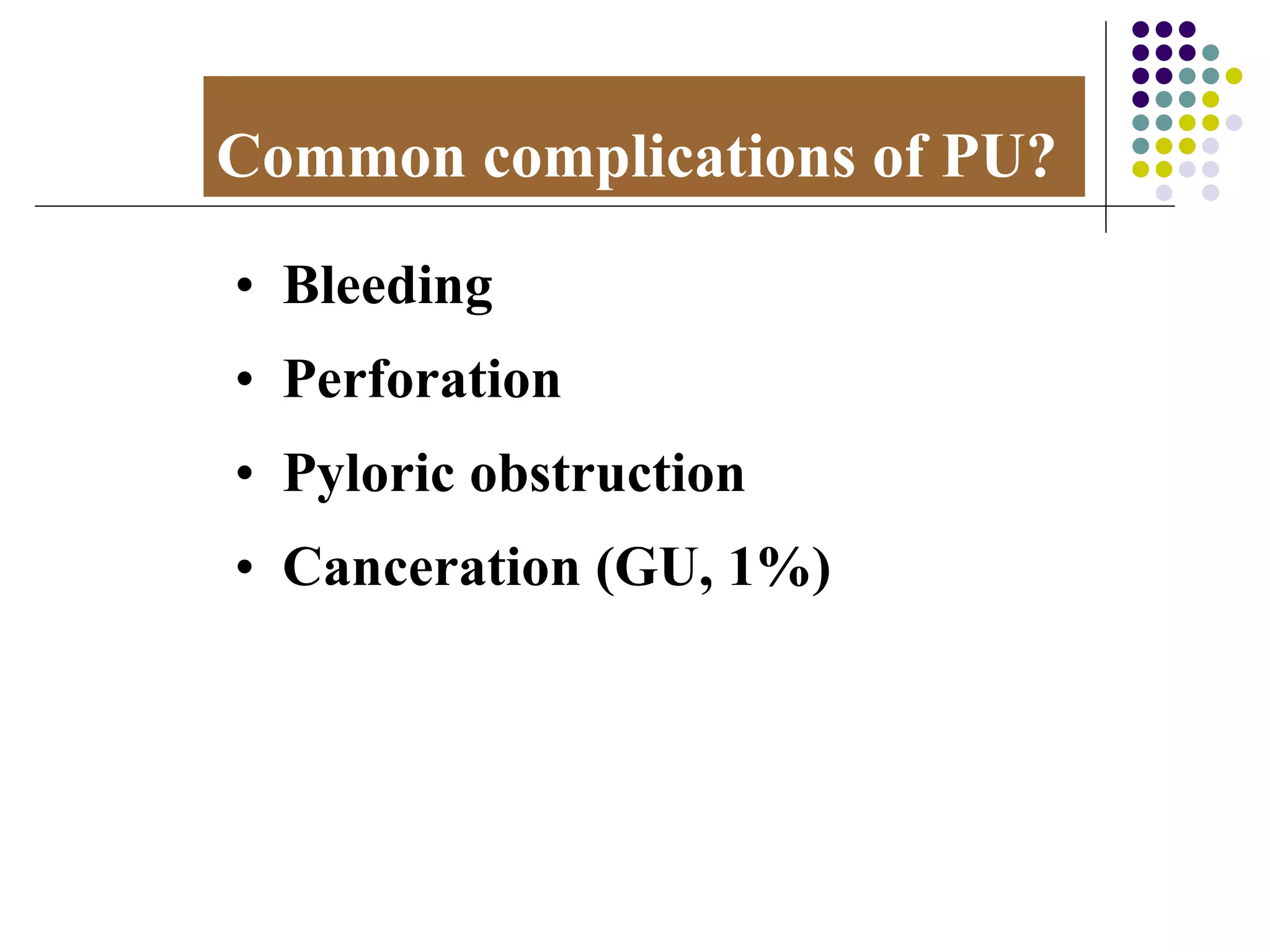
Common complications of PU? Bleeding Perforation Pyloric obstruction Canceration (GU, 1%)
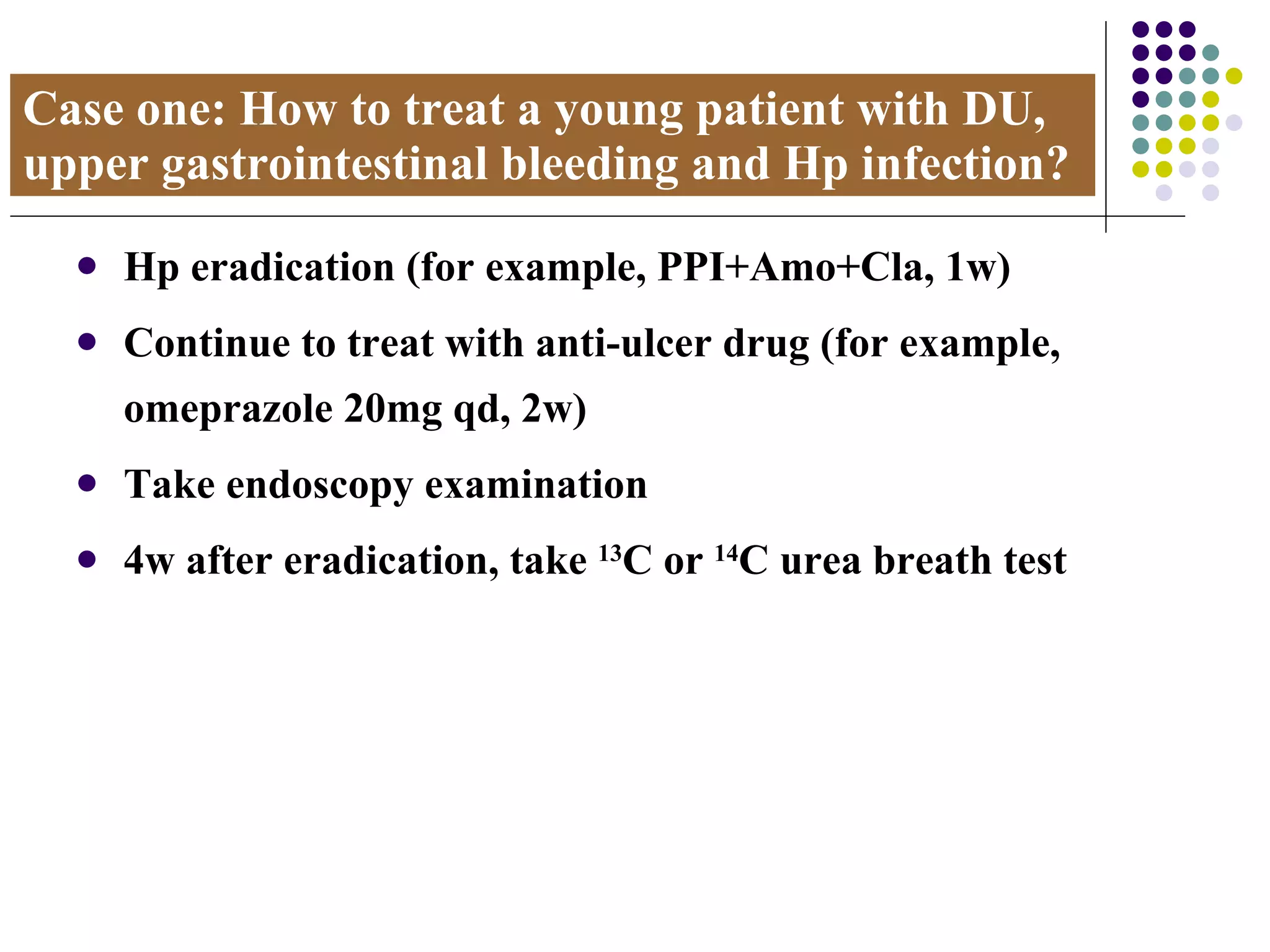
Case one: How to treat a young patient with DU, upper gastrointestinal bleeding and Hp infection? Hp eradication (for example, PPI+Amo+Cla, 1w) Continue to treat with anti-ulcer drug (for example, omeprazole 20mg qd, 2w) Take endoscopy examination 4w after eradication, take  13 C or  14 C urea breath test
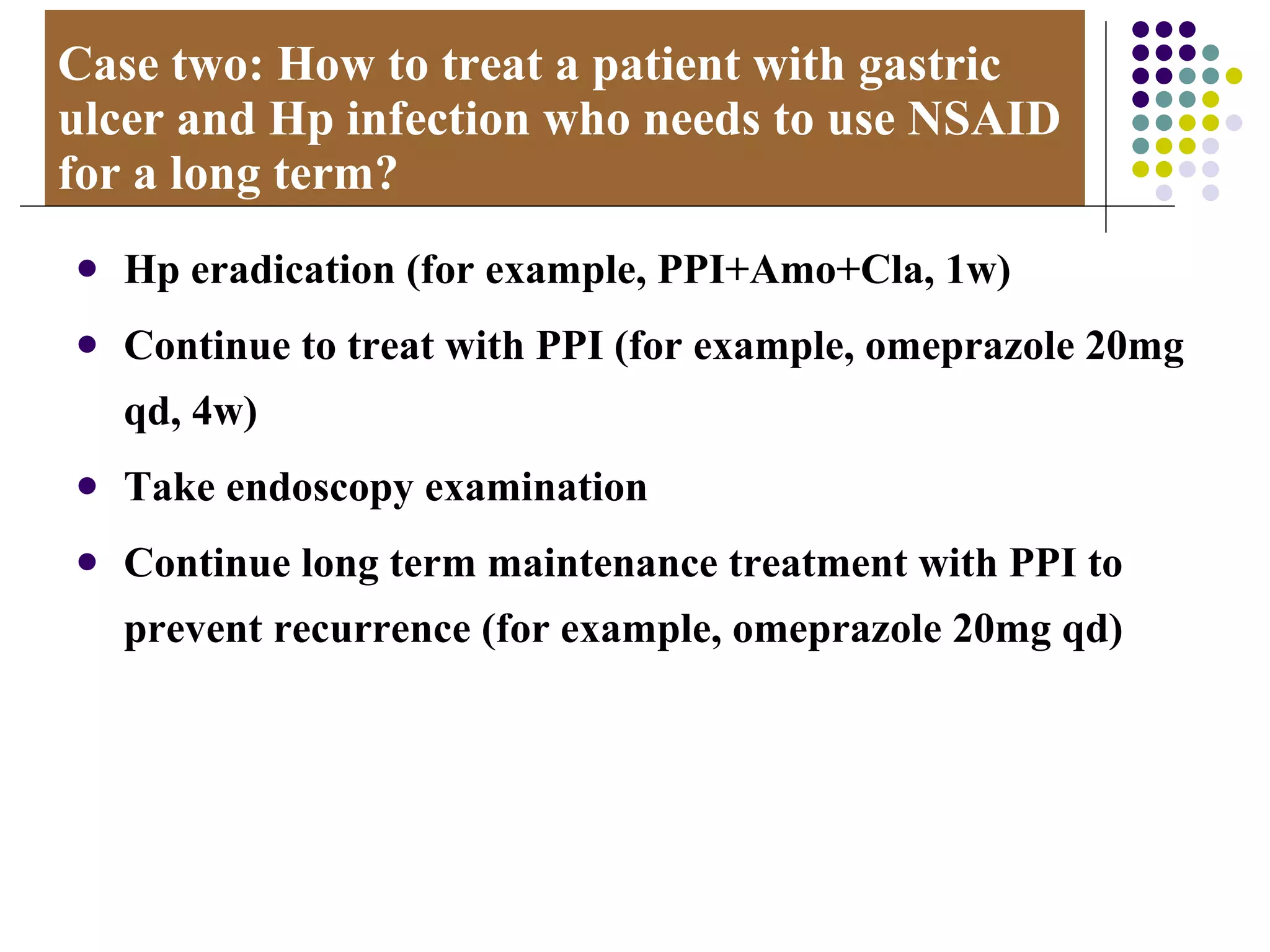
Case two: How to treat a patient with gastric ulcer and Hp infection who needs to use NSAID for a long term? Hp eradication (for example, PPI+Amo+Cla, 1w) Continue to treat with PPI (for example, omeprazole 20mg qd, 4w) Take endoscopy examination Continue long term maintenance treatment with PPI to prevent recurrence (for example, omeprazole 20mg qd)
Thank you!

18 peptic ulcer

  • 1.
    Peptic ulcer Chen Jie Department of gastroenterology, The first affiliated hospital of Sun Yat-sen university
  • 2.
    Ulcer Erosion DefinitionChronic ulcer occur in stomach and duodenum (Pathologically, ulcer is a lesion extending deeper into submucosa)
  • 3.
    Epidemiology A commondisease in digestive system No data are available about the exact incidence of peptic ulcer worldwide
  • 4.
    Ideograph of gastricmucosa barrier PGE ( prostaglandin e) EGF( epidermal growth factor) Gastric acid and pepsin Pathogenesis CO 2 +H 2 O  HCO 3  HCO 3  HCO 3  HCO 3  pH 2 pH 3 pH 4 pH 5 pH 6 pH 7 H + H + H + H + Mucus Bicarbonate Epithelial cell Bllod flow Capillary Artery of submucosa Gastral cavity
  • 5.
  • 6.
    Helicobacter pylori, Hp( transmission electron microscope ) Hp is an important etiological factor of peptic ulcer
  • 7.
    Evidences Detection rateof Hp in PU patients 1
  • 8.
    Recurence rate ofPU after successful eradication of Hp 2
  • 9.
    Cyclo-oxygenase (COX)( rate-limiting enzyme in PG synthesis) Arachidonic acid COX-1 Tissue type COX-2 Induced type NSAIDs Prostaglandin NSAIDs(non-steroidal anti-inflammatory drugs) is another important etiological factor of PU (-) (-) Prostaglandin Gastrointestinal tract Physiological function Inflammation Inflammatory reaction
  • 10.
    “ No acid,no ulcer ” --- Key role of gastric acid in the formation of peptic ulcer Because the activation of pepsin is pH-dependent (pH<4) Gastric acid and pepsin
  • 11.
    Diagnosis and differentialdiagnosis Symptom is the most important clue for clinical diagnosis Typical upper abdominal pain: Chronic, periodic and rhythmical pain Relieve after food eating or antacid using (Attention: Symptomless or un-typical ulcer)
  • 12.
    Complex ulcer: --ulcersoccur in both gastric and duodenal mucosa Ulcer of pyloric canal: -- usually cause pyloric obstruction Postbulbar ulcer Macrosis ulcer: --size>2cm Peptic ulcer in elderly people Symptomless ulcer --half of the NSAIDS-related ulcers are symptomless Special type of peptic ulcer
  • 13.
    Definite diagnosis ofpeptic ulcer depends on endoscopy examination: --- may observe ulcer, take biopsy and detect HP infection Niche sign observed by X-ray barium meal examination may also provide evidence for definite diagnosis of peptic ulcer ---not as accurate as endoscopy detection
  • 14.
    Pictures of PUunder endoscopy DU GU
  • 15.
    X-ray barium mealexamination --- Niche sign (direct sign of ulcer)
  • 16.
    Virulence (biopsy specimenof gastric mucosa) Histological examination Hp culture Rapid urease test Non-virulence 13 C or 14 C urea breath test Hp antigen detection in stool Serologic examination of Hp antibody Hp detection (routine)
  • 17.
    Steiner silver stainof gastric mucosa, showing abundantly microorganisms scattered within mucus (dark arrow indicated)
  • 18.
    Culture Very smalland translucent colony on the plate
  • 19.
    Rapid Urease Test: urea in the reagent was broken down by Hp urease, then the PH value of the reagent changed, finally the yellow color of the reagent changed to read color
  • 20.
    13C Urea BreathTest (UBT)
  • 21.
    Differential diagnosis Pepticulcer need to be differentiated from diseases with chronic upper abdominal pain Diseases of liver, gallbladder and pancreas, functional dyspepsia After the ulcer has been detected by endoscopy examination The differential diagnosis of benign and malignant gastric ulcer is very important
  • 22.
    ---larger size, dirtymoss, swollen and stiff surrounding mucosa---cancer --- Definite diagnosis must depend on biopsy and pathohistological examination!! Gatric ulcer Gatric cancer Benign and malignant gastric ulcer
  • 23.
    Complications Bleeding The most common complication The most common cause of massive hemorrhage of gastrointestinal tract Perforation Pyloric obstruction Canceration (GU, 1%)
  • 24.
    Pyloric obstruction (DU 、 pyloric canal ulcer) Temporary obstruction (caused by pyloric dropsy or pylorospasm during the active stage of ulcer) Chronic obstruction (cicatricial pyloric obstruction) (caused by shrink of scar during the healing stage of ulcer) Symptoms (abdominal pain, nausea, vomit, et al) Confirmed by gastroscope or X-ray barium meal examination
  • 25.
    Treatment Principles Eliminateetiological factors (Hp eradication, stop using NSAIDs) Relieve symptoms, facilitate ulcer healing (antiulcer drugs) Prevent ulcer recurrence, and prevent or treat complications
  • 26.
    General treatment ---Stop smoking, stop drinking ,regular food-intake, et al 2. Anti-ulcer treatment
  • 27.
    Types Commonlyused drugs Recommend dosage Acid inhibition drugs Antacid Algeldrate, hydrotalcite et al H 2 RA Cimetidine 800mg qN or 400mg bid Ranitidine 300mg qN or 150mg bid Famotidine 40mg qN or 20mg bid PPI Omeprazole 20mg qd Lansoprazole 30mg qd Rabeprazole 10mg qd Gastric mucosa protection drugs Sucralfate Sucralfate 1g qid Prostaglandins Misoprostol 200  g qid Bismuth compound Colloidal bismuth subcitrate 120mg qid Anti-ulcer drugs H2RA :Histamine H2 receptor antagonist; PPI :proton pump inhibitor
  • 28.
    3. Hp eradicationtreatment Hp must be eradicated in all Hp-positive peptic ulcer!!
  • 29.
    Proton pump inhibitor(PPI) Two antibiotics Colloidal Bismuth Subcitrate Amoxicillin , Clarithromycin , Tetracycline , Metronidazole , Furaltadone … + (1) Hp eradication regimen Or
  • 30.
    Omeprazole 20mg b.i.d+ Clarithromycin 500mg b.i.d + Amoxicillin 1000mg b.i.d × 7days A trigeminy regimen of Hp eradication This is a widely used first-line Hp eradication regimem.
  • 31.
    Ulcer patient withcomplications Patient with large ulcer or recurrent ulcer Symptom cannot be relieved after Hp eradication Above patients need to use PPI or H2RA for 2-8weeks (2)Anti-ulcer treatment after Hp eradication
  • 32.
    (3) Detect Hpafter eradication treatment 4 weeks after eradication treatment ---- to avoid false negative result 13 C or 14 C-UBT is the first choice Detect Hp infection by gastroscope is necessary in DU patients with complications, or in GU patients with or without complications
  • 33.
    4. Treatment andPrevention of NSAID-related ulcer Treatment Stop using NSAIDs , routinely give H 2 RA or PPI for treatment For patients who can not stop using NSAIDs, give PPI, and maintain long term anti-ulcer treatment after ulcer healing For patients with Hp infection , Hp eradication is also needed (NSAID and Hp are two independent ulcerogenic factors )
  • 34.
    Prevention Following patientsneed routine prevention treatment : Patients with a history of peptic ulcer Elderly patients Patients using glucocorticosteroid or decoagulant (including low-dosage asprin) together with NSAIDs Prevention method: PPI , routine dosage
  • 35.
    5. Preventionof peptic ulcer recurrence 2. Following patients need to maintain long term anti-ulcer treatment to prevent ulcer recurrence : Patient who can not stop using NSAIDs Hp can not be eradicated Ulcer recurrence after Hp eradication Non-Hp and non-NSAIDs ulcer Elderly patients Patients with serious concomitant disease 3. Prevention method: PPI or H 2 RA, routine dosage 1.Hp eradication and stop using NSAID may prevent peptic ulcer recurrence
  • 36.
    6. Indication forsurgery Hemorrhea, medical treatment is ineffective Acute perforation Cicatricial pyloric obstruction Gastric ulcer with canceration Telephium, medical treatment is ineffective
  • 37.
    What is theetiopathogenisis of PU?
  • 38.
    How to diagnosePU? Chronic, periodic and rhythmical upper abdominal pain Endoscopy (or X-ray barium meal ) examination for definite diagnosis Routinely detect Hp
  • 39.
    Common complications ofPU? Bleeding Perforation Pyloric obstruction Canceration (GU, 1%)
  • 40.
    Case one: Howto treat a young patient with DU, upper gastrointestinal bleeding and Hp infection? Hp eradication (for example, PPI+Amo+Cla, 1w) Continue to treat with anti-ulcer drug (for example, omeprazole 20mg qd, 2w) Take endoscopy examination 4w after eradication, take 13 C or 14 C urea breath test
  • 41.
    Case two: Howto treat a patient with gastric ulcer and Hp infection who needs to use NSAID for a long term? Hp eradication (for example, PPI+Amo+Cla, 1w) Continue to treat with PPI (for example, omeprazole 20mg qd, 4w) Take endoscopy examination Continue long term maintenance treatment with PPI to prevent recurrence (for example, omeprazole 20mg qd)
  • 42.