CARDIAC ARRHYTHMIA
Ashwini somayaji
1st M.pharm
pharmacology
DEFINITION:
• Cardiac arrhythmia/cardiac dysrhythmia/irregular
heart beat is a group of condition in which the heart
beat is irregular,too fast or too slow.
• BRADYCARDIA:heart beat that is too slow i.e <60
beats /min
• TACHYCARDIA:heart beat that is too fast i.e >100
beats/min.
• Ischaemia
• Mechanial injury
• Streching
• Electrolyte and pH imbalance
• Neurogenic and drug influences
CAUSES:
SYMPTOMS:
Many arrhythmias have no symptoms.when
symptoms are present they include:
Palpitation(unpleasant awareness of cardiac
activity)
Sincope
Unstable haemodynamic condition.
Abnormal pulse.
Precipitation of cardiac failure.
Shortness of breath or chest pain.
CONTENTS:
a) Normal cardiac rhythm
b) Mechanism of arrhythmia
c) Types and ECG
d) Treatment/drugs
Normal cardiac rhythm:
For normal cardiac rhythm:
I. Heart rate should be 80-100
II. Impulse should originate from SA node
III. Cardiac impulse should propagate
through normal conduction pathway
IV. Normal velocity
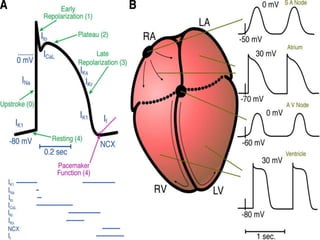
CARDIAC ACTION POTENTIAL:
FAST CHANNEL AP
SLOW CHANNEL AP
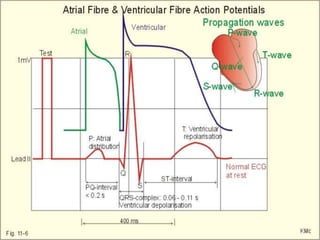
CARDIAC CONDUCTION AND ECG:
MECHANISM OF CARDIAC
ARRHYTHMIA:
1) Enhanced/ectopic pacemaker activity
2) After depolarisation
i. Early after-depolarisation
ii. Delayed after depolarisation
3) Reentry
i. Circus movement type
ii. Microentry circuit
4) Increased/decreased automaticity
ENHANCED/ECTOPIC PACEMAKER
ACTIVITY
• An ectopic pacemaker or ectopic foci is an
excitable groups of cells that causes the
premature heart beat outside the normally
functioning SA node of human heart....
These are secondary depolarisation
accompanying a normal or premature action
potential.
EARLY AFTER DEPOLARISATION:
repolarisation during phase 3 is interrupted
and membrane potential oscillates.
If the amplitude of oscillation is sufficiently
large, neighbouring tissue is activated and
series of impulses are propogated
AFTER DEPOLARISATION:
CONTINUE........
• EAD are frequently associated with long QT
interval.
• They result from depression of delayed
rectifier K+ ion.
DELAYED AFTER-DEPOLARISATION:
• After attaining RMP a secondary deflection
occurs which may reach threshold potential
and initiate a single premature AP.
• Result from a Ca+ overload.
CONTINUE...
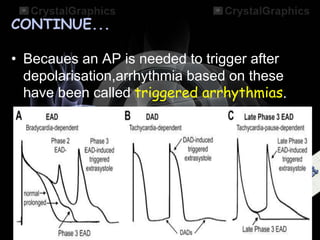
• Becaues an AP is needed to trigger after
depolarisation,arrhythmia based on these
have been called triggered arrhythmias.
REENTRY:
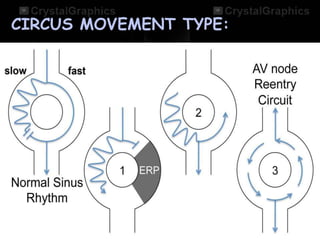
• Due primarily to abnormality of conduction,
an impulse may recirculate in the heart and
cause repetitive activation without need for
any new impulse to be generated.
i. Circus movement type
ii. Microentry circuit
CIRCUS MOVEMENT TYPE:
MICRO ENTRY CIRCUIT:
INCREASED OR DECREASED
AUTOMATICITY:
CLASSIFICATION:
NORMOTROPIC
• Sinus tachycardia
• Sinus bradychardia
• Sinus arrhythmia
ECTOPIC
• Heart block
• Extrasystole
• Paroxysmal tachycardia
• others
TREATMENT:
CLASS 1:Na+ CHANNEL BLOCKERS
FURTHER CLASSIFIED INTO:
• Class 1a-
Eg:quinidine,procainamide,disopyramide
• Class 1b-Eg:lidocaine
• Class1c-Eg:propafenone
CLASS 2:β BLOCKERS
CLASS 3:K+ channel blockers
CLASS 4:calcium channel blockers
REFERENCES:
• The pharmacological basis of therapeutics
by goodman and gilman’s
• Essentials of medical pharmacology by KD
Tripathi.
• Clinical pharmacy and therapeutics by
walker whittlesea.
Arrhythmia

Arrhythmia

  • 1.
  • 2.
    DEFINITION: • Cardiac arrhythmia/cardiacdysrhythmia/irregular heart beat is a group of condition in which the heart beat is irregular,too fast or too slow. • BRADYCARDIA:heart beat that is too slow i.e <60 beats /min • TACHYCARDIA:heart beat that is too fast i.e >100 beats/min.
  • 4.
    • Ischaemia • Mechanialinjury • Streching • Electrolyte and pH imbalance • Neurogenic and drug influences CAUSES:
  • 5.
    SYMPTOMS: Many arrhythmias haveno symptoms.when symptoms are present they include: Palpitation(unpleasant awareness of cardiac activity) Sincope Unstable haemodynamic condition. Abnormal pulse. Precipitation of cardiac failure. Shortness of breath or chest pain.
  • 6.
    CONTENTS: a) Normal cardiacrhythm b) Mechanism of arrhythmia c) Types and ECG d) Treatment/drugs
  • 7.
    Normal cardiac rhythm: Fornormal cardiac rhythm: I. Heart rate should be 80-100 II. Impulse should originate from SA node III. Cardiac impulse should propagate through normal conduction pathway IV. Normal velocity
  • 8.
    CARDIAC ACTION POTENTIAL: FASTCHANNEL AP SLOW CHANNEL AP
  • 10.
  • 12.
    MECHANISM OF CARDIAC ARRHYTHMIA: 1)Enhanced/ectopic pacemaker activity 2) After depolarisation i. Early after-depolarisation ii. Delayed after depolarisation 3) Reentry i. Circus movement type ii. Microentry circuit 4) Increased/decreased automaticity
  • 14.
    ENHANCED/ECTOPIC PACEMAKER ACTIVITY • Anectopic pacemaker or ectopic foci is an excitable groups of cells that causes the premature heart beat outside the normally functioning SA node of human heart....
  • 16.
    These are secondarydepolarisation accompanying a normal or premature action potential. EARLY AFTER DEPOLARISATION: repolarisation during phase 3 is interrupted and membrane potential oscillates. If the amplitude of oscillation is sufficiently large, neighbouring tissue is activated and series of impulses are propogated AFTER DEPOLARISATION:
  • 17.
    CONTINUE........ • EAD arefrequently associated with long QT interval. • They result from depression of delayed rectifier K+ ion. DELAYED AFTER-DEPOLARISATION: • After attaining RMP a secondary deflection occurs which may reach threshold potential and initiate a single premature AP. • Result from a Ca+ overload.
  • 18.
    CONTINUE... • Becaues anAP is needed to trigger after depolarisation,arrhythmia based on these have been called triggered arrhythmias.
  • 19.
    REENTRY: • Due primarilyto abnormality of conduction, an impulse may recirculate in the heart and cause repetitive activation without need for any new impulse to be generated. i. Circus movement type ii. Microentry circuit
  • 20.
  • 21.
  • 22.
  • 23.
    CLASSIFICATION: NORMOTROPIC • Sinus tachycardia •Sinus bradychardia • Sinus arrhythmia ECTOPIC • Heart block • Extrasystole • Paroxysmal tachycardia • others
  • 24.
  • 25.
    CLASS 1:Na+ CHANNELBLOCKERS FURTHER CLASSIFIED INTO: • Class 1a- Eg:quinidine,procainamide,disopyramide • Class 1b-Eg:lidocaine • Class1c-Eg:propafenone
  • 29.
  • 30.
  • 31.
  • 33.
    REFERENCES: • The pharmacologicalbasis of therapeutics by goodman and gilman’s • Essentials of medical pharmacology by KD Tripathi. • Clinical pharmacy and therapeutics by walker whittlesea.