Input & Output
CS2052 Computer Architecture
Computer Science & Engineering
University of Moratuwa
Dilum Bandara
Dilum.Bandara@uom.lk
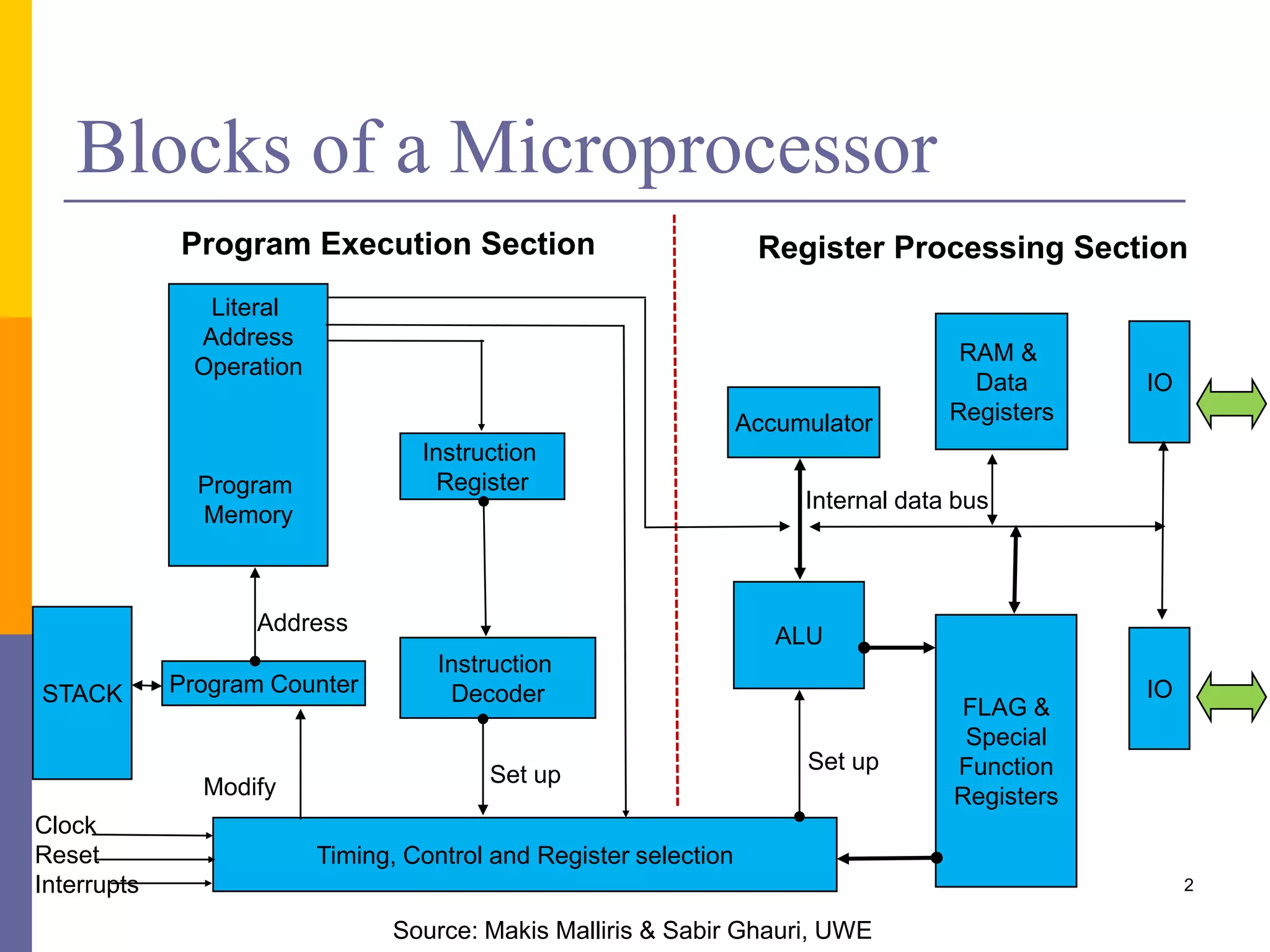
Blocks of a Microprocessor
2
Literal
Address
Operation
Program
Memory
Instruction
Register
STACK Program Counter
Instruction
Decoder
Timing, Control and Register selection
Accumulator
RAM &
Data
Registers
ALU
IO
IO
FLAG &
Special
Function
Registers
Clock
Reset
Interrupts
Program Execution Section Register Processing Section
Set up
Set up
Modify
Address
Internal data bus
Source: Makis Malliris & Sabir Ghauri, UWE
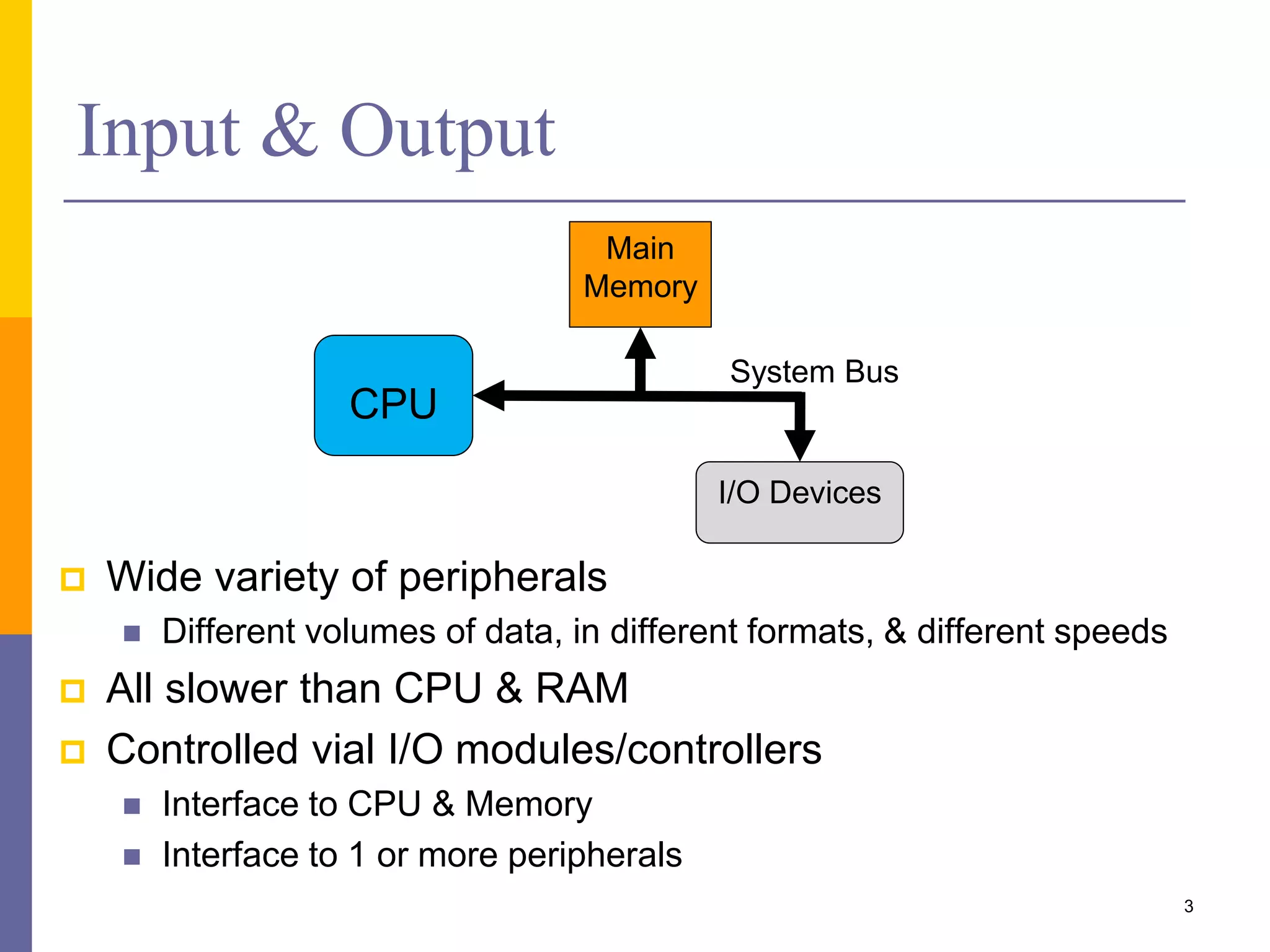
Input & Output
 Wide variety of peripherals
 Different volumes of data, in different formats, & different speeds
 All slower than CPU & RAM
 Controlled vial I/O modules/controllers
 Interface to CPU & Memory
 Interface to 1 or more peripherals
3
CPU
Main
Memory
I/O Devices
System Bus
External Devices
 Interact with humans
 Monitor, printer, keyboard, mouse
 Machine readable
 Monitoring & control
 e.g., process scheduling, CPU/casing temperature
monitoring, fan speed control
 Communication
 Network Interface Card (NIC)
 Modems
 Dongles – Bluetooth, Wi-Fi, 3G, 4G
4
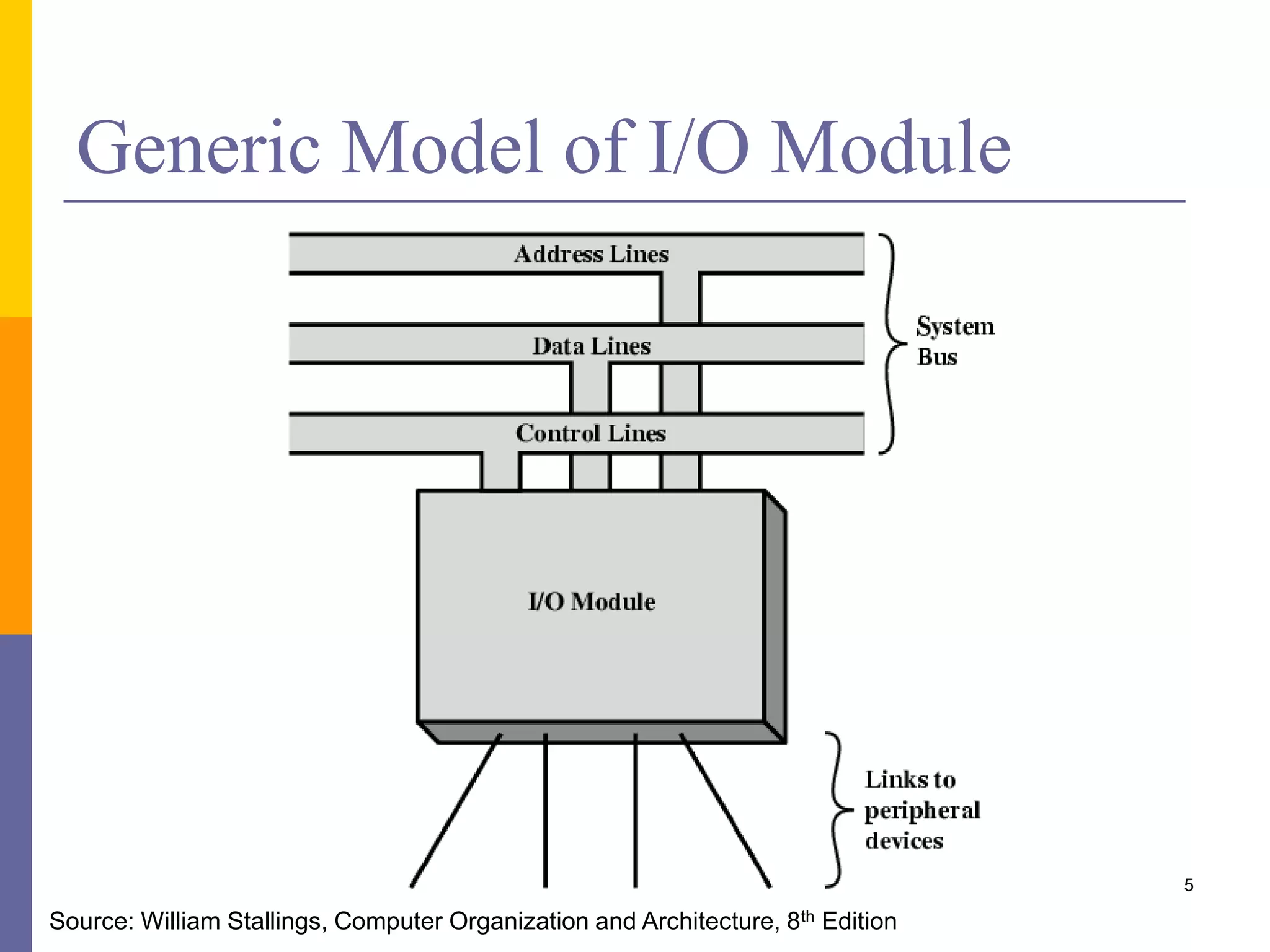
Generic Model of I/O Module
5
Source: William Stallings, Computer Organization and Architecture, 8th Edition
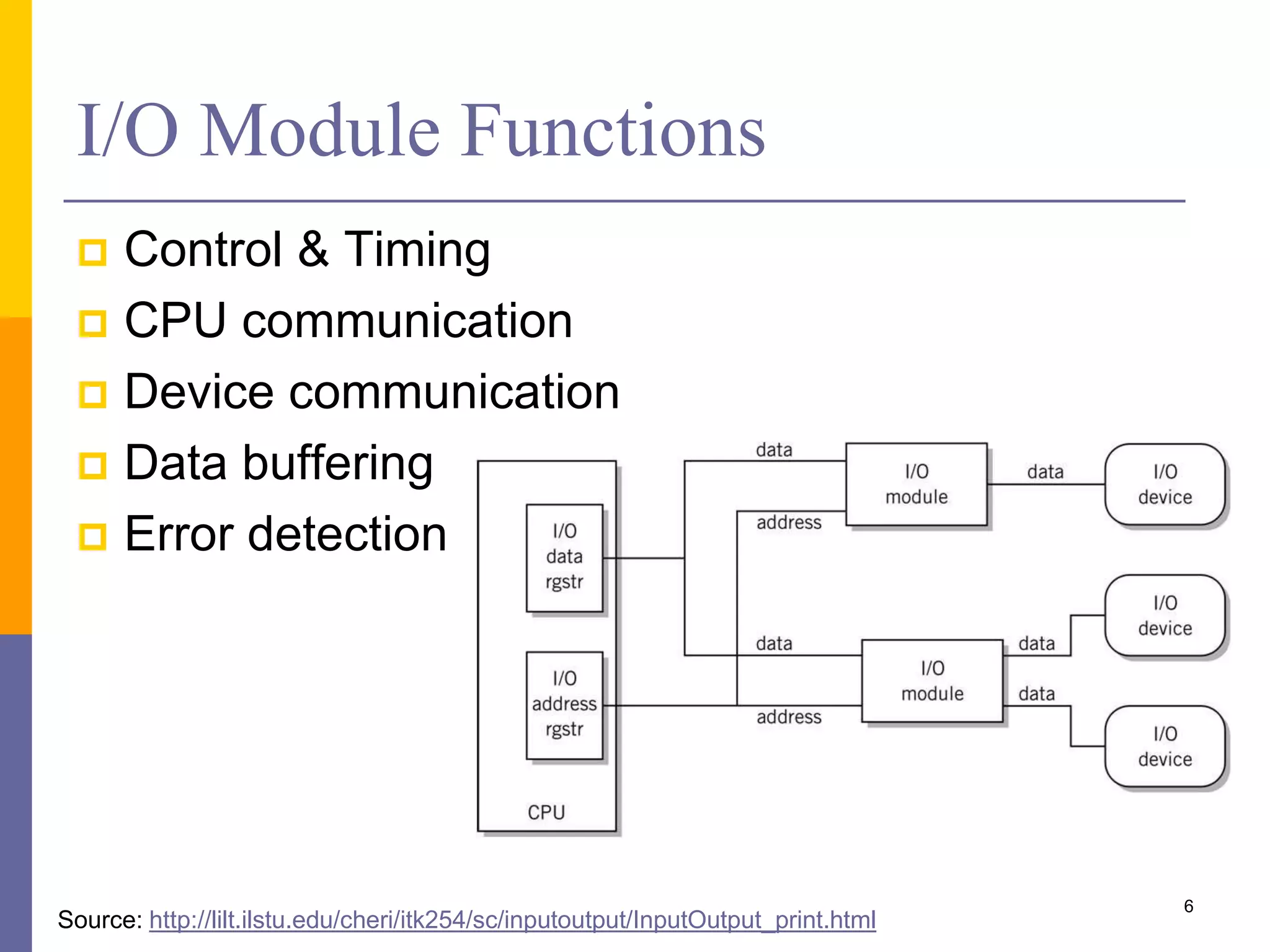
I/O Module Functions
 Control & Timing
 CPU communication
 Device communication
 Data buffering
 Error detection
6
Source: http://lilt.ilstu.edu/cheri/itk254/sc/inputoutput/InputOutput_print.html
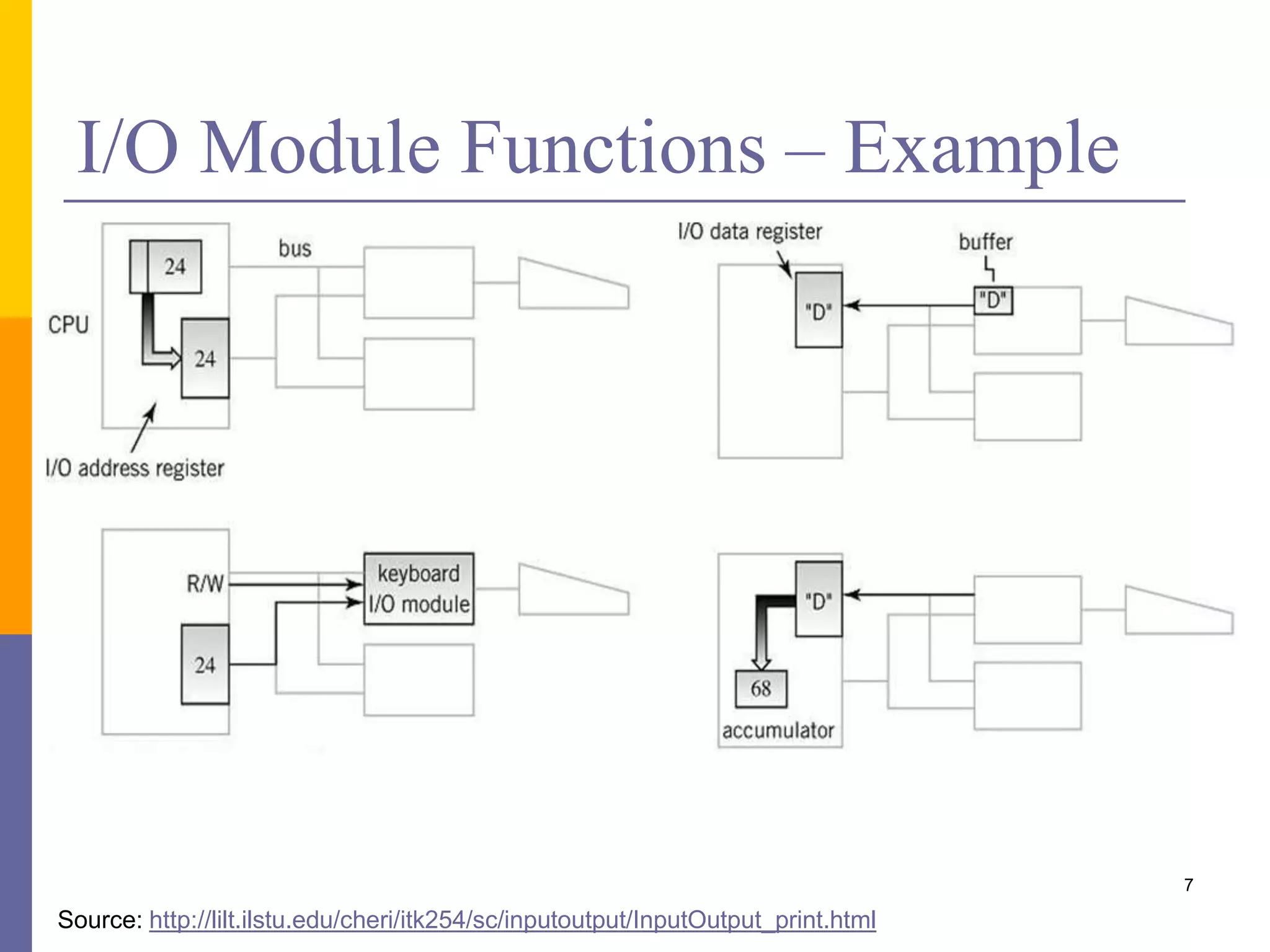
I/O Module Functions – Example
7
Source: http://lilt.ilstu.edu/cheri/itk254/sc/inputoutput/InputOutput_print.html
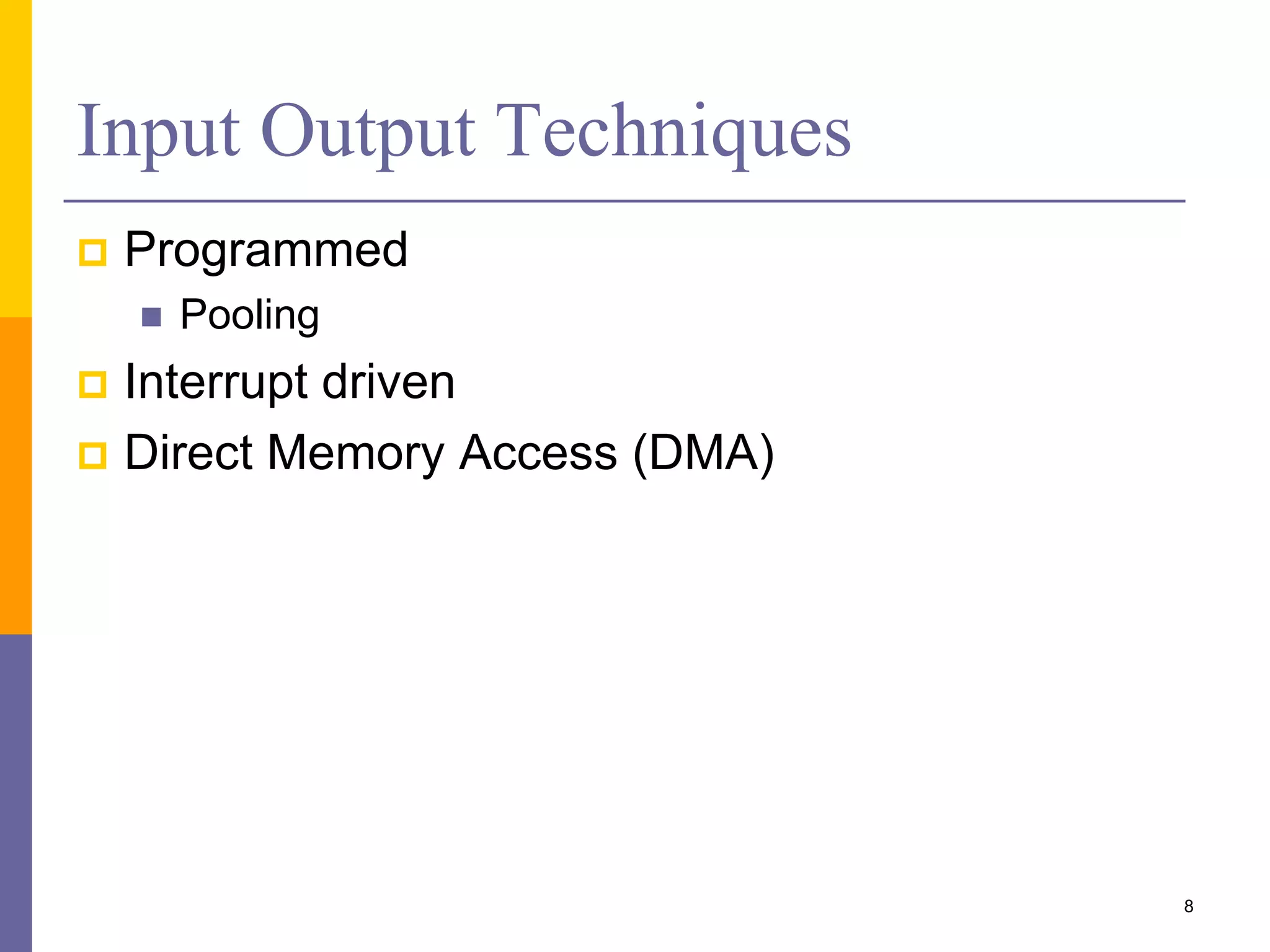
Input Output Techniques
 Programmed
 Pooling
 Interrupt driven
 Direct Memory Access (DMA)
8
Programmed I/O
 CPU has direct control over I/O
 Continuously sense status
 Read/write commands
 Transferring data
 CPU waits for I/O module to complete operation
 Wastes CPU time
9
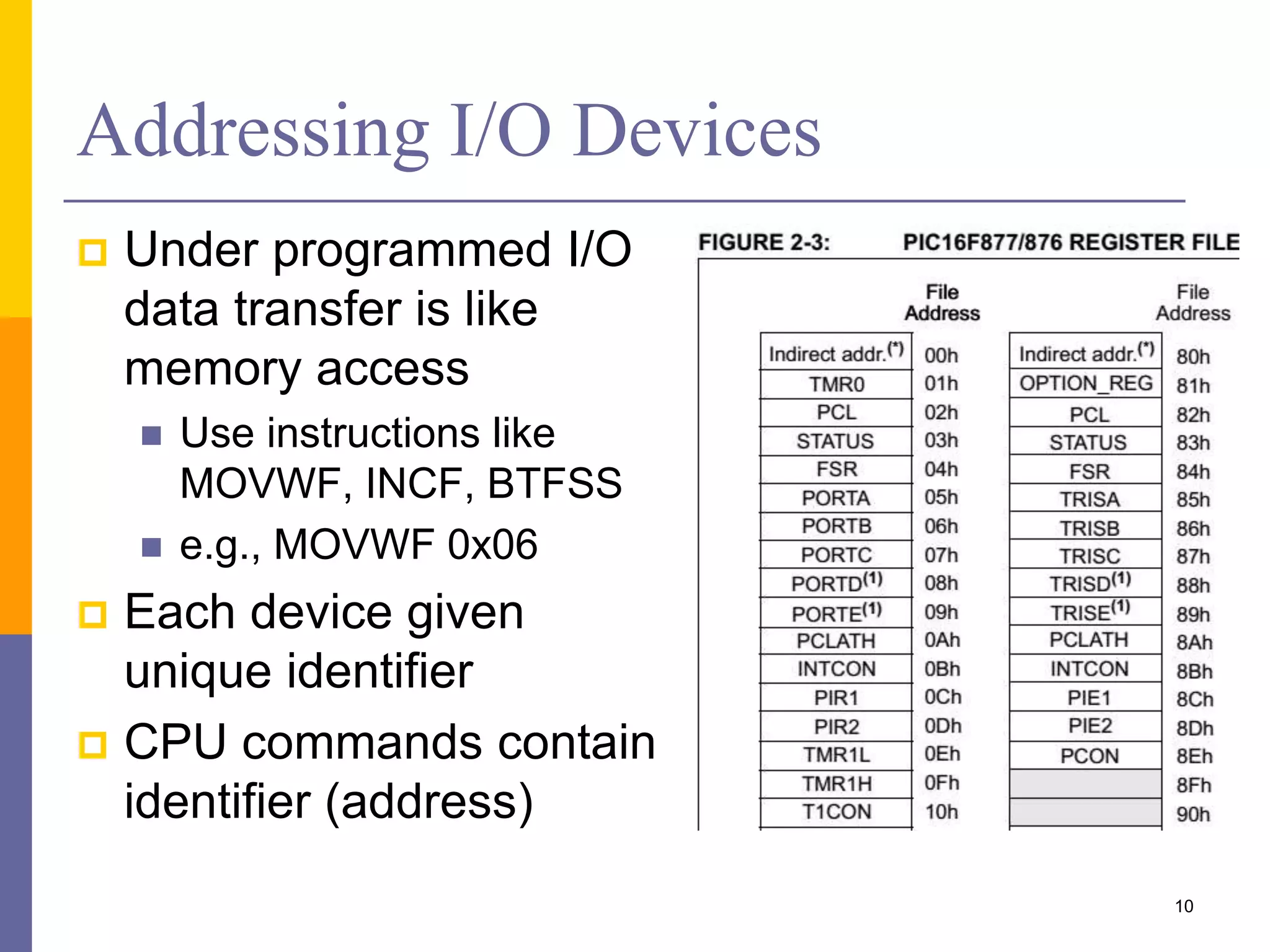
Addressing I/O Devices
 Under programmed I/O
data transfer is like
memory access
 Use instructions like
MOVWF, INCF, BTFSS
 e.g., MOVWF 0x06
 Each device given
unique identifier
 CPU commands contain
identifier (address)
10
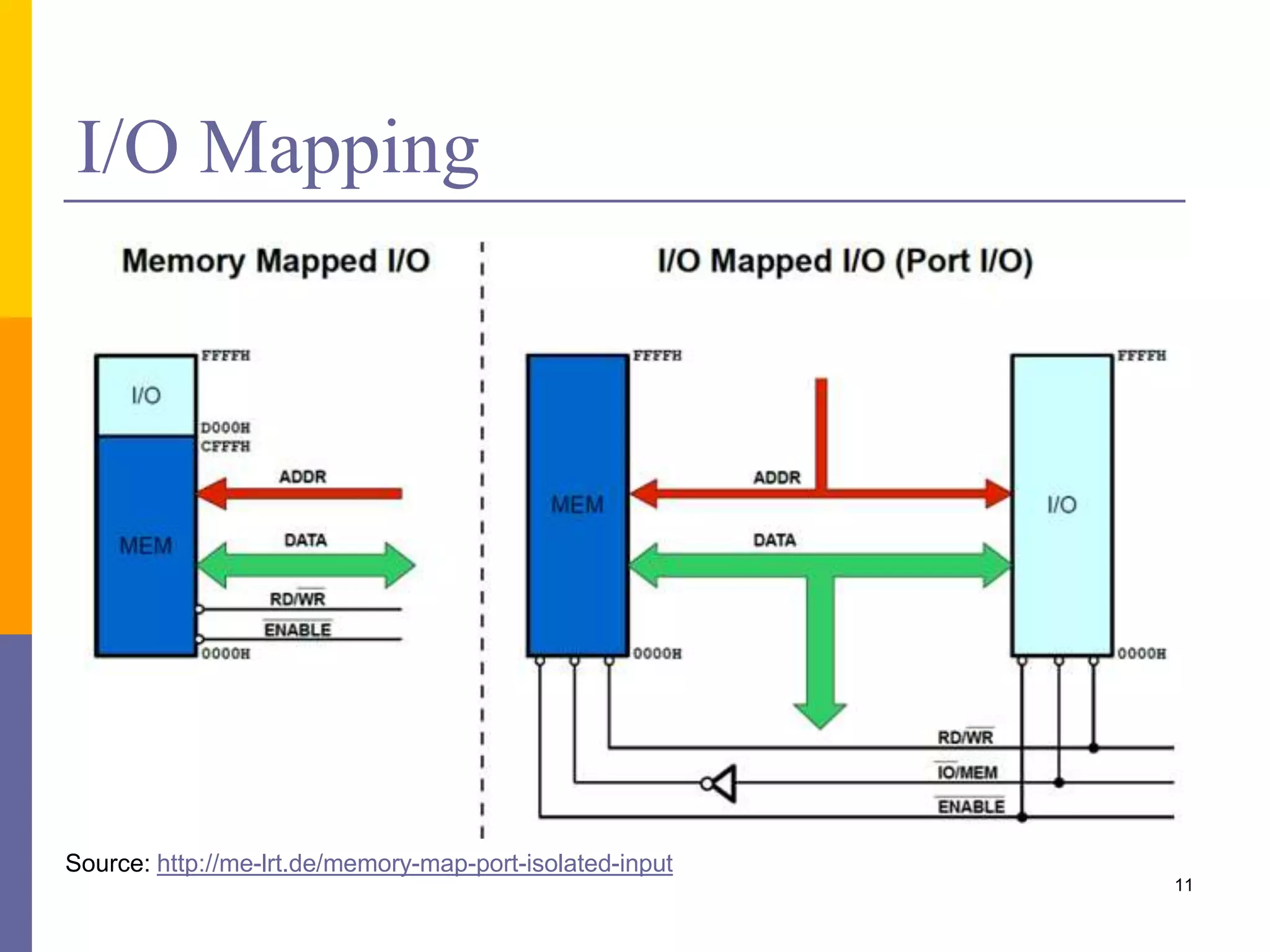
I/O Mapping
11
Source: http://me-lrt.de/memory-map-port-isolated-input
I/O Mapping (Cont.)
Memory Mapped I/O
 Devices & memory share
same address space
 I/O looks just like memory
read/write
 No special commands for
I/O
 Large selection of memory
access commands
Isolated I/O
 Separate address spaces
 Need I/O or memory
select lines
 Special commands for I/O
 Limited set
12
Interrupt Driven I/O
 No repeated CPU checking of device
 No waiting
 CPU does its own work
 I/O module interrupts CPU when ready
 Steps
 CPU issues read command
 I/O module gets data from peripheral whilst CPU does
other work
 I/O module interrupts CPU
 CPU requests data
 I/O module transfers data
13
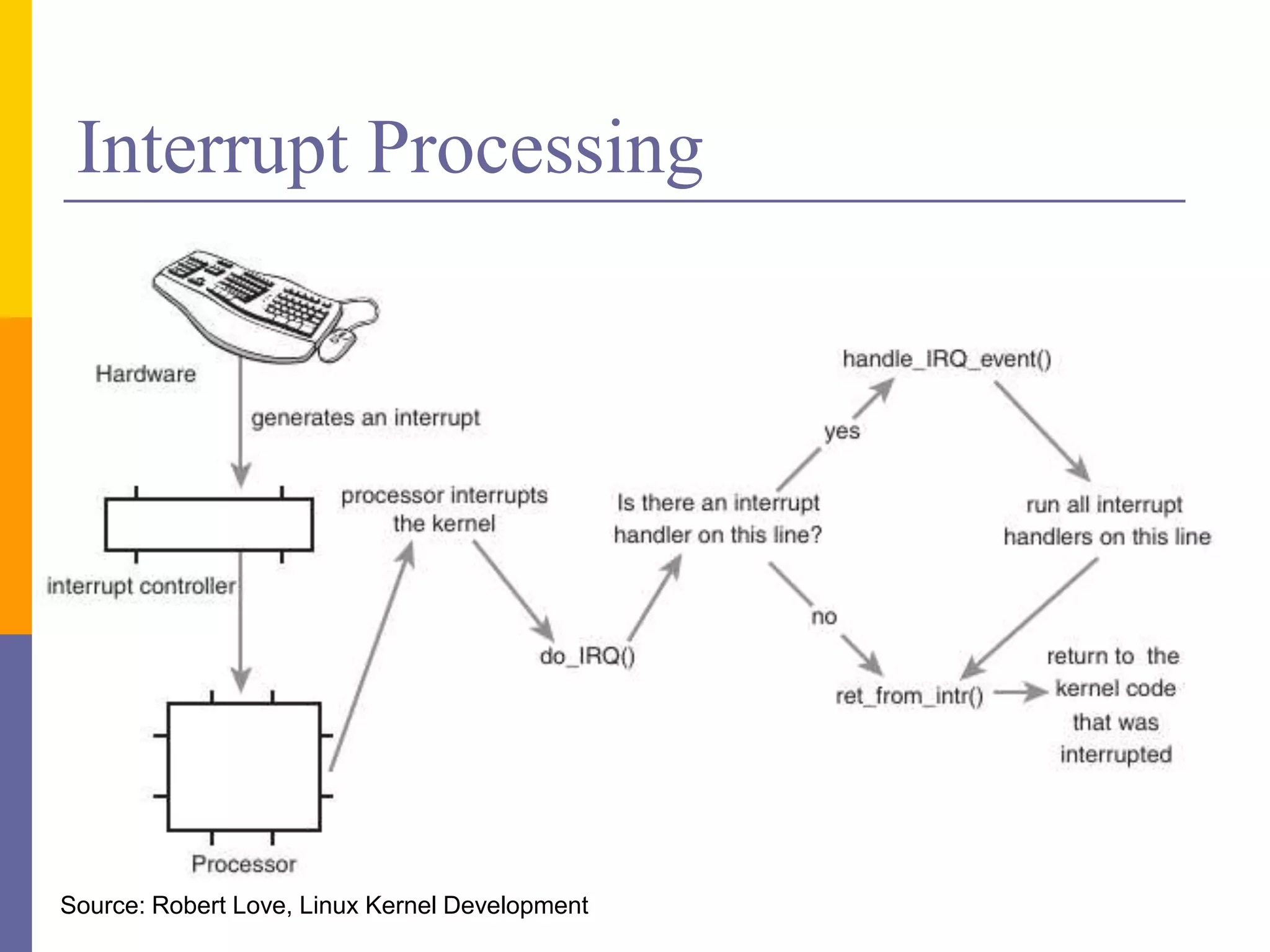
Interrupt Processing
14
Source: Robert Love, Linux Kernel Development
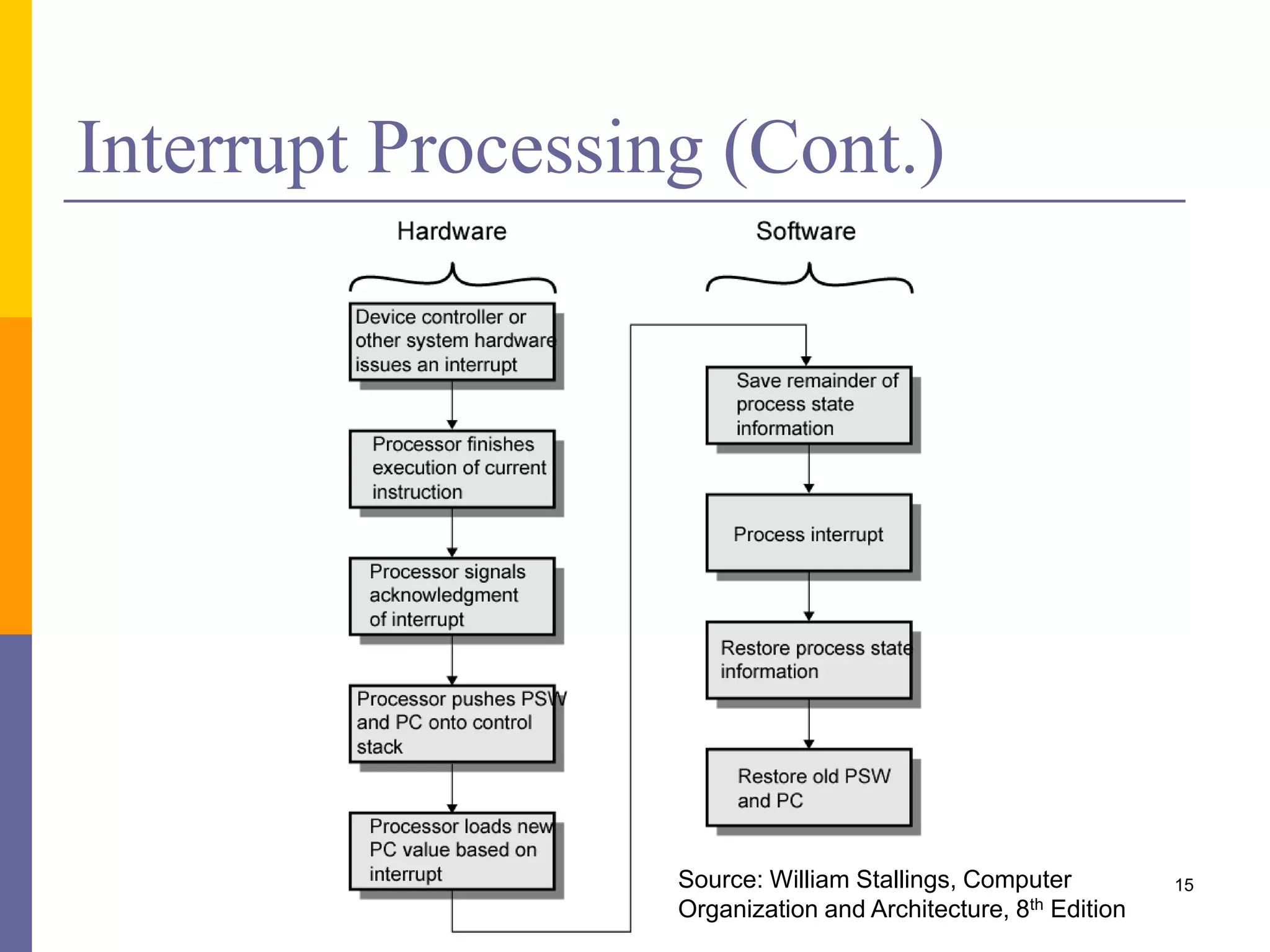
Interrupt Processing (Cont.)
15Source: William Stallings, Computer
Organization and Architecture, 8th Edition
Direct Memory Access (DMA)
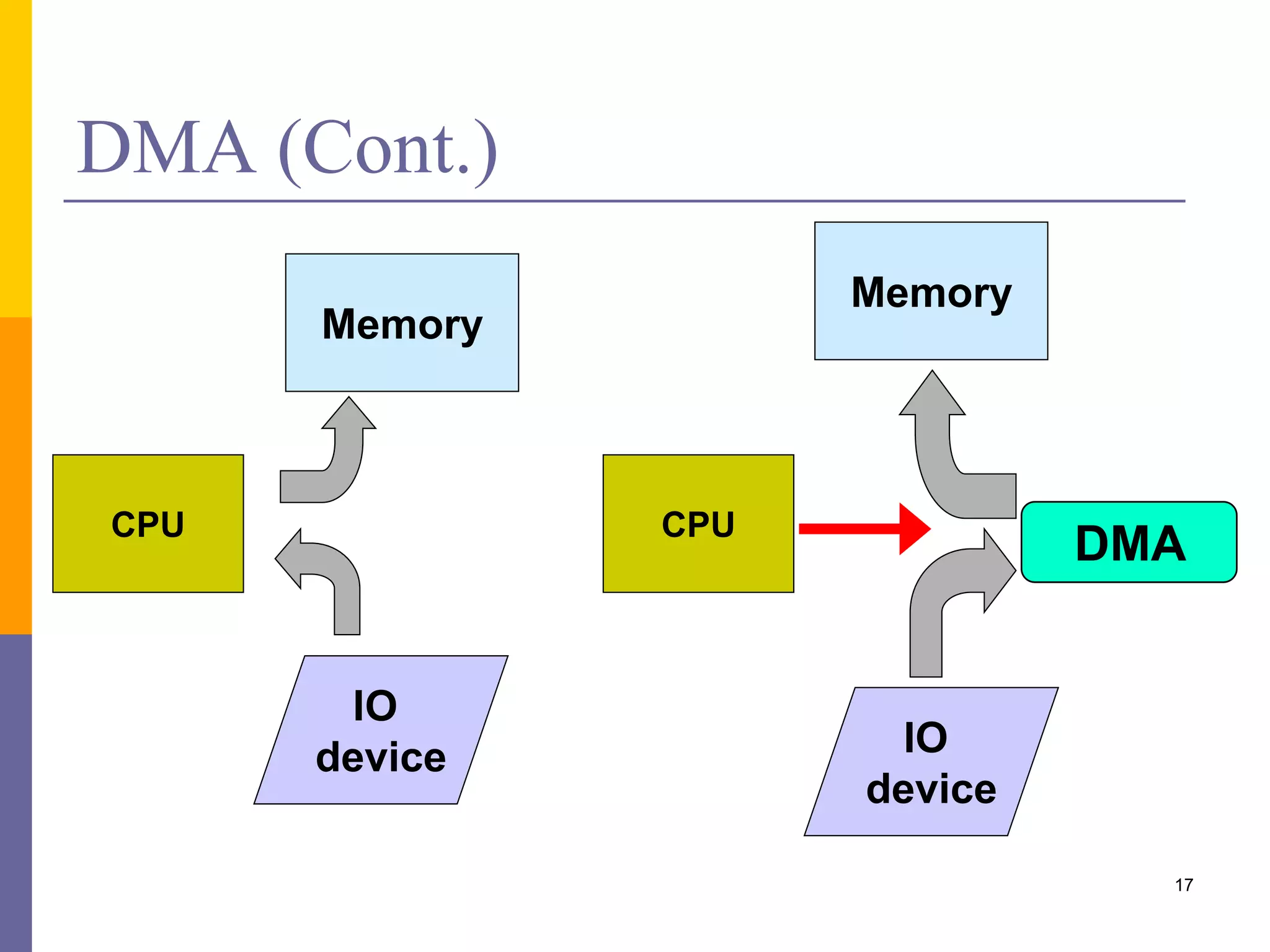
 Programmed & interrupt driven I/O require active
CPU intervention
 Transfer rate is limited
 CPU is tied up
 DMA is the answer
 Additional module (hardware) on bus
 DMA controller takes over from CPU for I/O
 Provide a way of bypassing CPU when transferring data
between memory & IO
16
17
DMA (Cont.)
CPU
IO
device
Memory
DMACPU
IO
device
Memory
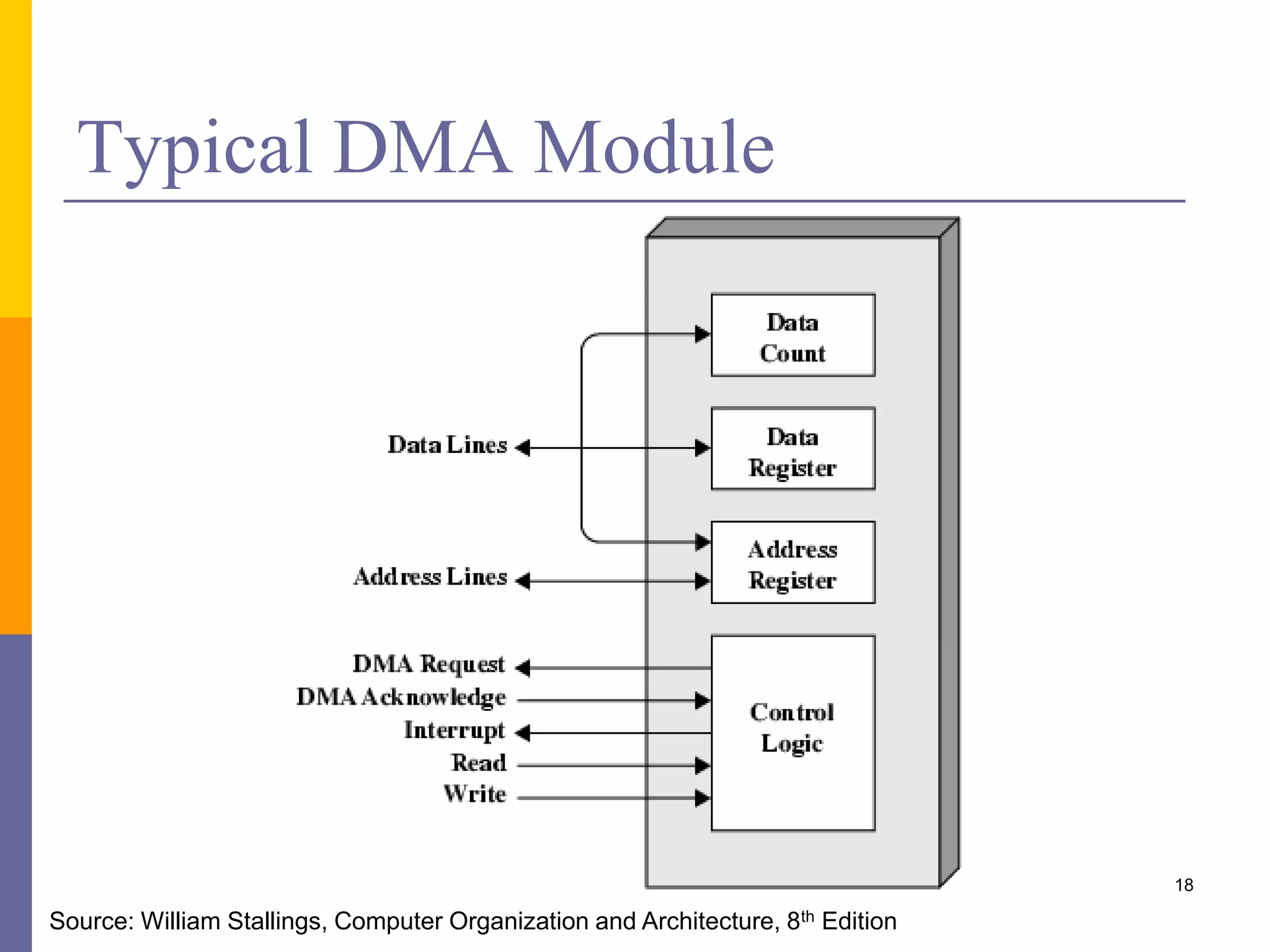
Typical DMA Module
18
Source: William Stallings, Computer Organization and Architecture, 8th Edition
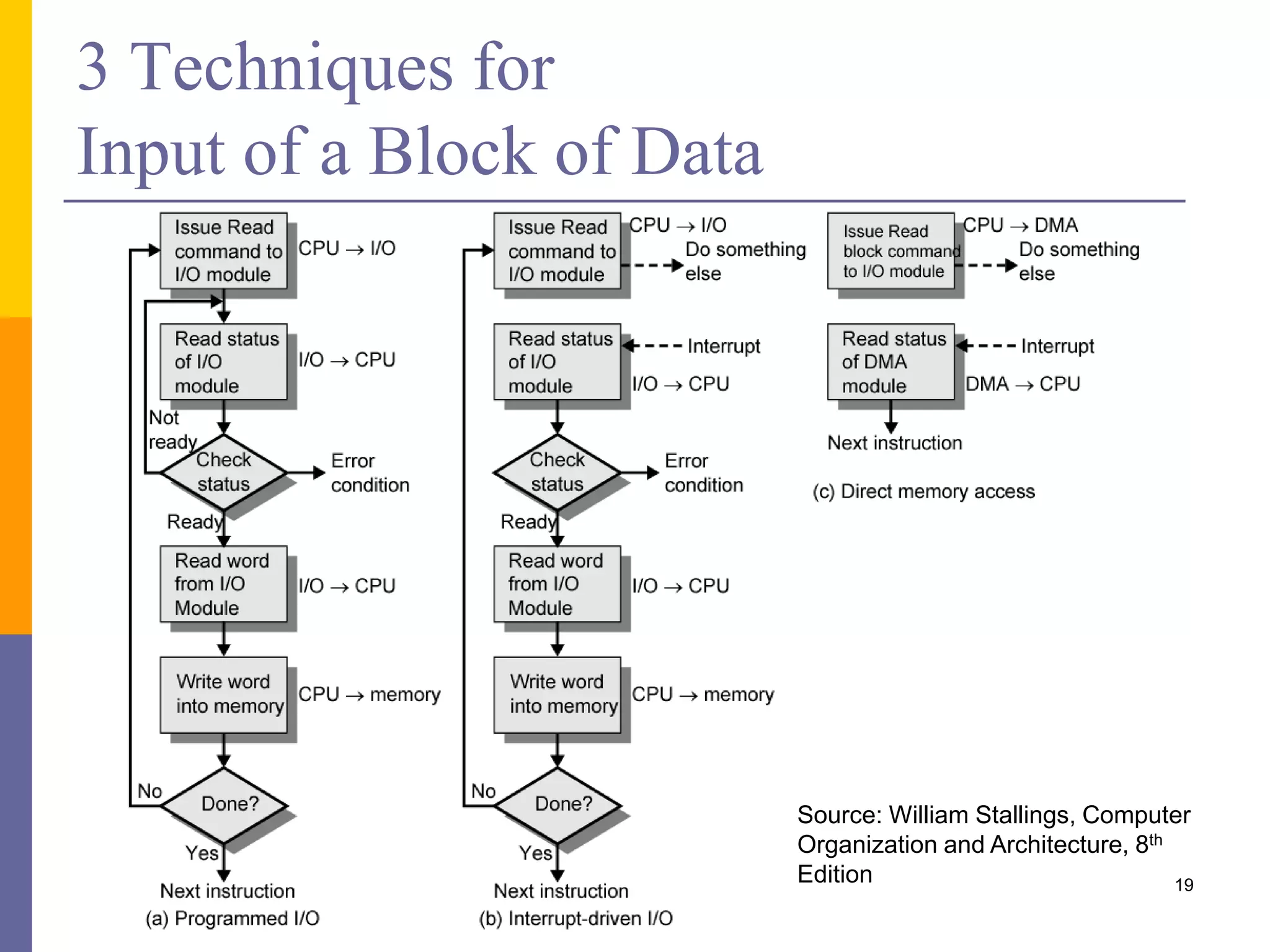
3 Techniques for
Input of a Block of Data
19
Source: William Stallings, Computer
Organization and Architecture, 8th
Edition
Blocks of a Computer
20
Figure 4.19.Use of DMA controllers in a computer system.
memory
Processor
Key board
Sy stem bus
Main
Interface
Network
Disk/DMA
controller Printer
DMA
controller
DiskDisk

Input & Output

  • 1.
    Input & Output CS2052Computer Architecture Computer Science & Engineering University of Moratuwa Dilum Bandara Dilum.Bandara@uom.lk
  • 2.
    Blocks of aMicroprocessor 2 Literal Address Operation Program Memory Instruction Register STACK Program Counter Instruction Decoder Timing, Control and Register selection Accumulator RAM & Data Registers ALU IO IO FLAG & Special Function Registers Clock Reset Interrupts Program Execution Section Register Processing Section Set up Set up Modify Address Internal data bus Source: Makis Malliris & Sabir Ghauri, UWE
  • 3.
    Input & Output Wide variety of peripherals  Different volumes of data, in different formats, & different speeds  All slower than CPU & RAM  Controlled vial I/O modules/controllers  Interface to CPU & Memory  Interface to 1 or more peripherals 3 CPU Main Memory I/O Devices System Bus
  • 4.
    External Devices  Interactwith humans  Monitor, printer, keyboard, mouse  Machine readable  Monitoring & control  e.g., process scheduling, CPU/casing temperature monitoring, fan speed control  Communication  Network Interface Card (NIC)  Modems  Dongles – Bluetooth, Wi-Fi, 3G, 4G 4
  • 5.
    Generic Model ofI/O Module 5 Source: William Stallings, Computer Organization and Architecture, 8th Edition
  • 6.
    I/O Module Functions Control & Timing  CPU communication  Device communication  Data buffering  Error detection 6 Source: http://lilt.ilstu.edu/cheri/itk254/sc/inputoutput/InputOutput_print.html
  • 7.
    I/O Module Functions– Example 7 Source: http://lilt.ilstu.edu/cheri/itk254/sc/inputoutput/InputOutput_print.html
  • 8.
    Input Output Techniques Programmed  Pooling  Interrupt driven  Direct Memory Access (DMA) 8
  • 9.
    Programmed I/O  CPUhas direct control over I/O  Continuously sense status  Read/write commands  Transferring data  CPU waits for I/O module to complete operation  Wastes CPU time 9
  • 10.
    Addressing I/O Devices Under programmed I/O data transfer is like memory access  Use instructions like MOVWF, INCF, BTFSS  e.g., MOVWF 0x06  Each device given unique identifier  CPU commands contain identifier (address) 10
  • 11.
  • 12.
    I/O Mapping (Cont.) MemoryMapped I/O  Devices & memory share same address space  I/O looks just like memory read/write  No special commands for I/O  Large selection of memory access commands Isolated I/O  Separate address spaces  Need I/O or memory select lines  Special commands for I/O  Limited set 12
  • 13.
    Interrupt Driven I/O No repeated CPU checking of device  No waiting  CPU does its own work  I/O module interrupts CPU when ready  Steps  CPU issues read command  I/O module gets data from peripheral whilst CPU does other work  I/O module interrupts CPU  CPU requests data  I/O module transfers data 13
  • 14.
    Interrupt Processing 14 Source: RobertLove, Linux Kernel Development
  • 15.
    Interrupt Processing (Cont.) 15Source:William Stallings, Computer Organization and Architecture, 8th Edition
  • 16.
    Direct Memory Access(DMA)  Programmed & interrupt driven I/O require active CPU intervention  Transfer rate is limited  CPU is tied up  DMA is the answer  Additional module (hardware) on bus  DMA controller takes over from CPU for I/O  Provide a way of bypassing CPU when transferring data between memory & IO 16
  • 17.
  • 18.
    Typical DMA Module 18 Source:William Stallings, Computer Organization and Architecture, 8th Edition
  • 19.
    3 Techniques for Inputof a Block of Data 19 Source: William Stallings, Computer Organization and Architecture, 8th Edition
  • 20.
    Blocks of aComputer 20 Figure 4.19.Use of DMA controllers in a computer system. memory Processor Key board Sy stem bus Main Interface Network Disk/DMA controller Printer DMA controller DiskDisk