External Storage Device
INTRODUCTION 
A Data Storage Device is a device for recording (Storing) 
information(Data).
TYPES OF STORAGE 
Hard Disk Drive 
Solid State Storage 
Flash Memory 
Magnetic Storage 
Optical Storage Device like CD, DVD
HARD DISK 
A Hard Disk drive is a data storage device used for storing 
and retrieving digital information using rapidly rotating disks 
(patters_ coated with magnetic material. 
An HDD consists of one or more rigid rapidly rotating disks 
(platters) with magnetic heads arranged on a moving 
actuator arm to read and write data to the surfaces.
SOLID STATE DRIVE (SDD) 
Data storage drive using integrated circuit assemblies as 
memory to storage persistently. 
SDD technology uses electronic interfaces compatible with 
traditional block input/output hard disk drives, thus 
permitting simple replacement in common applications. 
SD’s are typically more resistant to physical shock, run 
silently, have lower access time and less latency.
USB FLASH DRIVE 
• A USB flash refers to a type of computer technology that stores 
data , does not need constant electricity, and can be electrically 
erased and reprogrammed. 
• Flash memory is used in many different appliances including 
memory card, PDAs. 
• Information is stored in an array of memory cells made from 
floating-gate(FD) transistors. 
• UDB flash drive are typically removable and rewritable and 
physically much smaller than an optical disk.
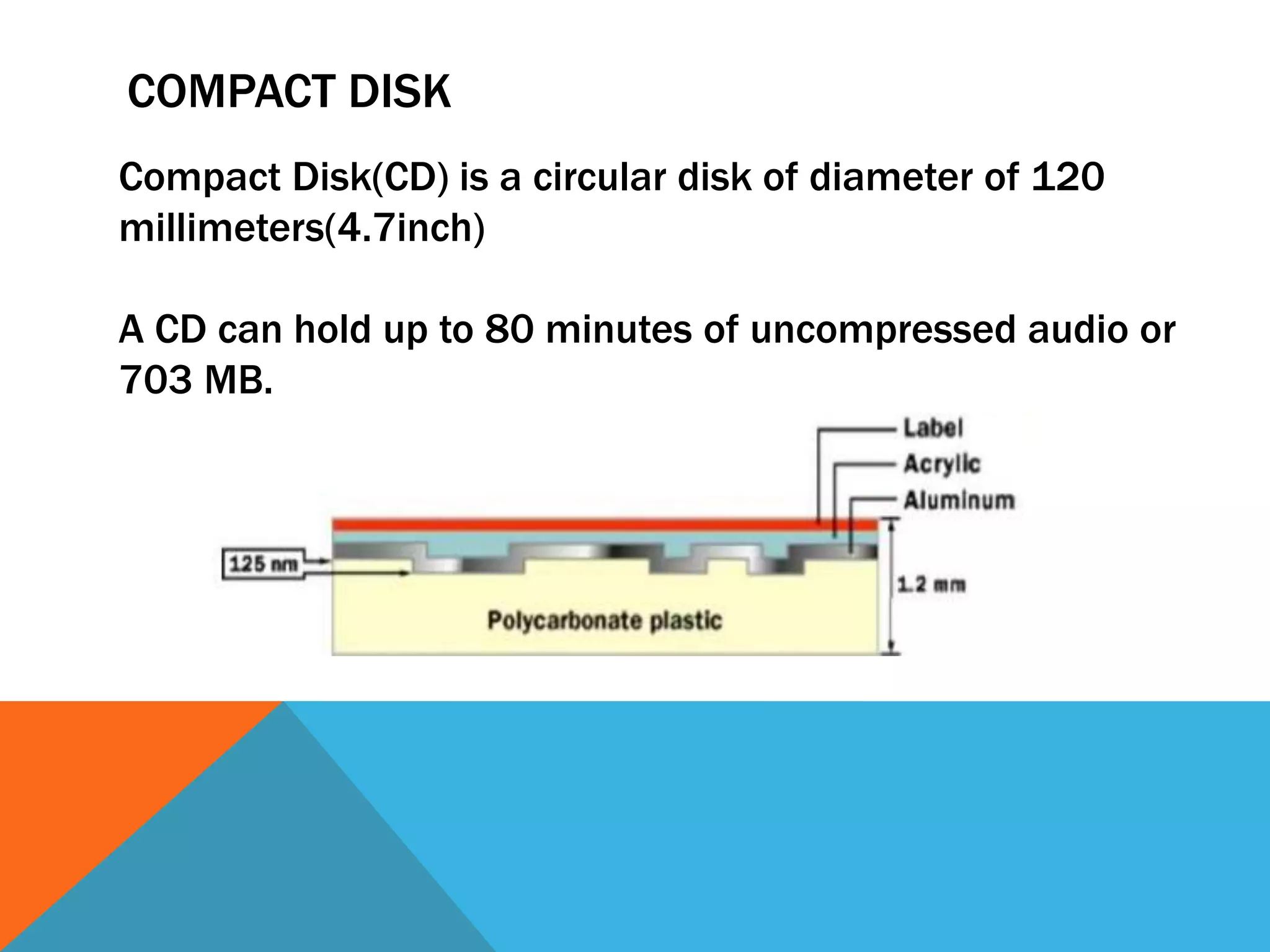
COMPACT DISK 
Compact Disk(CD) is a circular disk of diameter of 120 
millimeters(4.7inch) 
A CD can hold up to 80 minutes of uncompressed audio or 
703 MB.
UNDERSTANDING THE CD 
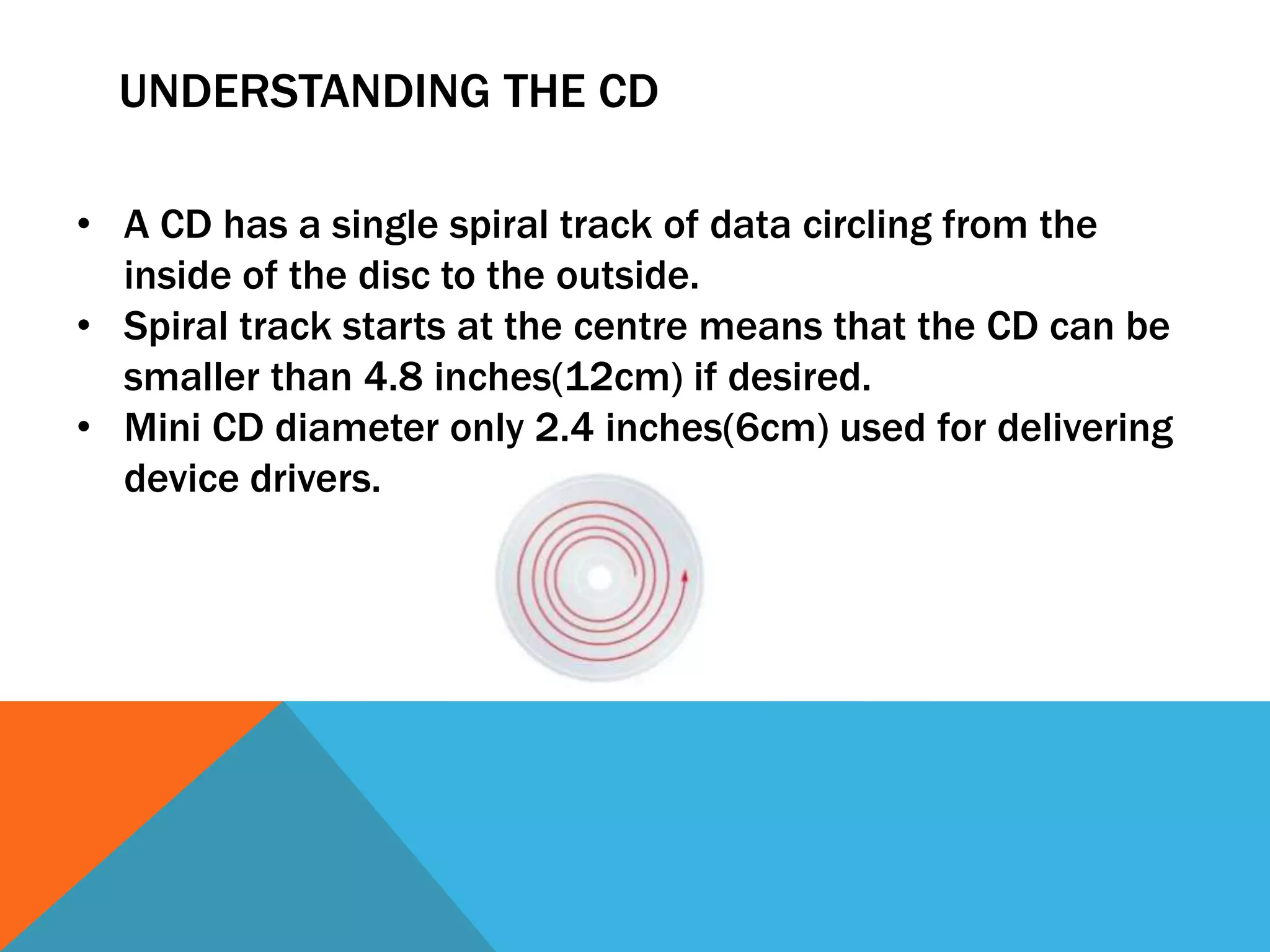
• A CD has a single spiral track of data circling from the 
inside of the disc to the outside. 
• Spiral track starts at the centre means that the CD can be 
smaller than 4.8 inches(12cm) if desired. 
• Mini CD diameter only 2.4 inches(6cm) used for delivering 
device drivers.
UNDERSTANDING THE CD: BUMPS 
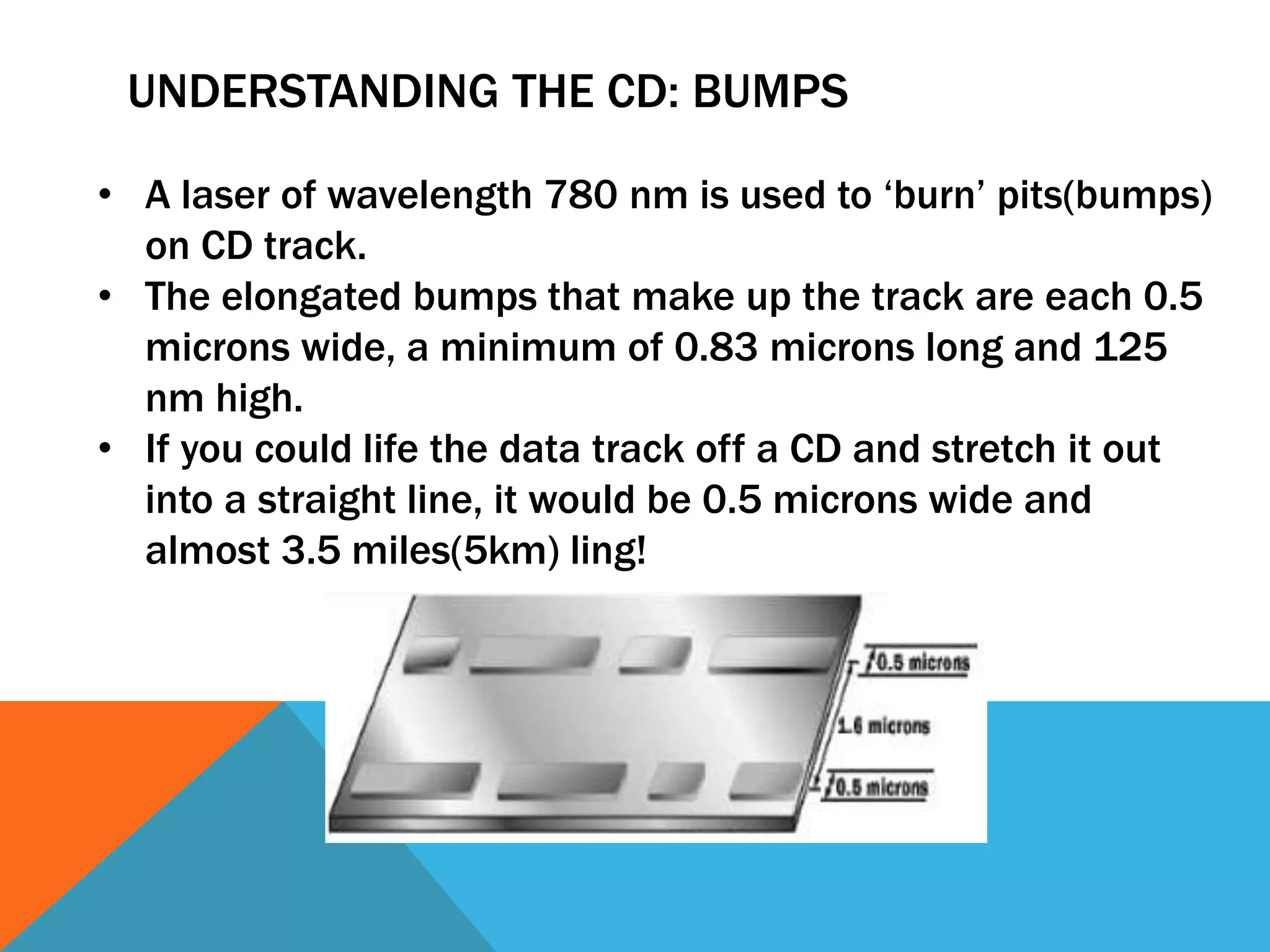
• A laser of wavelength 780 nm is used to ‘burn’ pits(bumps) 
on CD track. 
• The elongated bumps that make up the track are each 0.5 
microns wide, a minimum of 0.83 microns long and 125 
nm high. 
• If you could life the data track off a CD and stretch it out 
into a straight line, it would be 0.5 microns wide and 
almost 3.5 miles(5km) ling!
DIGITAL VERSATILE DISC 
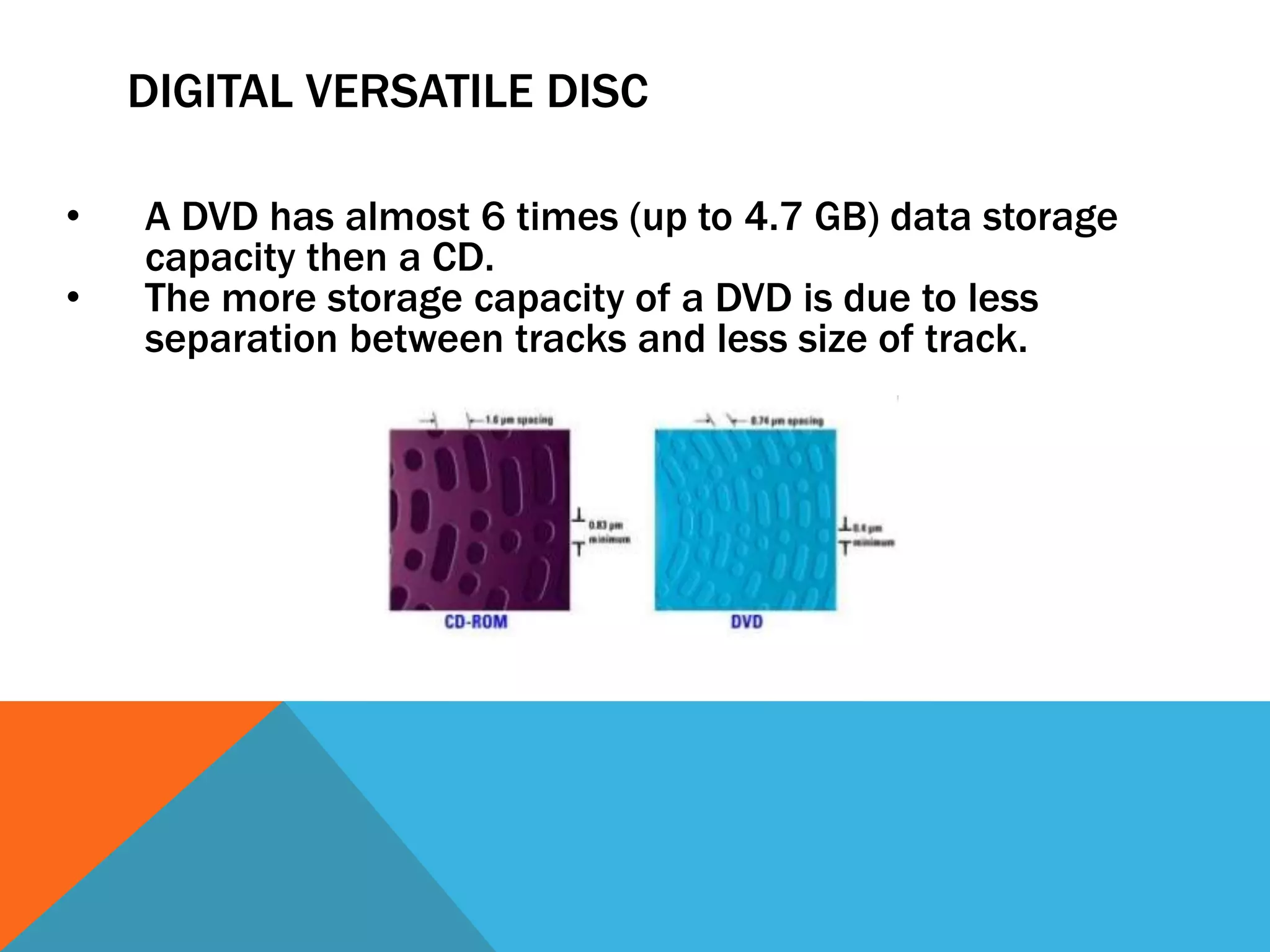
• A DVD has almost 6 times (up to 4.7 GB) data storage 
capacity then a CD. 
• The more storage capacity of a DVD is due to less 
separation between tracks and less size of track.
FUTURE TECHNOLOGY 
Storage Devices 
Helium Drive Technology 
Ethernet Interface Kinetic Drives
THANK YOU

Types of Storage Devices

  • 1.
  • 2.
    INTRODUCTION A DataStorage Device is a device for recording (Storing) information(Data).
  • 3.
    TYPES OF STORAGE Hard Disk Drive Solid State Storage Flash Memory Magnetic Storage Optical Storage Device like CD, DVD
  • 4.
    HARD DISK AHard Disk drive is a data storage device used for storing and retrieving digital information using rapidly rotating disks (patters_ coated with magnetic material. An HDD consists of one or more rigid rapidly rotating disks (platters) with magnetic heads arranged on a moving actuator arm to read and write data to the surfaces.
  • 5.
    SOLID STATE DRIVE(SDD) Data storage drive using integrated circuit assemblies as memory to storage persistently. SDD technology uses electronic interfaces compatible with traditional block input/output hard disk drives, thus permitting simple replacement in common applications. SD’s are typically more resistant to physical shock, run silently, have lower access time and less latency.
  • 6.
    USB FLASH DRIVE • A USB flash refers to a type of computer technology that stores data , does not need constant electricity, and can be electrically erased and reprogrammed. • Flash memory is used in many different appliances including memory card, PDAs. • Information is stored in an array of memory cells made from floating-gate(FD) transistors. • UDB flash drive are typically removable and rewritable and physically much smaller than an optical disk.
  • 7.
    COMPACT DISK CompactDisk(CD) is a circular disk of diameter of 120 millimeters(4.7inch) A CD can hold up to 80 minutes of uncompressed audio or 703 MB.
  • 8.
    UNDERSTANDING THE CD • A CD has a single spiral track of data circling from the inside of the disc to the outside. • Spiral track starts at the centre means that the CD can be smaller than 4.8 inches(12cm) if desired. • Mini CD diameter only 2.4 inches(6cm) used for delivering device drivers.
  • 9.
    UNDERSTANDING THE CD:BUMPS • A laser of wavelength 780 nm is used to ‘burn’ pits(bumps) on CD track. • The elongated bumps that make up the track are each 0.5 microns wide, a minimum of 0.83 microns long and 125 nm high. • If you could life the data track off a CD and stretch it out into a straight line, it would be 0.5 microns wide and almost 3.5 miles(5km) ling!
  • 10.
    DIGITAL VERSATILE DISC • A DVD has almost 6 times (up to 4.7 GB) data storage capacity then a CD. • The more storage capacity of a DVD is due to less separation between tracks and less size of track.
  • 11.
    FUTURE TECHNOLOGY StorageDevices Helium Drive Technology Ethernet Interface Kinetic Drives
  • 12.