IO Interface
Input Output Organization
IO Interface
 IO interface provides a method for transferring
information between internal system (CPU) and
external I/O devices.
 I/O devices can not directly communicate with the
CPU due to various differences between them.
Significance of I/O Interface
I/O Bus and Interface Modules
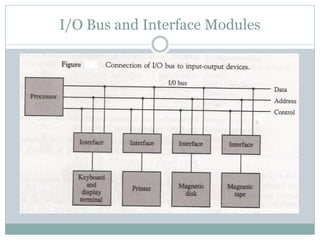
 I/O bus is attached to all peripherals.
 Interface monitors the address on address bus.
 If it find its own address, it activates path between
bus line and device.
 All the other devices are disabled by their interfaces.
 Data to read or write is made available in the data
bus.
 IO command is made available in the control bus.
 There are four types of IO command:
 Control Command
 Status Command
 Output Data Command
 Input Data Command
IO versus Memory bus
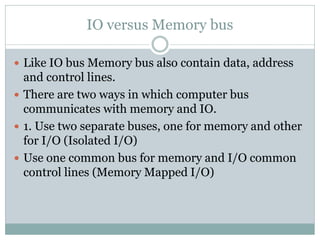
 Like IO bus Memory bus also contain data, address
and control lines.
 There are two ways in which computer bus
communicates with memory and IO.
 1. Use two separate buses, one for memory and other
for I/O (Isolated I/O)
 Use one common bus for memory and I/O common
control lines (Memory Mapped I/O)
 In the first method, CPU has independent set of
buses for both memory and IO. It is done in
computers that has separate IOP and CPU.
 In second method computers use common bus to
transfer data between IO or memory and CPU.
 This configuration isolates all I/O interface address
with the memory address and is referred to as
Isolated IO method.
 In memory mapped method, same address space is
used for both memory and IO interface. They have
only one set of read and write signals.
 Computer treats interface as being part of the
memory system.
 It assign address for each interface which cannot be
used for memory words which reduces the memory
address range available.
 This configuration is referred to as memory-
mapped IO.
Modes of transfer
 Data transfer between computer and IO device can
be handle in the following ways:
 Programmed IO
 Interrupt-Initiated IO
 Direct Memory Access(DMA)
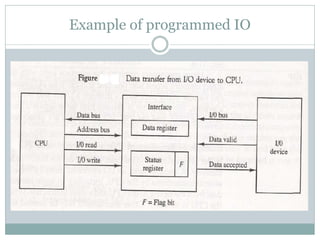
Programmed IO
 Each data transfer is initiated by an instruction in
the program.
 CPU stays in the program loop until IO unit indicates
it is ready for the data transfer.
 It is time consuming process since it keeps processor
busy needlessly.
Example of programmed IO
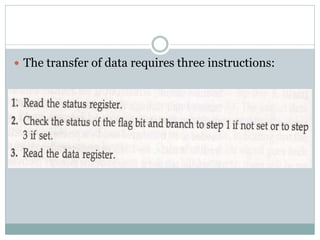
 The transfer of data requires three instructions:
Flow chart of programmed I/O from e-book
Interrupt Initiated IO
 In this type of IO, computer does not check the flag.
It continue to perform its task.
 Whenever any device wants the attention, it sends
the interrupt signal to the CPU.
 CPU then deviates from what it was doing, store the
return address from PC and branch to the address of
the subroutine.
 There are two ways of choosing the branch address:
 Vectored Interrupt
 Non-vectored Interrupt
 In vectored interrupt the source that interrupt the
CPU provides the branch information. This
information is called interrupt vectored.
 In non-vectored interrupt, the branch address is
assigned to the fixed address in the memory.
Direct Memory Access(DMA) (11.6)
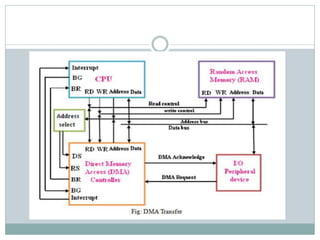
 In DMA there is direct communication between
memory and the peripheral devices.
 Direct memory access (DMA) is a feature of
modern computer systems that allows certain
hardware subsystems to read/write data to/from
memory without microprocessor intervention,
allowing the processor to do other work.
 Typically, the CPU initiates DMA transfer, does other
operations while the transfer is in progress, and
receives an interrupt from the DMA controller once
the operation is complete.
 BR(Bus Request) signal is used by DMA controller to
request CPU for the buses.
 CPU then places the bus on the high impedance state
which behave like open circuit.
 CPU then activates BG(Bus Grant) signal to
acknowledge BR signal.
 DMA now has full control over the buses and
perform the transfer.
 Transfer can be perform in two ways:
 Burst Transfer
 Cycle Stealing
 In burst transfer, a number of memory word is
transfer in a continuous burst. It is done while
communicating with fast devices and can’t be
stopped or slow down.
 In cycle stealing, one data word is transfer at a time.
 CPU delays it operation for one cycle.
DMA Controller
DMA Controller
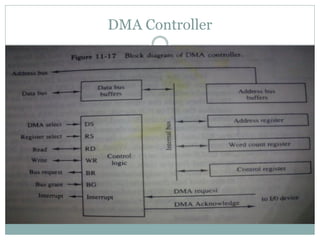
 It communicates with CPU through data bus and
control lines.
 Registers in DMA are selected by CPU by enabling
DS and RS.
 RD and WR signals are for read and write operation.
 When BG=0 CPU can communicate with DMA
register for read or write operation.
 When BG=1 DMA communicate directly with the
memory.
DMA Controller
 It has three register: address, word count and control
register.
 Address register contain address which specify the
location of memory to read or write.
 It is incremented after each word is transferred into
memory.
 Word count register holds the number of words to be
transferred.
 It is decremented by one after each word is
transferred into memory and regularly check for
zero.
 Control Register specify the mode of transfer.
 DMA is first initialized by CPU. After that DMA
continue to transfer data.
 CPU initialize the DMA by sending the following
information through the data bus:
 Starting address of memory block for read or write.
 The word count or number of words to read or write.
 Control to specify mode such as read or write.
 Control to start DMA
 Once DMA is initialized, CPU stop communicating
with DMA unless it receive interrupt signal or if it
wants to check how many words has been
transferred.

Unit 4-input-output organization

  • 1.
  • 2.
    IO Interface  IOinterface provides a method for transferring information between internal system (CPU) and external I/O devices.  I/O devices can not directly communicate with the CPU due to various differences between them.
  • 3.
  • 4.
    I/O Bus andInterface Modules
  • 5.
     I/O busis attached to all peripherals.  Interface monitors the address on address bus.  If it find its own address, it activates path between bus line and device.  All the other devices are disabled by their interfaces.  Data to read or write is made available in the data bus.  IO command is made available in the control bus.
  • 6.
     There arefour types of IO command:  Control Command  Status Command  Output Data Command  Input Data Command
  • 7.
    IO versus Memorybus  Like IO bus Memory bus also contain data, address and control lines.  There are two ways in which computer bus communicates with memory and IO.  1. Use two separate buses, one for memory and other for I/O (Isolated I/O)  Use one common bus for memory and I/O common control lines (Memory Mapped I/O)
  • 8.
     In thefirst method, CPU has independent set of buses for both memory and IO. It is done in computers that has separate IOP and CPU.  In second method computers use common bus to transfer data between IO or memory and CPU.
  • 9.
     This configurationisolates all I/O interface address with the memory address and is referred to as Isolated IO method.  In memory mapped method, same address space is used for both memory and IO interface. They have only one set of read and write signals.  Computer treats interface as being part of the memory system.
  • 10.
     It assignaddress for each interface which cannot be used for memory words which reduces the memory address range available.  This configuration is referred to as memory- mapped IO.
  • 11.
    Modes of transfer Data transfer between computer and IO device can be handle in the following ways:  Programmed IO  Interrupt-Initiated IO  Direct Memory Access(DMA)
  • 12.
    Programmed IO  Eachdata transfer is initiated by an instruction in the program.  CPU stays in the program loop until IO unit indicates it is ready for the data transfer.  It is time consuming process since it keeps processor busy needlessly.
  • 13.
  • 14.
     The transferof data requires three instructions:
  • 15.
    Flow chart ofprogrammed I/O from e-book
  • 16.
    Interrupt Initiated IO In this type of IO, computer does not check the flag. It continue to perform its task.  Whenever any device wants the attention, it sends the interrupt signal to the CPU.  CPU then deviates from what it was doing, store the return address from PC and branch to the address of the subroutine.
  • 17.
     There aretwo ways of choosing the branch address:  Vectored Interrupt  Non-vectored Interrupt  In vectored interrupt the source that interrupt the CPU provides the branch information. This information is called interrupt vectored.  In non-vectored interrupt, the branch address is assigned to the fixed address in the memory.
  • 18.
    Direct Memory Access(DMA)(11.6)  In DMA there is direct communication between memory and the peripheral devices.  Direct memory access (DMA) is a feature of modern computer systems that allows certain hardware subsystems to read/write data to/from memory without microprocessor intervention, allowing the processor to do other work.  Typically, the CPU initiates DMA transfer, does other operations while the transfer is in progress, and receives an interrupt from the DMA controller once the operation is complete.
  • 20.
     BR(Bus Request)signal is used by DMA controller to request CPU for the buses.  CPU then places the bus on the high impedance state which behave like open circuit.  CPU then activates BG(Bus Grant) signal to acknowledge BR signal.  DMA now has full control over the buses and perform the transfer.
  • 21.
     Transfer canbe perform in two ways:  Burst Transfer  Cycle Stealing  In burst transfer, a number of memory word is transfer in a continuous burst. It is done while communicating with fast devices and can’t be stopped or slow down.  In cycle stealing, one data word is transfer at a time.  CPU delays it operation for one cycle.
  • 22.
  • 23.
    DMA Controller  Itcommunicates with CPU through data bus and control lines.  Registers in DMA are selected by CPU by enabling DS and RS.  RD and WR signals are for read and write operation.  When BG=0 CPU can communicate with DMA register for read or write operation.  When BG=1 DMA communicate directly with the memory.
  • 24.
    DMA Controller  Ithas three register: address, word count and control register.  Address register contain address which specify the location of memory to read or write.  It is incremented after each word is transferred into memory.  Word count register holds the number of words to be transferred.  It is decremented by one after each word is transferred into memory and regularly check for zero.
  • 25.
     Control Registerspecify the mode of transfer.  DMA is first initialized by CPU. After that DMA continue to transfer data.  CPU initialize the DMA by sending the following information through the data bus:  Starting address of memory block for read or write.  The word count or number of words to read or write.  Control to specify mode such as read or write.  Control to start DMA
  • 26.
     Once DMAis initialized, CPU stop communicating with DMA unless it receive interrupt signal or if it wants to check how many words has been transferred.