DIFFUSION & OSMOSIS
A cell can’t just keep growing and growing.
- As cell gets larger, surface area to volume ratio decreases
- Less surface area for passage of nutrients and waste across the
membrane
- Substances would take too long to diffuse to where they are
needed in the cell
DIFFUSION
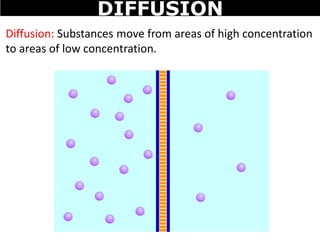
Diffusion: Substances move from areas of high concentration
to areas of low concentration.
DIFFUSION
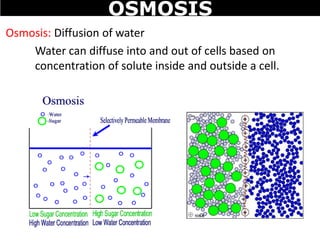
Osmosis: Diffusion of water
Water can diffuse into and out of cells based on
concentration of solute inside and outside a cell.
OSMOSIS
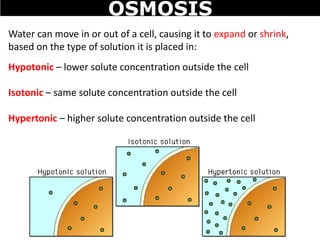
Water can move in or out of a cell, causing it to expand or shrink,
based on the type of solution it is placed in:
Hypotonic – lower solute concentration outside the cell
Isotonic – same solute concentration outside the cell
Hypertonic – higher solute concentration outside the cell
OSMOSIS
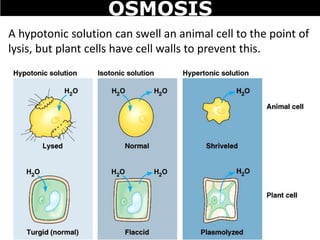
A hypotonic solution can swell an animal cell to the point of
lysis, but plant cells have cell walls to prevent this.
OSMOSIS
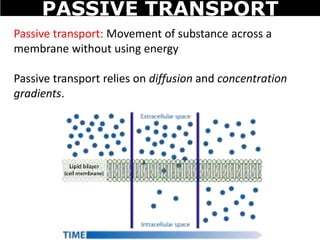
Passive transport: Movement of substance across a
membrane without using energy
Passive transport relies on diffusion and concentration
gradients.
PASSIVE TRANSPORT
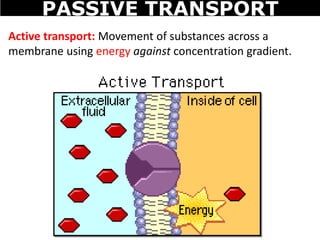
Active transport: Movement of substances across a
membrane using energy against concentration gradient.
PASSIVE TRANSPORT
CELL DIVISION
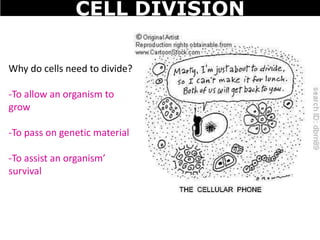
Why do cells need to divide?
-To allow an organism to
grow
-To pass on genetic material
-To assist an organism’
survival
CELL DIVISION
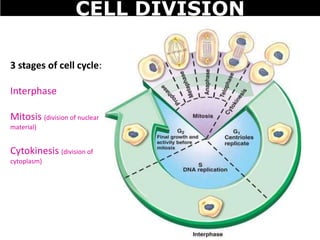
3 stages of cell cycle:
Interphase
Mitosis (division of nuclear
material)
Cytokinesis (division of
cytoplasm)
CELL DIVISION
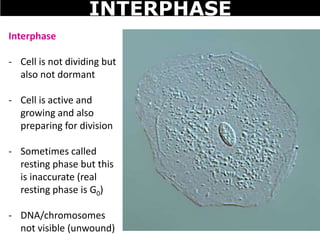
Interphase
- Cell is not dividing but
also not dormant
- Cell is active and
growing and also
preparing for division
- Sometimes called
resting phase but this
is inaccurate (real
resting phase is G0)
- DNA/chromosomes
not visible (unwound)
INTERPHASE
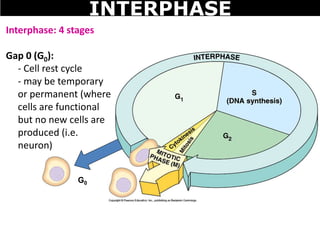
Interphase: 4 stages
Gap 0 (G0):
- Cell rest cycle
- may be temporary
or permanent (where
cells are functional
but no new cells are
produced (i.e.
neuron)
G0
INTERPHASE
Interphase: 4 stages
Gap 1 (G1):
- Rapid growth (4hr)
- cell takes in
nutrients for energy,
growth, repair
- Cells either go into S
or G0 after G1
G0
INTERPHASE
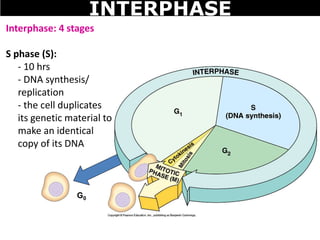
Interphase: 4 stages
S phase (S):
- 10 hrs
- DNA synthesis/
replication
- the cell duplicates
its genetic material to
make an identical
copy of its DNA
G0
INTERPHASE
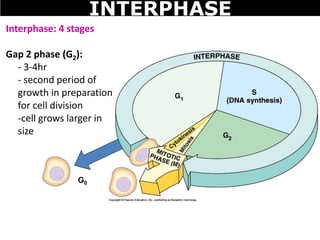
Interphase: 4 stages
Gap 2 phase (G2):
- 3-4hr
- second period of
growth in preparation
for cell division
-cell grows larger in
size
G0
INTERPHASE
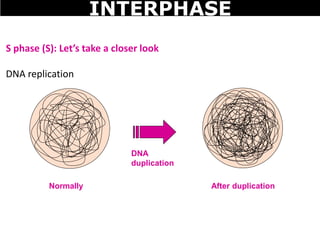
S phase (S): Let’s take a closer look
DNA replication
Normally
DNA
duplication
After duplication
INTERPHASE
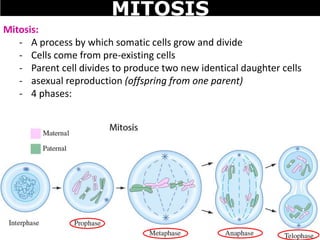
Mitosis:
- A process by which somatic cells grow and divide
- Cells come from pre-existing cells
- Parent cell divides to produce two new identical daughter cells
- asexual reproduction (offspring from one parent)
- 4 phases:
MITOSIS
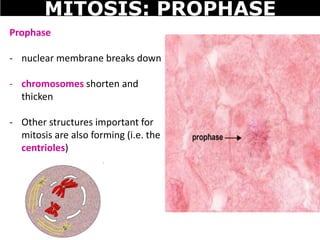
Prophase
- nuclear membrane breaks down
- chromosomes shorten and
thicken
- Other structures important for
mitosis are also forming (i.e. the
centrioles)
MITOSIS: PROPHASE
Prophase
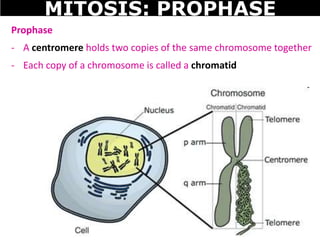
- A centromere holds two copies of the same chromosome together
- Each copy of a chromosome is called a chromatid
MITOSIS: PROPHASE
Mother’s
side
Prophase
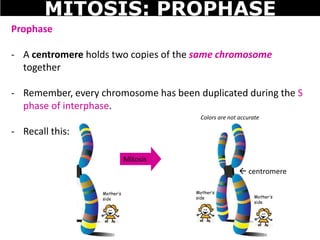
- A centromere holds two copies of the same chromosome
together
- Remember, every chromosome has been duplicated during the S
phase of interphase.
- Recall this:
Mitosis
Mother’s
side Mother’s
side
Colors are not accurate
MITOSIS: PROPHASE
 centromere
Prophase
MITOSIS: PROPHASE
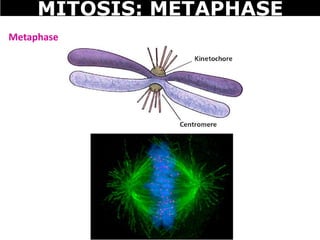
Metaphase
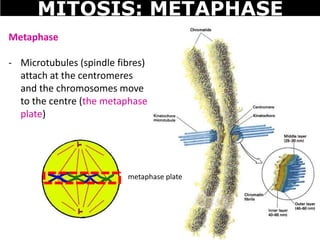
- Microtubules (spindle fibres)
attach at the centromeres
and the chromosomes move
to the centre (the metaphase
plate)
MITOSIS: METAPHASE
metaphase plate
Metaphase
MITOSIS: METAPHASE
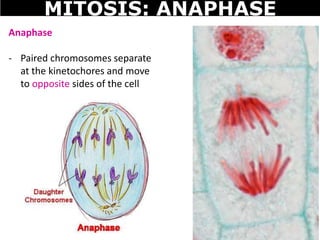
Anaphase
- Paired chromosomes separate
at the kinetochores and move
to opposite sides of the cell
MITOSIS: ANAPHASE
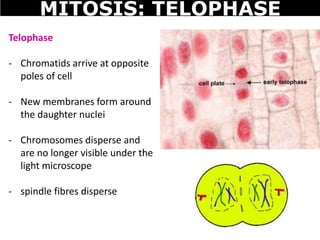
Telophase
- Chromatids arrive at opposite
poles of cell
- New membranes form around
the daughter nuclei
- Chromosomes disperse and
are no longer visible under the
light microscope
- spindle fibres disperse
MITOSIS: TELOPHASE
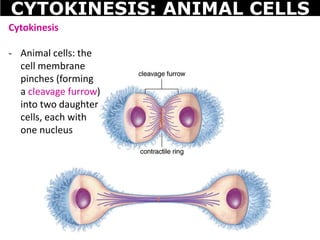
Cytokinesis
- Animal cells: the
cell membrane
pinches (forming
a cleavage furrow)
into two daughter
cells, each with
one nucleus
CYTOKINESIS: ANIMAL CELLS
Cytokinesis
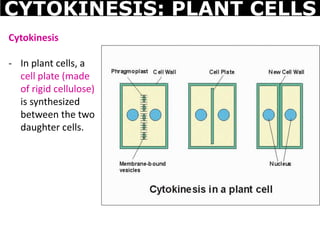
- In plant cells, a
cell plate (made
of rigid cellulose)
is synthesized
between the two
daughter cells.
CYTOKINESIS: PLANT CELLS
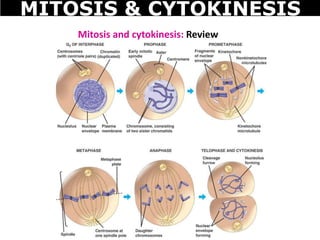
Mitosis and cytokinesis: Review
MITOSIS & CYTOKINESIS

03 Diffusion, osmosis, and cell division

  • 1.
  • 2.
    A cell can’tjust keep growing and growing. - As cell gets larger, surface area to volume ratio decreases - Less surface area for passage of nutrients and waste across the membrane - Substances would take too long to diffuse to where they are needed in the cell DIFFUSION
  • 3.
    Diffusion: Substances movefrom areas of high concentration to areas of low concentration. DIFFUSION
  • 4.
    Osmosis: Diffusion ofwater Water can diffuse into and out of cells based on concentration of solute inside and outside a cell. OSMOSIS
  • 5.
    Water can movein or out of a cell, causing it to expand or shrink, based on the type of solution it is placed in: Hypotonic – lower solute concentration outside the cell Isotonic – same solute concentration outside the cell Hypertonic – higher solute concentration outside the cell OSMOSIS
  • 6.
    A hypotonic solutioncan swell an animal cell to the point of lysis, but plant cells have cell walls to prevent this. OSMOSIS
  • 7.
    Passive transport: Movementof substance across a membrane without using energy Passive transport relies on diffusion and concentration gradients. PASSIVE TRANSPORT
  • 8.
    Active transport: Movementof substances across a membrane using energy against concentration gradient. PASSIVE TRANSPORT
  • 9.
  • 10.
    Why do cellsneed to divide? -To allow an organism to grow -To pass on genetic material -To assist an organism’ survival CELL DIVISION
  • 11.
    3 stages ofcell cycle: Interphase Mitosis (division of nuclear material) Cytokinesis (division of cytoplasm) CELL DIVISION
  • 12.
    Interphase - Cell isnot dividing but also not dormant - Cell is active and growing and also preparing for division - Sometimes called resting phase but this is inaccurate (real resting phase is G0) - DNA/chromosomes not visible (unwound) INTERPHASE
  • 13.
    Interphase: 4 stages Gap0 (G0): - Cell rest cycle - may be temporary or permanent (where cells are functional but no new cells are produced (i.e. neuron) G0 INTERPHASE
  • 14.
    Interphase: 4 stages Gap1 (G1): - Rapid growth (4hr) - cell takes in nutrients for energy, growth, repair - Cells either go into S or G0 after G1 G0 INTERPHASE
  • 15.
    Interphase: 4 stages Sphase (S): - 10 hrs - DNA synthesis/ replication - the cell duplicates its genetic material to make an identical copy of its DNA G0 INTERPHASE
  • 16.
    Interphase: 4 stages Gap2 phase (G2): - 3-4hr - second period of growth in preparation for cell division -cell grows larger in size G0 INTERPHASE
  • 17.
    S phase (S):Let’s take a closer look DNA replication Normally DNA duplication After duplication INTERPHASE
  • 18.
    Mitosis: - A processby which somatic cells grow and divide - Cells come from pre-existing cells - Parent cell divides to produce two new identical daughter cells - asexual reproduction (offspring from one parent) - 4 phases: MITOSIS
  • 19.
    Prophase - nuclear membranebreaks down - chromosomes shorten and thicken - Other structures important for mitosis are also forming (i.e. the centrioles) MITOSIS: PROPHASE
  • 20.
    Prophase - A centromereholds two copies of the same chromosome together - Each copy of a chromosome is called a chromatid MITOSIS: PROPHASE
  • 21.
    Mother’s side Prophase - A centromereholds two copies of the same chromosome together - Remember, every chromosome has been duplicated during the S phase of interphase. - Recall this: Mitosis Mother’s side Mother’s side Colors are not accurate MITOSIS: PROPHASE  centromere
  • 22.
  • 23.
    Metaphase - Microtubules (spindlefibres) attach at the centromeres and the chromosomes move to the centre (the metaphase plate) MITOSIS: METAPHASE metaphase plate
  • 24.
  • 25.
    Anaphase - Paired chromosomesseparate at the kinetochores and move to opposite sides of the cell MITOSIS: ANAPHASE
  • 26.
    Telophase - Chromatids arriveat opposite poles of cell - New membranes form around the daughter nuclei - Chromosomes disperse and are no longer visible under the light microscope - spindle fibres disperse MITOSIS: TELOPHASE
  • 27.
    Cytokinesis - Animal cells:the cell membrane pinches (forming a cleavage furrow) into two daughter cells, each with one nucleus CYTOKINESIS: ANIMAL CELLS
  • 28.
    Cytokinesis - In plantcells, a cell plate (made of rigid cellulose) is synthesized between the two daughter cells. CYTOKINESIS: PLANT CELLS
  • 29.
    Mitosis and cytokinesis:Review MITOSIS & CYTOKINESIS