State Standards
Genetics State Standards
 10.4 In sexually reproducing organism, each offspring
  contains a mix of characteristics inherited from both
  parents.

Genetics CAPT Strands
 D 34. Describe, in general terms, how the genetic
  information of organisms can be altered to make them
  produce new materials.

 D 35. Explain the risks and benefits of altering the genetic
  composition and cell products of existing organisms.

 D 36. Explain how meiosis contributes to the genetic
  variability of organisms.
Objectives
 Understand that most organisms have two genes for
  each trait.

 Illustrate how meiosis contributes to genetic
  variability.

 Create a visual representation of the stages of meiosis.
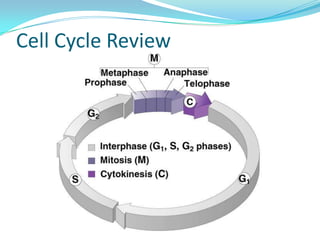
Cell Cycle Review
 All cells come from pre-existing cells


 New cells are produced for growth and to replace
  damaged or old cells

 Differs in prokaryotes (bacteria) and eukaryotes
  (protists, fungi, plants and animals)
Cell Cycle Review
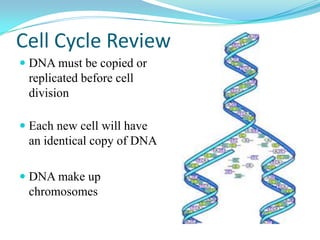
 DNA must be copied or
 replicated before cell
 division

 Each new cell will have
 an identical copy of DNA

 DNA make up
 chromosomes
Cell Cycle Review
 Before cells divide
  chromosomes are
  replicated

 Create two identical sister
  chromatids held together
  by a centromere

 Human cells have 46
  chromosomes
Cell Cycle Review
Checkpoint
When chromosomes are replicated, what is created?


  1. Two brother chromosomes

  2. Two sister chromosomes

  3. Two brother chromatids

  4. Two sister chromatids
Checkpoint
How many chromosomes does the human cell have?


  1. 23

  2. 32

  3. 46

  4. 52
Checkpoint
Why is DNA replicated?


  1. To replace old DNA

  2. For cell division

  3. To make new DNA

  4. All of the above
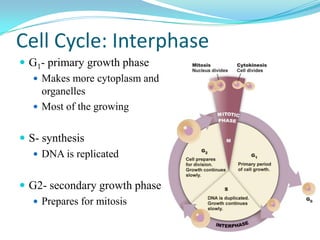
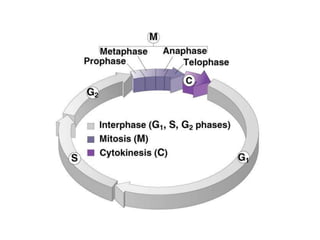
Cell Cycle: Interphase
 G1- primary growth phase
   Makes more cytoplasm and
    organelles
   Most of the growing


 S- synthesis
    DNA is replicated


 G2- secondary growth phase
   Prepares for mitosis
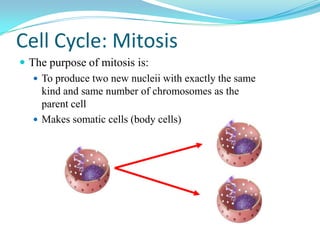
Cell Cycle: Mitosis
 The purpose of mitosis is:
    To produce two new nucleii with exactly the same
     kind and same number of chromosomes as the
     parent cell
    Makes somatic cells (body cells)
Cell Cycle: Mitosis
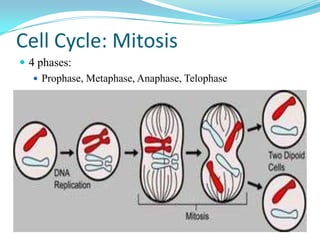
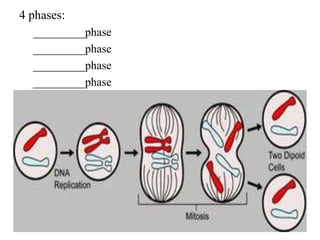
 4 phases:
    Prophase, Metaphase, Anaphase, Telophase
Cell Cycle: Mitosis
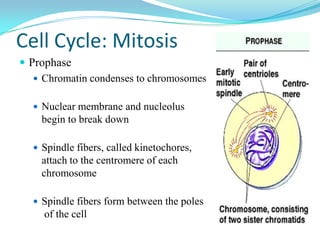
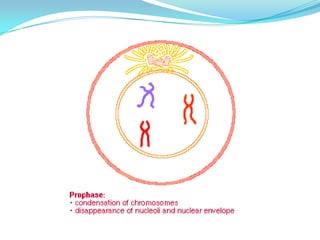
 Prophase
    Chromatin condenses to chromosomes


   Nuclear membrane and nucleolus
    begin to break down

   Spindle fibers, called kinetochores,
    attach to the centromere of each
    chromosome

   Spindle fibers form between the poles
     of the cell
Cell Cycle: Mitosis
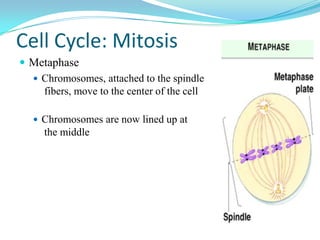
 Metaphase
   Chromosomes, attached to the spindle
    fibers, move to the center of the cell

    Chromosomes are now lined up at
     the middle
Cell Cycle: Mitosis
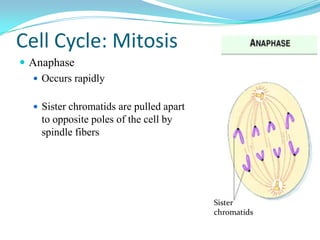
 Anaphase
   Occurs rapidly


   Sister chromatids are pulled apart
    to opposite poles of the cell by
    spindle fibers


                                         Sister
                                         chromatids
Cell Cycle: Mitosis
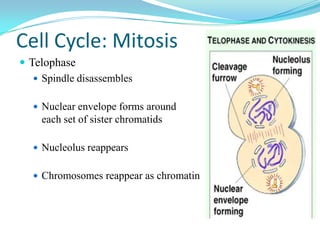
 Telophase
    Spindle disassembles


    Nuclear envelope forms around
    each set of sister chromatids

    Nucleolus reappears


    Chromosomes reappear as chromatin
Checkpoint
What happens during the S phase of the cell cycle?


  1. DNA is replicated

  2. Cells grown

  3. Cells divide

  4. Nothing happens
Checkpoint
During anaphase in mitosis what is pulled apart?


  1. Centromere

  2. Homologous chromosomes

  3. Sister chromatids

  4. Spindle fibers
Checkpoint
What is the correct order of mitosis?


  1. MATP

  2. TMAP

  3. PMAT

  4. MAPT
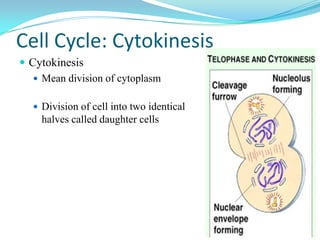
Cell Cycle: Cytokinesis
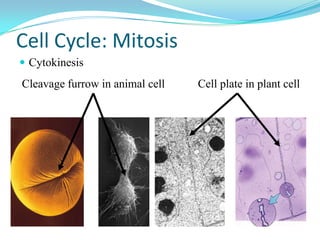
 Cytokinesis
    Mean division of cytoplasm


    Division of cell into two identical
     halves called daughter cells
Cell Cycle: Mitosis
 Cytokinesis
Cleavage furrow in animal cell   Cell plate in plant cell
Cell Cycle: Mitosis
 Daughter cells
   Have the same number of chromosomes as each other and
    as the parent cell

   Identical to each other, but smaller then parent cell


   Must grow to become mature cell (G1 of Interphase)


   Diploid cells (or 2n) because these cells have 2 sets of the
    same chromosomes
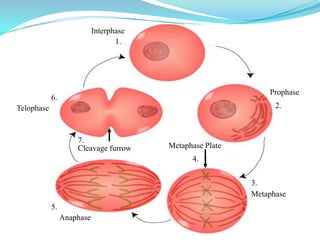
Interphase
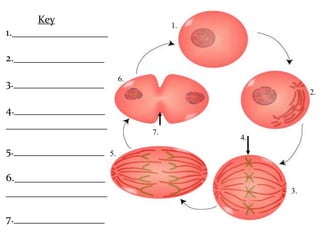
                                   1.


                                                               Prophase
            6.
Telophase                                                        2.


                     7.
                     Cleavage furrow     Metaphase Plate
                                               4.


                                                           3.
                                                           Metaphase
            5.
                 Anaphase
 STUDENT
Cell Cycle Review
 All cells come from ________________ cells


 New cells are produced for ______________ and to
  _________________damaged or old cells

 Differs in _______________ (bacteria) and
  _________________(protists, fungi, plants and animals)
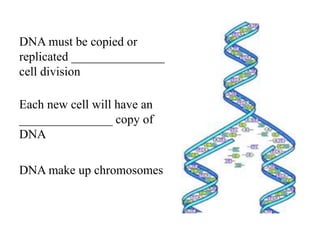
DNA must be copied or
replicated _______________
cell division

Each new cell will have an
_______________ copy of
DNA

DNA make up chromosomes
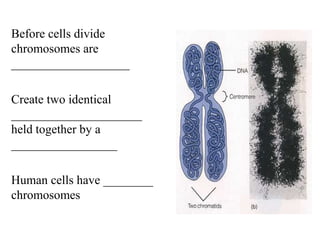
Before cells divide
chromosomes are
___________________

Create two identical
_____________________
held together by a
_________________

Human cells have ________
chromosomes
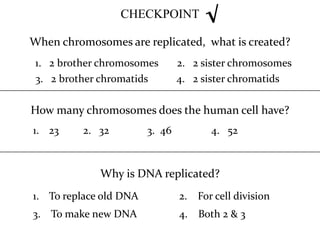
CHECKPOINT         √
When chromosomes are replicated, what is created?
 1. 2 brother chromosomes       2. 2 sister chromosomes
 3. 2 brother chromatids        4. 2 sister chromatids

How many chromosomes does the human cell have?
1. 23     2. 32         3. 46          4. 52


             Why is DNA replicated?
1. To replace old DNA           2. For cell division
3. To make new DNA              4. Both 2 & 3
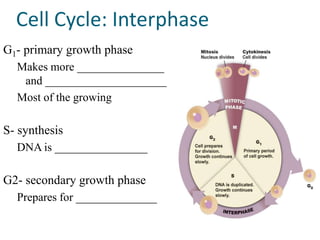
Cell Cycle: Interphase
G1- primary growth phase
  Makes more _______________
   and _____________________
  Most of the growing

S- synthesis
  DNA is ________________

G2- secondary growth phase
  Prepares for ______________
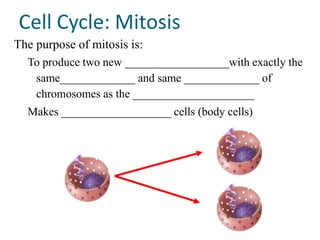
Cell Cycle: Mitosis
The purpose of mitosis is:
  To produce two new __________________with exactly the
   same_____________ and same _____________ of
   chromosomes as the _____________________
  Makes ___________________ cells (body cells)
4 phases:
  _________phase
  _________phase
  _________phase
  _________phase
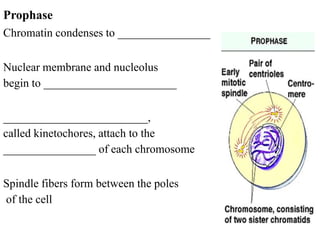
Prophase
Chromatin condenses to ________________

Nuclear membrane and nucleolus
begin to _______________________

_________________________,
called kinetochores, attach to the
________________ of each chromosome

Spindle fibers form between the poles
of the cell
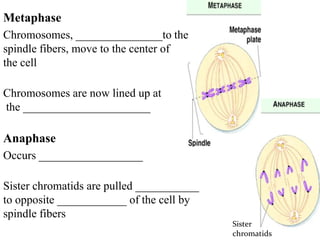
Metaphase
Chromosomes, _______________to the
spindle fibers, move to the center of
the cell

Chromosomes are now lined up at
the ______________________

Anaphase
Occurs __________________

Sister chromatids are pulled ___________
to opposite ____________ of the cell by
spindle fibers
                                           Sister
                                           chromatids
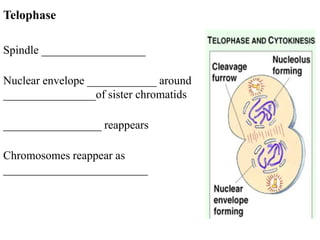
Telophase

Spindle __________________

Nuclear envelope ____________ around
________________of sister chromatids

_________________ reappears

Chromosomes reappear as
_________________________
CHECKPOINT    √
What happens during the S phase of the cell cycle?
   1. DNA is replicated    2. Cells grown
   3. Cells divide         4.. Nothing happens

  During anaphase of mitosis what is pulled apart?
 1. Centromere              2. Homologous chromosomes
 3. Sister chromatids       4. Spindle fibers

     What is the correct order of mitosis?

 1. MATP         2. TMAP    3. PMAT       4. MAPT
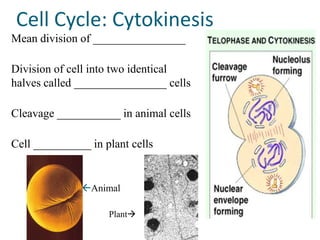
Cell Cycle: Cytokinesis
Mean division of ________________

Division of cell into two identical
halves called ________________ cells

Cleavage ___________ in animal cells

Cell __________ in plant cells


              Animal

                    Plant
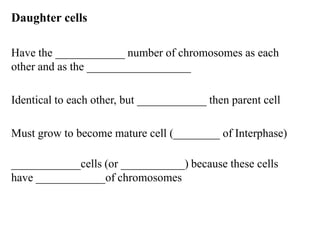
Daughter cells

Have the ____________ number of chromosomes as each
other and as the __________________

Identical to each other, but ____________ then parent cell

Must grow to become mature cell (________ of Interphase)

____________cells (or ___________) because these cells
have ____________of chromosomes
Key                            1.
1.__________________

2._________________
                            6.
3._________________
                                                     2.

4._________________
___________________
                                 7.
                                           4.
5._________________    5.


6._________________
___________________                             3.


7._________________

Cell cycle- mitosis

  • 2.
    State Standards Genetics StateStandards  10.4 In sexually reproducing organism, each offspring contains a mix of characteristics inherited from both parents. Genetics CAPT Strands  D 34. Describe, in general terms, how the genetic information of organisms can be altered to make them produce new materials.  D 35. Explain the risks and benefits of altering the genetic composition and cell products of existing organisms.  D 36. Explain how meiosis contributes to the genetic variability of organisms.
  • 3.
    Objectives  Understand thatmost organisms have two genes for each trait.  Illustrate how meiosis contributes to genetic variability.  Create a visual representation of the stages of meiosis.
  • 4.
    Cell Cycle Review All cells come from pre-existing cells  New cells are produced for growth and to replace damaged or old cells  Differs in prokaryotes (bacteria) and eukaryotes (protists, fungi, plants and animals)
  • 5.
    Cell Cycle Review DNA must be copied or replicated before cell division  Each new cell will have an identical copy of DNA  DNA make up chromosomes
  • 6.
    Cell Cycle Review Before cells divide chromosomes are replicated  Create two identical sister chromatids held together by a centromere  Human cells have 46 chromosomes
  • 7.
  • 8.
    Checkpoint When chromosomes arereplicated, what is created? 1. Two brother chromosomes 2. Two sister chromosomes 3. Two brother chromatids 4. Two sister chromatids
  • 9.
    Checkpoint How many chromosomesdoes the human cell have? 1. 23 2. 32 3. 46 4. 52
  • 10.
    Checkpoint Why is DNAreplicated? 1. To replace old DNA 2. For cell division 3. To make new DNA 4. All of the above
  • 11.
    Cell Cycle: Interphase G1- primary growth phase  Makes more cytoplasm and organelles  Most of the growing  S- synthesis  DNA is replicated  G2- secondary growth phase  Prepares for mitosis
  • 12.
    Cell Cycle: Mitosis The purpose of mitosis is:  To produce two new nucleii with exactly the same kind and same number of chromosomes as the parent cell  Makes somatic cells (body cells)
  • 13.
    Cell Cycle: Mitosis 4 phases:  Prophase, Metaphase, Anaphase, Telophase
  • 14.
    Cell Cycle: Mitosis Prophase  Chromatin condenses to chromosomes  Nuclear membrane and nucleolus begin to break down  Spindle fibers, called kinetochores, attach to the centromere of each chromosome  Spindle fibers form between the poles of the cell
  • 15.
    Cell Cycle: Mitosis Metaphase  Chromosomes, attached to the spindle fibers, move to the center of the cell  Chromosomes are now lined up at the middle
  • 16.
    Cell Cycle: Mitosis Anaphase  Occurs rapidly  Sister chromatids are pulled apart to opposite poles of the cell by spindle fibers Sister chromatids
  • 17.
    Cell Cycle: Mitosis Telophase  Spindle disassembles  Nuclear envelope forms around each set of sister chromatids  Nucleolus reappears  Chromosomes reappear as chromatin
  • 18.
    Checkpoint What happens duringthe S phase of the cell cycle? 1. DNA is replicated 2. Cells grown 3. Cells divide 4. Nothing happens
  • 19.
    Checkpoint During anaphase inmitosis what is pulled apart? 1. Centromere 2. Homologous chromosomes 3. Sister chromatids 4. Spindle fibers
  • 20.
    Checkpoint What is thecorrect order of mitosis? 1. MATP 2. TMAP 3. PMAT 4. MAPT
  • 21.
    Cell Cycle: Cytokinesis Cytokinesis  Mean division of cytoplasm  Division of cell into two identical halves called daughter cells
  • 22.
    Cell Cycle: Mitosis Cytokinesis Cleavage furrow in animal cell Cell plate in plant cell
  • 23.
    Cell Cycle: Mitosis Daughter cells  Have the same number of chromosomes as each other and as the parent cell  Identical to each other, but smaller then parent cell  Must grow to become mature cell (G1 of Interphase)  Diploid cells (or 2n) because these cells have 2 sets of the same chromosomes
  • 25.
    Interphase 1. Prophase 6. Telophase 2. 7. Cleavage furrow Metaphase Plate 4. 3. Metaphase 5. Anaphase
  • 26.
  • 27.
    Cell Cycle Review All cells come from ________________ cells  New cells are produced for ______________ and to _________________damaged or old cells  Differs in _______________ (bacteria) and _________________(protists, fungi, plants and animals)
  • 28.
    DNA must becopied or replicated _______________ cell division Each new cell will have an _______________ copy of DNA DNA make up chromosomes
  • 29.
    Before cells divide chromosomesare ___________________ Create two identical _____________________ held together by a _________________ Human cells have ________ chromosomes
  • 31.
    CHECKPOINT √ When chromosomes are replicated, what is created? 1. 2 brother chromosomes 2. 2 sister chromosomes 3. 2 brother chromatids 4. 2 sister chromatids How many chromosomes does the human cell have? 1. 23 2. 32 3. 46 4. 52 Why is DNA replicated? 1. To replace old DNA 2. For cell division 3. To make new DNA 4. Both 2 & 3
  • 32.
    Cell Cycle: Interphase G1-primary growth phase Makes more _______________ and _____________________ Most of the growing S- synthesis DNA is ________________ G2- secondary growth phase Prepares for ______________
  • 33.
    Cell Cycle: Mitosis Thepurpose of mitosis is: To produce two new __________________with exactly the same_____________ and same _____________ of chromosomes as the _____________________ Makes ___________________ cells (body cells)
  • 34.
    4 phases: _________phase _________phase _________phase _________phase
  • 35.
    Prophase Chromatin condenses to________________ Nuclear membrane and nucleolus begin to _______________________ _________________________, called kinetochores, attach to the ________________ of each chromosome Spindle fibers form between the poles of the cell
  • 36.
    Metaphase Chromosomes, _______________to the spindlefibers, move to the center of the cell Chromosomes are now lined up at the ______________________ Anaphase Occurs __________________ Sister chromatids are pulled ___________ to opposite ____________ of the cell by spindle fibers Sister chromatids
  • 37.
    Telophase Spindle __________________ Nuclear envelope____________ around ________________of sister chromatids _________________ reappears Chromosomes reappear as _________________________
  • 38.
    CHECKPOINT √ What happens during the S phase of the cell cycle? 1. DNA is replicated 2. Cells grown 3. Cells divide 4.. Nothing happens During anaphase of mitosis what is pulled apart? 1. Centromere 2. Homologous chromosomes 3. Sister chromatids 4. Spindle fibers What is the correct order of mitosis? 1. MATP 2. TMAP 3. PMAT 4. MAPT
  • 39.
    Cell Cycle: Cytokinesis Meandivision of ________________ Division of cell into two identical halves called ________________ cells Cleavage ___________ in animal cells Cell __________ in plant cells Animal Plant
  • 40.
    Daughter cells Have the____________ number of chromosomes as each other and as the __________________ Identical to each other, but ____________ then parent cell Must grow to become mature cell (________ of Interphase) ____________cells (or ___________) because these cells have ____________of chromosomes
  • 41.
    Key 1. 1.__________________ 2._________________ 6. 3._________________ 2. 4._________________ ___________________ 7. 4. 5._________________ 5. 6._________________ ___________________ 3. 7._________________