STRUCTURE &
PHYSIOLOGY
THE CELL
Group Names
1-YASMIN YEHIA
2-AMGAD HUSSEIN
3-SERAG ALI
4-MOHAMED MOKHTAR
5-AHMED HASAN
6-WALEED ABD ELAZIZ
Definition of cell
The cell is the fundamental
unit of structuree
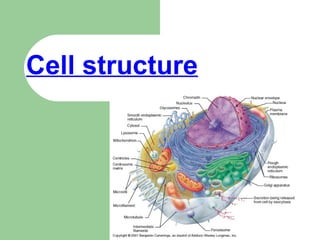
Cell structure
Type of cell
eukaryotes
Have nucleus
Have DNA
Cell division
(mitosis& meiosis)
E.g animals& plants
Prokaryotes
No nucleus
No DNA
Cell division by binary
fission
E.g bacteria
Cell growth and metabolism
Cell grow through the functioning of cellular
metabolism. Cell metabolism is the process
by which individual cells process nutrients
molecules . Metabolism has two distinct
division: catabolism, in which the cell breaks
down complex molecules to produce energy
and anabolism, in which the cells use energy
and to construct molecules and perform
other biological functions.
Function of cell
1. Cell division
2. Transport Metabolism
3. Transport through cell
membrane
Cell division
Is the process by which new cells
are formed for growth, repair, and
replacement at the body
Types of cell division
Mitosis: which result in two cell
identical to the one parent cell
Meiosis: daughters cell with half
genetic material
Mitosis
Prophase: cell prepared to division
metaphase
anaphase
Cell membrane
1. Definition it is structure to protect cell
and control the enterers of substance
2. Description it is bilipids layer
embedded between protein lipids
 head H2O soluble +ve charge called
hydrophili
 Tail H2O in soluble -ve called hydrophobic
Function
1. It acts as barrier, enclosing and protecting
the component of cell
2. It acts as agate, controlling the flow of
molecules in and out of the cell
The cell must selectively absorb nutrients
that are essential to its growth and
function
 Osmosis
 Diffusion
 Active transport
 filtration
Diffusion
 It occurs only in substances is the movement
of substance through the membranes from
any area of high concentration gradient this
process called passive diffusion
• Another type of diffusion is facilitate in
diffusion occurs when water soluble
molecule move through the membrane with
the help of proteins
Active transport
Is the movement of the substance against
the concentration gradient from low
concentration to high amount of high
amount of energy ATP
filtration
Is the movement of water and solutes from an
area of high hydrostatic pressure to an area
of low hydrostatic pressure
Hydrostatic pressure is the pressure that is
created by the weight of fluid
Cystic fibrosis
Genetic defect in transport of substances
through cell membrane

Cell Structure

  • 1.
  • 2.
    Group Names 1-YASMIN YEHIA 2-AMGADHUSSEIN 3-SERAG ALI 4-MOHAMED MOKHTAR 5-AHMED HASAN 6-WALEED ABD ELAZIZ
  • 3.
    Definition of cell Thecell is the fundamental unit of structuree
  • 4.
  • 5.
    Type of cell eukaryotes Havenucleus Have DNA Cell division (mitosis& meiosis) E.g animals& plants Prokaryotes No nucleus No DNA Cell division by binary fission E.g bacteria
  • 6.
    Cell growth andmetabolism Cell grow through the functioning of cellular metabolism. Cell metabolism is the process by which individual cells process nutrients molecules . Metabolism has two distinct division: catabolism, in which the cell breaks down complex molecules to produce energy and anabolism, in which the cells use energy and to construct molecules and perform other biological functions.
  • 7.
    Function of cell 1.Cell division 2. Transport Metabolism 3. Transport through cell membrane
  • 8.
    Cell division Is theprocess by which new cells are formed for growth, repair, and replacement at the body
  • 9.
    Types of celldivision Mitosis: which result in two cell identical to the one parent cell Meiosis: daughters cell with half genetic material
  • 10.
  • 11.
  • 12.
  • 16.
    Cell membrane 1. Definitionit is structure to protect cell and control the enterers of substance 2. Description it is bilipids layer embedded between protein lipids  head H2O soluble +ve charge called hydrophili  Tail H2O in soluble -ve called hydrophobic
  • 17.
    Function 1. It actsas barrier, enclosing and protecting the component of cell 2. It acts as agate, controlling the flow of molecules in and out of the cell
  • 18.
    The cell mustselectively absorb nutrients that are essential to its growth and function  Osmosis  Diffusion  Active transport  filtration
  • 19.
    Diffusion  It occursonly in substances is the movement of substance through the membranes from any area of high concentration gradient this process called passive diffusion • Another type of diffusion is facilitate in diffusion occurs when water soluble molecule move through the membrane with the help of proteins
  • 20.
    Active transport Is themovement of the substance against the concentration gradient from low concentration to high amount of high amount of energy ATP
  • 21.
    filtration Is the movementof water and solutes from an area of high hydrostatic pressure to an area of low hydrostatic pressure Hydrostatic pressure is the pressure that is created by the weight of fluid
  • 22.
    Cystic fibrosis Genetic defectin transport of substances through cell membrane