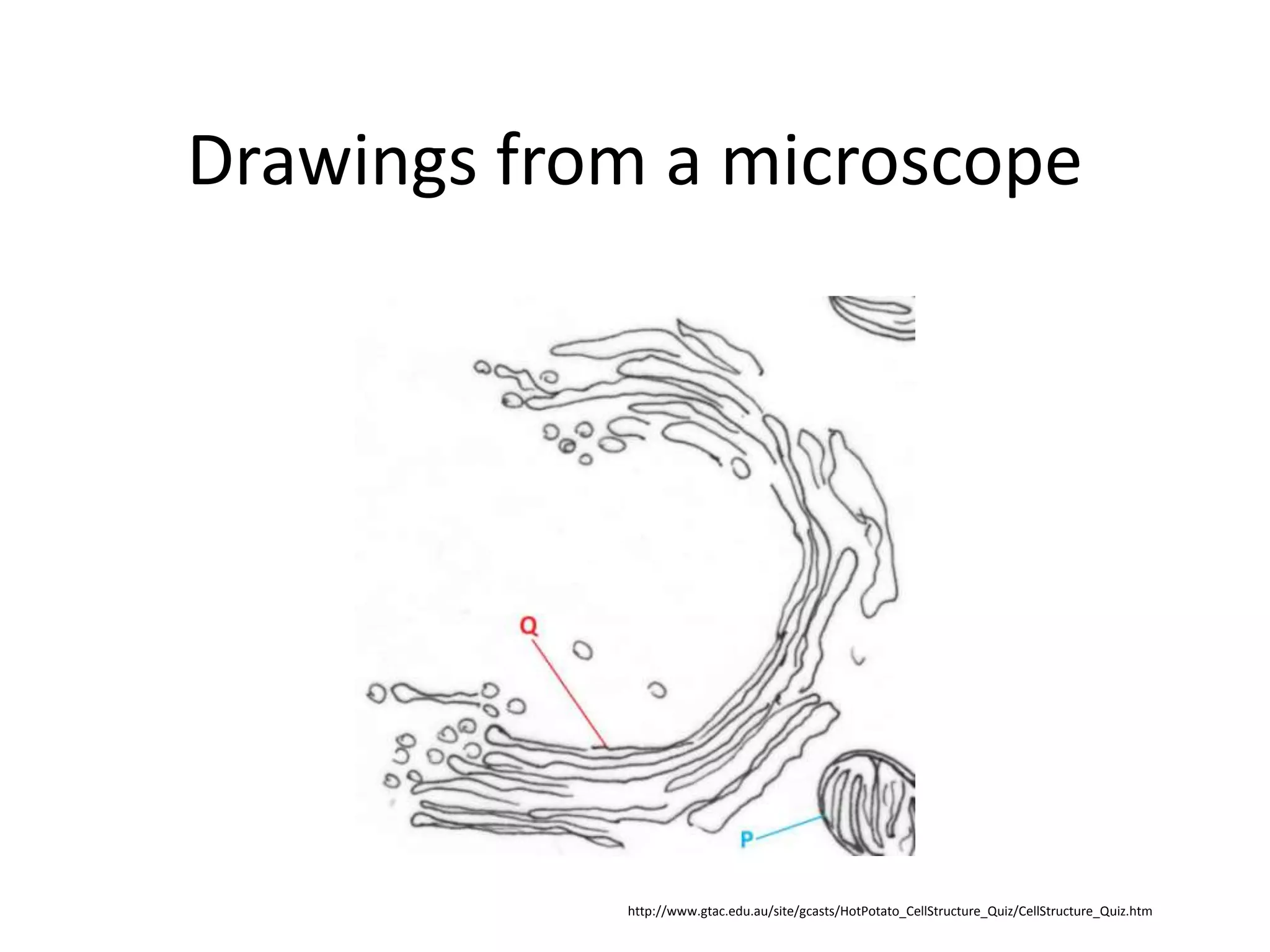
Drawings from a microscope


            http://www.gtac.edu.au/site/gcasts/HotPotato_CellStructure_Quiz/CellStructure_Quiz.htm
1. If a red blood cell has a diameter of 8 mm and a
   student shows it with a diameter of 40 mm in a
   drawing, what is the magnification of the
   drawing?

A.     × 0.0002
B.     × 0.2
C.     ×5
D.     × 5000
2. A student observes and draws an Amoeba, using the high
power lens of a microscope. The diameter of the drawing is
100 mm. The actual diameter of the Amoeba is 100 µm.
What is the magnification of the drawing?

A.     0.001
B.     100
C.     400
D.     1000
Surface area to volume ratio
        Carissa Fletcher
    Inter Community School
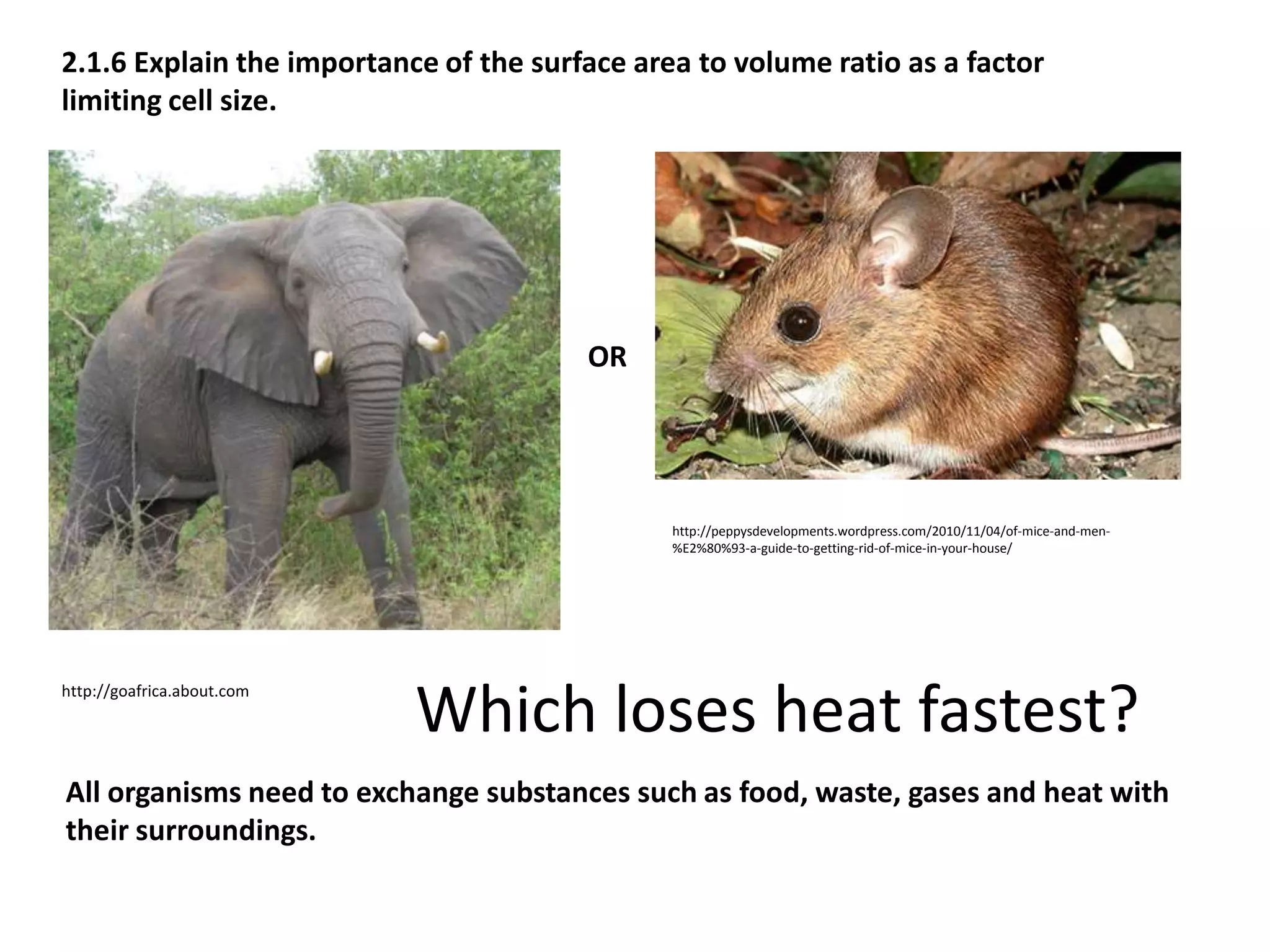
2.1.6 Explain the importance of the surface area to volume ratio as a factor
limiting cell size.


                                        OR


                                               http://peppysdevelopments.wordpress.com/2010/11/04/of-mice-and-men-
                                               %E2%80%93-a-guide-to-getting-rid-of-mice-in-your-house/


http://goafrica.about.com
                            Which loses heat fastest?
All organisms need to exchange substances such as food, waste, gases and heat with
their surroundings.
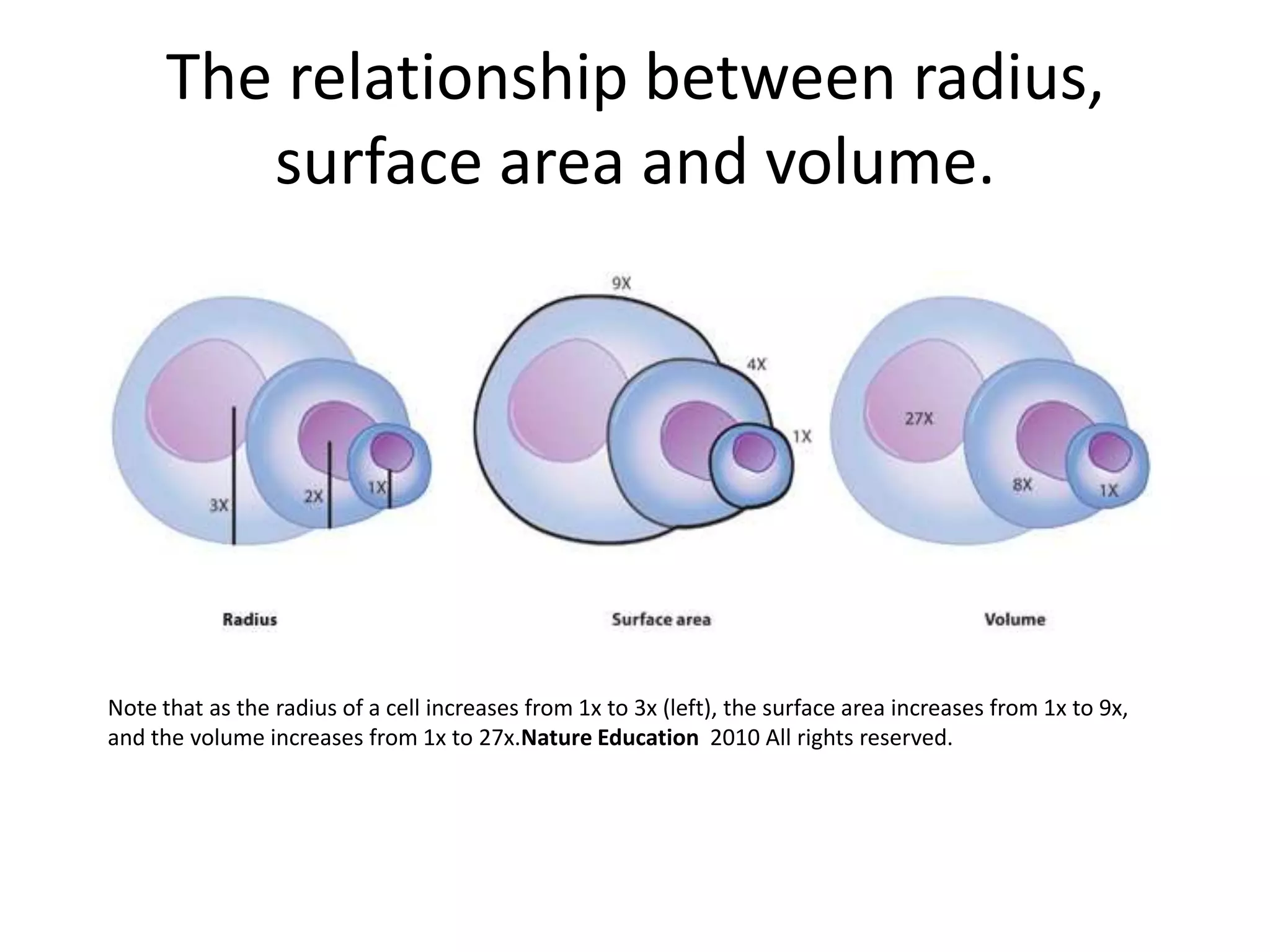
The relationship between radius,
         surface area and volume.


Note that as the radius of a cell increases from 1x to 3x (left), the surface area increases from 1x to 9x,
and the volume increases from 1x to 27x.Nature Education 2010 All rights reserved.
Exchange of substances
• The rate of exchange of substances depends on the organism's
  surface area that is in contact with the surroundings.

• The requirements for materials depends on the volume of the
  organism.

• Ability to meet the requirements depends on the surface area:
  volume ratio.

• As organisms get bigger their volume and surface area both get
  bigger.

• The volume increases much more than surface area.
Challenge – design a cell
Using a plasticine make a model cell that you
think:

1. Has the highest surface/volume ratio.
2. That is optimally shaped for diffusion of
   substances.
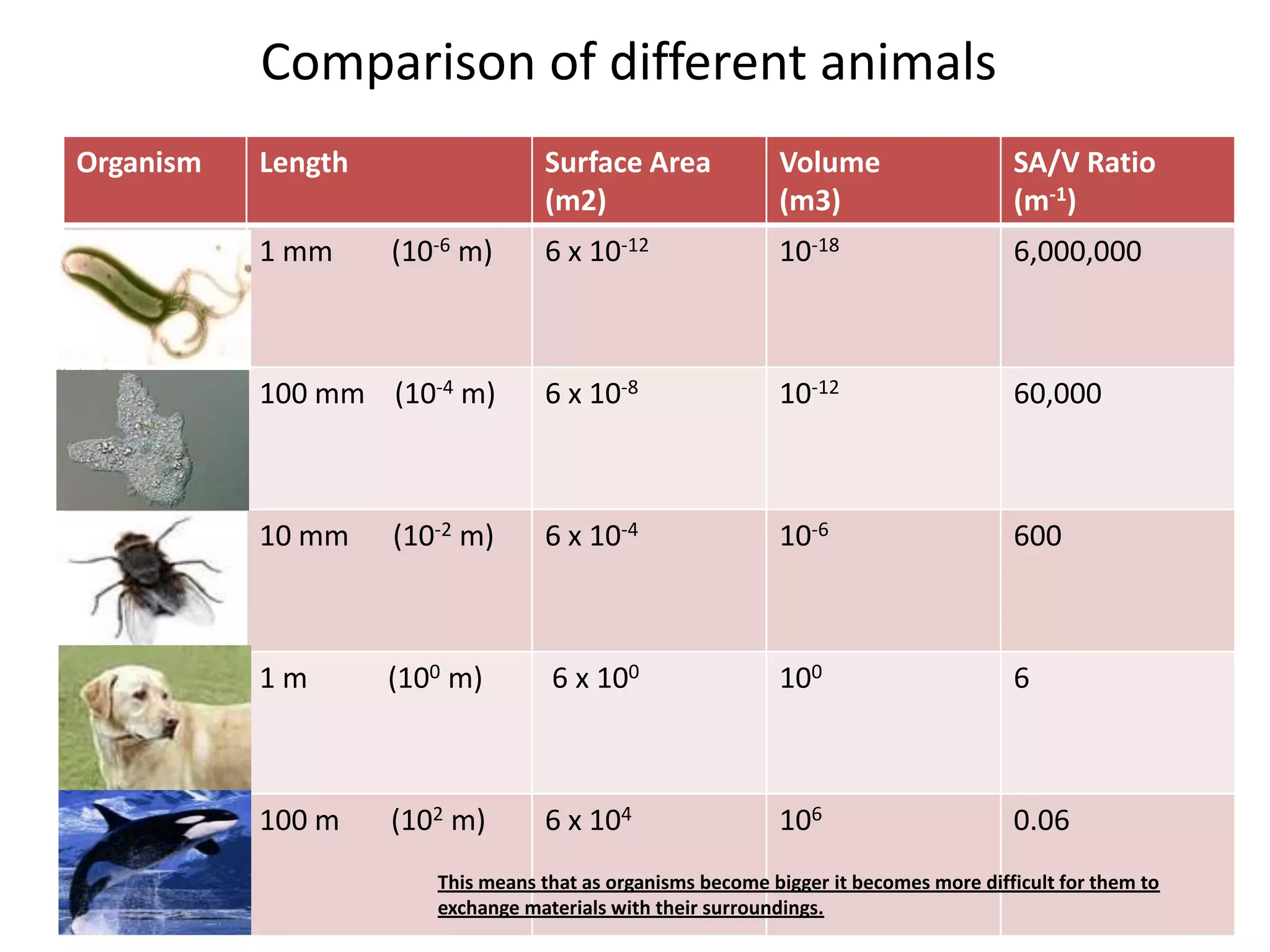
Comparison of different animals
Organism   Length                 Surface Area              Volume                    SA/V Ratio
                                  (m2)                      (m3)                      (m-1)
           1 mm     (10-6 m)      6 x 10-12                 10-18                     6,000,000


           100 mm (10-4 m)        6 x 10⁻⁸                  10-12                     60,000


           10 mm    (10-2 m)      6 x 10⁻⁴                  10-6                      600


           1m       (100 m)        6 x 100                  100                       6


           100 m    (102 m)       6 x 10⁴                   106                       0.06
                       This means that as organisms become bigger it becomes more difficult for them to
                       exchange materials with their surroundings.

Surface area to volume ratio

  • 1.
    Drawings from amicroscope http://www.gtac.edu.au/site/gcasts/HotPotato_CellStructure_Quiz/CellStructure_Quiz.htm
  • 2.
    1. If ared blood cell has a diameter of 8 mm and a student shows it with a diameter of 40 mm in a drawing, what is the magnification of the drawing? A. × 0.0002 B. × 0.2 C. ×5 D. × 5000
  • 3.
    2. A studentobserves and draws an Amoeba, using the high power lens of a microscope. The diameter of the drawing is 100 mm. The actual diameter of the Amoeba is 100 µm. What is the magnification of the drawing? A. 0.001 B. 100 C. 400 D. 1000
  • 4.
    Surface area tovolume ratio Carissa Fletcher Inter Community School
  • 5.
    2.1.6 Explain theimportance of the surface area to volume ratio as a factor limiting cell size. OR http://peppysdevelopments.wordpress.com/2010/11/04/of-mice-and-men- %E2%80%93-a-guide-to-getting-rid-of-mice-in-your-house/ http://goafrica.about.com Which loses heat fastest? All organisms need to exchange substances such as food, waste, gases and heat with their surroundings.
  • 6.
    The relationship betweenradius, surface area and volume. Note that as the radius of a cell increases from 1x to 3x (left), the surface area increases from 1x to 9x, and the volume increases from 1x to 27x.Nature Education 2010 All rights reserved.
  • 7.
    Exchange of substances •The rate of exchange of substances depends on the organism's surface area that is in contact with the surroundings. • The requirements for materials depends on the volume of the organism. • Ability to meet the requirements depends on the surface area: volume ratio. • As organisms get bigger their volume and surface area both get bigger. • The volume increases much more than surface area.
  • 8.
    Challenge – designa cell Using a plasticine make a model cell that you think: 1. Has the highest surface/volume ratio. 2. That is optimally shaped for diffusion of substances.
  • 9.
    Comparison of differentanimals Organism Length Surface Area Volume SA/V Ratio (m2) (m3) (m-1) 1 mm (10-6 m) 6 x 10-12 10-18 6,000,000 100 mm (10-4 m) 6 x 10⁻⁸ 10-12 60,000 10 mm (10-2 m) 6 x 10⁻⁴ 10-6 600 1m (100 m) 6 x 100 100 6 100 m (102 m) 6 x 10⁴ 106 0.06 This means that as organisms become bigger it becomes more difficult for them to exchange materials with their surroundings.