sgisave@ymail.com
1
Tools of Data
Collection
By,
S.G.Isave,
Assistant Professor,
Tilak College of Education,
Pune - India
sgisave@ymail.com 2
Tools
• Questionnaire
• Interview schedule
• observation
sgisave@ymail.com 3
Interview schedule
sgisave@ymail.com 4
Meaning of Interview schedule
• One to one direct communication
between researcher and subject for
collection of data.
• Series of a questions to be asked in an
interview is called interview schedule.
sgisave@ymail.com 5
Types of Interview schedule
• Structured (for research)
• Semi-structured ( flexible but
structured)
• Non-directive ( free talk on issues)
• Focused ( in depth talk on an issue )
(Media)
sgisave@ymail.com 6
How to conduct an Interview
• Interview schedule should as per objectives.
• Planning of time, duration, place, mode of
recording.
• Follow Formalities.
• Respect not to answer right of subject.
• Use of appropriate Language.
• Positive body language.
• Directing the interview.
• Questioning – proper stress and tone, use of
sub questions if required.
sgisave@ymail.com 7
Limitations
• Hesitation to express
• Vague
• Time restrictions
• Less time for thinking
• Subjective
• Researcher’s influence
• Consciousness
• Manipulated/polished/sophisticated/socially
accepted responses may be preferred.
sgisave@ymail.com 8
Questionnaire
sgisave@ymail.com 9
Meaning
• Series of questions in written form.
• Indirect interview
• Widely used tool
sgisave@ymail.com 10
When to use
• Objective tool
• Factual data required
• Large sample
• Minimum cost & time
• Crossing Geographical limitations
sgisave@ymail.com 11
Types
• Open
• Close
• Mixed
• E-mail
• Web based
• Live
• Distance
sgisave@ymail.com 12
Development of Questionnaire
• Objectives
• Content analysis
• Combination of Types of questions.
• Sequence of questions.
• Statistical techniques.
• Questions- clear, correct, to the point,
appropriate nos.,
sgisave@ymail.com 13
Administration of Questionnaire
• Appointment
• Take in to confidence
• Instructions and expectation
• Tackling queries
• Postage
• Formalities
sgisave@ymail.com 14
Advantages of Questionnaire
• Objectivity
• Freedom to think
• Flexibility of time
• Free to answer.
sgisave@ymail.com 15
Limitations of Questionnaire
• Difficult to analyze.
• Environmental effects.
• Collection is a challenge
• Ambiguous
sgisave@ymail.com 16
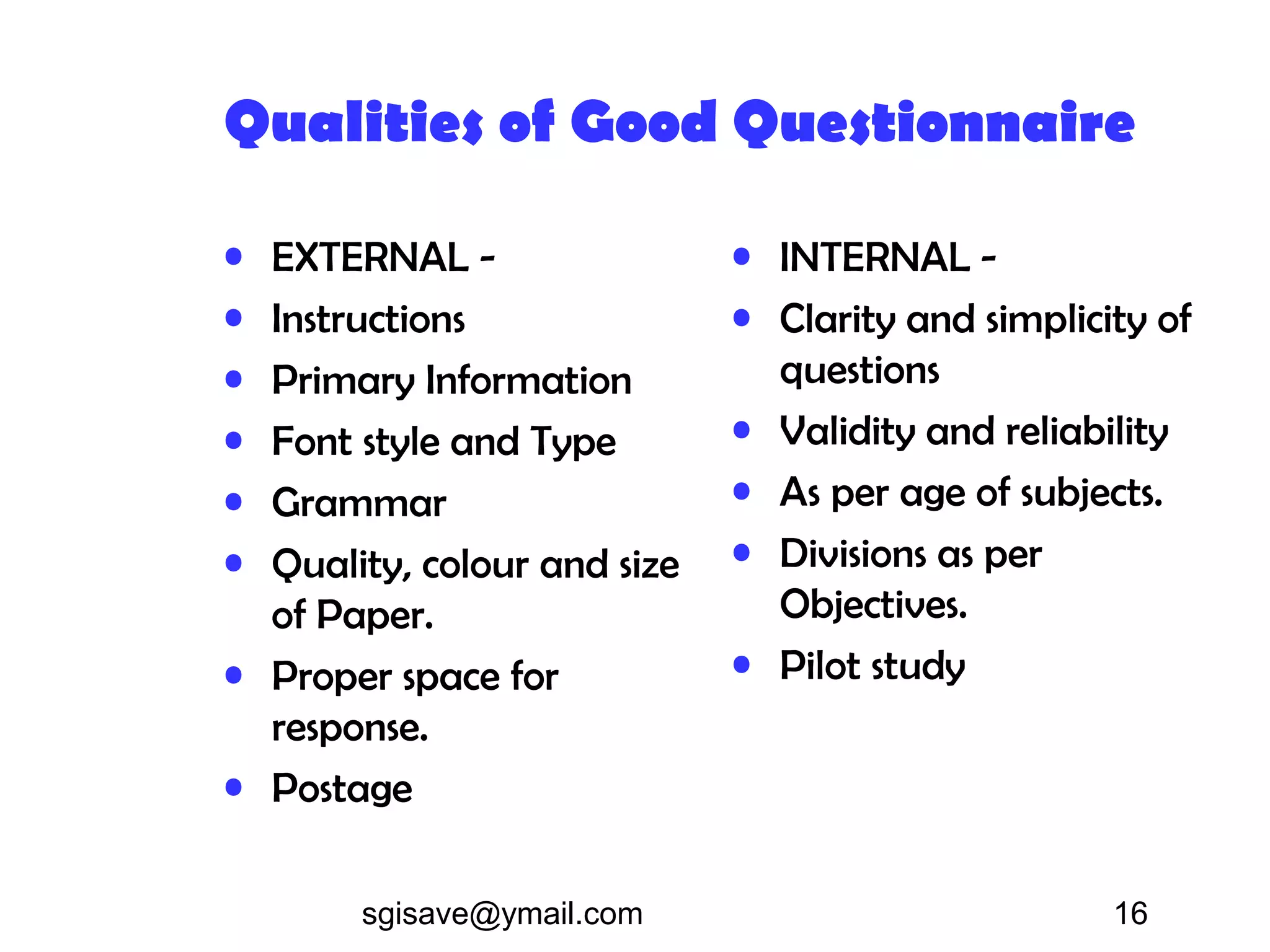
Qualities of Good Questionnaire
• EXTERNAL -
• Instructions
• Primary Information
• Font style and Type
• Grammar
• Quality, colour and size
of Paper.
• Proper space for
response.
• Postage
• INTERNAL -
• Clarity and simplicity of
questions
• Validity and reliability
• As per age of subjects.
• Divisions as per
Objectives.
• Pilot study
sgisave@ymail.com 17
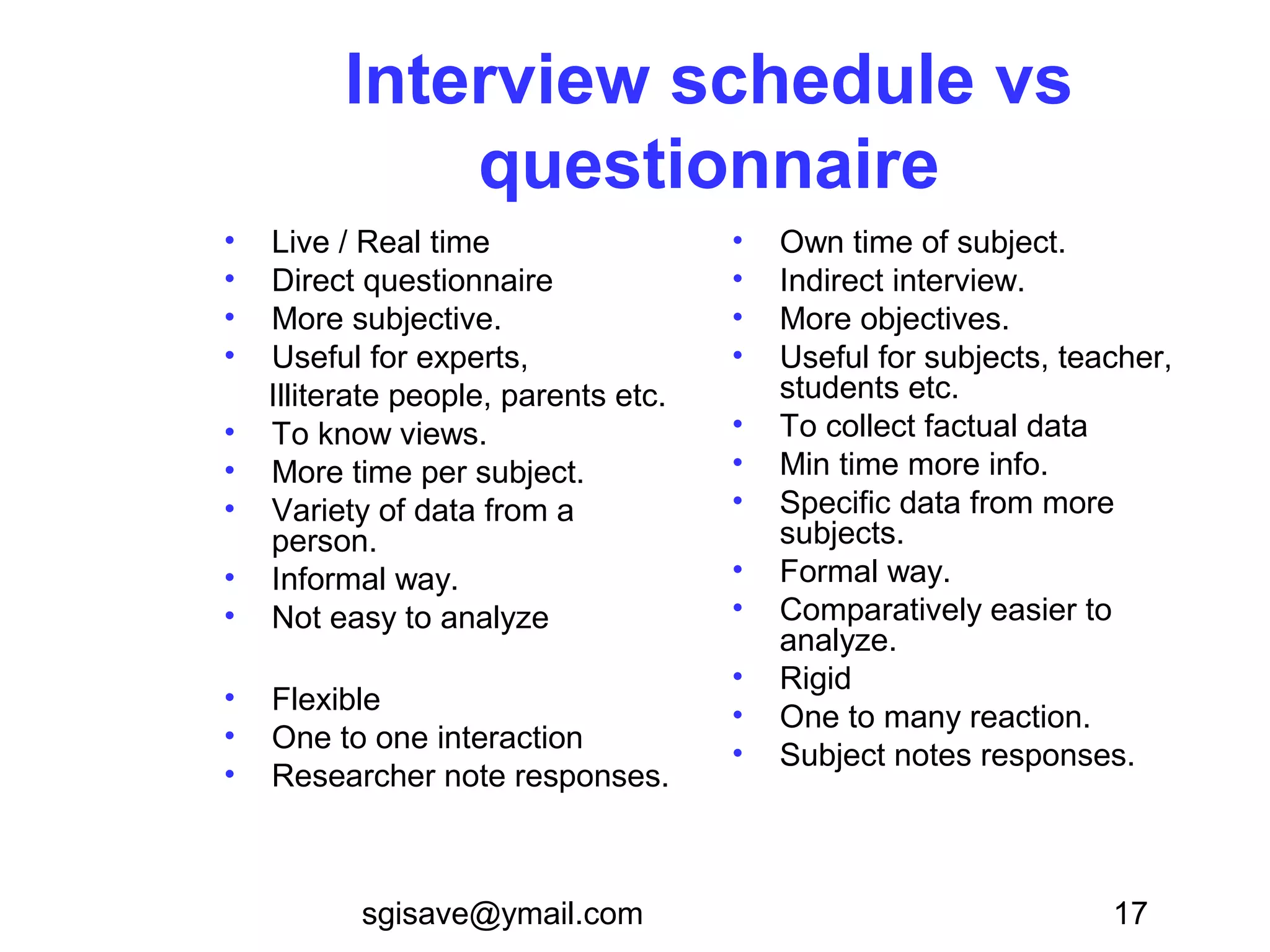
Interview schedule vs
questionnaire
• Live / Real time
• Direct questionnaire
• More subjective.
• Useful for experts,
Illiterate people, parents etc.
• To know views.
• More time per subject.
• Variety of data from a
person.
• Informal way.
• Not easy to analyze
• Flexible
• One to one interaction
• Researcher note responses.
• Own time of subject.
• Indirect interview.
• More objectives.
• Useful for subjects, teacher,
students etc.
• To collect factual data
• Min time more info.
• Specific data from more
subjects.
• Formal way.
• Comparatively easier to
analyze.
• Rigid
• One to many reaction.
• Subject notes responses.
sgisave@ymail.com 18
Observation
sgisave@ymail.com 19
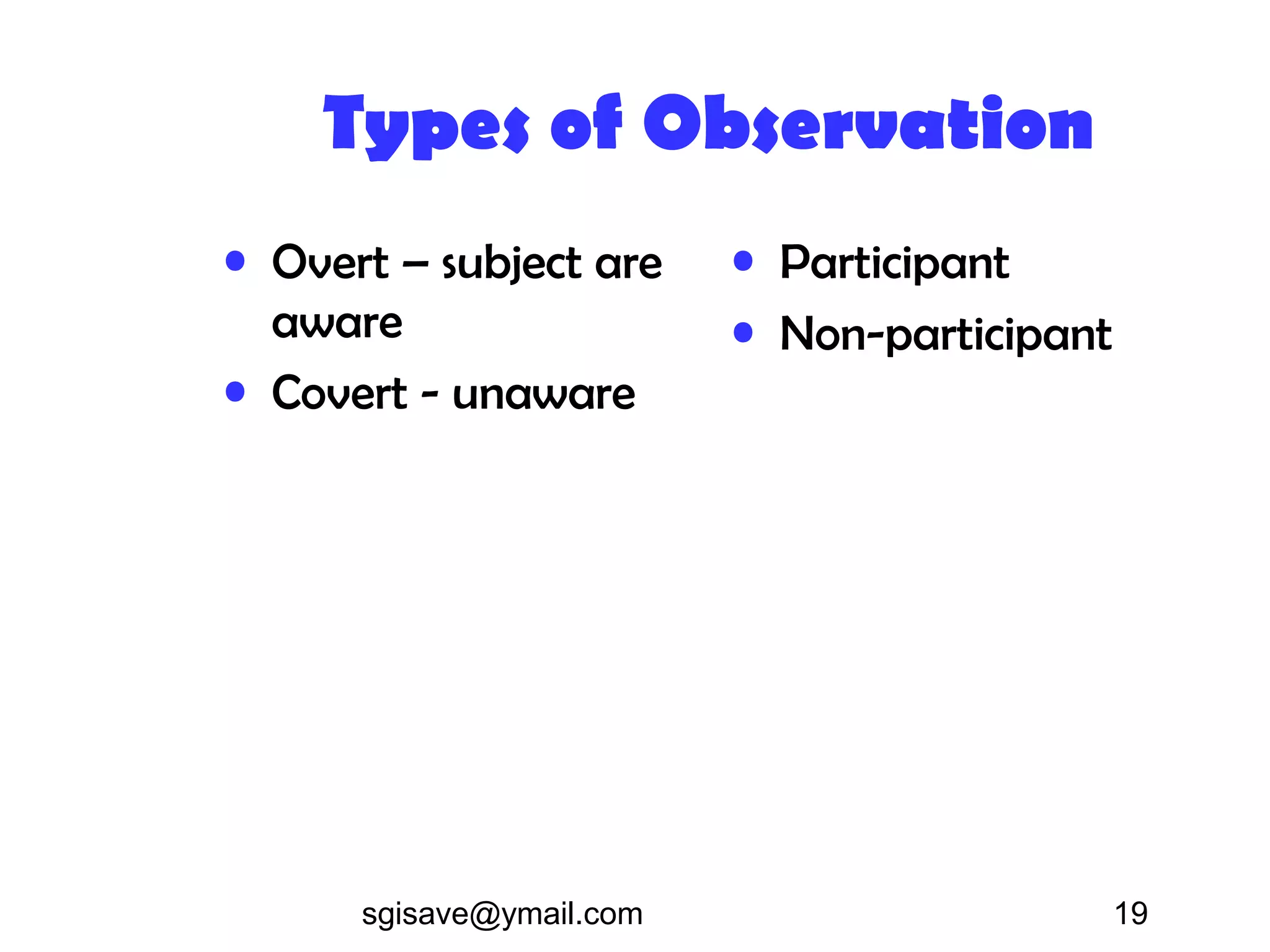
Types of Observation
• Overt – subject are
aware
• Covert - unaware
• Participant
• Non-participant
sgisave@ymail.com 20
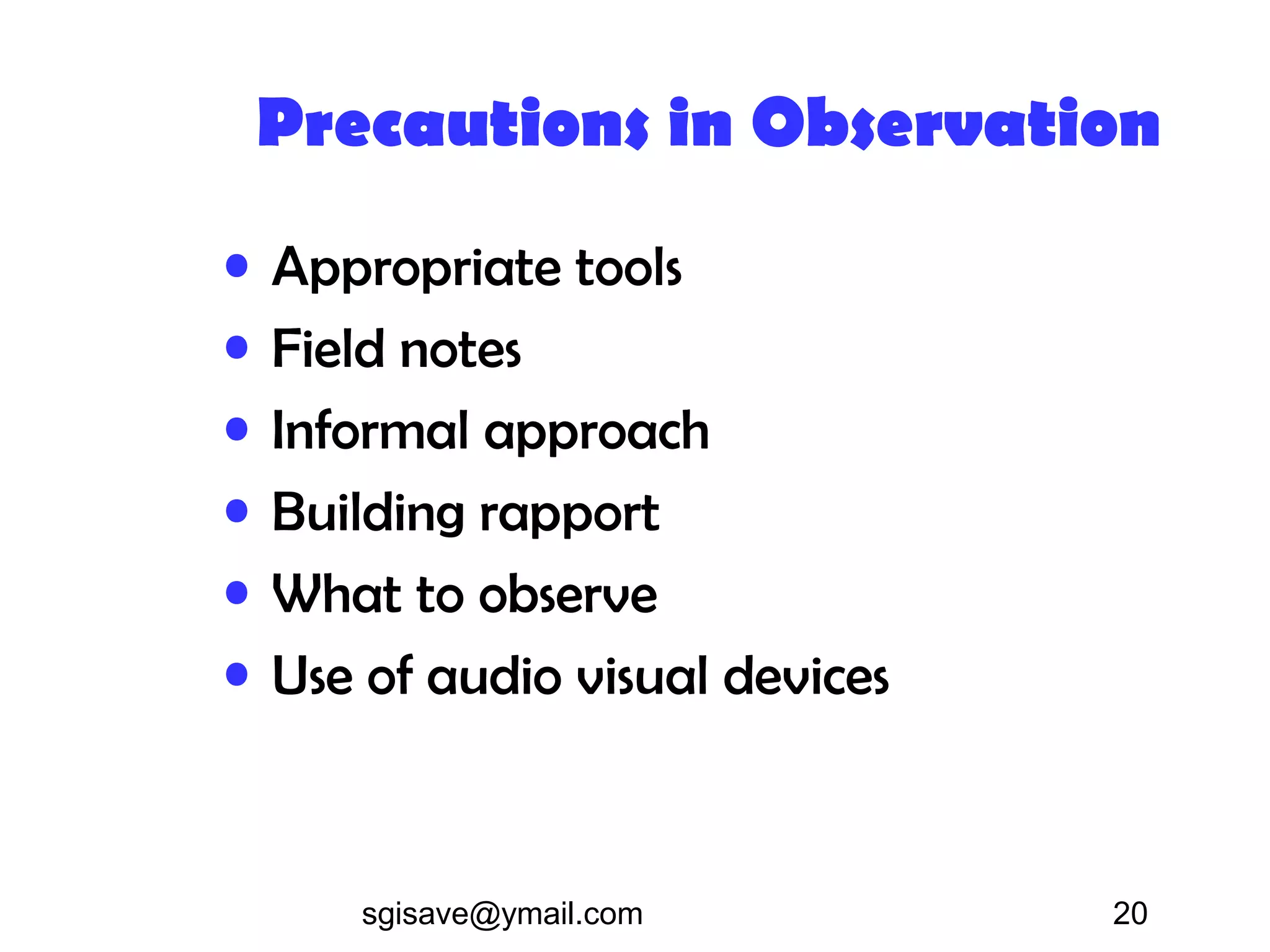
Precautions in Observation
• Appropriate tools
• Field notes
• Informal approach
• Building rapport
• What to observe
• Use of audio visual devices
sgisave@ymail.com 21
Advantages
• Natural response
• Real collection of a data
• All round data
• Self experience
• Understanding the subject.
• Useful for sociological research.
• Useful for linear research.
sgisave@ymail.com 22
Limitations
• Subjectivity
• Temporary form of data is acquired.
• Difficult to analyze the data.
• Time consumable.
• Practical difficulties.
sgisave@ymail.com 23
Lets go beyond content…
sgisave@ymail.com 24
Ask yourself ….
sgisave@ymail.com
25
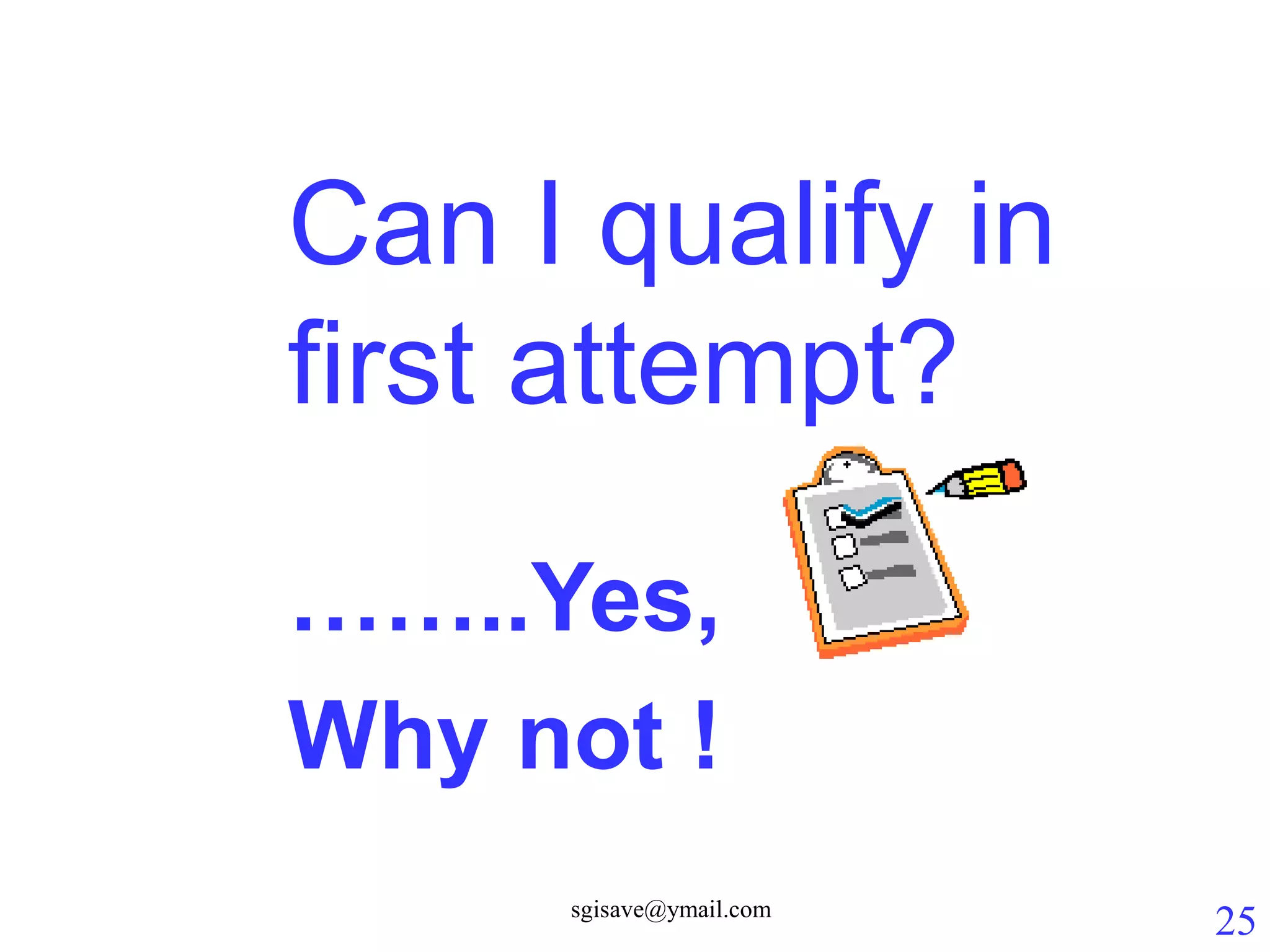
Can I qualify in
first attempt?
……..Yes,
Why not !
sgisave@ymail.com 26
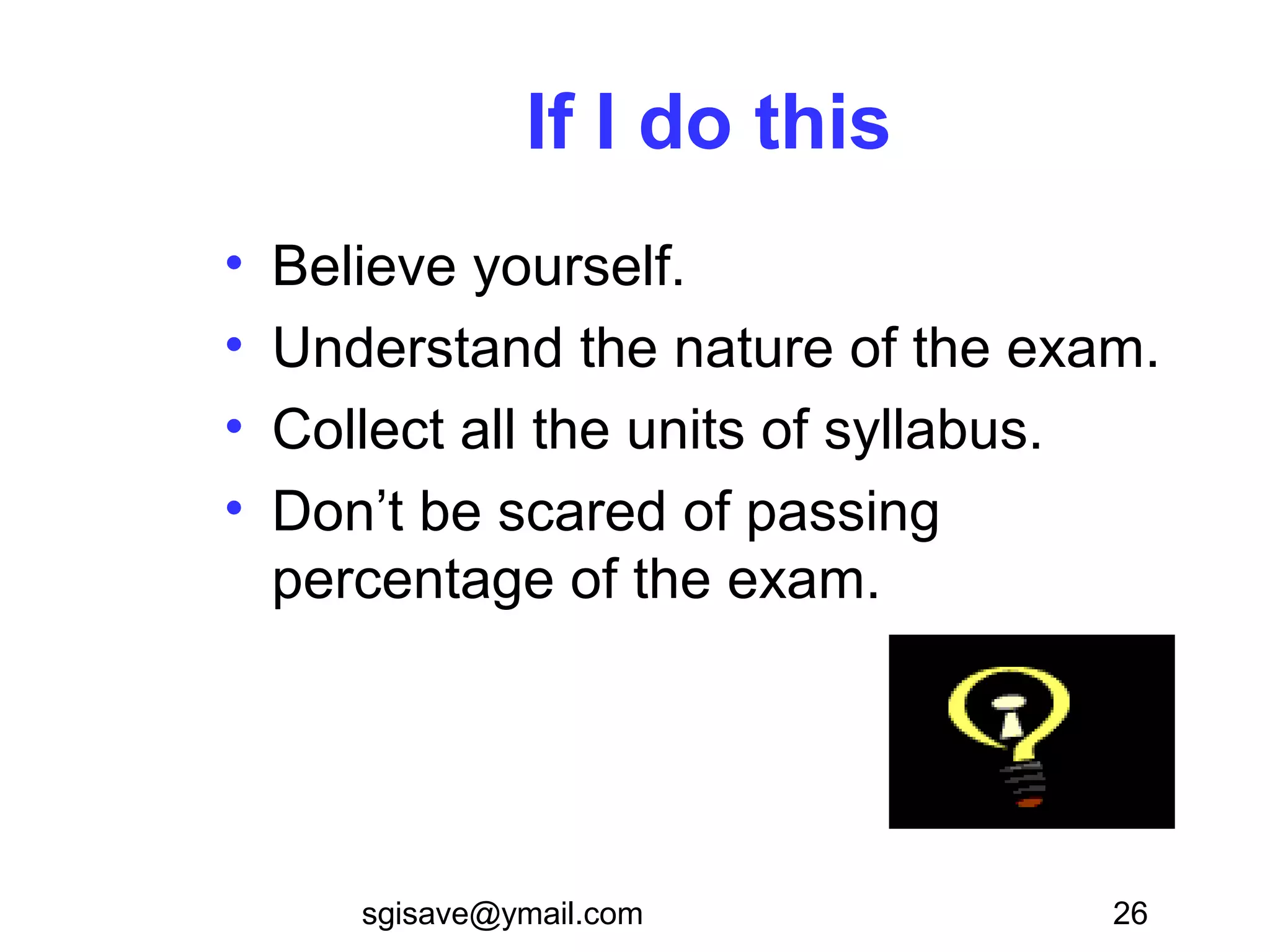
If I do this
• Believe yourself.
• Understand the nature of the exam.
• Collect all the units of syllabus.
• Don’t be scared of passing
percentage of the exam.
sgisave@ymail.com 27
If I do this..
• Prepare seriously.
• Don’t just try for experience.
• Prepare your own notes.
• Practice to write answers.
• Avoid Grammatical mistakes.
sgisave@ymail.com 28
If I do this
• Solve old question paper with time
management and get it checked
from an expert.
• Construct diagrams.
• Update your knowledge with books,
periodicals, internet etc.
• Discuss with peer, teachers,
successful candidates.
sgisave@ymail.com 29
• Be confident.
• Be healthy, because learning is also
physical activity.
• Be careful about filling application
form, attaching documents, admit
cart,
sgisave@ymail.com 30
All the Best
• If you try hard in proper
direction, “You all will
qualify in coming SET
exam. in first attempt.”
sgisave@ymail.com 31
THANK YOU !

Tools of data collection

  • 1.
    sgisave@ymail.com 1 Tools of Data Collection By, S.G.Isave, AssistantProfessor, Tilak College of Education, Pune - India
  • 2.
    sgisave@ymail.com 2 Tools • Questionnaire •Interview schedule • observation
  • 3.
  • 4.
    sgisave@ymail.com 4 Meaning ofInterview schedule • One to one direct communication between researcher and subject for collection of data. • Series of a questions to be asked in an interview is called interview schedule.
  • 5.
    sgisave@ymail.com 5 Types ofInterview schedule • Structured (for research) • Semi-structured ( flexible but structured) • Non-directive ( free talk on issues) • Focused ( in depth talk on an issue ) (Media)
  • 6.
    sgisave@ymail.com 6 How toconduct an Interview • Interview schedule should as per objectives. • Planning of time, duration, place, mode of recording. • Follow Formalities. • Respect not to answer right of subject. • Use of appropriate Language. • Positive body language. • Directing the interview. • Questioning – proper stress and tone, use of sub questions if required.
  • 7.
    sgisave@ymail.com 7 Limitations • Hesitationto express • Vague • Time restrictions • Less time for thinking • Subjective • Researcher’s influence • Consciousness • Manipulated/polished/sophisticated/socially accepted responses may be preferred.
  • 8.
  • 9.
    sgisave@ymail.com 9 Meaning • Seriesof questions in written form. • Indirect interview • Widely used tool
  • 10.
    sgisave@ymail.com 10 When touse • Objective tool • Factual data required • Large sample • Minimum cost & time • Crossing Geographical limitations
  • 11.
    sgisave@ymail.com 11 Types • Open •Close • Mixed • E-mail • Web based • Live • Distance
  • 12.
    sgisave@ymail.com 12 Development ofQuestionnaire • Objectives • Content analysis • Combination of Types of questions. • Sequence of questions. • Statistical techniques. • Questions- clear, correct, to the point, appropriate nos.,
  • 13.
    sgisave@ymail.com 13 Administration ofQuestionnaire • Appointment • Take in to confidence • Instructions and expectation • Tackling queries • Postage • Formalities
  • 14.
    sgisave@ymail.com 14 Advantages ofQuestionnaire • Objectivity • Freedom to think • Flexibility of time • Free to answer.
  • 15.
    sgisave@ymail.com 15 Limitations ofQuestionnaire • Difficult to analyze. • Environmental effects. • Collection is a challenge • Ambiguous
  • 16.
    sgisave@ymail.com 16 Qualities ofGood Questionnaire • EXTERNAL - • Instructions • Primary Information • Font style and Type • Grammar • Quality, colour and size of Paper. • Proper space for response. • Postage • INTERNAL - • Clarity and simplicity of questions • Validity and reliability • As per age of subjects. • Divisions as per Objectives. • Pilot study
  • 17.
    sgisave@ymail.com 17 Interview schedulevs questionnaire • Live / Real time • Direct questionnaire • More subjective. • Useful for experts, Illiterate people, parents etc. • To know views. • More time per subject. • Variety of data from a person. • Informal way. • Not easy to analyze • Flexible • One to one interaction • Researcher note responses. • Own time of subject. • Indirect interview. • More objectives. • Useful for subjects, teacher, students etc. • To collect factual data • Min time more info. • Specific data from more subjects. • Formal way. • Comparatively easier to analyze. • Rigid • One to many reaction. • Subject notes responses.
  • 18.
  • 19.
    sgisave@ymail.com 19 Types ofObservation • Overt – subject are aware • Covert - unaware • Participant • Non-participant
  • 20.
    sgisave@ymail.com 20 Precautions inObservation • Appropriate tools • Field notes • Informal approach • Building rapport • What to observe • Use of audio visual devices
  • 21.
    sgisave@ymail.com 21 Advantages • Naturalresponse • Real collection of a data • All round data • Self experience • Understanding the subject. • Useful for sociological research. • Useful for linear research.
  • 22.
    sgisave@ymail.com 22 Limitations • Subjectivity •Temporary form of data is acquired. • Difficult to analyze the data. • Time consumable. • Practical difficulties.
  • 23.
  • 24.
  • 25.
    sgisave@ymail.com 25 Can I qualifyin first attempt? ……..Yes, Why not !
  • 26.
    sgisave@ymail.com 26 If Ido this • Believe yourself. • Understand the nature of the exam. • Collect all the units of syllabus. • Don’t be scared of passing percentage of the exam.
  • 27.
    sgisave@ymail.com 27 If Ido this.. • Prepare seriously. • Don’t just try for experience. • Prepare your own notes. • Practice to write answers. • Avoid Grammatical mistakes.
  • 28.
    sgisave@ymail.com 28 If Ido this • Solve old question paper with time management and get it checked from an expert. • Construct diagrams. • Update your knowledge with books, periodicals, internet etc. • Discuss with peer, teachers, successful candidates.
  • 29.
    sgisave@ymail.com 29 • Beconfident. • Be healthy, because learning is also physical activity. • Be careful about filling application form, attaching documents, admit cart,
  • 30.
    sgisave@ymail.com 30 All theBest • If you try hard in proper direction, “You all will qualify in coming SET exam. in first attempt.”
  • 31.