 Data are numerical facts. They are figures
 collected in a systematic manner for a pre
 determined purpose. Those figures are
 aggregate of facts relating to one or more
 phenomenon of study. It is from the data
 collected that an economist study about a
 phenomenon and draw conclusions.
The sources of information are generally
classified as primary or secondary.

                 PRIMARY DATA
   When the researcher himself is trying to
collect the data for his particular purpose
from the sources available it becomes
primary data.
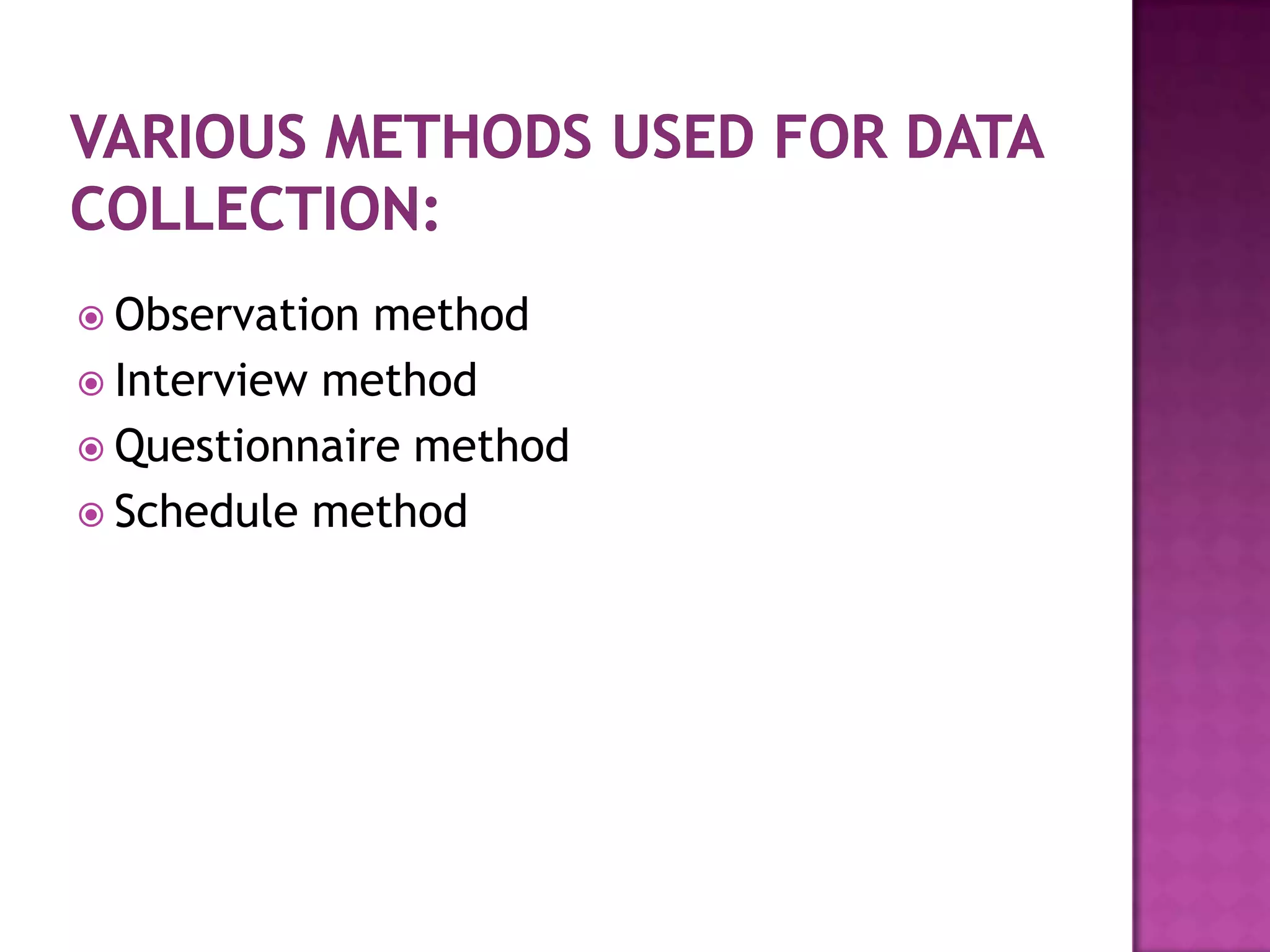
 Observation method
 Interview method
 Questionnaire method
 Schedule method
Observation method as the name itself
indicates is based on observation.
Observation is keen and scientific study of a
problem.
 For example:- in a study of consumer
behavior the investigator instead of asking
the brand of wrist watch used by the
respondent, may himself look a the watch.
Interview method is a direct method of
collection of data, which is based on
interview. It is the most important methods
of collection of data. Through this method
we can know the views and ideas of other
persons. It s a method of social interaction.
Interviews can be conducted through
personal and telephone.
This is an important and very popular method
of data collection. This is adopted by
individuals, organization and government. In
this method, a questionnaire is prepared and
sent to respondent by post. It is a set of
questions. The success of this method
depends on the proper drafting of the
questions.
It is a proforma containing a set of questions. This
    proforma is filled by enumerators who are specially
    identified for the purpose. The enumerators are
    persons acting under the direction of researchers.
    Requisite of a good schedule
   Accurate communication
   Schedules must be attractive
Secondary data are those data which have
collected by some other person for their
purpose and published. So a researcher is
said to make use of secondary data if he
makes use of data already compiled by some
other person. Secondary data are in the
shape of a finished products.
Sources of secondary data may be classified
broadly as internal and external. Internal
sources of data represents the data that are
already available with the research
organization. The information available with
outside organization are External.
There a re variety of published sources from
which one can get information for his
research work.
o   Official publications of the central, state and local
    governments.
o   Official publication of the foreign governments and
    international bodies like UNO and its subordinate
    bodies.
o   Technical journals, newspapers, books, periodicals,
    etc.
o   Publication of research organizations, centres,
    institutes and reports submitted by economists,
    research scholars etc.
Primary data are original in character
because the researcher himself collects the
data. Secondary data are not original. They
collected by somebody else. The researcher
only makes use of them.

Methods of data collection

  • 2.
     Data arenumerical facts. They are figures collected in a systematic manner for a pre determined purpose. Those figures are aggregate of facts relating to one or more phenomenon of study. It is from the data collected that an economist study about a phenomenon and draw conclusions.
  • 3.
    The sources ofinformation are generally classified as primary or secondary. PRIMARY DATA When the researcher himself is trying to collect the data for his particular purpose from the sources available it becomes primary data.
  • 4.
     Observation method Interview method  Questionnaire method  Schedule method
  • 5.
    Observation method asthe name itself indicates is based on observation. Observation is keen and scientific study of a problem. For example:- in a study of consumer behavior the investigator instead of asking the brand of wrist watch used by the respondent, may himself look a the watch.
  • 6.
    Interview method isa direct method of collection of data, which is based on interview. It is the most important methods of collection of data. Through this method we can know the views and ideas of other persons. It s a method of social interaction. Interviews can be conducted through personal and telephone.
  • 7.
    This is animportant and very popular method of data collection. This is adopted by individuals, organization and government. In this method, a questionnaire is prepared and sent to respondent by post. It is a set of questions. The success of this method depends on the proper drafting of the questions.
  • 8.
    It is aproforma containing a set of questions. This proforma is filled by enumerators who are specially identified for the purpose. The enumerators are persons acting under the direction of researchers. Requisite of a good schedule  Accurate communication  Schedules must be attractive  Schedules must be attractive
  • 9.
    Secondary data arethose data which have collected by some other person for their purpose and published. So a researcher is said to make use of secondary data if he makes use of data already compiled by some other person. Secondary data are in the shape of a finished products.
  • 10.
    Sources of secondarydata may be classified broadly as internal and external. Internal sources of data represents the data that are already available with the research organization. The information available with outside organization are External. There a re variety of published sources from which one can get information for his research work.
  • 11.
    o Official publications of the central, state and local governments. o Official publication of the foreign governments and international bodies like UNO and its subordinate bodies. o Technical journals, newspapers, books, periodicals, etc. o Publication of research organizations, centres, institutes and reports submitted by economists, research scholars etc.
  • 12.
    Primary data areoriginal in character because the researcher himself collects the data. Secondary data are not original. They collected by somebody else. The researcher only makes use of them.