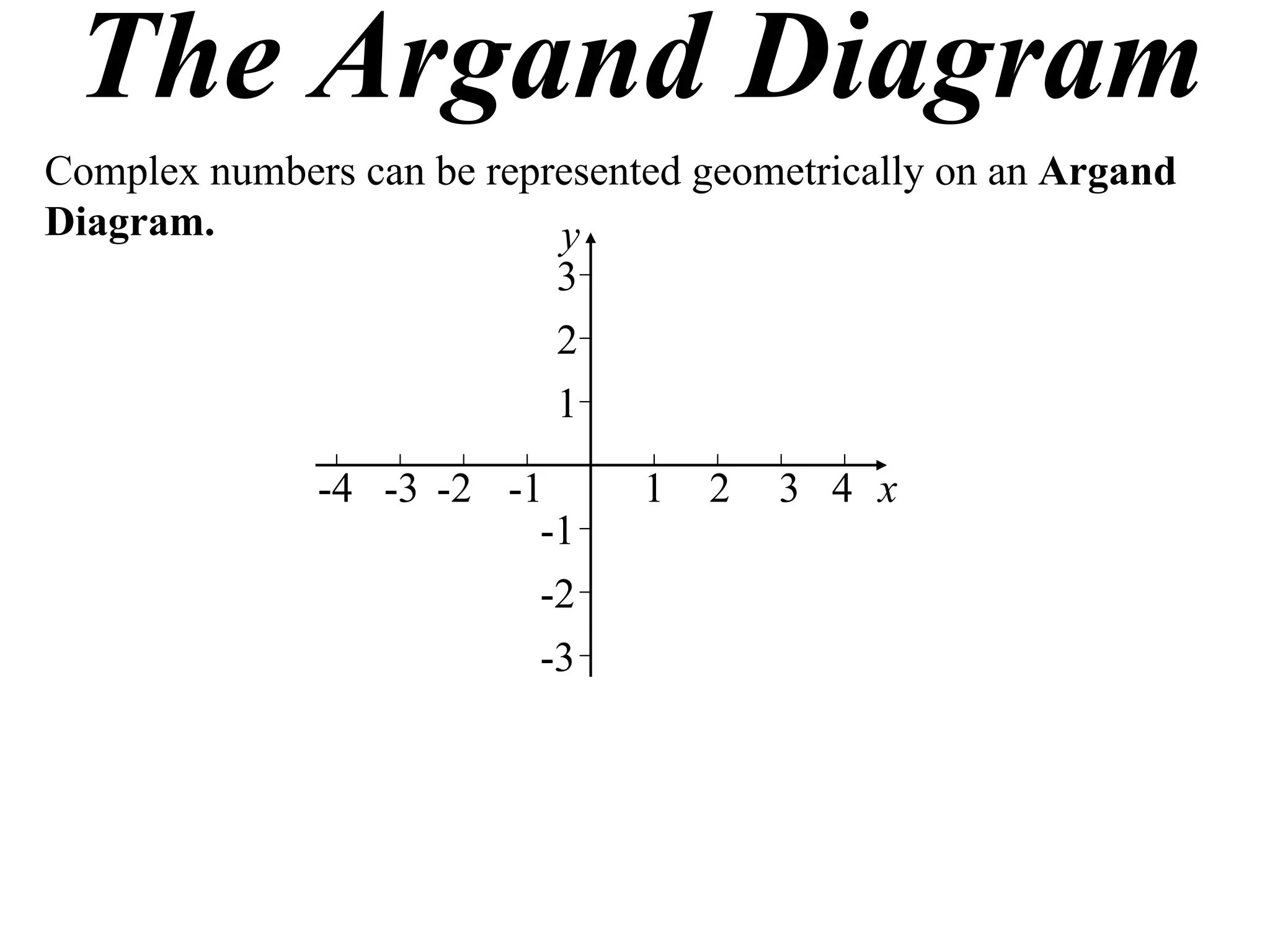
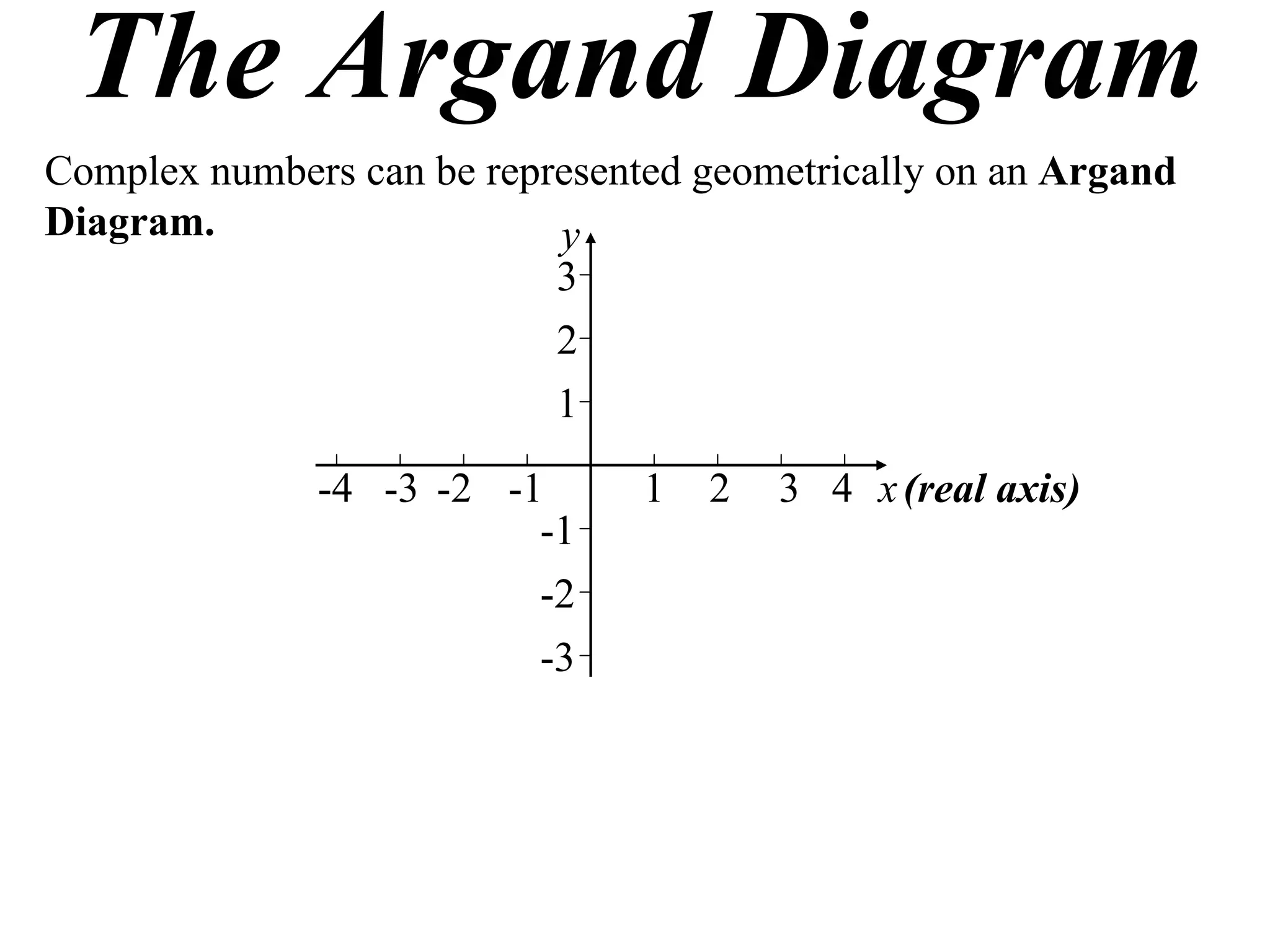
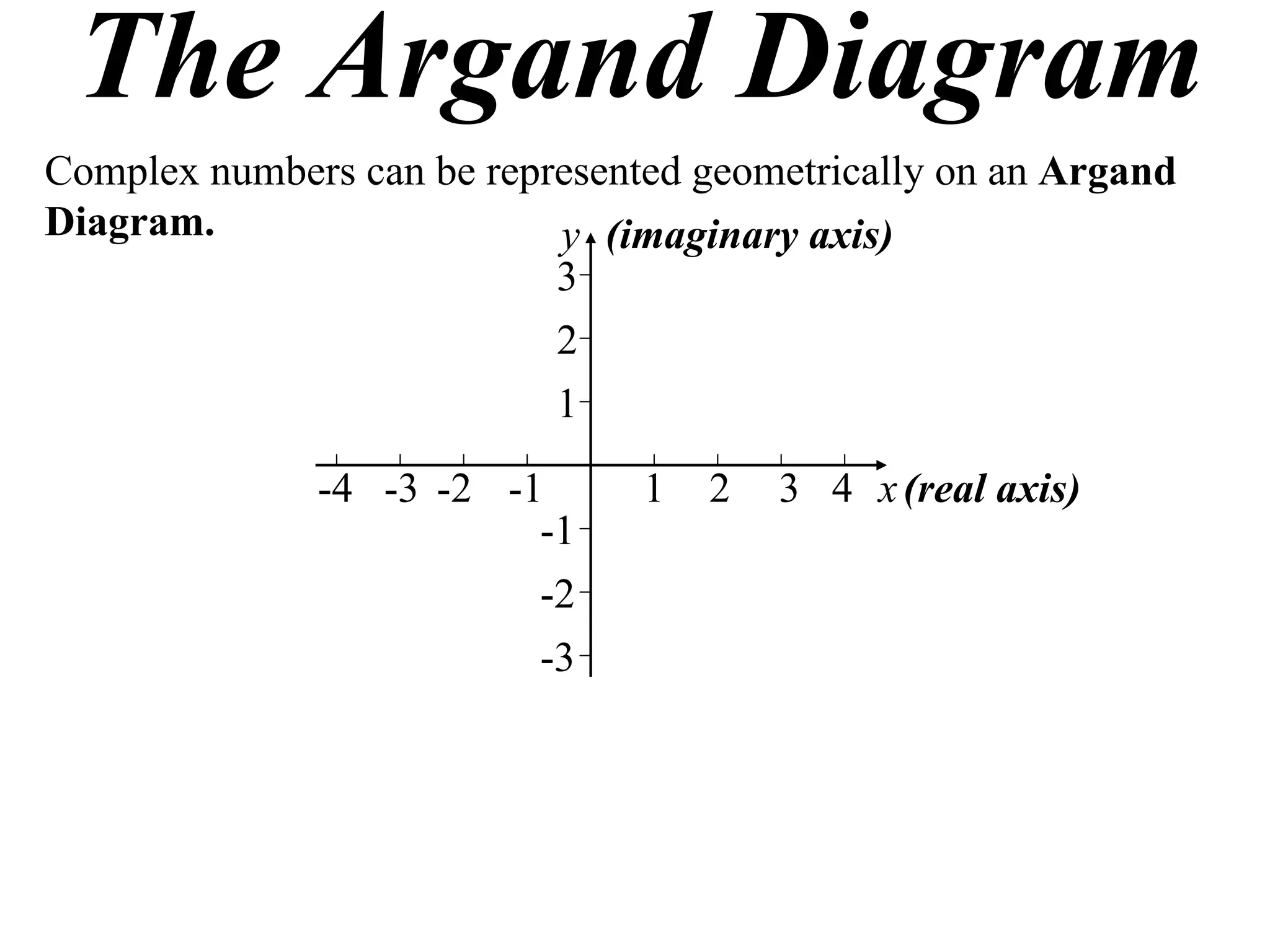
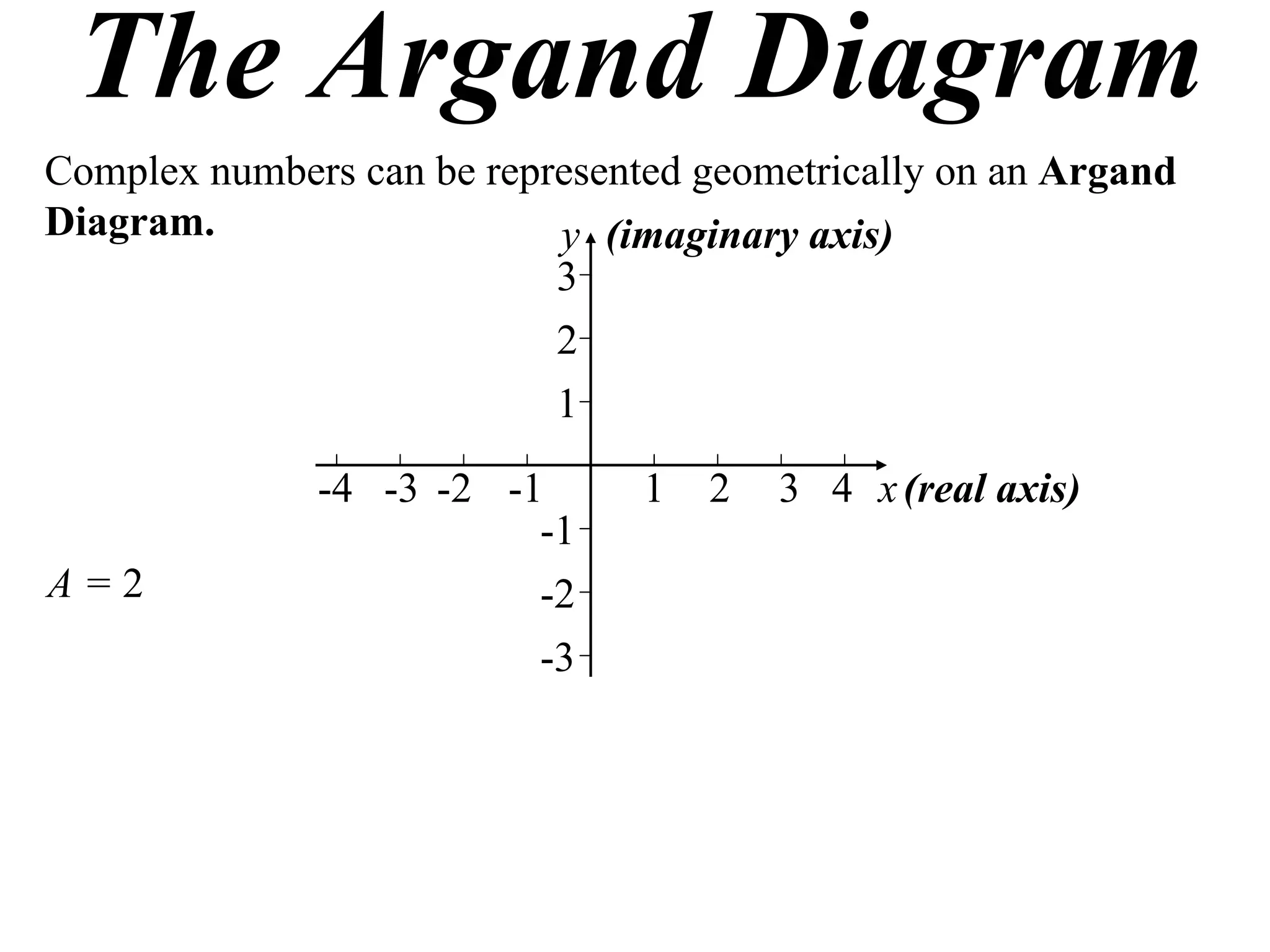
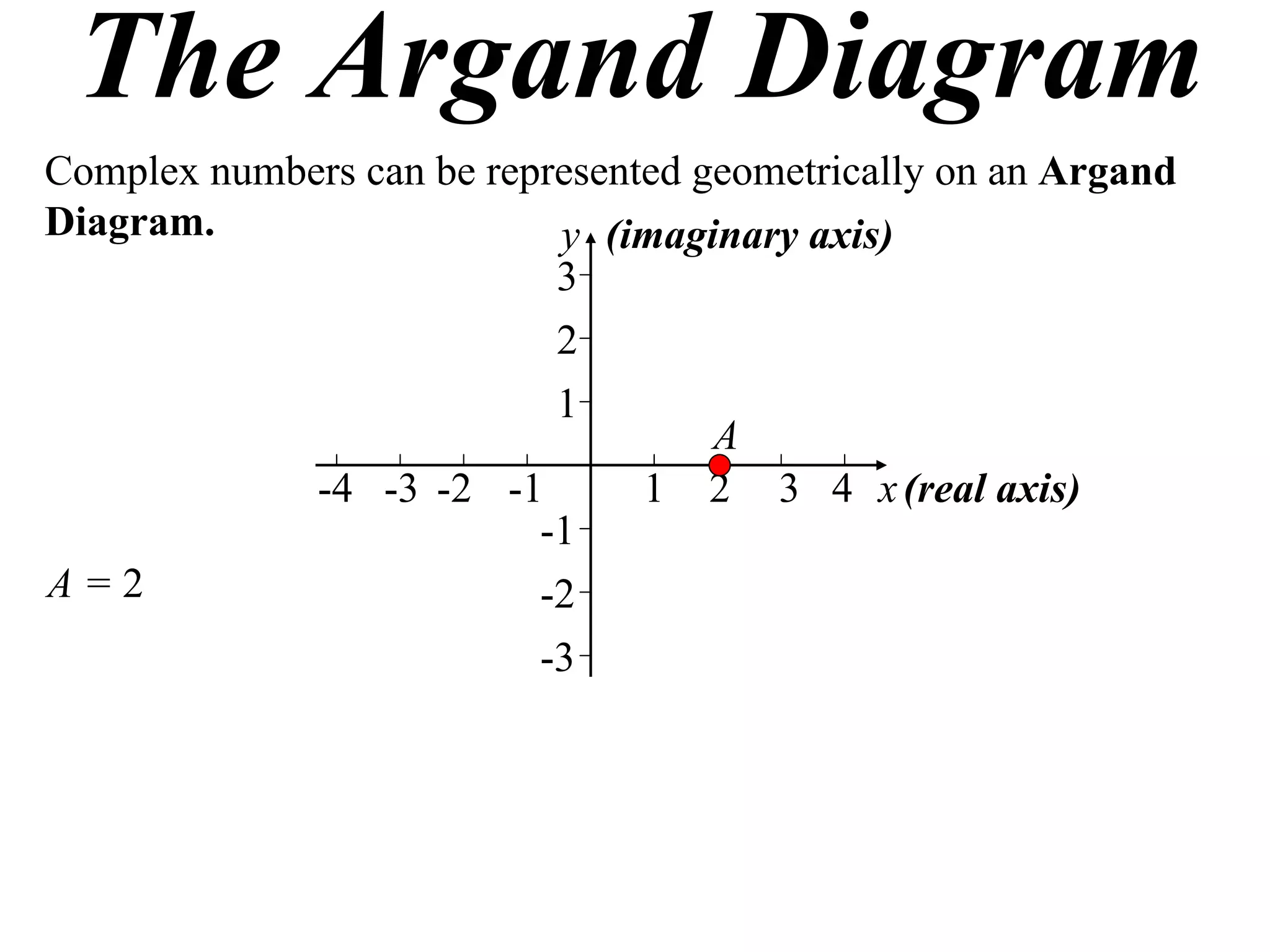
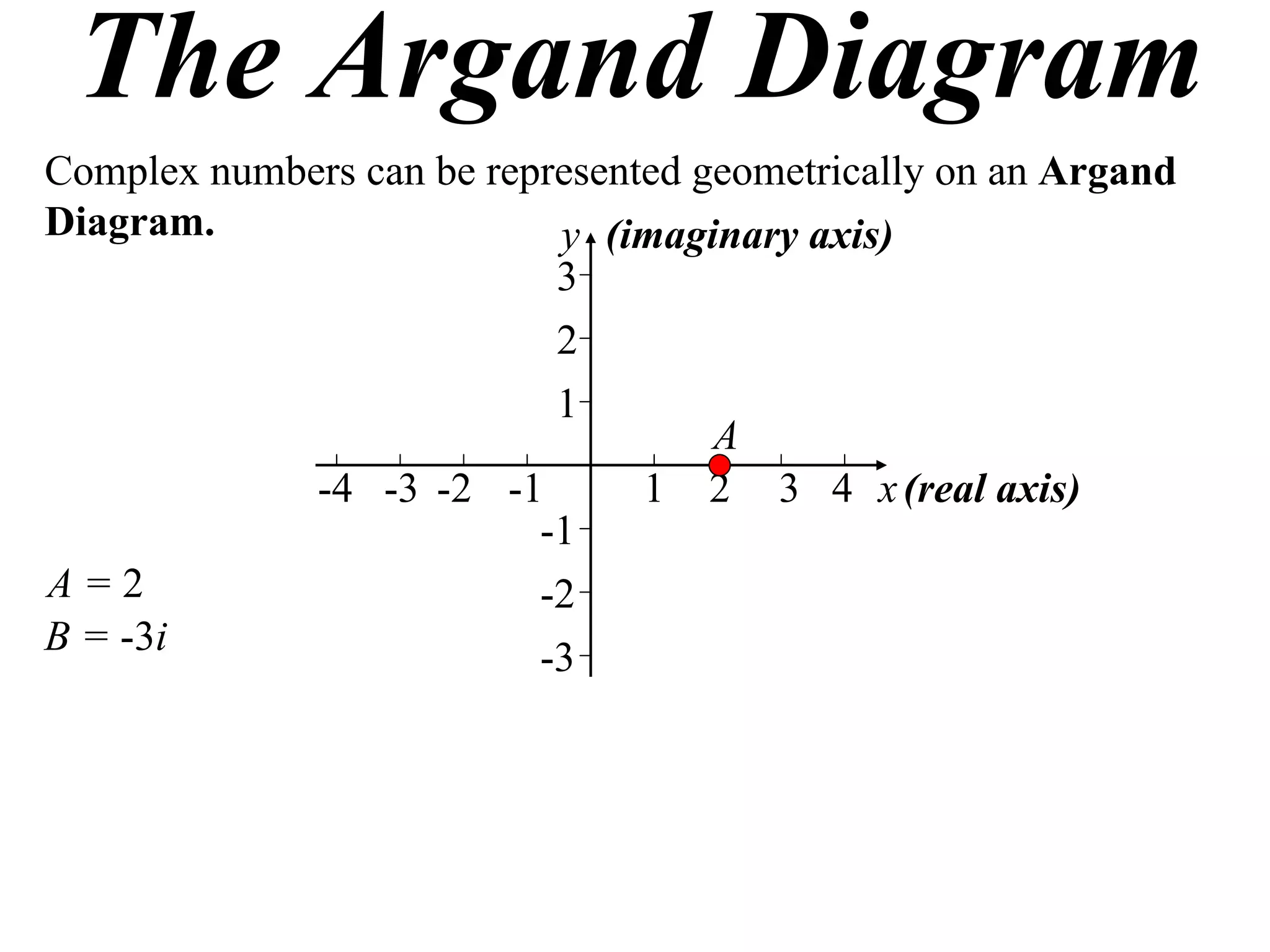
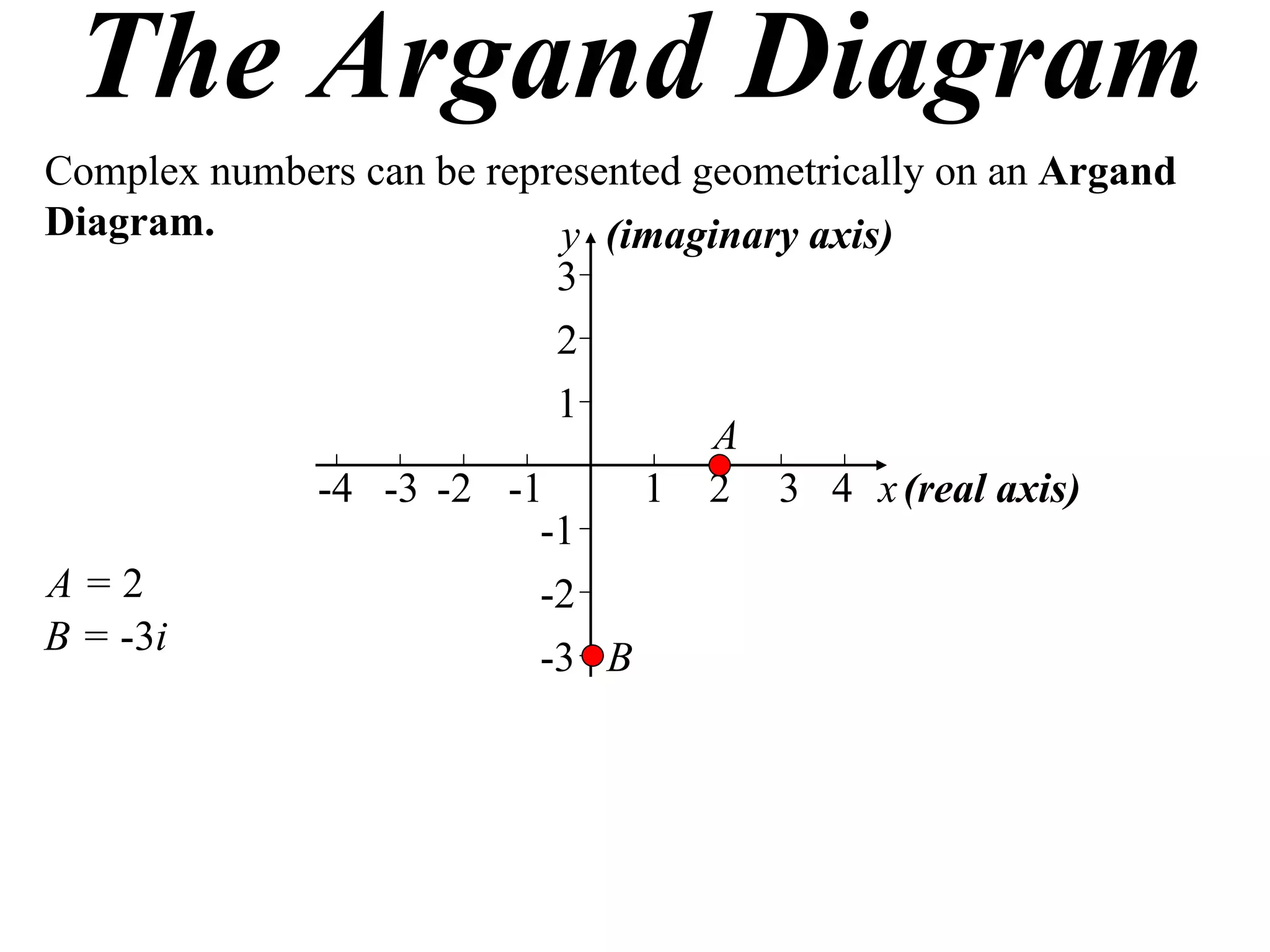
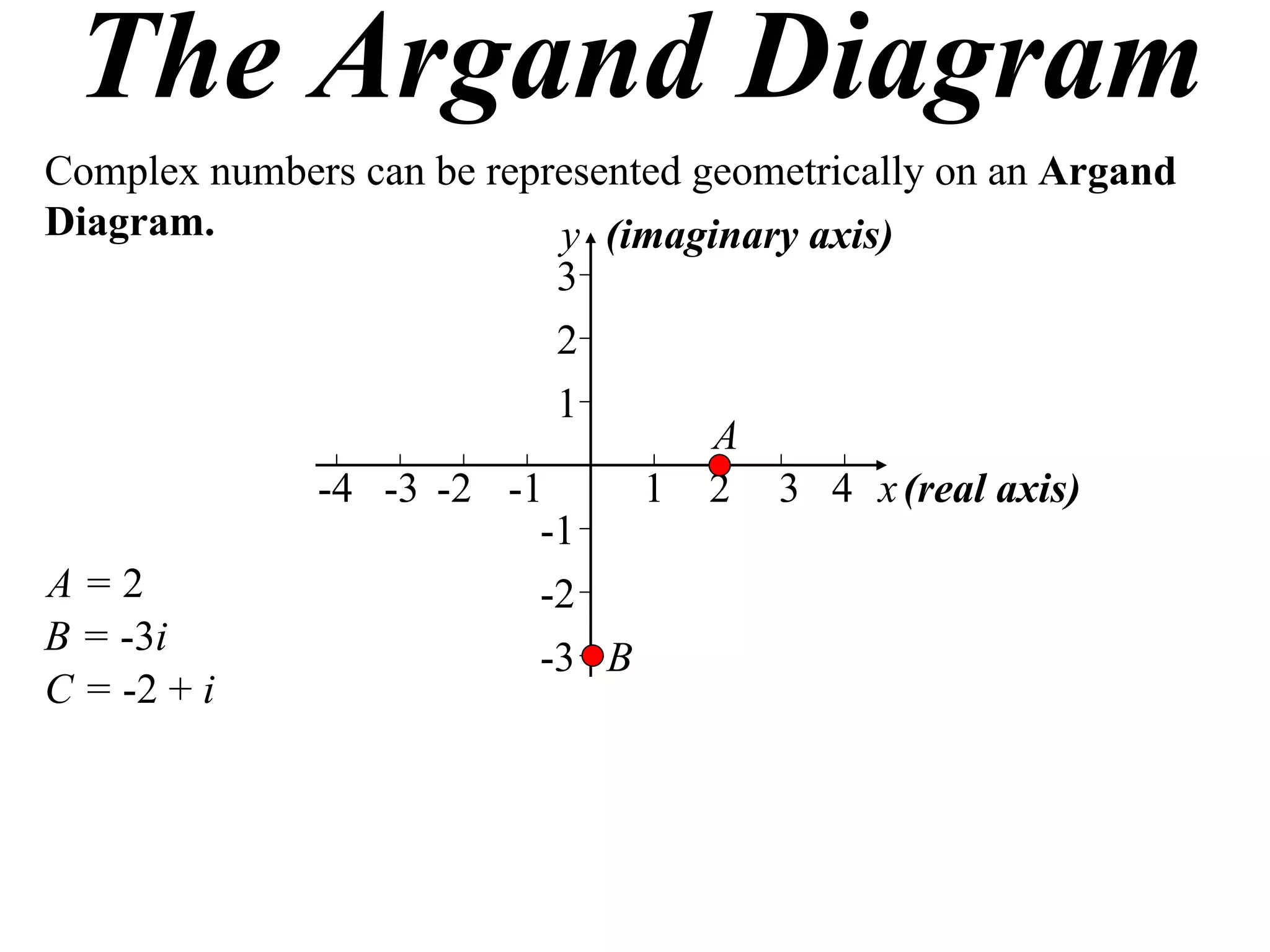
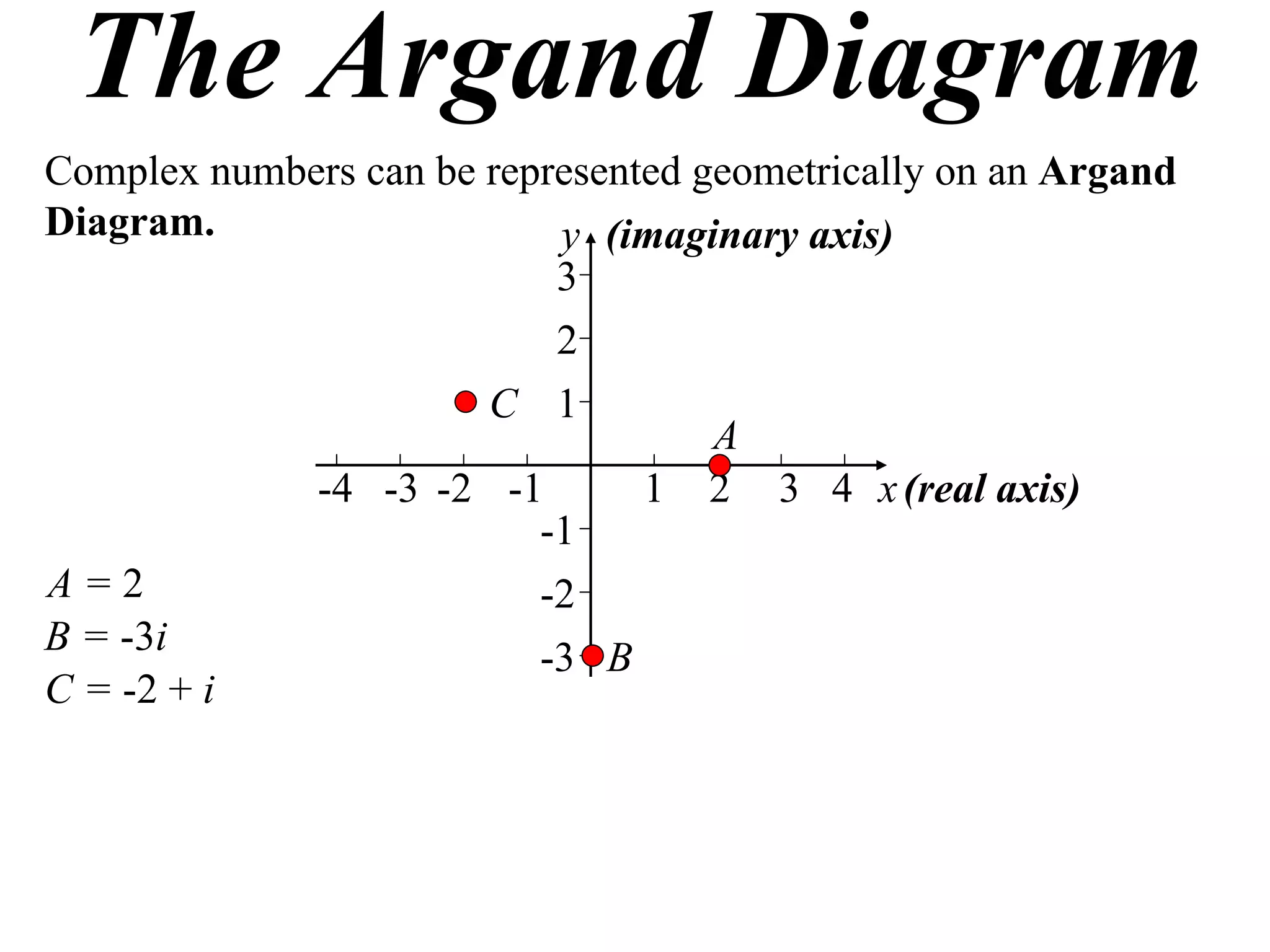
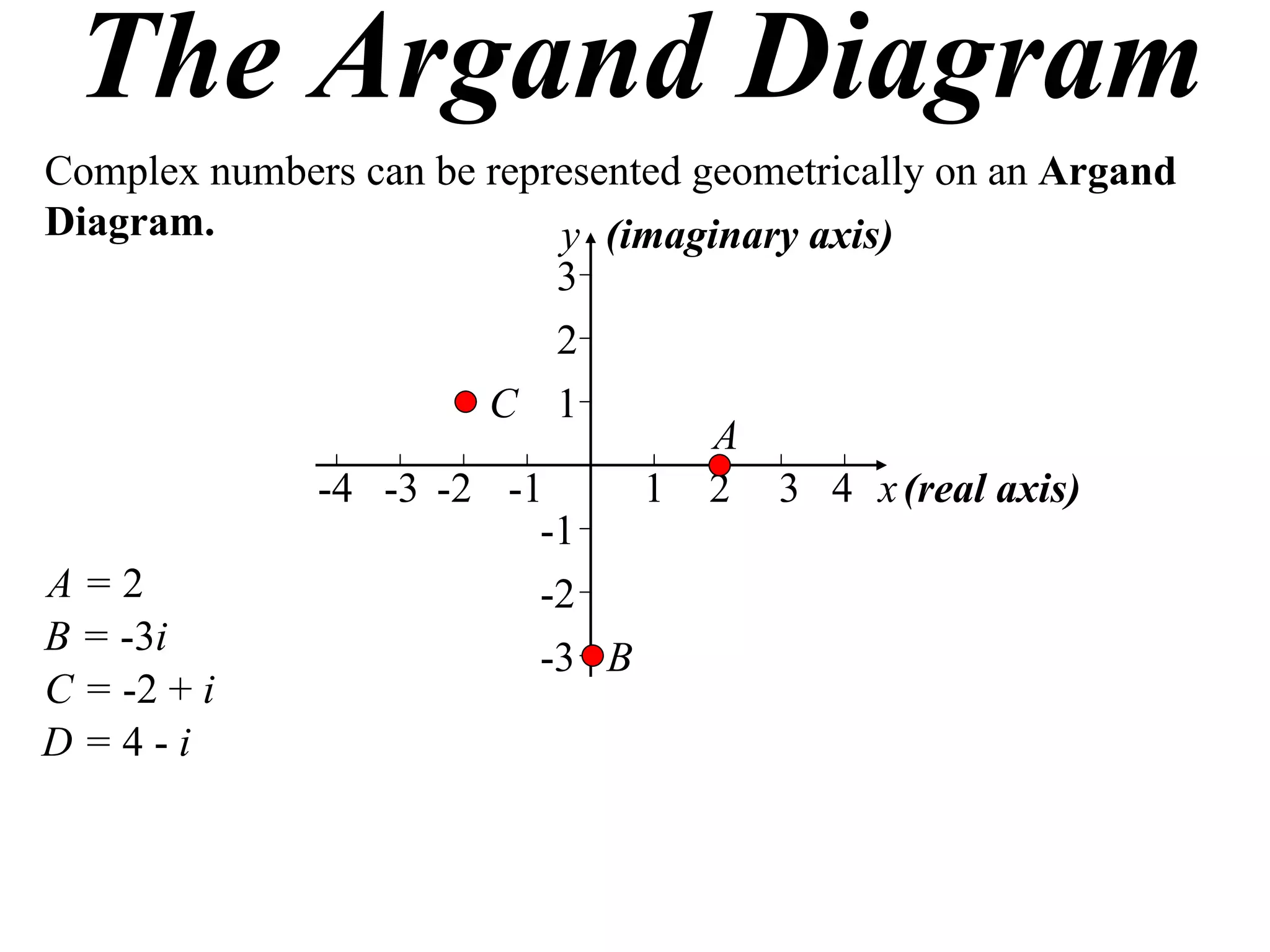
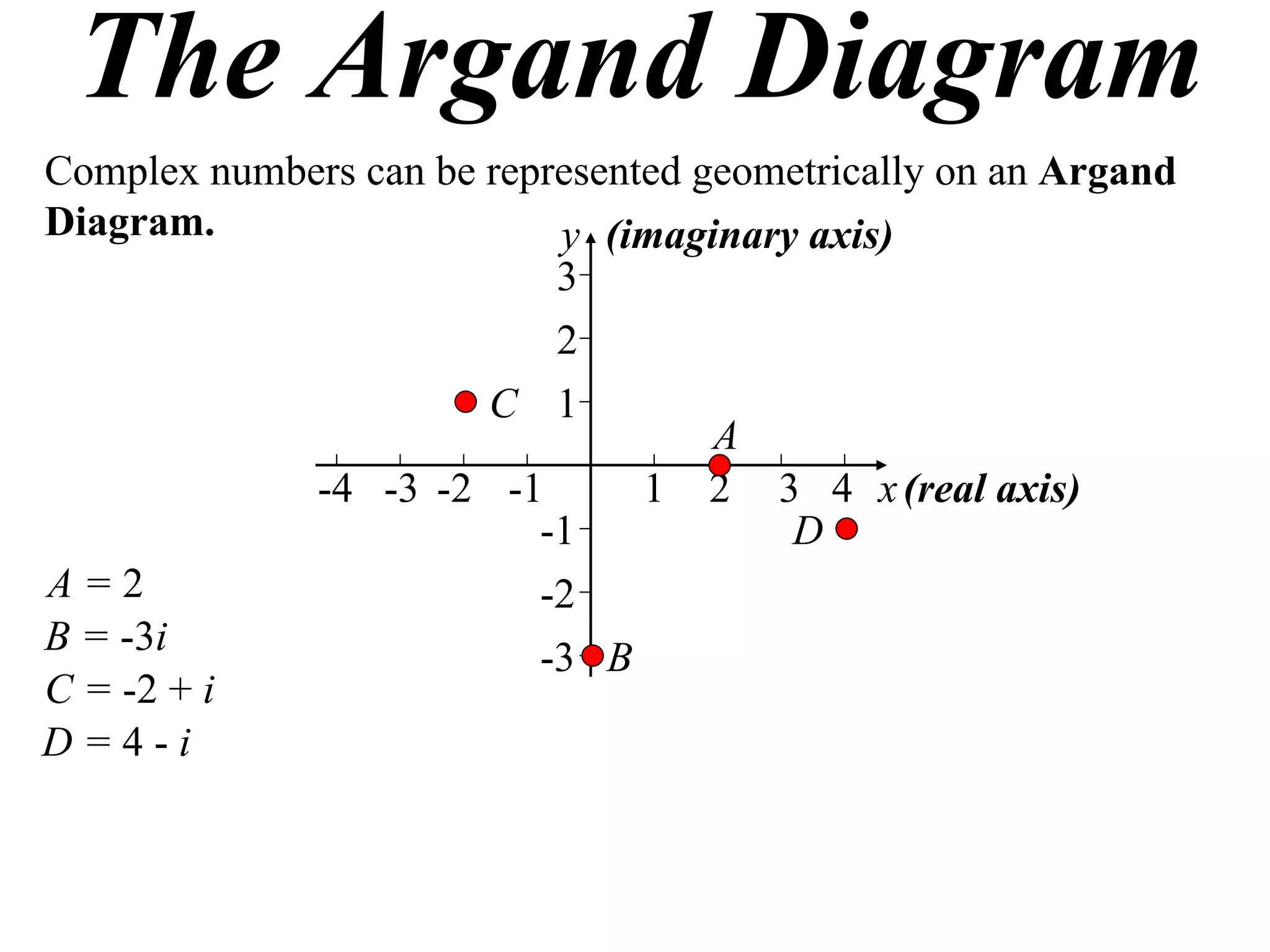
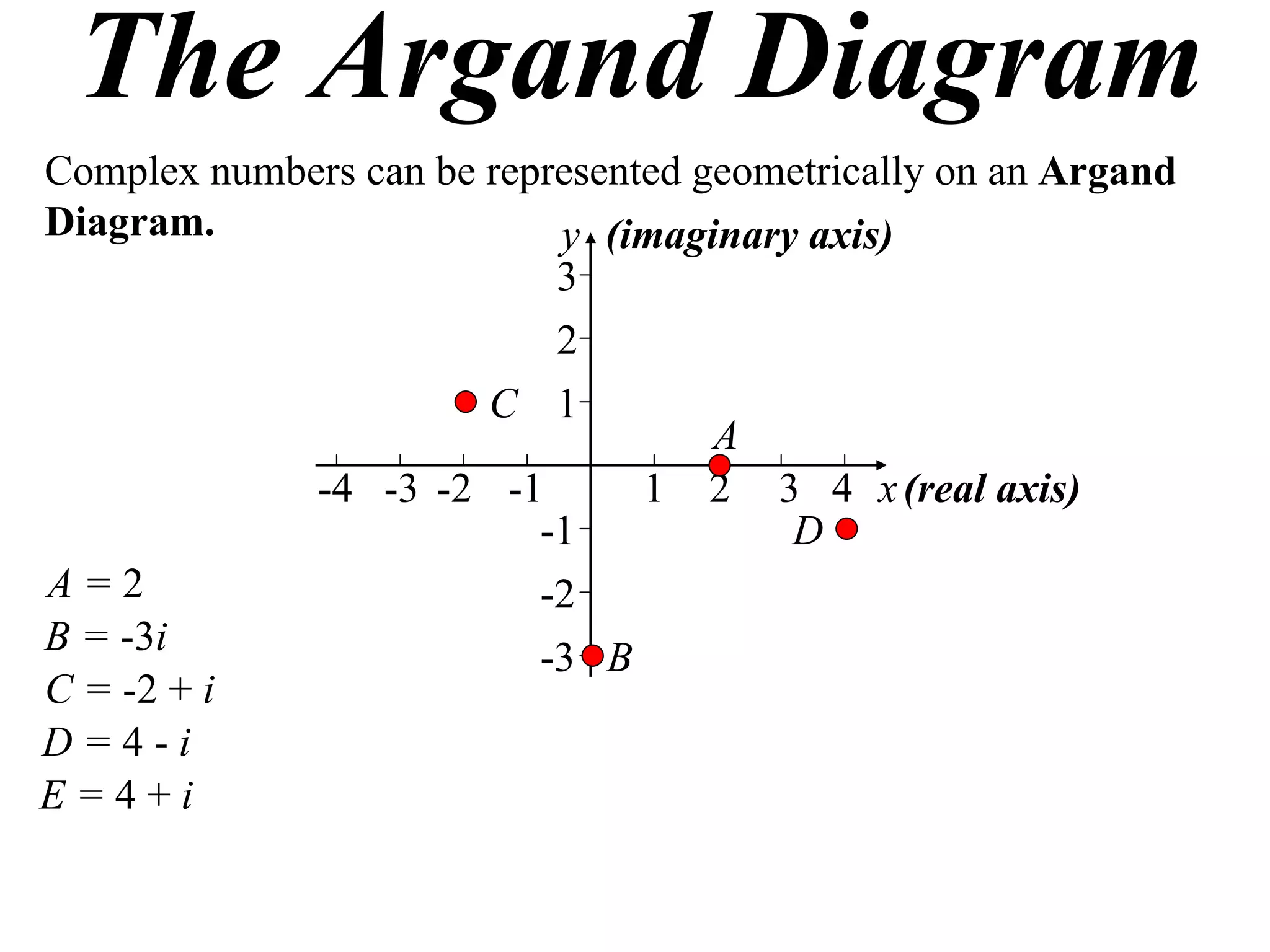
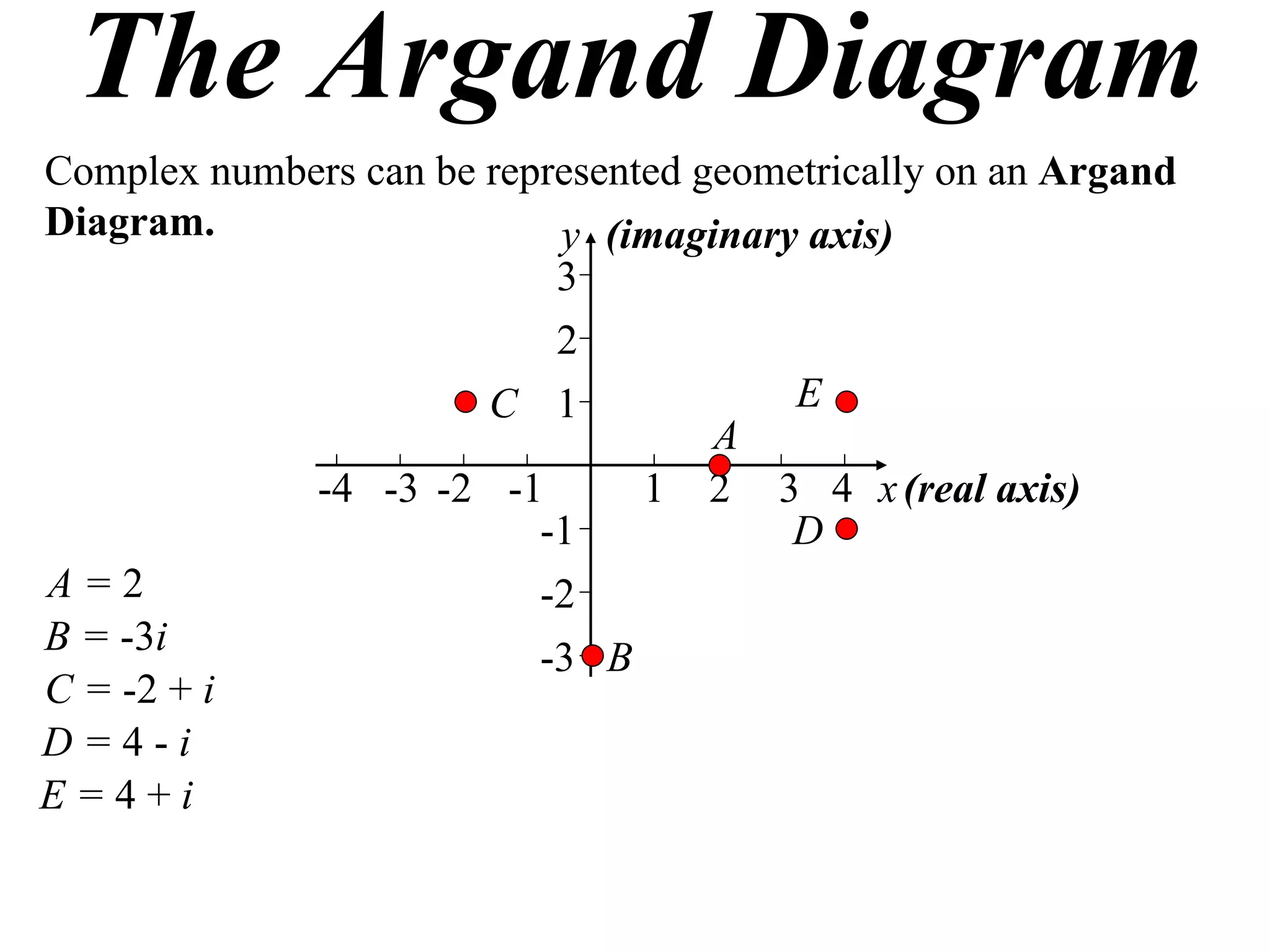
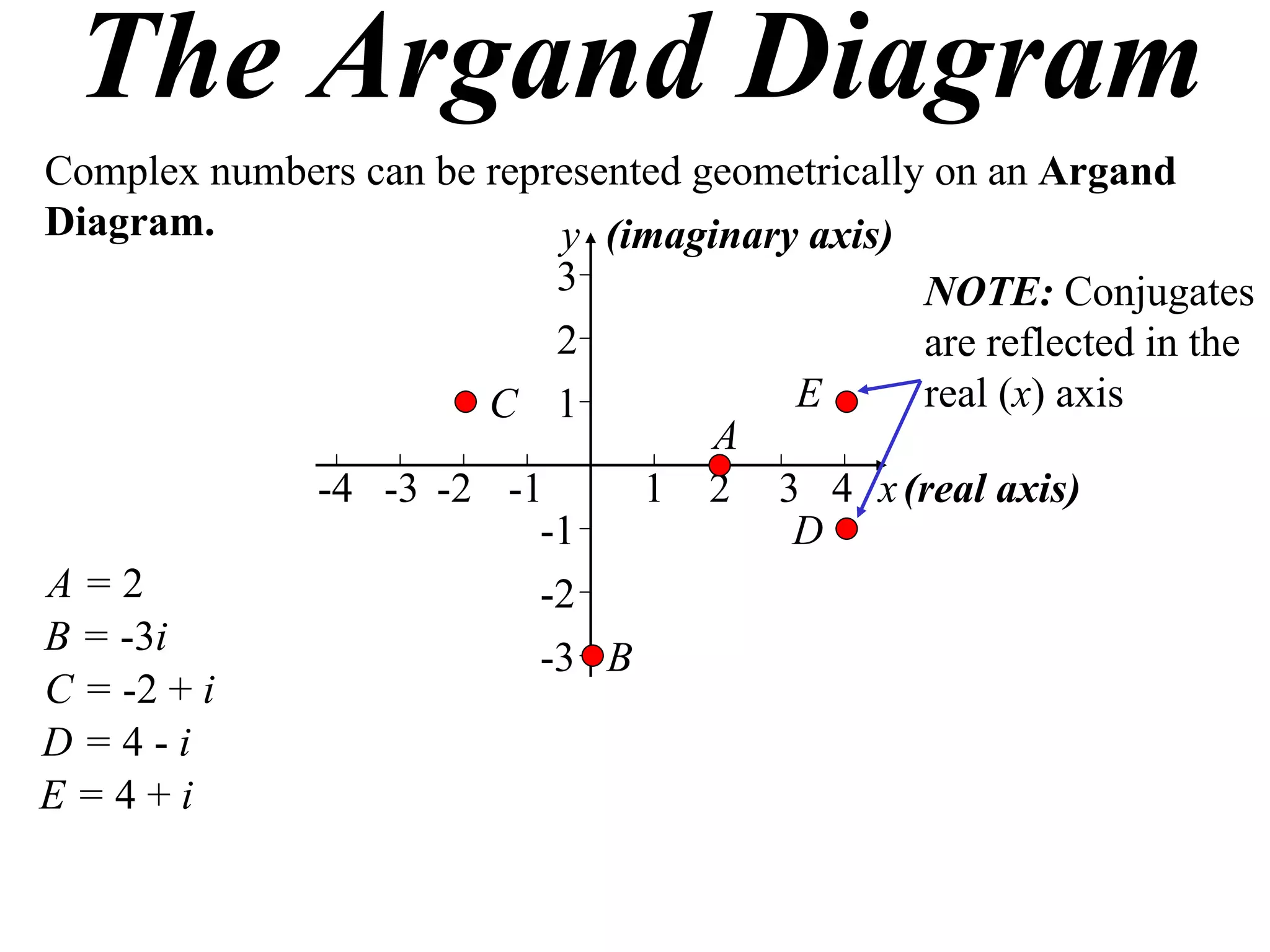
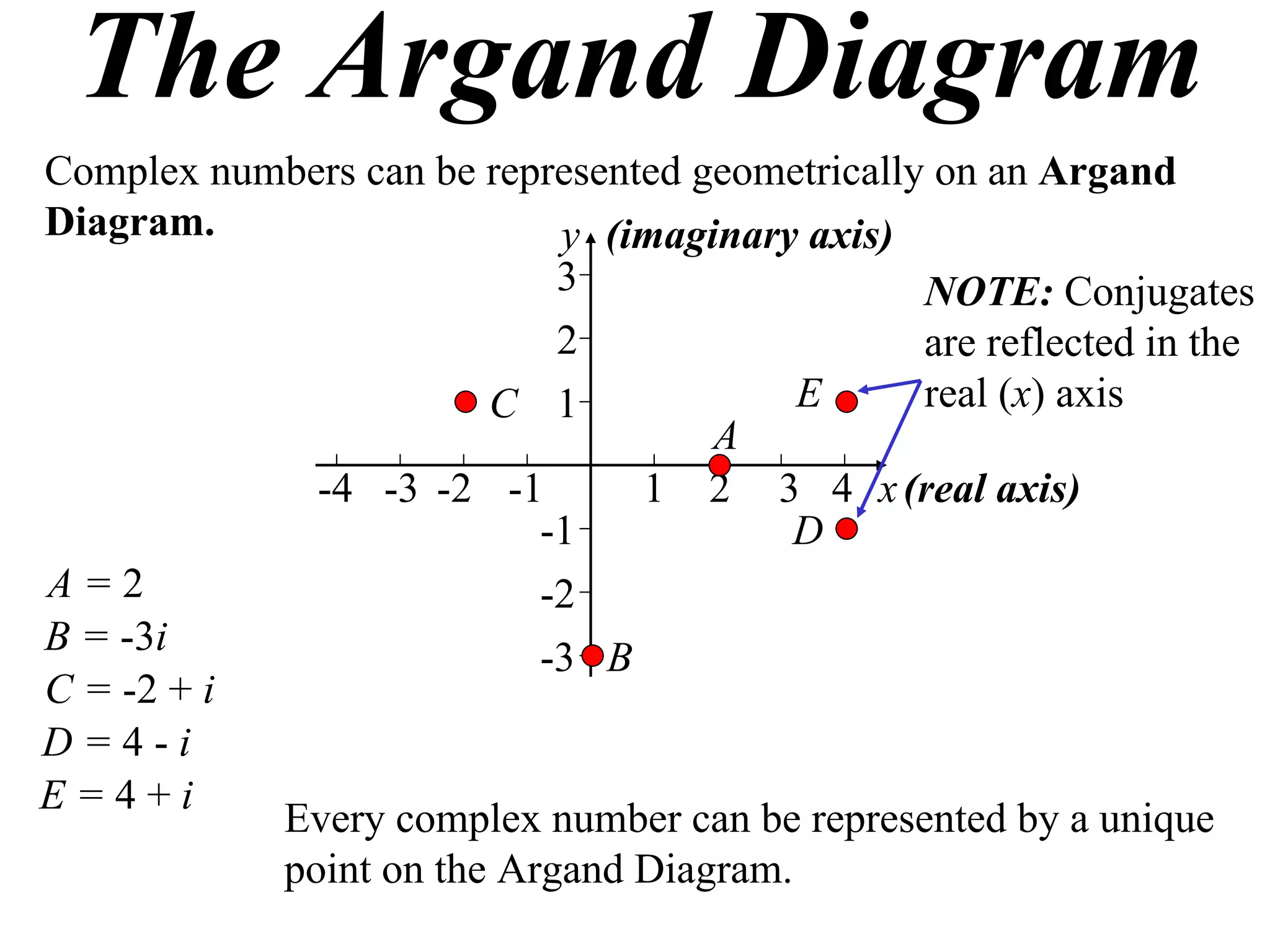
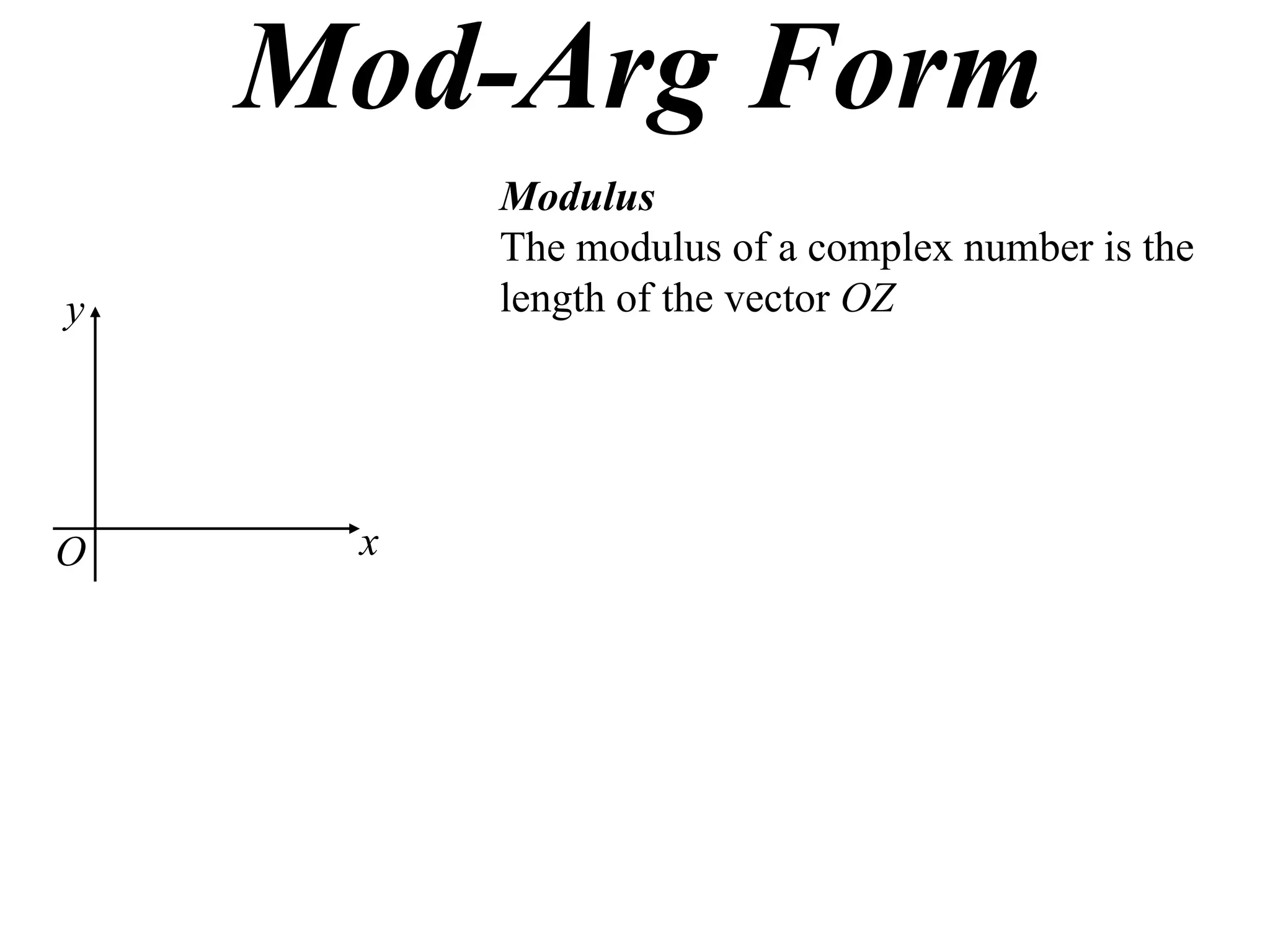
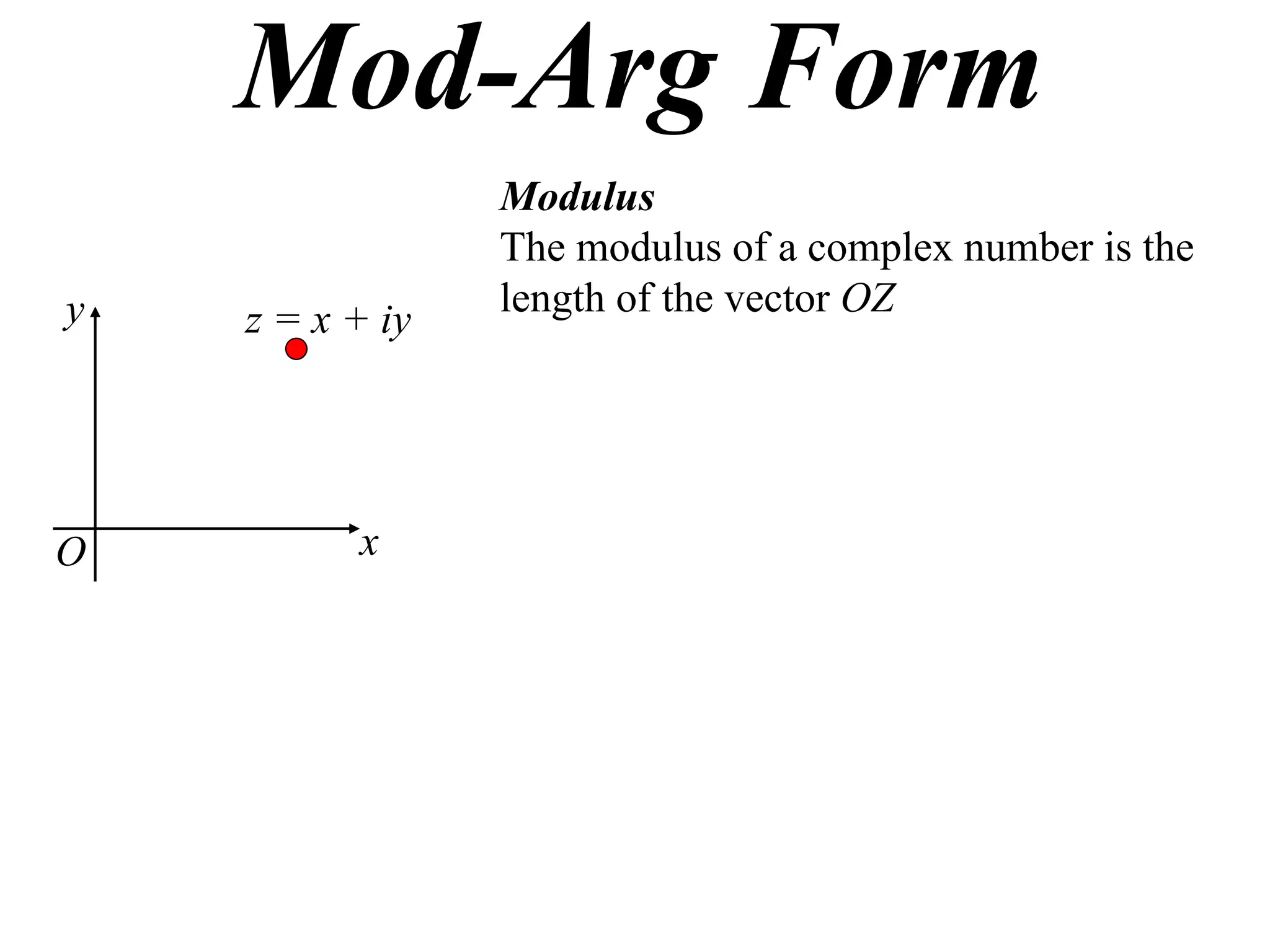
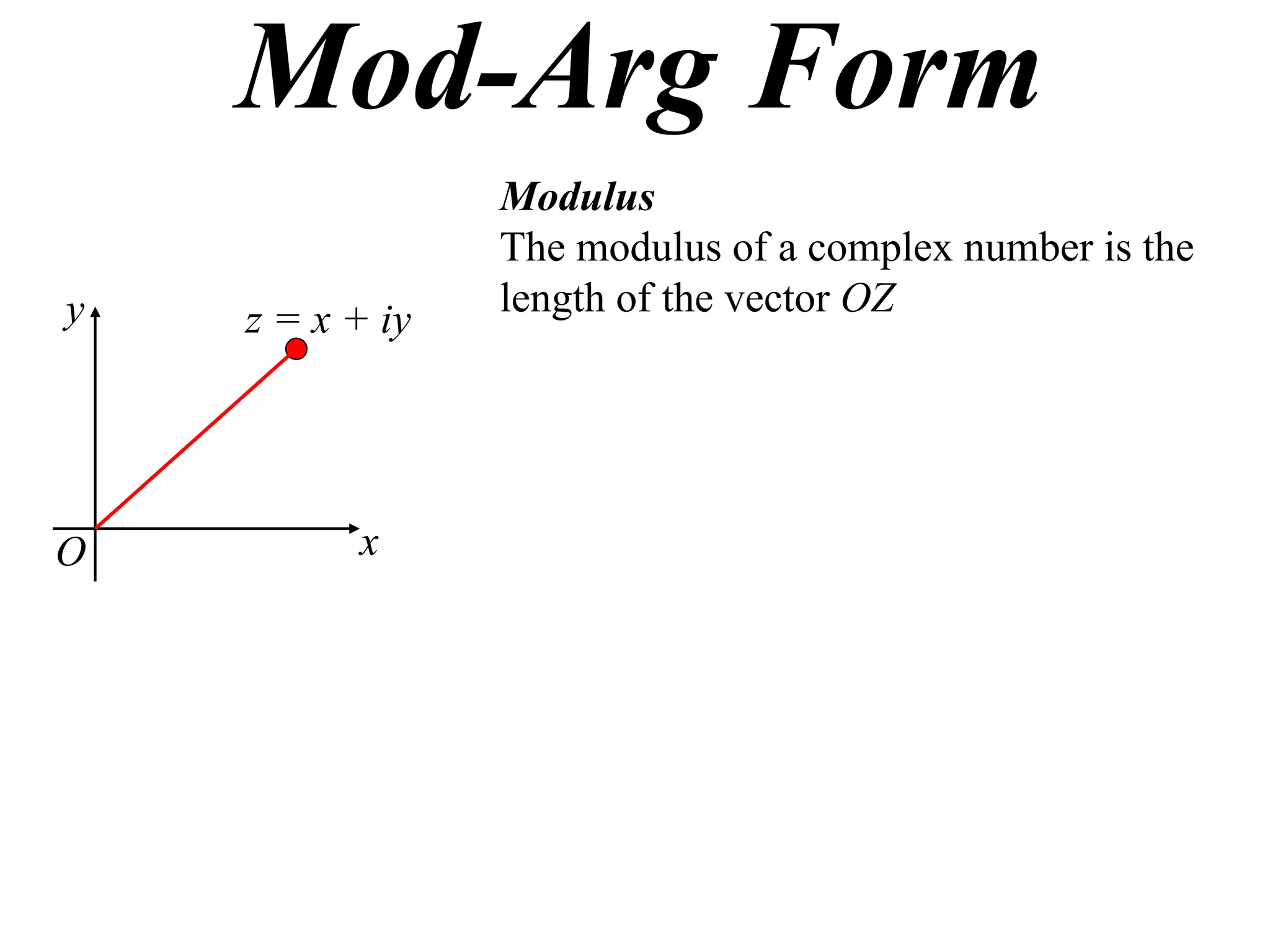
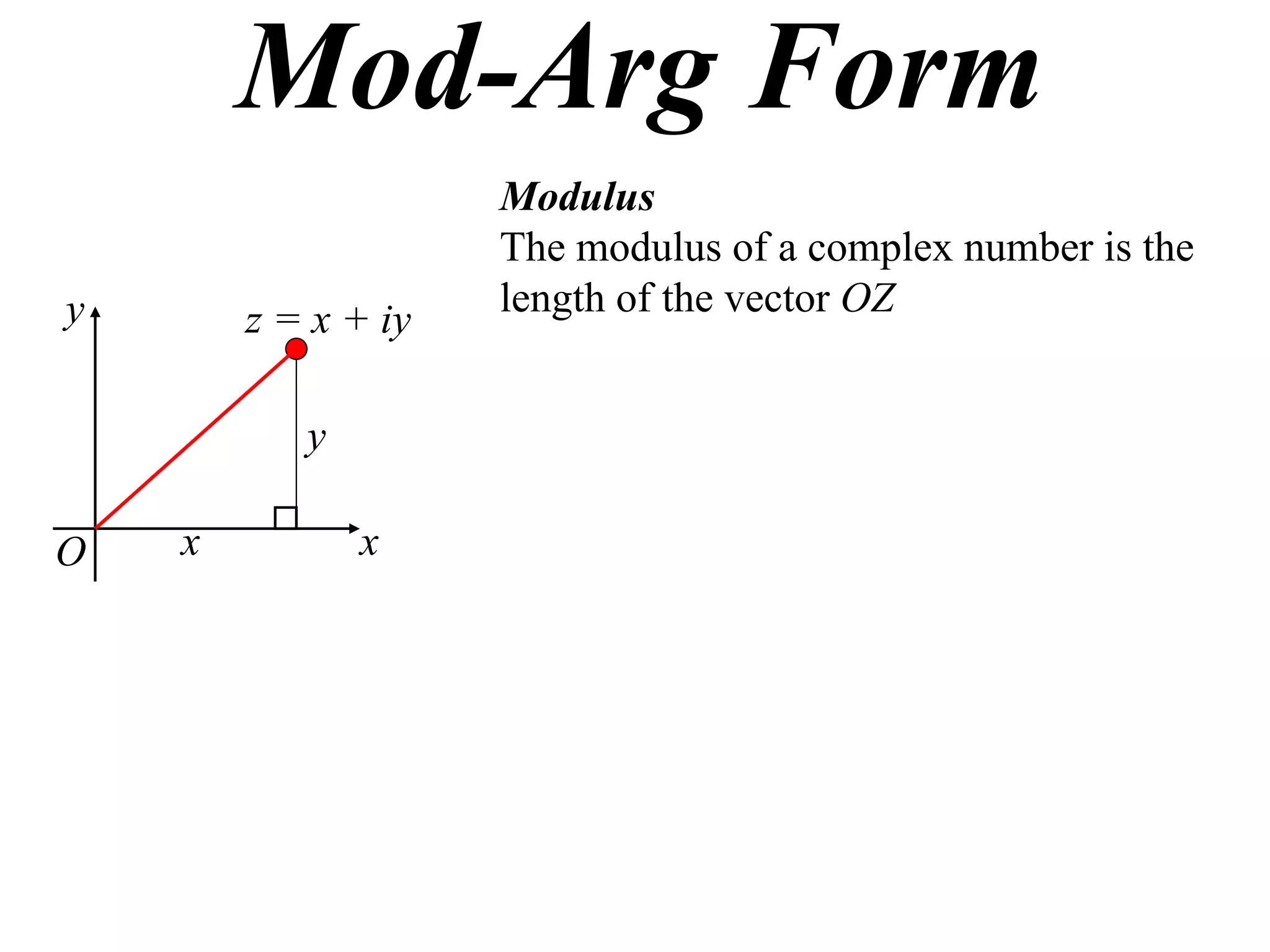
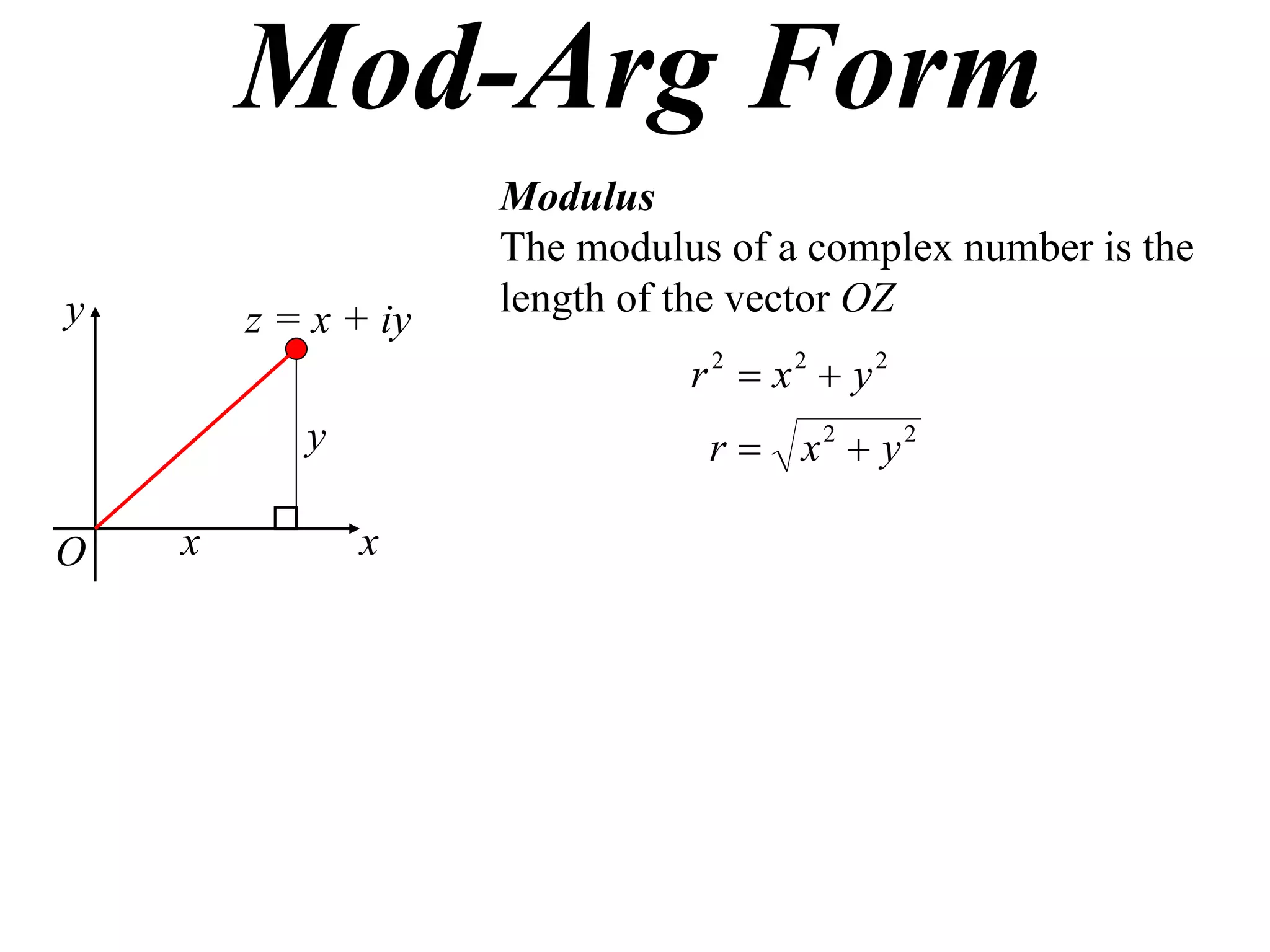
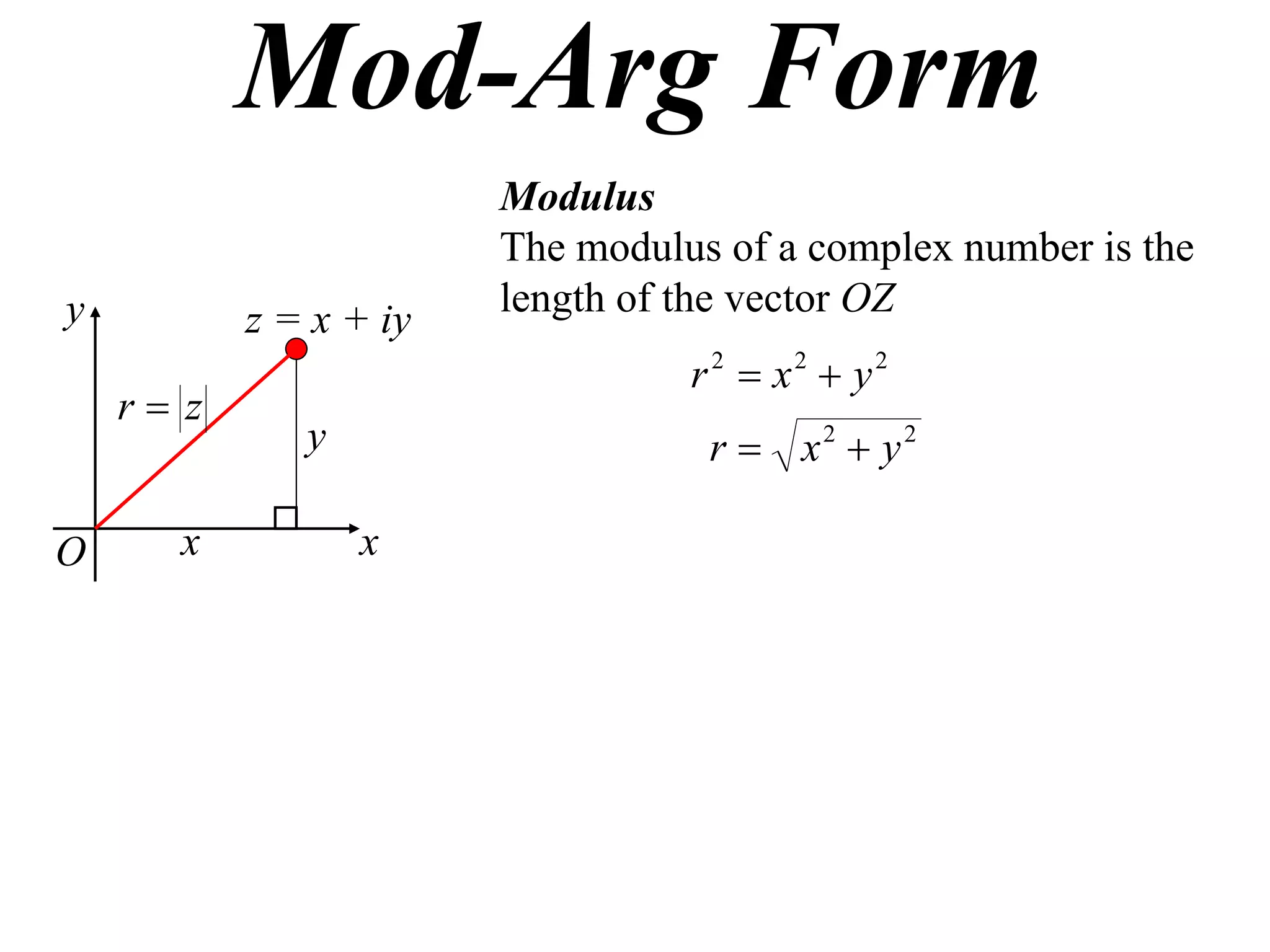
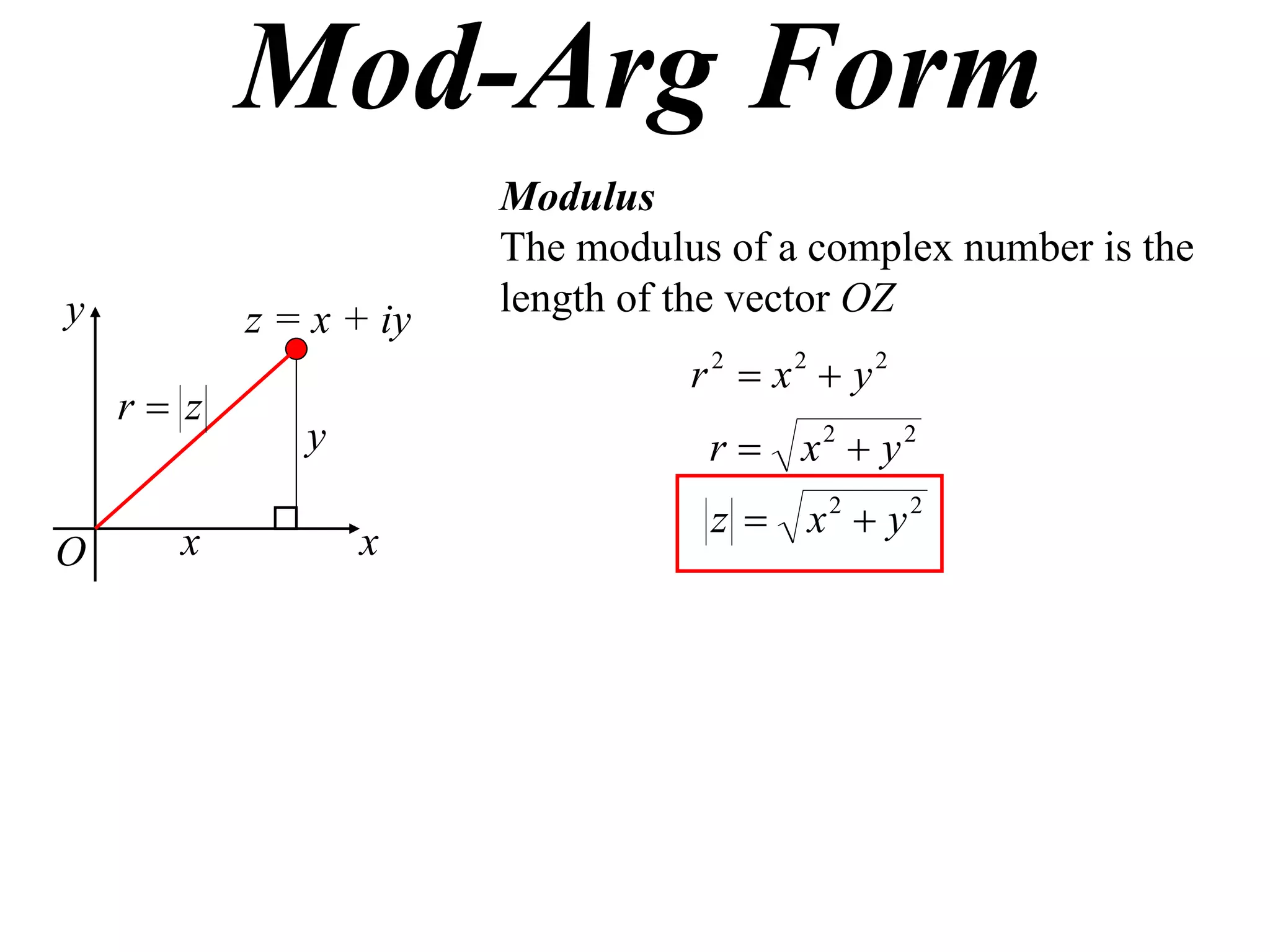
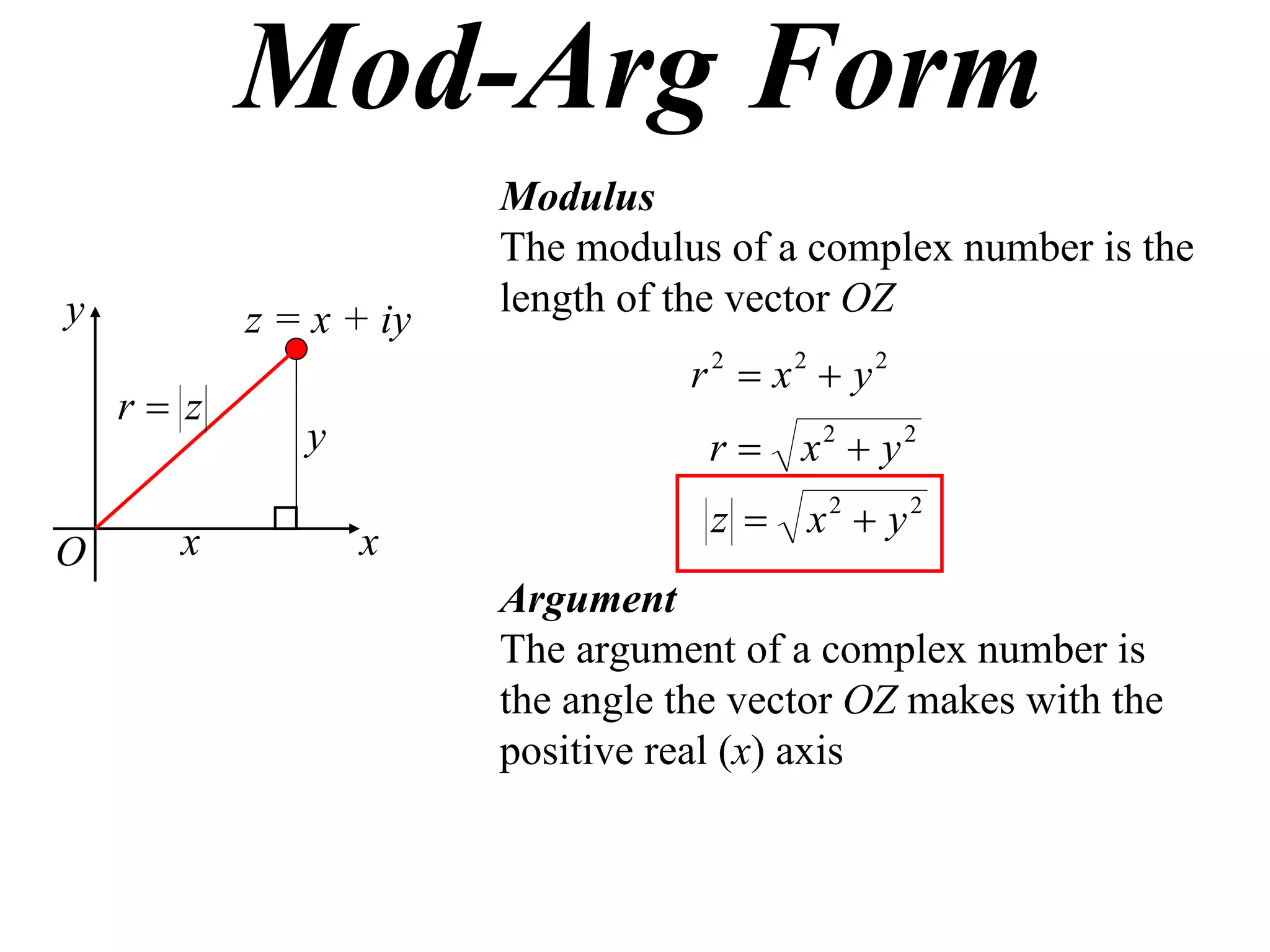
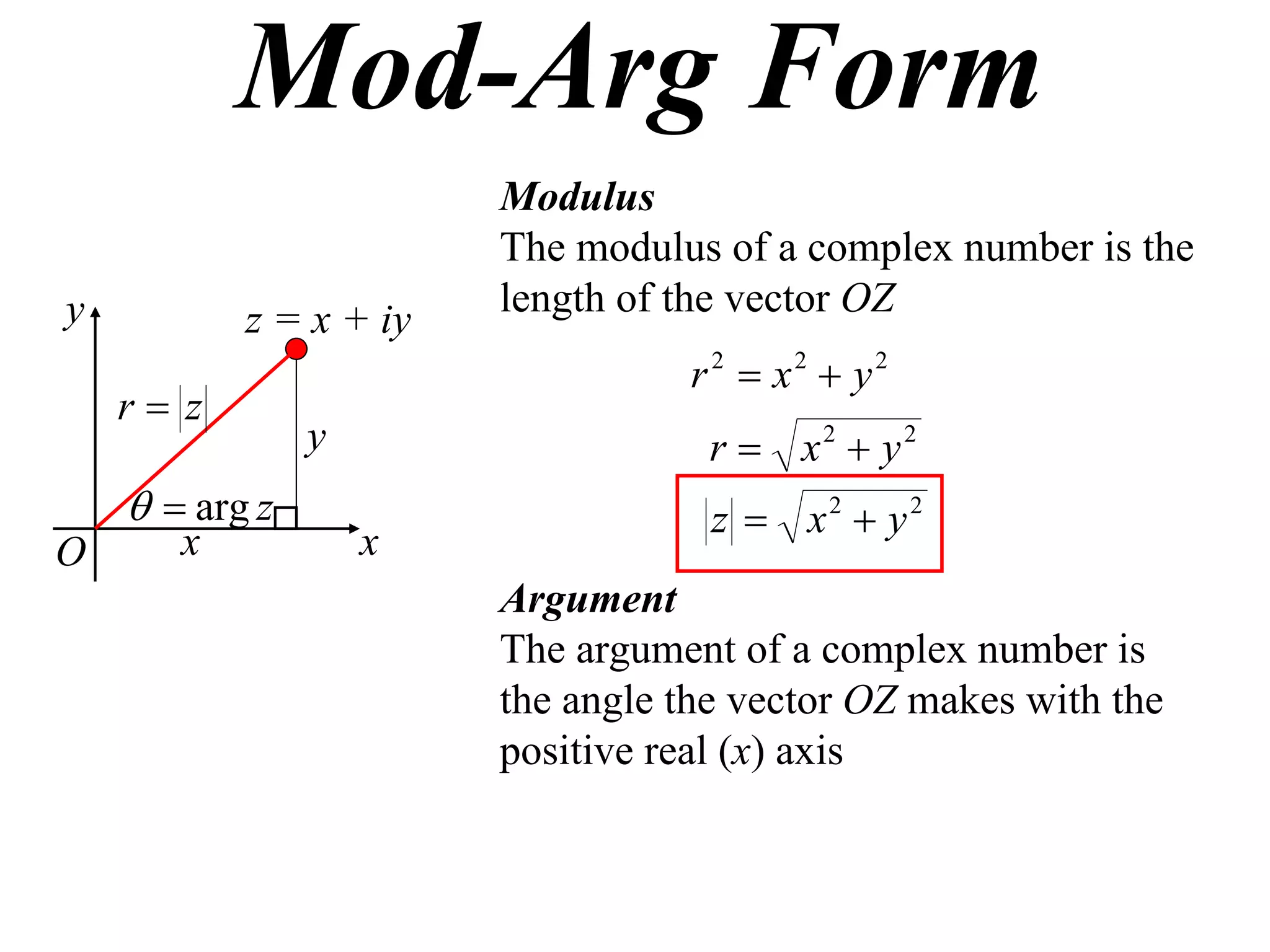
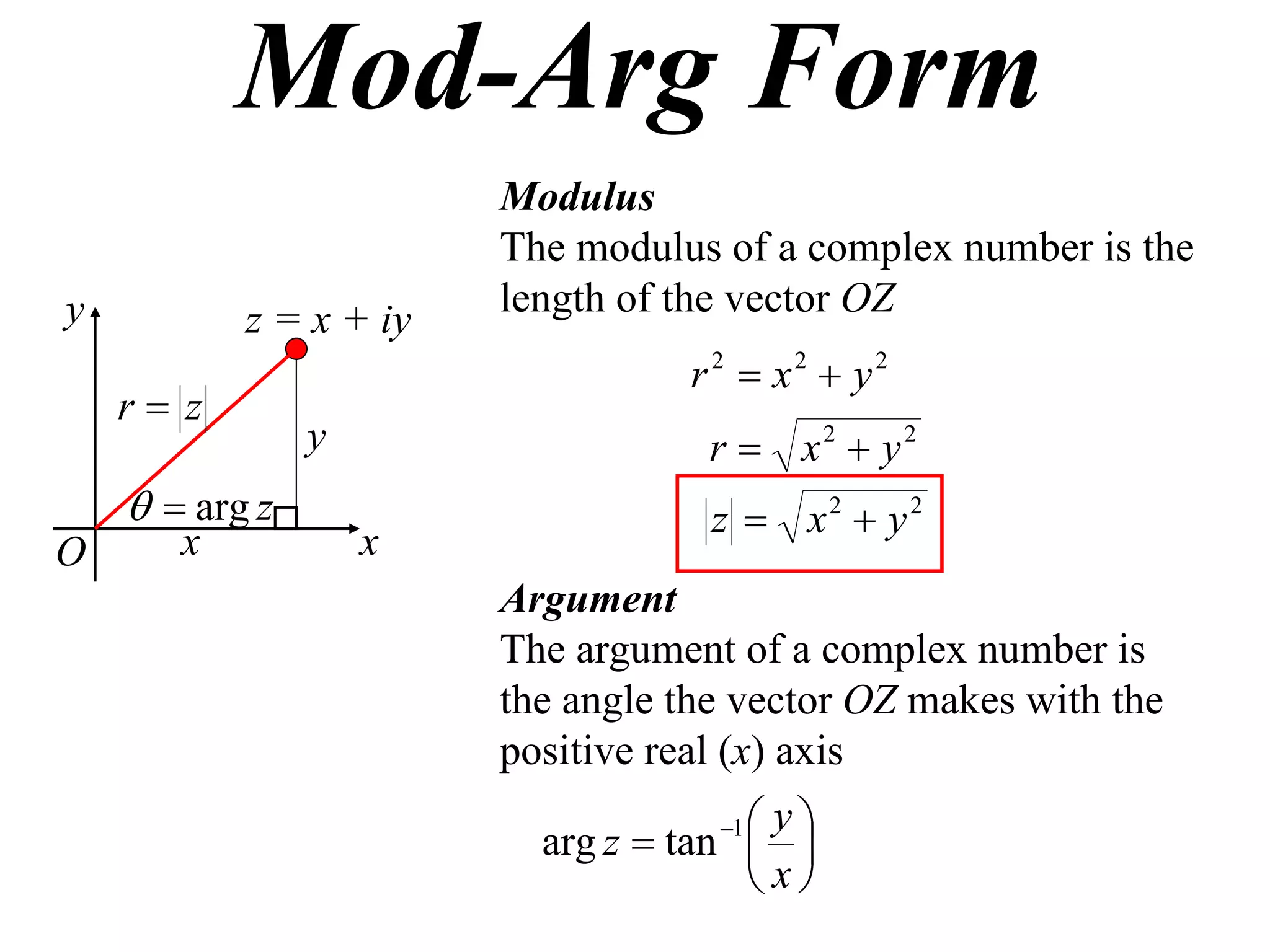
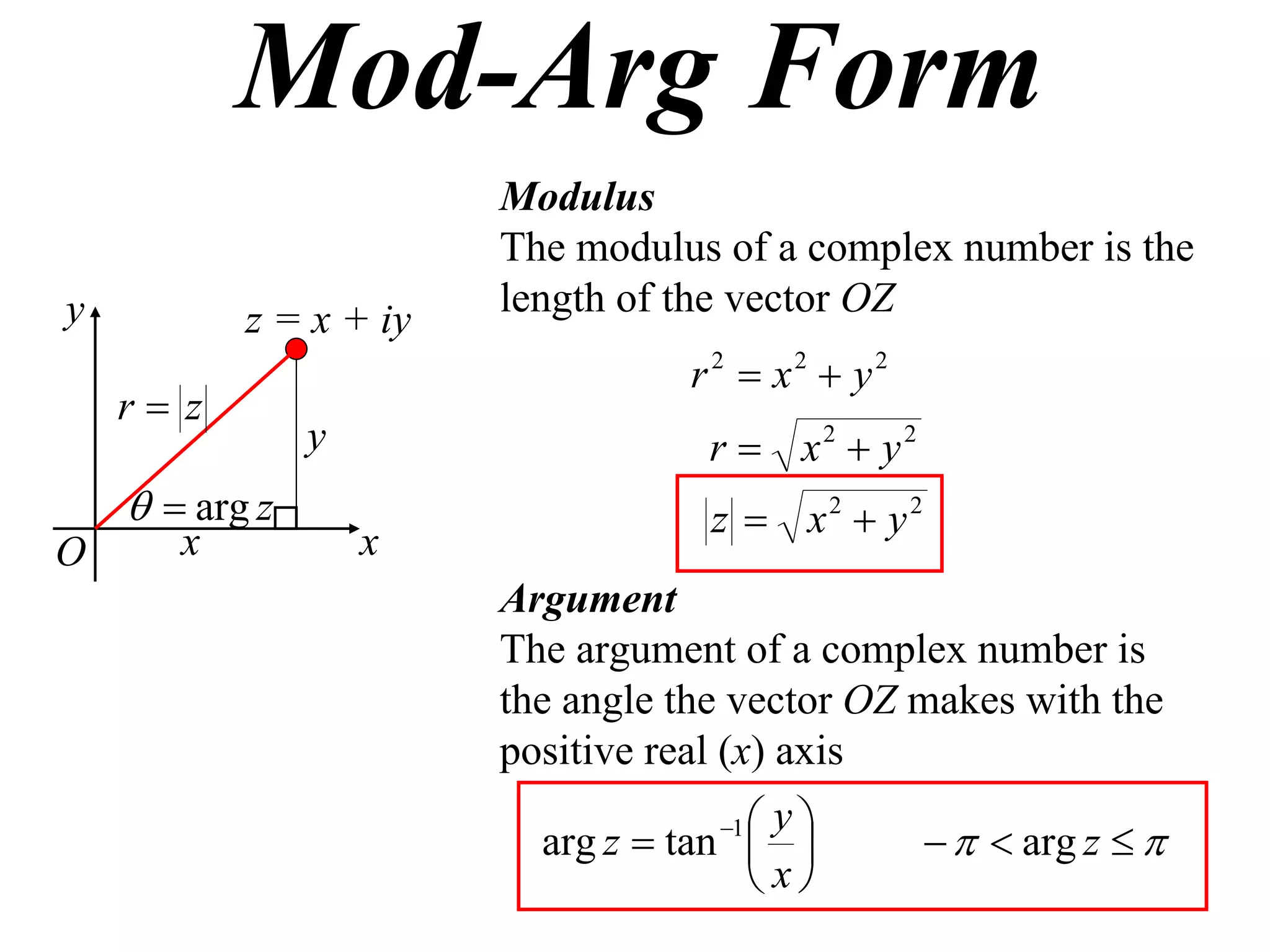
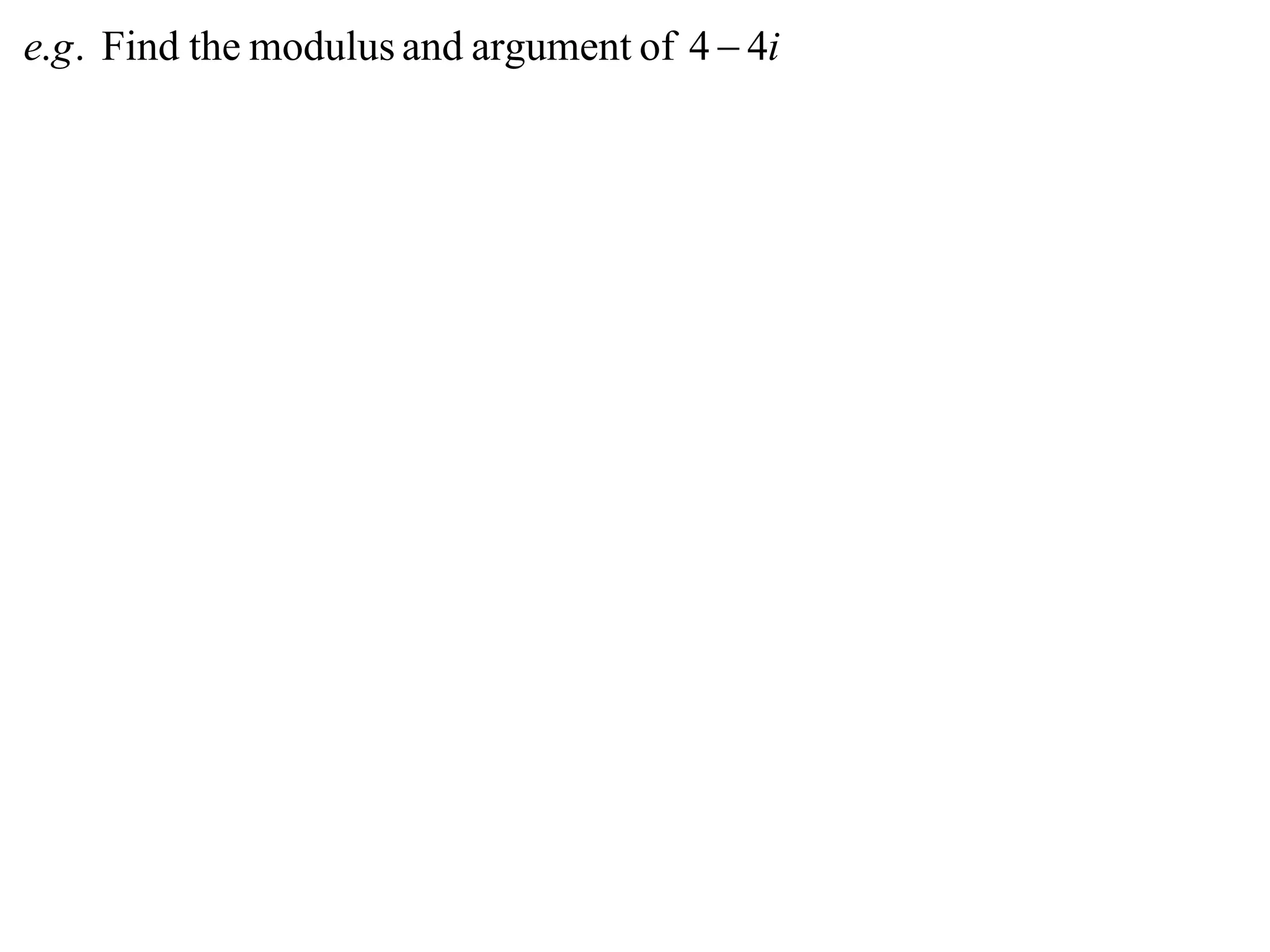
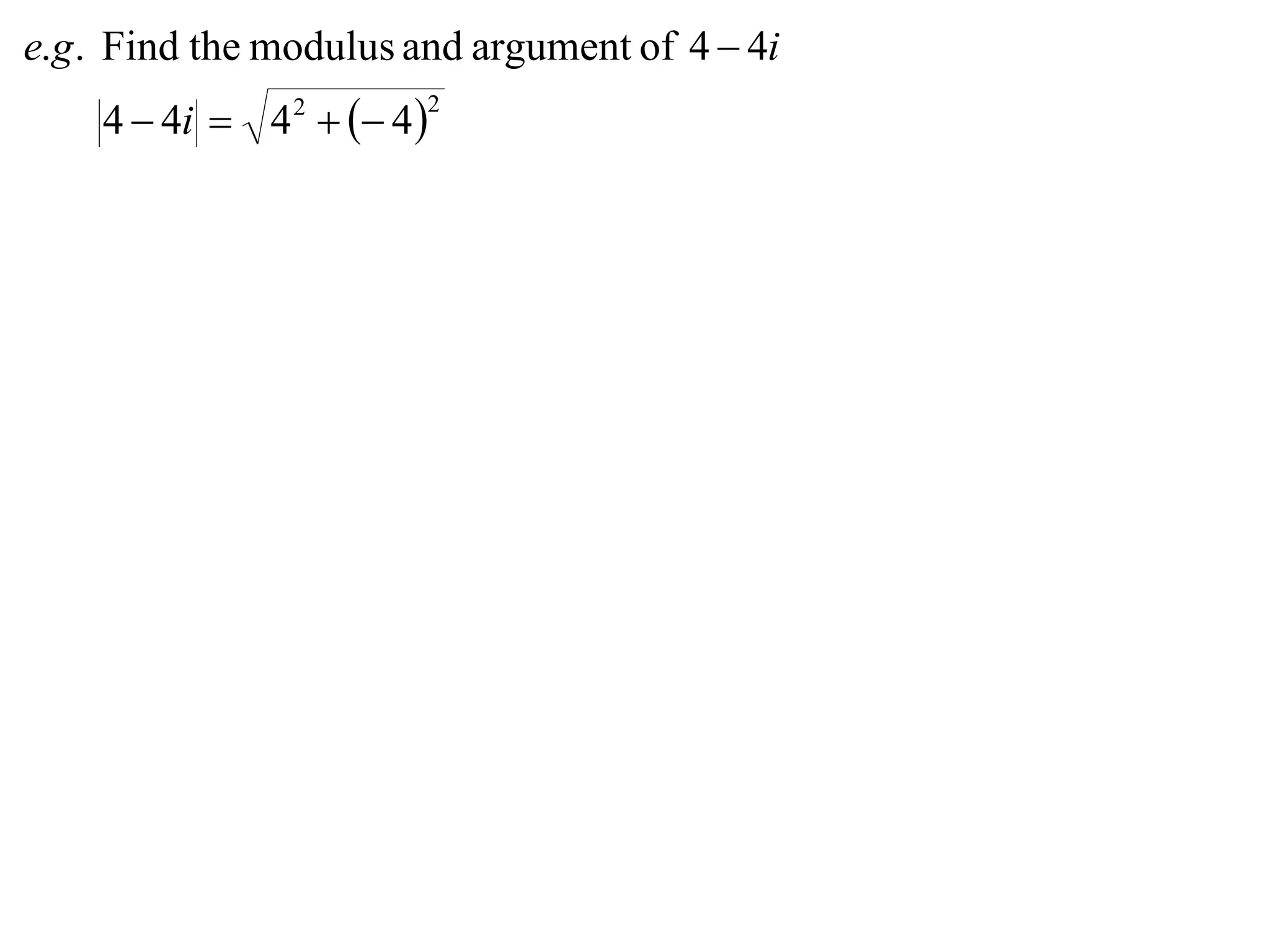
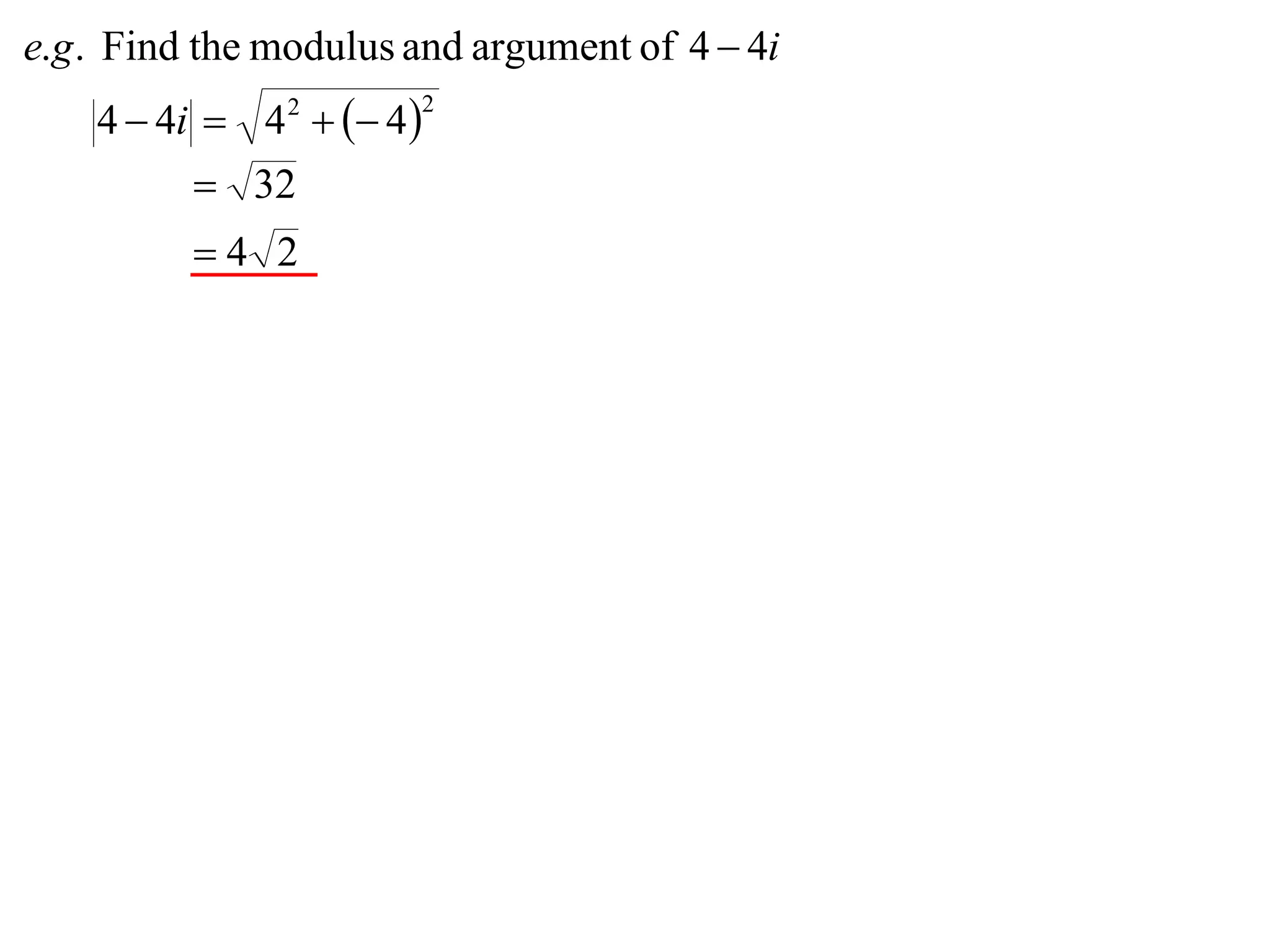
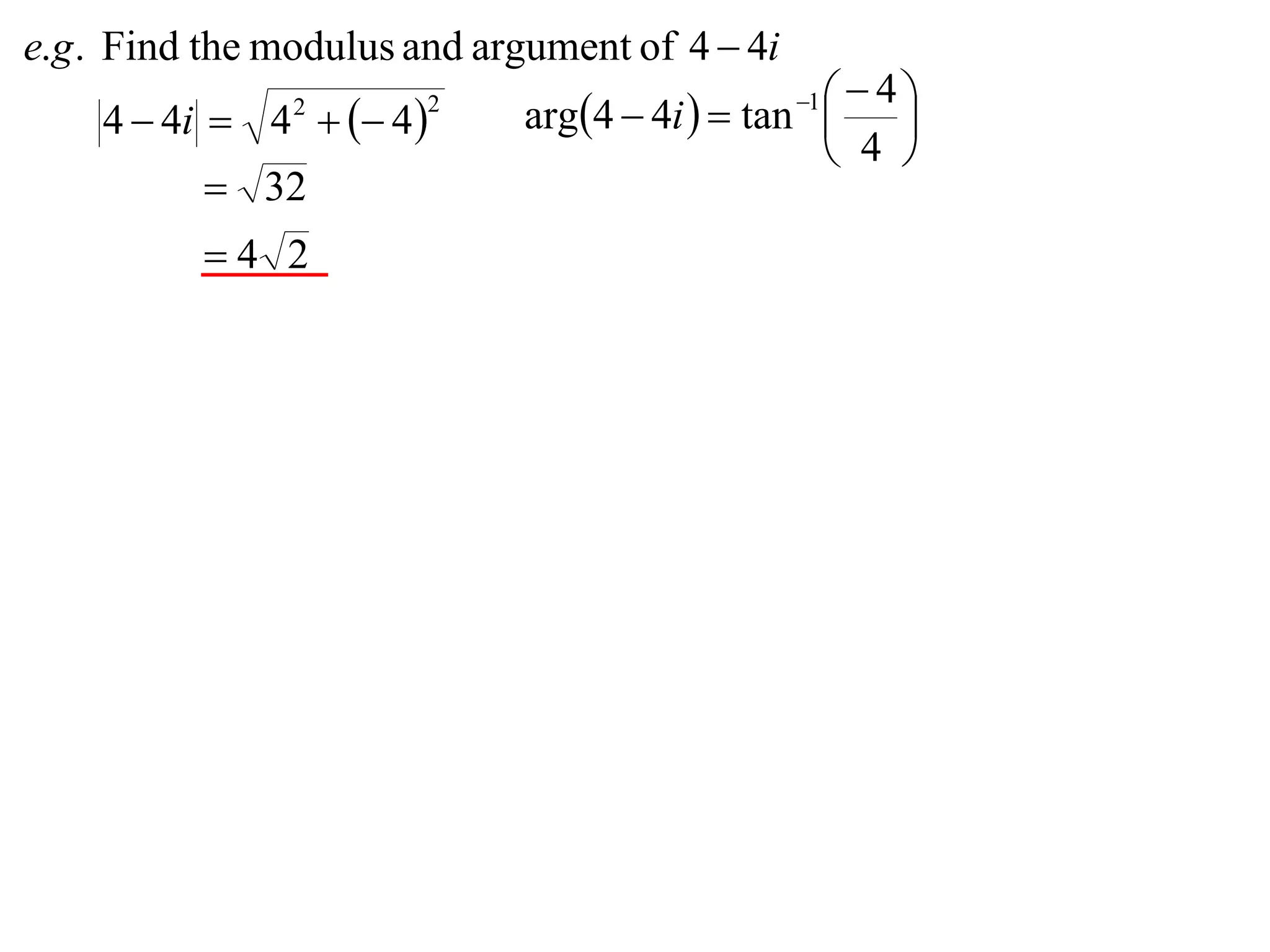
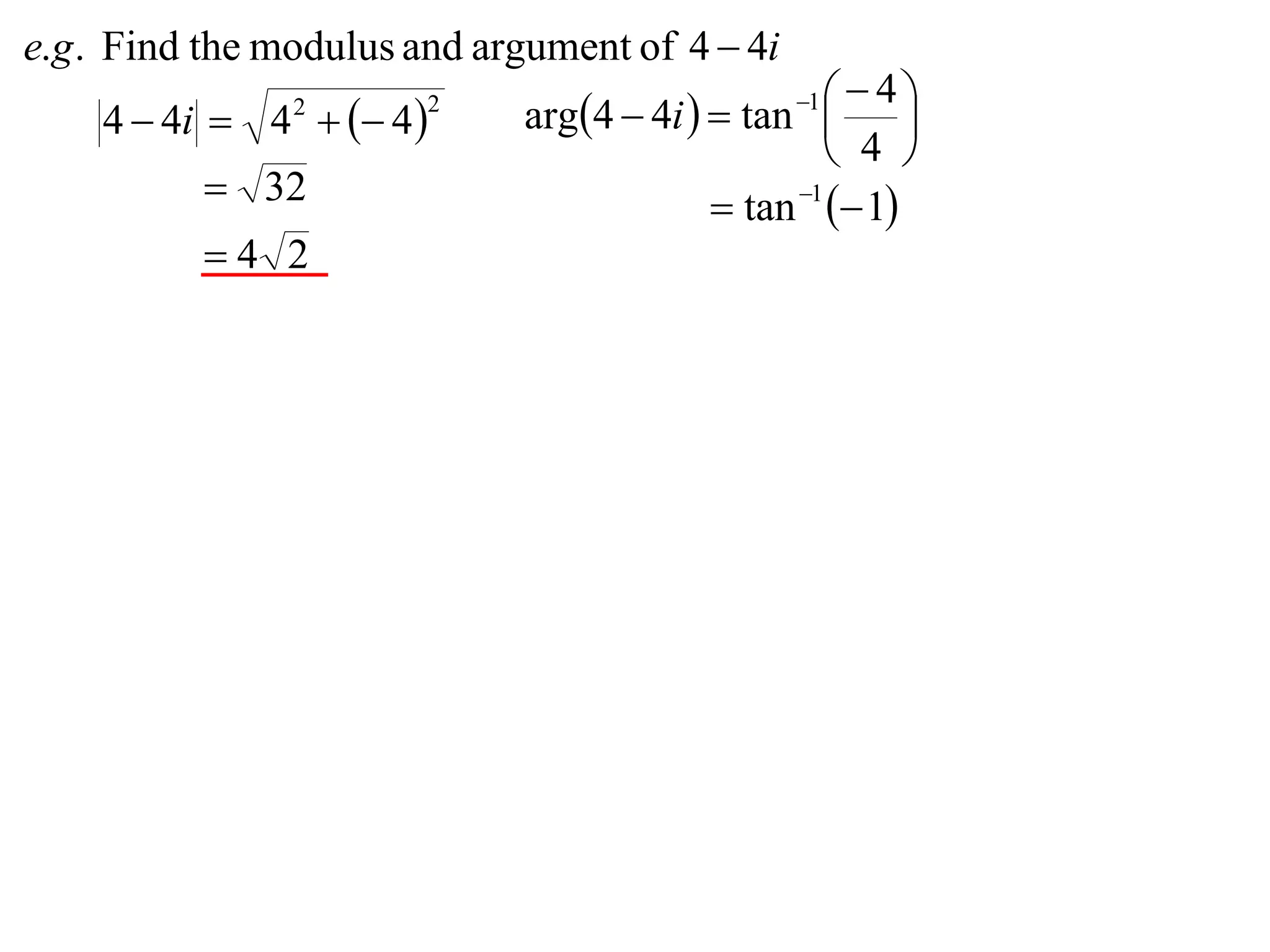
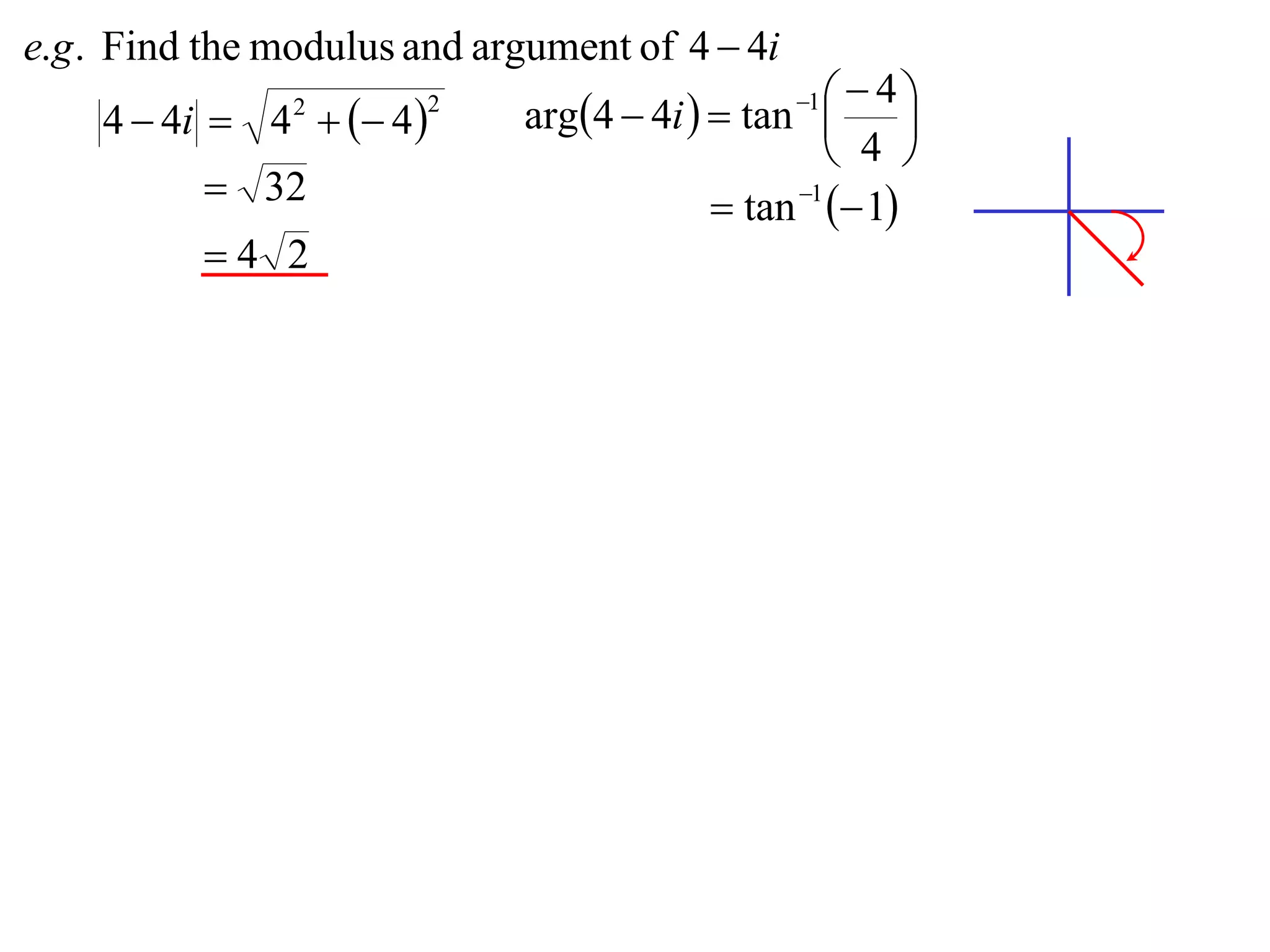
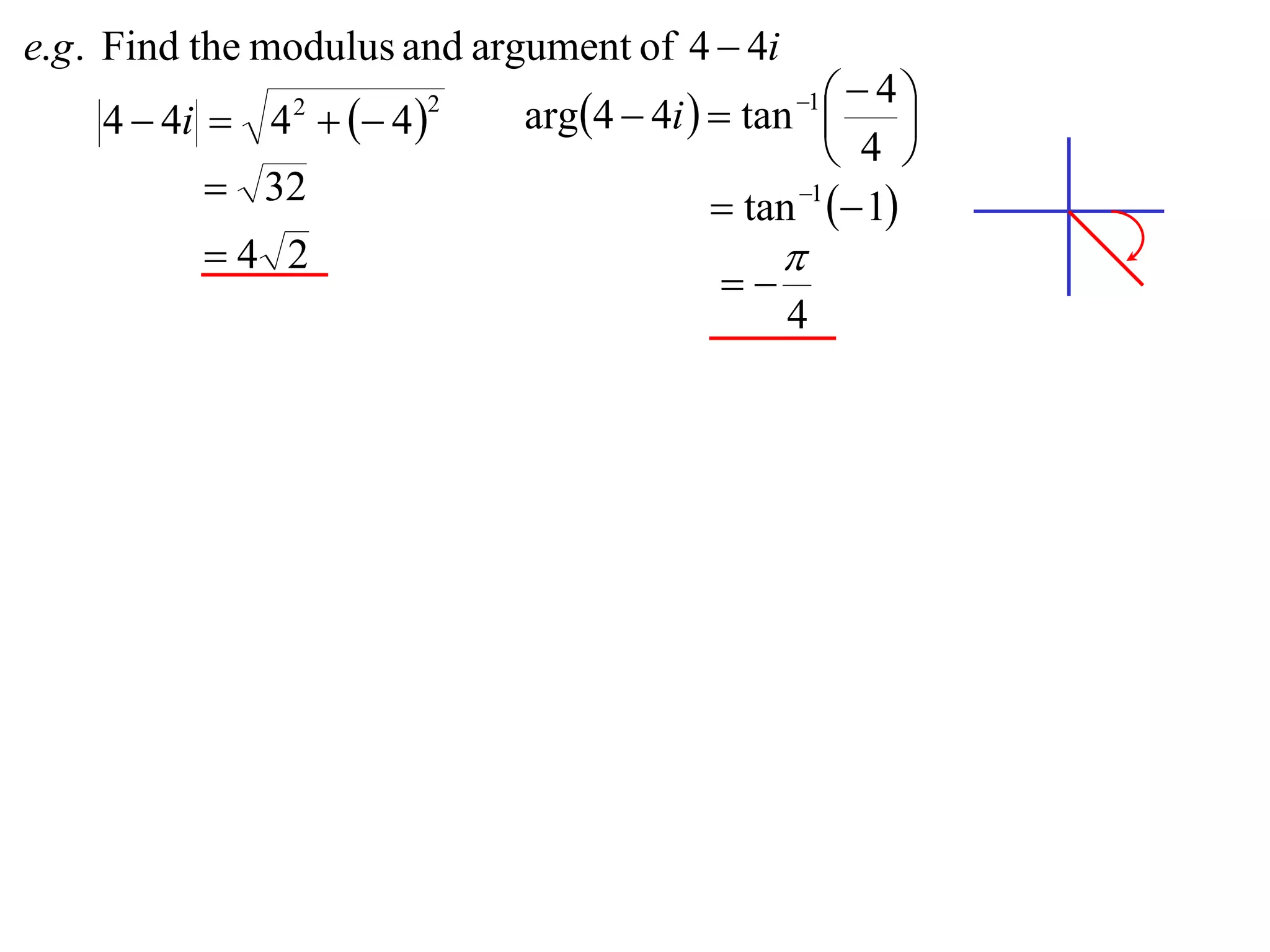
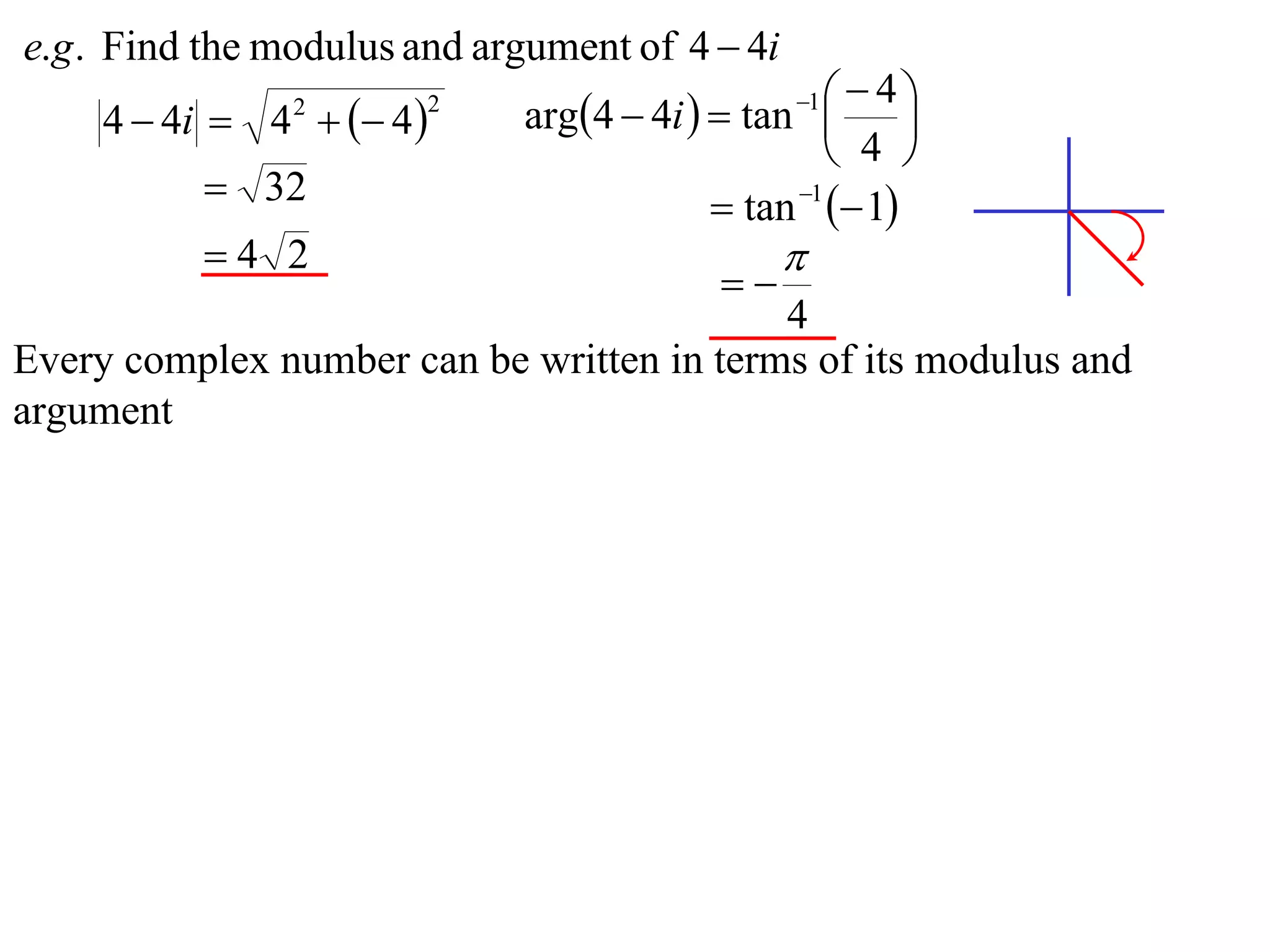
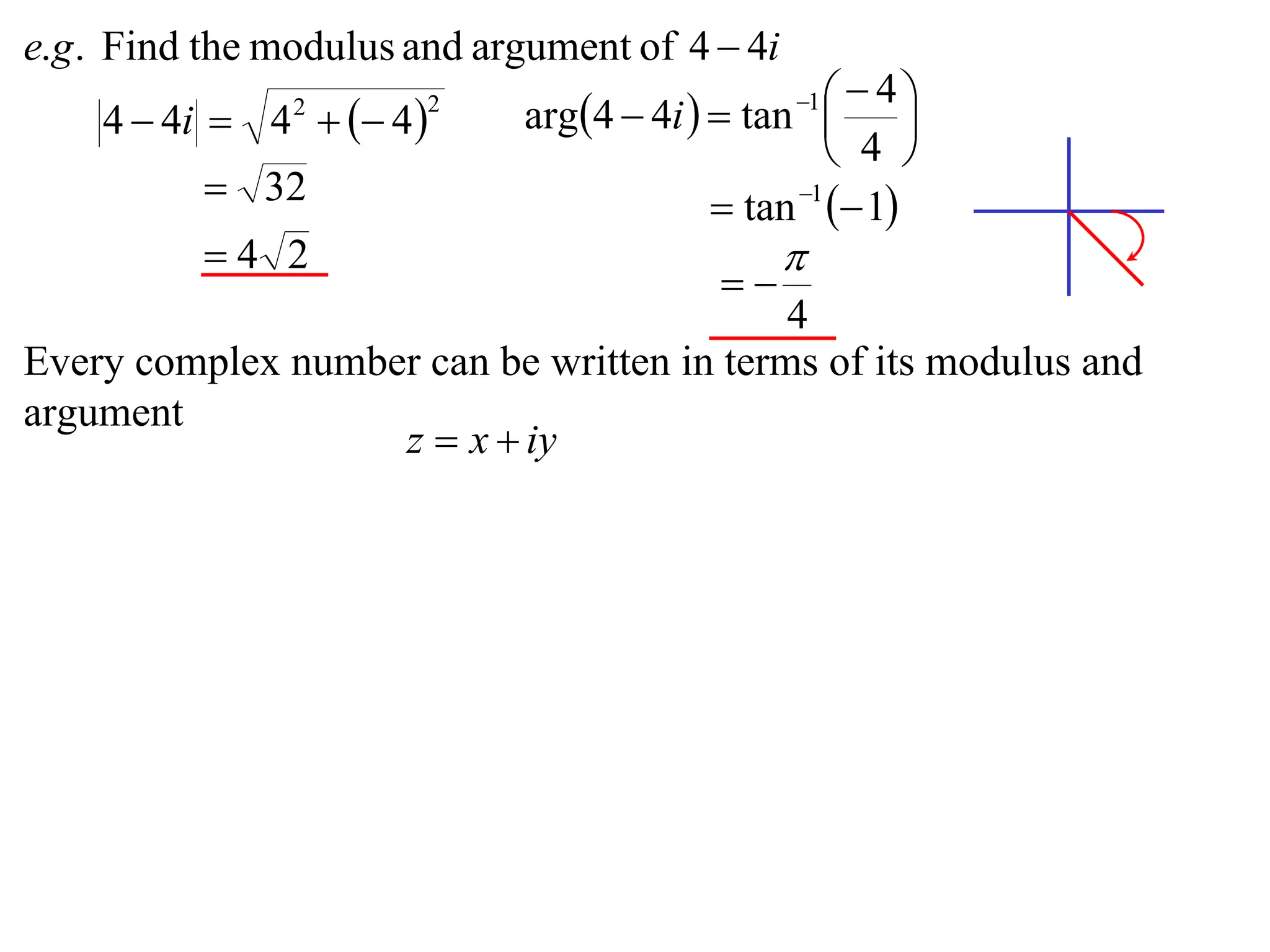
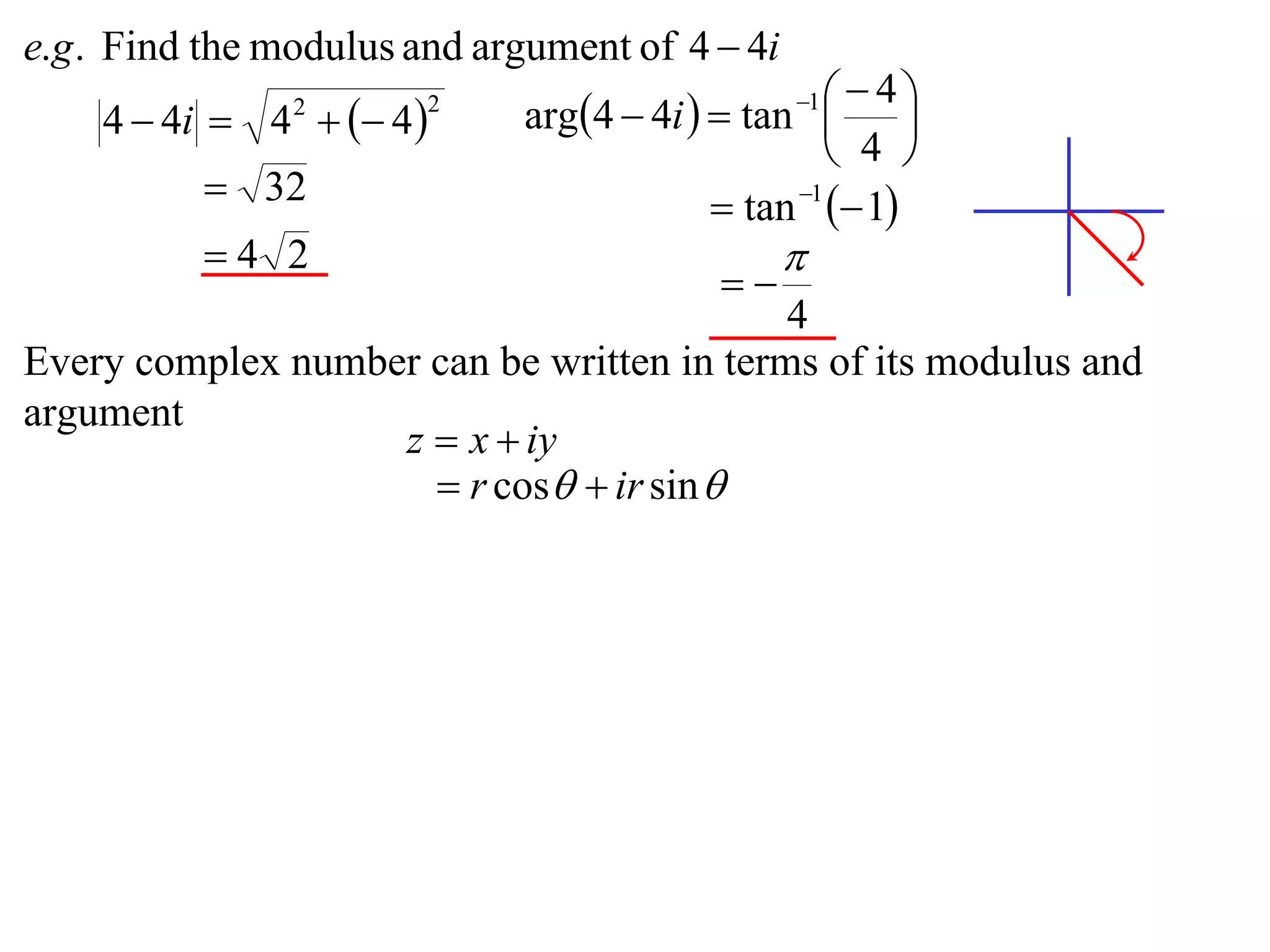
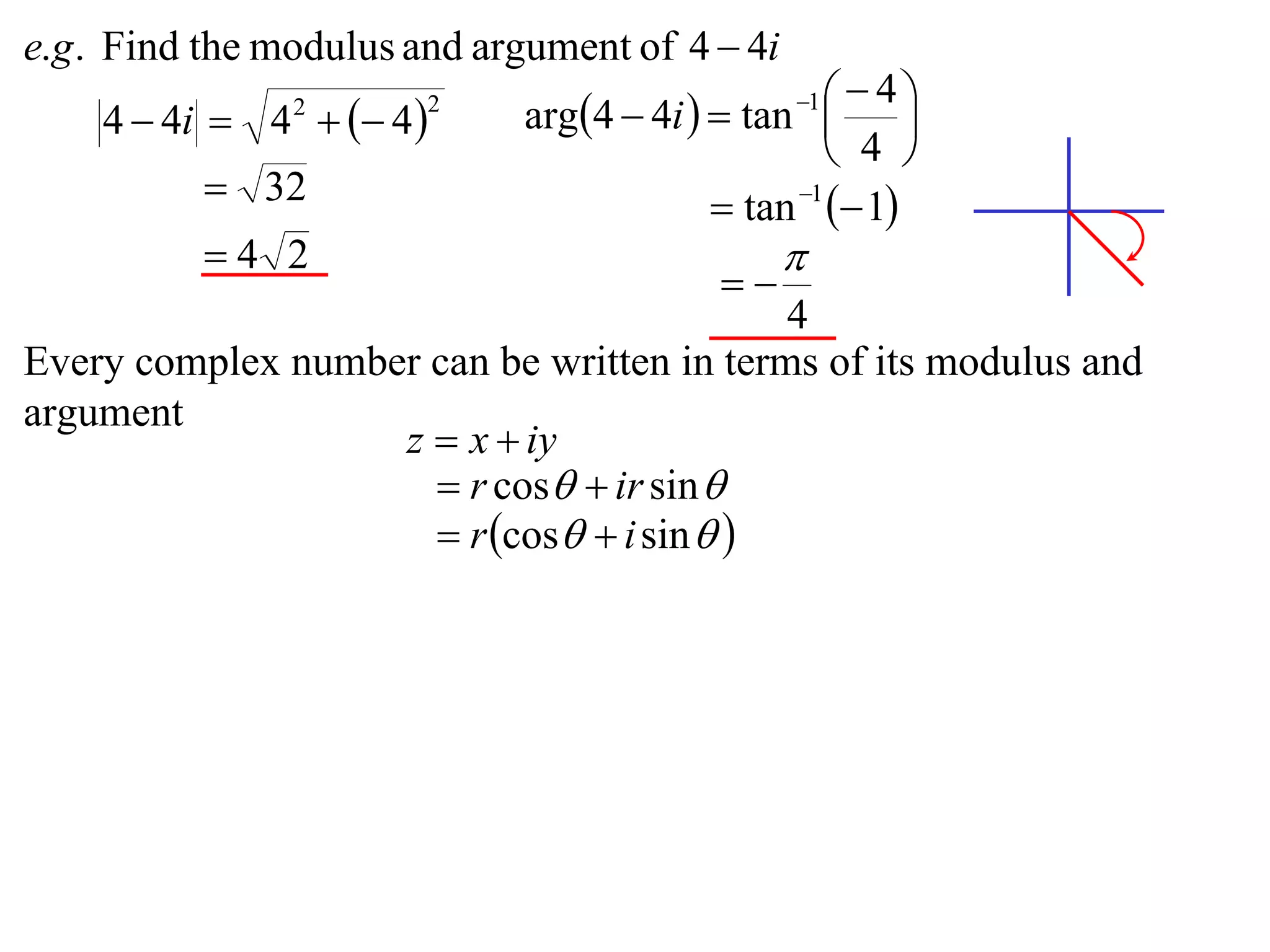
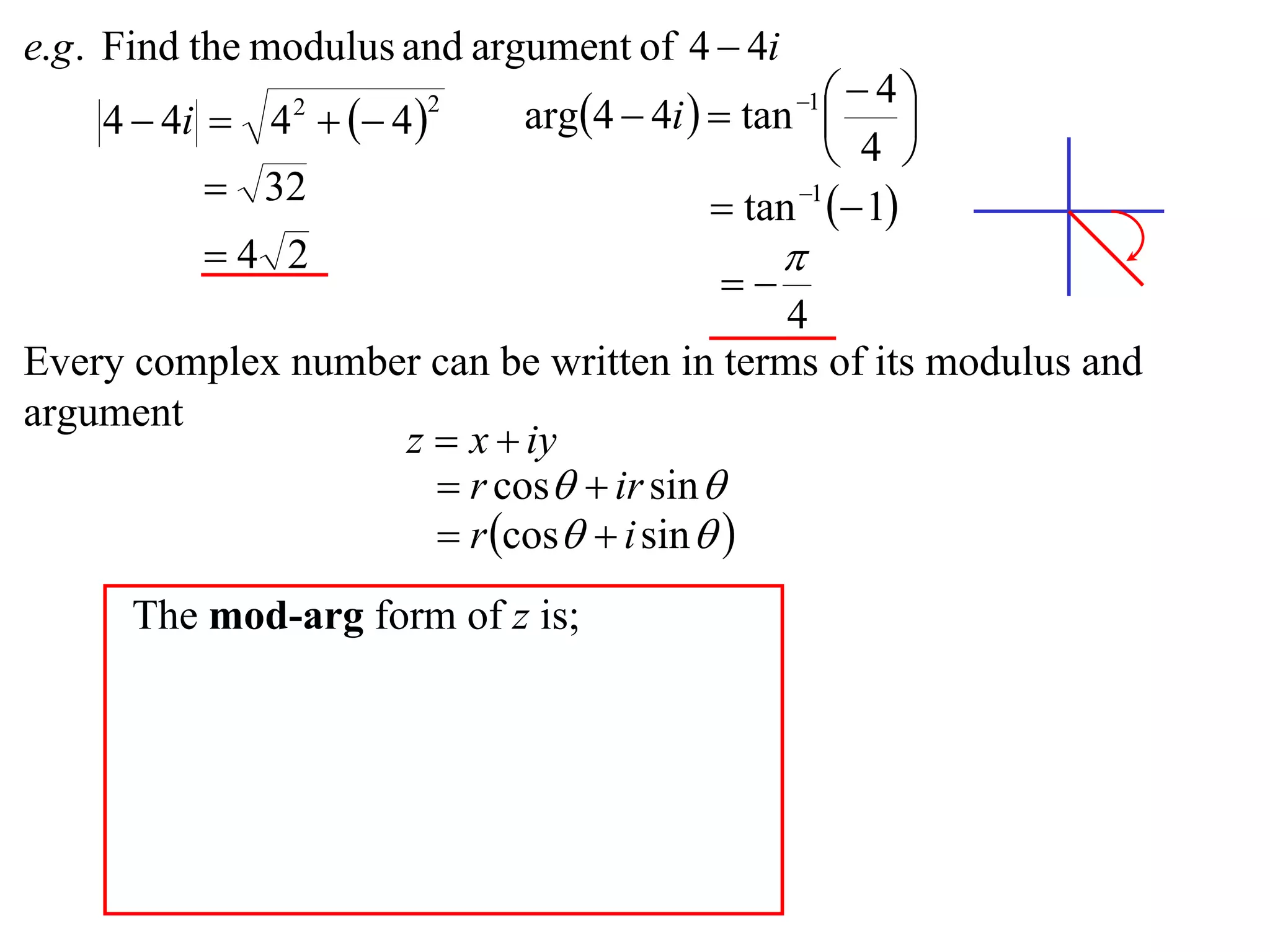
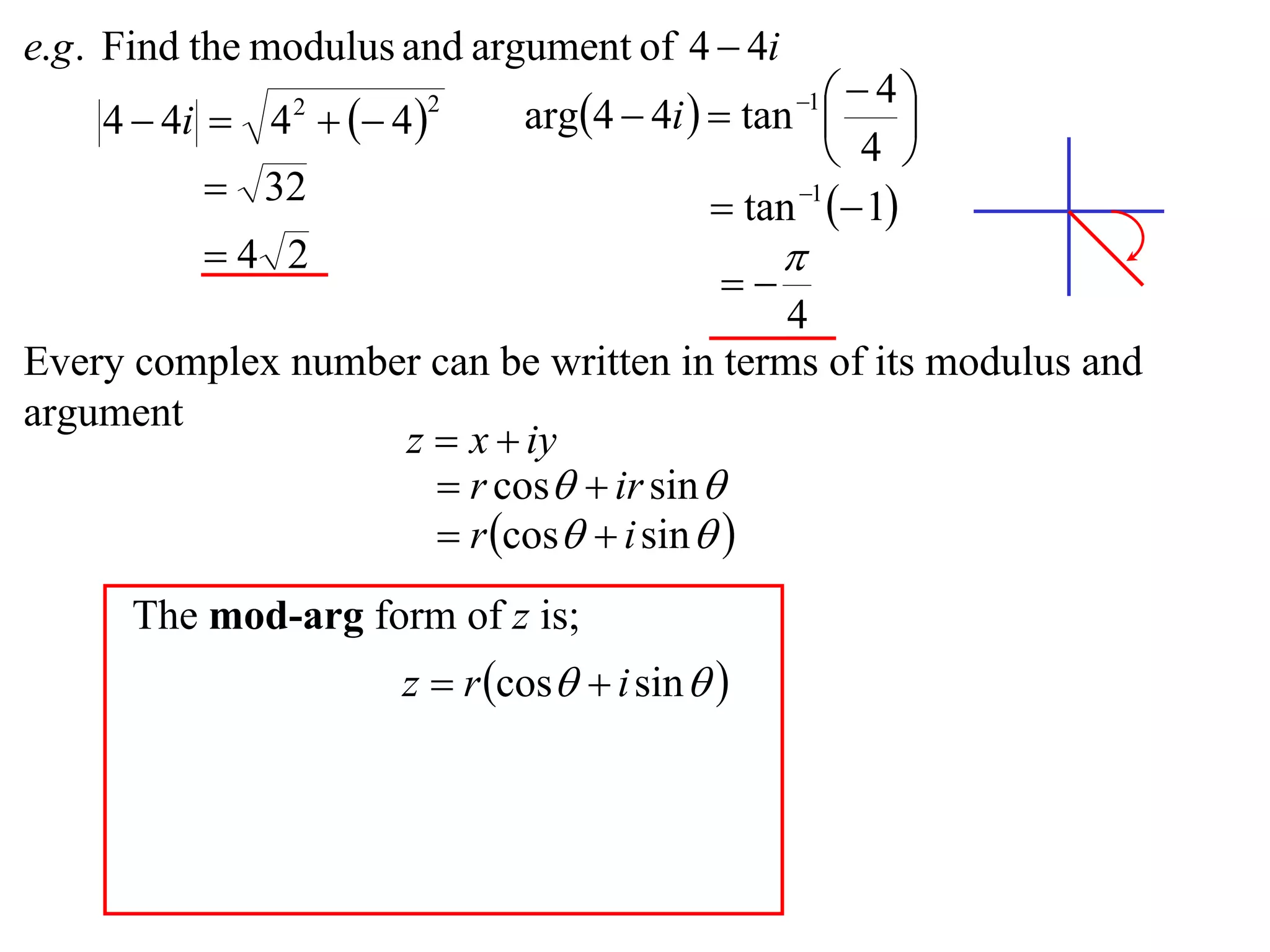
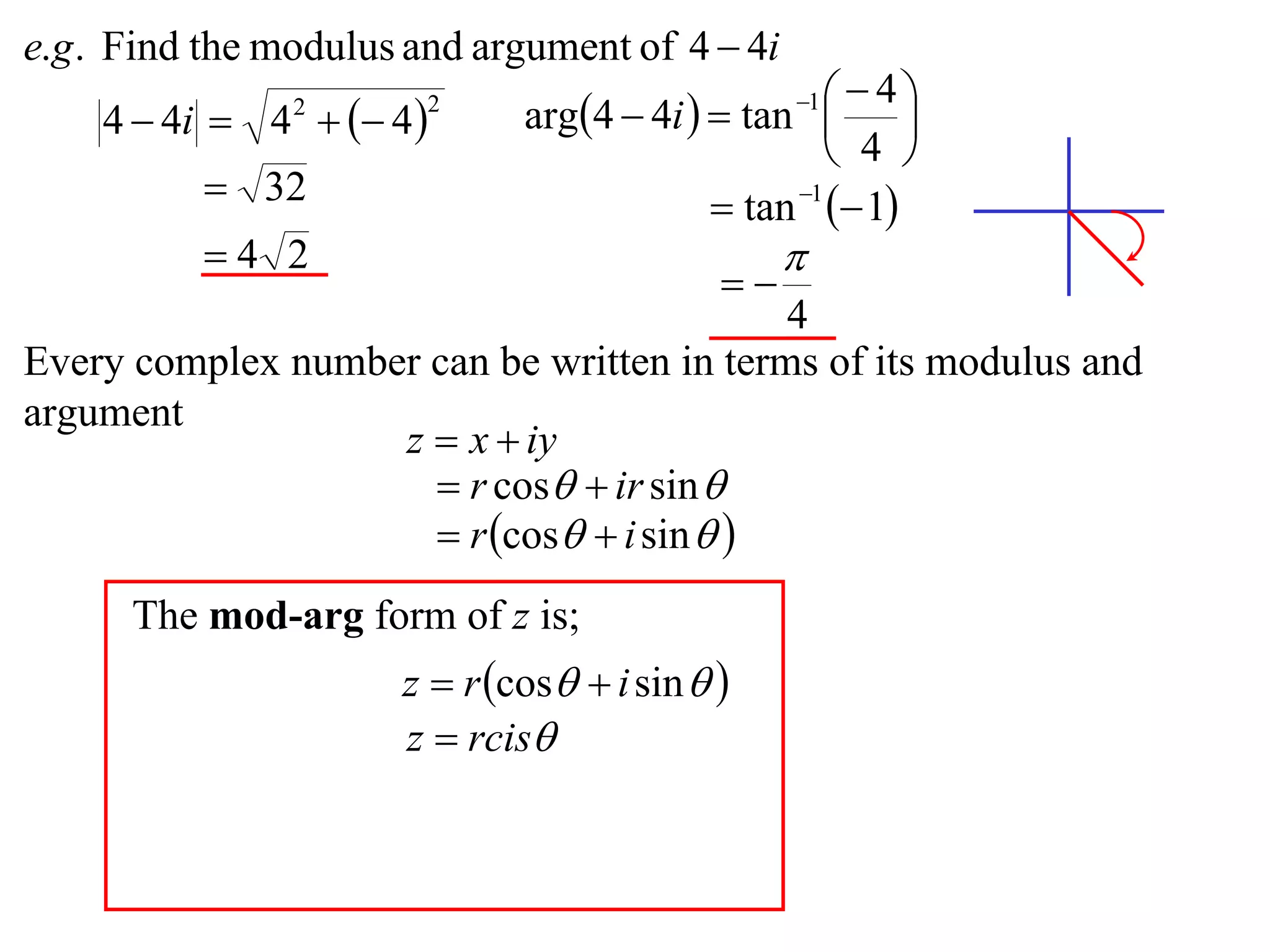
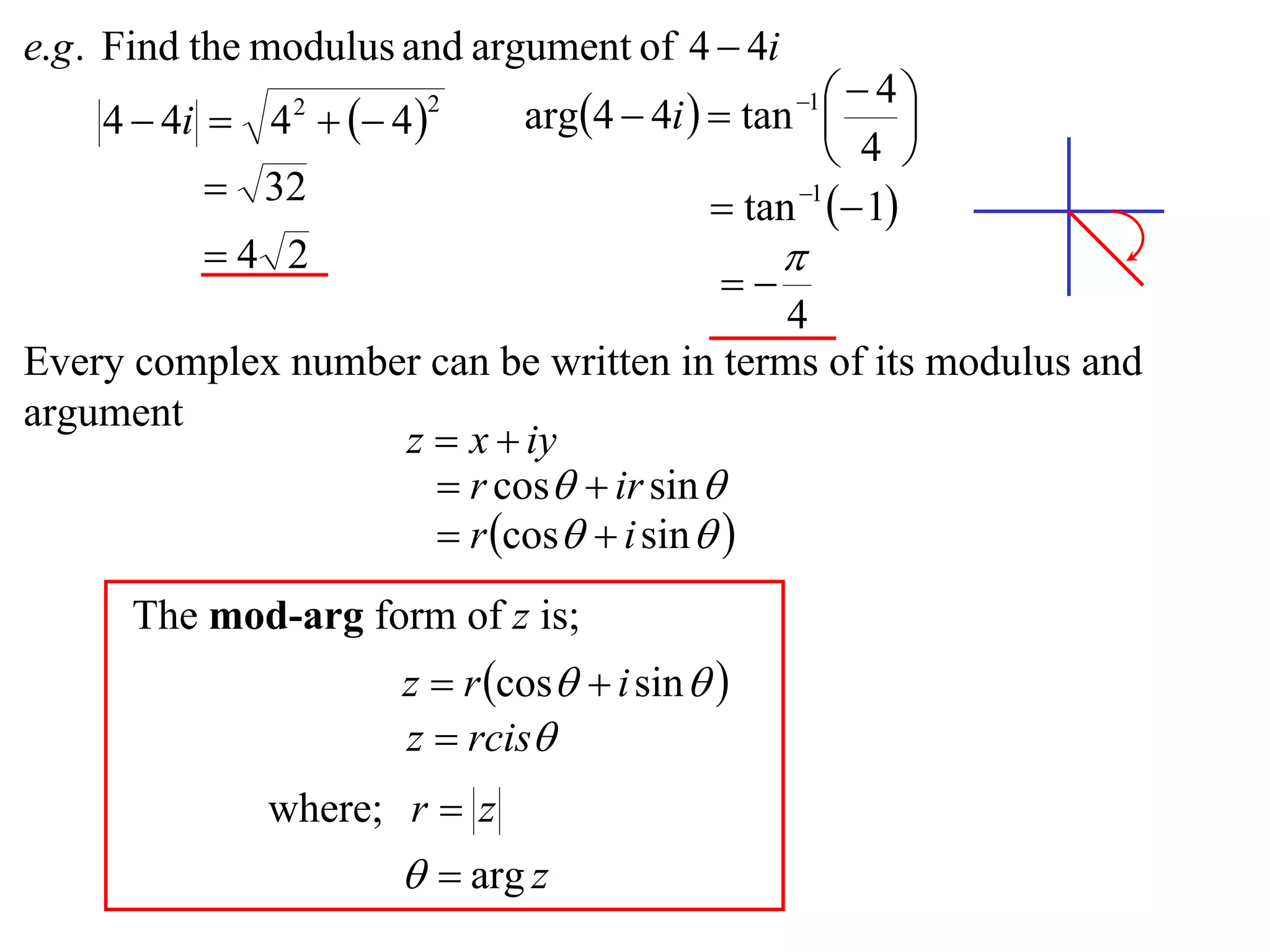
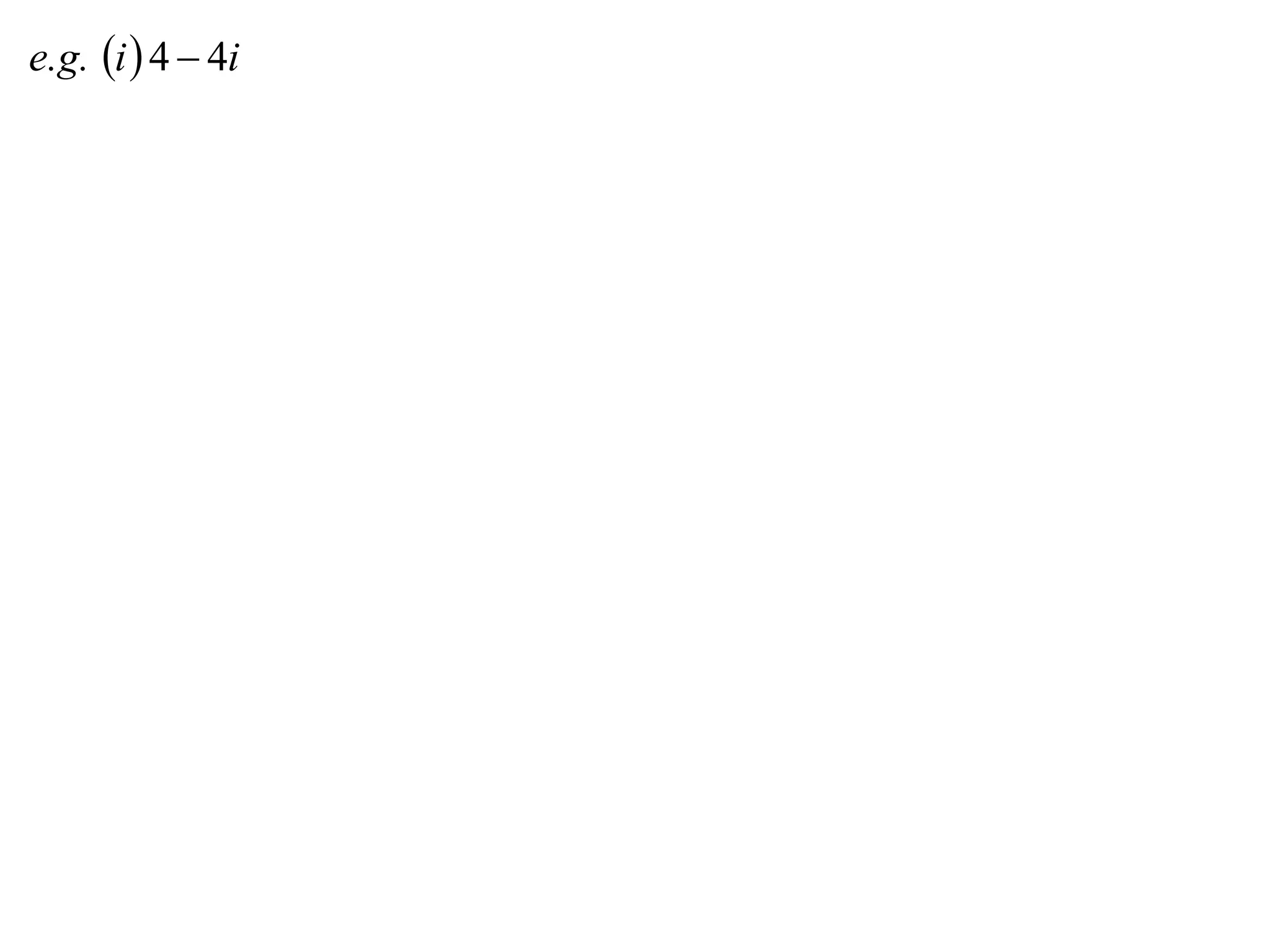
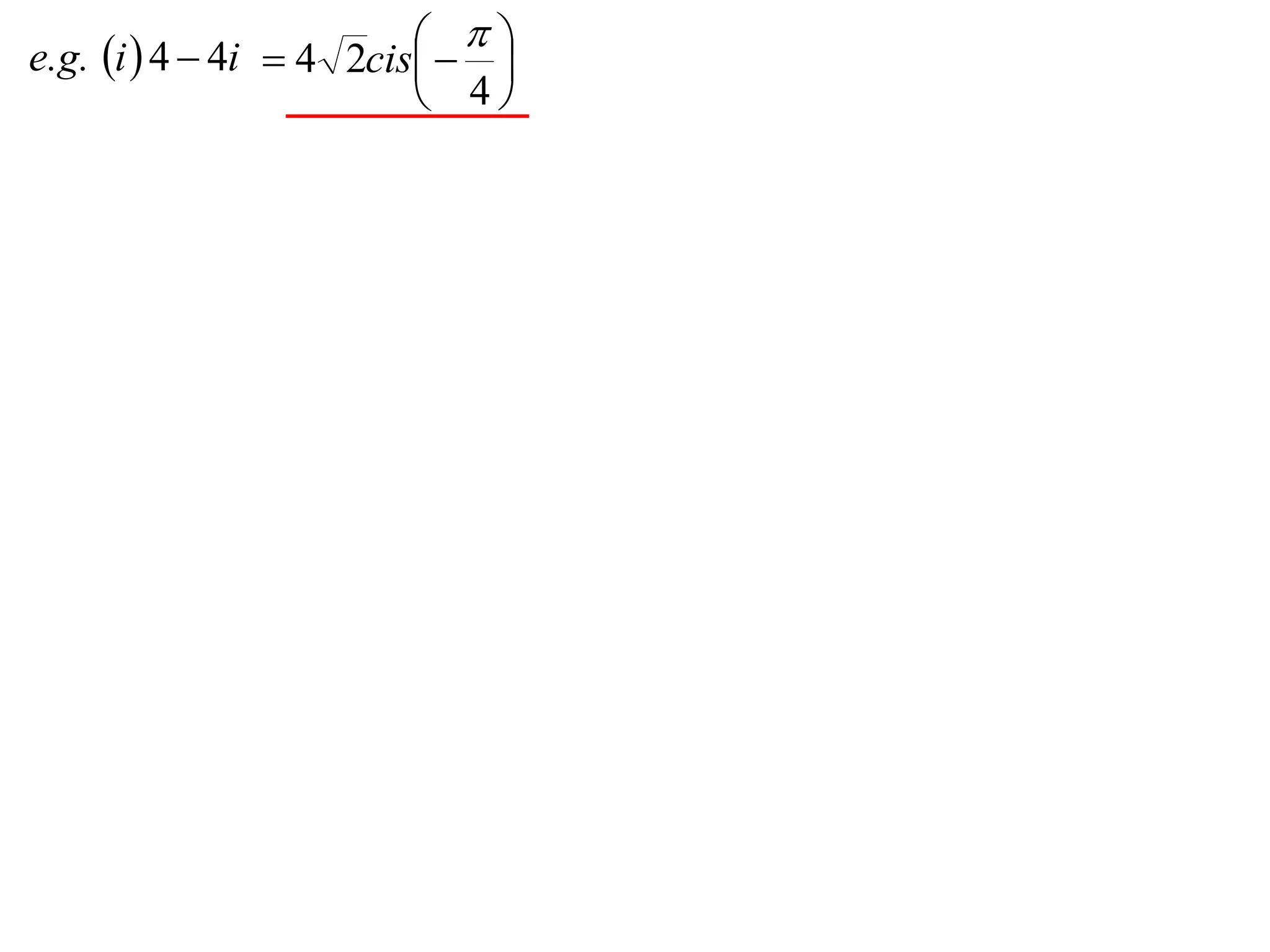
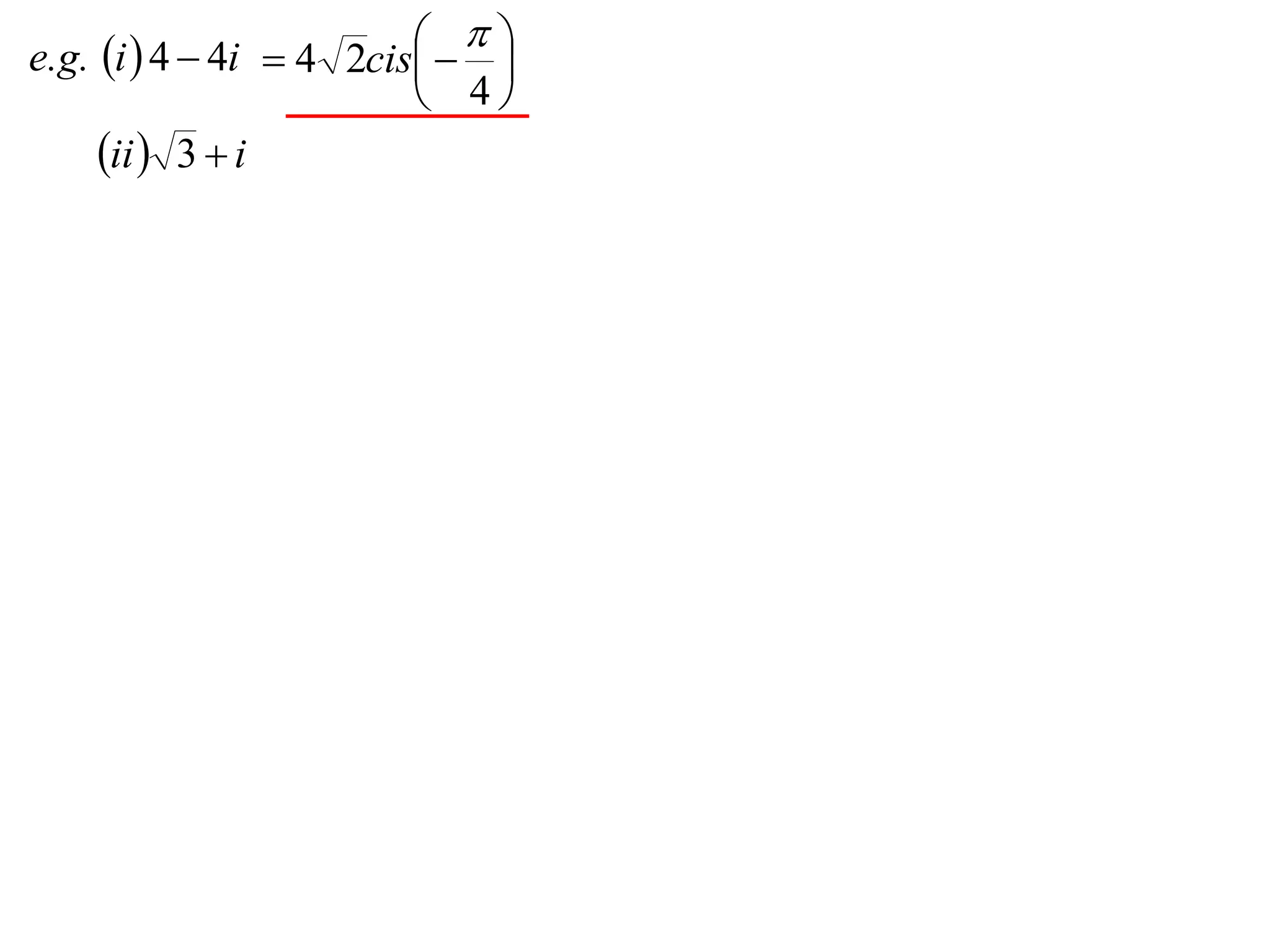
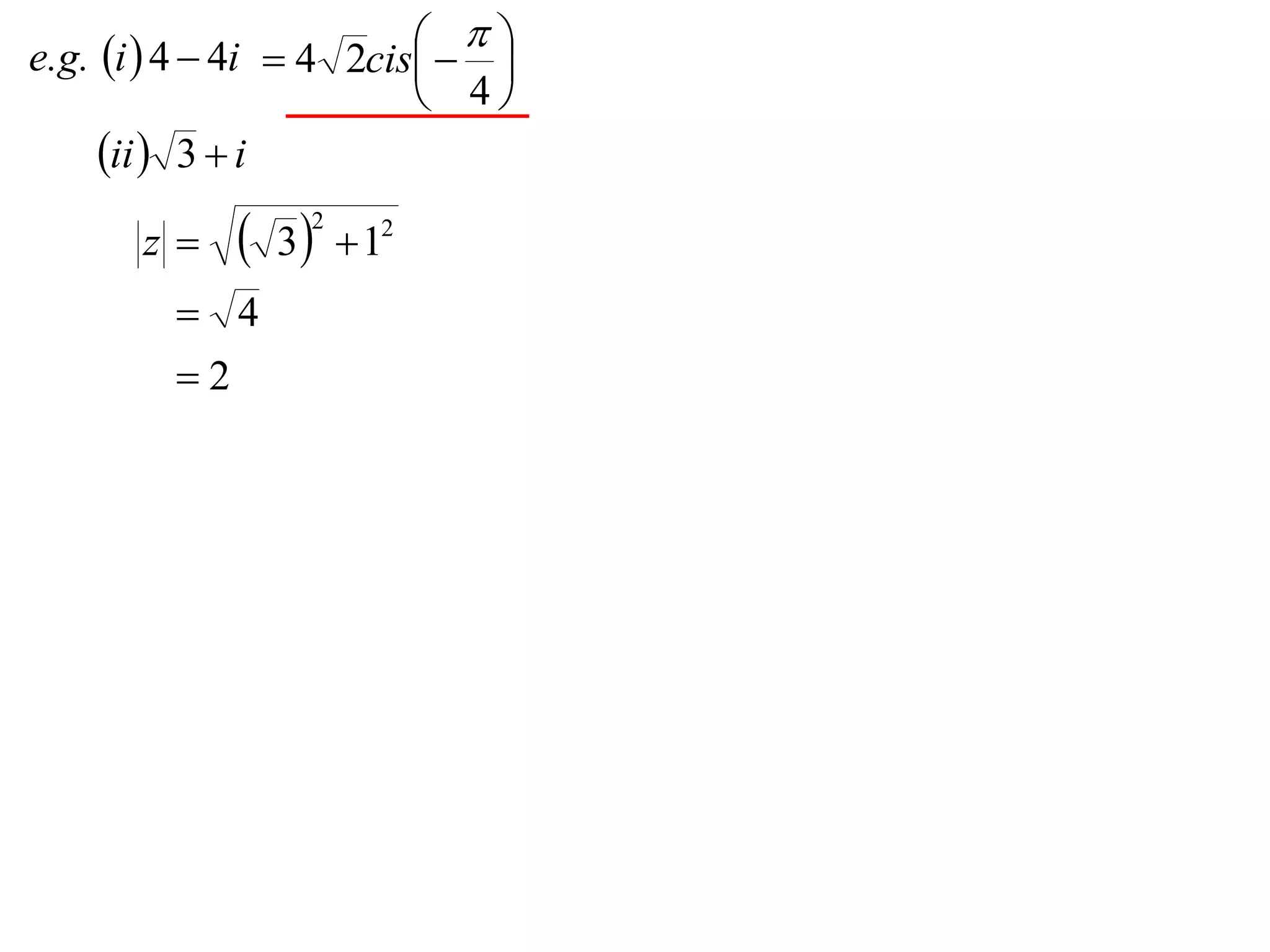
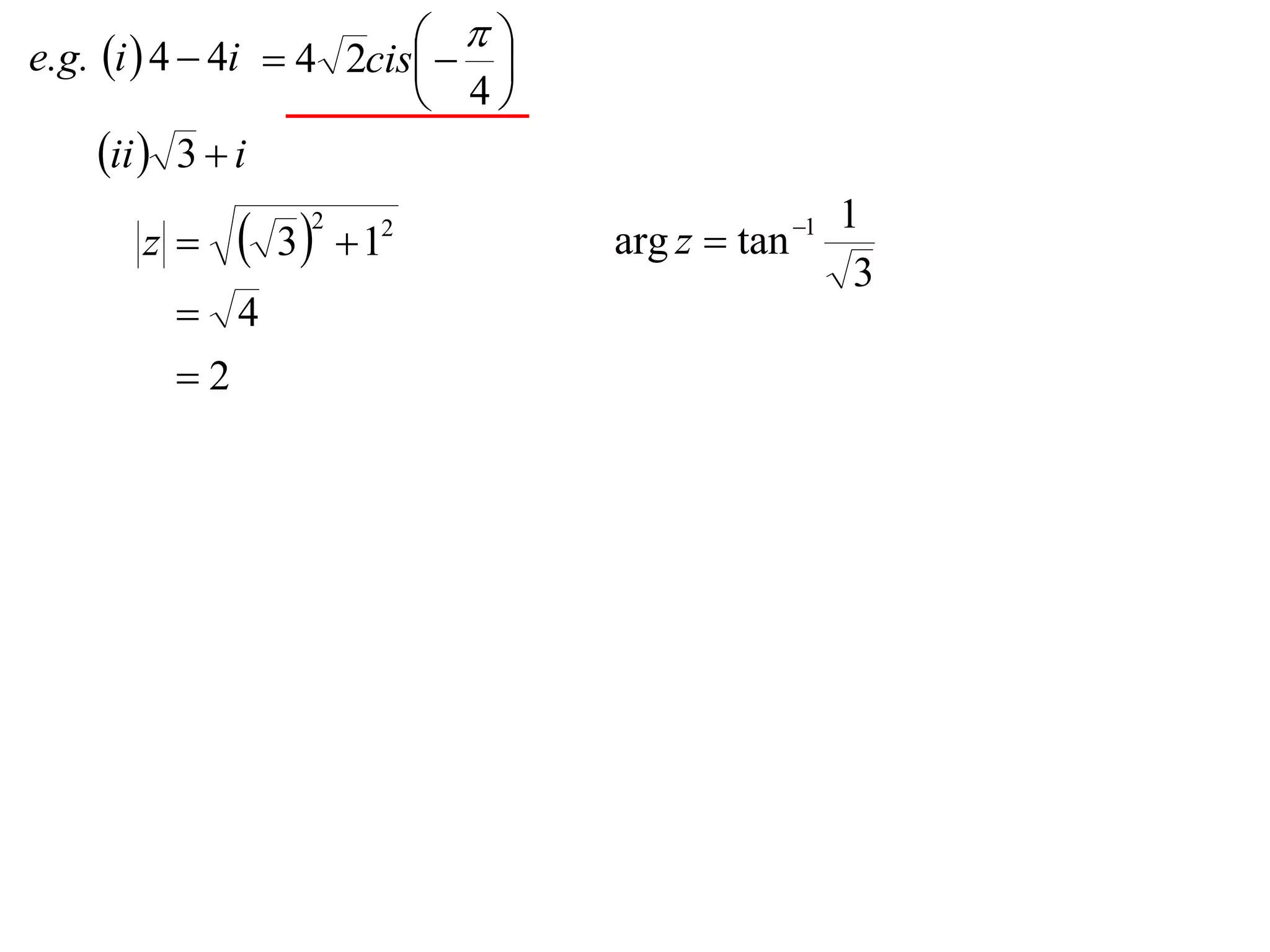
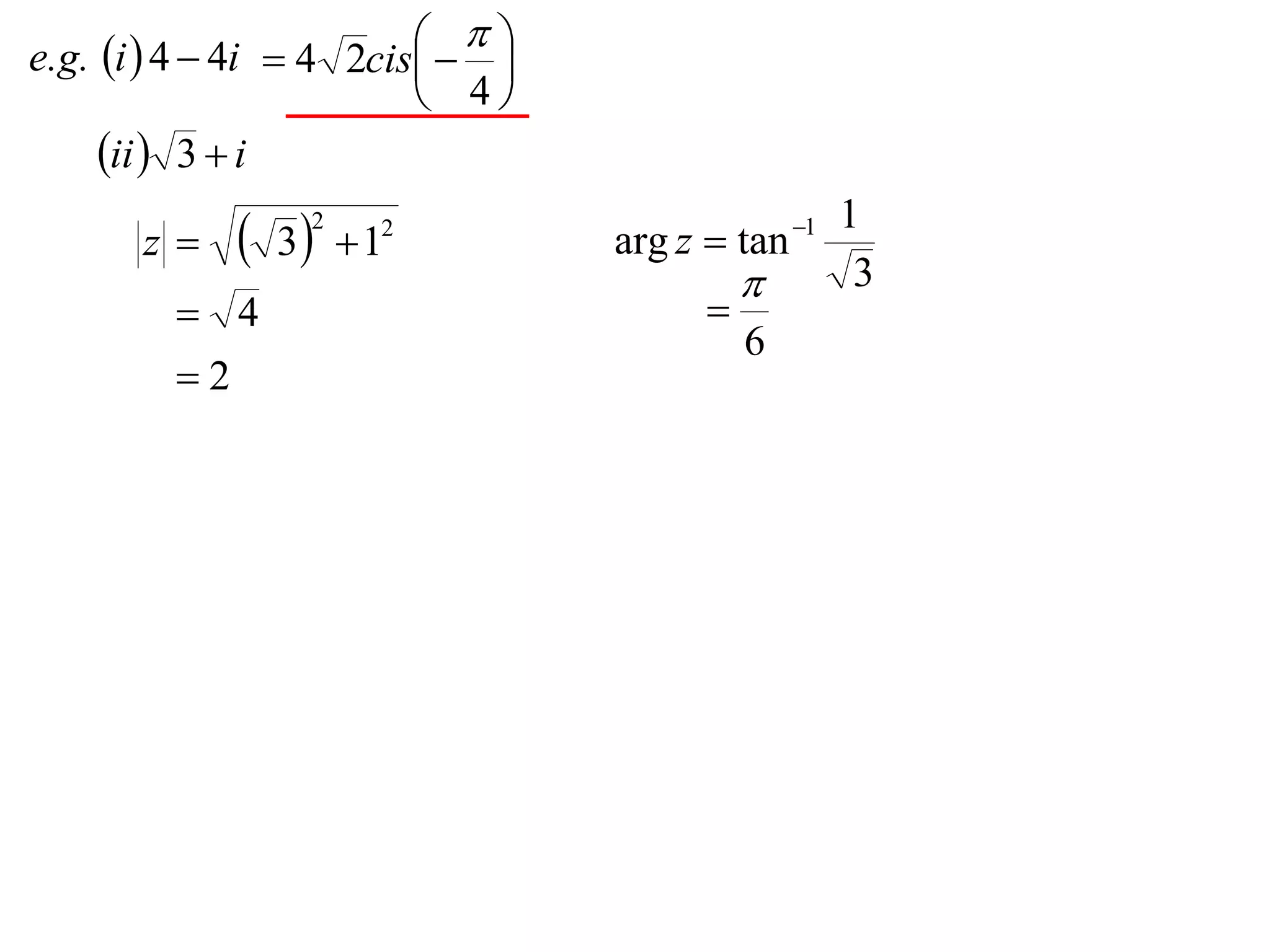
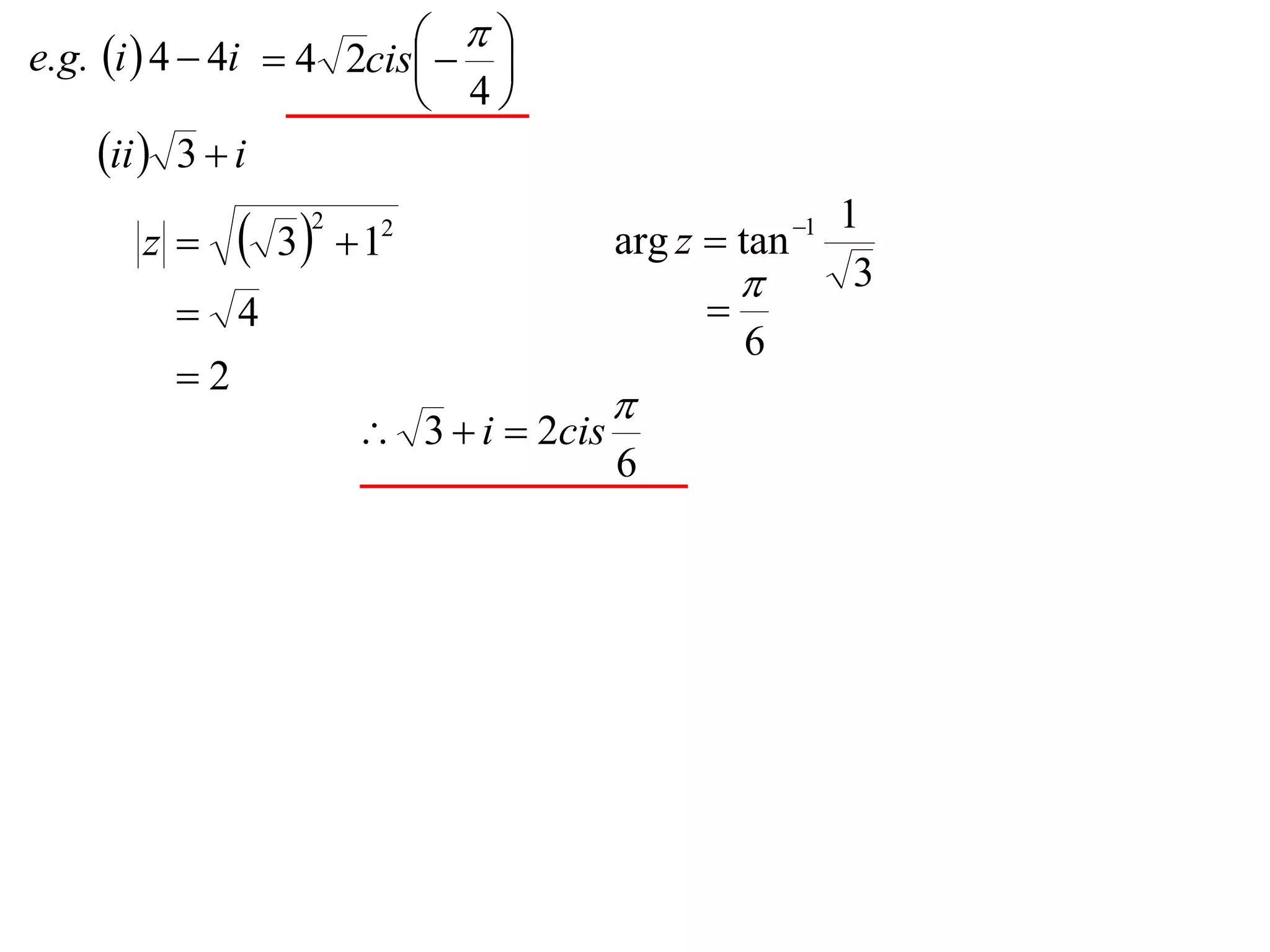
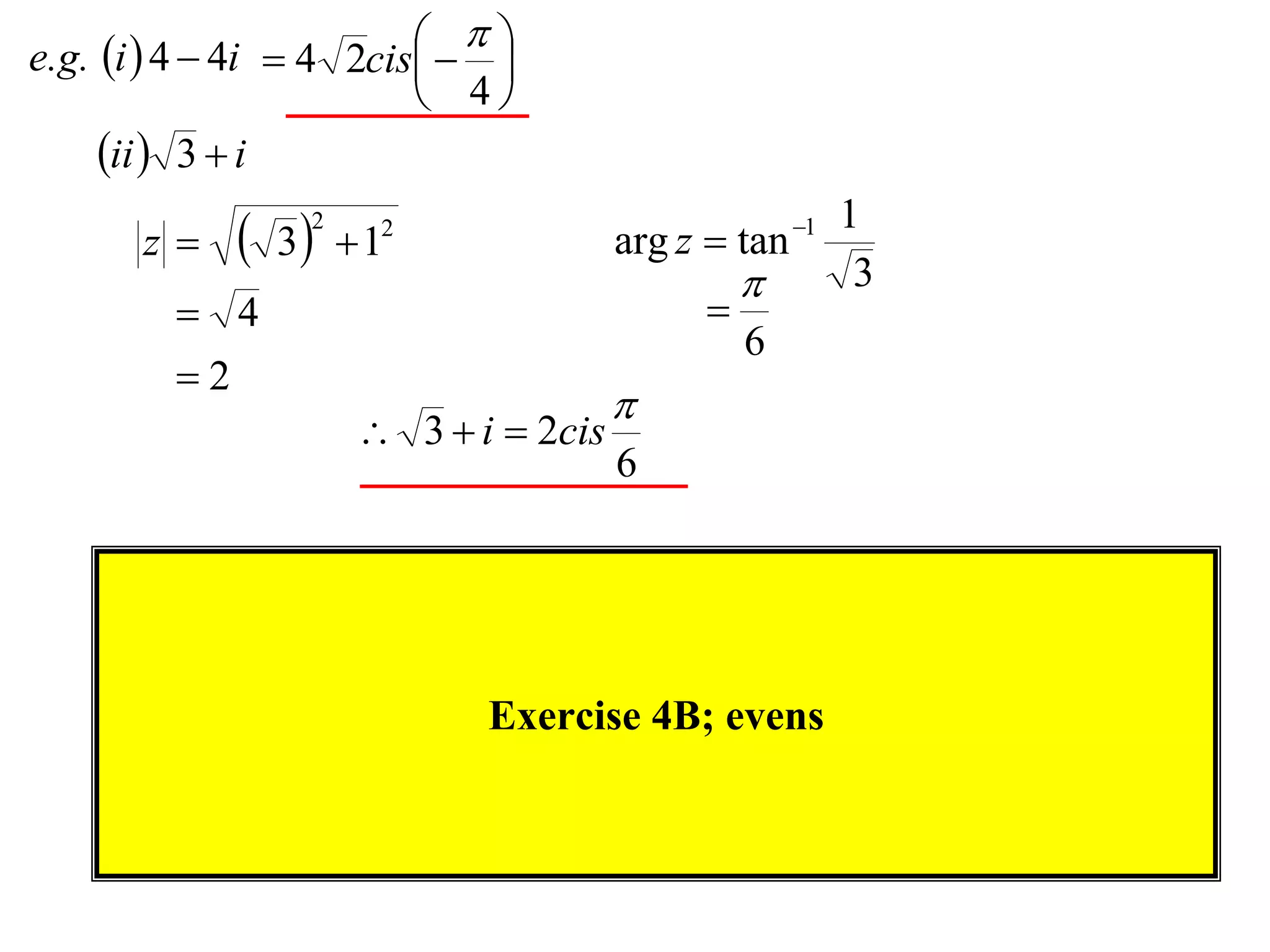
The document describes how complex numbers can be represented geometrically using an Argand diagram. The Argand diagram plots the real component of a complex number along the x-axis and the imaginary component along the y-axis, allowing any complex number to be represented as a point in the diagram. The document also explains how every complex number can be expressed in terms of its modulus and argument, where the modulus is the distance from the origin to the point and the argument is the angle relative to the positive real axis. An example of finding the modulus and argument of a complex number is provided.


![PM [B03] Complex Coordinate](https://cdn.slidesharecdn.com/ss_thumbnails/pmb03complexcoordinate-151009051941-lva1-app6891-thumbnail.jpg?width=640&height=640&fit=bounds)


