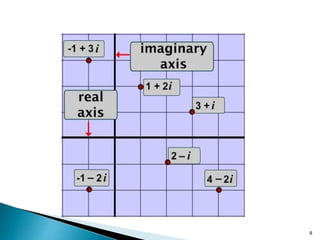
Lesson P.6 (pg:60)
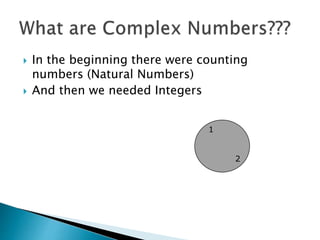
 In the beginning there were counting 
numbers (Natural Numbers) 
 And then we needed Integers 
1 
2
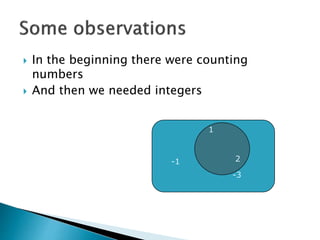
 In the beginning there were counting 
numbers 
 And then we needed integers 
1 
-1 2 
-3
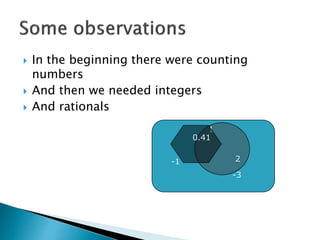
 In the beginning there were counting 
numbers 
 And then we needed integers 
 And rationals 
1 
-1 2 
-3 
0.41
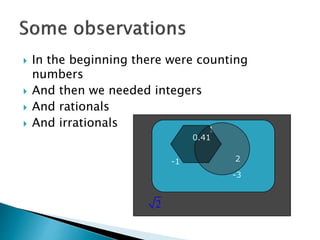
 In the beginning there were counting 
numbers 
 And then we needed integers 
 And rationals 
 And irrationals 
1 
-1 2 
-3 
0.41 
2
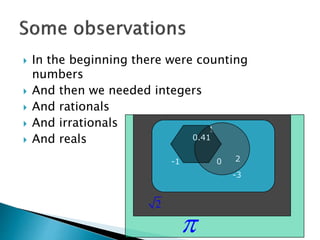
 In the beginning there were counting 
numbers 
 And then we needed integers 
 And rationals 
 And irrationals 
 And reals 
1 
-1 2 
-3 
0.41 
2 
 
0
1 
2
8
9
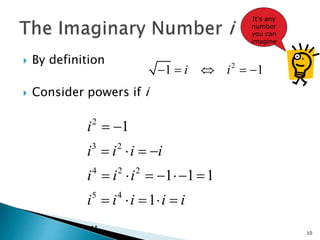
 By definition 
 Consider powers if i 
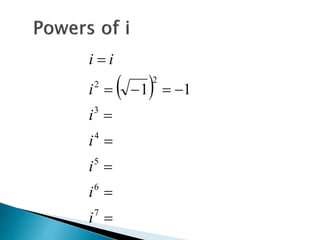
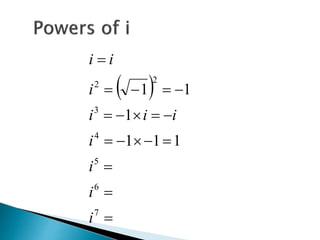
1  i  i2  1 
10 
2 
i 
1 
i 3 i 2 
i i 
i 4 i 2 i 
2 
i 5 i 4 
i i i 
1 1 1 
1 
... 
  
    
       
     
It's any 
number 
you can 
imagine
i  
i 
 
 
 
 
 
 
2 
3 
4 
5 
6 
7 
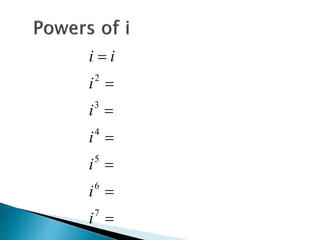
i 
i 
i 
i 
i 
i
  
i  
i 
    
 
 
 
 
 
3 
4 
5 
6 
7 
2 
2 1 1 
i 
i 
i 
i 
i 
i
  
i  
i 
    
1 1 
i 
i   1 
 i   
i 
    
 
 
 
3 
4 
5 
6 
7 
2 
2 
1 1 1 
i 
i 
i 
i
i  i  i  i  
i 
i i i i 
     
i  i  i  i   
i 
1 
1 
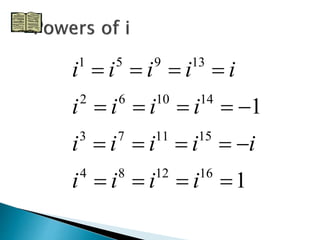
1 5 9 13 
2 6 10 14 
3 7 11 15 
4 8 12 16 
i i i i 
   
15
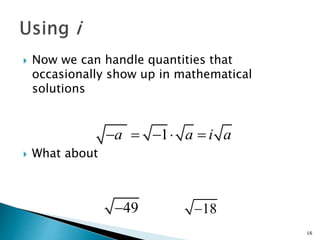
 Now we can handle quantities that 
occasionally show up in mathematical 
solutions 
 What about 
16 
a  1 a  i a 
49 18
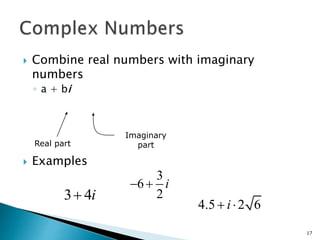
 Combine real numbers with imaginary 
numbers 
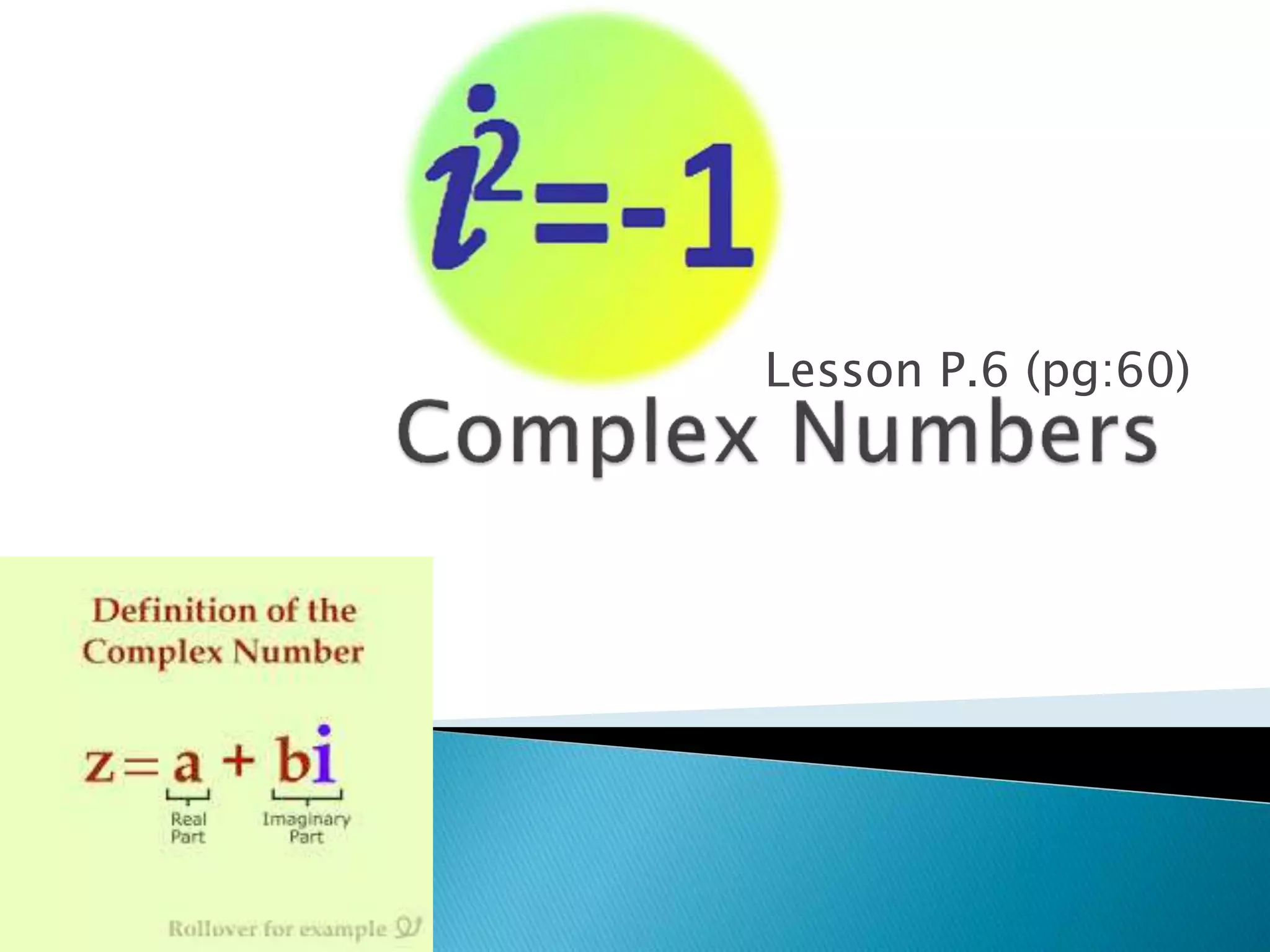
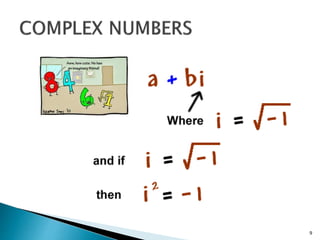
◦ a + bi 
 Examples 
17 
Real part 
Imaginary 
part 
3 4i 
3 
 6 
 i 
2 
4.5  i  2 6
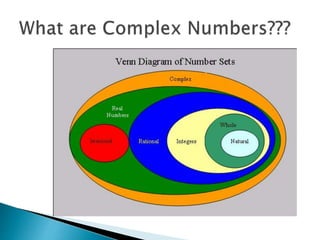
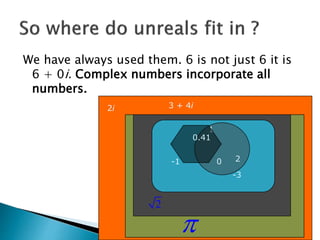
We have always used them. 6 is not just 6 it is 
6 + 0i. Complex numbers incorporate all 
numbers. 
1 
2i 3 + 4i 
-1 2 
-3 
0.41 
2 
 
0
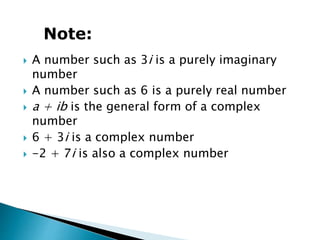
Note: 
 A number such as 3i is a purely imaginary 
number 
 A number such as 6 is a purely real number 
 a + ib is the general form of a complex 
number 
 6 + 3i is a complex number 
 -2 + 7i is also a complex number
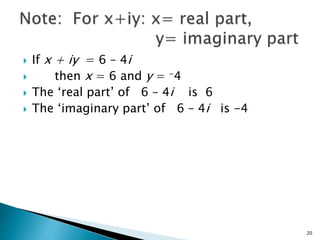
 If x + iy = 6 – 4i 
 then x = 6 and y = -4 
 The ‘real part’ of 6 – 4i is 6 
 The ‘imaginary part’ of 6 – 4i is -4 
20
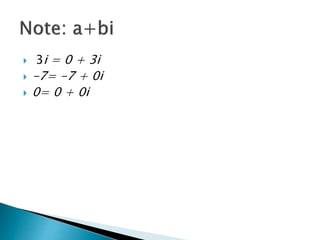
 3i = 0 + 3i 
 -7= -7 + 0i 
 0= 0 + 0i
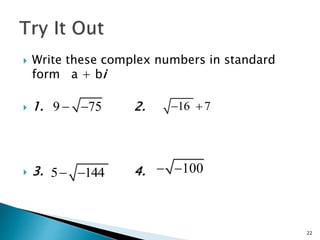
 Write these complex numbers in standard 
form a + bi 
 1. 2. 
 3. 4. 
22 
9  75 16 7 
5 144  100
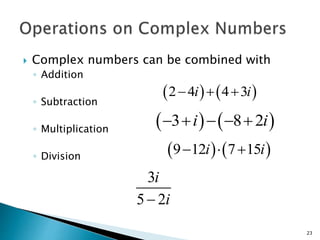
 Complex numbers can be combined with 
◦ Addition 
◦ Subtraction 
◦ Multiplication 
◦ Division 
3i8 2i 
912i715i 
23 
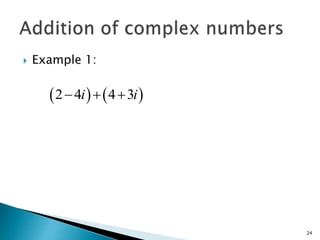
24i43i 
i 
 i 
3 
5 2
 Example 1: 
24 
24i43i
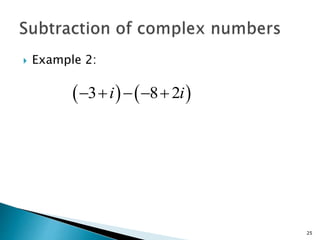
 Example 2: 
25 
3i8 2i
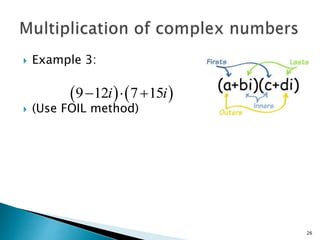
 Example 3: 
 (Use FOIL method) 
26 
912i715i
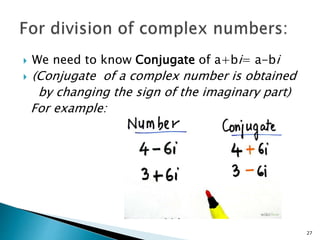
 We need to know Conjugate of a+bi= a-bi 
 (Conjugate of a complex number is obtained 
by changing the sign of the imaginary part) 
For example: 
27
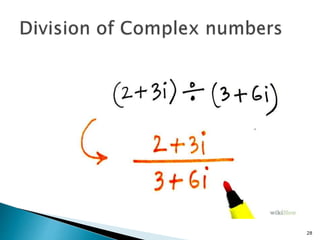
28
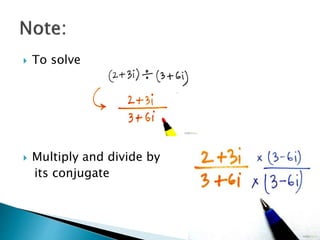
 To solve 
 Multiply and divide by 
its conjugate 
29
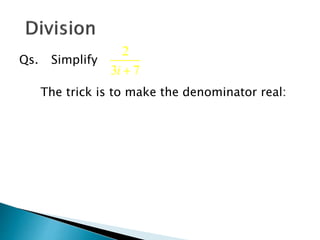
Qs. Simplify 
2 
3i  7 
The trick is to make the denominator real:
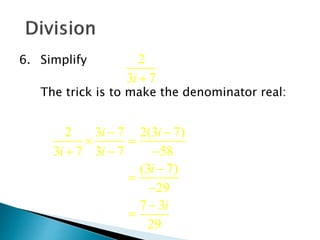
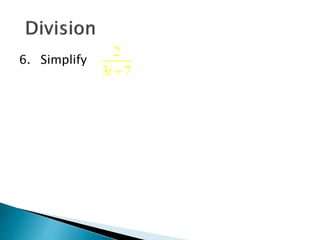
6. Simplify 
2 
37i  
The trick is to make the denominator real: 
i i 
2 3 7 2(3 7) 
3 7 3 7 58 
  
  
i i 
   
i 
(3  
7) 
29 
i 
7 3 
29 
 
 
 

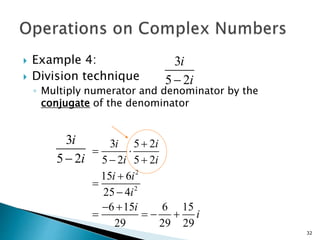
 Example 4: 
i 
i  
 Division technique 
◦ Multiply numerator and denominator by the 
conjugate of the denominator 
32 
3 
52 
i i 
i i 
i i 
3 5 2 
5 2 5 2 
15 6 
2 
25 4 
i 
2 
6 15 i 
6 15 
29 29 29 
i 
 
3 
5 2 
  
  
 
 
 
  
    
i 
 i
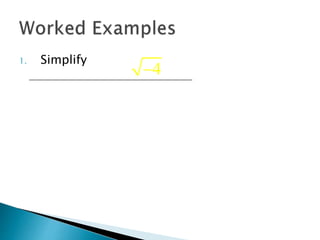
1. Simplify 
4
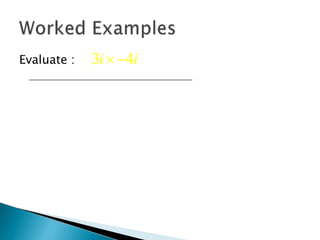
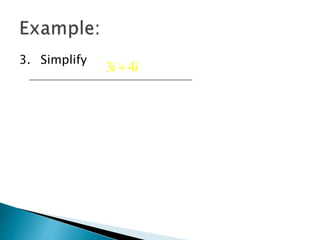
Evaluate : 34ii
3. Simplify 
34ii
6. Simplify 
2 
37i 
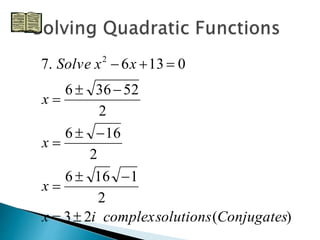
7. 6 13 0 2 
6  36  
52 
2 
6   
16 
2 
6  16  
1 
2 
x 
x 
 
 
 
x i complexsolutions Conjugates 
3 2 ( ) 
x 
Solve x x 
  
  
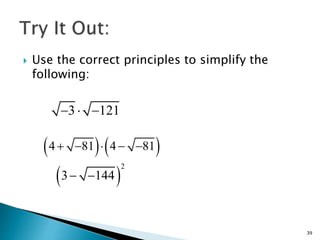
 Use the correct principles to simplify the 
following: 
39 
3  121 
4  81 4  81 
 2 
3 144
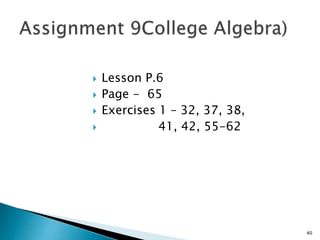
 Lesson P.6 
 Page - 65 
 Exercises 1 – 32, 37, 38, 
 41, 42, 55-62 
40

Complex numbers- College Algebra

  • 1.
  • 2.
     In thebeginning there were counting numbers (Natural Numbers)  And then we needed Integers 1 2
  • 3.
     In thebeginning there were counting numbers  And then we needed integers 1 -1 2 -3
  • 4.
     In thebeginning there were counting numbers  And then we needed integers  And rationals 1 -1 2 -3 0.41
  • 5.
     In thebeginning there were counting numbers  And then we needed integers  And rationals  And irrationals 1 -1 2 -3 0.41 2
  • 6.
     In thebeginning there were counting numbers  And then we needed integers  And rationals  And irrationals  And reals 1 -1 2 -3 0.41 2  0
  • 7.
  • 8.
  • 9.
  • 10.
     By definition  Consider powers if i 1  i  i2  1 10 2 i 1 i 3 i 2 i i i 4 i 2 i 2 i 5 i 4 i i i 1 1 1 1 ...                   It's any number you can imagine
  • 11.
    i  i       2 3 4 5 6 7 i i i i i i
  • 12.
      i i          3 4 5 6 7 2 2 1 1 i i i i i i
  • 13.
      i i     1 1 i i   1  i   i        3 4 5 6 7 2 2 1 1 1 i i i i
  • 14.
    i  i i  i  i i i i i      i  i  i  i   i 1 1 1 5 9 13 2 6 10 14 3 7 11 15 4 8 12 16 i i i i    
  • 15.
  • 16.
     Now wecan handle quantities that occasionally show up in mathematical solutions  What about 16 a  1 a  i a 49 18
  • 17.
     Combine realnumbers with imaginary numbers ◦ a + bi  Examples 17 Real part Imaginary part 3 4i 3  6  i 2 4.5  i  2 6
  • 18.
    We have alwaysused them. 6 is not just 6 it is 6 + 0i. Complex numbers incorporate all numbers. 1 2i 3 + 4i -1 2 -3 0.41 2  0
  • 19.
    Note:  Anumber such as 3i is a purely imaginary number  A number such as 6 is a purely real number  a + ib is the general form of a complex number  6 + 3i is a complex number  -2 + 7i is also a complex number
  • 20.
     If x+ iy = 6 – 4i  then x = 6 and y = -4  The ‘real part’ of 6 – 4i is 6  The ‘imaginary part’ of 6 – 4i is -4 20
  • 21.
     3i =0 + 3i  -7= -7 + 0i  0= 0 + 0i
  • 22.
     Write thesecomplex numbers in standard form a + bi  1. 2.  3. 4. 22 9  75 16 7 5 144  100
  • 23.
     Complex numberscan be combined with ◦ Addition ◦ Subtraction ◦ Multiplication ◦ Division 3i8 2i 912i715i 23 24i43i i  i 3 5 2
  • 24.
     Example 1: 24 24i43i
  • 25.
     Example 2: 25 3i8 2i
  • 26.
     Example 3:  (Use FOIL method) 26 912i715i
  • 27.
     We needto know Conjugate of a+bi= a-bi  (Conjugate of a complex number is obtained by changing the sign of the imaginary part) For example: 27
  • 28.
  • 29.
     To solve  Multiply and divide by its conjugate 29
  • 30.
    Qs. Simplify 2 3i  7 The trick is to make the denominator real:
  • 31.
    6. Simplify 2 37i  The trick is to make the denominator real: i i 2 3 7 2(3 7) 3 7 3 7 58     i i    i (3  7) 29 i 7 3 29    
  • 32.
     Example 4: i i   Division technique ◦ Multiply numerator and denominator by the conjugate of the denominator 32 3 52 i i i i i i 3 5 2 5 2 5 2 15 6 2 25 4 i 2 6 15 i 6 15 29 29 29 i  3 5 2              i  i
  • 33.
  • 34.
  • 36.
  • 37.
    6. Simplify 2 37i 
  • 38.
    7. 6 130 2 6  36  52 2 6   16 2 6  16  1 2 x x    x i complexsolutions Conjugates 3 2 ( ) x Solve x x     
  • 39.
     Use thecorrect principles to simplify the following: 39 3  121 4  81 4  81  2 3 144
  • 40.
     Lesson P.6  Page - 65  Exercises 1 – 32, 37, 38,  41, 42, 55-62 40