Gandham. Rajeev
 The synthesis of glucose from non-
carbohydrate compounds is known as
gluconeogenesis.
 The major substrates/precursors for
gluconeogenesis:
 Lactate, pyruvate, glucogenic amino acids,
propianate and glycerol.
 Site:
 Gluconeogenesis occurs mainly in the liver,
and to a lesser extent in the renal cortex.
 The pathway is partly mitochondrial &
partly cytoplasmic.
 About 1 kg glucose synthesized everyday
 Brain & CNS, erythrocytes, testes & kidney
medulla are dependent on glucose for
continuous supply for energy.
 Human brain alone requires about 120 g of
glucose per day, out of about 160 g needed by
the entire body.
 Glucose is the only source that supplies to the
skeletal muscle, anaerobic conditions.
 During starvation gluconeogenesis
maintains the blood glucose level.
 The stored glycogen is depleted within the
first 12-18 hours of fasting.
 On prolonged starvation, the
gluconeogenesis is speeded up & protein
catabolism provides the substrates, namely
glucogenic amino acids.
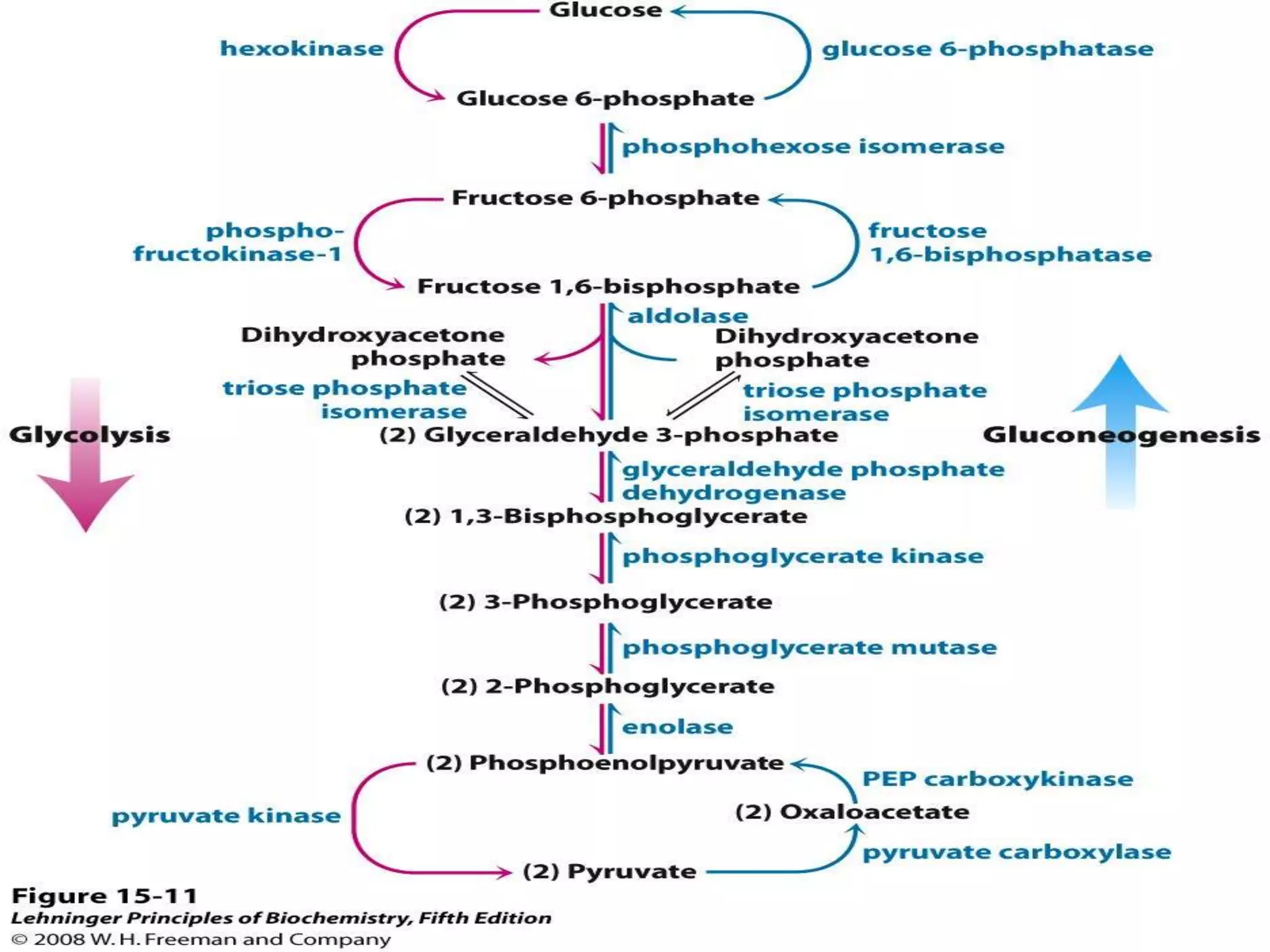
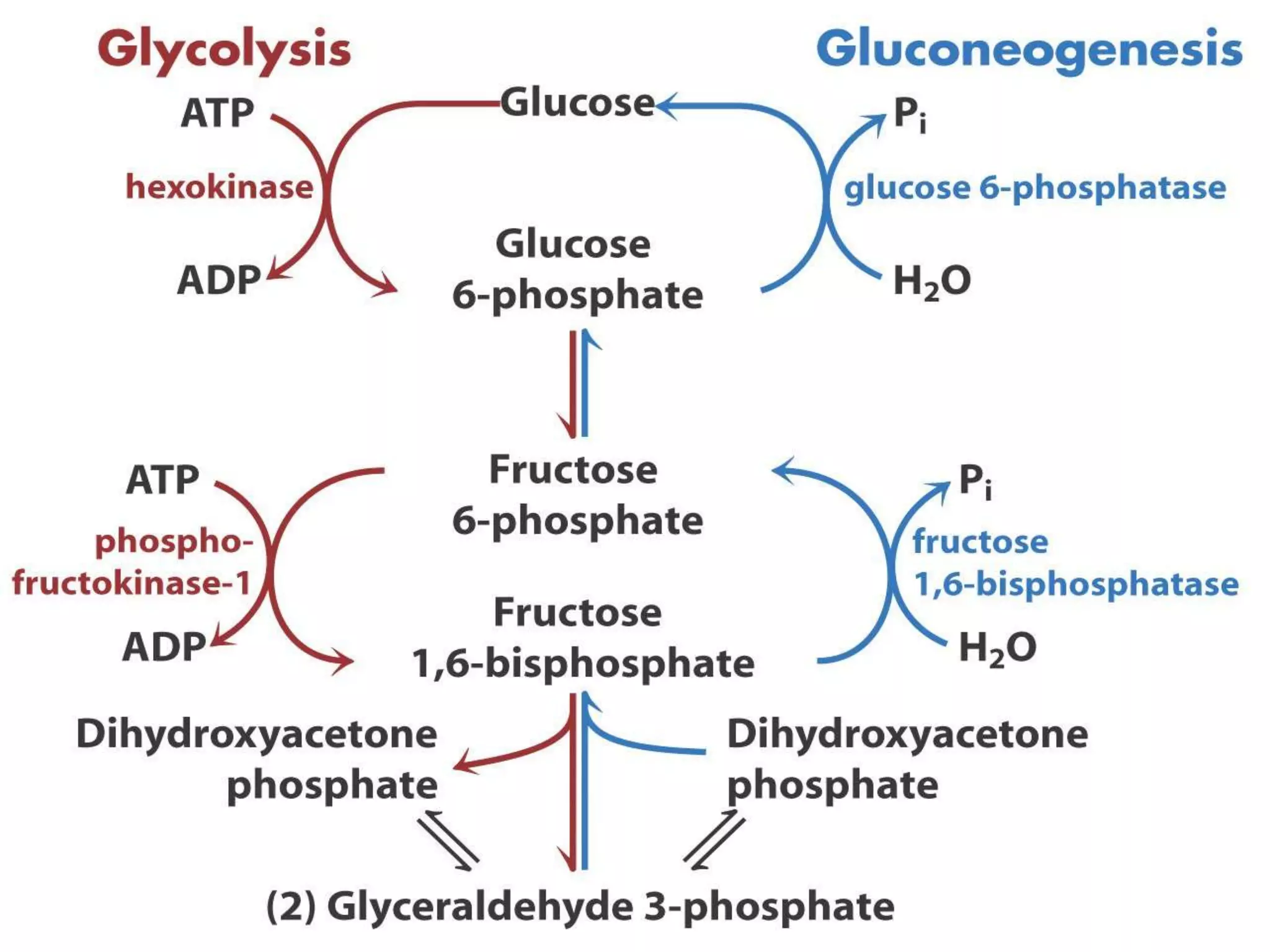
 Gluconeogeenesis closely resembles the
reversed pathway of glycolysis.
 The 3 irreversible steps of glycolysis are
catalysed by the 3 enzymes.
 Hexokinase
 PFK
 Pyruvate kinase
 These three stages bypassed by alternate
enzymes specific to gluconeogenesis.
 These are:
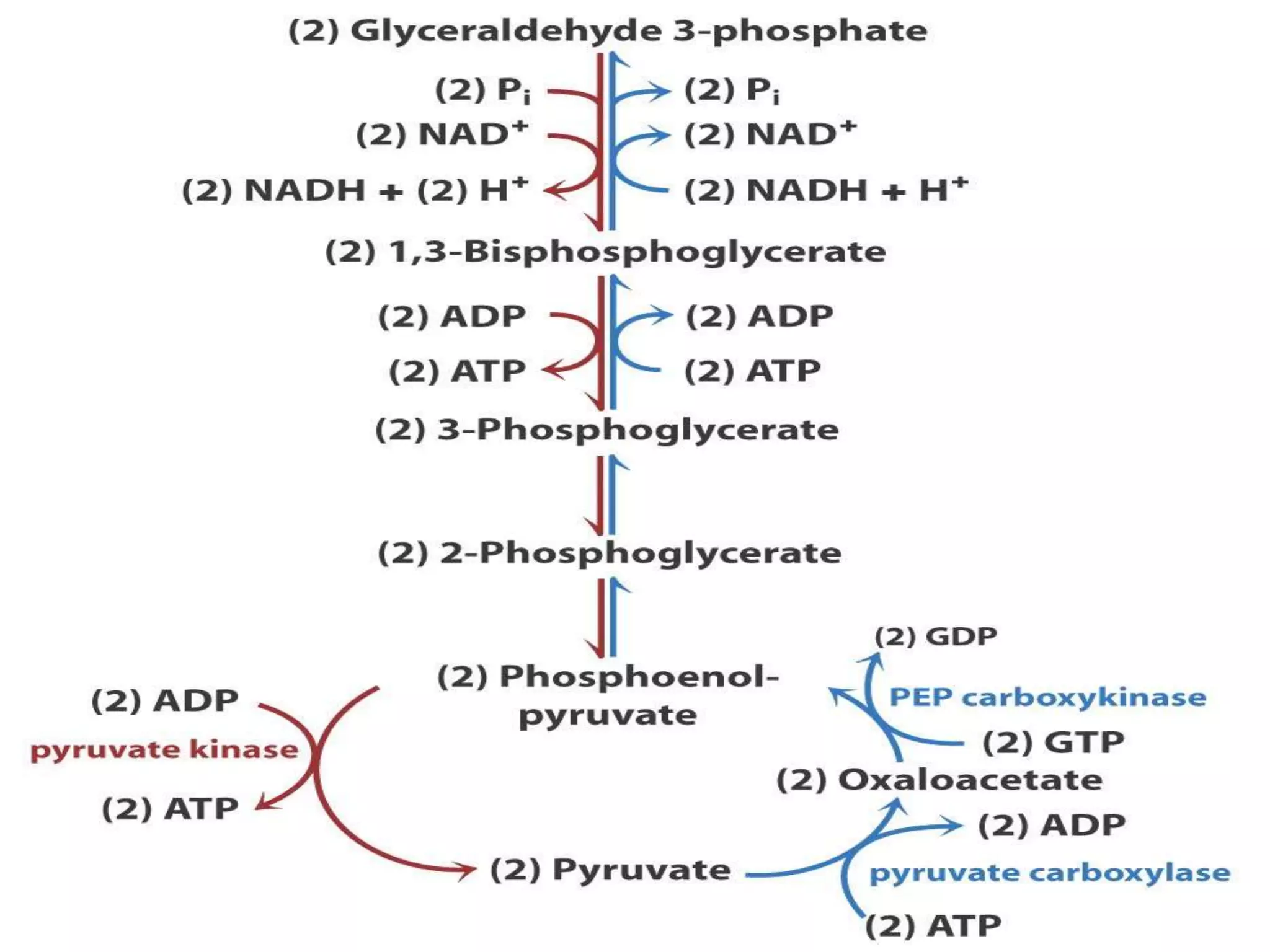
 Pyruvate carboxylase
 Phosphoenol pyruvate carboxy kinase
 Fructose-1-6-bisphosphatase
 Glucose-6-phosphatase
 Takes place in two steps pyruvate
carboxylase is a biotin dependent
mitochondrial enzyme that converts
pyruvate to oxaloacetate in presence of ATP
& CO2
 This enzyme regulates gluconeogenesis &
requires acetyl CoA for its activity.
 Oxaloacetate is synthesized in the
mitochondrial matrix.
 It has to be transported to the cytosol.
 Due to membrane impermeability,
oxaloacetate cannot diffuse out of the
mitochondria.
 It is converted to malate & transported to
cytosol.
 In the cytosol, oxaloacetate is regenerated.
 The reversible conversion of oxaloacetate to
malate is catalysed by MDH, present in
mitochondria & cytosol
 In the cytosol, phosphoenolpyruvate
carboxykinase converts oxaloacetate to
phosphoenol pyruvate.
 GTP or ITP (not ATP) is used in this reaction
and the CO2 is liberated.
 For the conversion of pyruvate to
phosphoenol pyruvate, 2ATP equivalents are
utilized.
 Phosphoenolpyruvate undergoes the reversal
of glycolysis until Fructose 1,6-bisphosphate is
produced.
 The enzyme Fructose 1,6-bisphosphatase
converts Fructose 1,6-bisphosphate to Fructose
6-phosphate & it requires Mg2+ ions.
 This is also a regulatory enzyme.
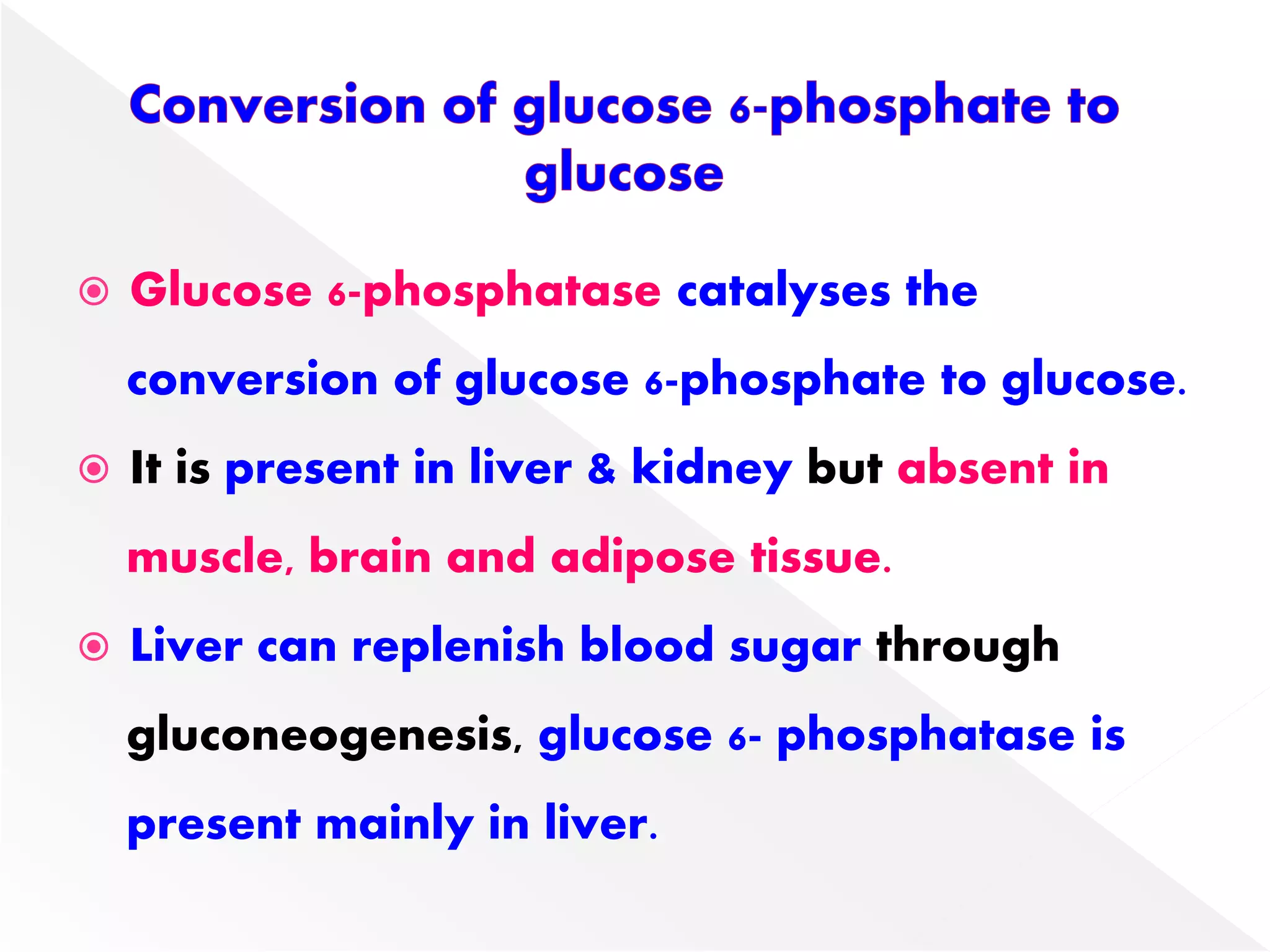
 Glucose 6-phosphatase catalyses the
conversion of glucose 6-phosphate to glucose.
 It is present in liver & kidney but absent in
muscle, brain and adipose tissue.
 Liver can replenish blood sugar through
gluconeogenesis, glucose 6- phosphatase is
present mainly in liver.
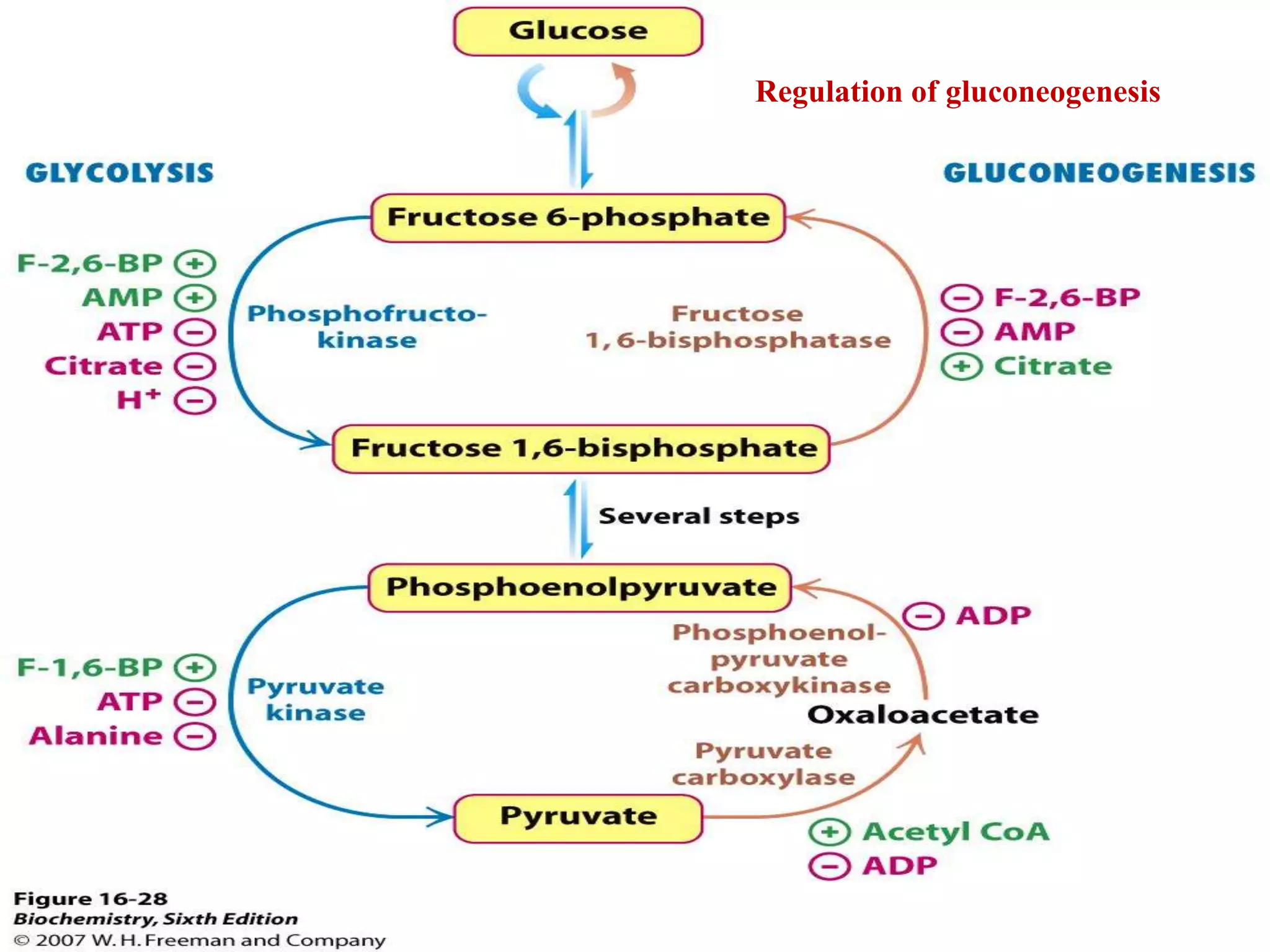
Regulation of gluconeogenesis
 The carbon skeleton of glucogenic amino
acids (all except leucine & lysine) results in
the formation of pyruvate or the
intermediates of citric acid cycle.
 Which, ultimately, result in the synthesis of
glucose.
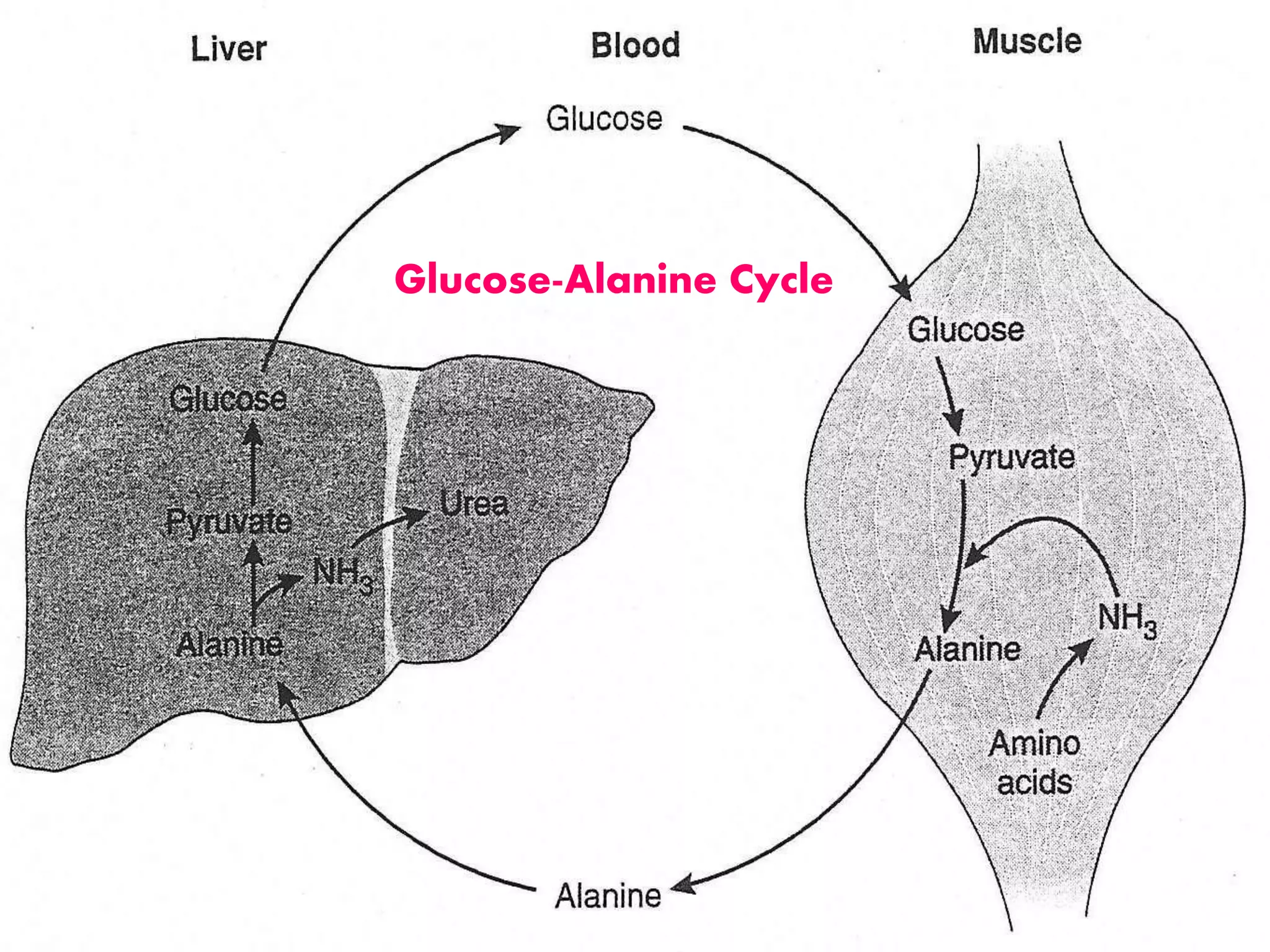
Glucose-Alanine Cycle
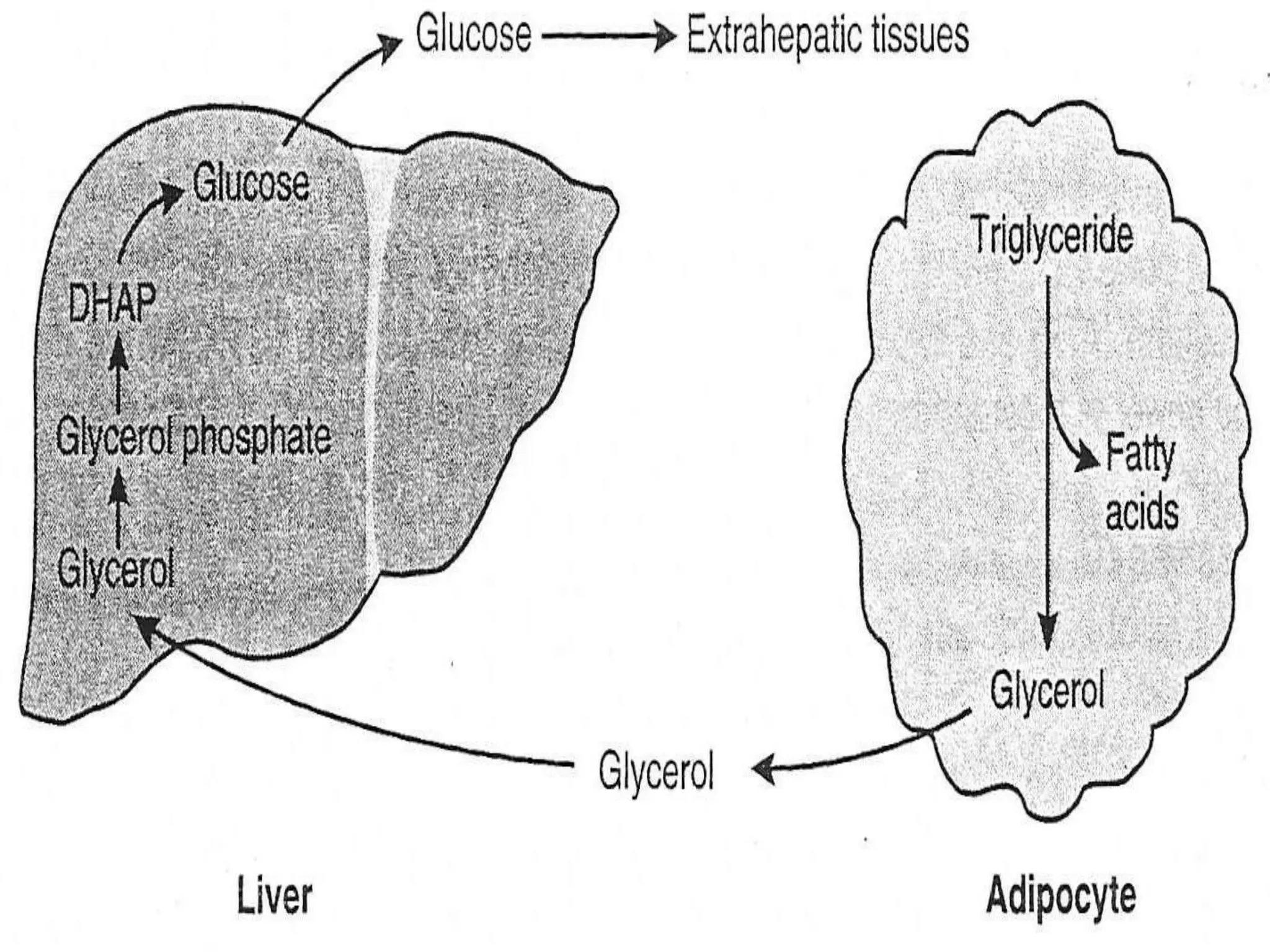
 Glycerol is liberated in the adipose tissue by
the hydrolysis of fats (triacylglycerols).
 The enzyme glycerokinase (found in liver &
kidney, absent in adipose tissue) activates
glycerol to glycerol 3- phosphate.
 It is converted to DHAP by glycerol 3-
phosphate dehydrogenase.
 DHAP is an intermediate in glycolysis.
 Oxidation of odd chain fatty acids & the
breakdown of some amino acids (methionine,
isoleucine) yields a three carbon propionyl CoA.
 Propionyl CoA carboxylase acts on this in the
presence of ATP & biotin & converts to methyl
melonyl CoA
 Which is then converted to succinyl CoA in the
presence of B12.
 Succinyl CoA formed from propionyl CoA
enters gluconeogenesis.
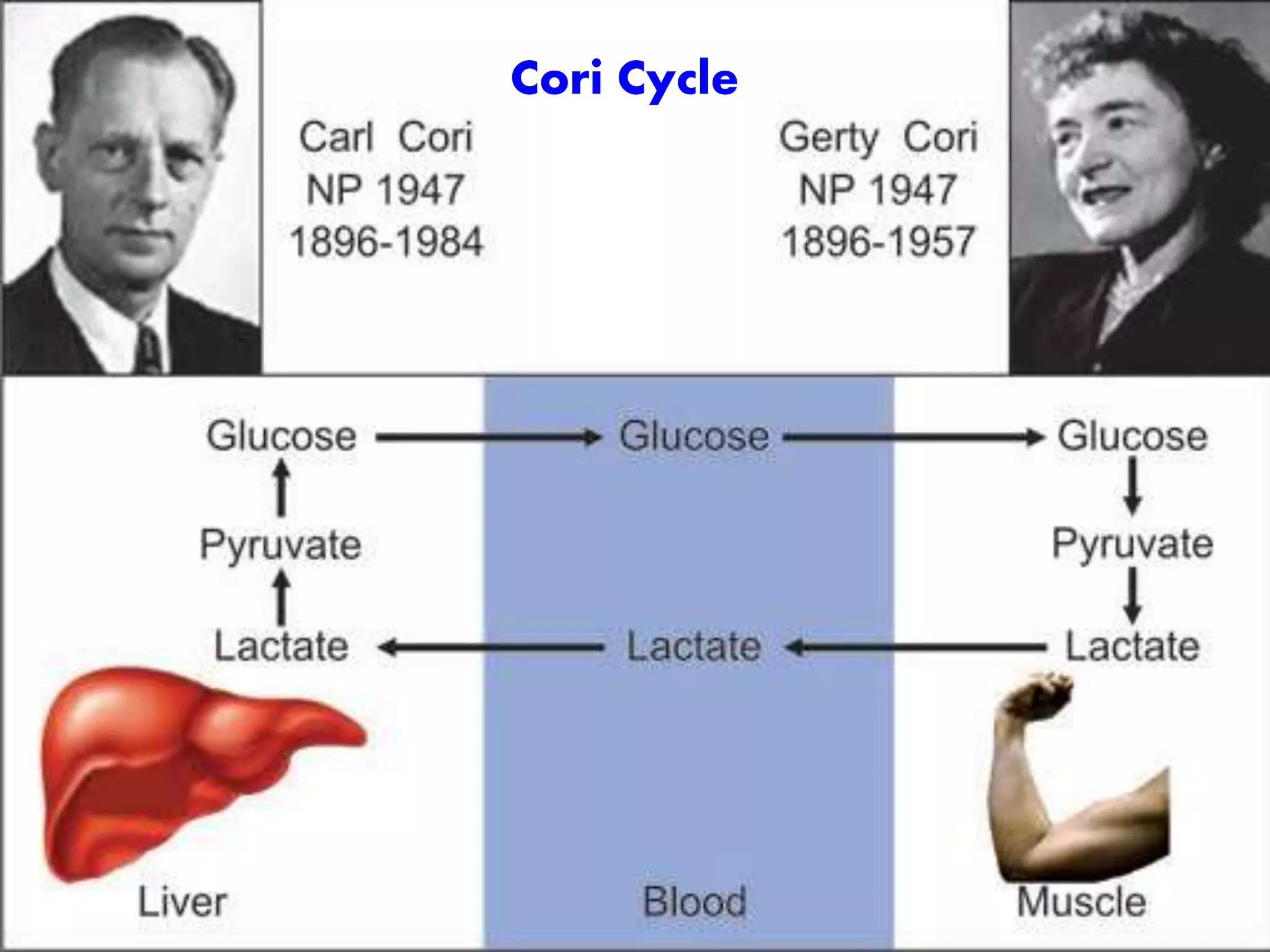
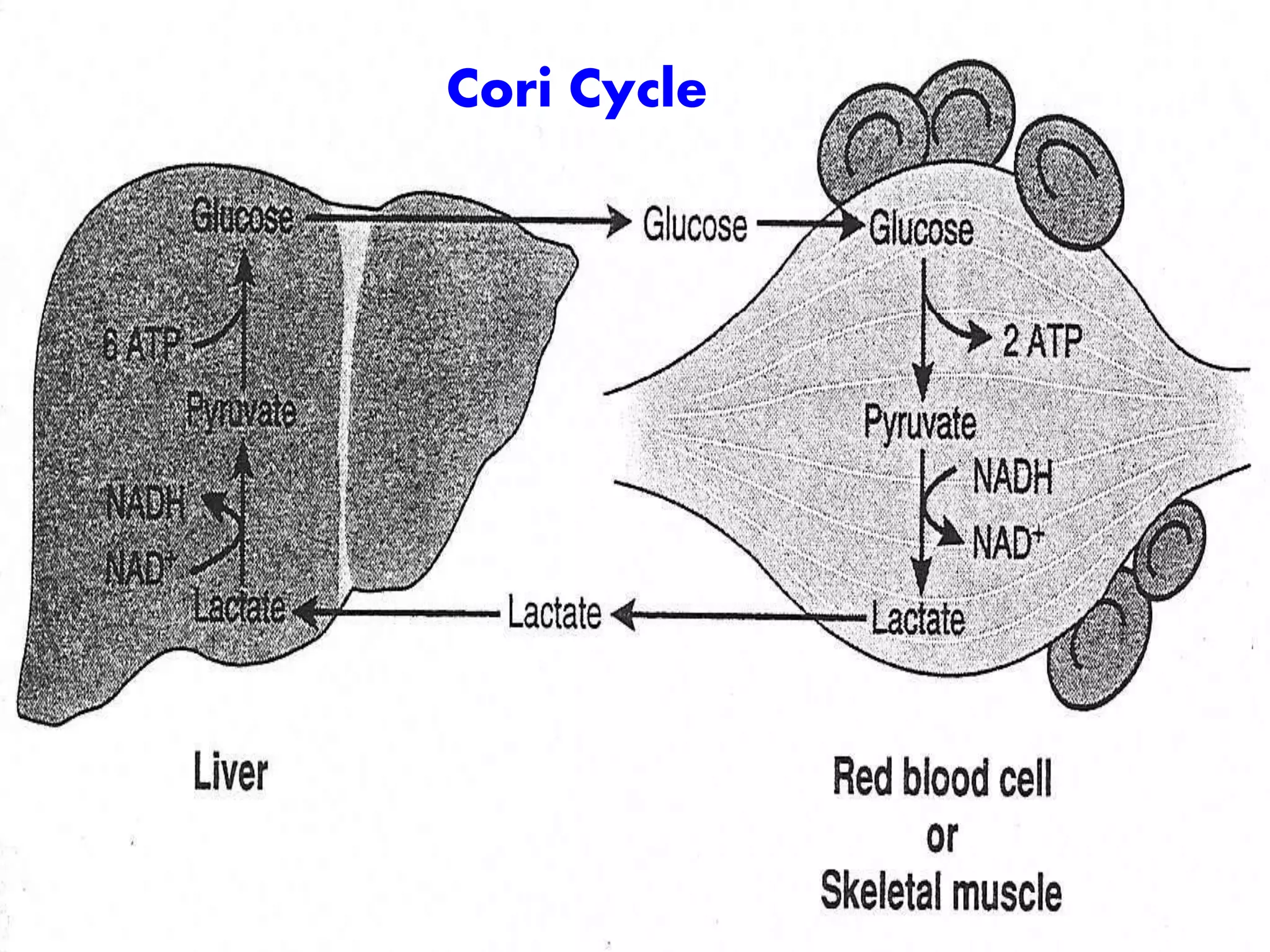
 Definition:
 It is a process in which glucose is converted to
Lactate in the muscle and in the liver this lactate
is re-converted to glucose.
 In an actively contracting muscle, pyruvate is
reduced to lactic acid which may tend to
accumulate in the muscle.
 To prevent lactate accumulation, body utilizes
cori cycle.
 This lactic acid from muscle diffuses into the
blood.
 Lactate then reaches liver, where it is
oxidised to pyruvate.
 It is entered into gluconeogenesis.
 Regenerated glucose can enter into blood
and then to muscle.
 This cycle is called cori cycle.
Cori Cycle
Cori Cycle
 Gluconeogenesis & glycolysis are reciprocally
regulated
 One pathway is relatively inactive when the
other is active.
 Regulatory enzymes:
 Pyruvate Carboxylase.
 Fructose-1,6-bisphosphatase.
 ATP.
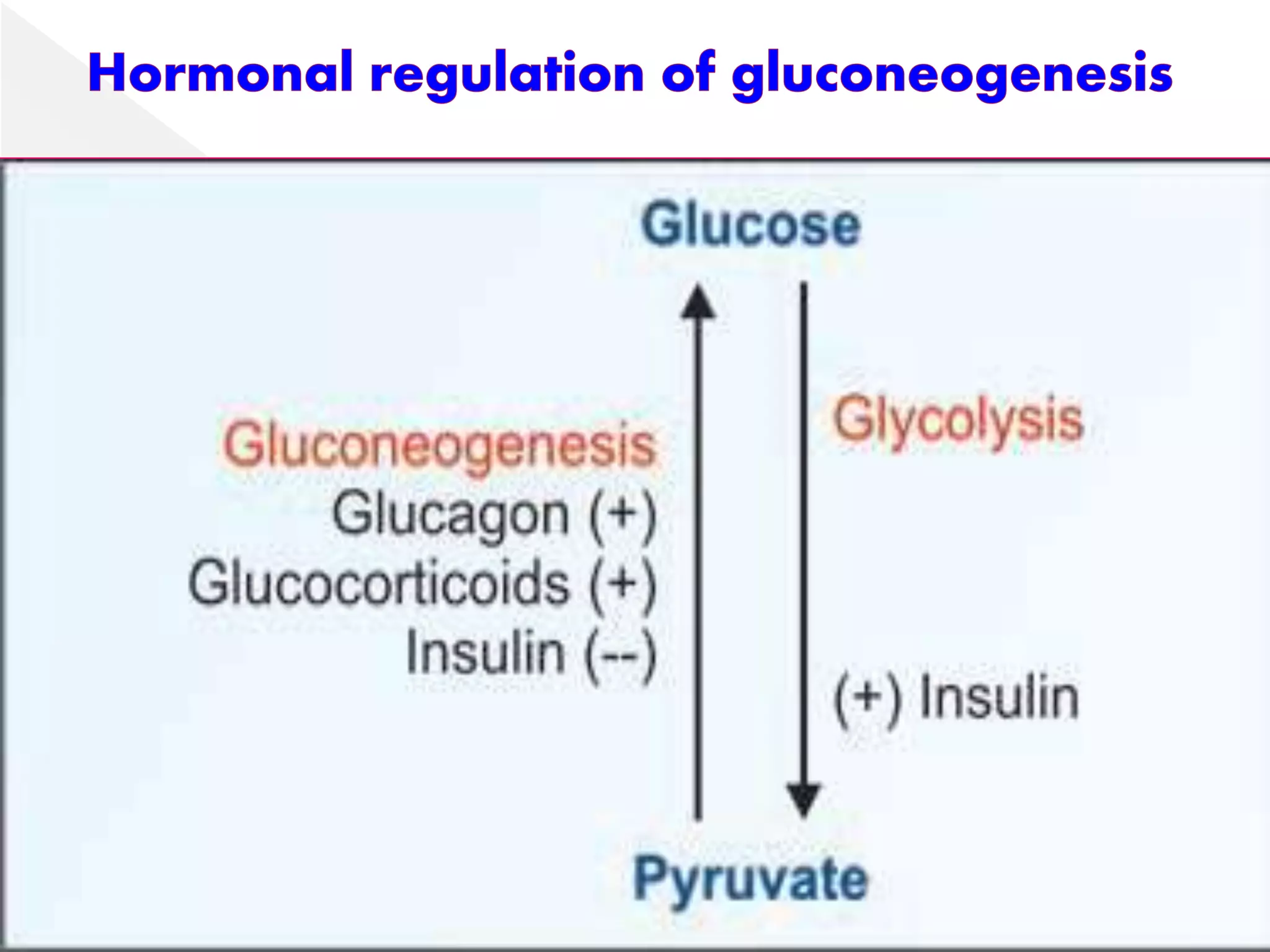
 Hormonal Regulation of Gluconeogenesis.
 It is an allosteric enzyme.
 Acetyl CoA is an activator of pyruvate
carboxylase so that generation of
oxaloacetate is favored when acetyl CoA
level is high.
 Citrate is an activator.
 Fructose-2,6-bisphosphate & AMP are
inhibitors.
 All these three effectors have an exactly
opposite effect on the phosphofructokinase
(PFK).
 ATP:
 Gluconeogenesis is enhanced by ATP.
 Glucagon & glucocorticoids increase
gluconeogenesis
 Glucocorticoids induce the synthesis of
hepatic amino transferases & provides
substrate for gluconeogenesis.
 The high glucagon-insulin ratio favors
induction of synthesis of gluconeogenic
enzymes (PEPCK, Fructose-1,6-bisphosphatase
& glucose-6-phosphatase).
 At the same time, synthesis of glycolytic
enzymes HK, PFK & PK are depressed.
 Textbook of Biochemistry-DM Vasudevan
 Textbook of Biochemistry-U Satyanarayana
GLUCONEOGENESIS & ITS REGULATION

GLUCONEOGENESIS & ITS REGULATION

  • 1.
  • 2.
     The synthesisof glucose from non- carbohydrate compounds is known as gluconeogenesis.  The major substrates/precursors for gluconeogenesis:  Lactate, pyruvate, glucogenic amino acids, propianate and glycerol.
  • 3.
     Site:  Gluconeogenesisoccurs mainly in the liver, and to a lesser extent in the renal cortex.  The pathway is partly mitochondrial & partly cytoplasmic.  About 1 kg glucose synthesized everyday
  • 4.
     Brain &CNS, erythrocytes, testes & kidney medulla are dependent on glucose for continuous supply for energy.  Human brain alone requires about 120 g of glucose per day, out of about 160 g needed by the entire body.  Glucose is the only source that supplies to the skeletal muscle, anaerobic conditions.
  • 5.
     During starvationgluconeogenesis maintains the blood glucose level.  The stored glycogen is depleted within the first 12-18 hours of fasting.  On prolonged starvation, the gluconeogenesis is speeded up & protein catabolism provides the substrates, namely glucogenic amino acids.
  • 6.
     Gluconeogeenesis closelyresembles the reversed pathway of glycolysis.  The 3 irreversible steps of glycolysis are catalysed by the 3 enzymes.  Hexokinase  PFK  Pyruvate kinase
  • 7.
     These threestages bypassed by alternate enzymes specific to gluconeogenesis.  These are:  Pyruvate carboxylase  Phosphoenol pyruvate carboxy kinase  Fructose-1-6-bisphosphatase  Glucose-6-phosphatase
  • 8.
     Takes placein two steps pyruvate carboxylase is a biotin dependent mitochondrial enzyme that converts pyruvate to oxaloacetate in presence of ATP & CO2  This enzyme regulates gluconeogenesis & requires acetyl CoA for its activity.
  • 9.
     Oxaloacetate issynthesized in the mitochondrial matrix.  It has to be transported to the cytosol.  Due to membrane impermeability, oxaloacetate cannot diffuse out of the mitochondria.  It is converted to malate & transported to cytosol.  In the cytosol, oxaloacetate is regenerated.
  • 10.
     The reversibleconversion of oxaloacetate to malate is catalysed by MDH, present in mitochondria & cytosol  In the cytosol, phosphoenolpyruvate carboxykinase converts oxaloacetate to phosphoenol pyruvate.
  • 11.
     GTP orITP (not ATP) is used in this reaction and the CO2 is liberated.  For the conversion of pyruvate to phosphoenol pyruvate, 2ATP equivalents are utilized.
  • 12.
     Phosphoenolpyruvate undergoesthe reversal of glycolysis until Fructose 1,6-bisphosphate is produced.  The enzyme Fructose 1,6-bisphosphatase converts Fructose 1,6-bisphosphate to Fructose 6-phosphate & it requires Mg2+ ions.  This is also a regulatory enzyme.
  • 13.
     Glucose 6-phosphatasecatalyses the conversion of glucose 6-phosphate to glucose.  It is present in liver & kidney but absent in muscle, brain and adipose tissue.  Liver can replenish blood sugar through gluconeogenesis, glucose 6- phosphatase is present mainly in liver.
  • 17.
  • 18.
     The carbonskeleton of glucogenic amino acids (all except leucine & lysine) results in the formation of pyruvate or the intermediates of citric acid cycle.  Which, ultimately, result in the synthesis of glucose.
  • 19.
  • 20.
     Glycerol isliberated in the adipose tissue by the hydrolysis of fats (triacylglycerols).  The enzyme glycerokinase (found in liver & kidney, absent in adipose tissue) activates glycerol to glycerol 3- phosphate.  It is converted to DHAP by glycerol 3- phosphate dehydrogenase.  DHAP is an intermediate in glycolysis.
  • 22.
     Oxidation ofodd chain fatty acids & the breakdown of some amino acids (methionine, isoleucine) yields a three carbon propionyl CoA.  Propionyl CoA carboxylase acts on this in the presence of ATP & biotin & converts to methyl melonyl CoA
  • 23.
     Which isthen converted to succinyl CoA in the presence of B12.  Succinyl CoA formed from propionyl CoA enters gluconeogenesis.
  • 24.
     Definition:  Itis a process in which glucose is converted to Lactate in the muscle and in the liver this lactate is re-converted to glucose.  In an actively contracting muscle, pyruvate is reduced to lactic acid which may tend to accumulate in the muscle.  To prevent lactate accumulation, body utilizes cori cycle.
  • 25.
     This lacticacid from muscle diffuses into the blood.  Lactate then reaches liver, where it is oxidised to pyruvate.  It is entered into gluconeogenesis.  Regenerated glucose can enter into blood and then to muscle.  This cycle is called cori cycle.
  • 26.
  • 27.
  • 28.
     Gluconeogenesis &glycolysis are reciprocally regulated  One pathway is relatively inactive when the other is active.  Regulatory enzymes:  Pyruvate Carboxylase.  Fructose-1,6-bisphosphatase.  ATP.  Hormonal Regulation of Gluconeogenesis.
  • 29.
     It isan allosteric enzyme.  Acetyl CoA is an activator of pyruvate carboxylase so that generation of oxaloacetate is favored when acetyl CoA level is high.
  • 30.
     Citrate isan activator.  Fructose-2,6-bisphosphate & AMP are inhibitors.  All these three effectors have an exactly opposite effect on the phosphofructokinase (PFK).  ATP:  Gluconeogenesis is enhanced by ATP.
  • 31.
     Glucagon &glucocorticoids increase gluconeogenesis  Glucocorticoids induce the synthesis of hepatic amino transferases & provides substrate for gluconeogenesis.
  • 32.
     The highglucagon-insulin ratio favors induction of synthesis of gluconeogenic enzymes (PEPCK, Fructose-1,6-bisphosphatase & glucose-6-phosphatase).  At the same time, synthesis of glycolytic enzymes HK, PFK & PK are depressed.
  • 34.
     Textbook ofBiochemistry-DM Vasudevan  Textbook of Biochemistry-U Satyanarayana