GLUCONEOGENESIS
&
GLYCOGENOLYSIS
PRESENTED BY-
HASNAHANA CHETIA
M.Sc Ist Sem,
Dept.Of Biotechnology,G.U.
GLUCONEOGENESIS
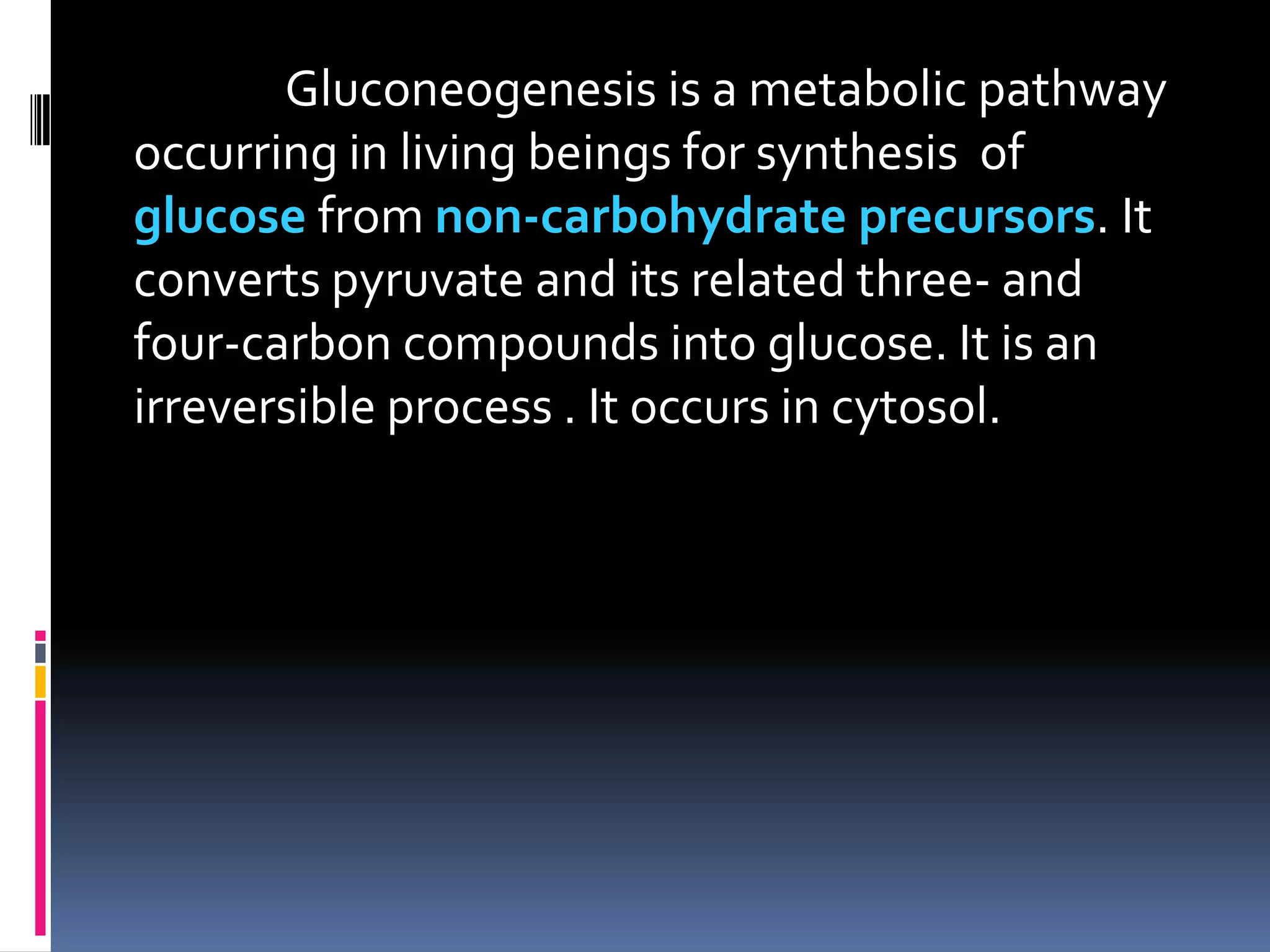
Gluconeogenesis is a metabolic pathway
occurring in living beings for synthesis of
glucose from non-carbohydrate precursors. It
converts pyruvate and its related three- and
four-carbon compounds into glucose. It is an
irreversible process . It occurs in cytosol.
PATHWAY
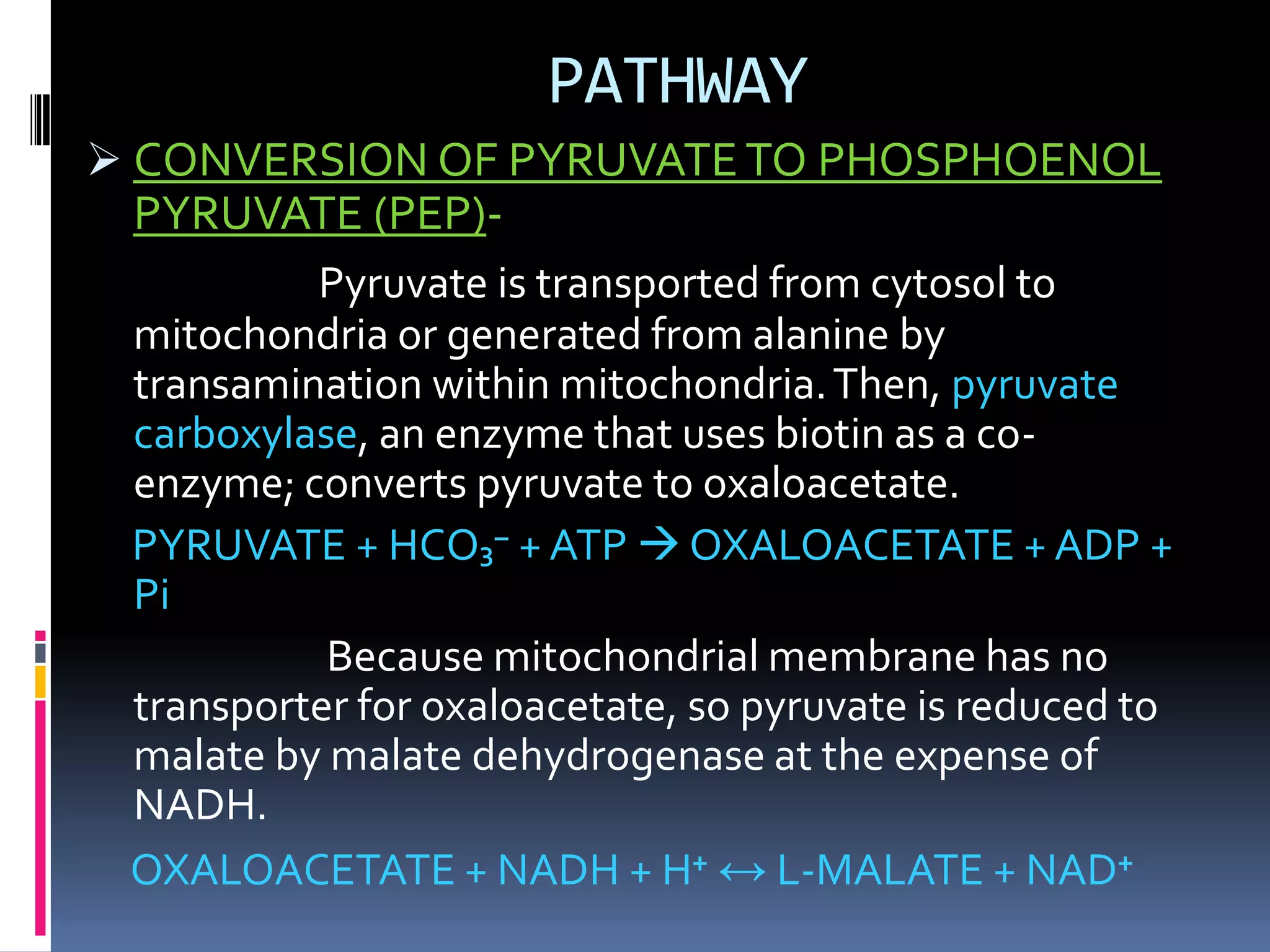
 CONVERSION OF PYRUVATETO PHOSPHOENOL
PYRUVATE (PEP)-
Pyruvate is transported from cytosol to
mitochondria or generated from alanine by
transamination within mitochondria.Then, pyruvate
carboxylase, an enzyme that uses biotin as a co-
enzyme; converts pyruvate to oxaloacetate.
PYRUVATE + HCO₃⁻ + ATP  OXALOACETATE + ADP +
Pi
Because mitochondrial membrane has no
transporter for oxaloacetate, so pyruvate is reduced to
malate by malate dehydrogenase at the expense of
NADH.
OXALOACETATE + NADH + H⁺ ↔ L-MALATE + NAD⁺
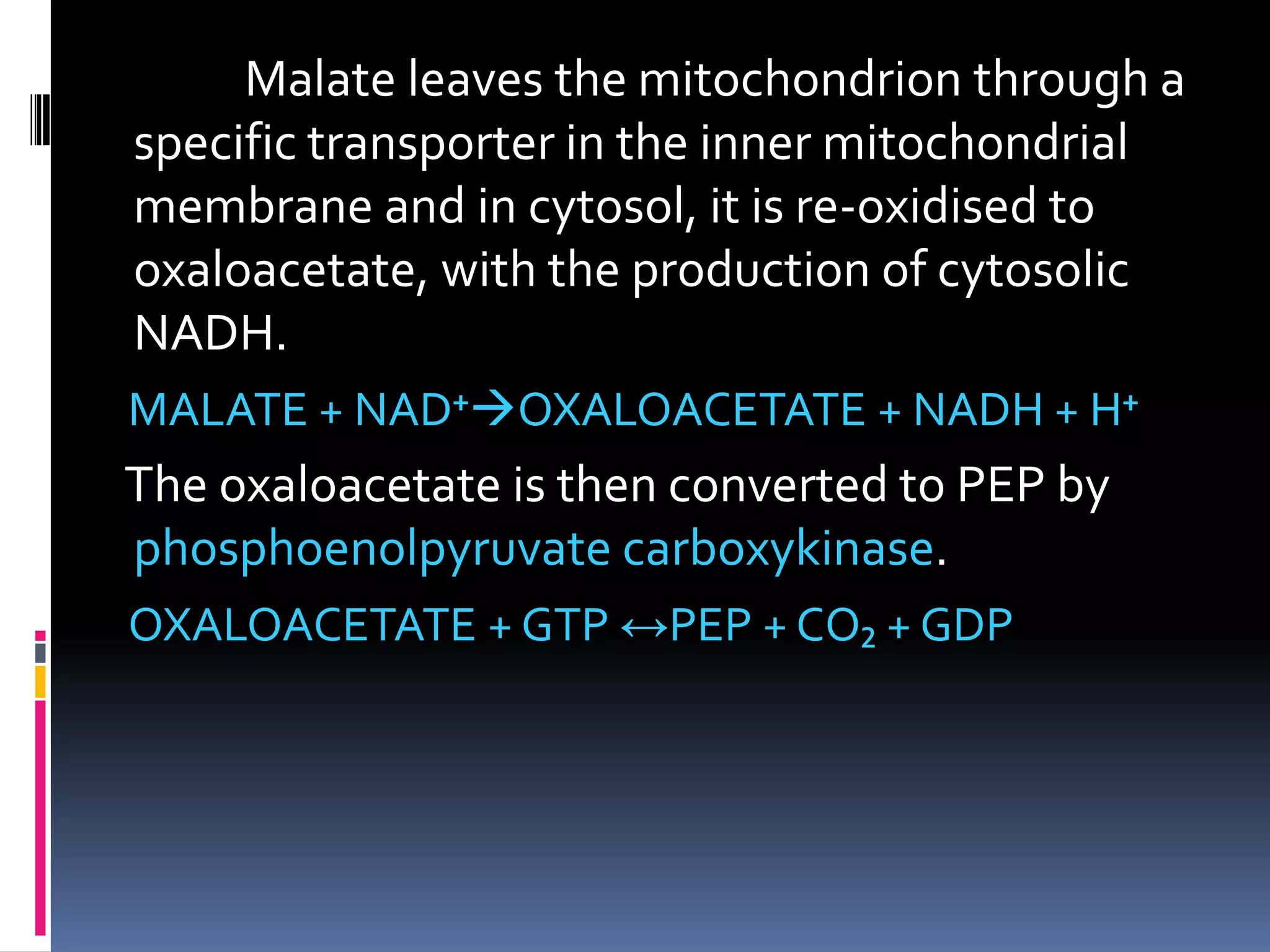
Malate leaves the mitochondrion through a
specific transporter in the inner mitochondrial
membrane and in cytosol, it is re-oxidised to
oxaloacetate, with the production of cytosolic
NADH.
MALATE + NAD⁺OXALOACETATE + NADH + H⁺
The oxaloacetate is then converted to PEP by
phosphoenolpyruvate carboxykinase.
OXALOACETATE + GTP ↔PEP + CO₂ + GDP
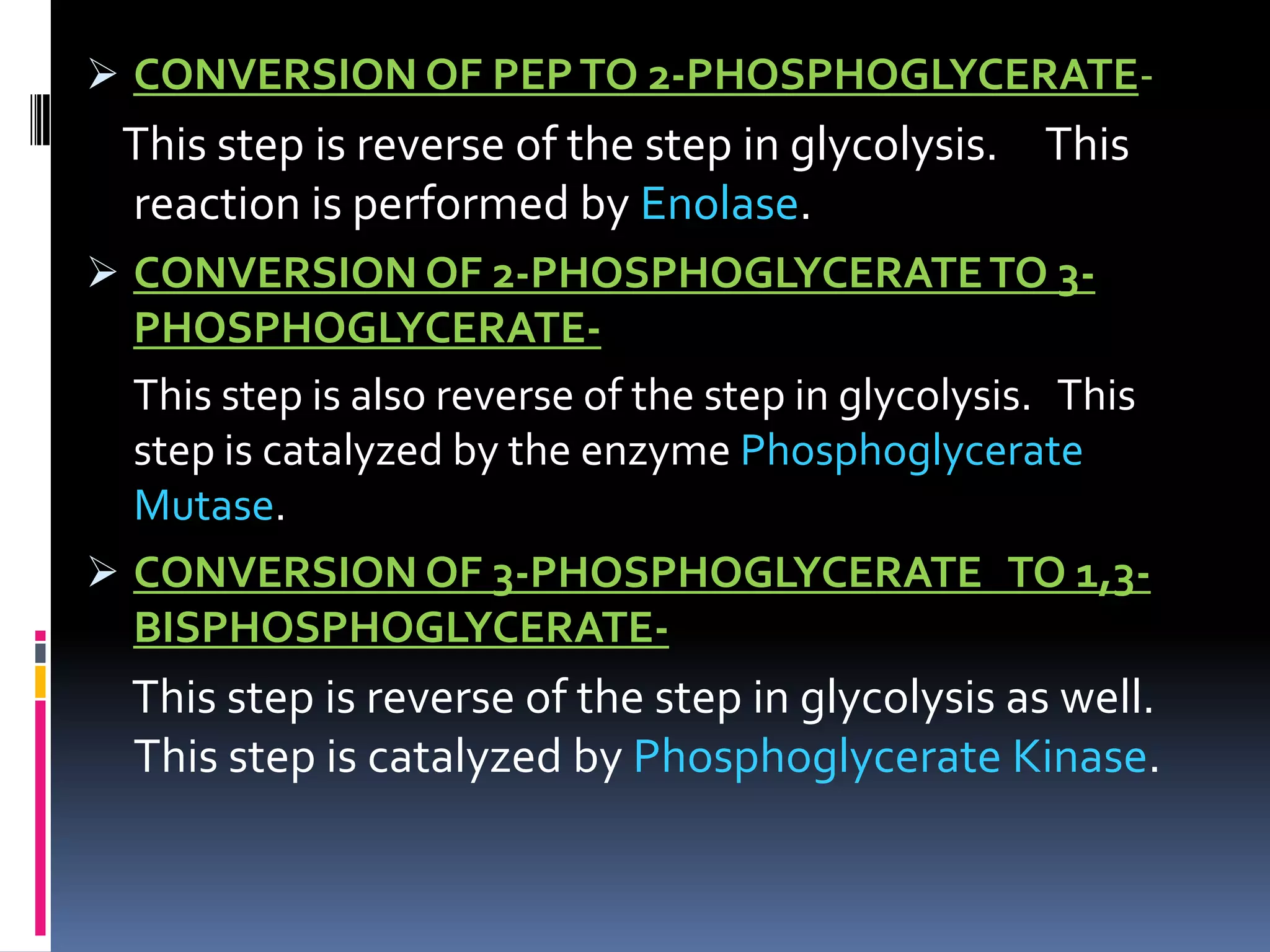
 CONVERSION OF PEPTO 2-PHOSPHOGLYCERATE-
This step is reverse of the step in glycolysis. This
reaction is performed by Enolase.
 CONVERSION OF 2-PHOSPHOGLYCERATETO 3-
PHOSPHOGLYCERATE-
This step is also reverse of the step in glycolysis. This
step is catalyzed by the enzyme Phosphoglycerate
Mutase.
 CONVERSION OF 3-PHOSPHOGLYCERATE TO 1,3-
BISPHOSPHOGLYCERATE-
This step is reverse of the step in glycolysis as well.
This step is catalyzed by Phosphoglycerate Kinase.
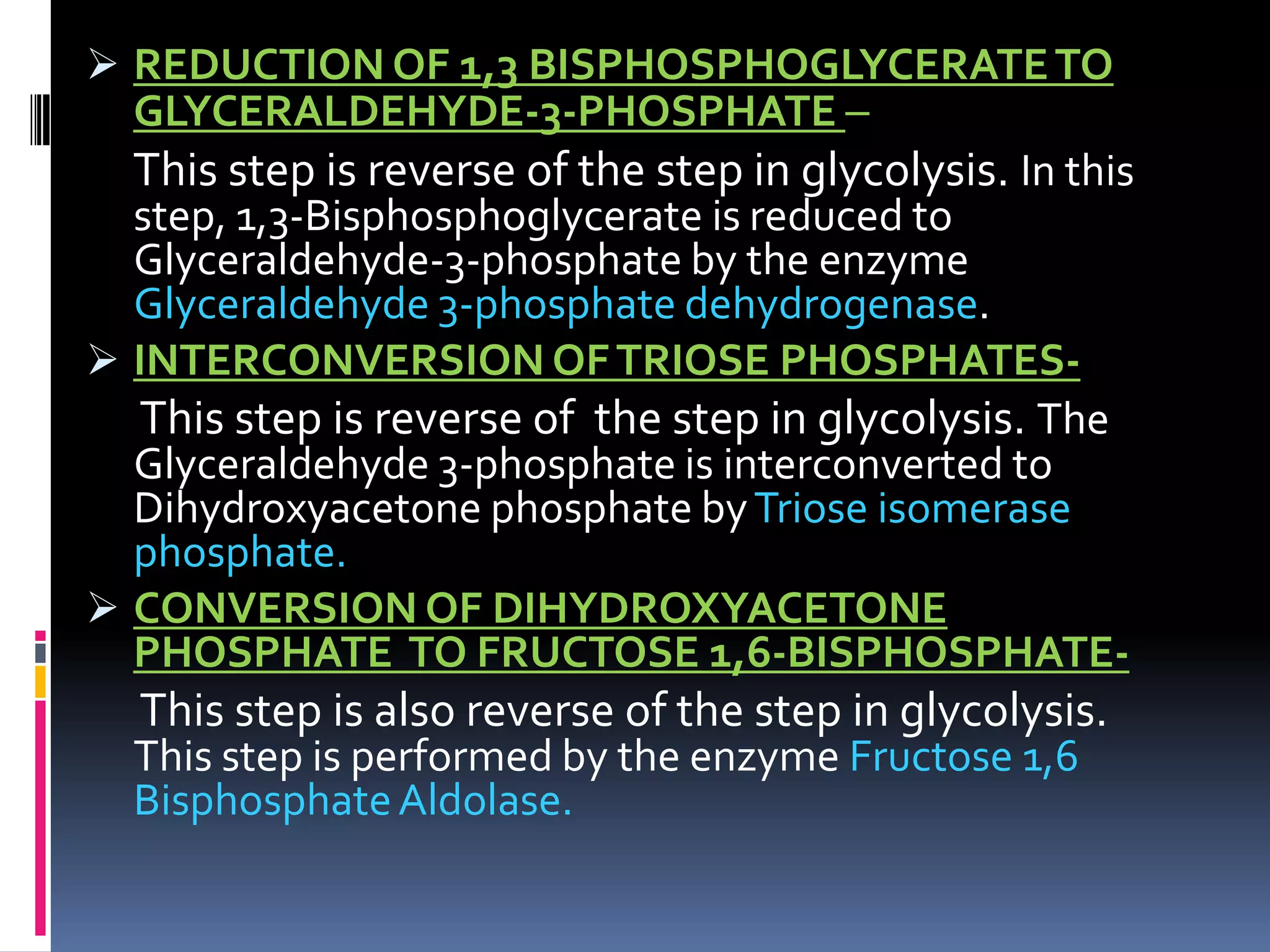
 REDUCTION OF 1,3 BISPHOSPHOGLYCERATETO
GLYCERALDEHYDE-3-PHOSPHATE –
This step is reverse of the step in glycolysis. In this
step, 1,3-Bisphosphoglycerate is reduced to
Glyceraldehyde-3-phosphate by the enzyme
Glyceraldehyde 3-phosphate dehydrogenase.
 INTERCONVERSION OFTRIOSE PHOSPHATES-
This step is reverse of the step in glycolysis. The
Glyceraldehyde 3-phosphate is interconverted to
Dihydroxyacetone phosphate byTriose isomerase
phosphate.
 CONVERSION OF DIHYDROXYACETONE
PHOSPHATE TO FRUCTOSE 1,6-BISPHOSPHATE-
This step is also reverse of the step in glycolysis.
This step is performed by the enzyme Fructose 1,6
BisphosphateAldolase.
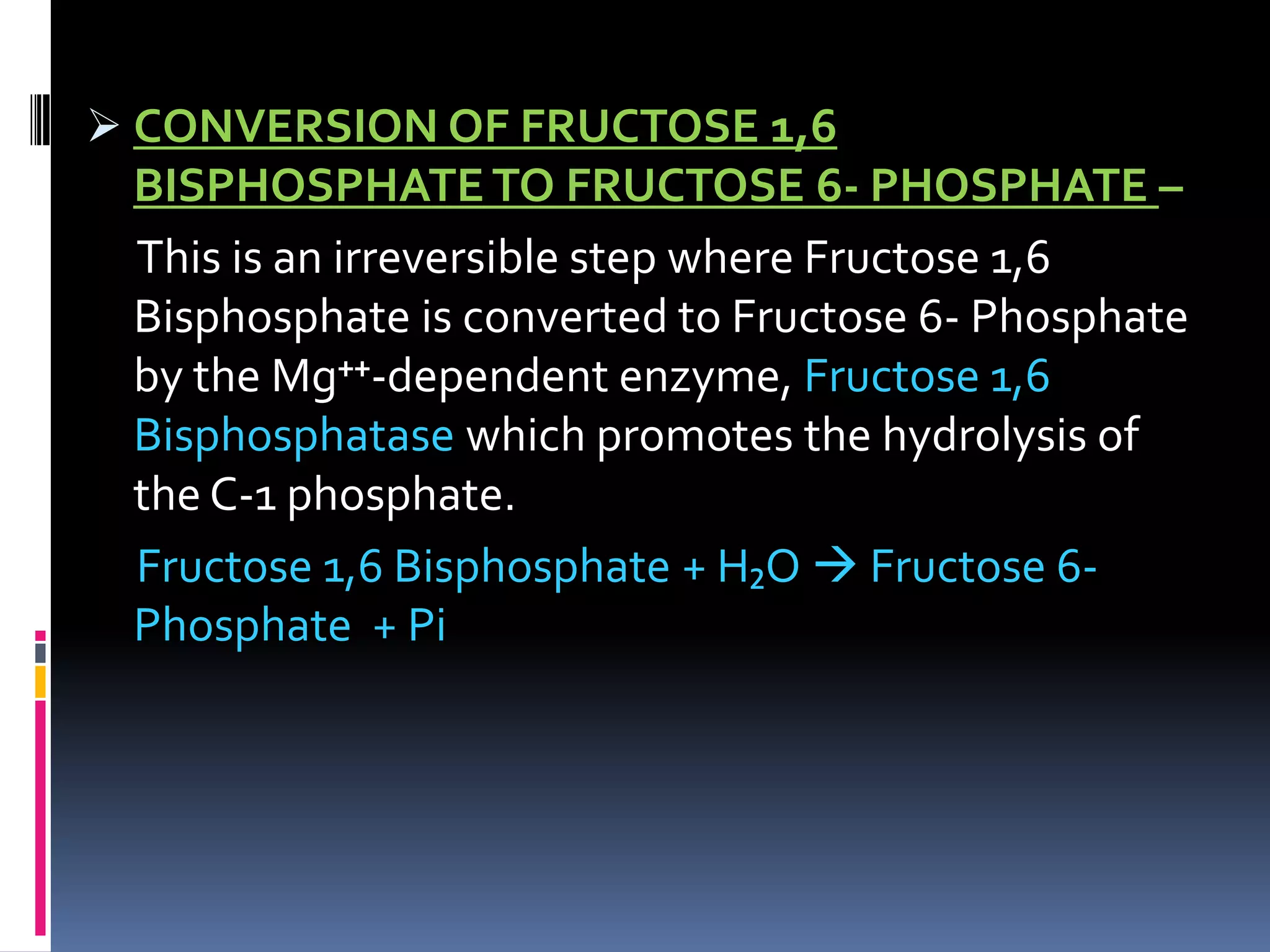
 CONVERSION OF FRUCTOSE 1,6
BISPHOSPHATETO FRUCTOSE 6- PHOSPHATE –
This is an irreversible step where Fructose 1,6
Bisphosphate is converted to Fructose 6- Phosphate
by the Mg⁺⁺-dependent enzyme, Fructose 1,6
Bisphosphatase which promotes the hydrolysis of
the C-1 phosphate.
Fructose 1,6 Bisphosphate + H₂O  Fructose 6-
Phosphate + Pi
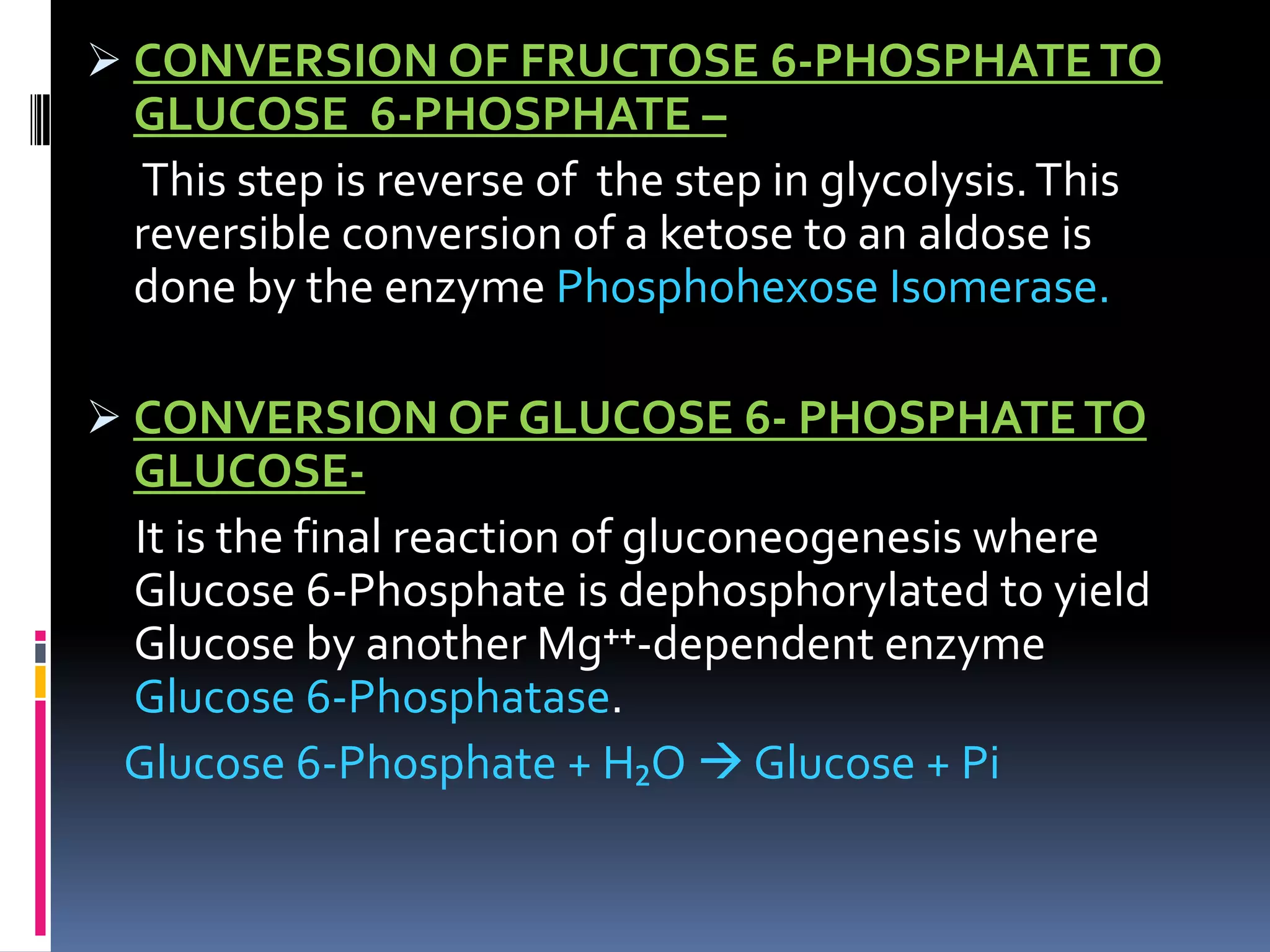
 CONVERSION OF FRUCTOSE 6-PHOSPHATE TO
GLUCOSE 6-PHOSPHATE –
This step is reverse of the step in glycolysis.This
reversible conversion of a ketose to an aldose is
done by the enzyme Phosphohexose Isomerase.
 CONVERSION OF GLUCOSE 6- PHOSPHATE TO
GLUCOSE-
It is the final reaction of gluconeogenesis where
Glucose 6-Phosphate is dephosphorylated to yield
Glucose by another Mg⁺⁺-dependent enzyme
Glucose 6-Phosphatase.
Glucose 6-Phosphate + H₂O  Glucose + Pi
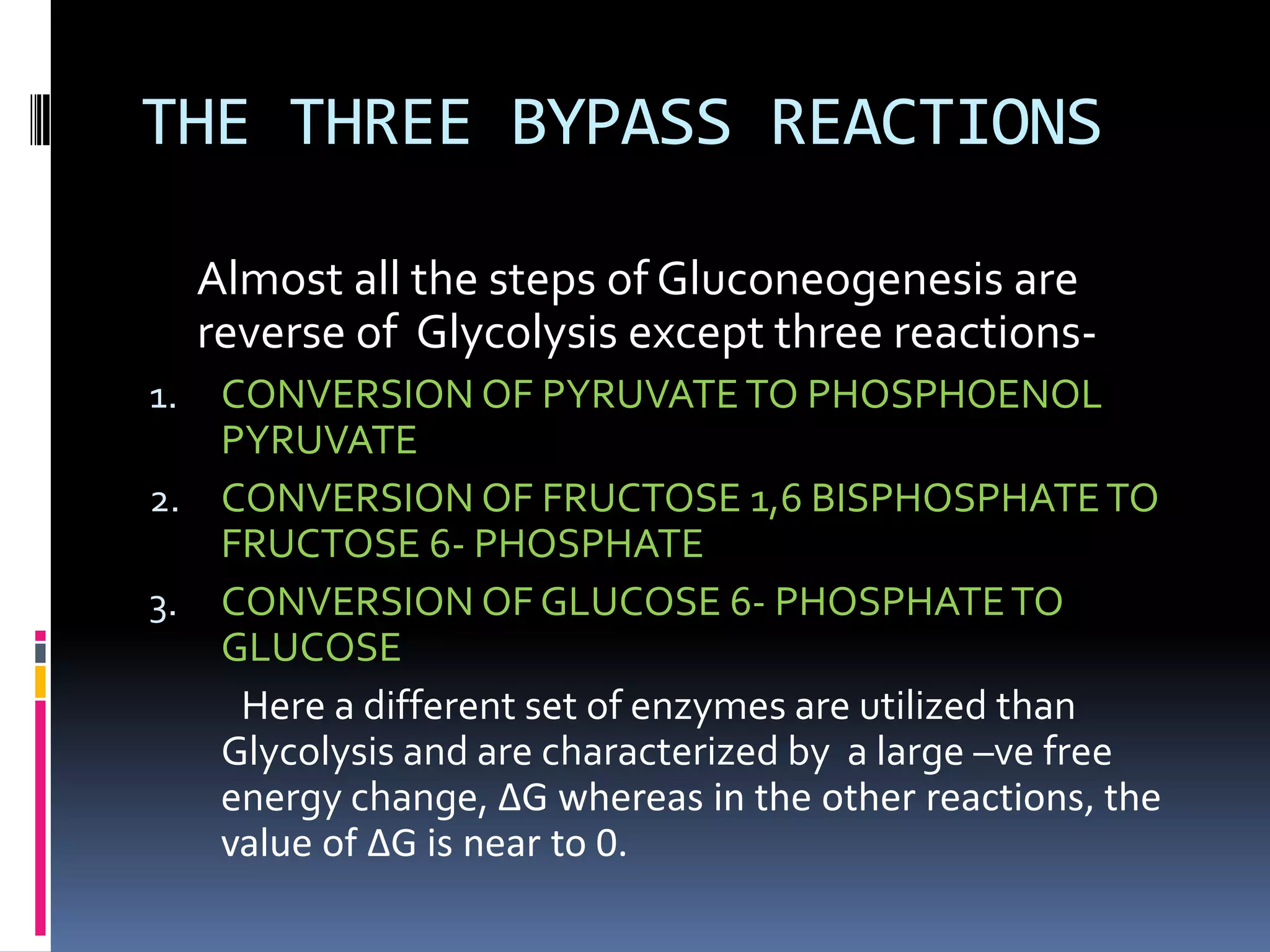
THE THREE BYPASS REACTIONS
Almost all the steps of Gluconeogenesis are
reverse of Glycolysis except three reactions-
1. CONVERSION OF PYRUVATETO PHOSPHOENOL
PYRUVATE
2. CONVERSION OF FRUCTOSE 1,6 BISPHOSPHATETO
FRUCTOSE 6- PHOSPHATE
3. CONVERSION OF GLUCOSE 6- PHOSPHATETO
GLUCOSE
Here a different set of enzymes are utilized than
Glycolysis and are characterized by a large –ve free
energy change, ∆G whereas in the other reactions, the
value of ∆G is near to 0.
REGULATION
There are 3 steps involved in regulation of
Gluconeogenesis.
1. CONVERSION OF PYRUVATE TO
OXALOACETATE-
When the cell’s energy need is being met,
oxidative phosphorylation slows down,
NADH:NAD⁺ rises and inhibits citric acid cycle
due to which Acetyl-CoA accumulates. Since
Acetyl-CoA is an positive allosteric modulator
of Pyruvate Carboxylase, it stimulates
gluconeogenesis and increases the formation of
glucose from pyruvate.
2. CONVERSION OF FRUCTOSE 1,6-
BISPHOSPHATETO FRUCTOSE 6-
PHOSPHATE-
The enzyme FBPase-1 involved in this
reaction is strongly inhibited by AMP. So,
when a high proportion of the cell’s adenylate
is in the form of ATP, gluconeogenesis is
favored.
3. HORMONAL REGULATION OF
GLUCONEOGENESIS-
The hormonal regulation of gluconeogenesis is
mediated by Fructose 2,6-Bisphosphate, an
allosteric effector for the enzyme FBPase-1.The
hormones epinephrine and glucagon decreases
the concentration of Fructose 2,6-Bisphosphate
by raising cAMP and bringing about
phosphorylation, i.e., inactivation of PFK-2 and
activates FBPase-2 leading to breakdown of
Fructose 2,6-Bisphosphate. Insulin increases the
concentration of Fructose 2,6-Bisphosphate by
dephosphorylating PFK-2.
GLYCOGENOLYSIS
Glycogenolysis is a metabolic process by
which glycogen, the primary carbohydrate
stored in the liver and muscle cells of animals, is
broken down into glucose to provide immediate
energy and to maintain blood glucose levels
during fasting.
Glycogen is catabolized by removal of a
glucose monomer through cleavage with
inorganic phosphate to produce glucose-1-
phosphate.This derivative of glucose is then
converted to glucose-6-phosphate, an
intermediate in glycolysis.
It takes place in the muscle and liver
tissues, where glycogen is stored, as a hormonal
response to epinephrine and/or glucagon.
PATHWAY
 First step-
The overall reaction for the 1st step is:
Glycogen (n residues) + Pi ↔ Glycogen (n-1
residues)+ G1P
Here, glycogen phosphorylase cleaves the
bond at the C1 position by substitution of a
phosphoryl group. It breaks down glucose
polymer at [α14] linkages until 4 linked
glucoses are left on the branch.
Pyridoxal phosphate is an important co-
factor in this reaction, as its phosphate group
acts as a general acid catalyst, promoting attack
by Pi on the glycosidic bond.
 Second step-
The second step involves the
enzyme oligo α[1→6] to α[1→4]
glucantransferase or debranching enzyme,
which transfers the three remaining glucose
units to another 1,4 terminal of glycogen,
which exposes the α[1→6] branching point.
The final action of this enzyme is
the hydrolysis of the remaining glucose
attached at the α[1→6] branch point, which
gives one free glucose molecule.
 Third step-
The third and last stage converts G1P
(glucose-1-phosphate) to G6P (glucose-6-
phosphate) through the enzyme
phosphoglucomutase.
G1P ↔ G6P
Here the enzyme donates a phosphoryl
group to C-6 of the substrate and accepts a
phosphoryl group from C-1.
FATES OF GLUCOSE 6 PHOSPHATE
 This G6P can enter glycolysis and serve as
an energy source to support muscle
contraction.
 In liver, it releases glucose into blood when
blood glucose level drops.
REGULATION OF GLYCOGEN PHOSPHORYLASE
 Glycogen phosphorylase is activated in response
to Glucagon or Epinephrine which raise the
[cAMP] level and activate Protein KinaseA. PKA
phosphorylates and activates Phosphorylase
Kinase, which converts Glycogen Phosphorylase
B to its active A form.
 Phosphoprotein Phosphatase 1 reverses the
phosphorylation of Glycogen Phosphorylase A,
inactivating it.
 Glucose binds to the liver isozyme of Glycogen
Phosphorylase,favoring its dephosphorylation
and inactivation.
REFERENCES
 Lehninger’s principles of Biochemistry by
David L. Nelson and Michael M. Cox
 www.wikipedia.org
 Britannica Online Encyclopaedia
Gluconeogenesis and glycogenolysis

Gluconeogenesis and glycogenolysis

  • 1.
  • 2.
  • 3.
    Gluconeogenesis is ametabolic pathway occurring in living beings for synthesis of glucose from non-carbohydrate precursors. It converts pyruvate and its related three- and four-carbon compounds into glucose. It is an irreversible process . It occurs in cytosol.
  • 4.
    PATHWAY  CONVERSION OFPYRUVATETO PHOSPHOENOL PYRUVATE (PEP)- Pyruvate is transported from cytosol to mitochondria or generated from alanine by transamination within mitochondria.Then, pyruvate carboxylase, an enzyme that uses biotin as a co- enzyme; converts pyruvate to oxaloacetate. PYRUVATE + HCO₃⁻ + ATP  OXALOACETATE + ADP + Pi Because mitochondrial membrane has no transporter for oxaloacetate, so pyruvate is reduced to malate by malate dehydrogenase at the expense of NADH. OXALOACETATE + NADH + H⁺ ↔ L-MALATE + NAD⁺
  • 5.
    Malate leaves themitochondrion through a specific transporter in the inner mitochondrial membrane and in cytosol, it is re-oxidised to oxaloacetate, with the production of cytosolic NADH. MALATE + NAD⁺OXALOACETATE + NADH + H⁺ The oxaloacetate is then converted to PEP by phosphoenolpyruvate carboxykinase. OXALOACETATE + GTP ↔PEP + CO₂ + GDP
  • 6.
     CONVERSION OFPEPTO 2-PHOSPHOGLYCERATE- This step is reverse of the step in glycolysis. This reaction is performed by Enolase.  CONVERSION OF 2-PHOSPHOGLYCERATETO 3- PHOSPHOGLYCERATE- This step is also reverse of the step in glycolysis. This step is catalyzed by the enzyme Phosphoglycerate Mutase.  CONVERSION OF 3-PHOSPHOGLYCERATE TO 1,3- BISPHOSPHOGLYCERATE- This step is reverse of the step in glycolysis as well. This step is catalyzed by Phosphoglycerate Kinase.
  • 7.
     REDUCTION OF1,3 BISPHOSPHOGLYCERATETO GLYCERALDEHYDE-3-PHOSPHATE – This step is reverse of the step in glycolysis. In this step, 1,3-Bisphosphoglycerate is reduced to Glyceraldehyde-3-phosphate by the enzyme Glyceraldehyde 3-phosphate dehydrogenase.  INTERCONVERSION OFTRIOSE PHOSPHATES- This step is reverse of the step in glycolysis. The Glyceraldehyde 3-phosphate is interconverted to Dihydroxyacetone phosphate byTriose isomerase phosphate.  CONVERSION OF DIHYDROXYACETONE PHOSPHATE TO FRUCTOSE 1,6-BISPHOSPHATE- This step is also reverse of the step in glycolysis. This step is performed by the enzyme Fructose 1,6 BisphosphateAldolase.
  • 8.
     CONVERSION OFFRUCTOSE 1,6 BISPHOSPHATETO FRUCTOSE 6- PHOSPHATE – This is an irreversible step where Fructose 1,6 Bisphosphate is converted to Fructose 6- Phosphate by the Mg⁺⁺-dependent enzyme, Fructose 1,6 Bisphosphatase which promotes the hydrolysis of the C-1 phosphate. Fructose 1,6 Bisphosphate + H₂O  Fructose 6- Phosphate + Pi
  • 9.
     CONVERSION OFFRUCTOSE 6-PHOSPHATE TO GLUCOSE 6-PHOSPHATE – This step is reverse of the step in glycolysis.This reversible conversion of a ketose to an aldose is done by the enzyme Phosphohexose Isomerase.  CONVERSION OF GLUCOSE 6- PHOSPHATE TO GLUCOSE- It is the final reaction of gluconeogenesis where Glucose 6-Phosphate is dephosphorylated to yield Glucose by another Mg⁺⁺-dependent enzyme Glucose 6-Phosphatase. Glucose 6-Phosphate + H₂O  Glucose + Pi
  • 10.
    THE THREE BYPASSREACTIONS Almost all the steps of Gluconeogenesis are reverse of Glycolysis except three reactions- 1. CONVERSION OF PYRUVATETO PHOSPHOENOL PYRUVATE 2. CONVERSION OF FRUCTOSE 1,6 BISPHOSPHATETO FRUCTOSE 6- PHOSPHATE 3. CONVERSION OF GLUCOSE 6- PHOSPHATETO GLUCOSE Here a different set of enzymes are utilized than Glycolysis and are characterized by a large –ve free energy change, ∆G whereas in the other reactions, the value of ∆G is near to 0.
  • 11.
    REGULATION There are 3steps involved in regulation of Gluconeogenesis. 1. CONVERSION OF PYRUVATE TO OXALOACETATE- When the cell’s energy need is being met, oxidative phosphorylation slows down, NADH:NAD⁺ rises and inhibits citric acid cycle due to which Acetyl-CoA accumulates. Since Acetyl-CoA is an positive allosteric modulator of Pyruvate Carboxylase, it stimulates gluconeogenesis and increases the formation of glucose from pyruvate.
  • 12.
    2. CONVERSION OFFRUCTOSE 1,6- BISPHOSPHATETO FRUCTOSE 6- PHOSPHATE- The enzyme FBPase-1 involved in this reaction is strongly inhibited by AMP. So, when a high proportion of the cell’s adenylate is in the form of ATP, gluconeogenesis is favored.
  • 13.
    3. HORMONAL REGULATIONOF GLUCONEOGENESIS- The hormonal regulation of gluconeogenesis is mediated by Fructose 2,6-Bisphosphate, an allosteric effector for the enzyme FBPase-1.The hormones epinephrine and glucagon decreases the concentration of Fructose 2,6-Bisphosphate by raising cAMP and bringing about phosphorylation, i.e., inactivation of PFK-2 and activates FBPase-2 leading to breakdown of Fructose 2,6-Bisphosphate. Insulin increases the concentration of Fructose 2,6-Bisphosphate by dephosphorylating PFK-2.
  • 14.
  • 15.
    Glycogenolysis is ametabolic process by which glycogen, the primary carbohydrate stored in the liver and muscle cells of animals, is broken down into glucose to provide immediate energy and to maintain blood glucose levels during fasting. Glycogen is catabolized by removal of a glucose monomer through cleavage with inorganic phosphate to produce glucose-1- phosphate.This derivative of glucose is then converted to glucose-6-phosphate, an intermediate in glycolysis. It takes place in the muscle and liver tissues, where glycogen is stored, as a hormonal response to epinephrine and/or glucagon.
  • 16.
    PATHWAY  First step- Theoverall reaction for the 1st step is: Glycogen (n residues) + Pi ↔ Glycogen (n-1 residues)+ G1P Here, glycogen phosphorylase cleaves the bond at the C1 position by substitution of a phosphoryl group. It breaks down glucose polymer at [α14] linkages until 4 linked glucoses are left on the branch. Pyridoxal phosphate is an important co- factor in this reaction, as its phosphate group acts as a general acid catalyst, promoting attack by Pi on the glycosidic bond.
  • 17.
     Second step- Thesecond step involves the enzyme oligo α[1→6] to α[1→4] glucantransferase or debranching enzyme, which transfers the three remaining glucose units to another 1,4 terminal of glycogen, which exposes the α[1→6] branching point. The final action of this enzyme is the hydrolysis of the remaining glucose attached at the α[1→6] branch point, which gives one free glucose molecule.
  • 18.
     Third step- Thethird and last stage converts G1P (glucose-1-phosphate) to G6P (glucose-6- phosphate) through the enzyme phosphoglucomutase. G1P ↔ G6P Here the enzyme donates a phosphoryl group to C-6 of the substrate and accepts a phosphoryl group from C-1.
  • 19.
    FATES OF GLUCOSE6 PHOSPHATE  This G6P can enter glycolysis and serve as an energy source to support muscle contraction.  In liver, it releases glucose into blood when blood glucose level drops.
  • 20.
    REGULATION OF GLYCOGENPHOSPHORYLASE  Glycogen phosphorylase is activated in response to Glucagon or Epinephrine which raise the [cAMP] level and activate Protein KinaseA. PKA phosphorylates and activates Phosphorylase Kinase, which converts Glycogen Phosphorylase B to its active A form.  Phosphoprotein Phosphatase 1 reverses the phosphorylation of Glycogen Phosphorylase A, inactivating it.  Glucose binds to the liver isozyme of Glycogen Phosphorylase,favoring its dephosphorylation and inactivation.
  • 21.
    REFERENCES  Lehninger’s principlesof Biochemistry by David L. Nelson and Michael M. Cox  www.wikipedia.org  Britannica Online Encyclopaedia