Which activity require the least amount of work?
 Carrying

heavy books home
 Reading a 300-page novel
 Skiing for 1 hour
 Lifting a 45 kg mass
 Holding a steel beam in place for 3 hours
 Jacking up a car




Book M: Chapter 4
By the end of this section, you should be able to:
 Determine

when work is being done on an

object.
 Calculate the amount of work done on an object.
 Explain the difference between work and power.
 Work

is the transfer of energy to an object by
using a force that causes the object to move in
the direction of the force.

 One

way you can tell that work is being done is
that energy is transferred.
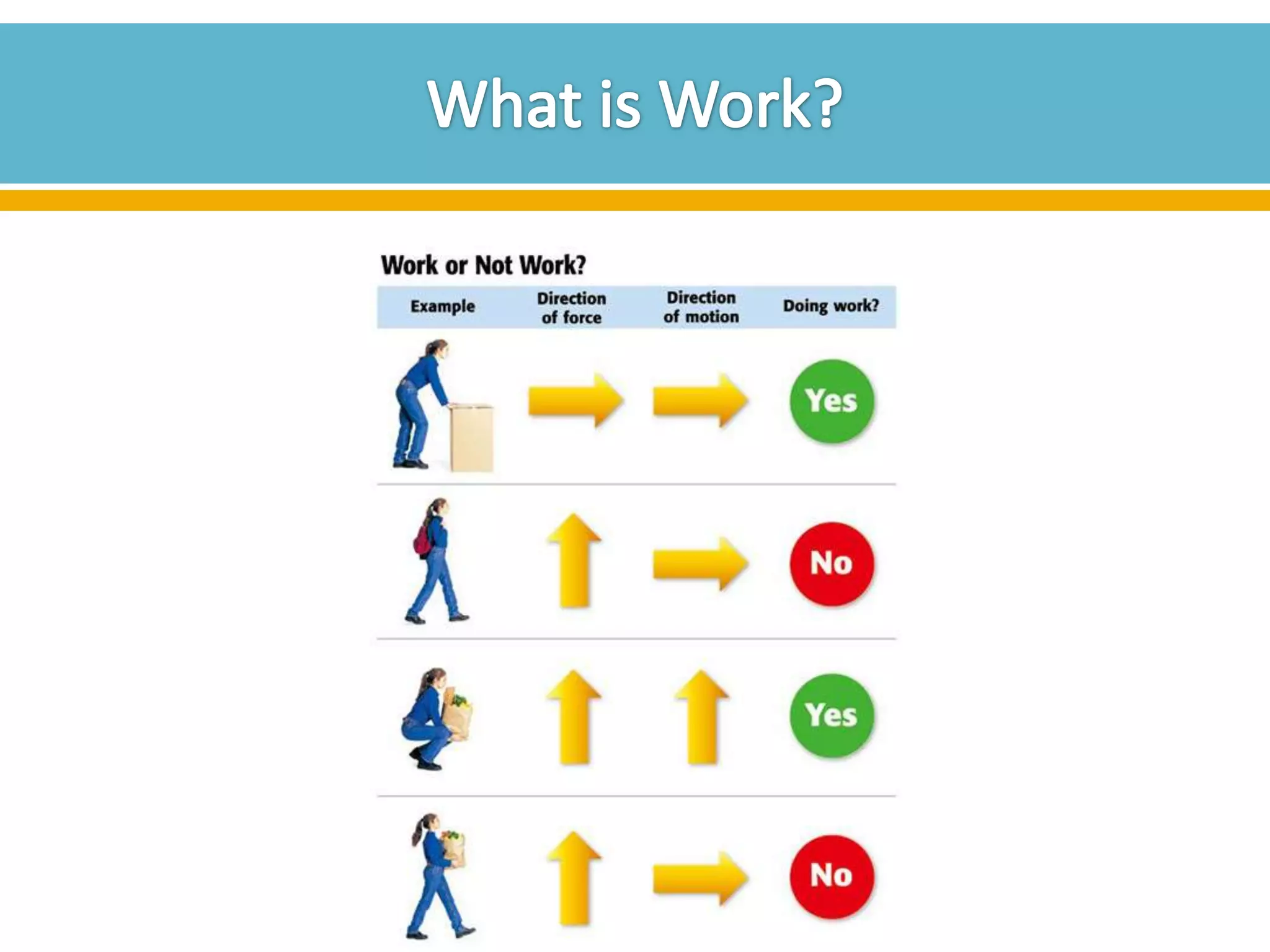
a force doesn’t always result in work
being done.

 Applying

 For

work to be done on an object, the object
must move in the same direction as the force is
applied.
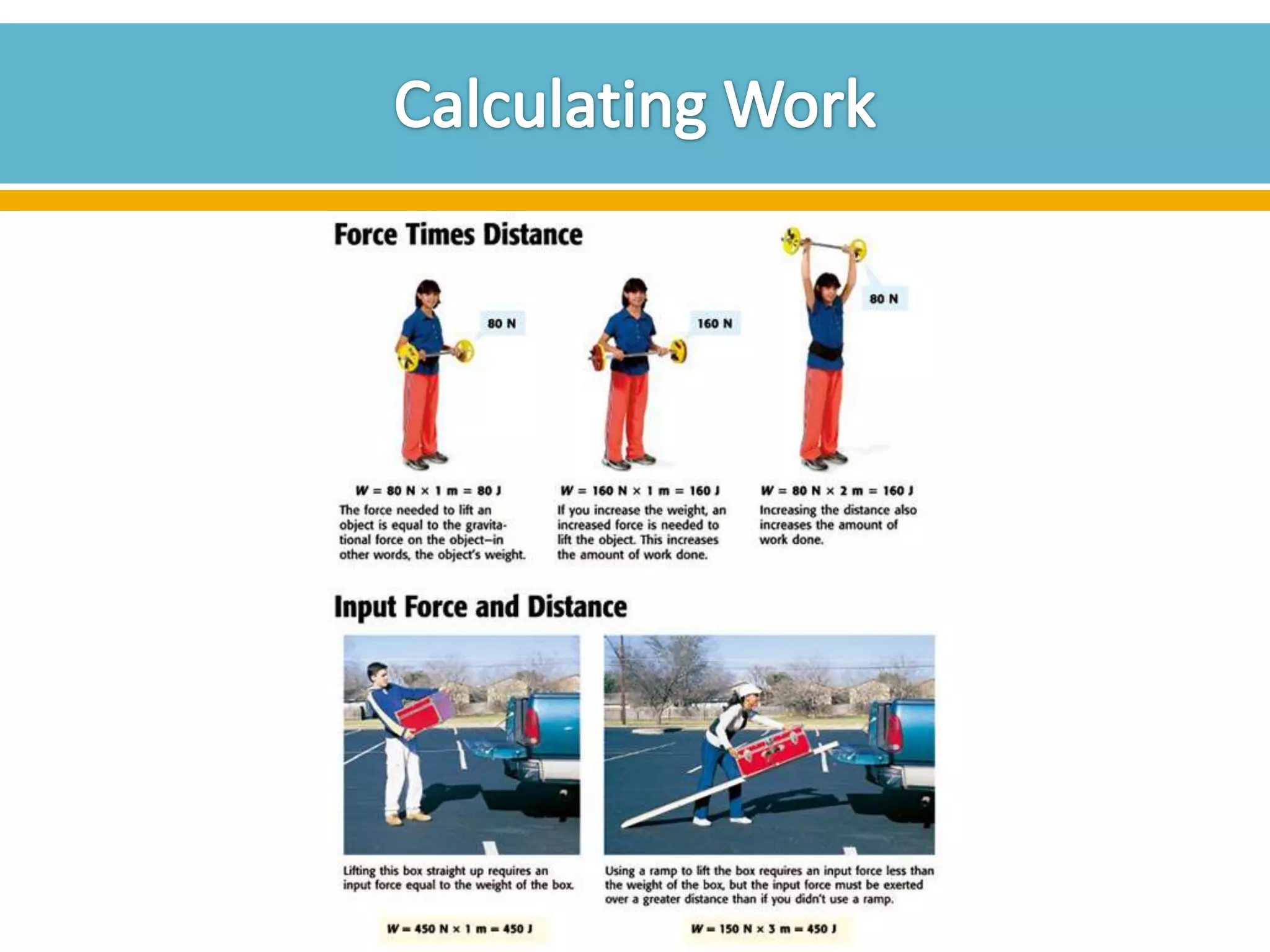
 Work

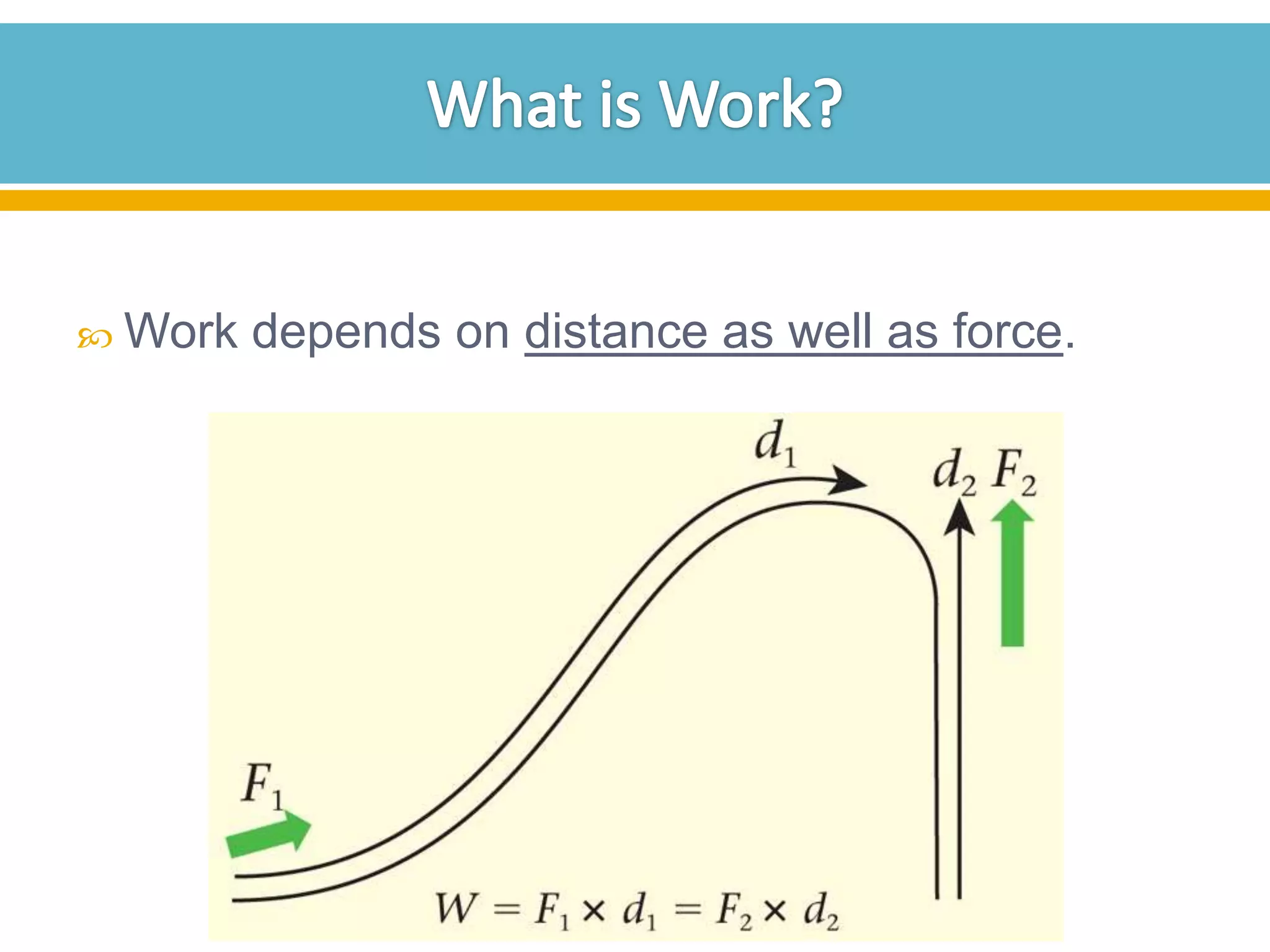
depends on distance as well as force.
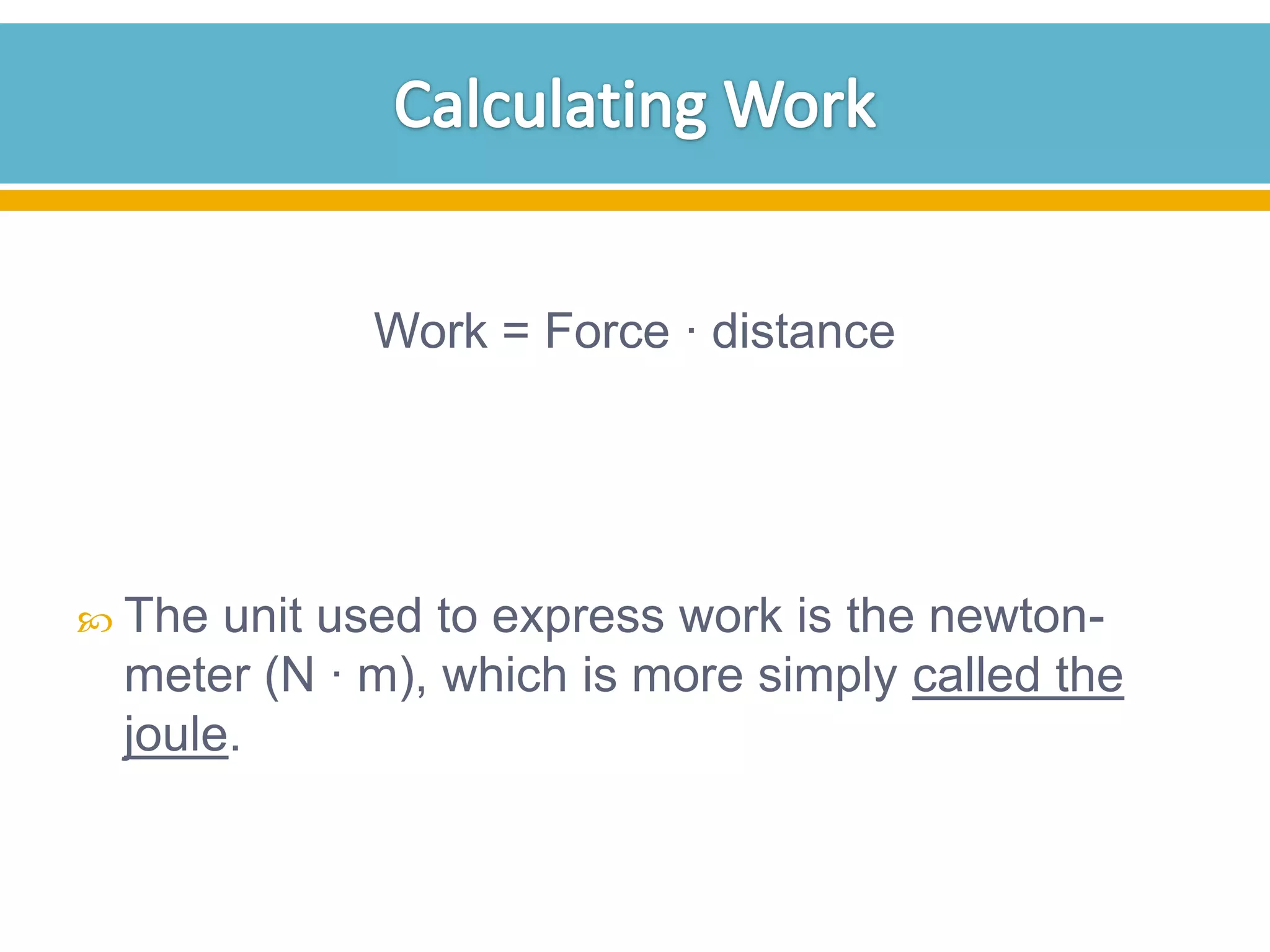
Work = Force · distance

 The

unit used to express work is the newtonmeter (N · m), which is more simply called the
joule.
Read the procedure on p.97

 It

may take you longer to sand a wooden shelf
by hand than by using an electric sander, but the
amount of energy needed is the same either
way. Only the power output is lower when you
sand the shelf by hand.
p.99 #3-9
Read through p.114-115
On a new sheet of paper, follow Step 2.
Copy the Data Collection Table into your
notes.
Why do we use machines?
By the end of this section, you should be able to:
 Explain

how a machine makes work easier.
 Describe and give examples of the forcedistance trade-off that occurs when a machine is
used.
 Calculate mechanical advantage.
 Explain why machines are not 100% efficient.
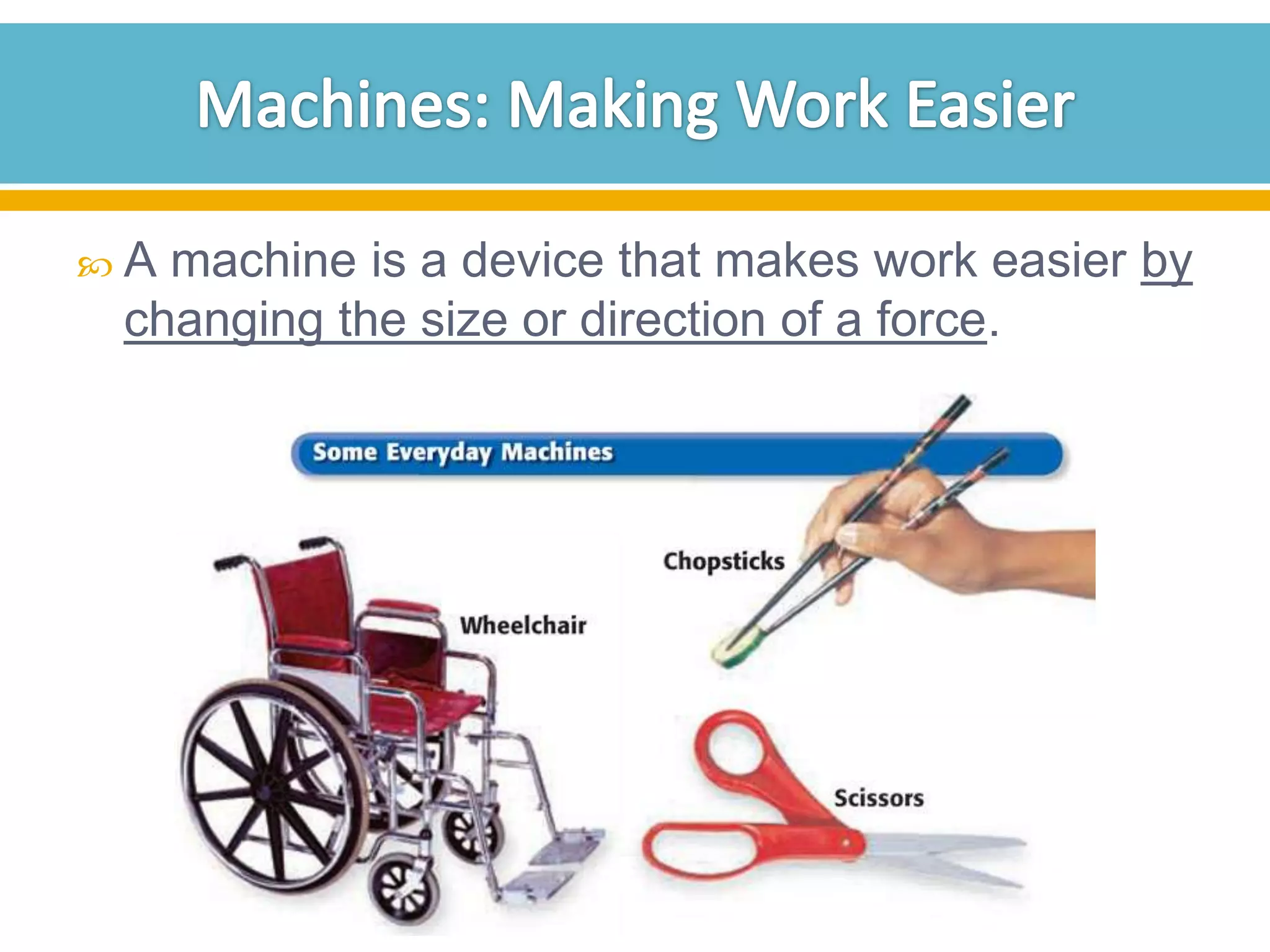
A

machine is a device that makes work easier by
changing the size or direction of a force.



 The

work that you do on a machine is called
work input.

 The

work done by the machine on an object is
called work output.

 Machines

allow force to be applied over a
greater distance, which means that less force
will be needed for the same amount of work.
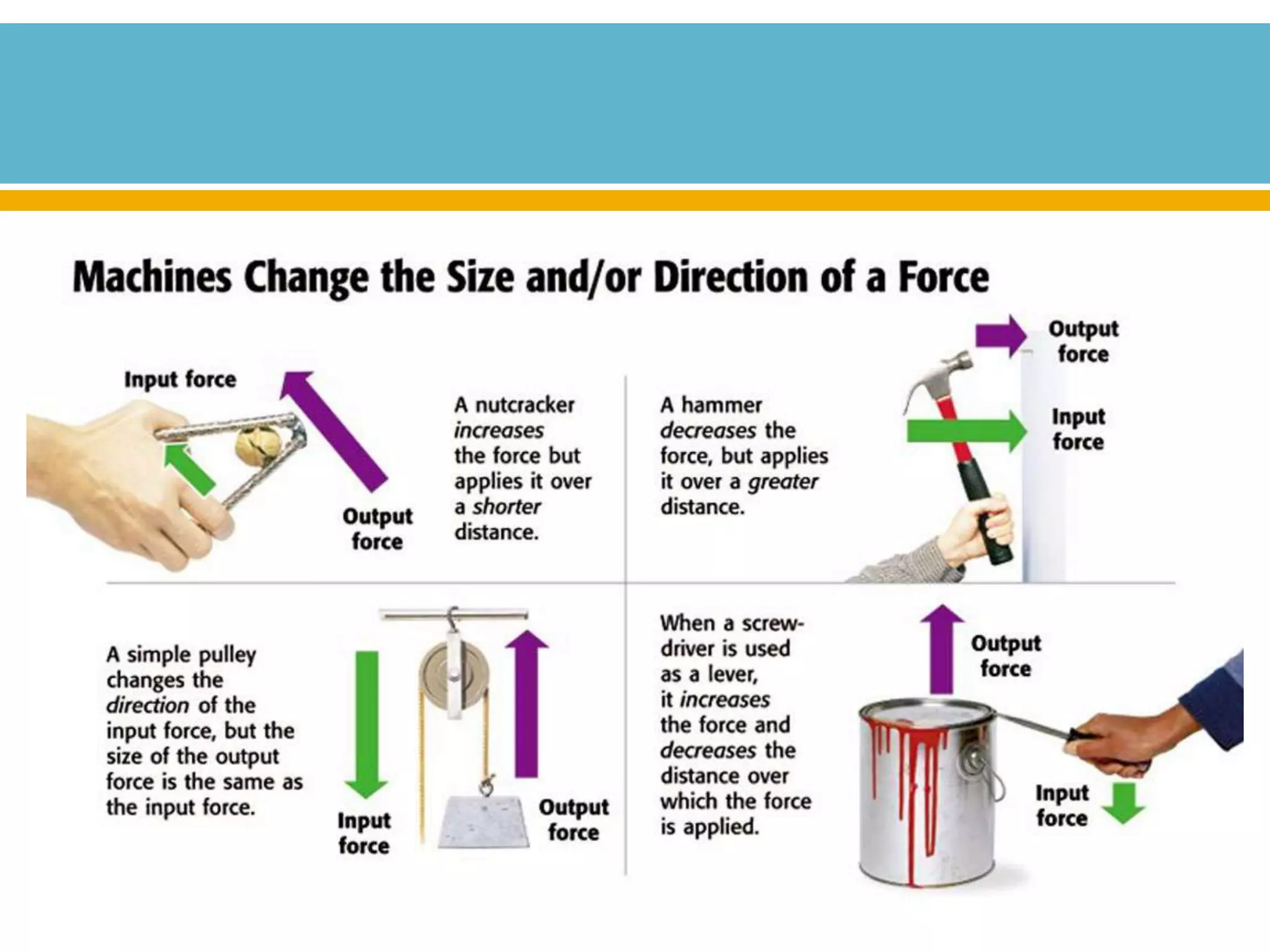
 Machines

make work easier by changing the
size or direction of the input force.

 When

a machine changes the size of the force,
the distance through which the force is exerted
must also change.



Math Practice
p.103
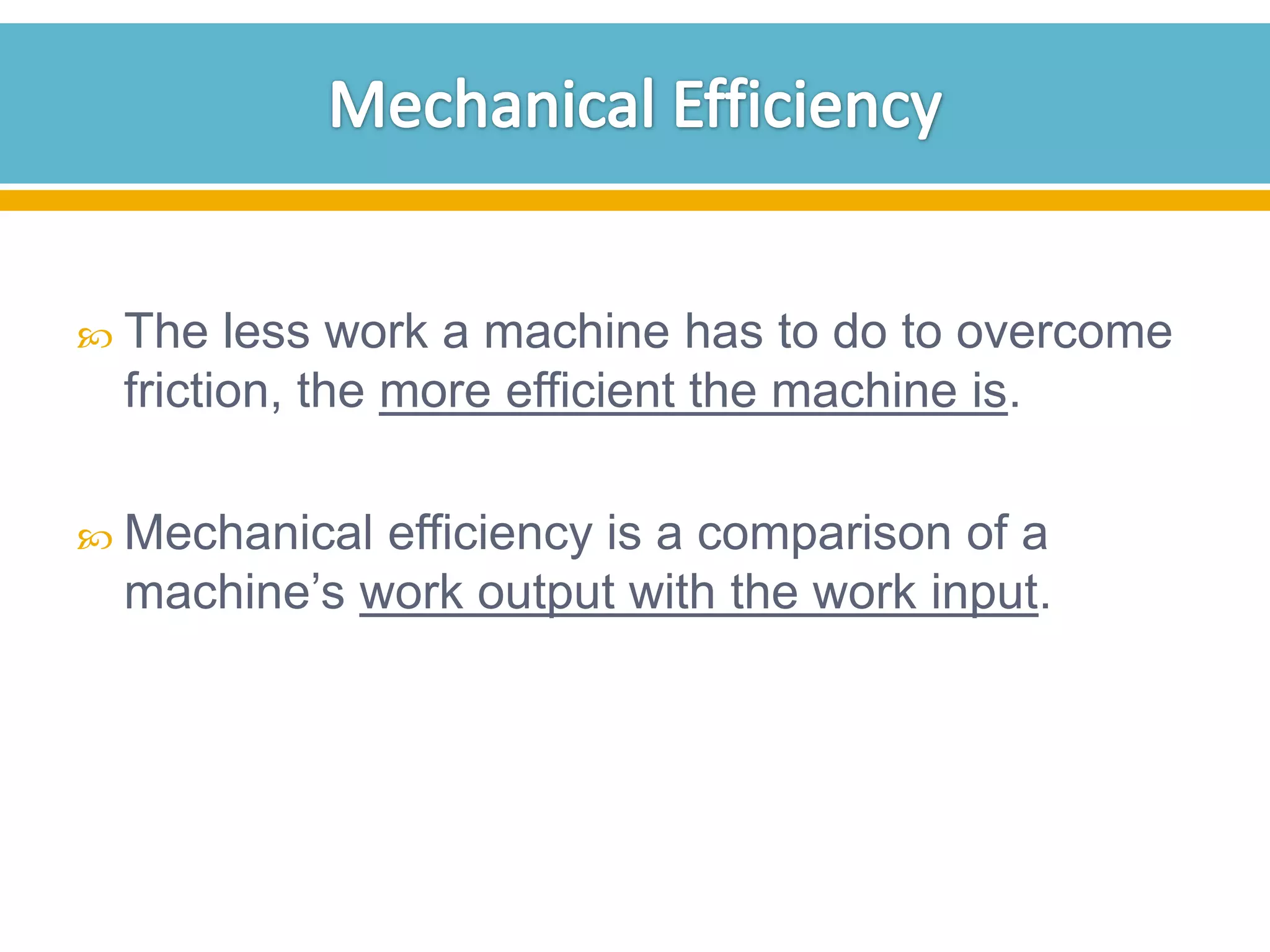
 The

less work a machine has to do to overcome
friction, the more efficient the machine is.

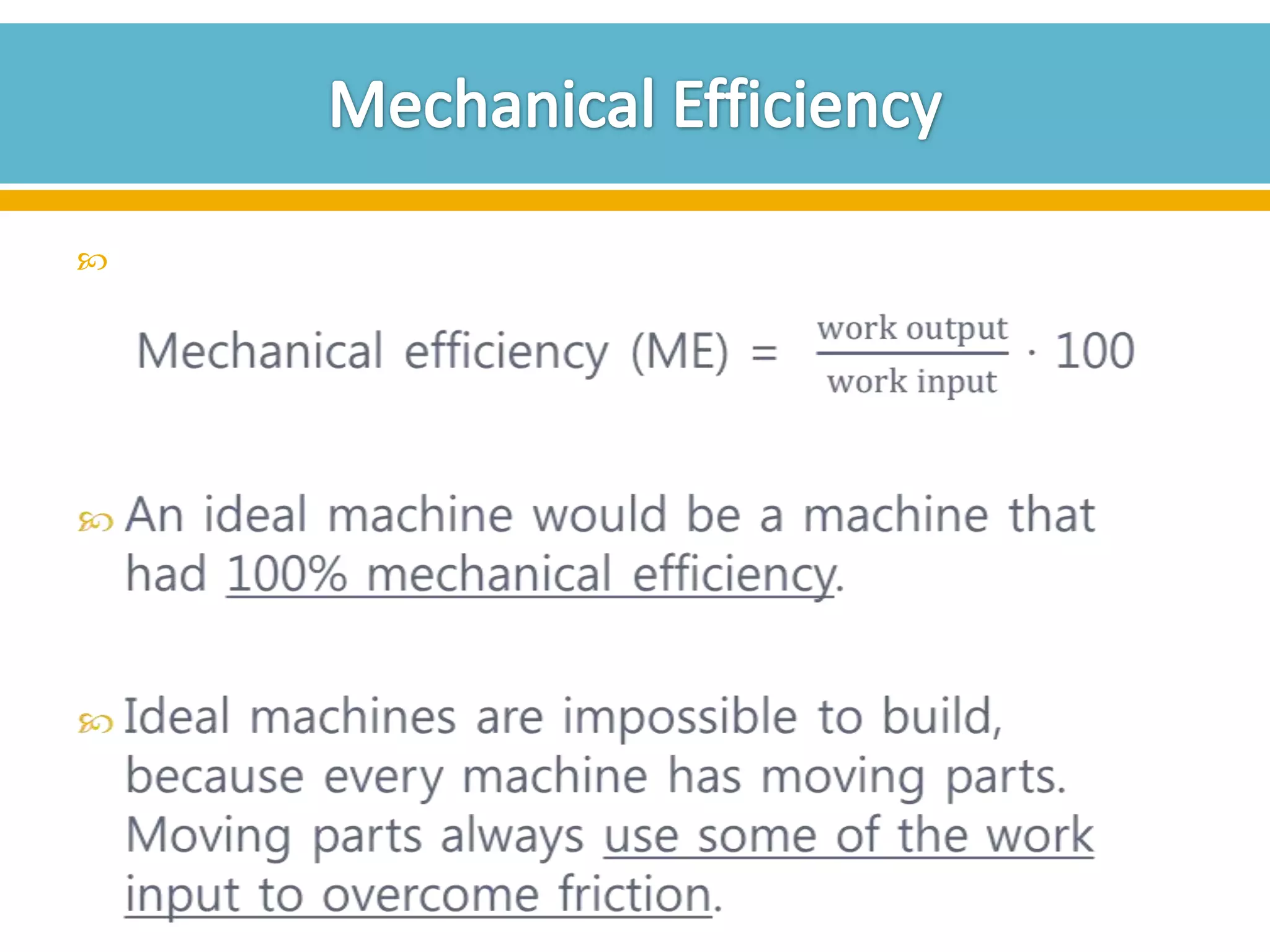
 Mechanical

efficiency is a comparison of a
machine’s work output with the work input.




p.105 #3-10
What type of machine can be found on at least half
of the people in this room right now?
By the end of this section, you should be able to:
 Identify

and give examples of the six types of
simple machines.
 Analyze the mechanical advantage provided by
each simple machine.
 Identify the simple machines that make up a
compound machine.
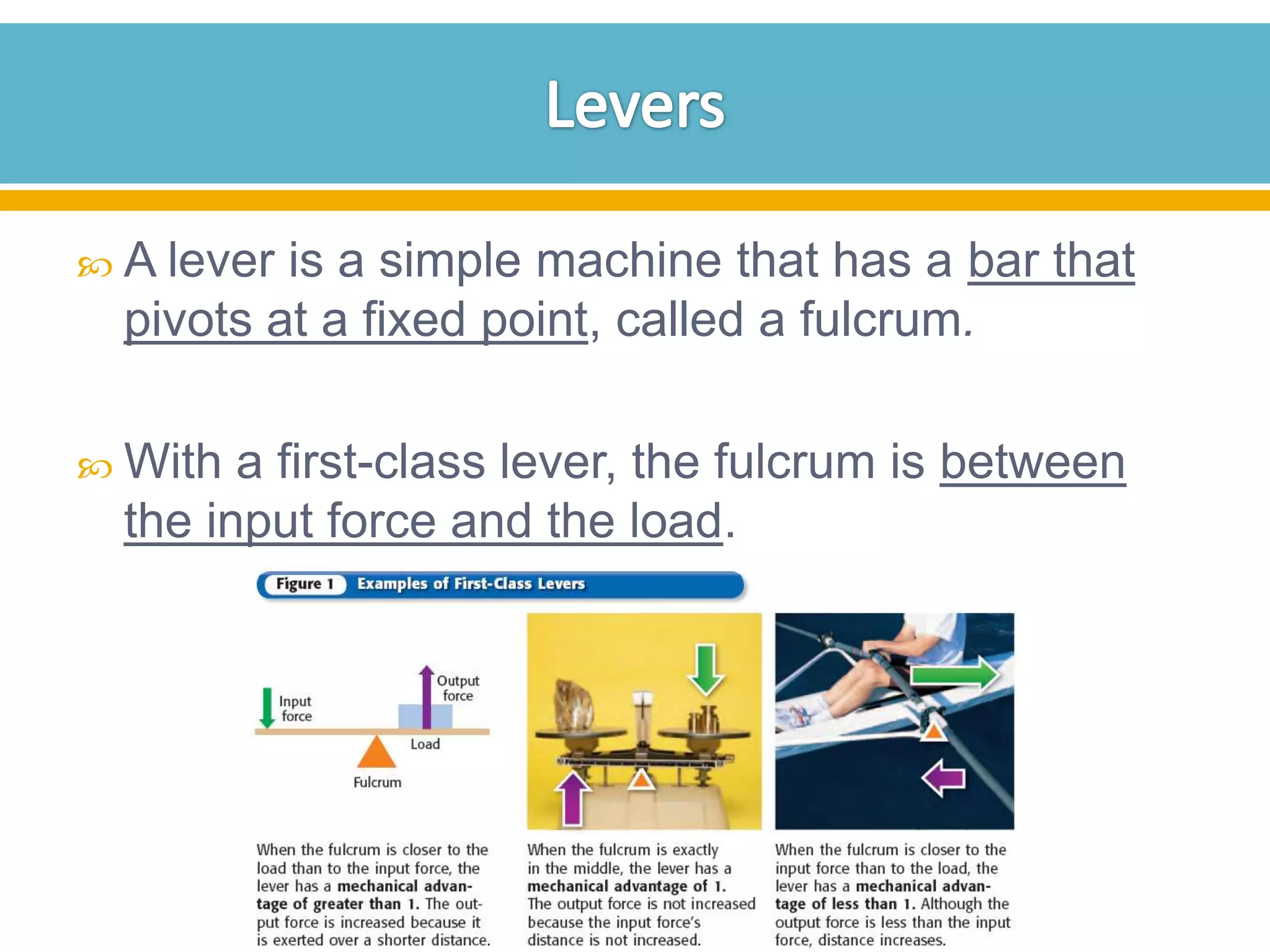
 A lever

is a simple machine that has a bar that
pivots at a fixed point, called a fulcrum.

 With

a first-class lever, the fulcrum is between
the input force and the load.
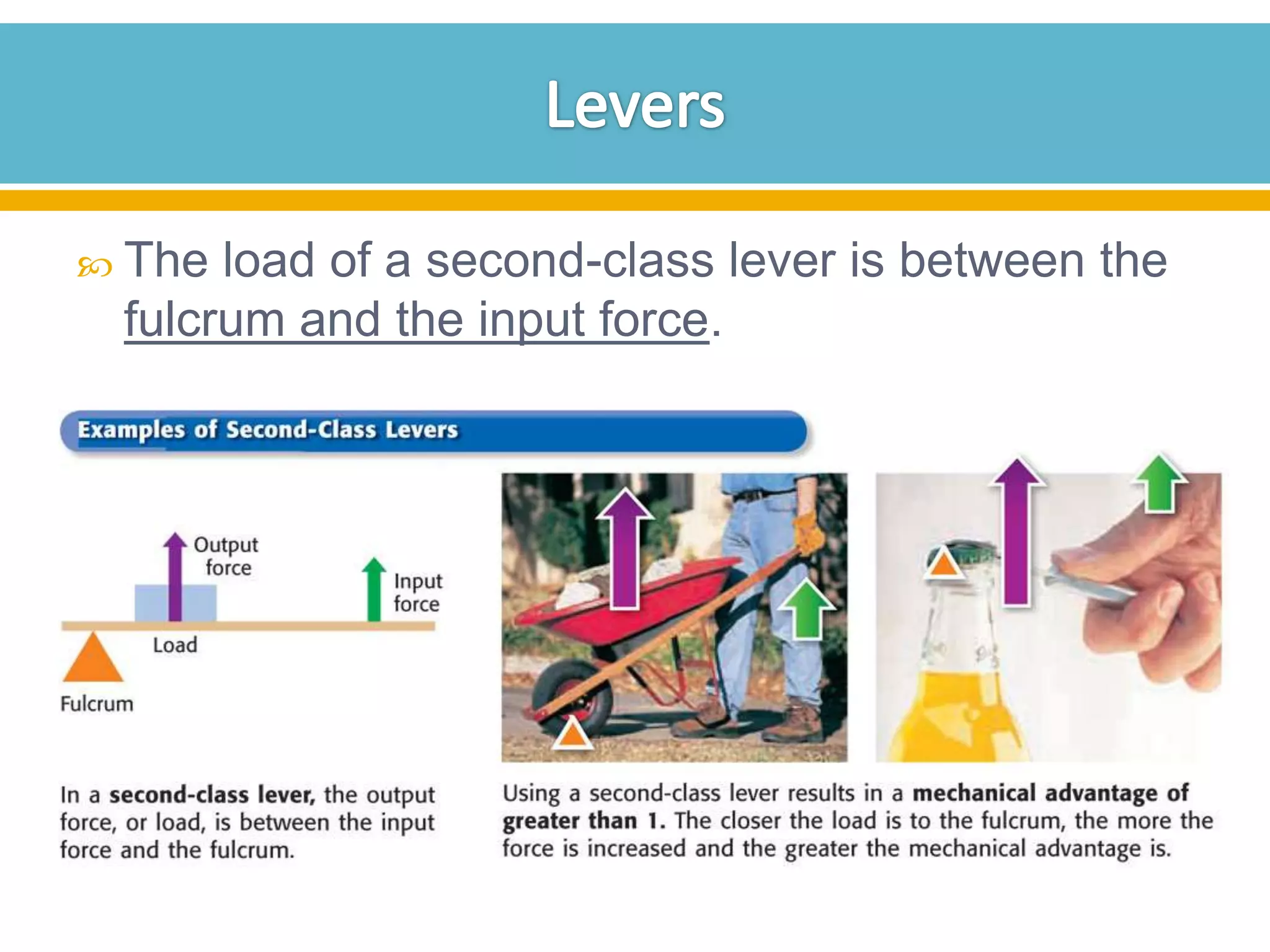
 The

load of a second-class lever is between the
fulcrum and the input force.
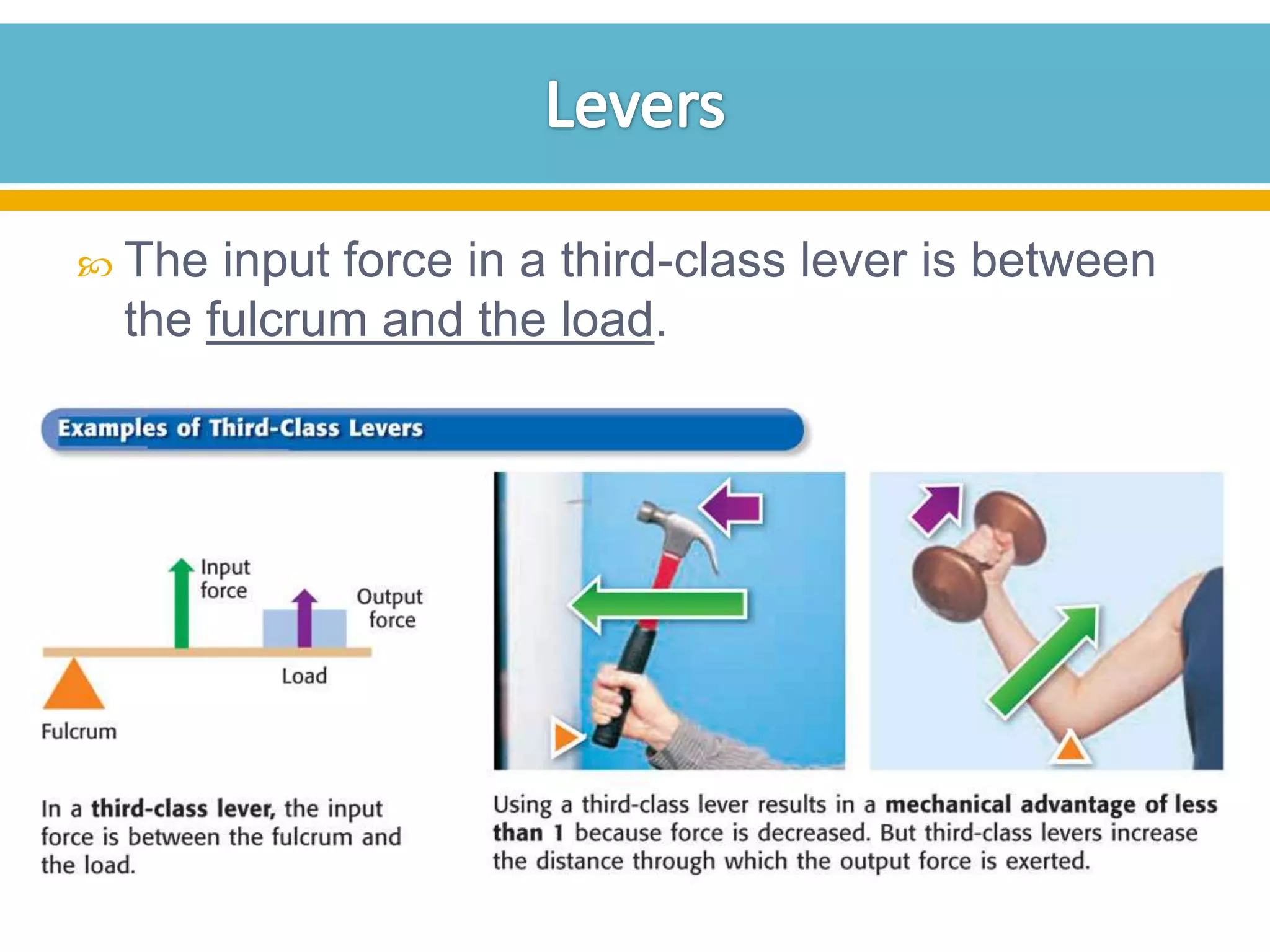
 The

input force in a third-class lever is between
the fulcrum and the load.



A

pulley is a simple machine that consists of a
wheel over which a rope, chain, or wire passes.

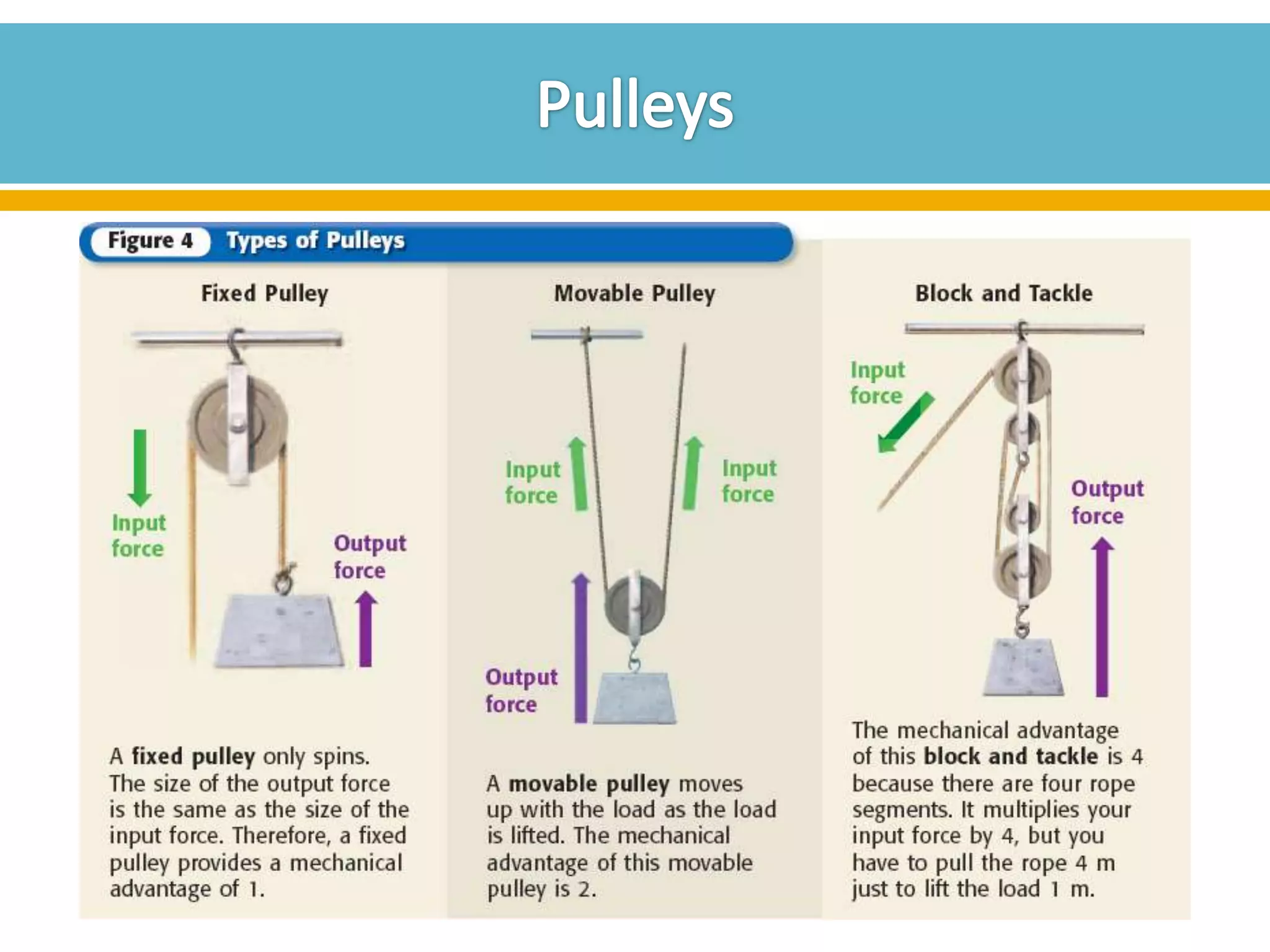
 A fixed

pulley is attached to something that does
not move.
 Unlike

fixed pulleys, movable pulleys are
attached to the object being moved.

 When

a fixed pulley and a movable pulley are
used together, the pulley system is called a
block and tackle.
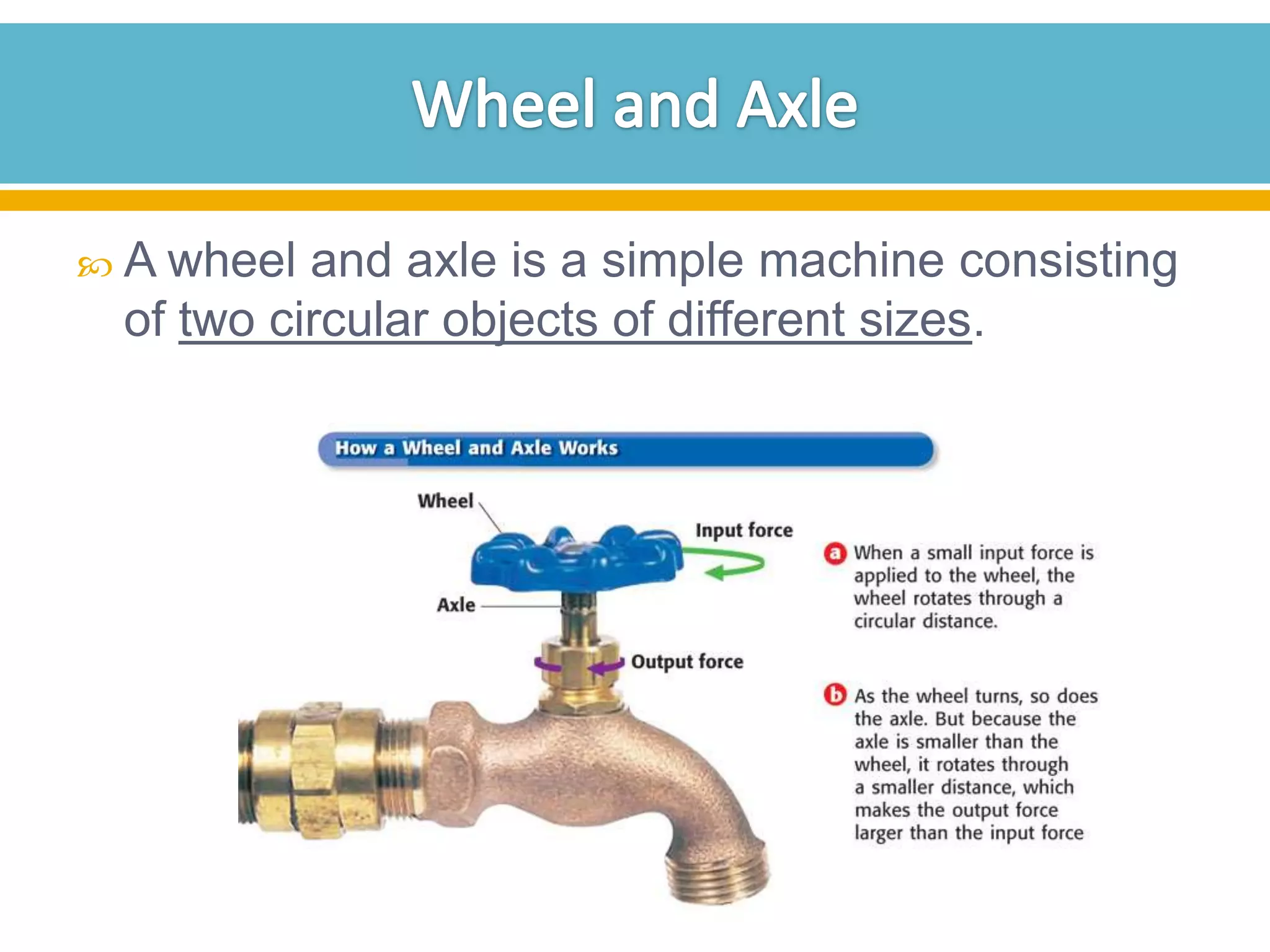
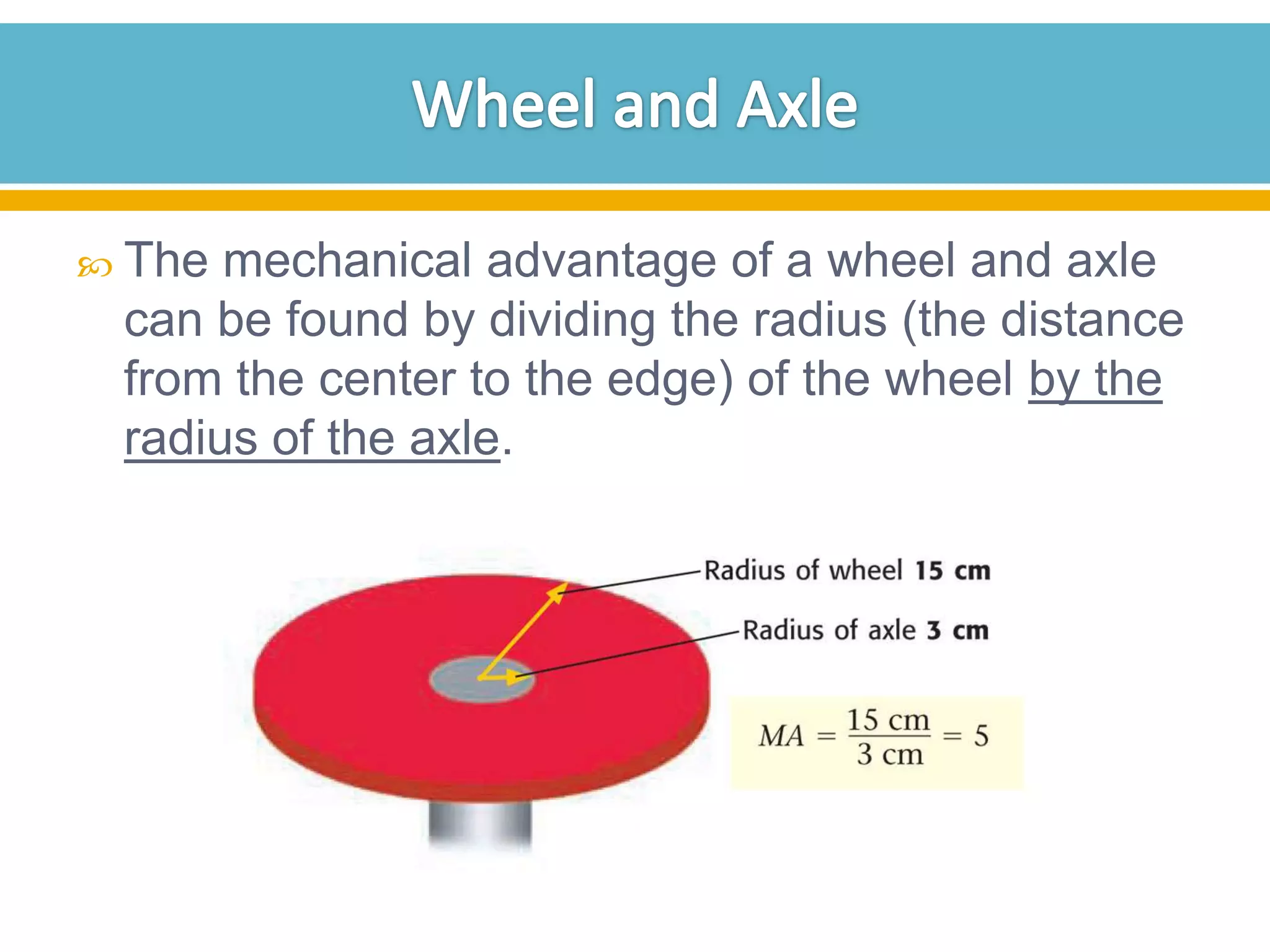
 A wheel

and axle is a simple machine consisting
of two circular objects of different sizes.
 The

mechanical advantage of a wheel and axle
can be found by dividing the radius (the distance
from the center to the edge) of the wheel by the
radius of the axle.
 An

inclined plane is a simple machine that is a
straight, slanted surface.

 The

mechanical advantage (MA) of an inclined
plane can be calculated by dividing the length of
the inclined plane by the height to which the load
is lifted.
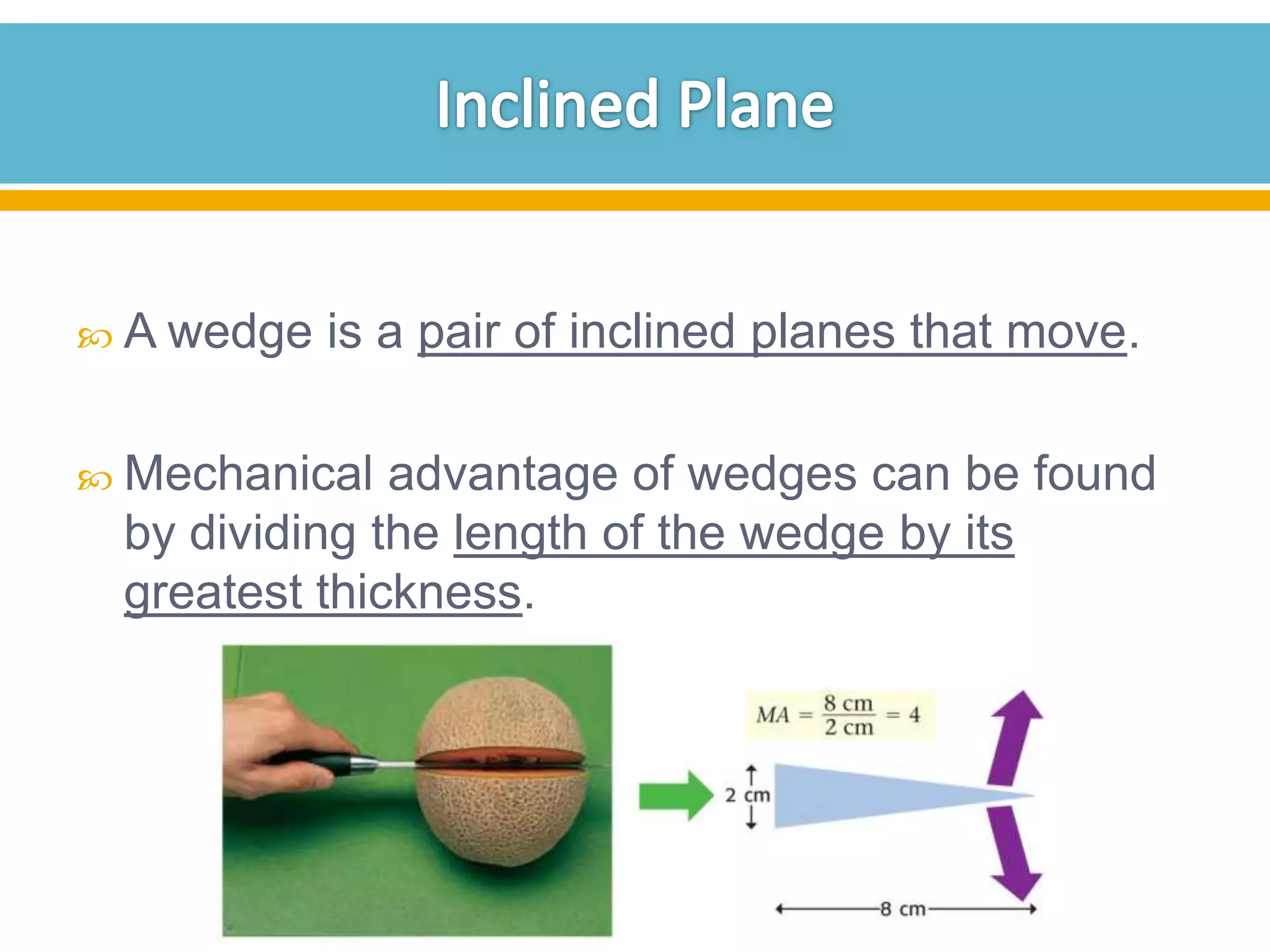
 A wedge

is a pair of inclined planes that move.

 Mechanical

advantage of wedges can be found
by dividing the length of the wedge by its
greatest thickness.
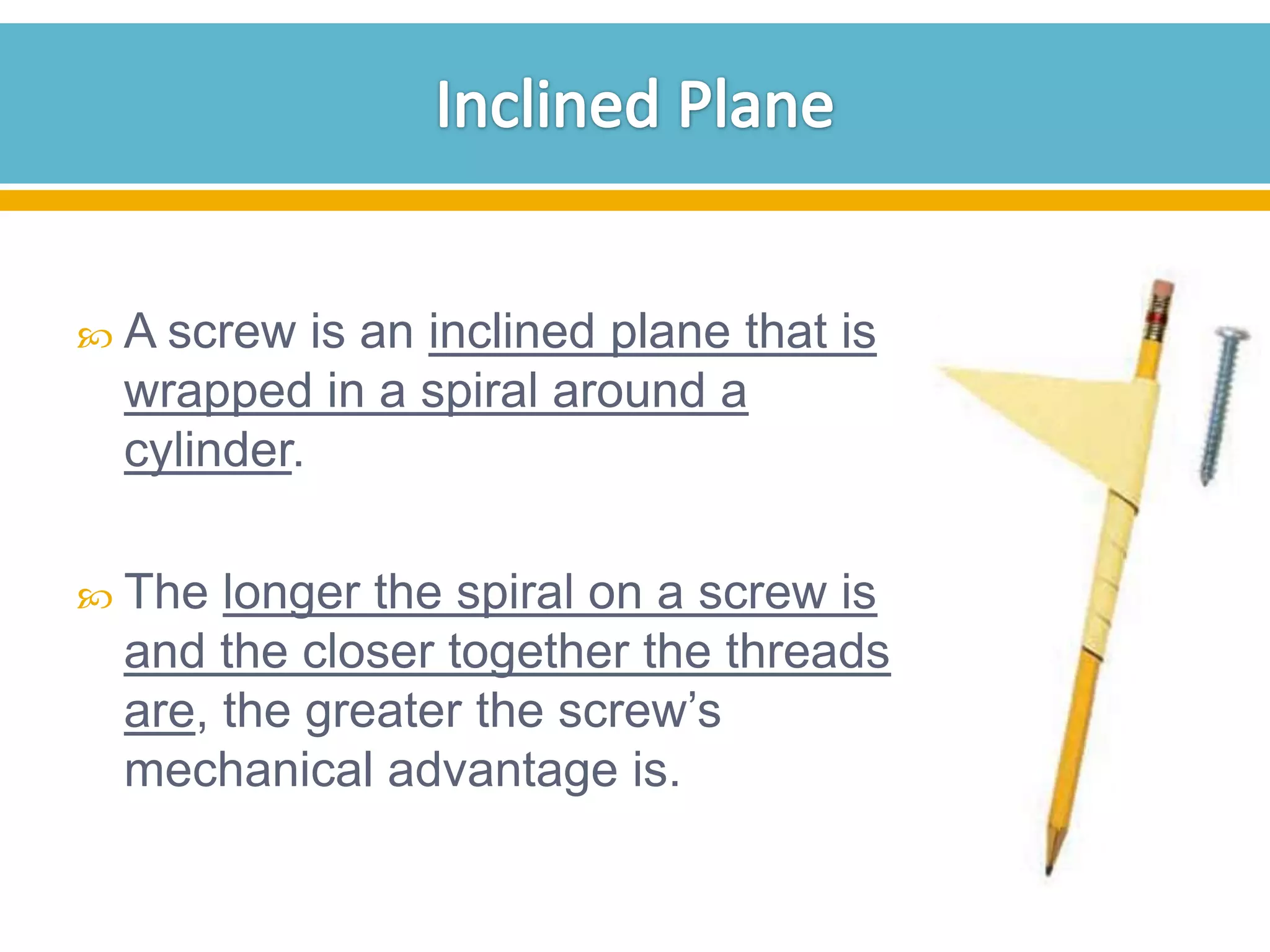
 A screw

is an inclined plane that is
wrapped in a spiral around a
cylinder.

 The

longer the spiral on a screw is
and the closer together the threads
are, the greater the screw’s
mechanical advantage is.
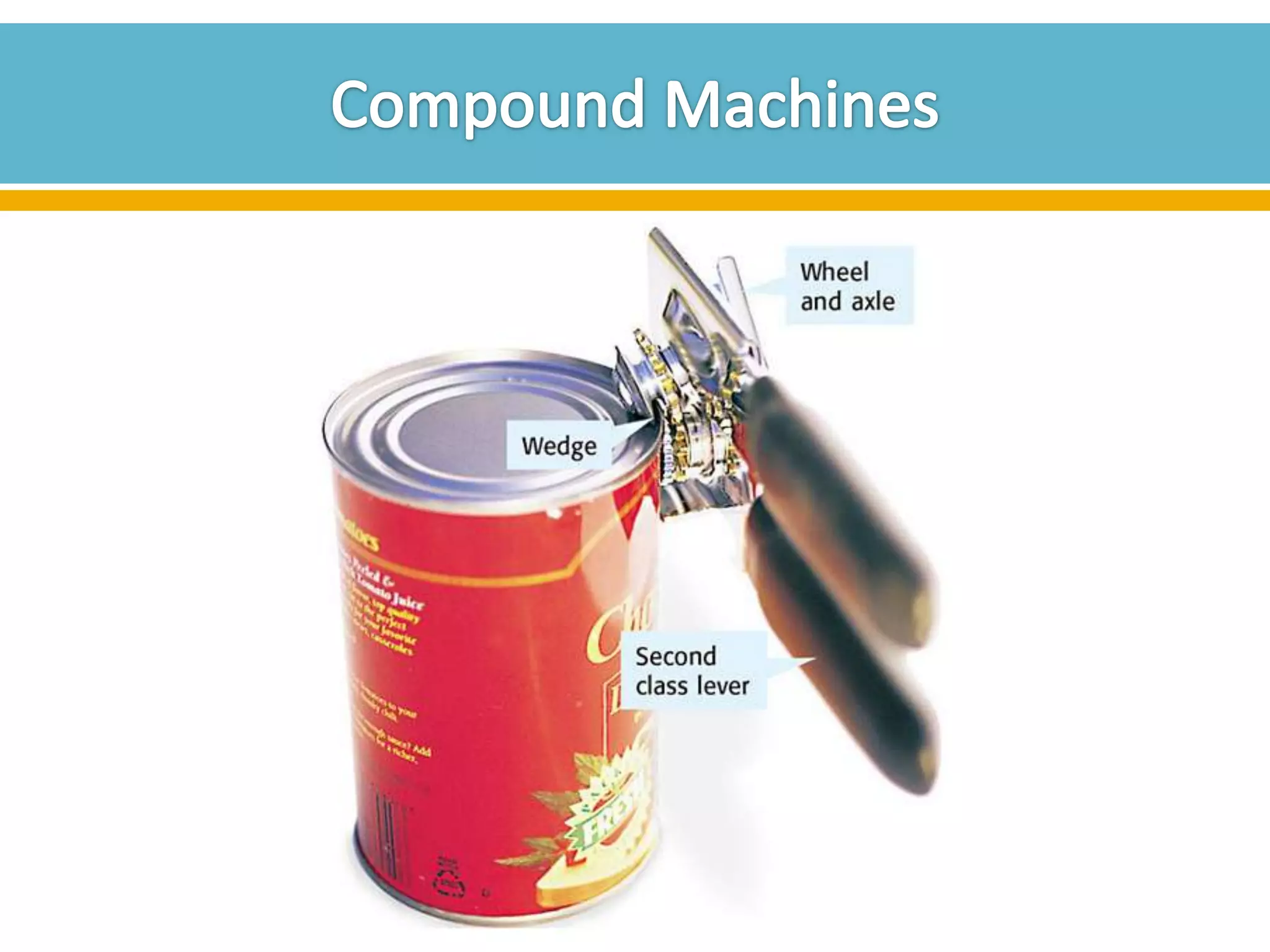
 Compound

machines are machines that are
made of two or more simple machines.
 The

mechanical efficiency of most compound
machines is low, because compound machines
have more moving parts than simple machines
do. Thus, there is more friction to overcome.



p.113 #3-9

Work and Machines

  • 1.
    Which activity requirethe least amount of work?  Carrying heavy books home  Reading a 300-page novel  Skiing for 1 hour  Lifting a 45 kg mass  Holding a steel beam in place for 3 hours  Jacking up a car
  • 2.
  • 3.
    By the endof this section, you should be able to:  Determine when work is being done on an object.  Calculate the amount of work done on an object.  Explain the difference between work and power.
  • 4.
     Work is thetransfer of energy to an object by using a force that causes the object to move in the direction of the force.  One way you can tell that work is being done is that energy is transferred.
  • 5.
    a force doesn’talways result in work being done.  Applying  For work to be done on an object, the object must move in the same direction as the force is applied.
  • 7.
     Work depends ondistance as well as force.
  • 8.
    Work = Force· distance  The unit used to express work is the newtonmeter (N · m), which is more simply called the joule.
  • 10.
  • 11.
  • 13.
     It may takeyou longer to sand a wooden shelf by hand than by using an electric sander, but the amount of energy needed is the same either way. Only the power output is lower when you sand the shelf by hand.
  • 14.
  • 15.
    Read through p.114-115 Ona new sheet of paper, follow Step 2. Copy the Data Collection Table into your notes.
  • 16.
    Why do weuse machines?
  • 17.
    By the endof this section, you should be able to:  Explain how a machine makes work easier.  Describe and give examples of the forcedistance trade-off that occurs when a machine is used.  Calculate mechanical advantage.  Explain why machines are not 100% efficient.
  • 18.
    A machine is adevice that makes work easier by changing the size or direction of a force.
  • 19.
  • 20.
     The work thatyou do on a machine is called work input.  The work done by the machine on an object is called work output.  Machines allow force to be applied over a greater distance, which means that less force will be needed for the same amount of work.
  • 21.
     Machines make workeasier by changing the size or direction of the input force.  When a machine changes the size of the force, the distance through which the force is exerted must also change.
  • 23.
  • 24.
  • 25.
     The less worka machine has to do to overcome friction, the more efficient the machine is.  Mechanical efficiency is a comparison of a machine’s work output with the work input.
  • 26.
  • 27.
  • 28.
  • 29.
    What type ofmachine can be found on at least half of the people in this room right now?
  • 30.
    By the endof this section, you should be able to:  Identify and give examples of the six types of simple machines.  Analyze the mechanical advantage provided by each simple machine.  Identify the simple machines that make up a compound machine.
  • 31.
     A lever isa simple machine that has a bar that pivots at a fixed point, called a fulcrum.  With a first-class lever, the fulcrum is between the input force and the load.
  • 32.
     The load ofa second-class lever is between the fulcrum and the input force.
  • 33.
     The input forcein a third-class lever is between the fulcrum and the load.
  • 34.
  • 35.
    A pulley is asimple machine that consists of a wheel over which a rope, chain, or wire passes.  A fixed pulley is attached to something that does not move.
  • 36.
     Unlike fixed pulleys,movable pulleys are attached to the object being moved.  When a fixed pulley and a movable pulley are used together, the pulley system is called a block and tackle.
  • 38.
     A wheel andaxle is a simple machine consisting of two circular objects of different sizes.
  • 39.
     The mechanical advantageof a wheel and axle can be found by dividing the radius (the distance from the center to the edge) of the wheel by the radius of the axle.
  • 40.
     An inclined planeis a simple machine that is a straight, slanted surface.  The mechanical advantage (MA) of an inclined plane can be calculated by dividing the length of the inclined plane by the height to which the load is lifted.
  • 41.
     A wedge isa pair of inclined planes that move.  Mechanical advantage of wedges can be found by dividing the length of the wedge by its greatest thickness.
  • 42.
     A screw isan inclined plane that is wrapped in a spiral around a cylinder.  The longer the spiral on a screw is and the closer together the threads are, the greater the screw’s mechanical advantage is.
  • 43.
     Compound machines aremachines that are made of two or more simple machines.  The mechanical efficiency of most compound machines is low, because compound machines have more moving parts than simple machines do. Thus, there is more friction to overcome.
  • 45.
  • 46.