SShhrreeee SSwwaammii AAttmmaannaanndd SSaarraasswwaattii 
IInnssttiittuuttee ooff TTeecchhnnoollooggyy
Introduction 
• Wind power is good renewable, clean and free 
source of energy for power production. 
• Reduce dependence on fossil fuels including 
imported oils. 
• Reduce emission of greenhouse gas and other 
pollutant. 
• One major concern is the noise – can be 
improved. 
• Intermittency and variability of the wind.
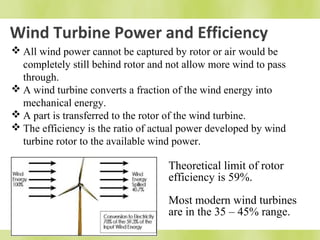
Wind Turbine Power and Efficiency 
All wind power cannot be captured by rotor or air would be 
completely still behind rotor and not allow more wind to pass 
through. 
A wind turbine converts a fraction of the wind energy into 
mechanical energy. 
A part is transferred to the rotor of the wind turbine. 
The efficiency is the ratio of actual power developed by wind 
turbine rotor to the available wind power. 
Theoretical limit of rotor 
efficiency is 59%. 
Most modern wind turbines 
are in the 35 – 45% range.
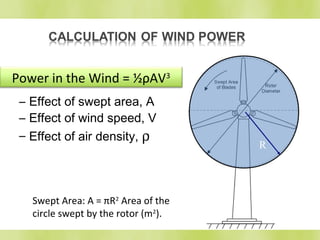
Power in the Wind = ½ρAV3 
– Effect of swept area, A 
– Effect of wind speed, V 
– Effect of air density, r 
R 
Swept Area: A = πR2 Area of the 
circle swept by the rotor (m2).
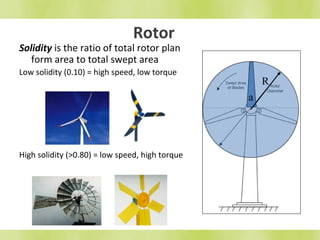
Rotor 
Solidity is the ratio of total rotor plan 
form area to total swept area 
Low solidity (0.10) = high speed, low torque 
High solidity (>0.80) = low speed, high torque 
A 
R 
a
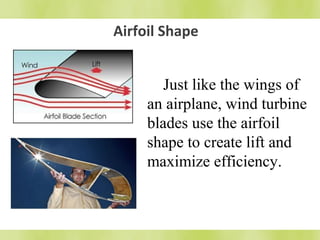
Airfoil Shape 
Just like the wings of 
an airplane, wind turbine 
blades use the airfoil 
shape to create lift and 
maximize efficiency.
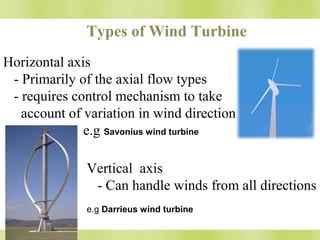
Types of Wind Turbine 
Horizontal axis 
- Primarily of the axial flow types 
- requires control mechanism to take 
account of variation in wind direction 
e.g Savonius wind turbine 
Vertical axis 
- Can handle winds from all directions 
e.g Darrieus wind turbine
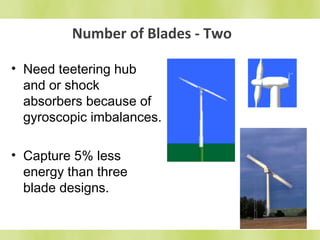
Number of Blades - Two 
• Need teetering hub 
and or shock 
absorbers because of 
gyroscopic imbalances. 
• Capture 5% less 
energy than three 
blade designs.
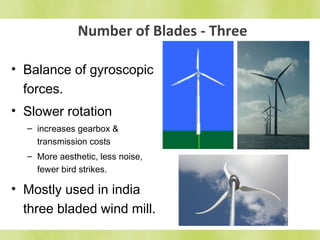
Number of Blades - Three 
• Balance of gyroscopic 
forces. 
• Slower rotation 
– increases gearbox & 
transmission costs 
– More aesthetic, less noise, 
fewer bird strikes. 
• Mostly used in india 
three bladed wind mill.
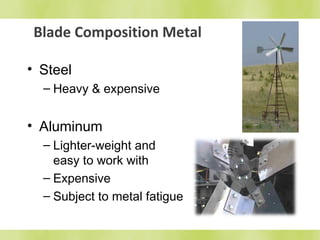
Blade Composition Metal 
• Steel 
– Heavy & expensive 
• Aluminum 
– Lighter-weight and 
easy to work with 
– Expensive 
– Subject to metal fatigue
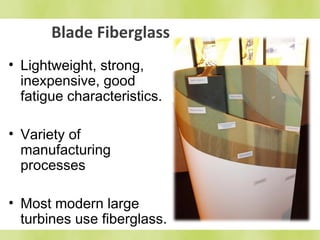
Blade Fiberglass 
• Lightweight, strong, 
inexpensive, good 
fatigue characteristics. 
• Variety of 
manufacturing 
processes 
• Most modern large 
turbines use fiberglass.
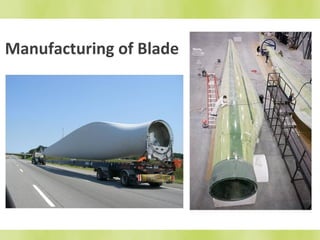
Manufacturing of Blade
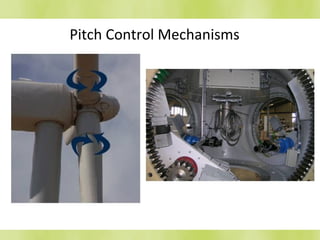
Pitch Control Mechanisms
Advantages of Wind Energy 
 Wind is free, wind farms need no fuel. 
 Produces no waste or greenhouse gases. 
 A good method of supplying energy to remote areas. 
 Although wind turbines can be very tall, they only take up a 
small plot of land. 
 Wind farms are appealing to the landscape. 
 Remote areas that have no other energy source available can 
use wind turbines to produce their own supply.
Disadvantages of Wind Energy 
The amount of wind available always varies. 
There will be times when they produce no 
electricity at all. 
Wind turbines can be noisy. It can be equivalent 
to the noise of a car traveling at 70 mph. 
Because wind turbines have to be anchored to the 
ground this could possibly impact soil structure. 
They do not produce enough electricity to power 
large amounts of homes.
Wind Energy Non Conventional  Energy Sources

Wind Energy Non Conventional Energy Sources

  • 1.
    SShhrreeee SSwwaammii AAttmmaannaannddSSaarraasswwaattii IInnssttiittuuttee ooff TTeecchhnnoollooggyy
  • 2.
    Introduction • Windpower is good renewable, clean and free source of energy for power production. • Reduce dependence on fossil fuels including imported oils. • Reduce emission of greenhouse gas and other pollutant. • One major concern is the noise – can be improved. • Intermittency and variability of the wind.
  • 5.
    Wind Turbine Powerand Efficiency All wind power cannot be captured by rotor or air would be completely still behind rotor and not allow more wind to pass through. A wind turbine converts a fraction of the wind energy into mechanical energy. A part is transferred to the rotor of the wind turbine. The efficiency is the ratio of actual power developed by wind turbine rotor to the available wind power. Theoretical limit of rotor efficiency is 59%. Most modern wind turbines are in the 35 – 45% range.
  • 6.
    Power in theWind = ½ρAV3 – Effect of swept area, A – Effect of wind speed, V – Effect of air density, r R Swept Area: A = πR2 Area of the circle swept by the rotor (m2).
  • 7.
    Rotor Solidity isthe ratio of total rotor plan form area to total swept area Low solidity (0.10) = high speed, low torque High solidity (>0.80) = low speed, high torque A R a
  • 8.
    Airfoil Shape Justlike the wings of an airplane, wind turbine blades use the airfoil shape to create lift and maximize efficiency.
  • 9.
    Types of WindTurbine Horizontal axis - Primarily of the axial flow types - requires control mechanism to take account of variation in wind direction e.g Savonius wind turbine Vertical axis - Can handle winds from all directions e.g Darrieus wind turbine
  • 11.
    Number of Blades- Two • Need teetering hub and or shock absorbers because of gyroscopic imbalances. • Capture 5% less energy than three blade designs.
  • 12.
    Number of Blades- Three • Balance of gyroscopic forces. • Slower rotation – increases gearbox & transmission costs – More aesthetic, less noise, fewer bird strikes. • Mostly used in india three bladed wind mill.
  • 13.
    Blade Composition Metal • Steel – Heavy & expensive • Aluminum – Lighter-weight and easy to work with – Expensive – Subject to metal fatigue
  • 14.
    Blade Fiberglass •Lightweight, strong, inexpensive, good fatigue characteristics. • Variety of manufacturing processes • Most modern large turbines use fiberglass.
  • 15.
  • 16.
  • 17.
    Advantages of WindEnergy  Wind is free, wind farms need no fuel.  Produces no waste or greenhouse gases.  A good method of supplying energy to remote areas.  Although wind turbines can be very tall, they only take up a small plot of land.  Wind farms are appealing to the landscape.  Remote areas that have no other energy source available can use wind turbines to produce their own supply.
  • 18.
    Disadvantages of WindEnergy The amount of wind available always varies. There will be times when they produce no electricity at all. Wind turbines can be noisy. It can be equivalent to the noise of a car traveling at 70 mph. Because wind turbines have to be anchored to the ground this could possibly impact soil structure. They do not produce enough electricity to power large amounts of homes.

Editor's Notes

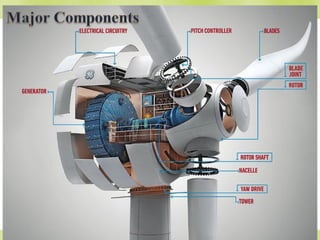
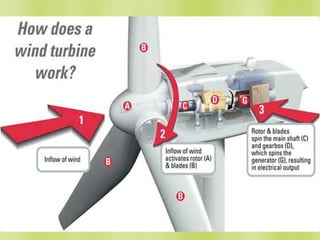
  • #5 A look inside. Blades are a very important component (duh!) Things to note as compared to Small Wind Turbines Blades can be actively pitched by hydraulics. Spin at 12-20 RPM --- much slower than a small wind turbine Large driveshaft attached to a gearbox….must go from 12-20 RPM to 1600 RPM for the generator. Generator creates electricity. Small Wind Turbines use vanes (typcally) to track the wind…they uses and anemometer and hydraulics to move the turbine. Highly computerized and automated….senses conditions and can turn itself off if there is a problem. Often connected by computers to one location and run from there.
  • #7 This is the equation for the power in the wind. (Don’t fear – there are only 2 equations in this presentation.) Each of the terms in this equation can tell us a lot about wind turbines and how they work. Lets look at wind speed (V), swept area (A), and density (Greek letter “rho,” ) one at a time. First, let’s look at wind speed, V. Because V is cubed in the equation, a small increase in V makes for a increase in power. (illustrated on next slide) (Click on the links at the bottom to get the values of both k and .)
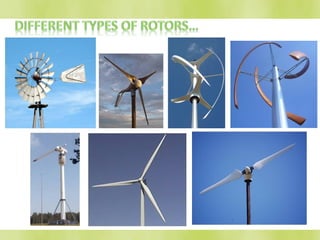
  • #11 Various rotor configurations… all used to convert wind into usable energy. Why do the rotors differ so greatly? Why have we come to use the typical 3-blade rotor in nearly all industrial wind turbines today?