Wind Energy
What is wind power?
Wind power is energy, such as electricity, that is generated directly from the
wind. It is considered a renewable energy source because there is always
wind on the Earth and we aren't "using up" the wind when we make energy
from it. Wind power also does not cause pollution. Wind Turbines and
Wind Farms
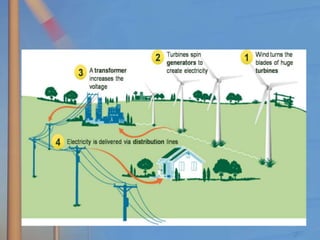
In order to make electricity from wind, energy companies use large
windmills called wind turbines. They are called this because they use
turbine generators to generate the electricity.
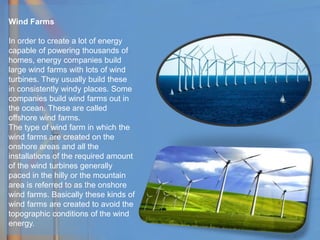
In order to create a lot of energy capable of powering thousands of homes,
energy companies build large wind farms with lots of wind turbines. They
usually build these in consistently windy places. Some companies build
wind farms out in the ocean. These are called offshore wind farms.
Wind in action:
When wind strikes an object, it exerts a force in an attempt to move it out of the
way. Some of the winds’ energy is transferred to the object, in this case the
windmill, causing it to move.
History of Wind usage:
 one of the earliest energy resources.
Recorded in history, first to power
boats and grind grain, later to pump
water, press oil, saw lumber and make
paper.
Windmills were mentioned at the
beginning of Islamic civilization (7th
century).
Windmills were developed in Persia
and used paddles made of bundled
reeds.
Egyptians may have been the first to
go up the Nile river around 4th century
B.C, powered by wind.
Ancient Chinese used vertical axis
windmills to grind grain and pump water.
Windmills were introduced to Europe
by the crusaders around 1300 A.D
*windmills used for pumping water.
Wind Today!!!
Windmills are used for pumping
water from deep underground.
Modern wind turbine is the result
of design and material advances
made during the 1980s and 1990s,
which enabled wind turbines to
become increasingly efficient.
Today, wind turbines are size
same as the traditional European
windmill. It can generate 250 to
300 kilowatts of power- a nearly
tenfold increase in efficiency.
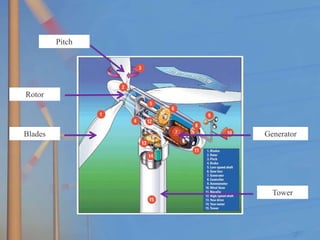
Blades
Tower
Pitch
Generator
Rotor
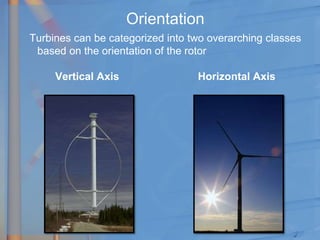
Orientation
Turbines can be categorized into two overarching classes
based on the orientation of the rotor
Vertical Axis Horizontal Axis
Types of Wind Turbines
Horizontal-axis turbines are similar to propeller airplane engines, most
of the wind turbines currently in use are horizontal-axis turbines.
Horizontal-axis turbines have blades like airplane propellers. The
horizontal-axis turbines used on wind farms can be as tall as 20-story
buildings and can have blades more than 100 feet long. Taller turbines
with longer blades generate more electricity. Horizontal-axis turbines
commonly have three blades.
Vertical-axis turbines have blades that are attached to the top and the
bottom of a vertical rotor. look like egg beaters , the most common type
of vertical-axis turbine—the Darrieus wind turbine, named after the
French engineer Georges Darrieus who patented the design in 1931—
looks like a giant, two-bladed egg beater. Some versions of the vertical-
axis turbine are 100 feet tall and 50 feet wide. Very few vertical-axis
wind turbines are in use today because they do not perform as well as
horizontal-axis turbines.
How does a wind turbine work?
A wind turbine works the opposite of a fan. Instead of using electricity
to turn the blades to make wind, it uses the wind to turn the blades to
make electricity.
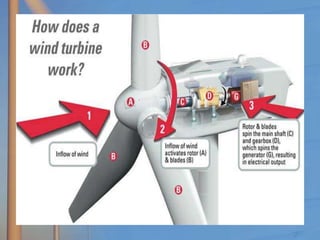
When the wind turns the blades, the blades turn a shaft inside the
turbine. This shaft is big, but turns slowly. The shaft, however, is
connected to a number of gears which causes a smaller shaft to turn
much faster. This smaller shaft drives the electrical generator which
generates the electricity that can be used by homes and businesses.
The parts inside a wind turbine help to generate electricity
What if there isn't any wind?
If there isn't any wind, then no energy will be generated by the wind
turbine. However, engineers do a lot of measurements and
calculations to figure out the best areas to place the wind turbines.
The wind won't be blowing all the time, but the important thing is how
much the wind blows on average.
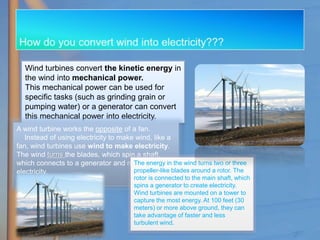
Wind turbines convert the kinetic energy in
the wind into mechanical power.
This mechanical power can be used for
specific tasks (such as grinding grain or
pumping water) or a generator can convert
this mechanical power into electricity.
A wind turbine works the opposite of a fan.
Instead of using electricity to make wind, like a
fan, wind turbines use wind to make electricity.
The wind turns the blades, which spin a shaft,
which connects to a generator and makes
electricity.
The energy in the wind turns two or three
propeller-like blades around a rotor. The
rotor is connected to the main shaft, which
spins a generator to create electricity.
Wind turbines are mounted on a tower to
capture the most energy. At 100 feet (30
meters) or more above ground, they can
take advantage of faster and less
turbulent wind.
General advantages
• Wind energy is friendly to the surrounding environment, as no
fossil fuels are burnt to generate electricity from wind energy
• Wind turbines requires less space than average power
stations.
• When combined with solar electricity, this energy source is
great for developed and developing countries to provide a
steady, reliable supply of electricity
General disadvantages
• The main disadvantage regarding wind power is down to
the winds unreliability factor. In many areas, the winds
strength is not enough to support a wind turbine
• Wind turbines generally produce allot less electricity than
the average fossil fuelled power station, which means
that multiple wind turbines are needed to make an
impact.
• For a wind turbine to make money it must be placed in a spot with
an average annual wind speed of 15 miles per hour.
• In 2011, the top wind power producing state in the United States
was Texas. Texas was followed by Iowa, California, Minnesota, and
Illinois.
• Around 3% of the electricity in the United States in 2011 was
provided by wind power. This was enough to power around 10
million homes.
• Tax breaks and new technologies have helped the output from wind
power to grow significantly in the last 10 years.
• The largest wind farm in the United States is the Horse Hollow Wind
Energy Center in Texas. It has 421 wind turbines.
Fun Facts about Wind Power
Advantages and Disadvantages
Advantages:
No pollution.
Lowest prices renewable resources
Don’t produce atmospheric emissions
that cause acid rains and green house
effects.
Disadvantages:
Depending on how energetic a wind site is, the wind
farm may or may not be cost competitive.
Wind energy cannot be stored (unless batteries are used)
Good wind sites are often located in remote locations
Wind resource development may compete with other
uses for the land and those alternative uses may be more
highly valued than electricity generation.
sometimes birds have been killed by flying into the
rotors
Wind Farms
In order to create a lot of energy
capable of powering thousands of
homes, energy companies build
large wind farms with lots of wind
turbines. They usually build these
in consistently windy places. Some
companies build wind farms out in
the ocean. These are called
offshore wind farms.
The type of wind farm in which the
wind farms are created on the
onshore areas and all the
installations of the required amount
of the wind turbines generally
paced in the hilly or the mountain
area is referred to as the onshore
wind farms. Basically these kinds of
wind farms are created to avoid the
topographic conditions of the wind
energy.
¡THANK
YOU!

Wind energy

  • 2.
    Wind Energy What iswind power? Wind power is energy, such as electricity, that is generated directly from the wind. It is considered a renewable energy source because there is always wind on the Earth and we aren't "using up" the wind when we make energy from it. Wind power also does not cause pollution. Wind Turbines and Wind Farms In order to make electricity from wind, energy companies use large windmills called wind turbines. They are called this because they use turbine generators to generate the electricity. In order to create a lot of energy capable of powering thousands of homes, energy companies build large wind farms with lots of wind turbines. They usually build these in consistently windy places. Some companies build wind farms out in the ocean. These are called offshore wind farms.
  • 3.
    Wind in action: Whenwind strikes an object, it exerts a force in an attempt to move it out of the way. Some of the winds’ energy is transferred to the object, in this case the windmill, causing it to move. History of Wind usage:  one of the earliest energy resources. Recorded in history, first to power boats and grind grain, later to pump water, press oil, saw lumber and make paper. Windmills were mentioned at the beginning of Islamic civilization (7th century). Windmills were developed in Persia and used paddles made of bundled reeds. Egyptians may have been the first to go up the Nile river around 4th century B.C, powered by wind. Ancient Chinese used vertical axis windmills to grind grain and pump water. Windmills were introduced to Europe by the crusaders around 1300 A.D *windmills used for pumping water. Wind Today!!! Windmills are used for pumping water from deep underground. Modern wind turbine is the result of design and material advances made during the 1980s and 1990s, which enabled wind turbines to become increasingly efficient. Today, wind turbines are size same as the traditional European windmill. It can generate 250 to 300 kilowatts of power- a nearly tenfold increase in efficiency.
  • 4.
  • 6.
    Orientation Turbines can becategorized into two overarching classes based on the orientation of the rotor Vertical Axis Horizontal Axis
  • 7.
    Types of WindTurbines Horizontal-axis turbines are similar to propeller airplane engines, most of the wind turbines currently in use are horizontal-axis turbines. Horizontal-axis turbines have blades like airplane propellers. The horizontal-axis turbines used on wind farms can be as tall as 20-story buildings and can have blades more than 100 feet long. Taller turbines with longer blades generate more electricity. Horizontal-axis turbines commonly have three blades. Vertical-axis turbines have blades that are attached to the top and the bottom of a vertical rotor. look like egg beaters , the most common type of vertical-axis turbine—the Darrieus wind turbine, named after the French engineer Georges Darrieus who patented the design in 1931— looks like a giant, two-bladed egg beater. Some versions of the vertical- axis turbine are 100 feet tall and 50 feet wide. Very few vertical-axis wind turbines are in use today because they do not perform as well as horizontal-axis turbines.
  • 8.
    How does awind turbine work? A wind turbine works the opposite of a fan. Instead of using electricity to turn the blades to make wind, it uses the wind to turn the blades to make electricity. When the wind turns the blades, the blades turn a shaft inside the turbine. This shaft is big, but turns slowly. The shaft, however, is connected to a number of gears which causes a smaller shaft to turn much faster. This smaller shaft drives the electrical generator which generates the electricity that can be used by homes and businesses. The parts inside a wind turbine help to generate electricity What if there isn't any wind? If there isn't any wind, then no energy will be generated by the wind turbine. However, engineers do a lot of measurements and calculations to figure out the best areas to place the wind turbines. The wind won't be blowing all the time, but the important thing is how much the wind blows on average.
  • 10.
    Wind turbines convertthe kinetic energy in the wind into mechanical power. This mechanical power can be used for specific tasks (such as grinding grain or pumping water) or a generator can convert this mechanical power into electricity. A wind turbine works the opposite of a fan. Instead of using electricity to make wind, like a fan, wind turbines use wind to make electricity. The wind turns the blades, which spin a shaft, which connects to a generator and makes electricity. The energy in the wind turns two or three propeller-like blades around a rotor. The rotor is connected to the main shaft, which spins a generator to create electricity. Wind turbines are mounted on a tower to capture the most energy. At 100 feet (30 meters) or more above ground, they can take advantage of faster and less turbulent wind.
  • 11.
    General advantages • Windenergy is friendly to the surrounding environment, as no fossil fuels are burnt to generate electricity from wind energy • Wind turbines requires less space than average power stations. • When combined with solar electricity, this energy source is great for developed and developing countries to provide a steady, reliable supply of electricity
  • 12.
    General disadvantages • Themain disadvantage regarding wind power is down to the winds unreliability factor. In many areas, the winds strength is not enough to support a wind turbine • Wind turbines generally produce allot less electricity than the average fossil fuelled power station, which means that multiple wind turbines are needed to make an impact.
  • 13.
    • For awind turbine to make money it must be placed in a spot with an average annual wind speed of 15 miles per hour. • In 2011, the top wind power producing state in the United States was Texas. Texas was followed by Iowa, California, Minnesota, and Illinois. • Around 3% of the electricity in the United States in 2011 was provided by wind power. This was enough to power around 10 million homes. • Tax breaks and new technologies have helped the output from wind power to grow significantly in the last 10 years. • The largest wind farm in the United States is the Horse Hollow Wind Energy Center in Texas. It has 421 wind turbines. Fun Facts about Wind Power
  • 14.
    Advantages and Disadvantages Advantages: Nopollution. Lowest prices renewable resources Don’t produce atmospheric emissions that cause acid rains and green house effects. Disadvantages: Depending on how energetic a wind site is, the wind farm may or may not be cost competitive. Wind energy cannot be stored (unless batteries are used) Good wind sites are often located in remote locations Wind resource development may compete with other uses for the land and those alternative uses may be more highly valued than electricity generation. sometimes birds have been killed by flying into the rotors
  • 15.
    Wind Farms In orderto create a lot of energy capable of powering thousands of homes, energy companies build large wind farms with lots of wind turbines. They usually build these in consistently windy places. Some companies build wind farms out in the ocean. These are called offshore wind farms. The type of wind farm in which the wind farms are created on the onshore areas and all the installations of the required amount of the wind turbines generally paced in the hilly or the mountain area is referred to as the onshore wind farms. Basically these kinds of wind farms are created to avoid the topographic conditions of the wind energy.
  • 16.