
Web 1.0, Web 2.0 & Wikis Brett Atwood
(Don’t) Believe the Hype The online media and marketing sector has a brief (but shady) history Rise in the ’90s Crash of 2001 Web 2.0 post -2002
Rise in the ’90s When the Internet emerged into the mainstream, there were a lot of promises – many of which were broken
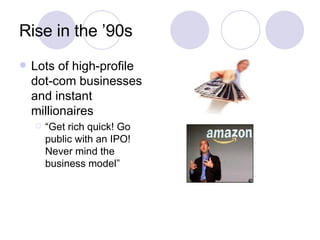
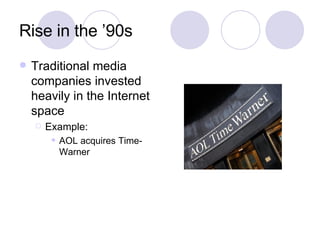
Rise in the ’90s Lots of high-profile dot-com businesses and instant millionaires “ Get rich quick! Go public with an IPO! Never mind the business model”
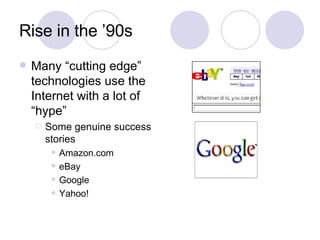
Rise in the ’90s Traditional media companies invested heavily in the Internet space Example: AOL acquires Time-Warner
Rise in the ’90s Many “cutting edge” technologies use the Internet with a lot of “hype” Some genuine success stories Amazon.com eBay Google Yahoo!
Failures But there were also technologies that failed
Crash of 2001 In the rush to get rich many businesses went bankrupt and investors got burned Consumers were subject to skepticism over the over-promoted “hype” on the Internet
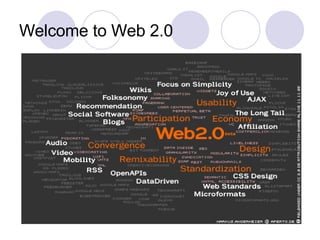
Welcome to Web 2.0
Web 2.0 As the Internet continues to grow in popularity, a new generation of more stable businesses and technologies are emerging online and on mobile devices
Web 2.0 Web serves as a platform for other technologies to interoperate with Mobile devices Home entertainment devices Appliances
Web 2.0 Architecture of participation User-generated content Blogs Wikis Social networking sites
Web 2.0 All of which enable a new ecosystem for online public relations campaigns
Web 2.0 The definition of “Web 2.0” extends to several other areas The term is subject to “hype” and remains in debate and in flux
Web 2.0 Content power shift to the masses rather than the “mass media” Mass media is “de-massed”
 
User-Generated Content These sites build content from the submission of users, rather than staff editors or writers “ Blogs”/Personal Journals Photos  Podcasts Video sharing (“Vlogs”)  Reviews/Advice Forums
Content Management Systems Publishing information online has become easier due to several self-publishing tools and content management systems
Publishing Tools: Blogs Popular Blog Tools Blogger.com LiveJournal WordPress
Publishing Tools: Wikis The “wiki” concept of user-created content extends beyond news Wikipedia.org Wikitionary.org Wikibooks.org Wikisource.org
In-Class Activity Register with  Wikipedia.org Add to an existing entry Create a new entry

Wikis, Web 2.0

  • 1.
    Web 1.0, Web2.0 & Wikis Brett Atwood
  • 2.
    (Don’t) Believe theHype The online media and marketing sector has a brief (but shady) history Rise in the ’90s Crash of 2001 Web 2.0 post -2002
  • 3.
    Rise in the’90s When the Internet emerged into the mainstream, there were a lot of promises – many of which were broken
  • 4.
    Rise in the’90s Lots of high-profile dot-com businesses and instant millionaires “ Get rich quick! Go public with an IPO! Never mind the business model”
  • 5.
    Rise in the’90s Traditional media companies invested heavily in the Internet space Example: AOL acquires Time-Warner
  • 6.
    Rise in the’90s Many “cutting edge” technologies use the Internet with a lot of “hype” Some genuine success stories Amazon.com eBay Google Yahoo!
  • 7.
    Failures But therewere also technologies that failed
  • 8.
    Crash of 2001In the rush to get rich many businesses went bankrupt and investors got burned Consumers were subject to skepticism over the over-promoted “hype” on the Internet
  • 9.
  • 10.
    Web 2.0 Asthe Internet continues to grow in popularity, a new generation of more stable businesses and technologies are emerging online and on mobile devices
  • 11.
    Web 2.0 Webserves as a platform for other technologies to interoperate with Mobile devices Home entertainment devices Appliances
  • 12.
    Web 2.0 Architectureof participation User-generated content Blogs Wikis Social networking sites
  • 13.
    Web 2.0 Allof which enable a new ecosystem for online public relations campaigns
  • 14.
    Web 2.0 Thedefinition of “Web 2.0” extends to several other areas The term is subject to “hype” and remains in debate and in flux
  • 15.
    Web 2.0 Contentpower shift to the masses rather than the “mass media” Mass media is “de-massed”
  • 16.
  • 17.
    User-Generated Content Thesesites build content from the submission of users, rather than staff editors or writers “ Blogs”/Personal Journals Photos Podcasts Video sharing (“Vlogs”) Reviews/Advice Forums
  • 18.
    Content Management SystemsPublishing information online has become easier due to several self-publishing tools and content management systems
  • 19.
    Publishing Tools: BlogsPopular Blog Tools Blogger.com LiveJournal WordPress
  • 20.
    Publishing Tools: WikisThe “wiki” concept of user-created content extends beyond news Wikipedia.org Wikitionary.org Wikibooks.org Wikisource.org
  • 21.
    In-Class Activity Registerwith Wikipedia.org Add to an existing entry Create a new entry