Historical Origins of 
Public Relations 
Presented by 
Brett Atwood
Early American PR History 
• Revolutionary War (1760s+) 
– Samuel Adams used various techniques to help 
gain support for the revolt against England 
– These techniques are still relevant today
Six Early PR Techniques 
• 1. Establish an activist 
organization 
– The Sons of Liberty; 
Committees of 
Correspondence 
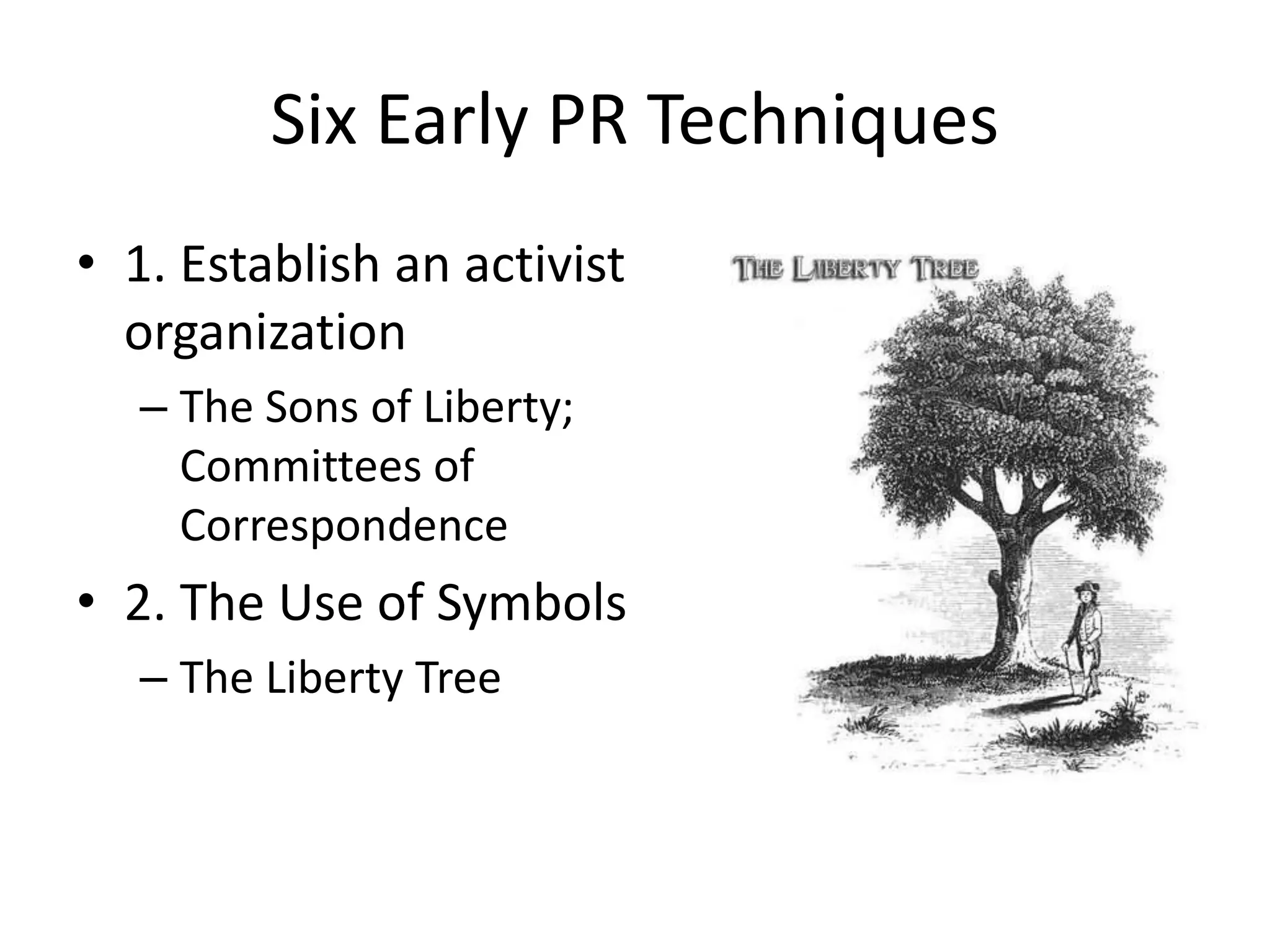
• 2. The Use of Symbols 
– The Liberty Tree
Six Early PR Techniques 
• 3. The Use of Slogans 
– “Taxation without representation is tyranny” 
• 4. The Use of Staged Events 
– The Boston Tea Party 
• 5. Be First in Getting Out Your Side of the Story 
– The Boston Massacre 
• 6. Use a Sustained Saturation Campaign
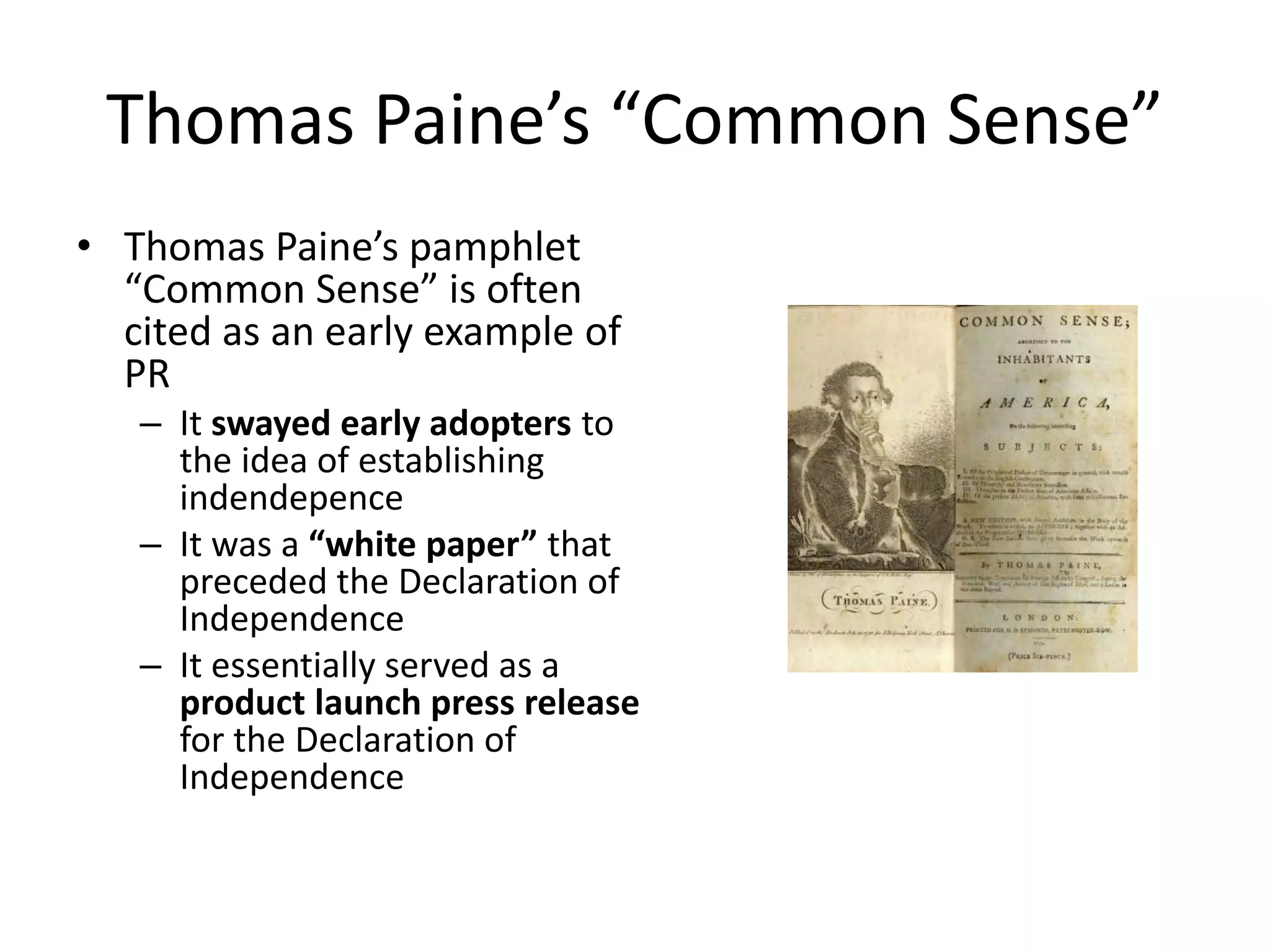
Thomas Paine’s “Common Sense” 
• Thomas Paine’s pamphlet 
“Common Sense” is often 
cited as an early example of 
PR 
– It swayed early adopters to 
the idea of establishing 
indendepence 
– It was a “white paper” that 
preceded the Declaration of 
Independence 
– It essentially served as a 
product launch press release 
for the Declaration of 
Independence
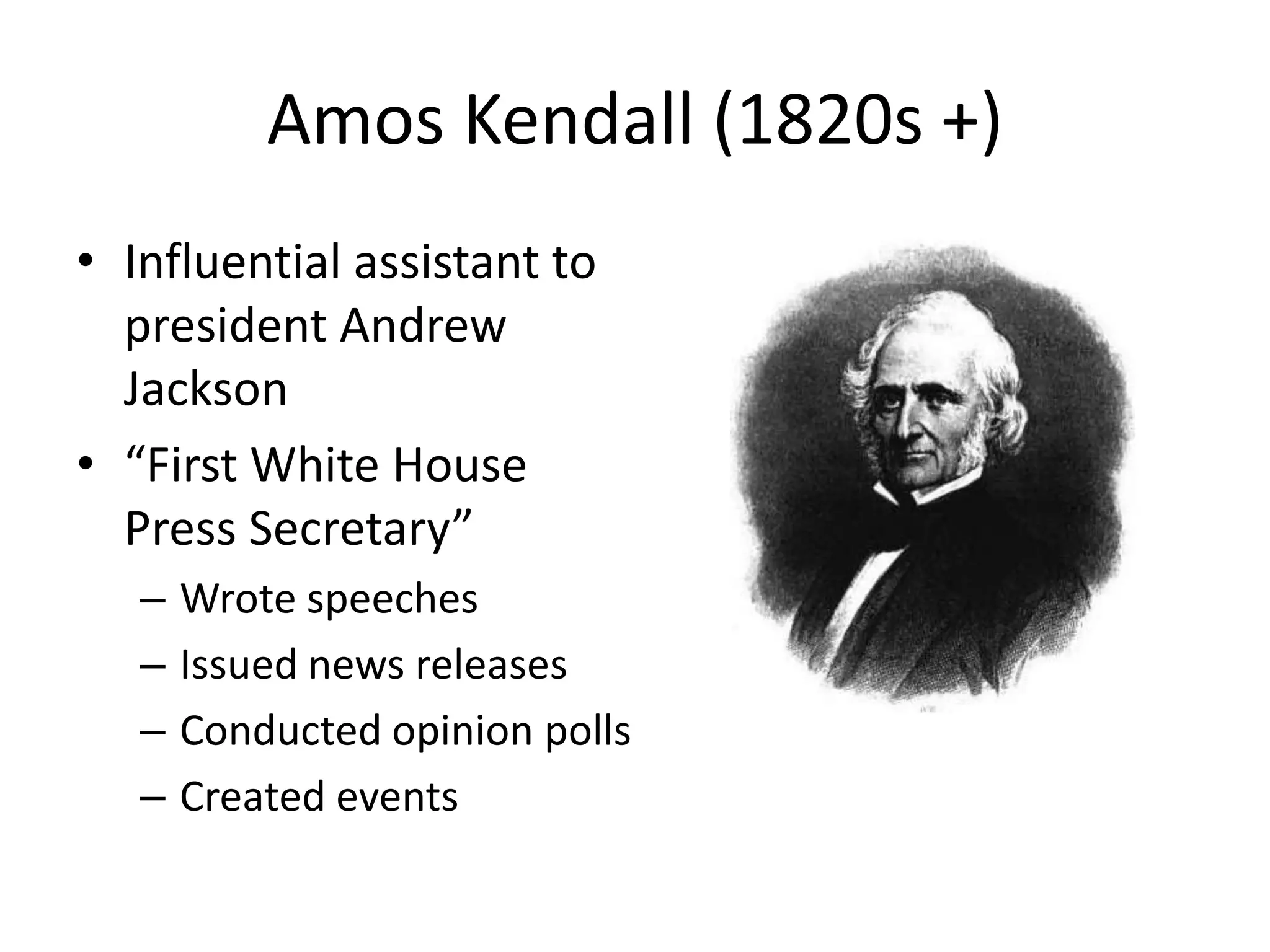
Amos Kendall (1820s +) 
• Influential assistant to 
president Andrew 
Jackson 
• “First White House 
Press Secretary” 
– Wrote speeches 
– Issued news releases 
– Conducted opinion polls 
– Created events
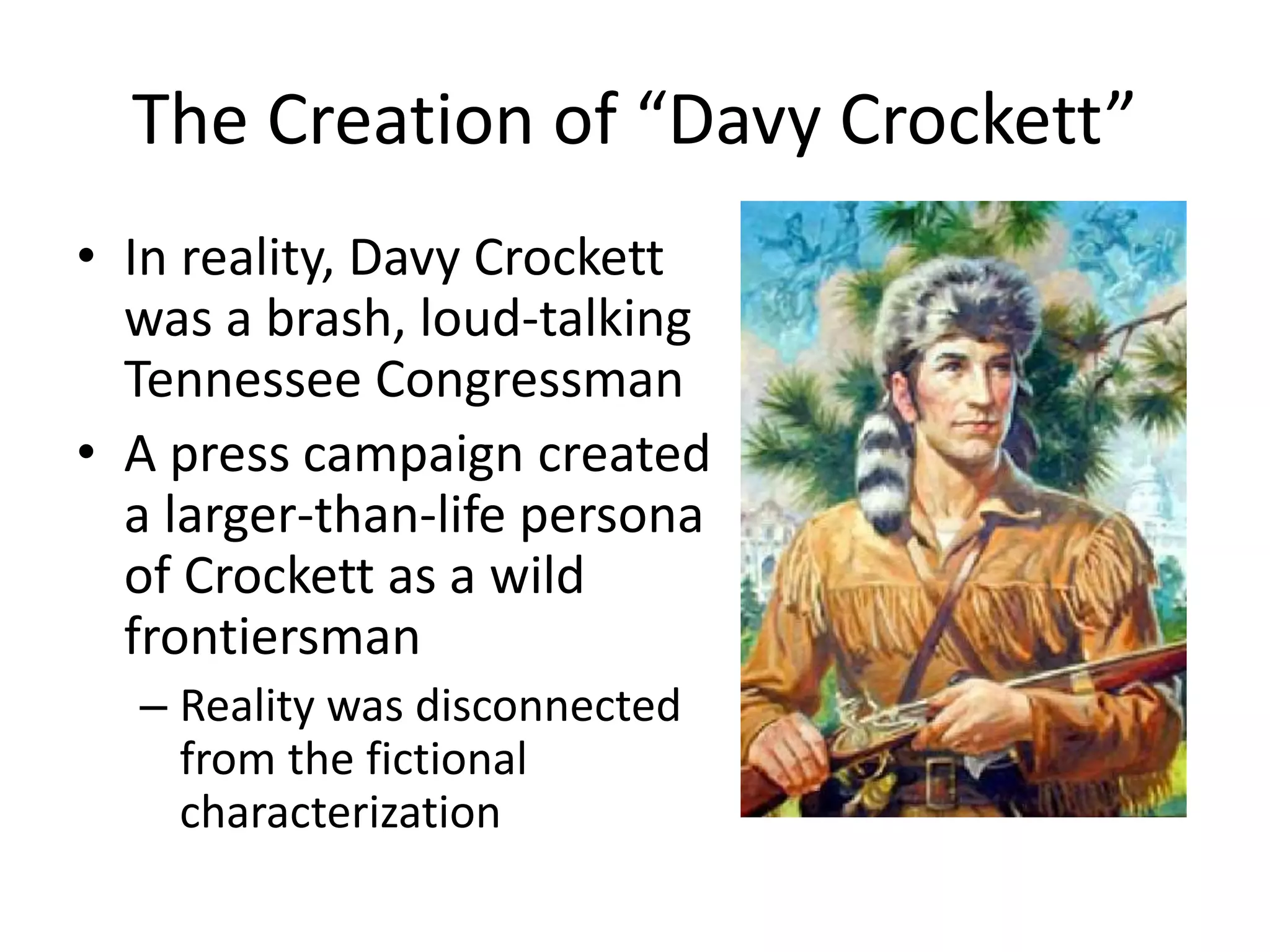
The Creation of “Davy Crockett” 
• In reality, Davy Crockett 
was a brash, loud-talking 
Tennessee Congressman 
• A press campaign created 
a larger-than-life persona 
of Crockett as a wild 
frontiersman 
– Reality was disconnected 
from the fictional 
characterization
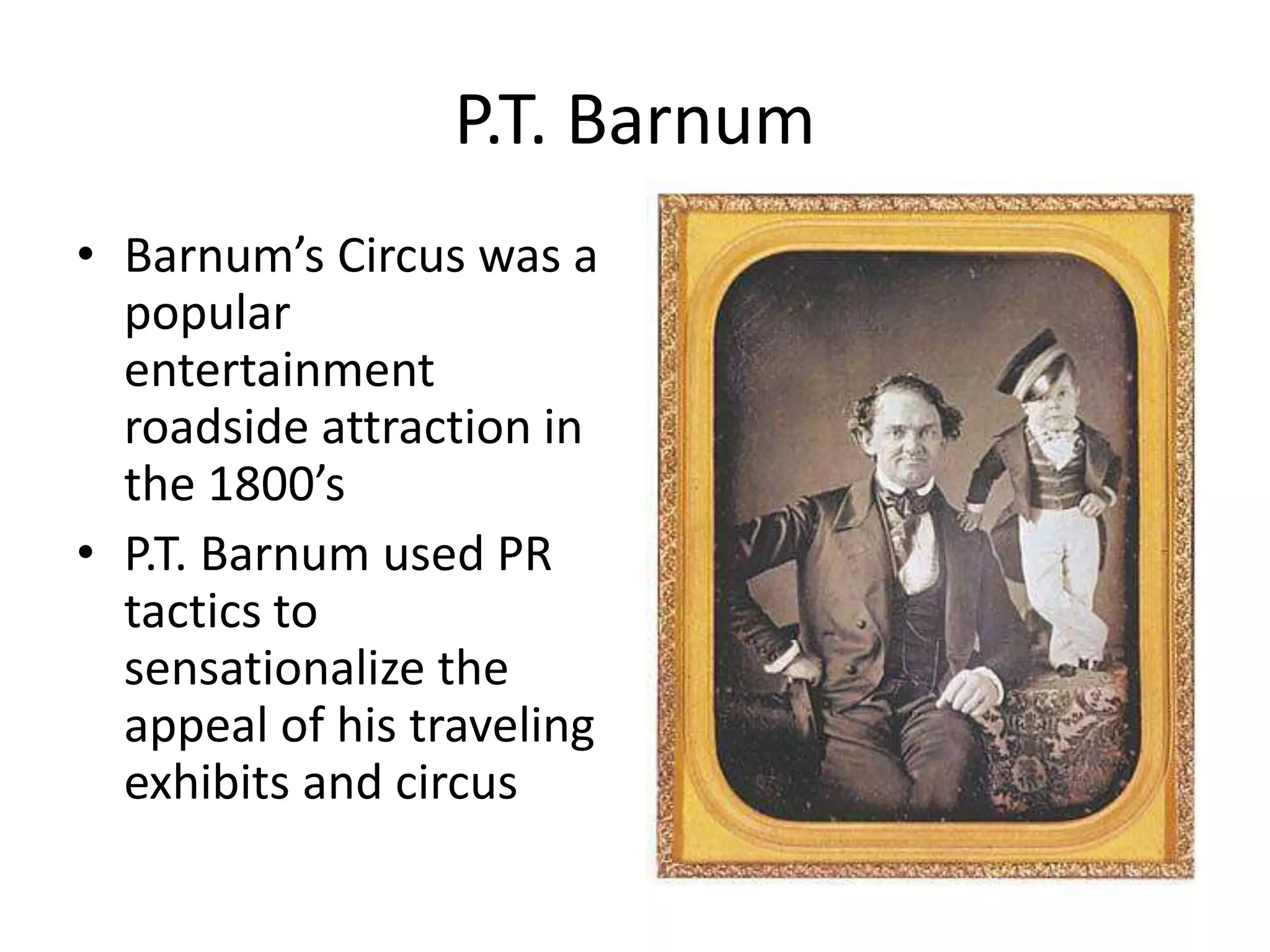
P.T. Barnum 
• Barnum’s Circus was a 
popular 
entertainment 
roadside attraction in 
the 1800’s 
• P.T. Barnum used PR 
tactics to 
sensationalize the 
appeal of his traveling 
exhibits and circus
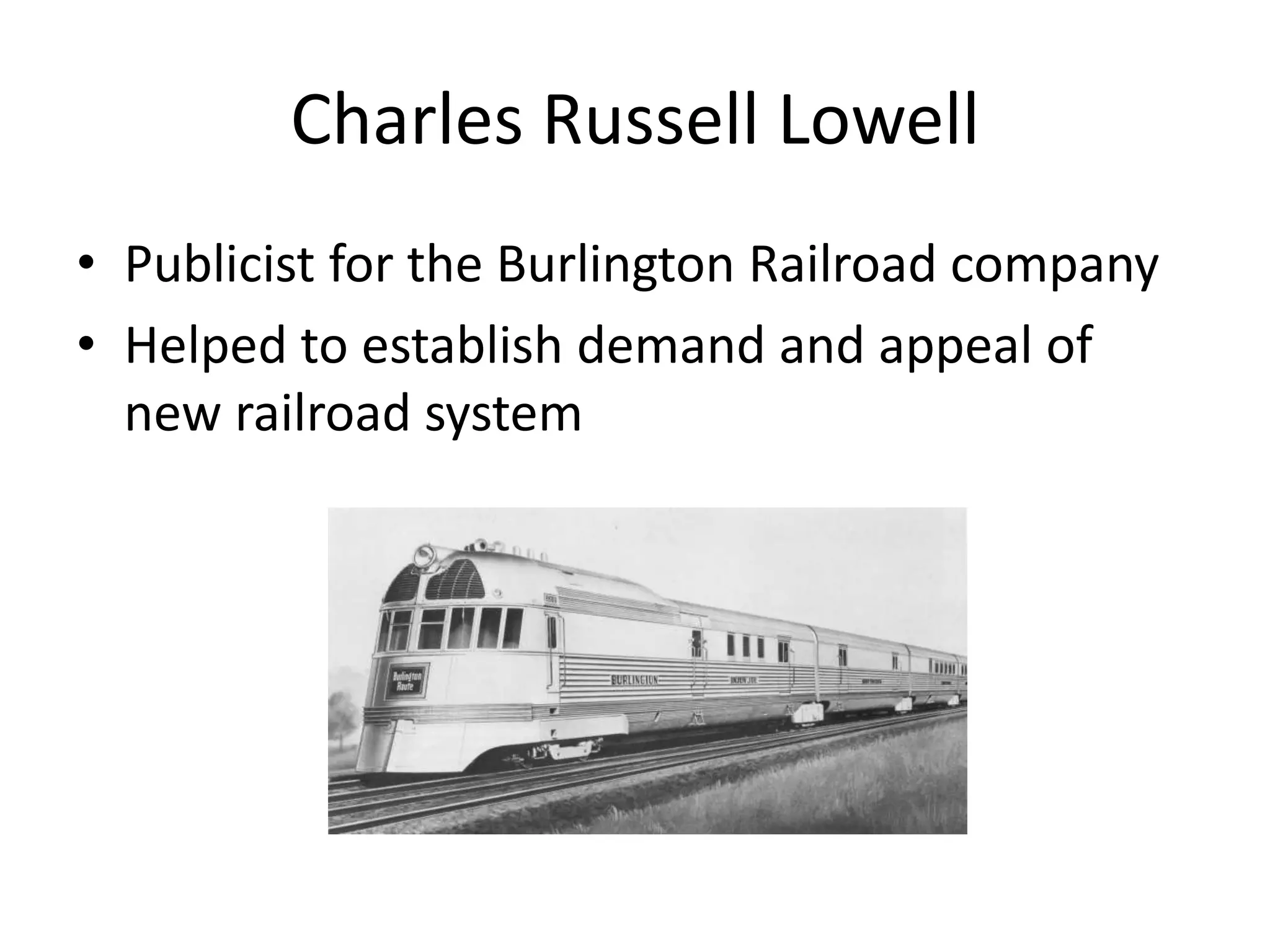
Charles Russell Lowell 
• Publicist for the Burlington Railroad company 
• Helped to establish demand and appeal of 
new railroad system
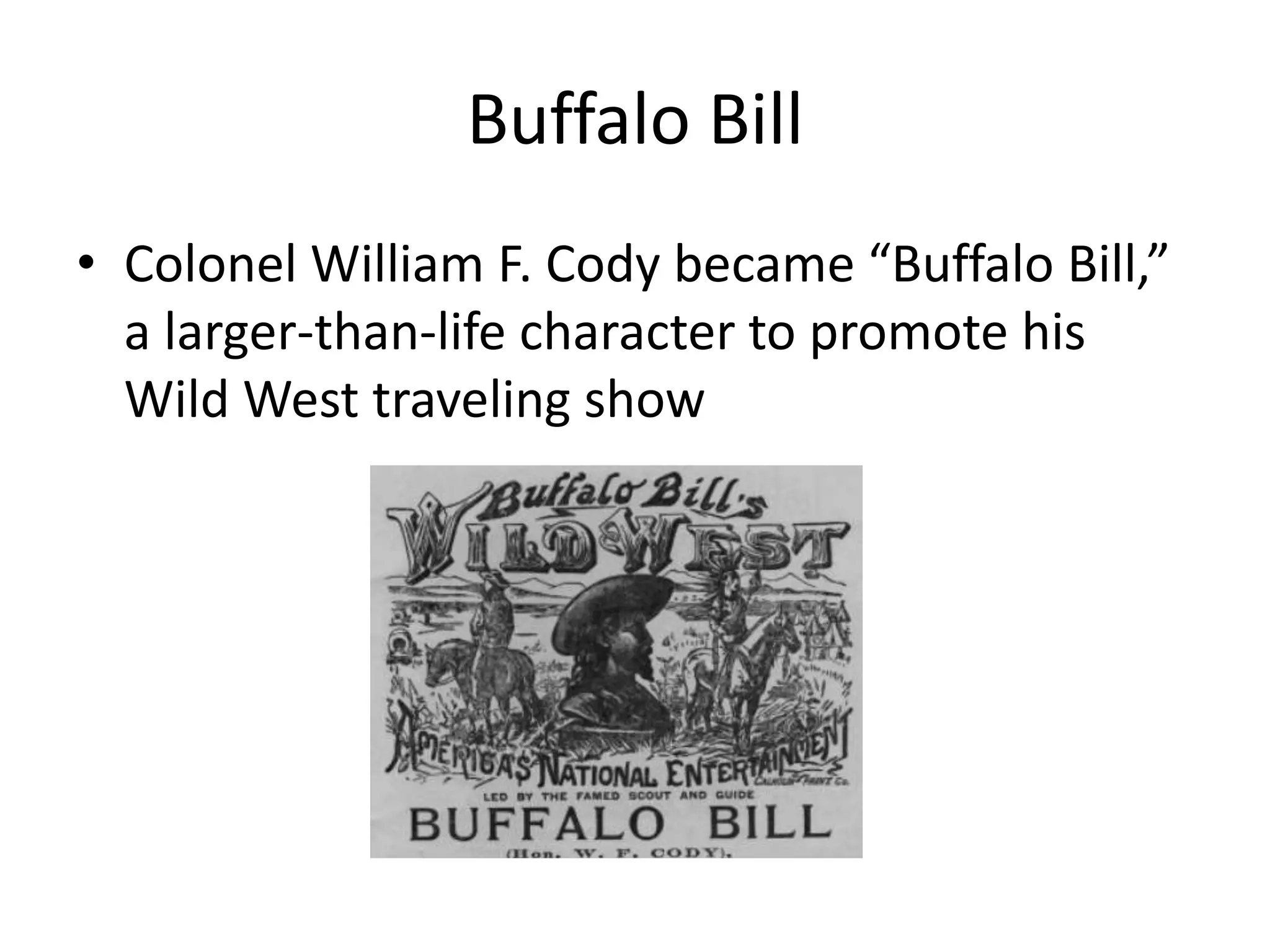
Buffalo Bill 
• Colonel William F. Cody became “Buffalo Bill,” 
a larger-than-life character to promote his 
Wild West traveling show
Business Community and PR 
• As American cities exploded in population 
and the popular press expanded, businesses 
used PR tactics to help build and maintain 
power 
• PR used to counter public outcry and probing 
journalists (“muckrakers”)
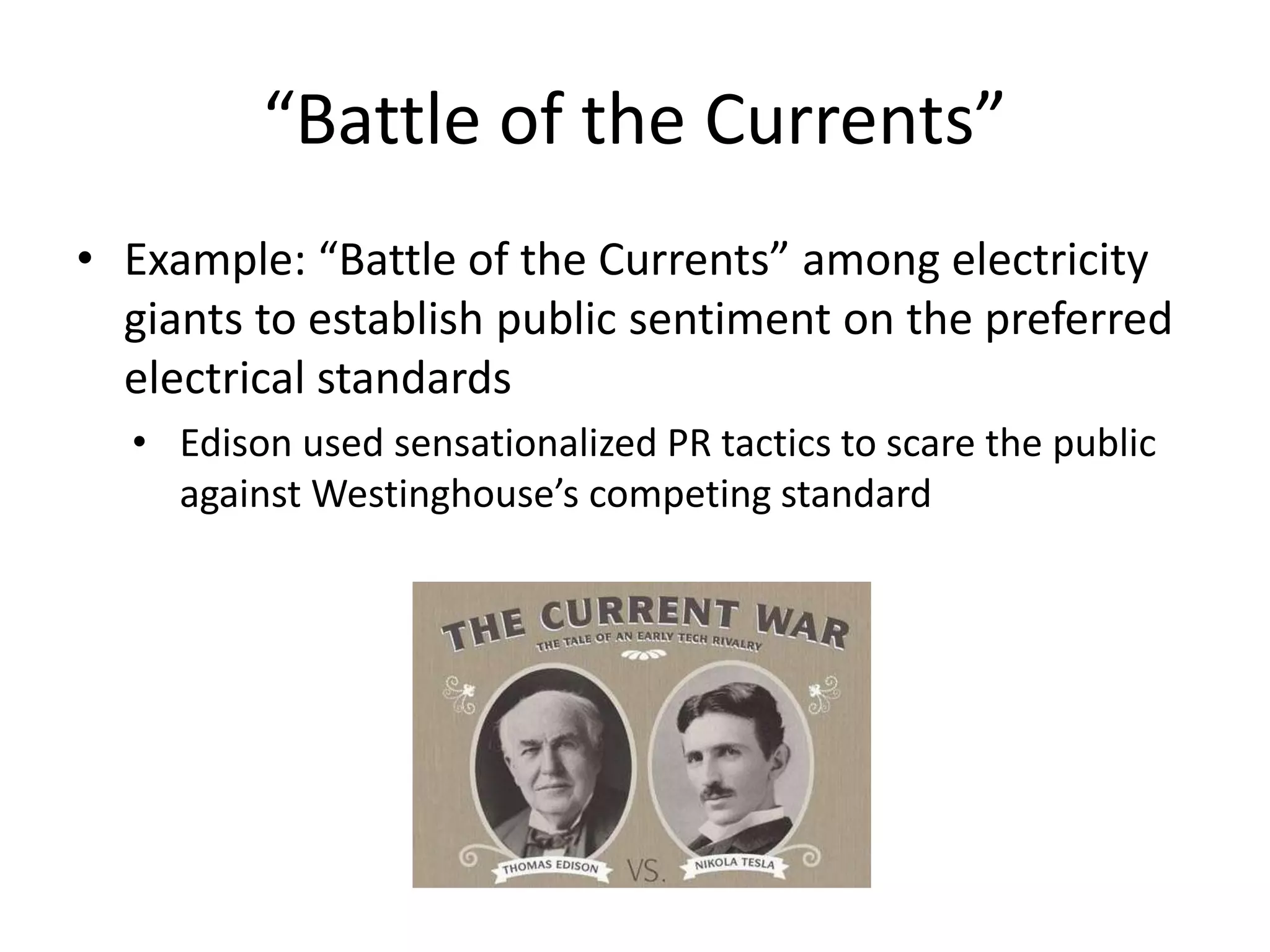
“Battle of the Currents” 
• Example: “Battle of the Currents” among electricity 
giants to establish public sentiment on the preferred 
electrical standards 
• Edison used sensationalized PR tactics to scare the public 
against Westinghouse’s competing standard
Evolution of PR 
• Stage 1: Manipulative (Public-be-damned) 
• Stage 2: Informative (Public-be-informed) 
• Stage 3: Social Responsibility (Periods of 
“mutual understanding” and “mutual 
adjustment”)
Seedbed Era (1900-1916) 
• “Muckraking” journalists take advantage of 
new mass media outlets 
• Lots of anti-corporation, anti-government 
sentiment is popularized in publications and 
media 
• Advertising tactics used to help combat 
negative stories
The Publicity Bureau 
• The nation’s first publicity agency was 
founded in Boston in mid-1900 
– First client: Harvard University 
– Worked closely with the railroad companies to 
plant stories that preempt or combat criticism 
• Closed in 1911
Smith & Walmer 
• Opened in 1902 in Washington, D.C. 
• First “political”-focused firm 
• Shows how governments and politics could 
benefit by working closely with PR-like 
agencies
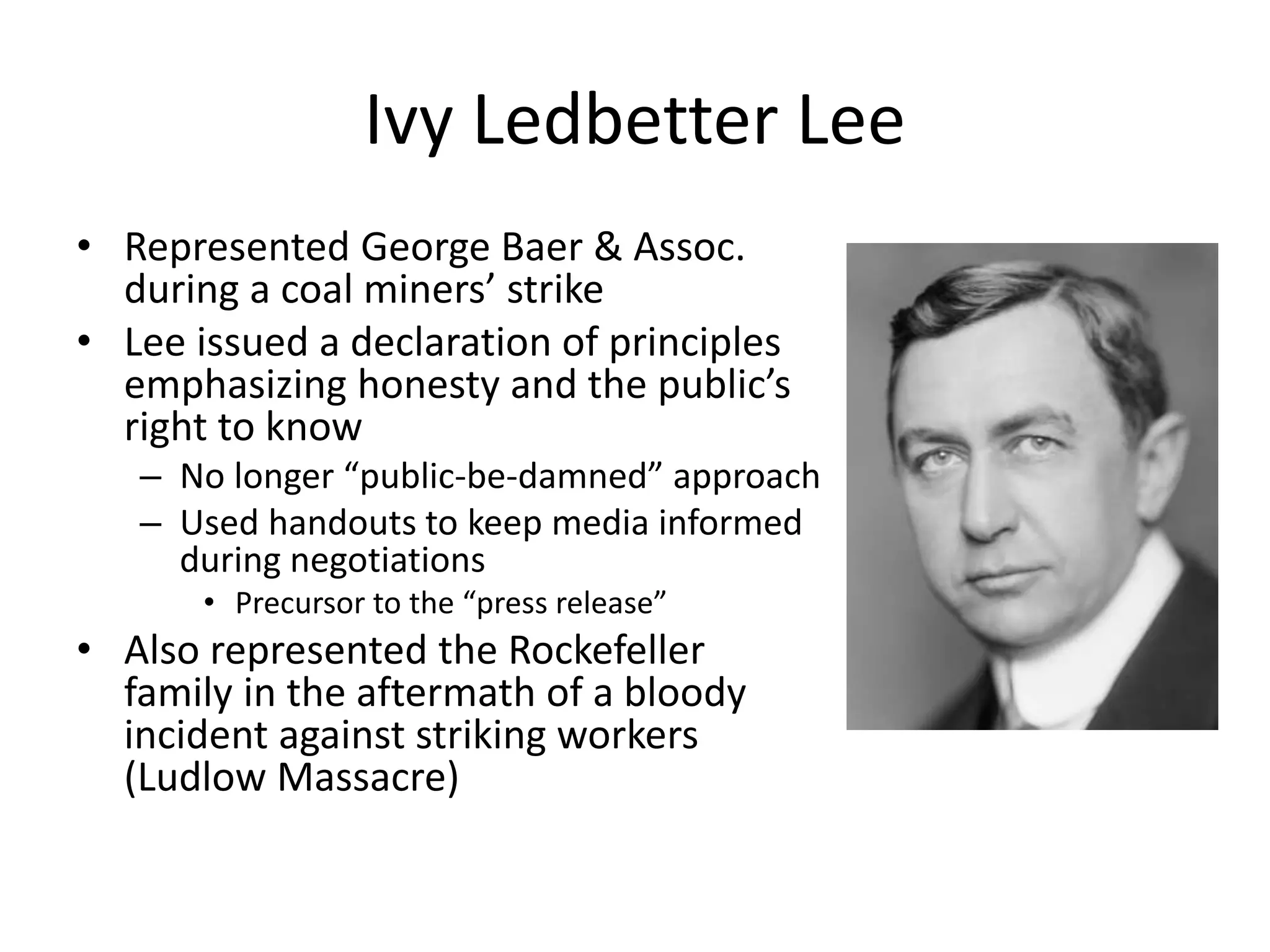
Ivy Ledbetter Lee 
• Represented George Baer & Assoc. 
during a coal miners’ strike 
• Lee issued a declaration of principles 
emphasizing honesty and the public’s 
right to know 
– No longer “public-be-damned” approach 
– Used handouts to keep media informed 
during negotiations 
• Precursor to the “press release” 
• Also represented the Rockefeller 
family in the aftermath of a bloody 
incident against striking workers 
(Ludlow Massacre)
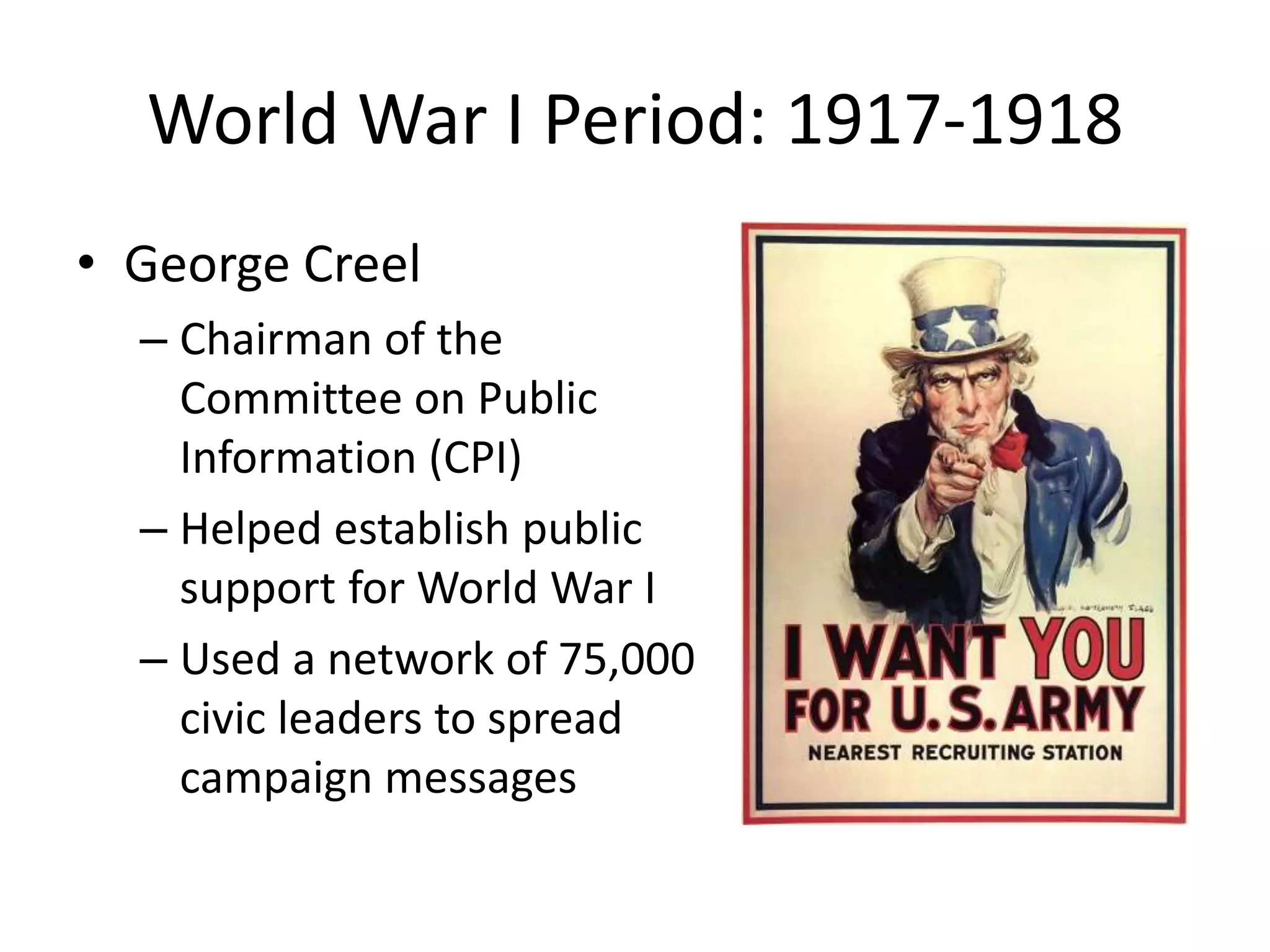
World War I Period: 1917-1918 
• George Creel 
– Chairman of the 
Committee on Public 
Information (CPI) 
– Helped establish public 
support for World War I 
– Used a network of 75,000 
civic leaders to spread 
campaign messages
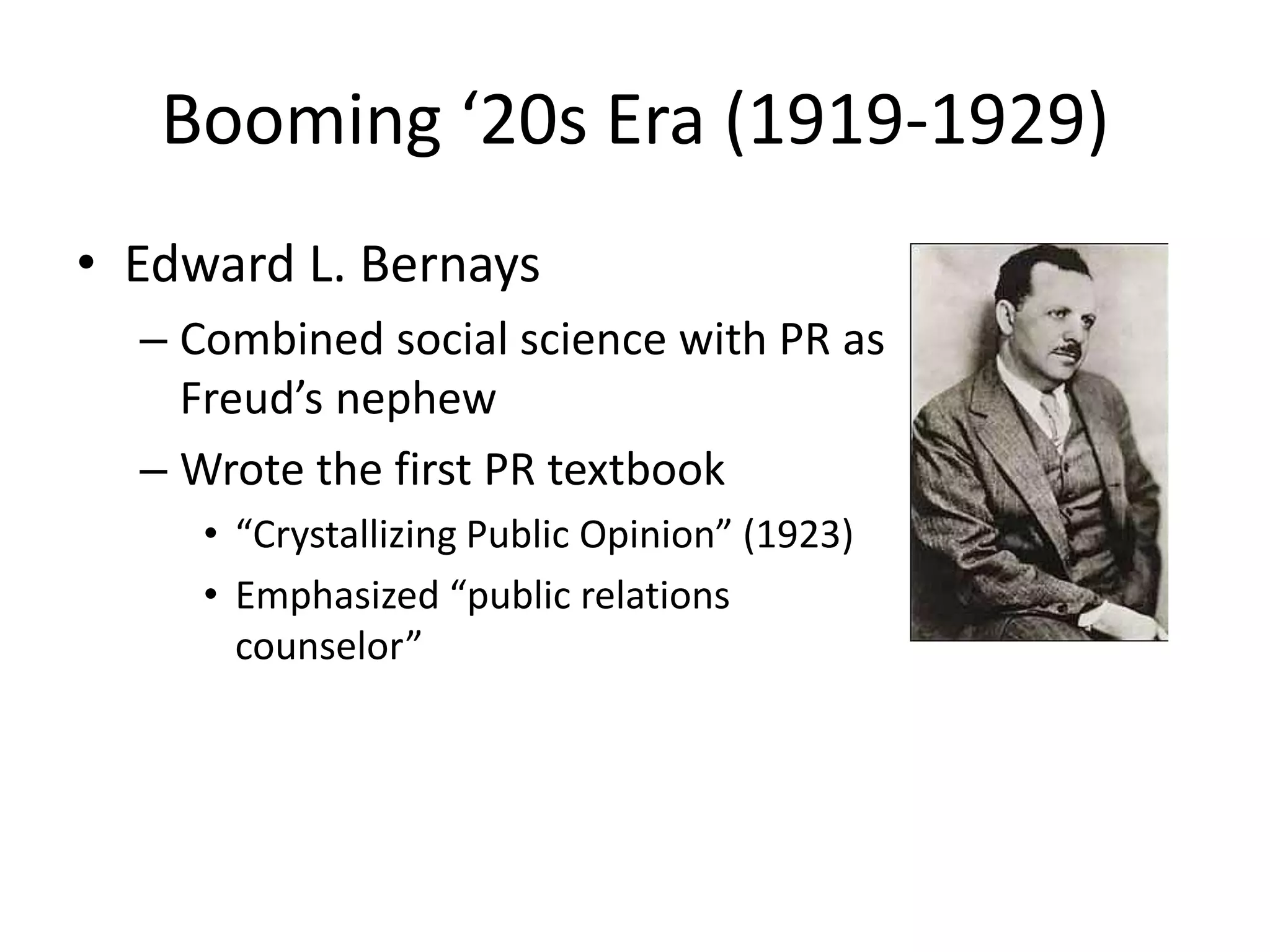
Booming ‘20s Era (1919-1929) 
• Edward L. Bernays 
– Combined social science with PR as 
Freud’s nephew 
– Wrote the first PR textbook 
• “Crystallizing Public Opinion” (1923) 
• Emphasized “public relations 
counselor”
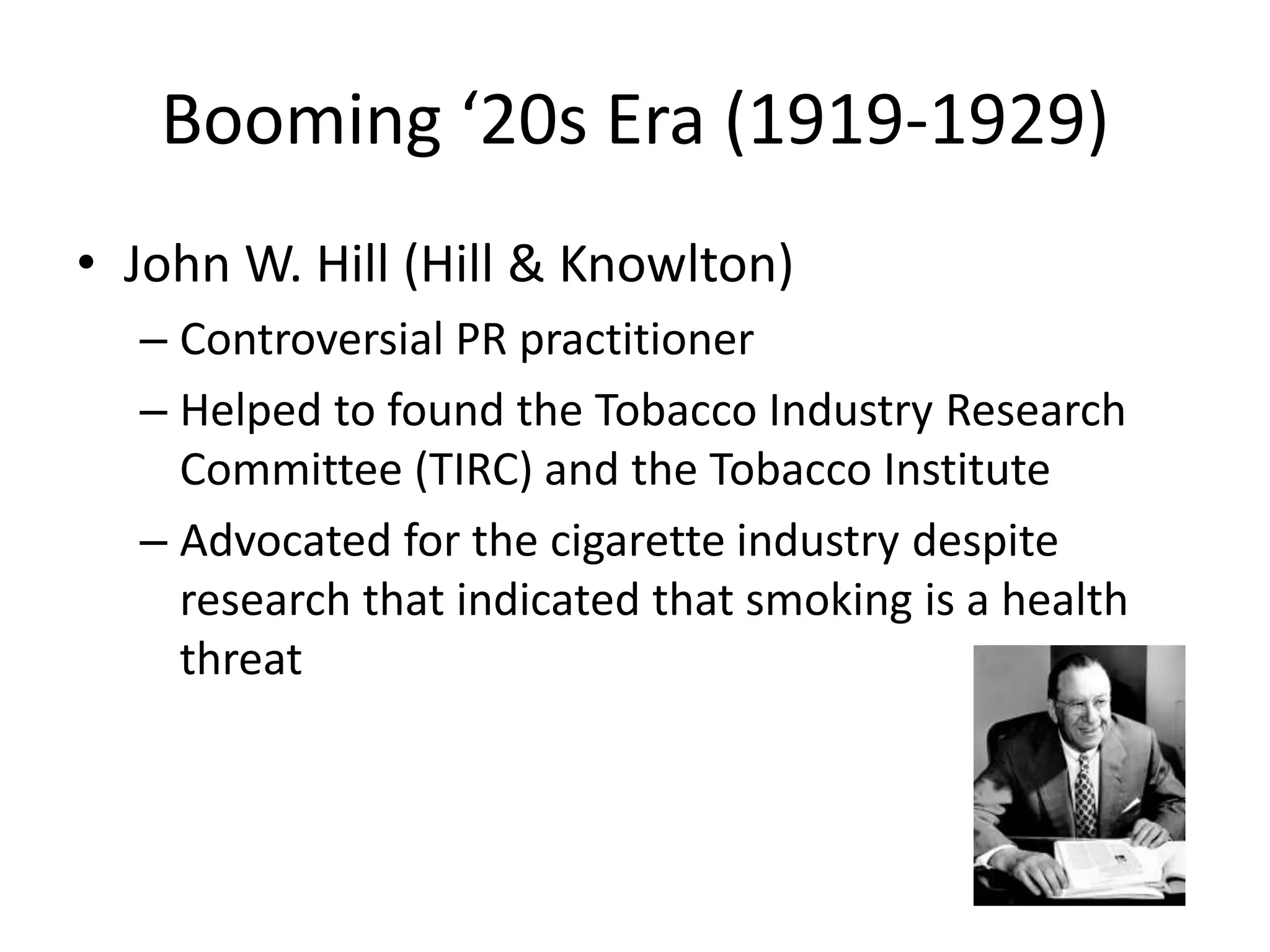
Booming ‘20s Era (1919-1929) 
• John W. Hill (Hill & Knowlton) 
– Controversial PR practitioner 
– Helped to found the Tobacco Industry Research 
Committee (TIRC) and the Tobacco Institute 
– Advocated for the cigarette industry despite 
research that indicated that smoking is a health 
threat
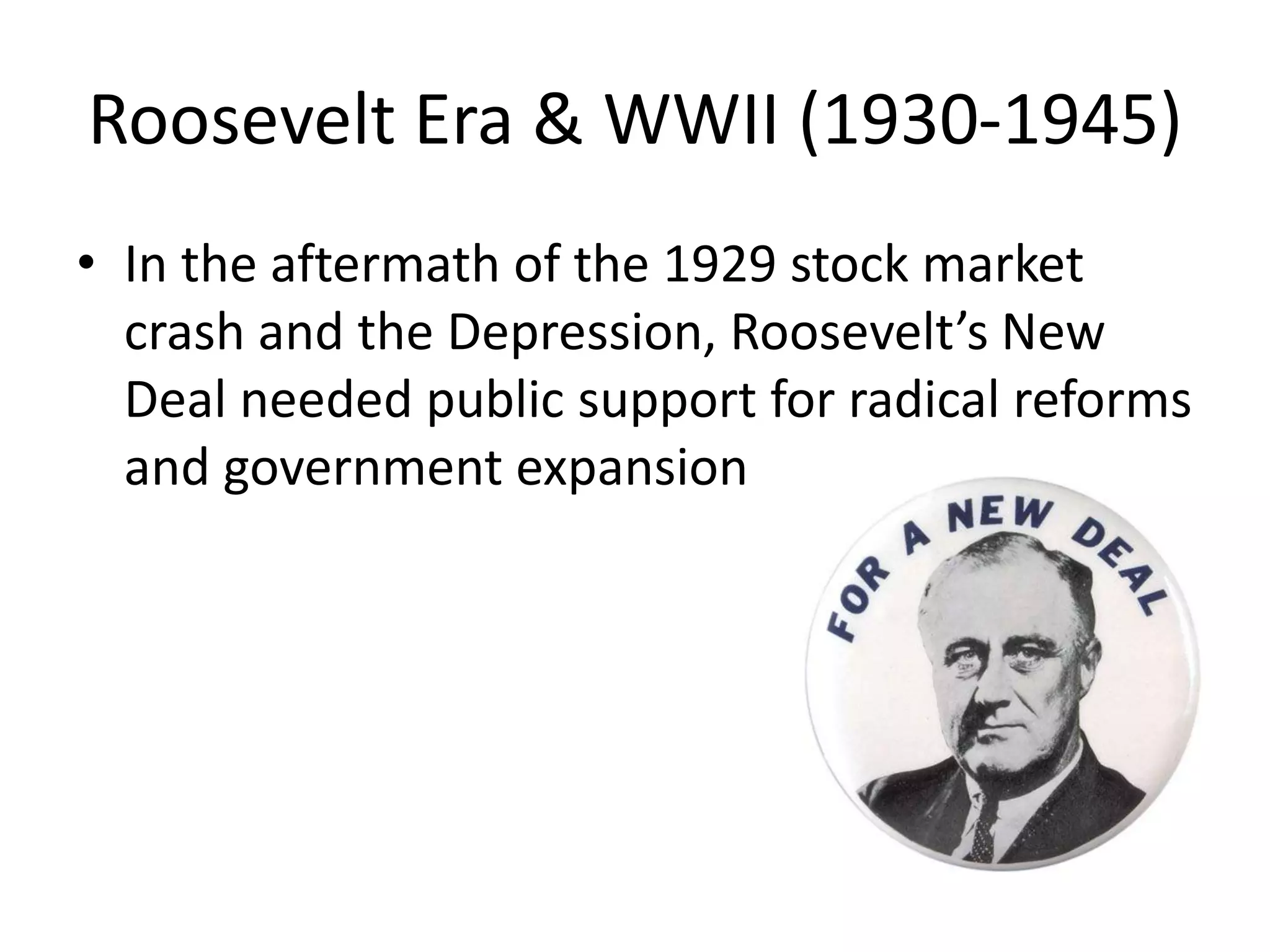
Roosevelt Era & WWII (1930-1945) 
• In the aftermath of the 1929 stock market 
crash and the Depression, Roosevelt’s New 
Deal needed public support for radical reforms 
and government expansion
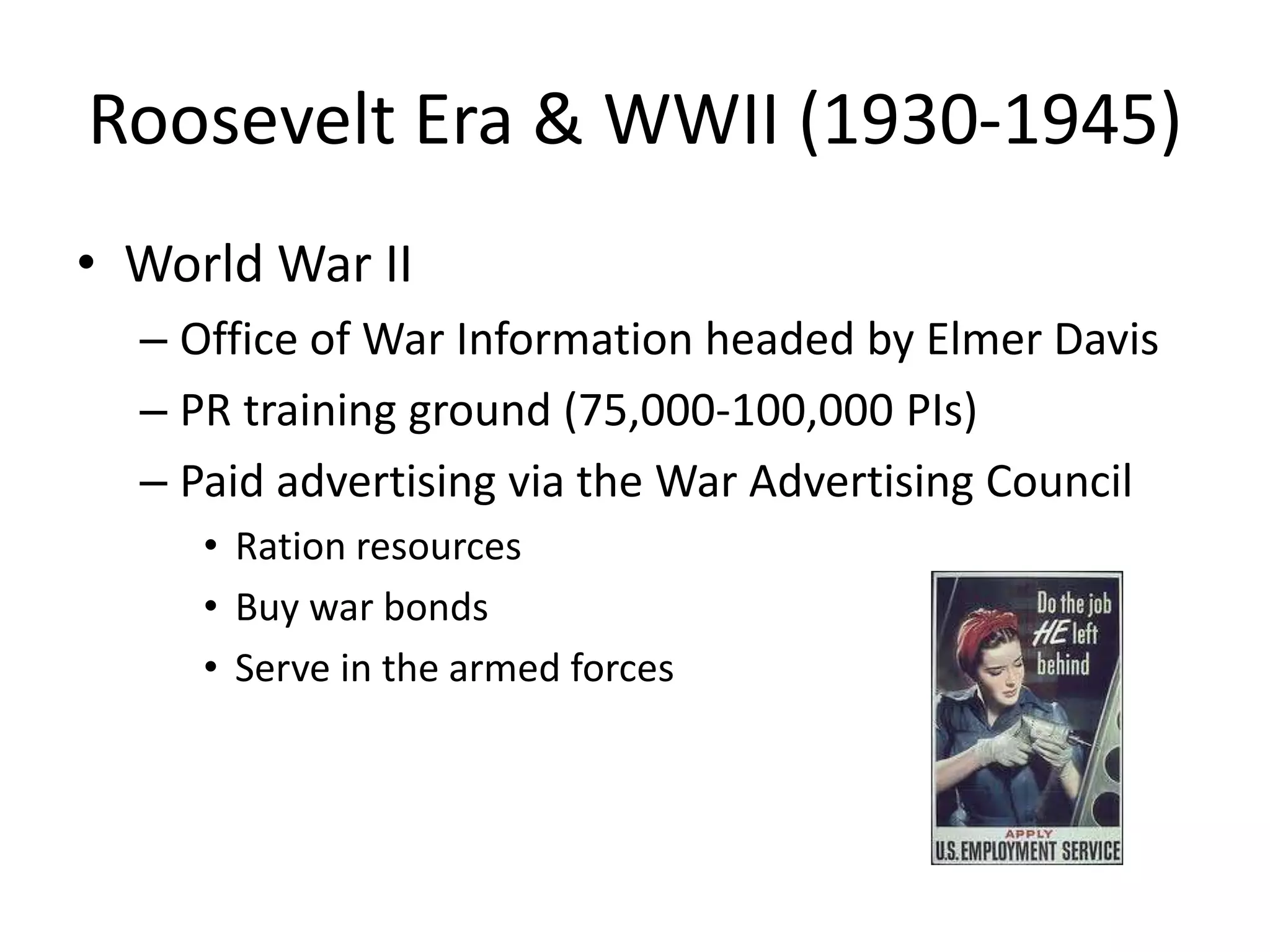
Roosevelt Era & WWII (1930-1945) 
• World War II 
– Office of War Information headed by Elmer Davis 
– PR training ground (75,000-100,000 PIs) 
– Paid advertising via the War Advertising Council 
• Ration resources 
• Buy war bonds 
• Serve in the armed forces
Postwar Boom (1946-1964) 
• PR helped to converting from a war-time to 
peace-time economy (industrial to post-industrial, 
service-oriented era) 
– PR used to combat rise of labor unions 
– Promotion of new opportunities for returning 
soldiers (including education)
Protest and Empowerment (1965- 
1985) 
• The ‘60s were turbulent times, including social 
unrest, protests and distrust of the 
“establishment” 
• Rise of individualism and empowerment (e.g. 
civil rights, environmentalism, etc.) 
• PR tactics used on all sides – both in an 
attempt to disrupt and preserve the status 
quo
Protest and Empowerment (1965- 
1985) 
• From the ’70s-early ‘90s, there were some key 
developments: 
– Advertising/PR firm mergers and consolidation 
– Fractionalization of media channels 
– Internationalization of PR 
– Public skepticism, consumerism and single-issue 
activism
Digital Age and Globalization (1986- 
Present) 
• In the late ’80s and beyond, new technologies 
began to emerge that dramatically disrupted 
traditional PR techniques 
– Broadcast outlets expanded with digital satellite 
and cable 
– The Internet caused an explosion of niche-based 
influencers 
– Social media empowers citizens to share and 
influence among their circle of friends
Other Recent Trends 
• Continued fragmentation of media 
• Increased emphasis on “return on 
investment” for all PR efforts 
• Increased sensitivity and emphasis on 
diversity

History of Public Relations

  • 1.
    Historical Origins of Public Relations Presented by Brett Atwood
  • 2.
    Early American PRHistory • Revolutionary War (1760s+) – Samuel Adams used various techniques to help gain support for the revolt against England – These techniques are still relevant today
  • 3.
    Six Early PRTechniques • 1. Establish an activist organization – The Sons of Liberty; Committees of Correspondence • 2. The Use of Symbols – The Liberty Tree
  • 4.
    Six Early PRTechniques • 3. The Use of Slogans – “Taxation without representation is tyranny” • 4. The Use of Staged Events – The Boston Tea Party • 5. Be First in Getting Out Your Side of the Story – The Boston Massacre • 6. Use a Sustained Saturation Campaign
  • 5.
    Thomas Paine’s “CommonSense” • Thomas Paine’s pamphlet “Common Sense” is often cited as an early example of PR – It swayed early adopters to the idea of establishing indendepence – It was a “white paper” that preceded the Declaration of Independence – It essentially served as a product launch press release for the Declaration of Independence
  • 6.
    Amos Kendall (1820s+) • Influential assistant to president Andrew Jackson • “First White House Press Secretary” – Wrote speeches – Issued news releases – Conducted opinion polls – Created events
  • 7.
    The Creation of“Davy Crockett” • In reality, Davy Crockett was a brash, loud-talking Tennessee Congressman • A press campaign created a larger-than-life persona of Crockett as a wild frontiersman – Reality was disconnected from the fictional characterization
  • 8.
    P.T. Barnum •Barnum’s Circus was a popular entertainment roadside attraction in the 1800’s • P.T. Barnum used PR tactics to sensationalize the appeal of his traveling exhibits and circus
  • 9.
    Charles Russell Lowell • Publicist for the Burlington Railroad company • Helped to establish demand and appeal of new railroad system
  • 10.
    Buffalo Bill •Colonel William F. Cody became “Buffalo Bill,” a larger-than-life character to promote his Wild West traveling show
  • 11.
    Business Community andPR • As American cities exploded in population and the popular press expanded, businesses used PR tactics to help build and maintain power • PR used to counter public outcry and probing journalists (“muckrakers”)
  • 12.
    “Battle of theCurrents” • Example: “Battle of the Currents” among electricity giants to establish public sentiment on the preferred electrical standards • Edison used sensationalized PR tactics to scare the public against Westinghouse’s competing standard
  • 13.
    Evolution of PR • Stage 1: Manipulative (Public-be-damned) • Stage 2: Informative (Public-be-informed) • Stage 3: Social Responsibility (Periods of “mutual understanding” and “mutual adjustment”)
  • 14.
    Seedbed Era (1900-1916) • “Muckraking” journalists take advantage of new mass media outlets • Lots of anti-corporation, anti-government sentiment is popularized in publications and media • Advertising tactics used to help combat negative stories
  • 15.
    The Publicity Bureau • The nation’s first publicity agency was founded in Boston in mid-1900 – First client: Harvard University – Worked closely with the railroad companies to plant stories that preempt or combat criticism • Closed in 1911
  • 16.
    Smith & Walmer • Opened in 1902 in Washington, D.C. • First “political”-focused firm • Shows how governments and politics could benefit by working closely with PR-like agencies
  • 17.
    Ivy Ledbetter Lee • Represented George Baer & Assoc. during a coal miners’ strike • Lee issued a declaration of principles emphasizing honesty and the public’s right to know – No longer “public-be-damned” approach – Used handouts to keep media informed during negotiations • Precursor to the “press release” • Also represented the Rockefeller family in the aftermath of a bloody incident against striking workers (Ludlow Massacre)
  • 18.
    World War IPeriod: 1917-1918 • George Creel – Chairman of the Committee on Public Information (CPI) – Helped establish public support for World War I – Used a network of 75,000 civic leaders to spread campaign messages
  • 19.
    Booming ‘20s Era(1919-1929) • Edward L. Bernays – Combined social science with PR as Freud’s nephew – Wrote the first PR textbook • “Crystallizing Public Opinion” (1923) • Emphasized “public relations counselor”
  • 20.
    Booming ‘20s Era(1919-1929) • John W. Hill (Hill & Knowlton) – Controversial PR practitioner – Helped to found the Tobacco Industry Research Committee (TIRC) and the Tobacco Institute – Advocated for the cigarette industry despite research that indicated that smoking is a health threat
  • 21.
    Roosevelt Era &WWII (1930-1945) • In the aftermath of the 1929 stock market crash and the Depression, Roosevelt’s New Deal needed public support for radical reforms and government expansion
  • 22.
    Roosevelt Era &WWII (1930-1945) • World War II – Office of War Information headed by Elmer Davis – PR training ground (75,000-100,000 PIs) – Paid advertising via the War Advertising Council • Ration resources • Buy war bonds • Serve in the armed forces
  • 23.
    Postwar Boom (1946-1964) • PR helped to converting from a war-time to peace-time economy (industrial to post-industrial, service-oriented era) – PR used to combat rise of labor unions – Promotion of new opportunities for returning soldiers (including education)
  • 24.
    Protest and Empowerment(1965- 1985) • The ‘60s were turbulent times, including social unrest, protests and distrust of the “establishment” • Rise of individualism and empowerment (e.g. civil rights, environmentalism, etc.) • PR tactics used on all sides – both in an attempt to disrupt and preserve the status quo
  • 25.
    Protest and Empowerment(1965- 1985) • From the ’70s-early ‘90s, there were some key developments: – Advertising/PR firm mergers and consolidation – Fractionalization of media channels – Internationalization of PR – Public skepticism, consumerism and single-issue activism
  • 26.
    Digital Age andGlobalization (1986- Present) • In the late ’80s and beyond, new technologies began to emerge that dramatically disrupted traditional PR techniques – Broadcast outlets expanded with digital satellite and cable – The Internet caused an explosion of niche-based influencers – Social media empowers citizens to share and influence among their circle of friends
  • 27.
    Other Recent Trends • Continued fragmentation of media • Increased emphasis on “return on investment” for all PR efforts • Increased sensitivity and emphasis on diversity