Web PR 
Techniques 
Brett Atwood
Web Distribution 
• Web news sites 
• “Viral marketing” 
• Direct-to-consumer marketing 
• Blogs and social networking sites
“Viral” Marketing 
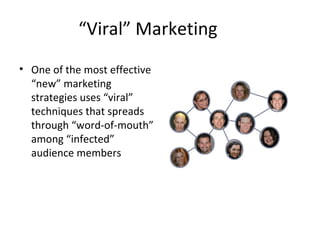
• One of the most effective 
“new” marketing 
strategies uses “viral” 
techniques that spreads 
through “word-of-mouth” 
among “infected” 
audience members
Goals of Viral Marketing 
• Get people talking about your product, service 
or campaign 
• Let “word-of-mouth” spread your message 
• Build trust and awareness through low-key 
product/message placement
Viral Marketing: Pros 
• Inexpensive 
– Others do the distribution 
• Increased Credibility 
– The audience is more likely to believe something 
from their peers over something originating 
directly from a sales person
Viral Marketing for “Unconventional” 
Products 
• Viral marketing can be used to 
promote unconventional products 
and ideas 
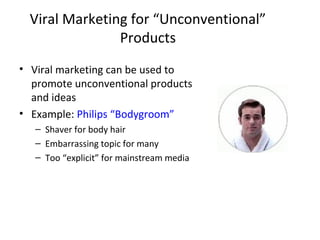
• Example: Philips “Bodygroom” 
– Shaver for body hair 
– Embarrassing topic for many 
– Too “explicit” for mainstream media
Success of Campaign 
• Philips launched a micro-site 
• Uses humor and even explicit language to pitch 
product 
• Small marketing budget 
• Sales increases 
• Mentioned in over 1,000 blogs
Success of “Fred” 
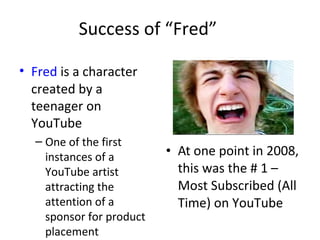
• Fred is a character 
created by a 
teenager on 
YouTube 
– One of the first 
instances of a 
YouTube artist 
attracting the 
attention of a 
sponsor for product 
placement 
• At one point in 2008, 
this was the # 1 – 
Most Subscribed (All 
Time) on YouTube
Viral Marketing: Cons 
• Control 
– You don’t control the distribution 
– Randomness to who gets the message 
• Context 
– The context of the message can be distorted since 
others are distributing it
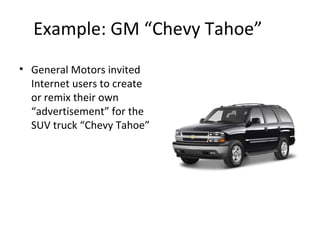
Example: GM “Chevy Tahoe” 
• General Motors invited 
Internet users to create 
or remix their own 
“advertisement” for the 
SUV truck “Chevy Tahoe”
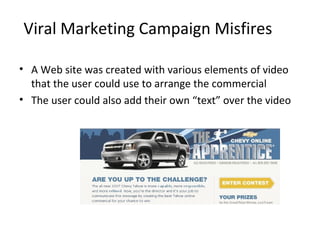
Viral Marketing Campaign Misfires 
• A Web site was created with various elements of video 
that the user could use to arrange the commercial 
• The user could also add their own “text” over the video
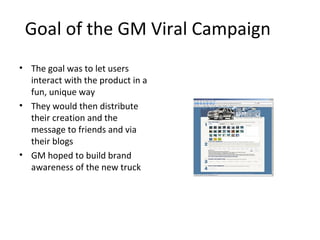
Goal of the GM Viral Campaign 
• The goal was to let users 
interact with the product in a 
fun, unique way 
• They would then distribute 
their creation and the 
message to friends and via 
their blogs 
• GM hoped to build brand 
awareness of the new truck
Success? Or Not? 
• 21,000 user-created ads were submitted 
• 2.4 million page views 
• 80% of the ads were positive 
• However, 20% of ads were critical 
– The media coverage focused on the negative
Lack of Control and Context 
• Many Internet users decided to create 
commercials that complained about the 
environmental impact of the gas-hungry truck 
• A negative association between the truck and 
the environment was created
Backlash? 
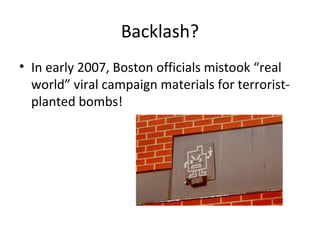
• In early 2007, Boston officials mistook “real 
world” viral campaign materials for terrorist-planted 
bombs!
Effective Ways to Use Viral Marketing 
• To increase brand awareness without selling 
anything. 
• To sell products and services that usually 
include discounts, giveaways or other 
incentives 
• To communicate simple messages that share 
positive or negative experiences or interesting 
thoughts, jokes, funny videos and other 
observations.
Effective Ways to Use Viral Marketing 
• Embed messages with programs such as 
games that entice the user to get involved 
• Entice individuals to get involved in recruiting 
others in return for incentives. 
• Recruit others as new customers to share 
products
Successful Delivery of Viral Marketing 
• The message should be credible 
– Credibility increases when the message is 
delivered by a known friend or associate 
• The message should be compelling 
– The content must be interesting enough for 
someone to want to pass on word about it 
• Timeliness is key 
– Viral messages have a limited life span 
– Interest will decrease quickly after an initial burst
“Online Street Teams” 
• Boston-based Alt Terrain arranges “alternative media” 
marketing campaigns 
• “Online street teams” infiltrate chat rooms, bulletin 
boards and blogs to post positive information on 
clients 
• They pose as fans expressing spontaneous opinions, 
but they are really paid promoters
“Astro-turfing” 
• Use caution in executing this technique 
• The online community is skeptical of obvious 
and aggressive sales techniques 
• The process of online eavesdropping has been 
given the nickname “astro-turfing” 
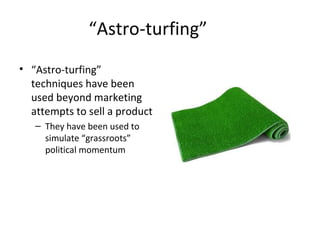
– The name refers to a brand of artificial grass 
– This is because this form of marketing is an 
artificial attempt at gaining “grassroots” support
“Astro-turfing” 
• “Astro-turfing” 
techniques have been 
used beyond marketing 
attempts to sell a product 
– They have been used to 
simulate “grassroots” 
political momentum
Dangers of Viral Marketing 
• Consumers will get upset if they discover that 
they have been manipulated 
• A backlash could occur toward your campaign
Example: “Lonelygirl15” 
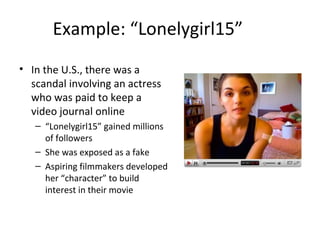
• In the U.S., there was a 
scandal involving an actress 
who was paid to keep a 
video journal online 
– “Lonelygirl15” gained millions 
of followers 
– She was exposed as a fake 
– Aspiring filmmakers developed 
her “character” to build 
interest in their movie
Blogging and Marketing 
• Many companies are adding blogs to their 
Web sites to communicate directly with their 
customers
Example: 
• Retailer Wal-Mart has been criticized by the media 
for the way it treats employees 
– Low wages 
– Poor medical benefits 
• In the past, Wal-Mart would offer a “no comment” to 
many journalists 
• The company suffered negative media exposure
Wal-Mart Woes 
• Wal-Mart initially decided to go directly to the public 
with its own Web site: WalMartFacts.com 
– That site now redirects to the corporate Wal-Mart page 
– The site was used to post responses to media attacks and to 
tell its side of the story
Corporate Blogs 
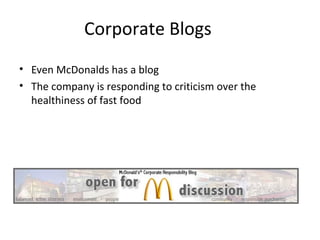
• Even McDonalds has a blog 
• The company is responding to criticism over the 
healthiness of fast food
Open Issues? 
• As more corporate blogs open, there is a 
question about how “open” they should be for 
public feedback 
• Should they allow for bulletin boards? 
– Lack of control = negative comments 
– Censorship = criticism from opponents
Marketing to Social Networking 
Sites 
• Social networking sites are 
growing 
• “Circle of friends” concept 
• Examples: 
– Facebook 
– Instagram 
– Twitter
Trends in Social Networking 
• “Viral” trends and marketing 
– These techniques are effective because they come 
from trusted sources 
– Customers “let in” the company and interact with 
them

Web PR Techniques

  • 1.
    Web PR Techniques Brett Atwood
  • 2.
    Web Distribution •Web news sites • “Viral marketing” • Direct-to-consumer marketing • Blogs and social networking sites
  • 3.
    “Viral” Marketing •One of the most effective “new” marketing strategies uses “viral” techniques that spreads through “word-of-mouth” among “infected” audience members
  • 4.
    Goals of ViralMarketing • Get people talking about your product, service or campaign • Let “word-of-mouth” spread your message • Build trust and awareness through low-key product/message placement
  • 5.
    Viral Marketing: Pros • Inexpensive – Others do the distribution • Increased Credibility – The audience is more likely to believe something from their peers over something originating directly from a sales person
  • 6.
    Viral Marketing for“Unconventional” Products • Viral marketing can be used to promote unconventional products and ideas • Example: Philips “Bodygroom” – Shaver for body hair – Embarrassing topic for many – Too “explicit” for mainstream media
  • 7.
    Success of Campaign • Philips launched a micro-site • Uses humor and even explicit language to pitch product • Small marketing budget • Sales increases • Mentioned in over 1,000 blogs
  • 8.
    Success of “Fred” • Fred is a character created by a teenager on YouTube – One of the first instances of a YouTube artist attracting the attention of a sponsor for product placement • At one point in 2008, this was the # 1 – Most Subscribed (All Time) on YouTube
  • 9.
    Viral Marketing: Cons • Control – You don’t control the distribution – Randomness to who gets the message • Context – The context of the message can be distorted since others are distributing it
  • 10.
    Example: GM “ChevyTahoe” • General Motors invited Internet users to create or remix their own “advertisement” for the SUV truck “Chevy Tahoe”
  • 11.
    Viral Marketing CampaignMisfires • A Web site was created with various elements of video that the user could use to arrange the commercial • The user could also add their own “text” over the video
  • 12.
    Goal of theGM Viral Campaign • The goal was to let users interact with the product in a fun, unique way • They would then distribute their creation and the message to friends and via their blogs • GM hoped to build brand awareness of the new truck
  • 13.
    Success? Or Not? • 21,000 user-created ads were submitted • 2.4 million page views • 80% of the ads were positive • However, 20% of ads were critical – The media coverage focused on the negative
  • 14.
    Lack of Controland Context • Many Internet users decided to create commercials that complained about the environmental impact of the gas-hungry truck • A negative association between the truck and the environment was created
  • 16.
    Backlash? • Inearly 2007, Boston officials mistook “real world” viral campaign materials for terrorist-planted bombs!
  • 17.
    Effective Ways toUse Viral Marketing • To increase brand awareness without selling anything. • To sell products and services that usually include discounts, giveaways or other incentives • To communicate simple messages that share positive or negative experiences or interesting thoughts, jokes, funny videos and other observations.
  • 18.
    Effective Ways toUse Viral Marketing • Embed messages with programs such as games that entice the user to get involved • Entice individuals to get involved in recruiting others in return for incentives. • Recruit others as new customers to share products
  • 19.
    Successful Delivery ofViral Marketing • The message should be credible – Credibility increases when the message is delivered by a known friend or associate • The message should be compelling – The content must be interesting enough for someone to want to pass on word about it • Timeliness is key – Viral messages have a limited life span – Interest will decrease quickly after an initial burst
  • 20.
    “Online Street Teams” • Boston-based Alt Terrain arranges “alternative media” marketing campaigns • “Online street teams” infiltrate chat rooms, bulletin boards and blogs to post positive information on clients • They pose as fans expressing spontaneous opinions, but they are really paid promoters
  • 21.
    “Astro-turfing” • Usecaution in executing this technique • The online community is skeptical of obvious and aggressive sales techniques • The process of online eavesdropping has been given the nickname “astro-turfing” – The name refers to a brand of artificial grass – This is because this form of marketing is an artificial attempt at gaining “grassroots” support
  • 22.
    “Astro-turfing” • “Astro-turfing” techniques have been used beyond marketing attempts to sell a product – They have been used to simulate “grassroots” political momentum
  • 23.
    Dangers of ViralMarketing • Consumers will get upset if they discover that they have been manipulated • A backlash could occur toward your campaign
  • 24.
    Example: “Lonelygirl15” •In the U.S., there was a scandal involving an actress who was paid to keep a video journal online – “Lonelygirl15” gained millions of followers – She was exposed as a fake – Aspiring filmmakers developed her “character” to build interest in their movie
  • 25.
    Blogging and Marketing • Many companies are adding blogs to their Web sites to communicate directly with their customers
  • 26.
    Example: • RetailerWal-Mart has been criticized by the media for the way it treats employees – Low wages – Poor medical benefits • In the past, Wal-Mart would offer a “no comment” to many journalists • The company suffered negative media exposure
  • 27.
    Wal-Mart Woes •Wal-Mart initially decided to go directly to the public with its own Web site: WalMartFacts.com – That site now redirects to the corporate Wal-Mart page – The site was used to post responses to media attacks and to tell its side of the story
  • 28.
    Corporate Blogs •Even McDonalds has a blog • The company is responding to criticism over the healthiness of fast food
  • 29.
    Open Issues? •As more corporate blogs open, there is a question about how “open” they should be for public feedback • Should they allow for bulletin boards? – Lack of control = negative comments – Censorship = criticism from opponents
  • 30.
    Marketing to SocialNetworking Sites • Social networking sites are growing • “Circle of friends” concept • Examples: – Facebook – Instagram – Twitter
  • 31.
    Trends in SocialNetworking • “Viral” trends and marketing – These techniques are effective because they come from trusted sources – Customers “let in” the company and interact with them