Web 2.0: Is it a Whole New Internet?  Jim Cuene 5.18.2005 MiMA
It’s Hard to Define, But I Know it When I See it… Web Services / API’s “ Folksonomies” / Content tagging “ AJAX” RSS Emerging Tech Apps You Know… Flickr Google Maps Blogging & Content Syndication Craigslist Linkedin, Tribes, Ryze, Friendster Some  Apps You Don’t  know Del.icio.us Upcoming.org 43Things.com Major Retailers Amazon API’s Google Adsense API Yahoo API Ebay API "[This is]  not my mom's Internet …It's changing, and it's changing because we're looking at the share-shifting—the time people are looking at TV, reading a magazine, listening to the radio—they're not replacing each other; they're coming together."  -  AOL Exec / May 2005
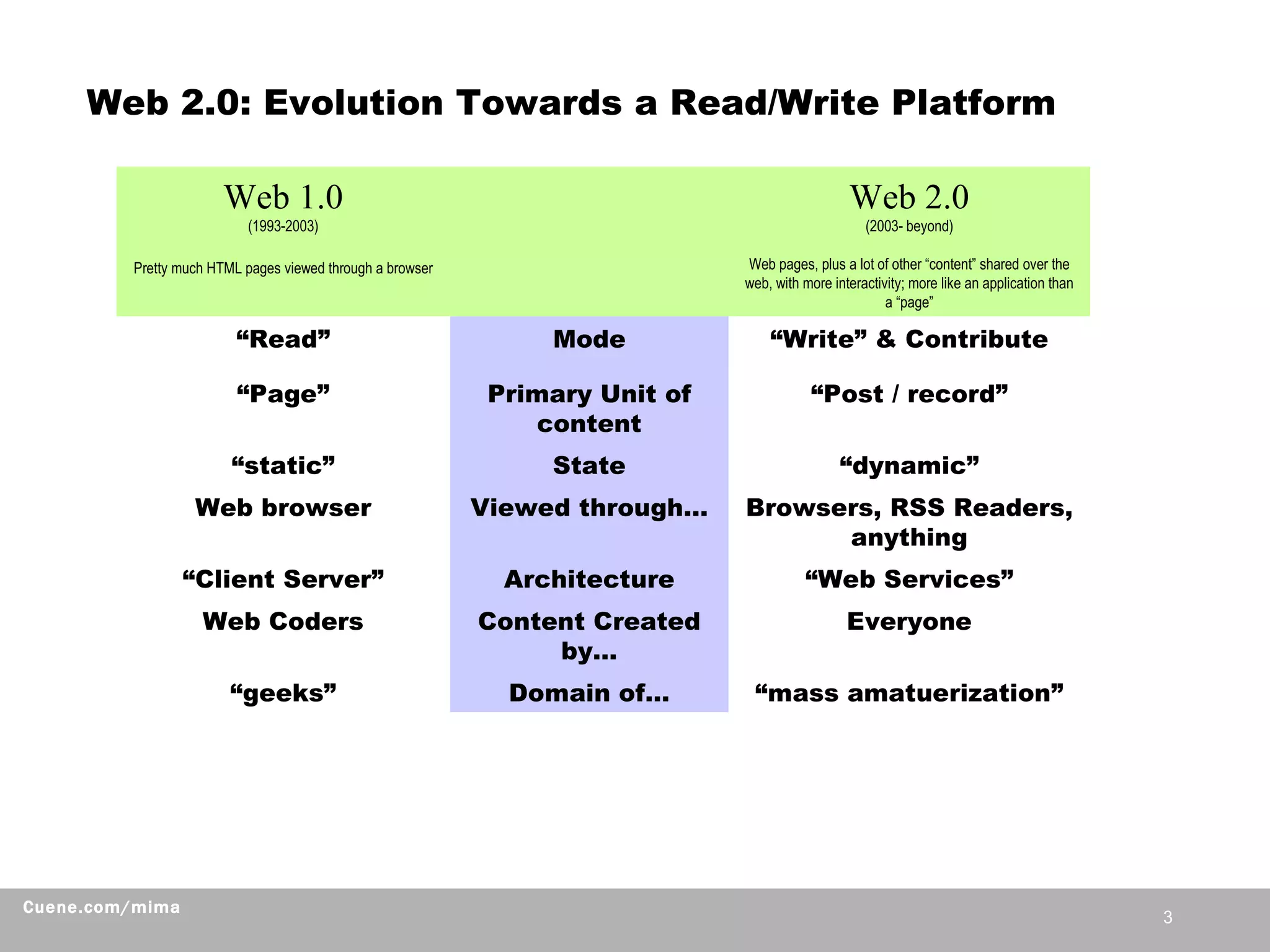
Web 2.0: Evolution Towards a Read/Write Platform Browsers, RSS Readers, anything Viewed through… Web browser Everyone Content Created by… Web Coders “ dynamic” State “ static” “ mass amatuerization” Domain of… “ geeks” “ Post / record” Primary Unit of content “ Page” “ Web Services” Architecture “ Client Server” “ Write” & Contribute Mode “ Read” Web 2.0 (2003- beyond) Web pages, plus a lot of other “content” shared over the web, with more interactivity; more like an application than a “page” Web 1.0 (1993-2003) Pretty much HTML pages viewed through a browser
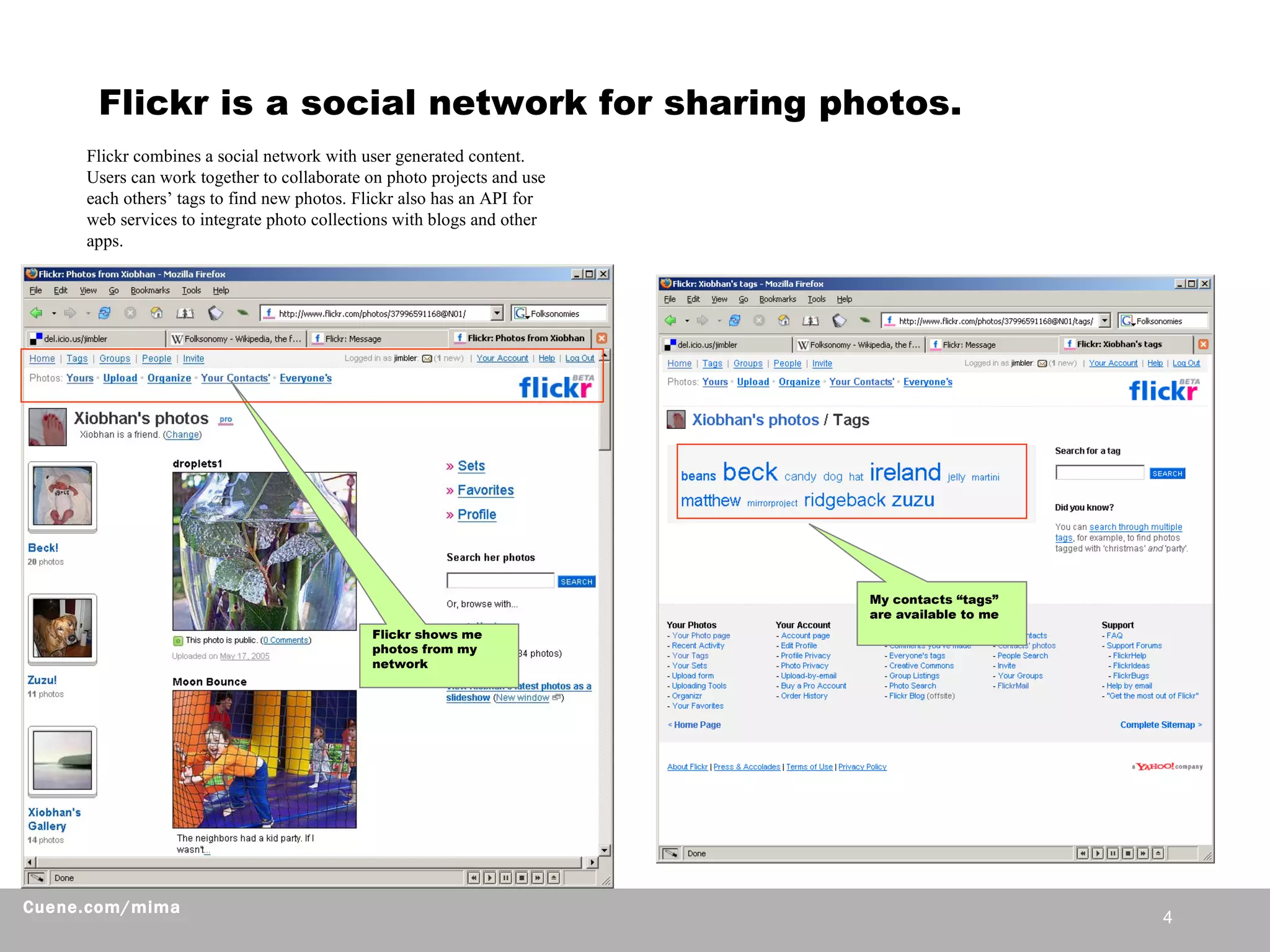
Flickr is a social network for sharing photos.  Flickr shows me photos from my network My contacts “tags” are available to me Flickr combines a social network with user generated content. Users can work together to collaborate on photo projects and use each others’ tags to find new photos. Flickr also has an API for web services to integrate photo collections with blogs and other apps.
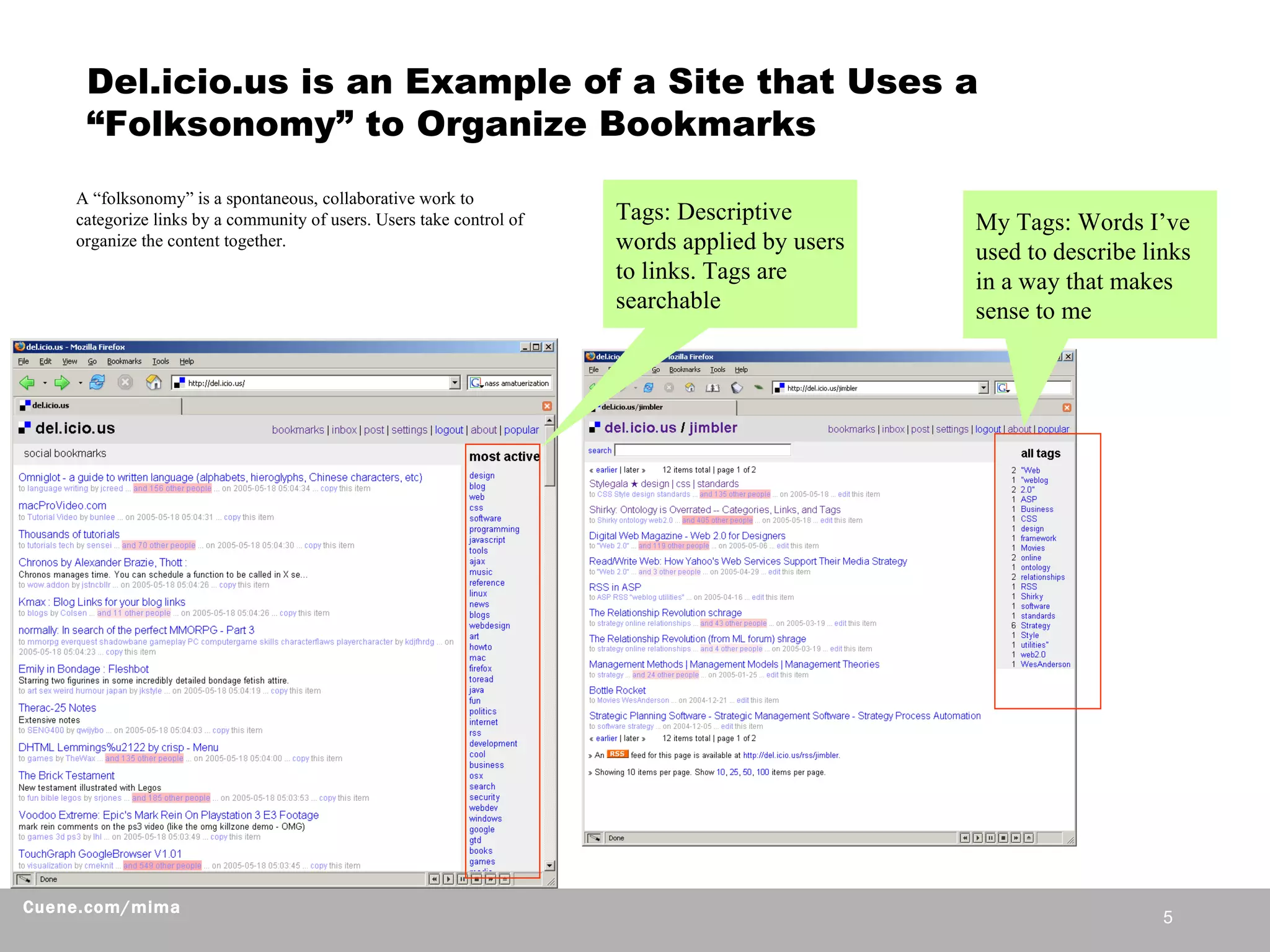
Del.icio.us is an Example of a Site that Uses a “Folksonomy” to Organize Bookmarks Tags: Descriptive words applied by users to links. Tags are searchable My Tags: Words I’ve used to describe links in a way that makes sense to me  A “folksonomy” is a spontaneous, collaborative work to categorize links by a community of users. Users take control of organize the content together.
Wikipedia is a Collaborative Dictionary Being Edited in Realtime by Anyone
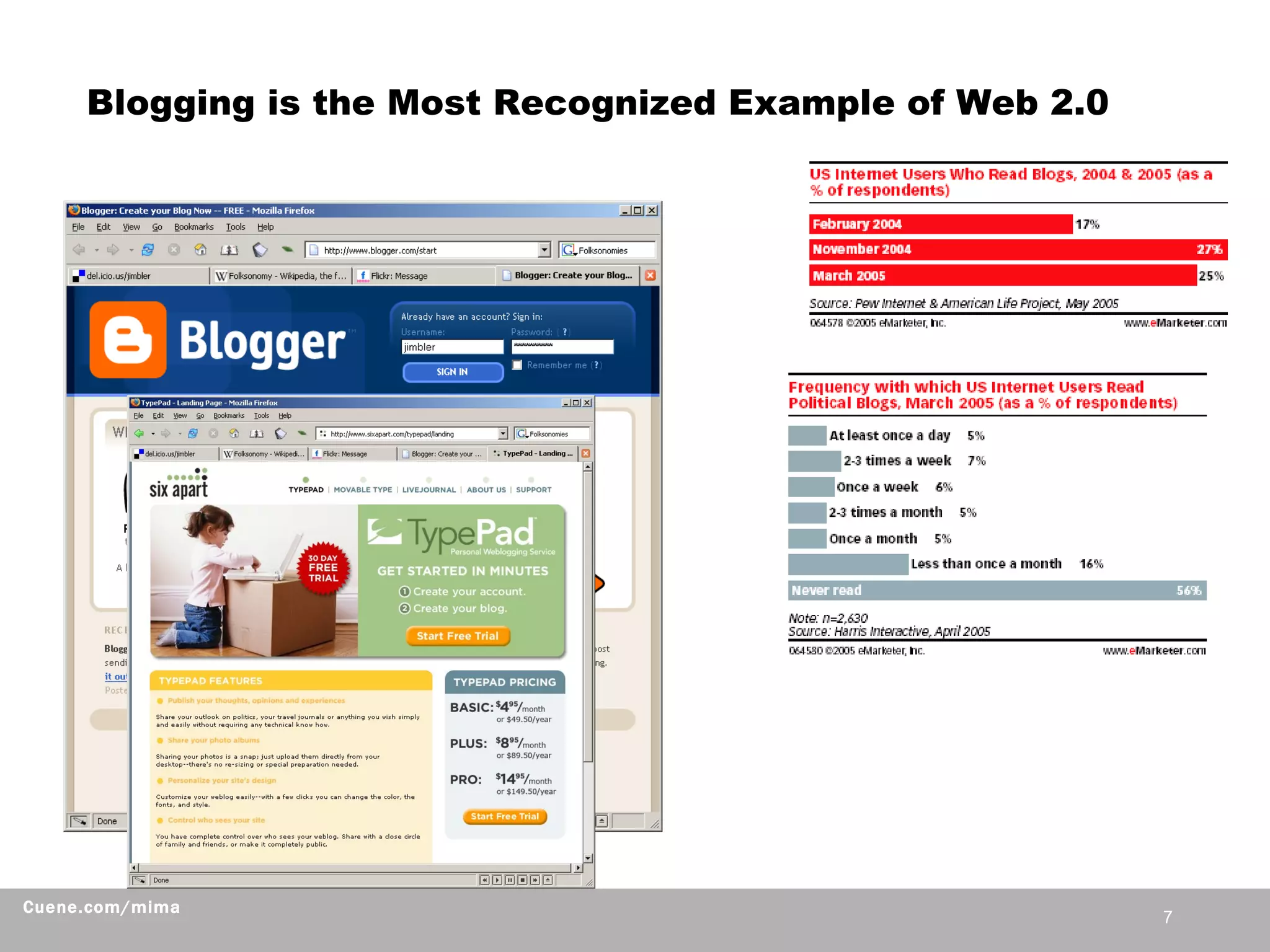
Blogging is the Most Recognized Example of Web 2.0
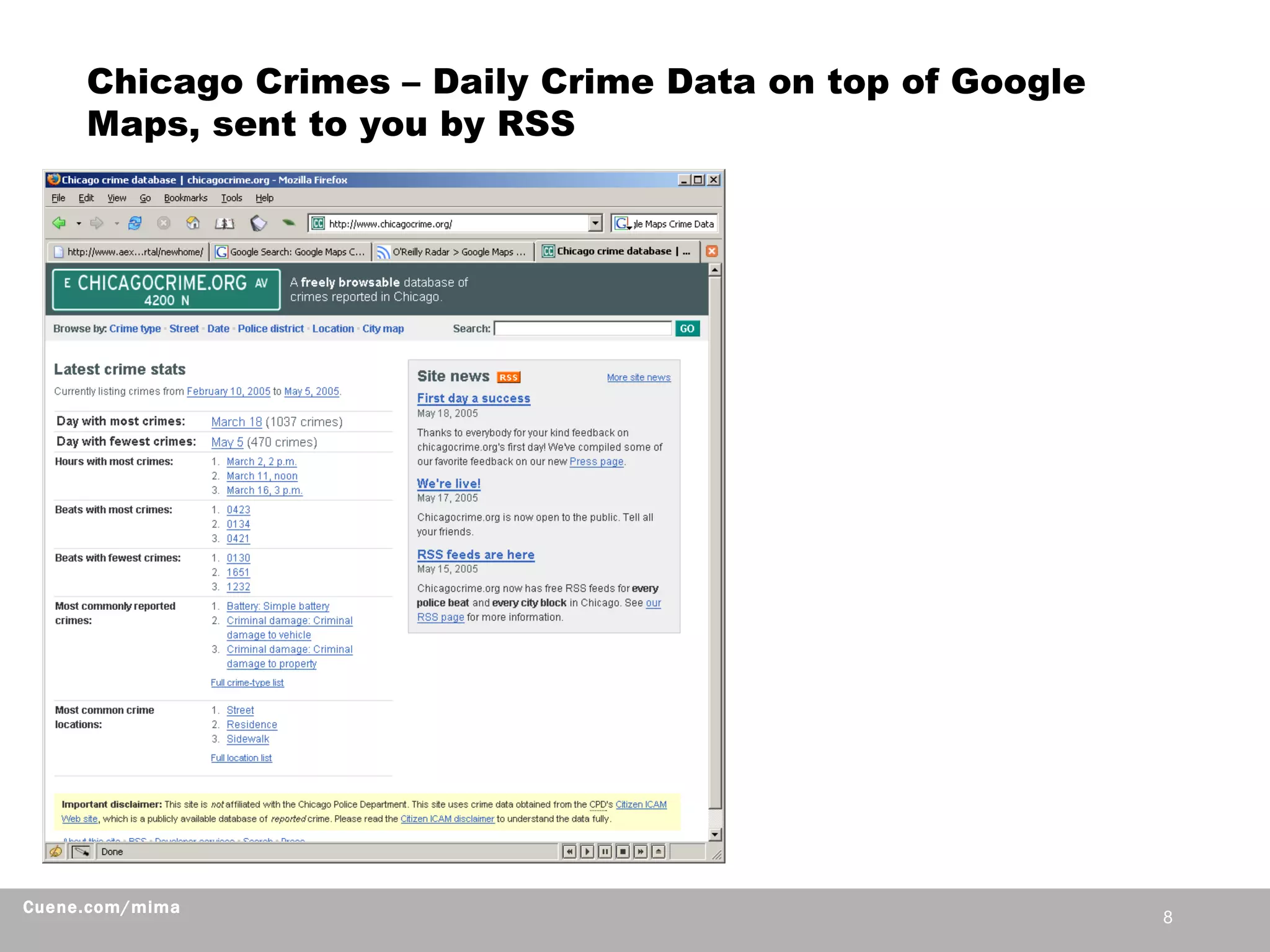
Chicago Crimes – Daily Crime Data on top of Google Maps, sent to you by RSS
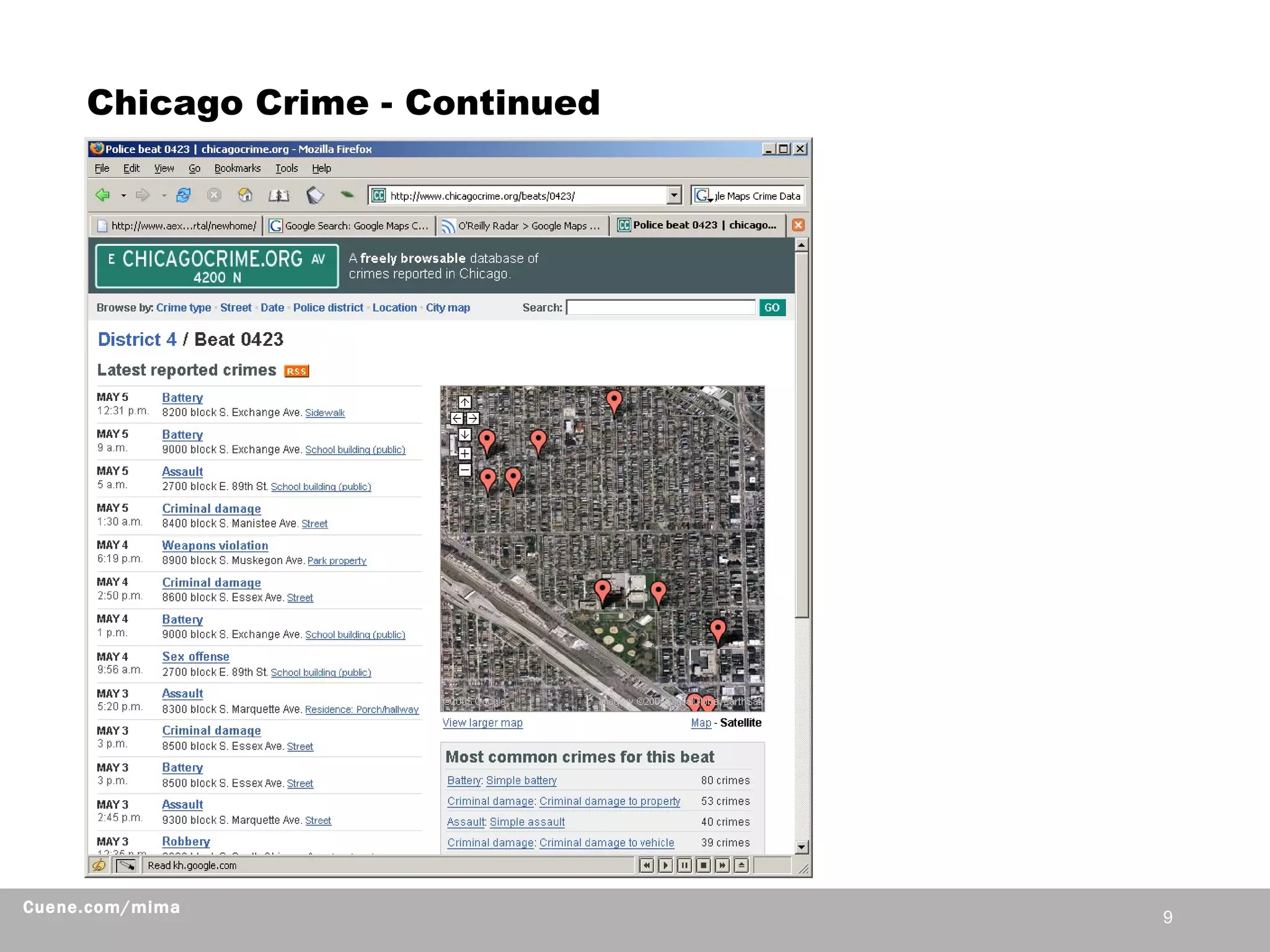
Chicago Crime - Continued
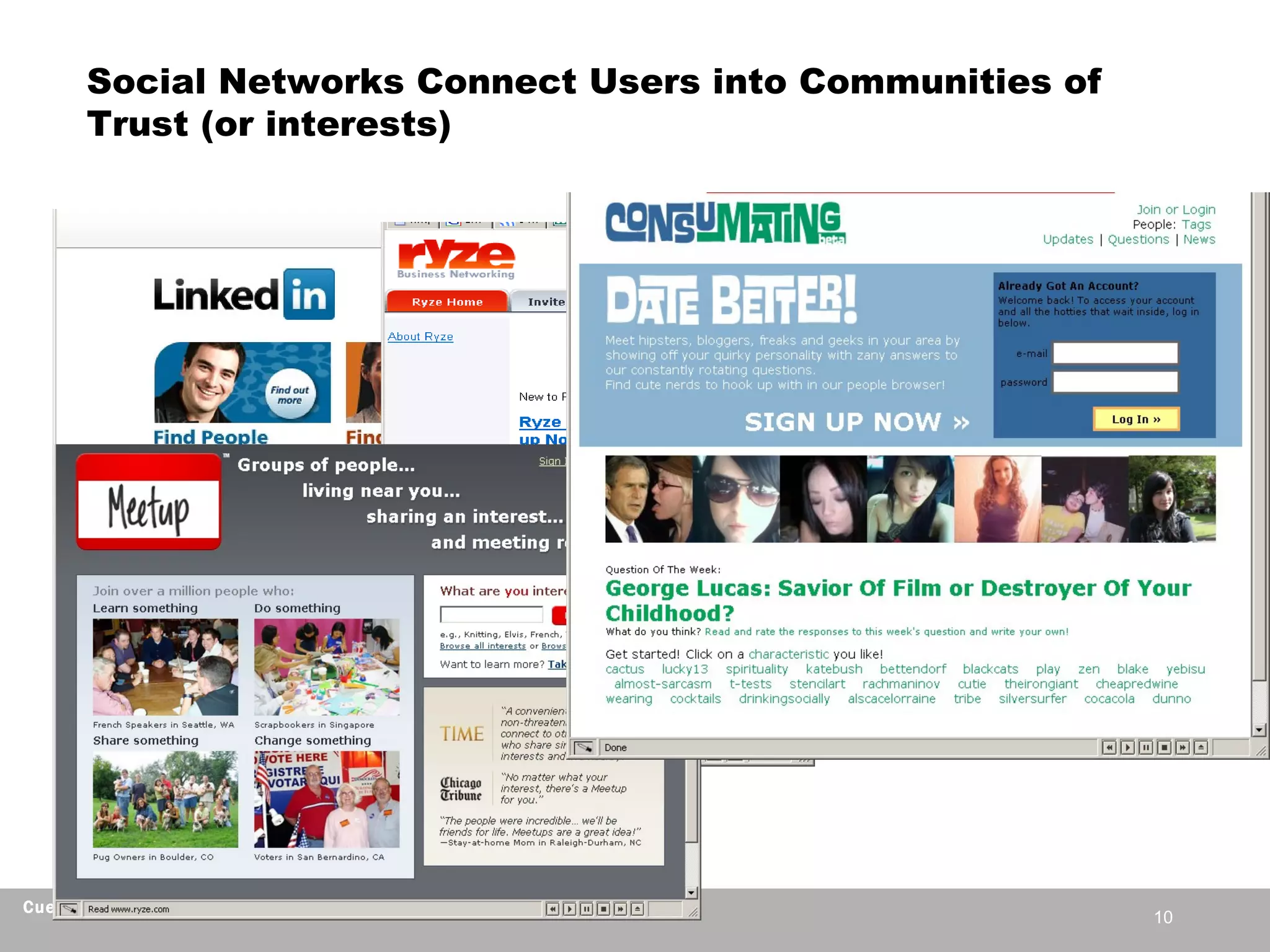
Social Networks Connect Users into Communities of Trust (or interests)
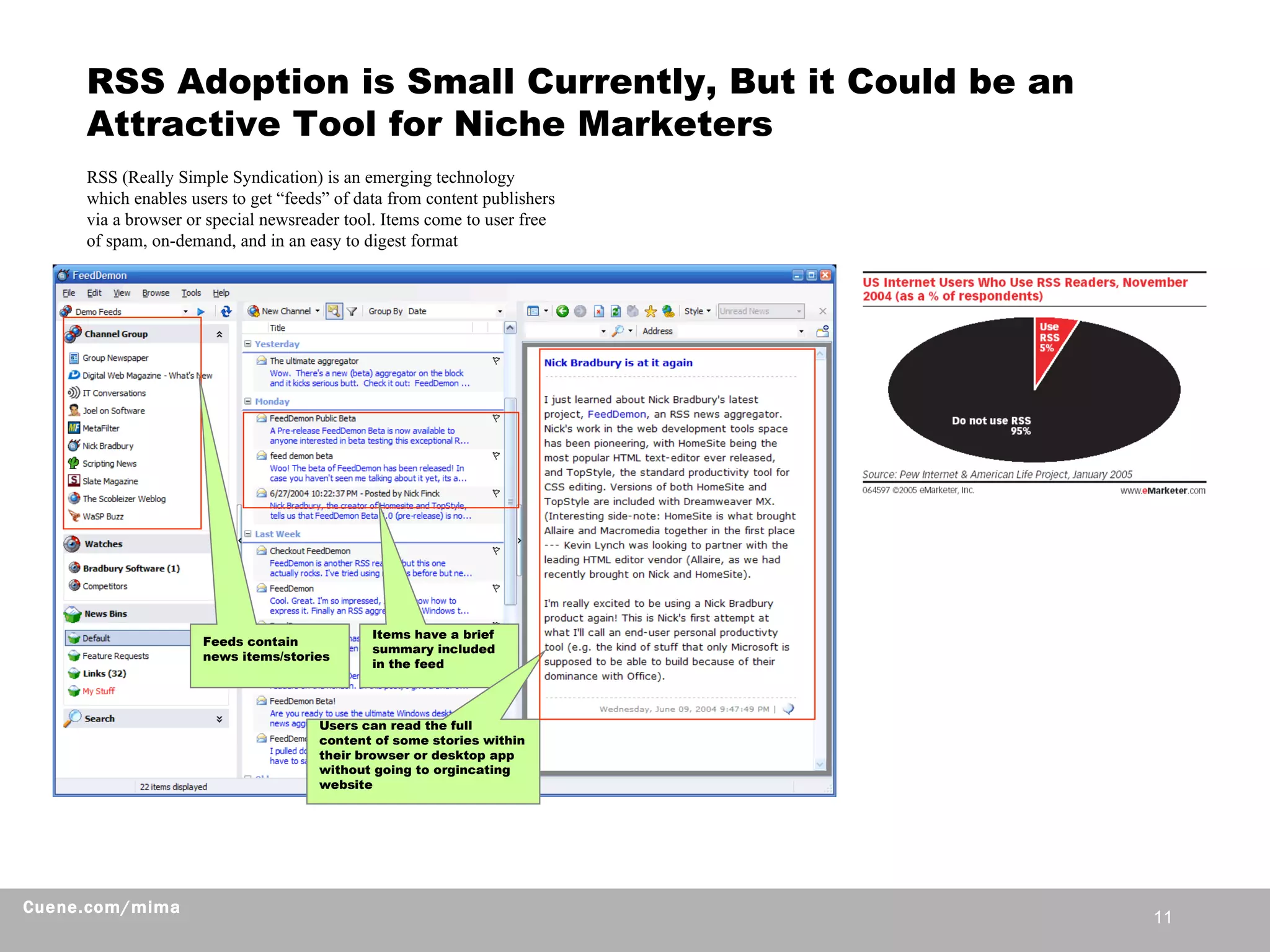
RSS Adoption is Small Currently, But it Could be an Attractive Tool for Niche Marketers RSS (Really Simple Syndication) is an emerging technology which enables users to get “feeds” of data from content publishers via a browser or special newsreader tool. Items come to user free of spam, on-demand, and in an easy to digest format Feeds contain news items/stories Items have a brief summary included in the feed Users can read the full content of some stories within their browser or desktop app without going to orgincating website
A new way of receiving content…
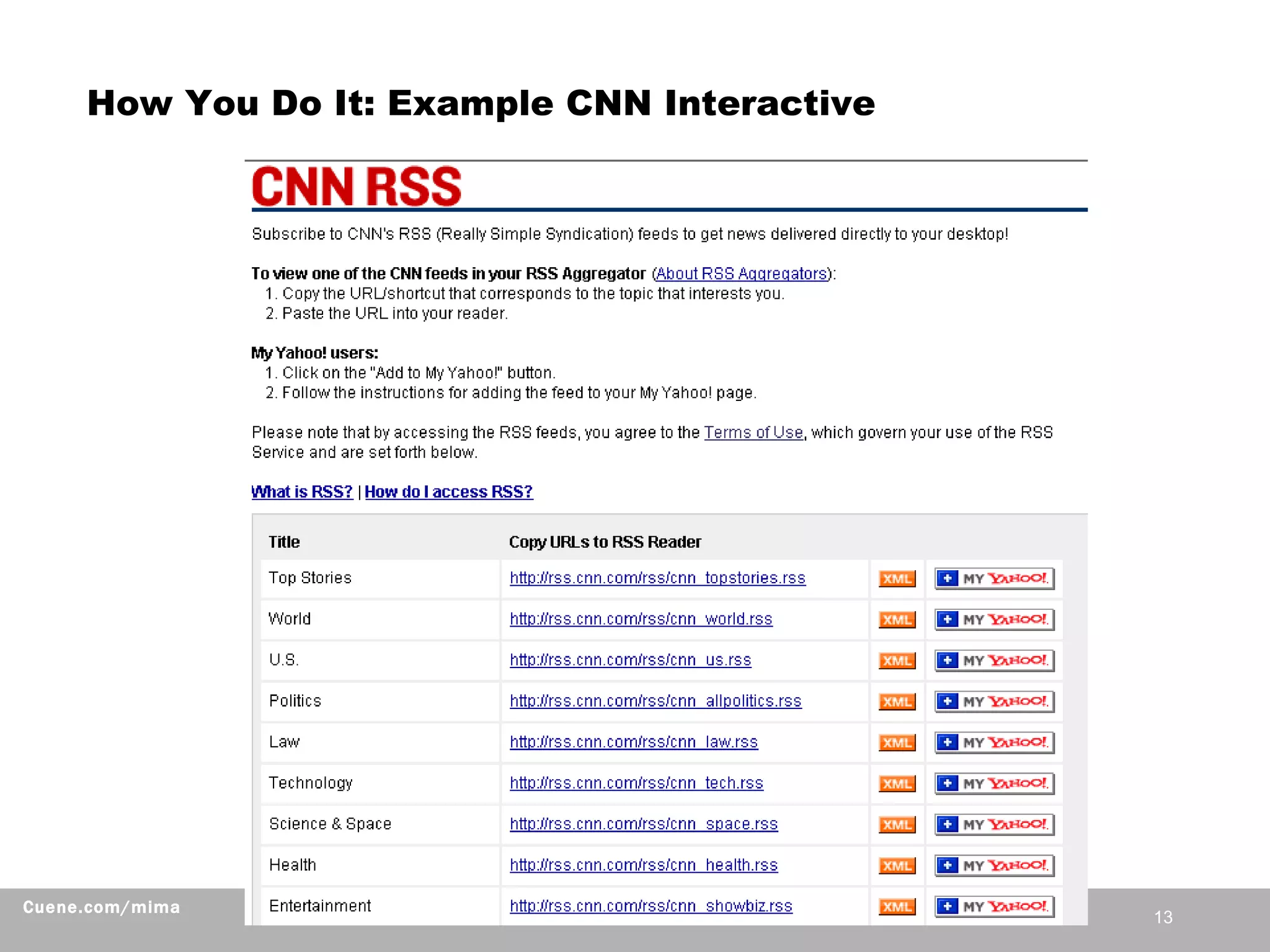
How You Do It: Example CNN Interactive
RSS Reader Examples
RSS Examples
RSS Examples
Users Who Are Using Web 2.0 Apps are Highly Engaged, Active and Attractive to Marketers Blogging is a good proxy for web 2.0 activities.  Blog readers consume a LOT of media
Users Find Blog Content Helpful, and They Are Receptive to Online Ads
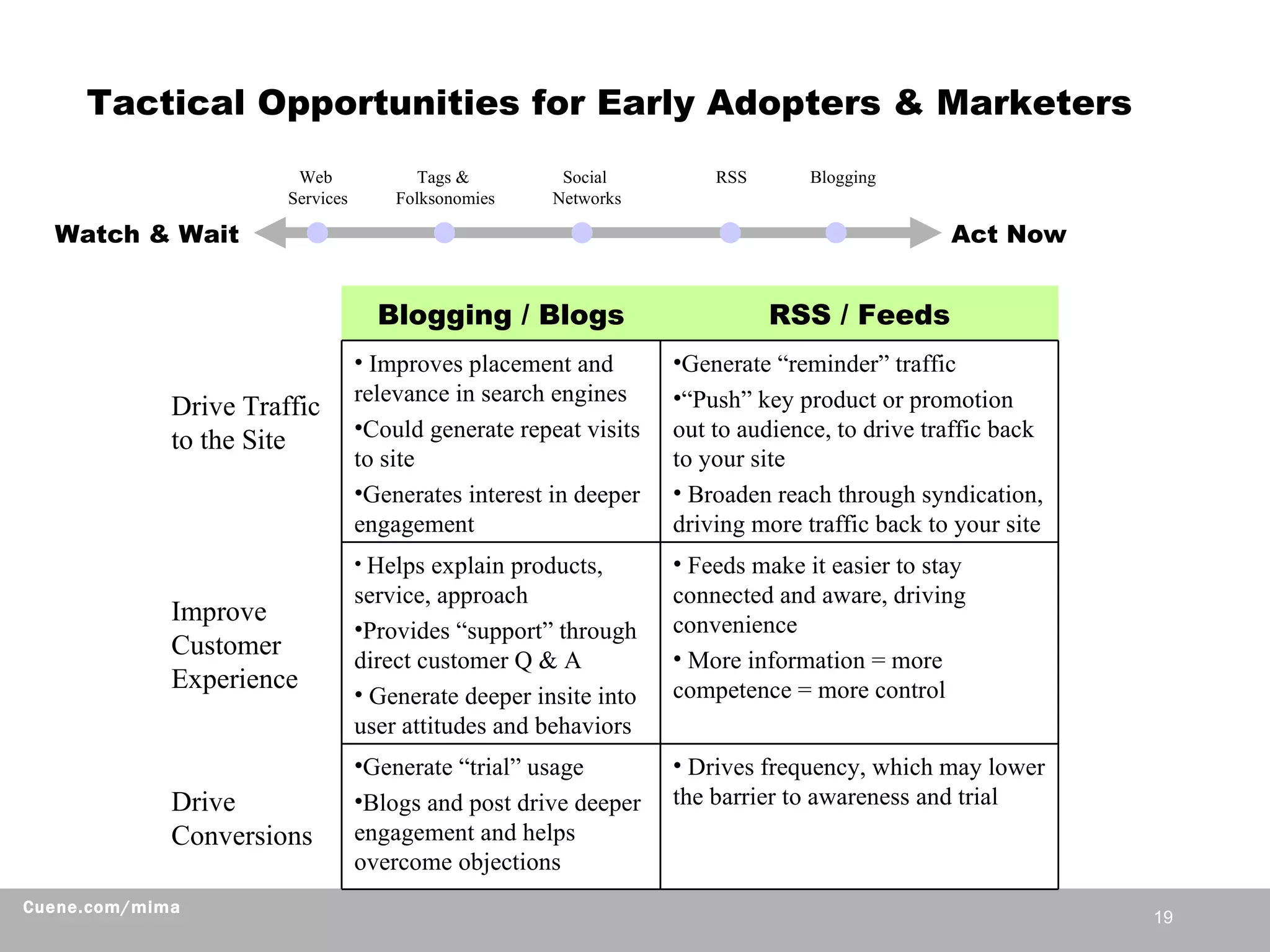
Tactical Opportunities for Early Adopters & Marketers Watch & Wait Act Now Web  Services Tags &  Folksonomies Social  Networks RSS Blogging Drives frequency, which may lower the barrier to awareness and trial Generate “trial” usage Blogs and post drive deeper engagement and helps overcome objections Drive Conversions Feeds make it easier to stay connected and aware, driving convenience More information = more competence = more control Helps explain products, service, approach Provides “support” through direct customer Q & A Generate deeper insite into user attitudes and behaviors Improve Customer Experience Generate “reminder” traffic “ Push” key product or promotion out to audience, to drive traffic back to your site Broaden reach through syndication, driving more traffic back to your site Improves placement and relevance in search engines Could generate repeat visits to site Generates interest in deeper engagement Drive Traffic to the Site RSS / Feeds Blogging / Blogs
Web 2.0 Will Mean Changes for Marketers More users are connecting to each other and content through networked, peer-driven activities & content Linkedin now has service referrals as part of their package API’s and Content syndication will lead to more machine generated connections “ Non-compliant” content won’t fit into the flow as readily Web 2.0 is truly two-way Marketers need to be very willing to “listen” and receive more than broadcast User-generated content may be more valuable to users than yours Adoption and ROI will drive investments in online advertising Investment in blog marketing will increase by 22% in 2005
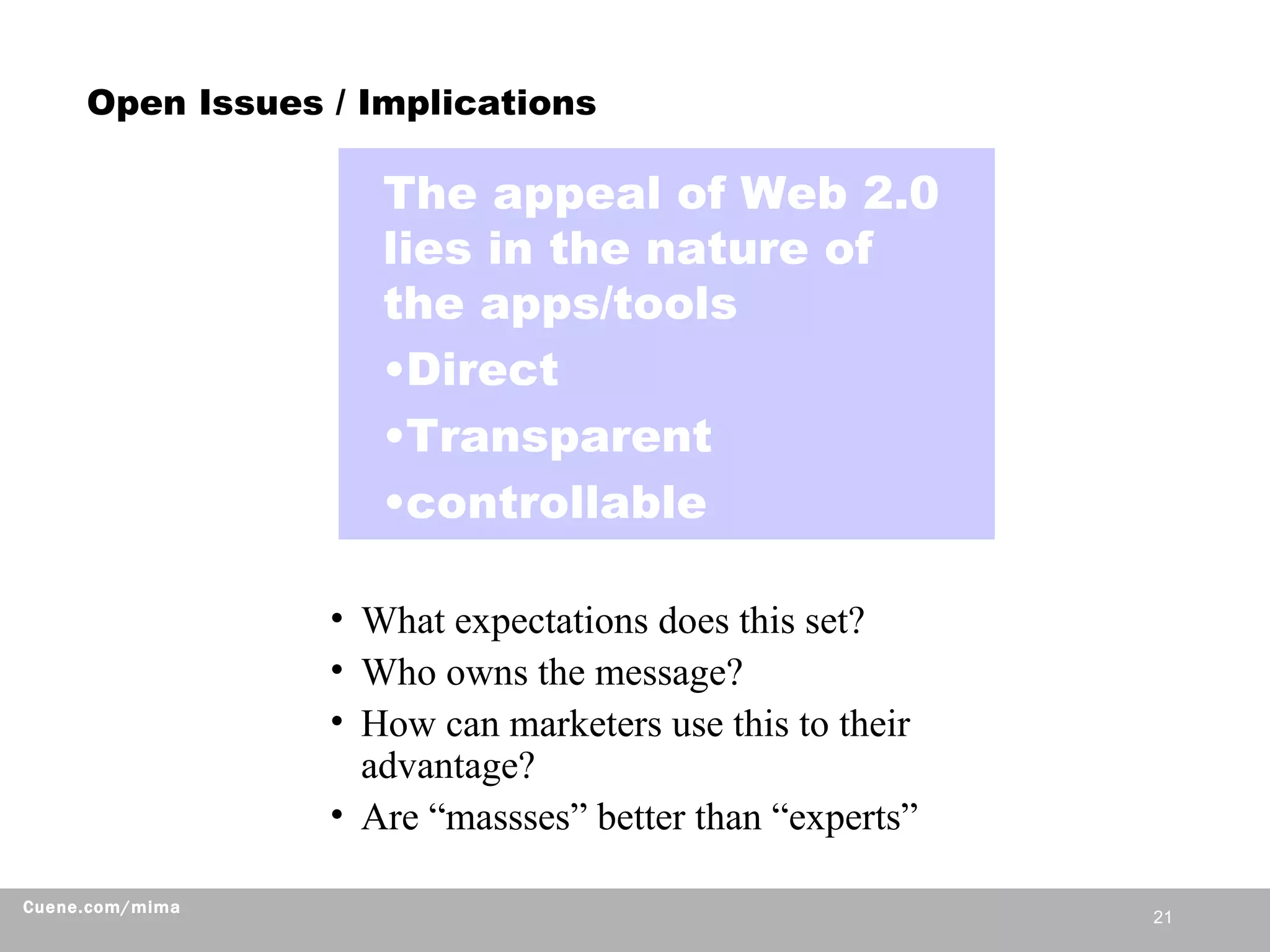
Open Issues / Implications What expectations does this set? Who owns the message? How can marketers use this to their advantage? Are “massses” better than “experts” The appeal of Web 2.0 lies in the nature of the apps/tools Direct Transparent controllable

Web 2.0

  • 1.
    Web 2.0: Isit a Whole New Internet? Jim Cuene 5.18.2005 MiMA
  • 2.
    It’s Hard toDefine, But I Know it When I See it… Web Services / API’s “ Folksonomies” / Content tagging “ AJAX” RSS Emerging Tech Apps You Know… Flickr Google Maps Blogging & Content Syndication Craigslist Linkedin, Tribes, Ryze, Friendster Some Apps You Don’t know Del.icio.us Upcoming.org 43Things.com Major Retailers Amazon API’s Google Adsense API Yahoo API Ebay API "[This is] not my mom's Internet …It's changing, and it's changing because we're looking at the share-shifting—the time people are looking at TV, reading a magazine, listening to the radio—they're not replacing each other; they're coming together." - AOL Exec / May 2005
  • 3.
    Web 2.0: EvolutionTowards a Read/Write Platform Browsers, RSS Readers, anything Viewed through… Web browser Everyone Content Created by… Web Coders “ dynamic” State “ static” “ mass amatuerization” Domain of… “ geeks” “ Post / record” Primary Unit of content “ Page” “ Web Services” Architecture “ Client Server” “ Write” & Contribute Mode “ Read” Web 2.0 (2003- beyond) Web pages, plus a lot of other “content” shared over the web, with more interactivity; more like an application than a “page” Web 1.0 (1993-2003) Pretty much HTML pages viewed through a browser
  • 4.
    Flickr is asocial network for sharing photos. Flickr shows me photos from my network My contacts “tags” are available to me Flickr combines a social network with user generated content. Users can work together to collaborate on photo projects and use each others’ tags to find new photos. Flickr also has an API for web services to integrate photo collections with blogs and other apps.
  • 5.
    Del.icio.us is anExample of a Site that Uses a “Folksonomy” to Organize Bookmarks Tags: Descriptive words applied by users to links. Tags are searchable My Tags: Words I’ve used to describe links in a way that makes sense to me A “folksonomy” is a spontaneous, collaborative work to categorize links by a community of users. Users take control of organize the content together.
  • 6.
    Wikipedia is aCollaborative Dictionary Being Edited in Realtime by Anyone
  • 7.
    Blogging is theMost Recognized Example of Web 2.0
  • 8.
    Chicago Crimes –Daily Crime Data on top of Google Maps, sent to you by RSS
  • 9.
    Chicago Crime -Continued
  • 10.
    Social Networks ConnectUsers into Communities of Trust (or interests)
  • 11.
    RSS Adoption isSmall Currently, But it Could be an Attractive Tool for Niche Marketers RSS (Really Simple Syndication) is an emerging technology which enables users to get “feeds” of data from content publishers via a browser or special newsreader tool. Items come to user free of spam, on-demand, and in an easy to digest format Feeds contain news items/stories Items have a brief summary included in the feed Users can read the full content of some stories within their browser or desktop app without going to orgincating website
  • 12.
    A new wayof receiving content…
  • 13.
    How You DoIt: Example CNN Interactive
  • 14.
  • 15.
  • 16.
  • 17.
    Users Who AreUsing Web 2.0 Apps are Highly Engaged, Active and Attractive to Marketers Blogging is a good proxy for web 2.0 activities. Blog readers consume a LOT of media
  • 18.
    Users Find BlogContent Helpful, and They Are Receptive to Online Ads
  • 19.
    Tactical Opportunities forEarly Adopters & Marketers Watch & Wait Act Now Web Services Tags & Folksonomies Social Networks RSS Blogging Drives frequency, which may lower the barrier to awareness and trial Generate “trial” usage Blogs and post drive deeper engagement and helps overcome objections Drive Conversions Feeds make it easier to stay connected and aware, driving convenience More information = more competence = more control Helps explain products, service, approach Provides “support” through direct customer Q & A Generate deeper insite into user attitudes and behaviors Improve Customer Experience Generate “reminder” traffic “ Push” key product or promotion out to audience, to drive traffic back to your site Broaden reach through syndication, driving more traffic back to your site Improves placement and relevance in search engines Could generate repeat visits to site Generates interest in deeper engagement Drive Traffic to the Site RSS / Feeds Blogging / Blogs
  • 20.
    Web 2.0 WillMean Changes for Marketers More users are connecting to each other and content through networked, peer-driven activities & content Linkedin now has service referrals as part of their package API’s and Content syndication will lead to more machine generated connections “ Non-compliant” content won’t fit into the flow as readily Web 2.0 is truly two-way Marketers need to be very willing to “listen” and receive more than broadcast User-generated content may be more valuable to users than yours Adoption and ROI will drive investments in online advertising Investment in blog marketing will increase by 22% in 2005
  • 21.
    Open Issues /Implications What expectations does this set? Who owns the message? How can marketers use this to their advantage? Are “massses” better than “experts” The appeal of Web 2.0 lies in the nature of the apps/tools Direct Transparent controllable