Water Potential (Ψ)
What is it?








Water potential (Ψ) is a measure of water’s potential to
do work.
In order to do work, an object must be able to apply
enough force to another object to cause displacement.
In order for water to displace another object, water must
be moving.
The largest water potential any volume of water can
have, if only standard atmospheric pressure is being
applied to that volume of water, is defined as 0. This is
the water potential for distilled water.
Distilled water has the greatest potential to move, and
thus displace another object.
Adding Solute effect on water potential


As solute is added to distilled water with no outside
pressure being applied to it, the water potential of that
solution drops.



But what does it mean to say that the water potential of a
solution drops? It means that the water in that solution is
less likely to do work - in other words, it is less likely to
move!



Why is that? Well, as solute is added, the chances
become less and less that a concentration gradient can
be set up between that solution and a second solution
that will favor the movement of water out of the initial
solution.
An Example












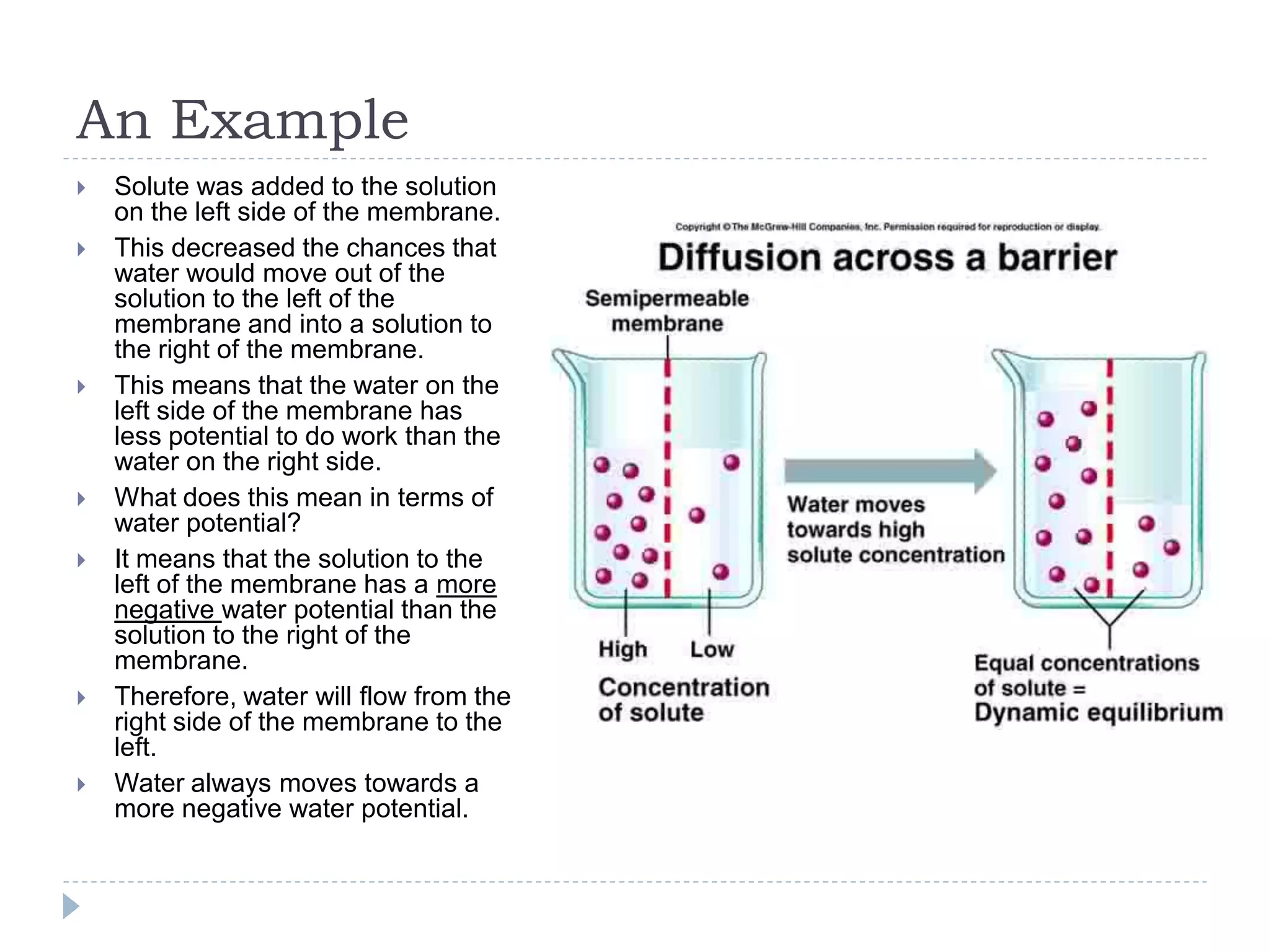
Solute was added to the solution
on the left side of the membrane.
This decreased the chances that
water would move out of the
solution to the left of the
membrane and into a solution to
the right of the membrane.
This means that the water on the
left side of the membrane has
less potential to do work than the
water on the right side.
What does this mean in terms of
water potential?
It means that the solution to the
left of the membrane has a more
negative water potential than the
solution to the right of the
membrane.
Therefore, water will flow from the
right side of the membrane to the
left.
Water always moves towards a
more negative water potential.
Practice


The solute potential of a 0.1 M solution of distilled water
and sucrose at 20º C at standard atmospheric pressure is 0.23. If we continue adding sucrose to the solution until it
reaches a concentration of 0.75 M at 20º C at standard
atmospheric pressure, the solute potential continues to
drop to a value of
-1.87. Which solution contains
water that is less likely to do work?



Remember, water always moves from an area of higher
water potential to an area of lower water potential
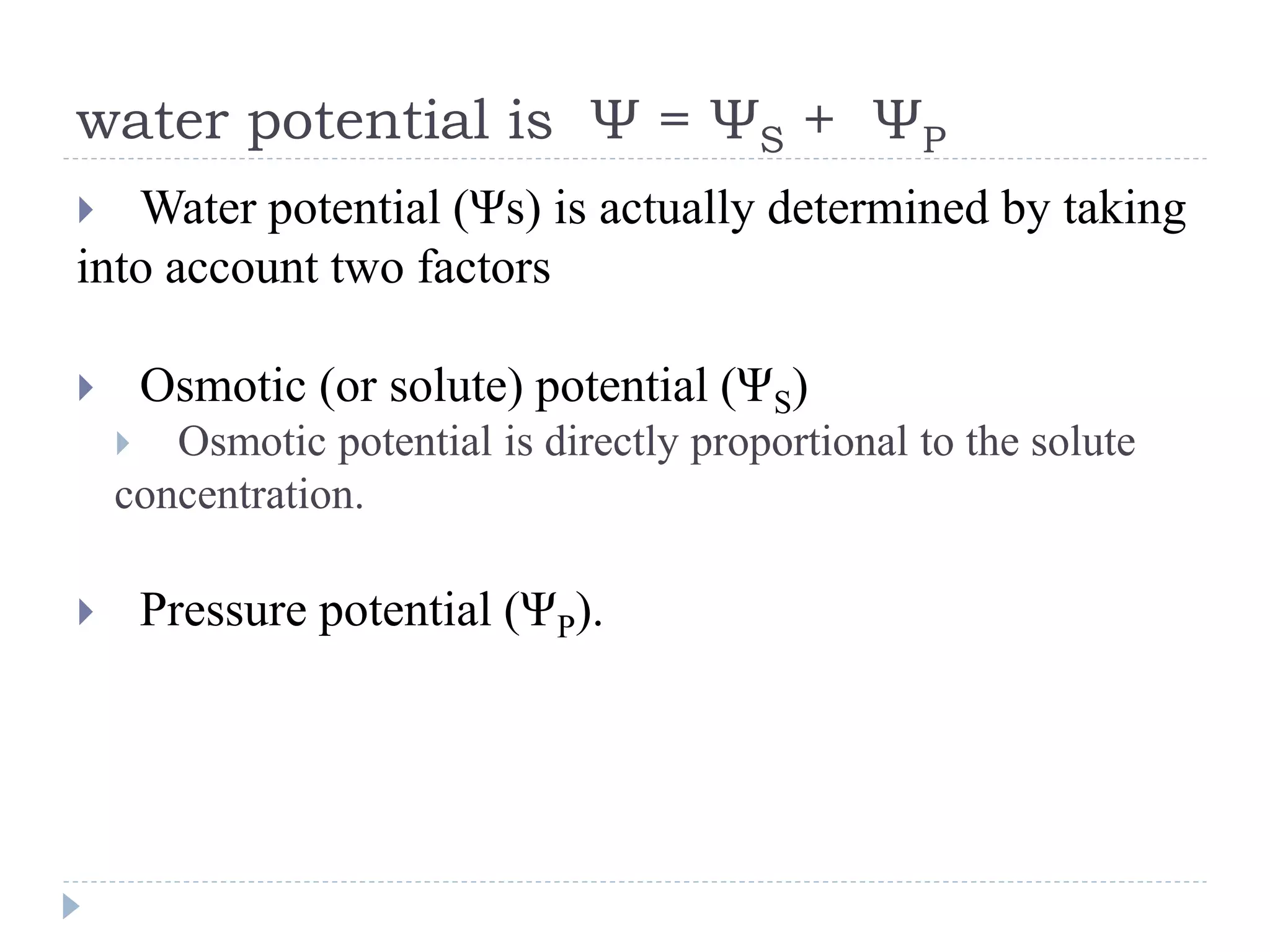
water potential is Ψ = ΨS + ΨP
Water potential (Ψs) is actually determined by taking
into account two factors


Osmotic (or solute) potential (ΨS)




Osmotic potential is directly proportional to the solute
concentration.


Pressure potential (ΨP).
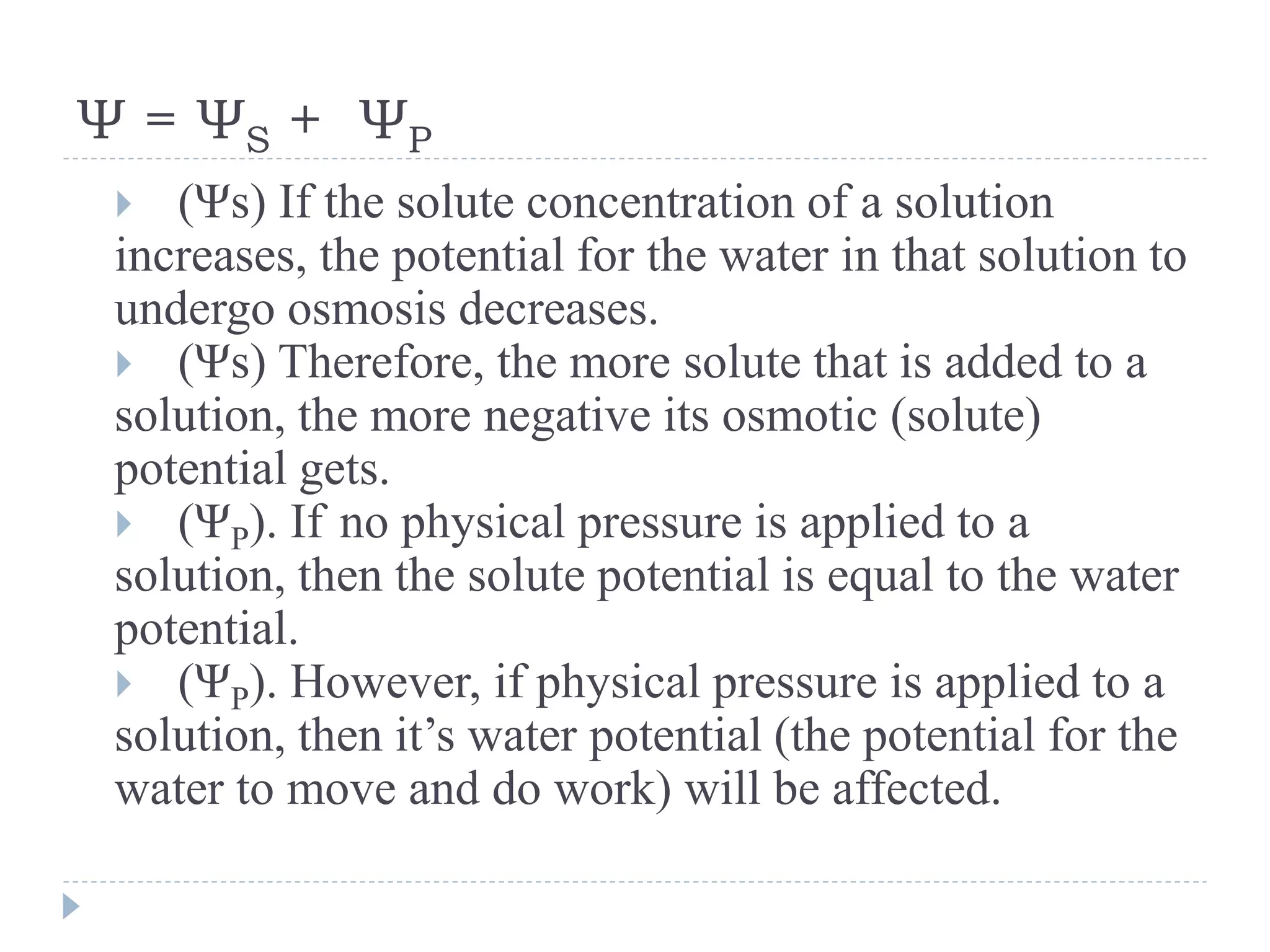
Ψ = ΨS + ΨP
(Ψs) If the solute concentration of a solution
increases, the potential for the water in that solution to
undergo osmosis decreases.
 (Ψs) Therefore, the more solute that is added to a
solution, the more negative its osmotic (solute)
potential gets.
 (ΨP). If no physical pressure is applied to a
solution, then the solute potential is equal to the water
potential.
 (ΨP). However, if physical pressure is applied to a
solution, then it’s water potential (the potential for the
water to move and do work) will be affected.

How could pressure be applied to a solution?










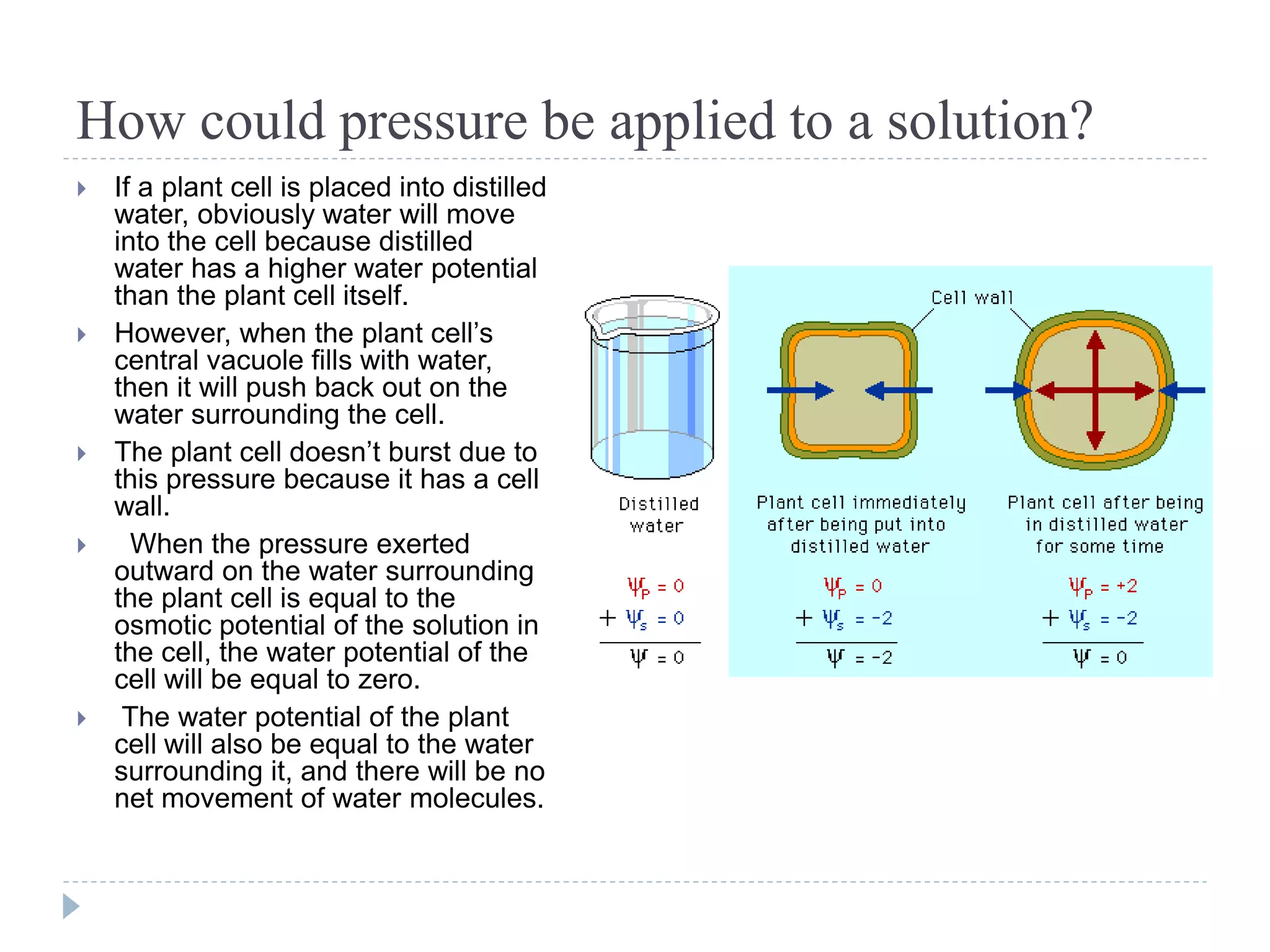
If a plant cell is placed into distilled
water, obviously water will move
into the cell because distilled
water has a higher water potential
than the plant cell itself.
However, when the plant cell’s
central vacuole fills with water,
then it will push back out on the
water surrounding the cell.
The plant cell doesn’t burst due to
this pressure because it has a cell
wall.
When the pressure exerted
outward on the water surrounding
the plant cell is equal to the
osmotic potential of the solution in
the cell, the water potential of the
cell will be equal to zero.
The water potential of the plant
cell will also be equal to the water
surrounding it, and there will be no
net movement of water molecules.
Practice problems


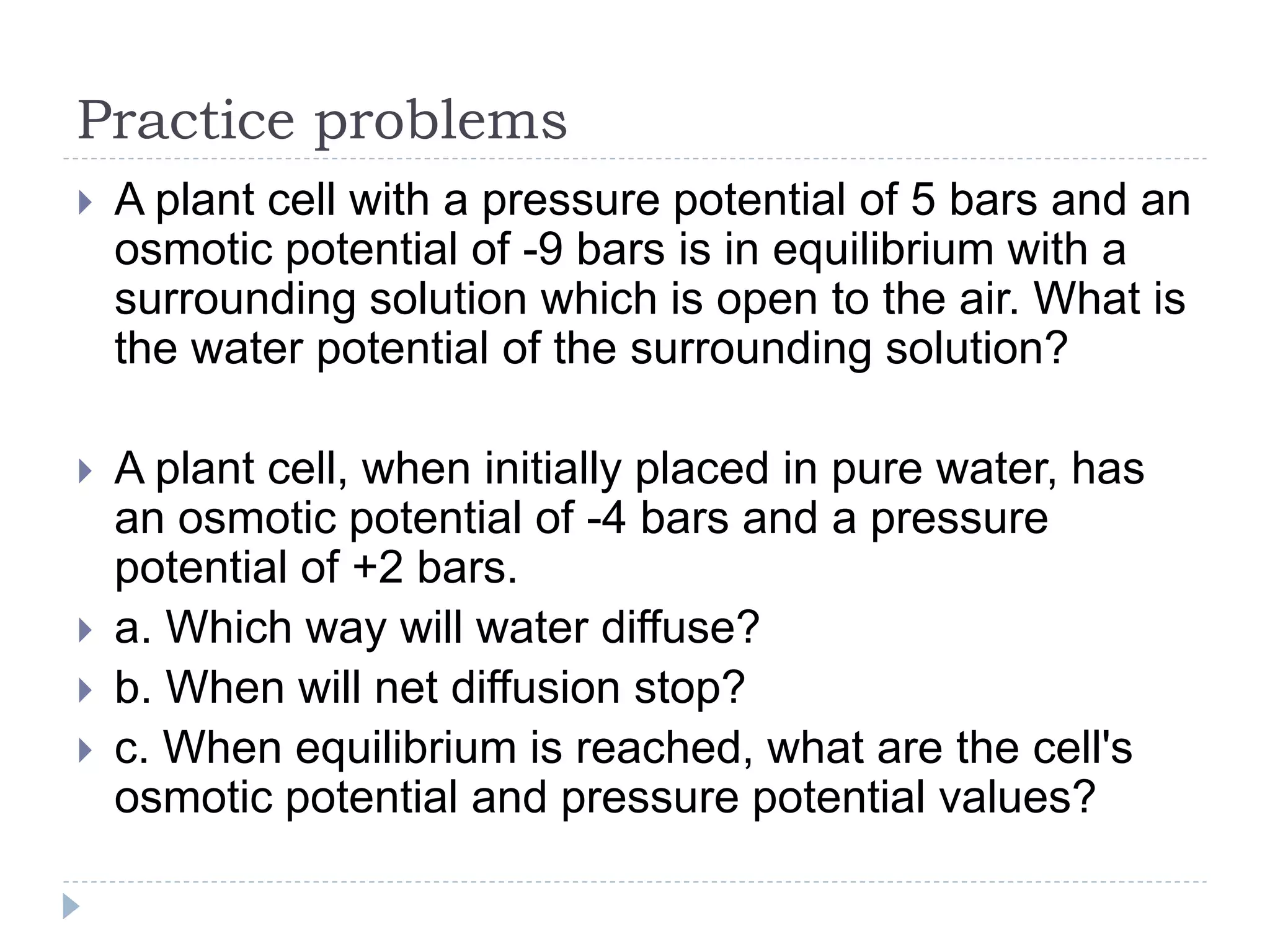
A plant cell with a pressure potential of 5 bars and an
osmotic potential of -9 bars is in equilibrium with a
surrounding solution which is open to the air. What is
the water potential of the surrounding solution?



A plant cell, when initially placed in pure water, has
an osmotic potential of -4 bars and a pressure
potential of +2 bars.
a. Which way will water diffuse?
b. When will net diffusion stop?
c. When equilibrium is reached, what are the cell's
osmotic potential and pressure potential values?






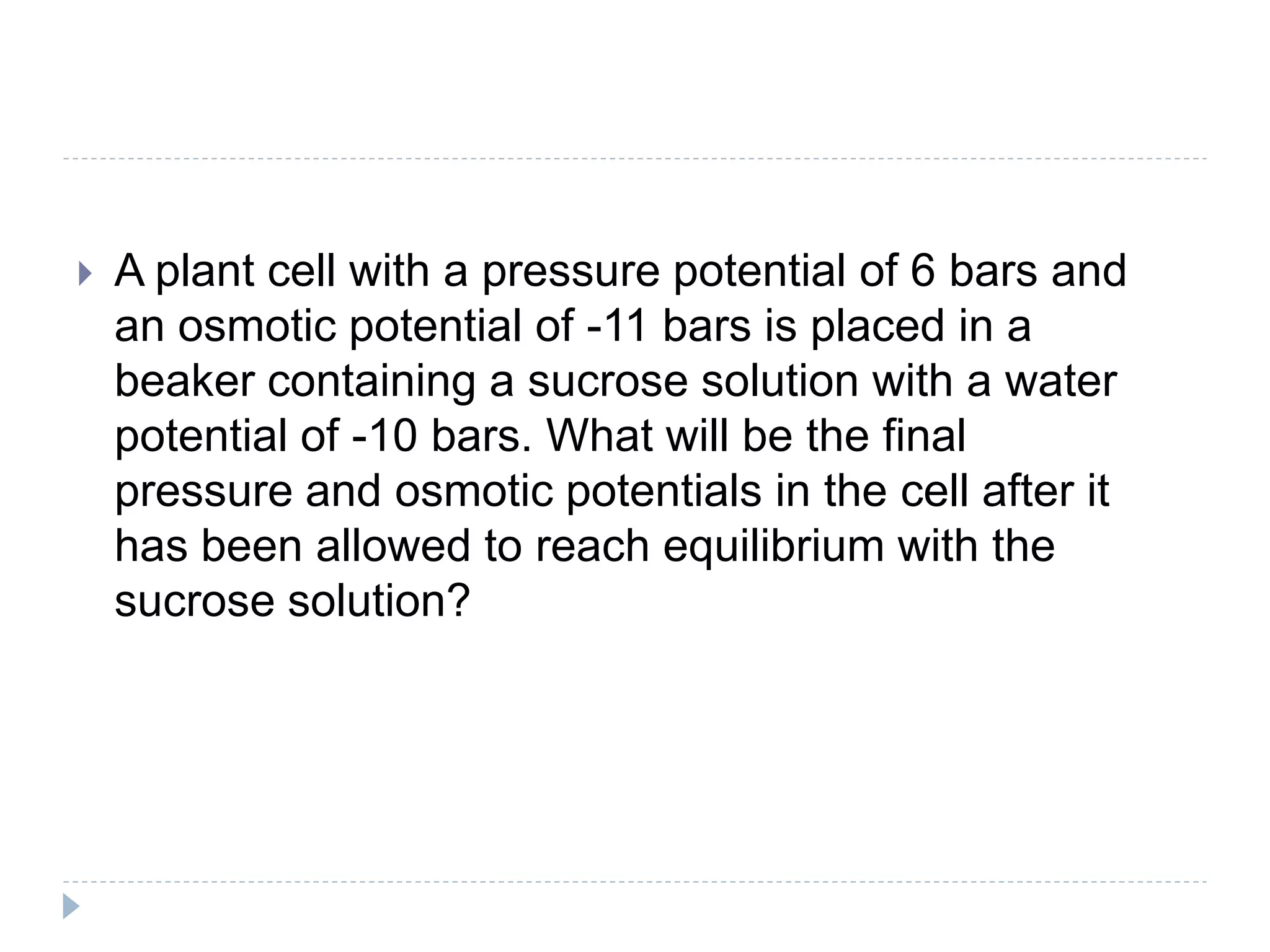
A plant cell with a pressure potential of 6 bars and
an osmotic potential of -11 bars is placed in a
beaker containing a sucrose solution with a water
potential of -10 bars. What will be the final
pressure and osmotic potentials in the cell after it
has been allowed to reach equilibrium with the
sucrose solution?
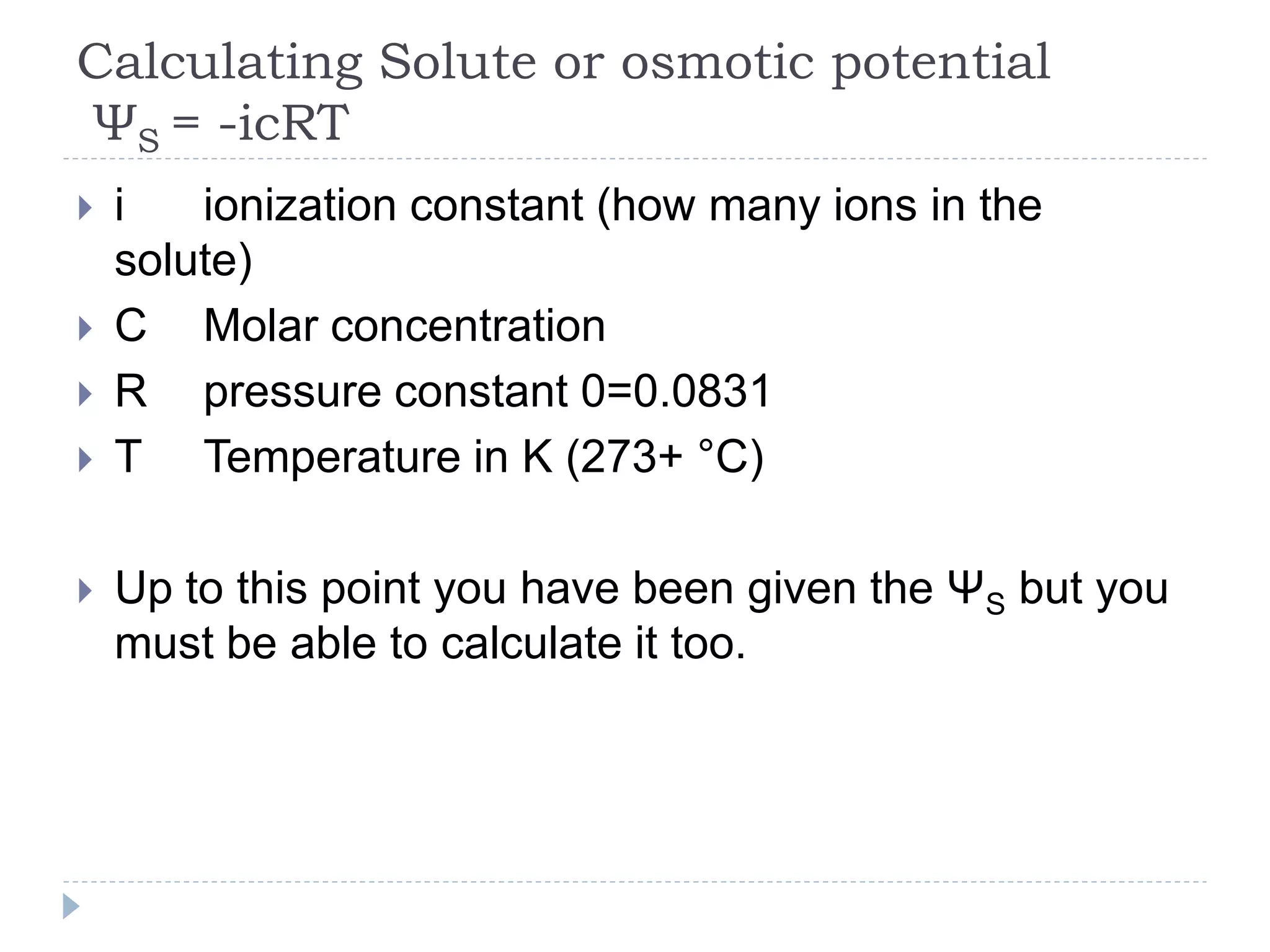
Calculating Solute or osmotic potential
ΨS = -icRT








i
ionization constant (how many ions in the
solute)
C Molar concentration
R pressure constant 0=0.0831
T Temperature in K (273+ °C)
Up to this point you have been given the ΨS but you
must be able to calculate it too.
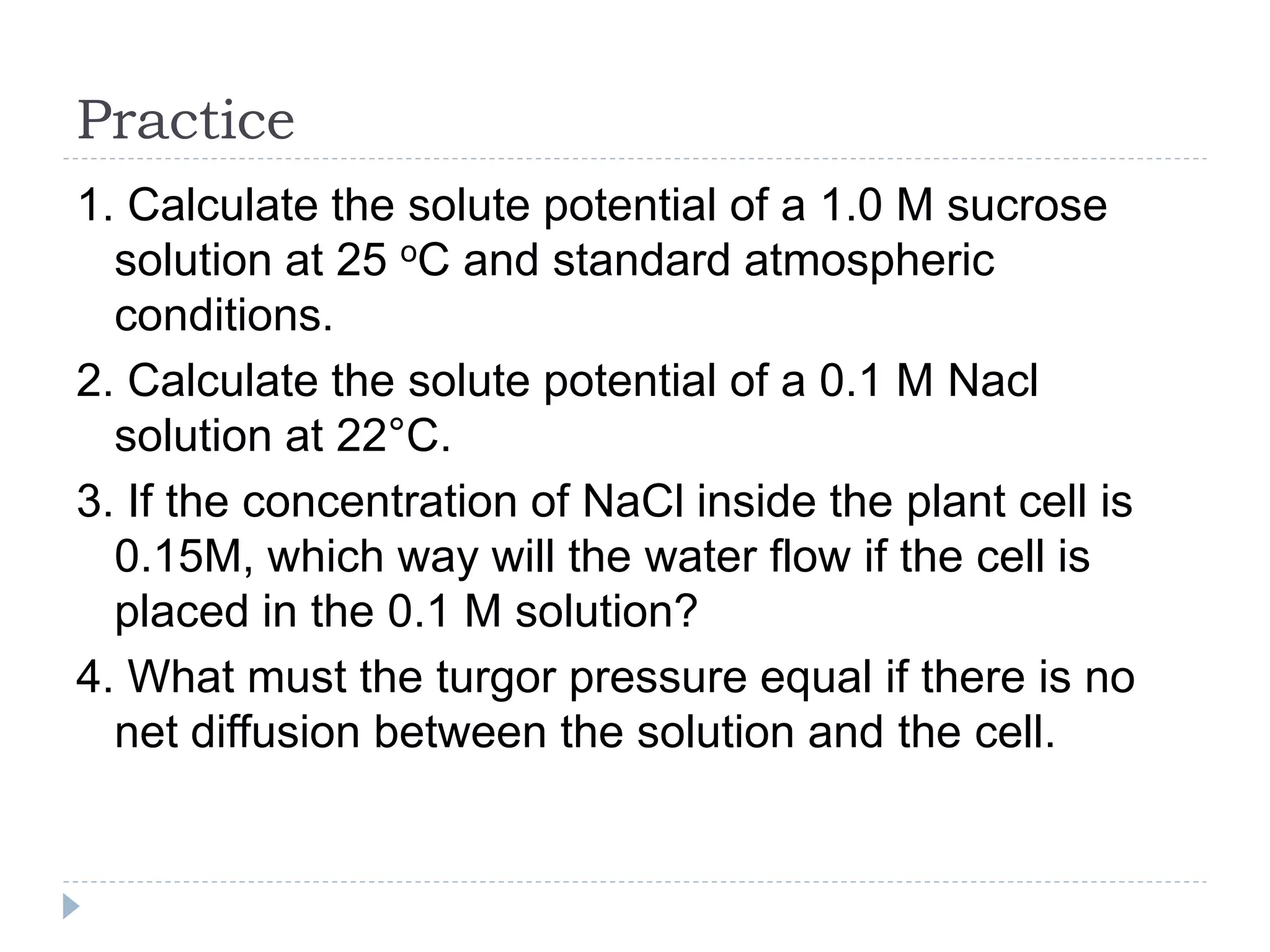
Practice
1. Calculate the solute potential of a 1.0 M sucrose
solution at 25 oC and standard atmospheric
conditions.
2. Calculate the solute potential of a 0.1 M Nacl
solution at 22°C.
3. If the concentration of NaCl inside the plant cell is
0.15M, which way will the water flow if the cell is
placed in the 0.1 M solution?
4. What must the turgor pressure equal if there is no
net diffusion between the solution and the cell.

Water+potential+explained

  • 1.
  • 2.
    What is it?      Waterpotential (Ψ) is a measure of water’s potential to do work. In order to do work, an object must be able to apply enough force to another object to cause displacement. In order for water to displace another object, water must be moving. The largest water potential any volume of water can have, if only standard atmospheric pressure is being applied to that volume of water, is defined as 0. This is the water potential for distilled water. Distilled water has the greatest potential to move, and thus displace another object.
  • 3.
    Adding Solute effecton water potential  As solute is added to distilled water with no outside pressure being applied to it, the water potential of that solution drops.  But what does it mean to say that the water potential of a solution drops? It means that the water in that solution is less likely to do work - in other words, it is less likely to move!  Why is that? Well, as solute is added, the chances become less and less that a concentration gradient can be set up between that solution and a second solution that will favor the movement of water out of the initial solution.
  • 4.
    An Example        Solute wasadded to the solution on the left side of the membrane. This decreased the chances that water would move out of the solution to the left of the membrane and into a solution to the right of the membrane. This means that the water on the left side of the membrane has less potential to do work than the water on the right side. What does this mean in terms of water potential? It means that the solution to the left of the membrane has a more negative water potential than the solution to the right of the membrane. Therefore, water will flow from the right side of the membrane to the left. Water always moves towards a more negative water potential.
  • 5.
    Practice  The solute potentialof a 0.1 M solution of distilled water and sucrose at 20º C at standard atmospheric pressure is 0.23. If we continue adding sucrose to the solution until it reaches a concentration of 0.75 M at 20º C at standard atmospheric pressure, the solute potential continues to drop to a value of -1.87. Which solution contains water that is less likely to do work?  Remember, water always moves from an area of higher water potential to an area of lower water potential
  • 6.
    water potential isΨ = ΨS + ΨP Water potential (Ψs) is actually determined by taking into account two factors  Osmotic (or solute) potential (ΨS)   Osmotic potential is directly proportional to the solute concentration.  Pressure potential (ΨP).
  • 7.
    Ψ = ΨS+ ΨP (Ψs) If the solute concentration of a solution increases, the potential for the water in that solution to undergo osmosis decreases.  (Ψs) Therefore, the more solute that is added to a solution, the more negative its osmotic (solute) potential gets.  (ΨP). If no physical pressure is applied to a solution, then the solute potential is equal to the water potential.  (ΨP). However, if physical pressure is applied to a solution, then it’s water potential (the potential for the water to move and do work) will be affected. 
  • 8.
    How could pressurebe applied to a solution?      If a plant cell is placed into distilled water, obviously water will move into the cell because distilled water has a higher water potential than the plant cell itself. However, when the plant cell’s central vacuole fills with water, then it will push back out on the water surrounding the cell. The plant cell doesn’t burst due to this pressure because it has a cell wall. When the pressure exerted outward on the water surrounding the plant cell is equal to the osmotic potential of the solution in the cell, the water potential of the cell will be equal to zero. The water potential of the plant cell will also be equal to the water surrounding it, and there will be no net movement of water molecules.
  • 9.
    Practice problems  A plantcell with a pressure potential of 5 bars and an osmotic potential of -9 bars is in equilibrium with a surrounding solution which is open to the air. What is the water potential of the surrounding solution?  A plant cell, when initially placed in pure water, has an osmotic potential of -4 bars and a pressure potential of +2 bars. a. Which way will water diffuse? b. When will net diffusion stop? c. When equilibrium is reached, what are the cell's osmotic potential and pressure potential values?   
  • 10.
     A plant cellwith a pressure potential of 6 bars and an osmotic potential of -11 bars is placed in a beaker containing a sucrose solution with a water potential of -10 bars. What will be the final pressure and osmotic potentials in the cell after it has been allowed to reach equilibrium with the sucrose solution?
  • 11.
    Calculating Solute orosmotic potential ΨS = -icRT      i ionization constant (how many ions in the solute) C Molar concentration R pressure constant 0=0.0831 T Temperature in K (273+ °C) Up to this point you have been given the ΨS but you must be able to calculate it too.
  • 12.
    Practice 1. Calculate thesolute potential of a 1.0 M sucrose solution at 25 oC and standard atmospheric conditions. 2. Calculate the solute potential of a 0.1 M Nacl solution at 22°C. 3. If the concentration of NaCl inside the plant cell is 0.15M, which way will the water flow if the cell is placed in the 0.1 M solution? 4. What must the turgor pressure equal if there is no net diffusion between the solution and the cell.