
BIPIN.S 
NATURAL SCIENCE 
REG No.13971012
Osmosis is the spontaneous net movement 
of solvent molecules through a partially 
permeable membrane into a region of higher solute 
concentration, in the direction that tends to equalize 
the solute concentrations on the two sides. 
Osmosis provides the primary means by 
which water is transported into and out of cells 
Difference in concentration between solutions on 
either side of semi permeable membrane called 
Osmotic gradient
Concentration 
gradient 
Concentration Gradient - change in the concentration of a substance 
from one area to another. 
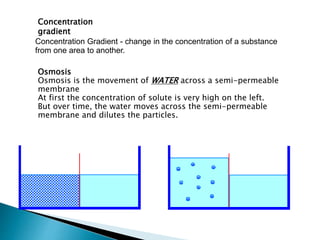
Osmosis 
Osmosis is the movement of WATER across a semi-permeable 
membrane 
At first the concentration of solute is very high on the left. 
But over time, the water moves across the semi-permeable 
membrane and dilutes the particles.
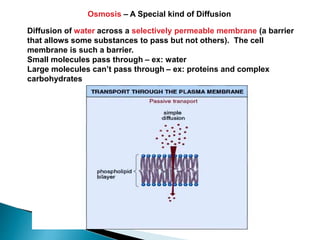
Osmosis – A Special kind of Diffusion 
Diffusion of water across a selectively permeable membrane (a barrier 
that allows some substances to pass but not others). The cell 
membrane is such a barrier. 
Small molecules pass through – ex: water 
Large molecules can’t pass through – ex: proteins and complex 
carbohydrates
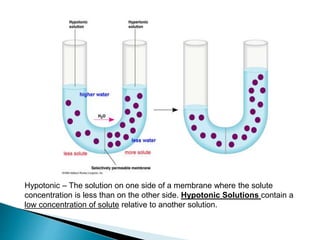
Hypotonic – The solution on one side of a membrane where the solute 
concentration is less than on the other side. Hypotonic Solutions contain a 
low concentration of solute relative to another solution.
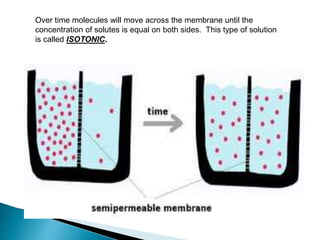
Over time molecules will move across the membrane until the 
concentration of solutes is equal on both sides. This type of solution 
is called ISOTONIC.
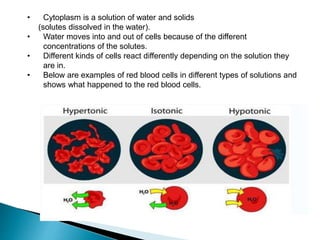
• Cytoplasm is a solution of water and solids 
(solutes dissolved in the water). 
• Water moves into and out of cells because of the different 
concentrations of the solutes. 
• Different kinds of cells react differently depending on the solution they 
are in. 
• Below are examples of red blood cells in different types of solutions and 
shows what happened to the red blood cells.
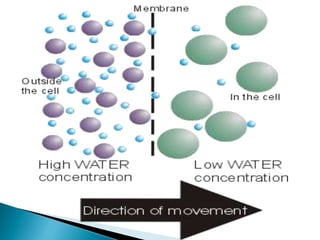
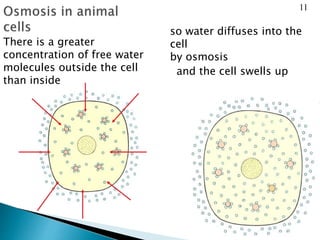
There is a greater 
concentration of free water 
molecules outside the cell 
than inside 
11 
so water diffuses into the 
cell 
by osmosis 
and the cell swells up
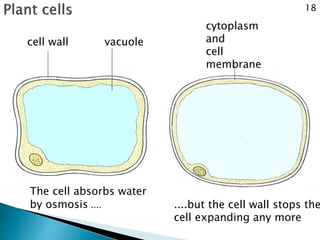
cell wall 
cytoplasm 
and 
cell 
membrane 
vacuole 
The cell absorbs water 
by osmosis .... ....but the cell wall stops the 
cell expanding any more 
18
For osmosis we talk about the potential 
water molecules have to move – the 
OSMOTIC POTENTIAL. Distilled water has the 
highest potential (zero). 
When water has another substance dissolved in 
it, the water molecules have less potential to 
move. The osmotic potential is NEGATIVE.
The osmotic potential of a cell is 
known as its WATER POTENTIAL. For 
animal cells, the water potential is 
the osmotic potential of the 
cytoplasm.
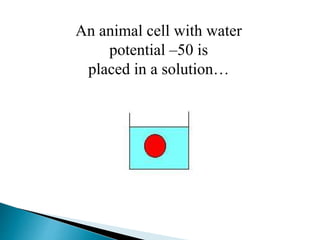
An animal cell with water 
potential –50 is 
placed in a solution…
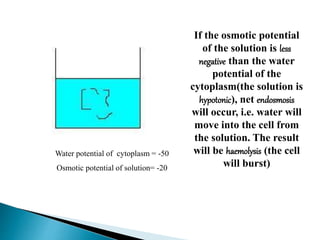
If the osmotic potential 
of the solution is less 
negative than the water 
potential of the 
cytoplasm(the solution is 
hypotonic), net endosmosis 
will occur, i.e. water will 
move into the cell from 
the solution. The result 
will be haemolysis (the cell 
will burst) 
Water potential of cytoplasm = -50 
Osmotic potential of solution= -20
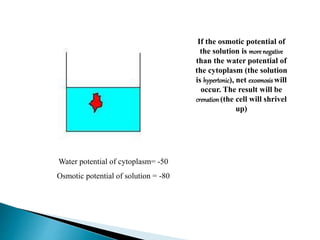
If the osmotic potential of 
the solution is more negative 
than the water potential of 
the cytoplasm (the solution 
is hypertonic), net exosmosis will 
occur. The result will be 
crenation (the cell will shrivel 
up) 
Water potential of cytoplasm= -50 
Osmotic potential of solution = -80
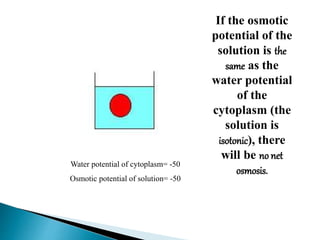
If the osmotic 
potential of the 
solution is the 
same as the 
water potential 
of the 
cytoplasm (the 
solution is 
isotonic), there 
will be no net 
osmosis. 
Water potential of cytoplasm= -50 
Osmotic potential of solution= -50
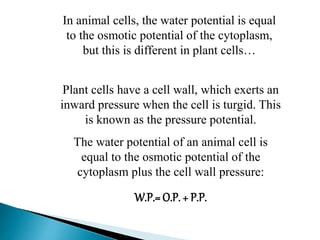
In animal cells, the water potential is equal 
to the osmotic potential of the cytoplasm, 
but this is different in plant cells… 
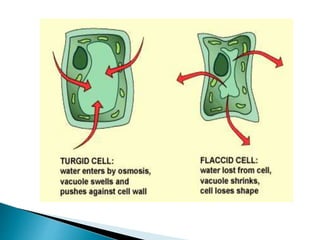
Plant cells have a cell wall, which exerts an 
inward pressure when the cell is turgid. This 
is known as the pressure potential. 
The water potential of an animal cell is 
equal to the osmotic potential of the 
cytoplasm plus the cell wall pressure: 
W.P.= O.P. + P.P.
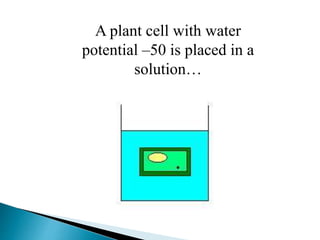
A plant cell with water 
potential –50 is placed in a 
solution…
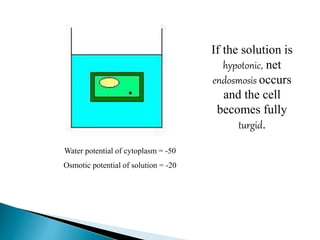
If the solution is 
hypotonic, net 
endosmosis occurs 
and the cell 
becomes fully 
turgid. 
Water potential of cytoplasm = -50 
Osmotic potential of solution = -20
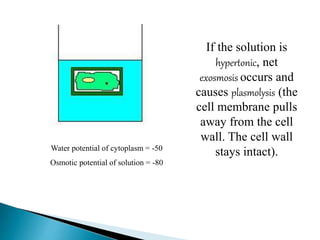
If the solution is 
hypertonic, net 
exosmosis occurs and 
causes plasmolysis (the 
cell membrane pulls 
away from the cell 
wall. The cell wall 
stays intact). Water potential of cytoplasm = -50 
Osmotic potential of solution = -80
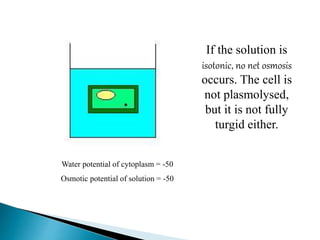
If the solution is 
isotonic, no net osmosis 
occurs. The cell is 
not plasmolysed, 
but it is not fully 
turgid either. 
Water potential of cytoplasm = -50 
Osmotic potential of solution = -50
Conclusion: 
Osmosis is a vital process in biological systems, 
as biological membranes are semi permeable. 
Osmosis is responsible for the ability of plant roots to 
draw water from the soil. 
Osmosis is a vital process in both plants and animals 
to maintain their own life process.
Reference: 
Borg, Frank (2003). "What is osmosis? Explanation and 
understanding of a physical phenomenon“ Wiley international 
publications. 
Kramer, Eric; David Myers. "Osmosis is not driven by water 
dilution". Trends in Plant Science 18 (4): 195–197. 
Kosinski, R. J. "Challenging misconceptions about 
osmosis.". Association for Biology Laboratory Education 30: 63– 
87.
OSMOSIS -BIPIN S

OSMOSIS -BIPIN S

  • 1.
    BIPIN.S NATURAL SCIENCE REG No.13971012
  • 2.
    Osmosis is thespontaneous net movement of solvent molecules through a partially permeable membrane into a region of higher solute concentration, in the direction that tends to equalize the solute concentrations on the two sides. Osmosis provides the primary means by which water is transported into and out of cells Difference in concentration between solutions on either side of semi permeable membrane called Osmotic gradient
  • 3.
    Concentration gradient ConcentrationGradient - change in the concentration of a substance from one area to another. Osmosis Osmosis is the movement of WATER across a semi-permeable membrane At first the concentration of solute is very high on the left. But over time, the water moves across the semi-permeable membrane and dilutes the particles.
  • 5.
    Osmosis – ASpecial kind of Diffusion Diffusion of water across a selectively permeable membrane (a barrier that allows some substances to pass but not others). The cell membrane is such a barrier. Small molecules pass through – ex: water Large molecules can’t pass through – ex: proteins and complex carbohydrates
  • 6.
    Hypotonic – Thesolution on one side of a membrane where the solute concentration is less than on the other side. Hypotonic Solutions contain a low concentration of solute relative to another solution.
  • 7.
    Over time moleculeswill move across the membrane until the concentration of solutes is equal on both sides. This type of solution is called ISOTONIC.
  • 8.
    • Cytoplasm isa solution of water and solids (solutes dissolved in the water). • Water moves into and out of cells because of the different concentrations of the solutes. • Different kinds of cells react differently depending on the solution they are in. • Below are examples of red blood cells in different types of solutions and shows what happened to the red blood cells.
  • 10.
    There is agreater concentration of free water molecules outside the cell than inside 11 so water diffuses into the cell by osmosis and the cell swells up
  • 11.
    cell wall cytoplasm and cell membrane vacuole The cell absorbs water by osmosis .... ....but the cell wall stops the cell expanding any more 18
  • 12.
    For osmosis wetalk about the potential water molecules have to move – the OSMOTIC POTENTIAL. Distilled water has the highest potential (zero). When water has another substance dissolved in it, the water molecules have less potential to move. The osmotic potential is NEGATIVE.
  • 13.
    The osmotic potentialof a cell is known as its WATER POTENTIAL. For animal cells, the water potential is the osmotic potential of the cytoplasm.
  • 14.
    An animal cellwith water potential –50 is placed in a solution…
  • 15.
    If the osmoticpotential of the solution is less negative than the water potential of the cytoplasm(the solution is hypotonic), net endosmosis will occur, i.e. water will move into the cell from the solution. The result will be haemolysis (the cell will burst) Water potential of cytoplasm = -50 Osmotic potential of solution= -20
  • 16.
    If the osmoticpotential of the solution is more negative than the water potential of the cytoplasm (the solution is hypertonic), net exosmosis will occur. The result will be crenation (the cell will shrivel up) Water potential of cytoplasm= -50 Osmotic potential of solution = -80
  • 17.
    If the osmotic potential of the solution is the same as the water potential of the cytoplasm (the solution is isotonic), there will be no net osmosis. Water potential of cytoplasm= -50 Osmotic potential of solution= -50
  • 18.
    In animal cells,the water potential is equal to the osmotic potential of the cytoplasm, but this is different in plant cells… Plant cells have a cell wall, which exerts an inward pressure when the cell is turgid. This is known as the pressure potential. The water potential of an animal cell is equal to the osmotic potential of the cytoplasm plus the cell wall pressure: W.P.= O.P. + P.P.
  • 19.
    A plant cellwith water potential –50 is placed in a solution…
  • 20.
    If the solutionis hypotonic, net endosmosis occurs and the cell becomes fully turgid. Water potential of cytoplasm = -50 Osmotic potential of solution = -20
  • 21.
    If the solutionis hypertonic, net exosmosis occurs and causes plasmolysis (the cell membrane pulls away from the cell wall. The cell wall stays intact). Water potential of cytoplasm = -50 Osmotic potential of solution = -80
  • 22.
    If the solutionis isotonic, no net osmosis occurs. The cell is not plasmolysed, but it is not fully turgid either. Water potential of cytoplasm = -50 Osmotic potential of solution = -50
  • 23.
    Conclusion: Osmosis isa vital process in biological systems, as biological membranes are semi permeable. Osmosis is responsible for the ability of plant roots to draw water from the soil. Osmosis is a vital process in both plants and animals to maintain their own life process.
  • 24.
    Reference: Borg, Frank(2003). "What is osmosis? Explanation and understanding of a physical phenomenon“ Wiley international publications. Kramer, Eric; David Myers. "Osmosis is not driven by water dilution". Trends in Plant Science 18 (4): 195–197. Kosinski, R. J. "Challenging misconceptions about osmosis.". Association for Biology Laboratory Education 30: 63– 87.