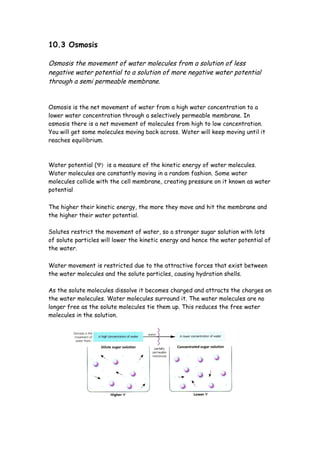
10.3 Osmosis

Osmosis the movement of water molecules from a solution of less
negative water potential to a solution of more negative water potential
through a semi permeable membrane.


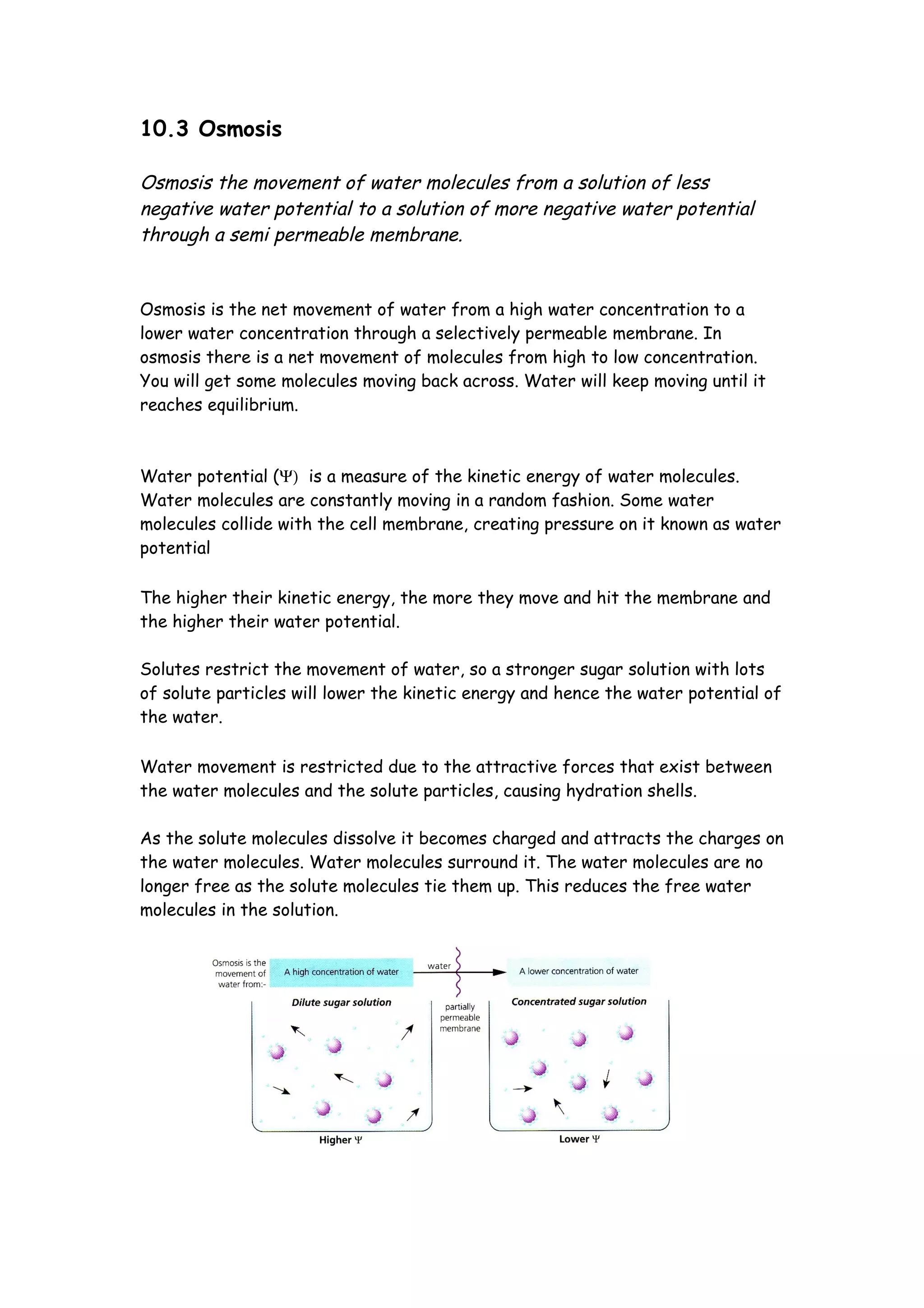
Osmosis is the net movement of water from a high water concentration to a
lower water concentration through a selectively permeable membrane. In
osmosis there is a net movement of molecules from high to low concentration.
You will get some molecules moving back across. Water will keep moving until it
reaches equilibrium.


Water potential (Ψ) is a measure of the kinetic energy of water molecules.
Water molecules are constantly moving in a random fashion. Some water
molecules collide with the cell membrane, creating pressure on it known as water
potential

The higher their kinetic energy, the more they move and hit the membrane and
the higher their water potential.

Solutes restrict the movement of water, so a stronger sugar solution with lots
of solute particles will lower the kinetic energy and hence the water potential of
the water.

Water movement is restricted due to the attractive forces that exist between
the water molecules and the solute particles, causing hydration shells.

As the solute molecules dissolve it becomes charged and attracts the charges on
the water molecules. Water molecules surround it. The water molecules are no
longer free as the solute molecules tie them up. This reduces the free water
molecules in the solution.
A dilute sugar solution with fewer solute particles will allow the water potential
to be higher as fewer solute particles are present to attract and restrict the
movement of water molecules.

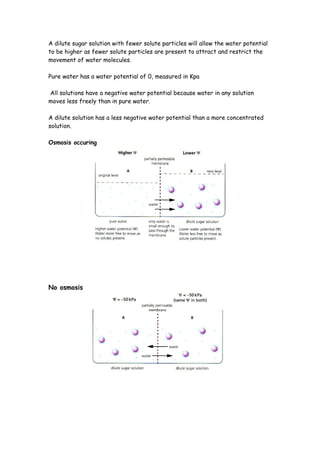
Pure water has a water potential of 0, measured in Kpa

All solutions have a negative water potential because water in any solution
moves less freely than in pure water.

A dilute solution has a less negative water potential than a more concentrated
solution.

Osmosis occuring


No osmosis
Dilute sugar solution                  Concentrated sugar solution
High Conc of water                     Lower concentration of water
Fewer solute particles                 More solute particles
Water more free to move as fewer       Water less free to move about as
solute molecules                       more solutes attracting them
Water has more kinetic energy          Water has less kinetic energy and
therefore more likely to hit the       is less likely to hit the membrane
membrane
Water has a less negative water        Water has a more negative water
potential                              potential.

How free the water molecules are to move depends on 3 things:

1. The number of solute particles
2. The pressure in the cell
3. The temperature – High temp more kinetic energy.
Solute and Pressure potential
The concentration of solutes inside the cell is called the solute potential (ψs). and
it always has a negative value. The pressure exerted on cell contents by the cell
surface membrane or cell wall is called the pressure potential (ψp). This is
because the membrane or wall exerts a force on the cell contents to increase
the concentration of water molecules in the cell. It squeezes the contents of
the cell, trying to push the water molecules out.


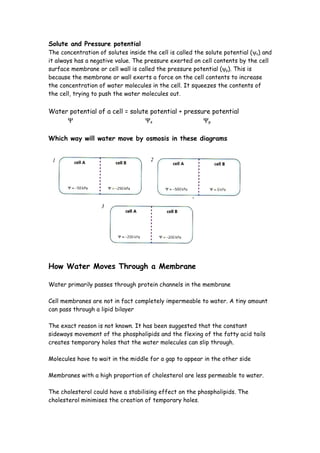
Water potential of a cell = solute potential + pressure potential
     Ψ                           Ψs                  Ψp

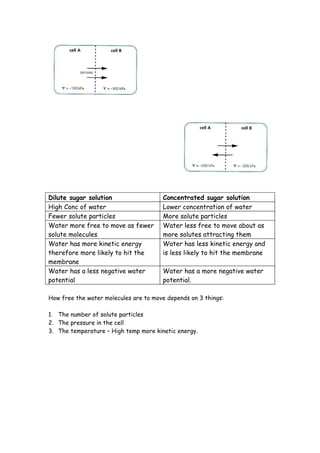
Which way will water move by osmosis in these diagrams


How Water Moves Through a Membrane

Water primarily passes through protein channels in the membrane

Cell membranes are not in fact completely impermeable to water. A tiny amount
can pass through a lipid bilayer

The exact reason is not known. It has been suggested that the constant
sideways movement of the phospholipids and the flexing of the fatty acid tails
creates temporary holes that the water molecules can slip through.

Molecules have to wait in the middle for a gap to appear in the other side

Membranes with a high proportion of cholesterol are less permeable to water.

The cholesterol could have a stabilising effect on the phospholipids. The
cholesterol minimises the creation of temporary holes.
Osmosis in Animal Cells
3 Terms used when discussing osmosis in animal cells

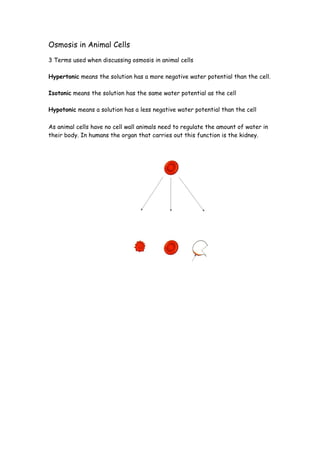
Hypertonic means the solution has a more negative water potential than the cell.

Isotonic means the solution has the same water potential as the cell

Hypotonic means a solution has a less negative water potential than the cell

As animal cells have no cell wall animals need to regulate the amount of water in
their body. In humans the organ that carries out this function is the kidney.

Water potential (osmosis) extension

  • 1.
    10.3 Osmosis Osmosis themovement of water molecules from a solution of less negative water potential to a solution of more negative water potential through a semi permeable membrane. Osmosis is the net movement of water from a high water concentration to a lower water concentration through a selectively permeable membrane. In osmosis there is a net movement of molecules from high to low concentration. You will get some molecules moving back across. Water will keep moving until it reaches equilibrium. Water potential (Ψ) is a measure of the kinetic energy of water molecules. Water molecules are constantly moving in a random fashion. Some water molecules collide with the cell membrane, creating pressure on it known as water potential The higher their kinetic energy, the more they move and hit the membrane and the higher their water potential. Solutes restrict the movement of water, so a stronger sugar solution with lots of solute particles will lower the kinetic energy and hence the water potential of the water. Water movement is restricted due to the attractive forces that exist between the water molecules and the solute particles, causing hydration shells. As the solute molecules dissolve it becomes charged and attracts the charges on the water molecules. Water molecules surround it. The water molecules are no longer free as the solute molecules tie them up. This reduces the free water molecules in the solution.
  • 2.
    A dilute sugarsolution with fewer solute particles will allow the water potential to be higher as fewer solute particles are present to attract and restrict the movement of water molecules. Pure water has a water potential of 0, measured in Kpa All solutions have a negative water potential because water in any solution moves less freely than in pure water. A dilute solution has a less negative water potential than a more concentrated solution. Osmosis occuring No osmosis
  • 3.
    Dilute sugar solution Concentrated sugar solution High Conc of water Lower concentration of water Fewer solute particles More solute particles Water more free to move as fewer Water less free to move about as solute molecules more solutes attracting them Water has more kinetic energy Water has less kinetic energy and therefore more likely to hit the is less likely to hit the membrane membrane Water has a less negative water Water has a more negative water potential potential. How free the water molecules are to move depends on 3 things: 1. The number of solute particles 2. The pressure in the cell 3. The temperature – High temp more kinetic energy.
  • 4.
    Solute and Pressurepotential The concentration of solutes inside the cell is called the solute potential (ψs). and it always has a negative value. The pressure exerted on cell contents by the cell surface membrane or cell wall is called the pressure potential (ψp). This is because the membrane or wall exerts a force on the cell contents to increase the concentration of water molecules in the cell. It squeezes the contents of the cell, trying to push the water molecules out. Water potential of a cell = solute potential + pressure potential Ψ Ψs Ψp Which way will water move by osmosis in these diagrams How Water Moves Through a Membrane Water primarily passes through protein channels in the membrane Cell membranes are not in fact completely impermeable to water. A tiny amount can pass through a lipid bilayer The exact reason is not known. It has been suggested that the constant sideways movement of the phospholipids and the flexing of the fatty acid tails creates temporary holes that the water molecules can slip through. Molecules have to wait in the middle for a gap to appear in the other side Membranes with a high proportion of cholesterol are less permeable to water. The cholesterol could have a stabilising effect on the phospholipids. The cholesterol minimises the creation of temporary holes.
  • 5.
    Osmosis in AnimalCells 3 Terms used when discussing osmosis in animal cells Hypertonic means the solution has a more negative water potential than the cell. Isotonic means the solution has the same water potential as the cell Hypotonic means a solution has a less negative water potential than the cell As animal cells have no cell wall animals need to regulate the amount of water in their body. In humans the organ that carries out this function is the kidney.