Presented By
MUH1819035F MUH1819004F
MUH1819011F ASH1819029M
DIFFUSION
Diffusion is a process
where molecules of a
material move from an
area of high concentration
to a area of low
concentration until it has
reach equilibrium.
Example-
Perfume
Breathing
Calcium
Balloon
Food coloring .
Process of Diffusion
We will need a clear
container filled with water,
food coloring and watch.
To start, ad a single drop
of coloring to the waters
edge in the container.
Then the drop hits the
container.
Stop timing as soon as the
color first reaches the
opposite edge of the
container.
Result of the process
At high temperature
the molecules in the
container are moving
more rapidly, which
should cause the food
coloring molecules to
move more rapidly from
one end of the container
to the other. The
opposite is true when
the water is cold.
Diffusion Pressure
 The potential ability of a substance to move from a region
of high concentration to a region of low concentration
when the temperature end atmospheric pressure is
constant, is known as diffusion pressure.
 For example, the diffusion pressure of air inside a balloon is
higher than the diffusion pressure of the air outside.
Consequently, if the balloon bursts, the air inside the
balloon spreads throughout the surrounding air due to its
higher diffusion pressure.
Osmosis
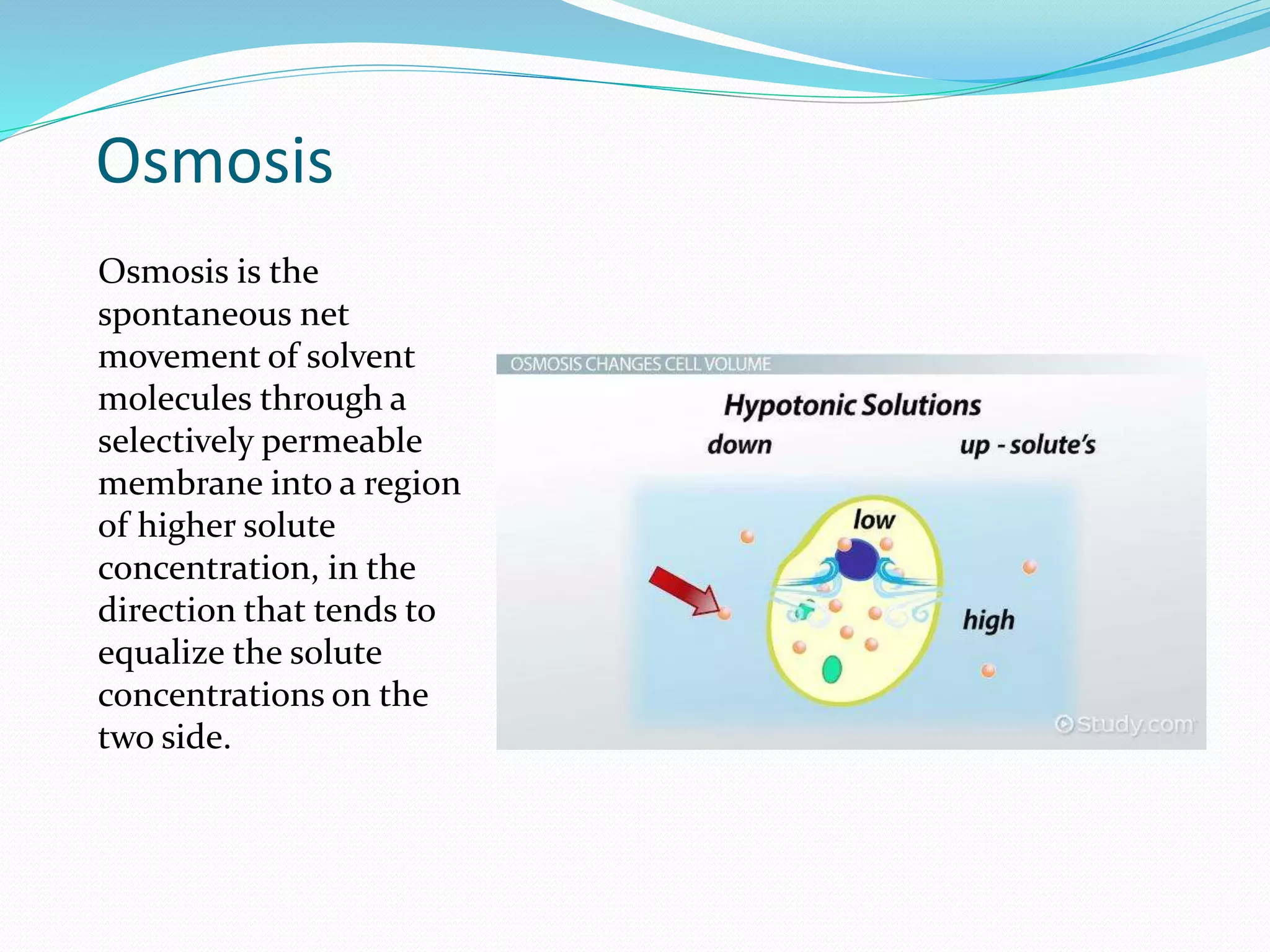
Osmosis is the
spontaneous net
movement of solvent
molecules through a
selectively permeable
membrane into a region
of higher solute
concentration, in the
direction that tends to
equalize the solute
concentrations on the
two side.
Osmosis Continue….
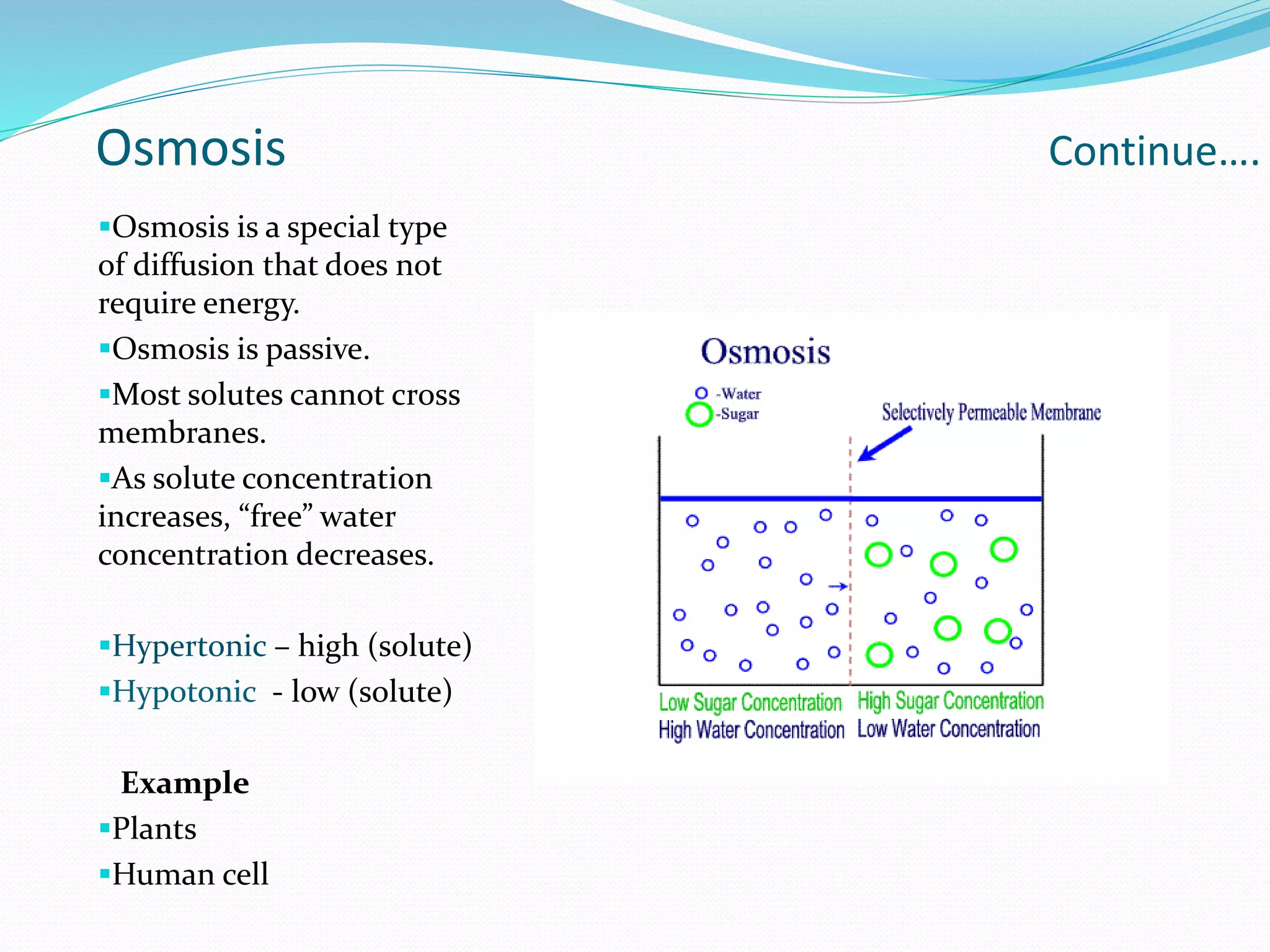
Osmosis is a special type
of diffusion that does not
require energy.
Osmosis is passive.
Most solutes cannot cross
membranes.
As solute concentration
increases, “free” water
concentration decreases.
Hypertonic – high (solute)
Hypotonic - low (solute)
Example
Plants
Human cell
Experiment of Osmosis
IMBIBITION
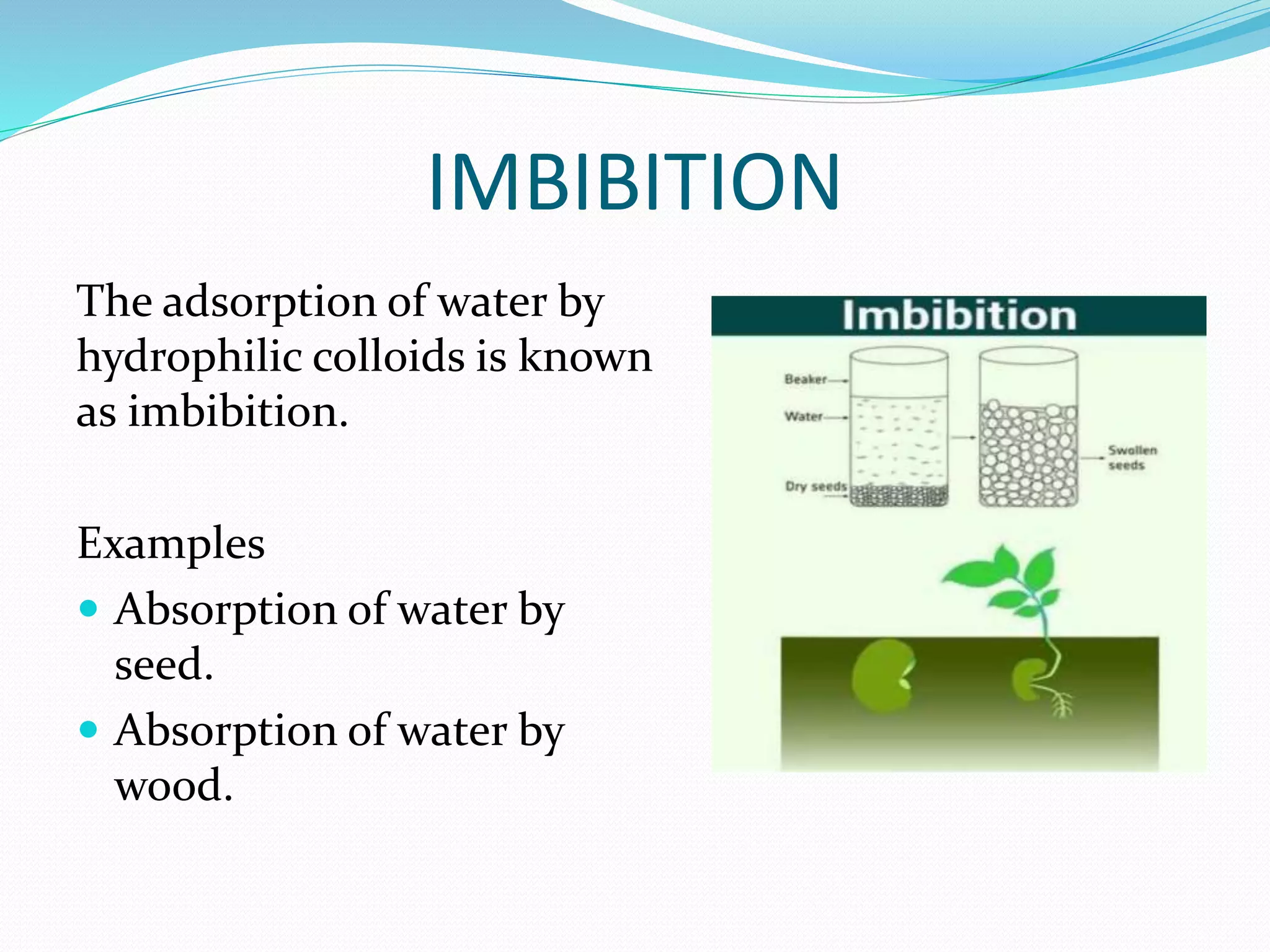
The adsorption of water by
hydrophilic colloids is known
as imbibition.
Examples
 Absorption of water by
seed.
 Absorption of water by
wood.
PROCESS OF IMBIBITION
 The process of imbibition occurs mainly due to presence of hydrophilic
colloids.
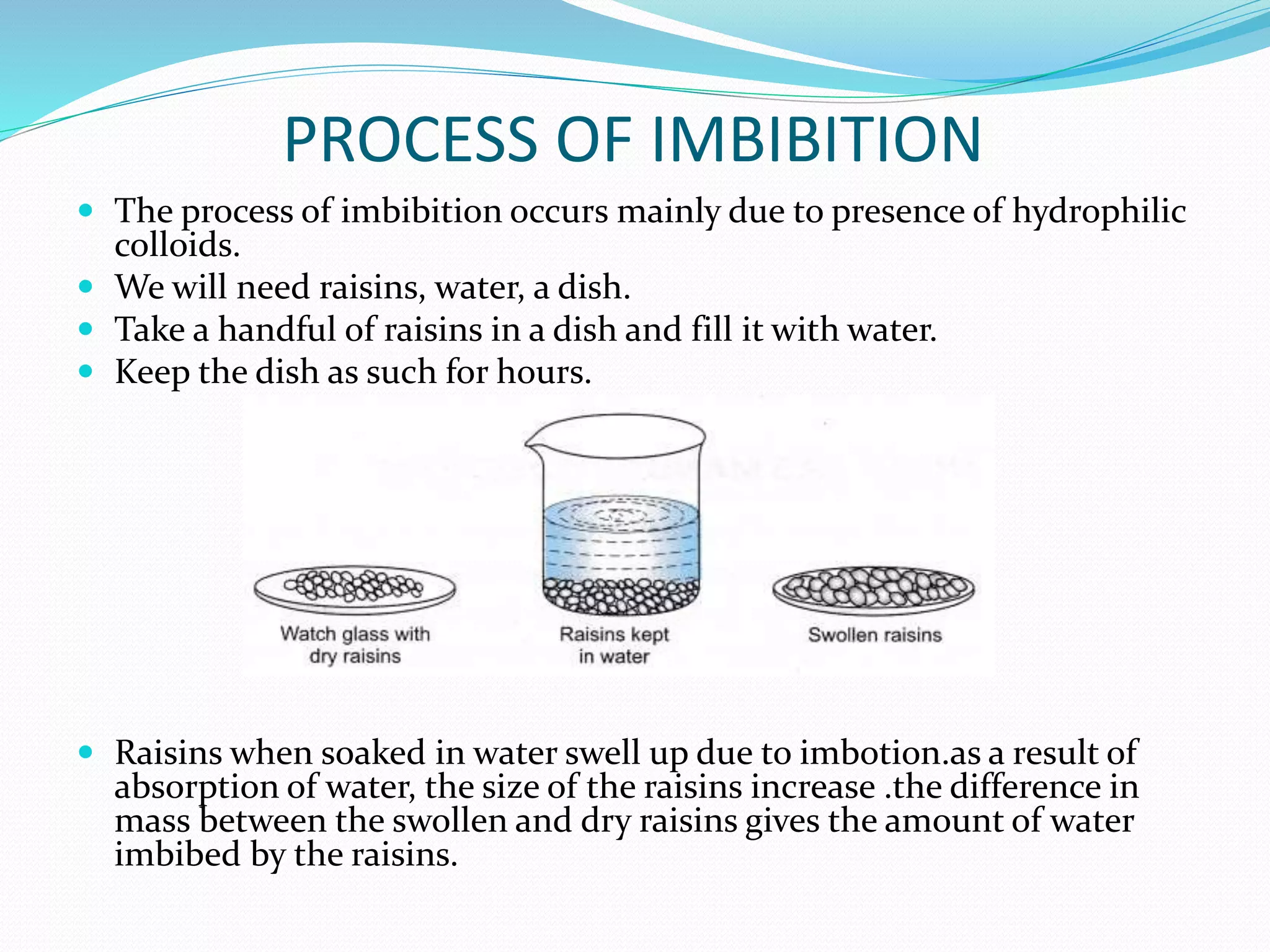
 We will need raisins, water, a dish.
 Take a handful of raisins in a dish and fill it with water.
 Keep the dish as such for hours.
 Raisins when soaked in water swell up due to imbotion.as a result of
absorption of water, the size of the raisins increase .the difference in
mass between the swollen and dry raisins gives the amount of water
imbibed by the raisins.
FACTORS AFFECTING THE RATE OF
IMBIBITION
 Nature of imbibition.
 Temperature.
 Concentration of the solute.
 Surface area of imbibition.
Importance of Diffusion
 Movement of molecules.
 In photosynthesis.
 In respiration.
 Mineral uptake.
 helps to remove excess water.
 Translocation of organic solutes.
 In pollination.
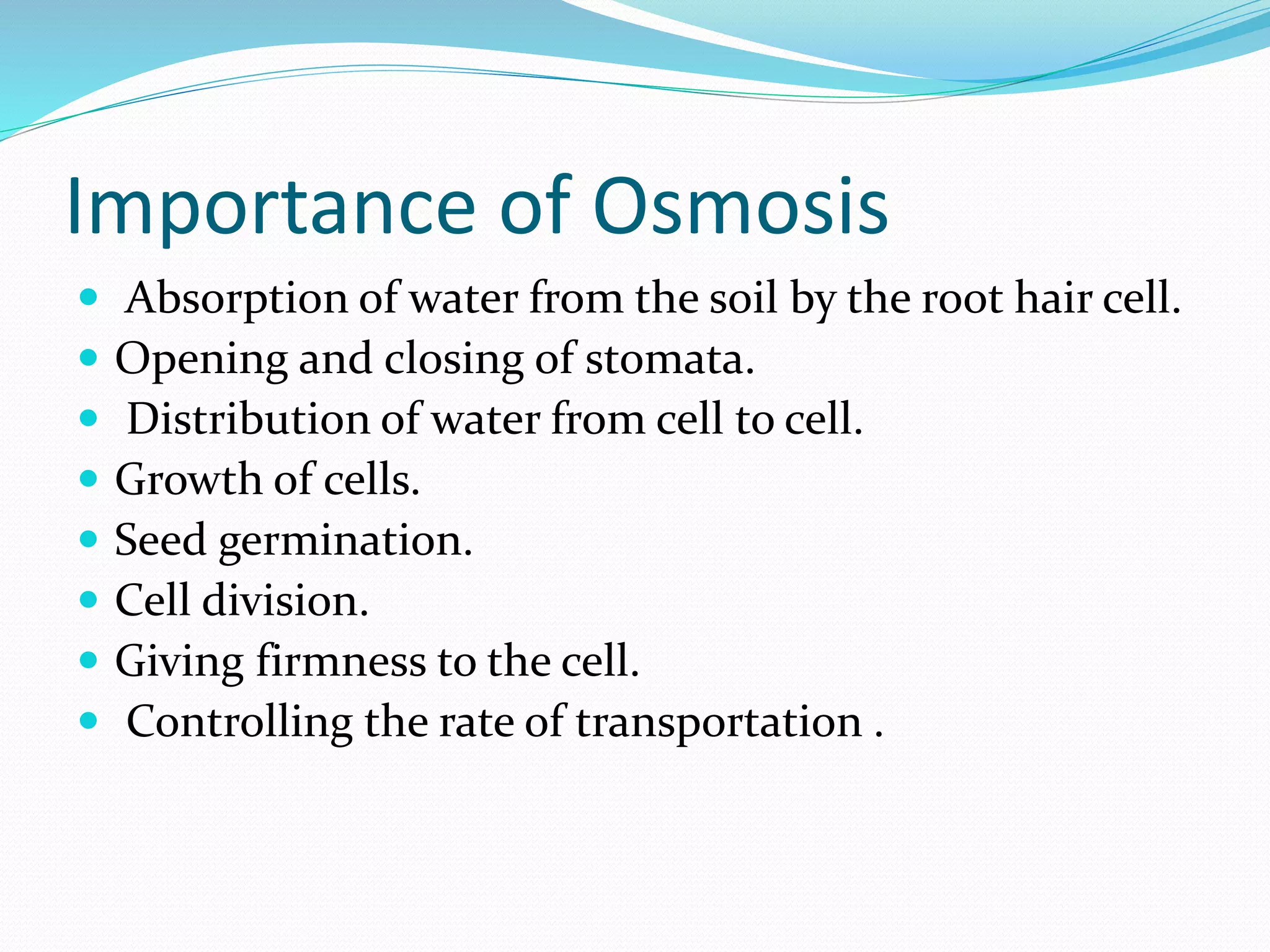
Importance of Osmosis
 Absorption of water from the soil by the root hair cell.
 Opening and closing of stomata.
 Distribution of water from cell to cell.
 Growth of cells.
 Seed germination.
 Cell division.
 Giving firmness to the cell.
 Controlling the rate of transportation .
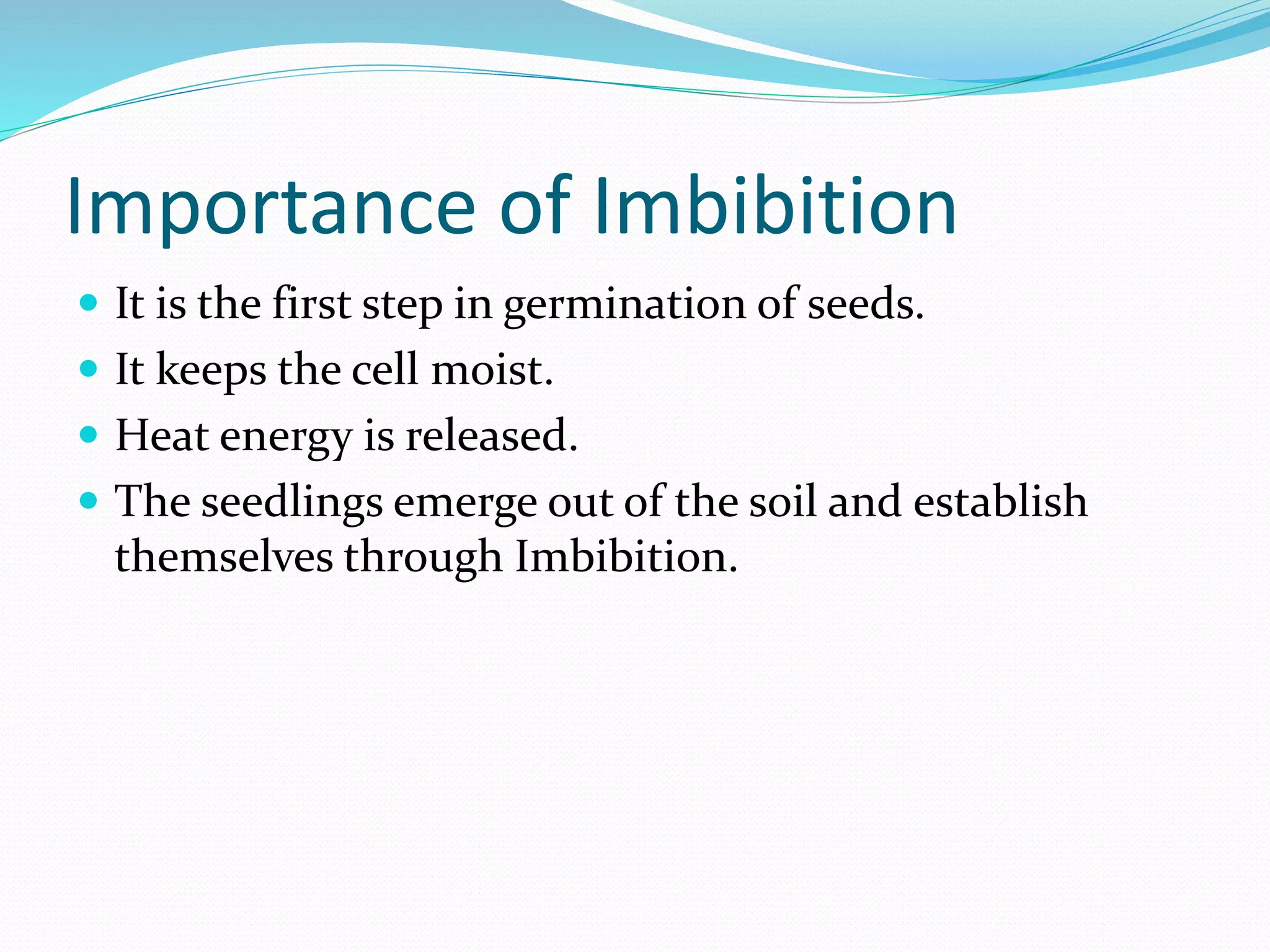
Importance of Imbibition
 It is the first step in germination of seeds.
 It keeps the cell moist.
 Heat energy is released.
 The seedlings emerge out of the soil and establish
themselves through Imbibition.
Difference among Diffusion, Osmosis and Imbibition
Diffusion Osmosis Imbibition
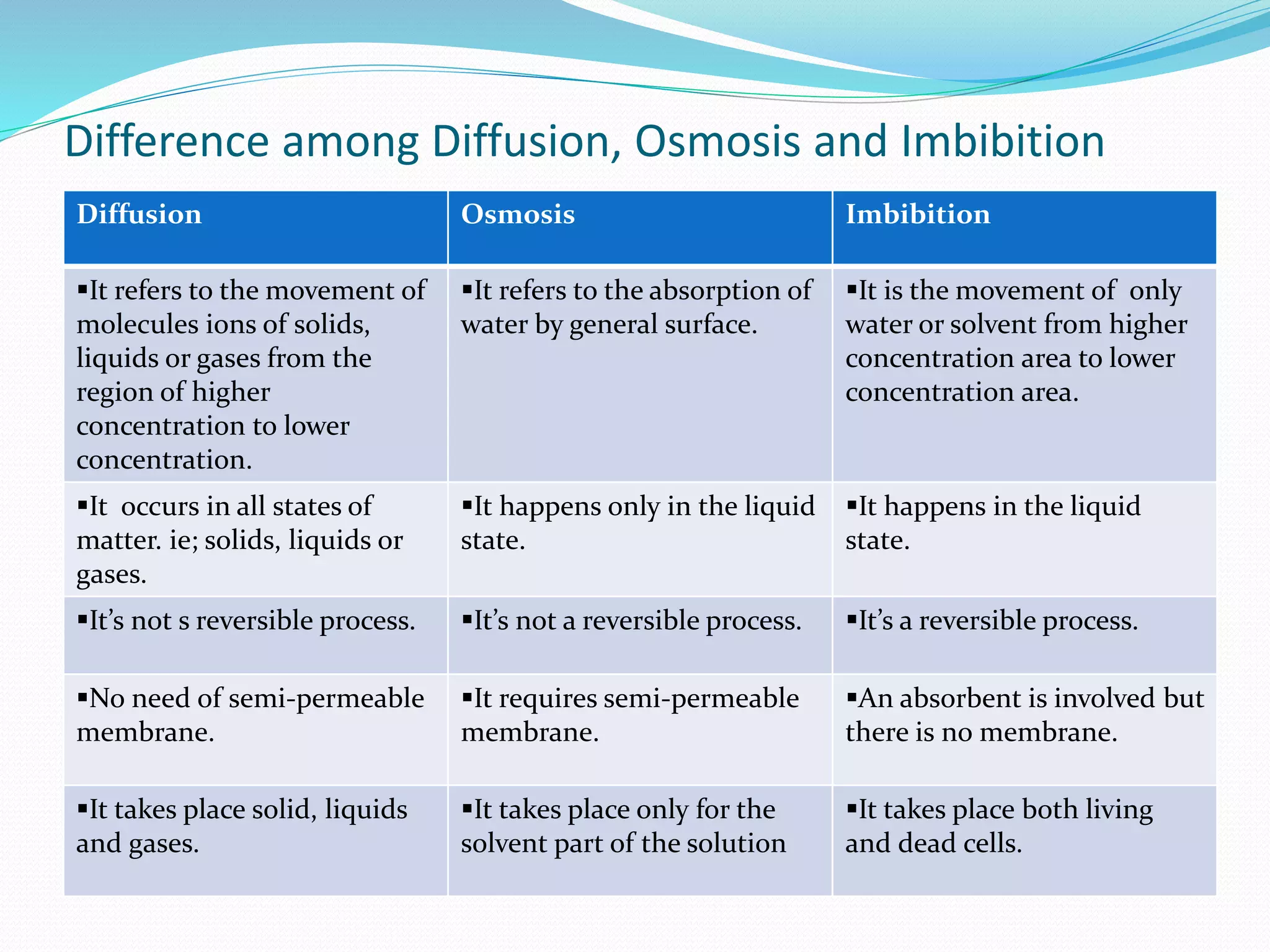
Difference among Diffusion, Osmosis and Imbibition
Diffusion Osmosis Imbibition
It refers to the movement of
molecules ions of solids,
liquids or gases from the
region of higher
concentration to lower
concentration.
It refers to the absorption of
water by general surface.
It is the movement of only
water or solvent from higher
concentration area to lower
concentration area.
It occurs in all states of
matter. ie; solids, liquids or
gases.
It happens only in the liquid
state.
It happens in the liquid
state.
It’s not s reversible process. It’s not a reversible process. It’s a reversible process.
No need of semi-permeable
membrane.
It requires semi-permeable
membrane.
An absorbent is involved but
there is no membrane.
It takes place solid, liquids
and gases.
It takes place only for the
solvent part of the solution
It takes place both living
and dead cells.
Reference
 Wikipedia
 www.scienceabc.com
 www.Thoughtco.com
 www.biotexts.org

Diffusion,osmosis and imbibition (ayshi)

  • 1.
  • 2.
    DIFFUSION Diffusion is aprocess where molecules of a material move from an area of high concentration to a area of low concentration until it has reach equilibrium. Example- Perfume Breathing Calcium Balloon Food coloring .
  • 3.
    Process of Diffusion Wewill need a clear container filled with water, food coloring and watch. To start, ad a single drop of coloring to the waters edge in the container. Then the drop hits the container. Stop timing as soon as the color first reaches the opposite edge of the container.
  • 4.
    Result of theprocess At high temperature the molecules in the container are moving more rapidly, which should cause the food coloring molecules to move more rapidly from one end of the container to the other. The opposite is true when the water is cold.
  • 5.
    Diffusion Pressure  Thepotential ability of a substance to move from a region of high concentration to a region of low concentration when the temperature end atmospheric pressure is constant, is known as diffusion pressure.  For example, the diffusion pressure of air inside a balloon is higher than the diffusion pressure of the air outside. Consequently, if the balloon bursts, the air inside the balloon spreads throughout the surrounding air due to its higher diffusion pressure.
  • 6.
    Osmosis Osmosis is the spontaneousnet movement of solvent molecules through a selectively permeable membrane into a region of higher solute concentration, in the direction that tends to equalize the solute concentrations on the two side.
  • 7.
    Osmosis Continue…. Osmosis isa special type of diffusion that does not require energy. Osmosis is passive. Most solutes cannot cross membranes. As solute concentration increases, “free” water concentration decreases. Hypertonic – high (solute) Hypotonic - low (solute) Example Plants Human cell
  • 8.
  • 9.
    IMBIBITION The adsorption ofwater by hydrophilic colloids is known as imbibition. Examples  Absorption of water by seed.  Absorption of water by wood.
  • 10.
    PROCESS OF IMBIBITION The process of imbibition occurs mainly due to presence of hydrophilic colloids.  We will need raisins, water, a dish.  Take a handful of raisins in a dish and fill it with water.  Keep the dish as such for hours.  Raisins when soaked in water swell up due to imbotion.as a result of absorption of water, the size of the raisins increase .the difference in mass between the swollen and dry raisins gives the amount of water imbibed by the raisins.
  • 11.
    FACTORS AFFECTING THERATE OF IMBIBITION  Nature of imbibition.  Temperature.  Concentration of the solute.  Surface area of imbibition.
  • 12.
    Importance of Diffusion Movement of molecules.  In photosynthesis.  In respiration.  Mineral uptake.  helps to remove excess water.  Translocation of organic solutes.  In pollination.
  • 13.
    Importance of Osmosis Absorption of water from the soil by the root hair cell.  Opening and closing of stomata.  Distribution of water from cell to cell.  Growth of cells.  Seed germination.  Cell division.  Giving firmness to the cell.  Controlling the rate of transportation .
  • 14.
    Importance of Imbibition It is the first step in germination of seeds.  It keeps the cell moist.  Heat energy is released.  The seedlings emerge out of the soil and establish themselves through Imbibition.
  • 15.
    Difference among Diffusion,Osmosis and Imbibition Diffusion Osmosis Imbibition
  • 16.
    Difference among Diffusion,Osmosis and Imbibition Diffusion Osmosis Imbibition It refers to the movement of molecules ions of solids, liquids or gases from the region of higher concentration to lower concentration. It refers to the absorption of water by general surface. It is the movement of only water or solvent from higher concentration area to lower concentration area. It occurs in all states of matter. ie; solids, liquids or gases. It happens only in the liquid state. It happens in the liquid state. It’s not s reversible process. It’s not a reversible process. It’s a reversible process. No need of semi-permeable membrane. It requires semi-permeable membrane. An absorbent is involved but there is no membrane. It takes place solid, liquids and gases. It takes place only for the solvent part of the solution It takes place both living and dead cells.
  • 17.
    Reference  Wikipedia  www.scienceabc.com www.Thoughtco.com  www.biotexts.org