Isotonic ,  Hypotonic ,  Hypertonic  solutions
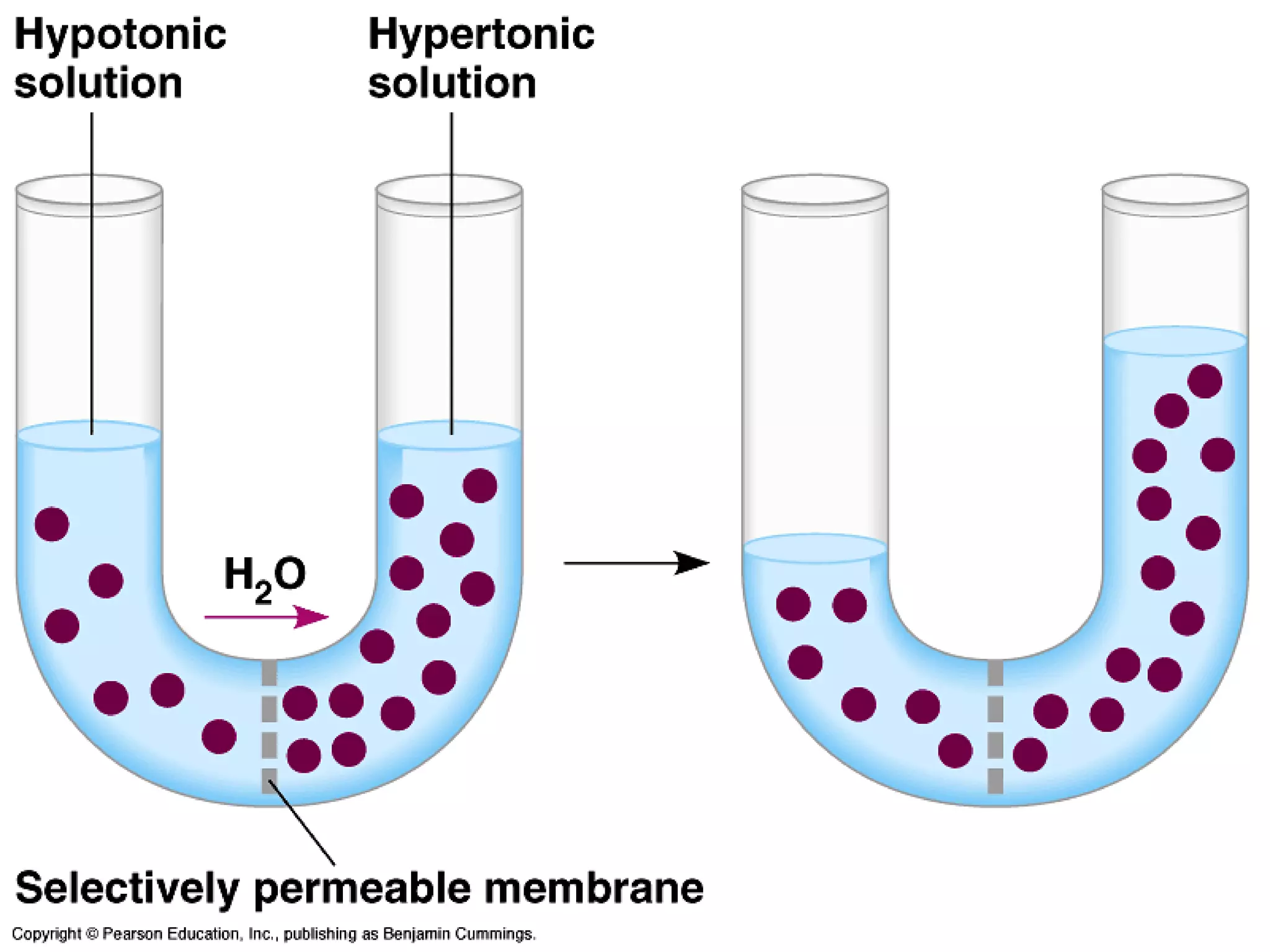
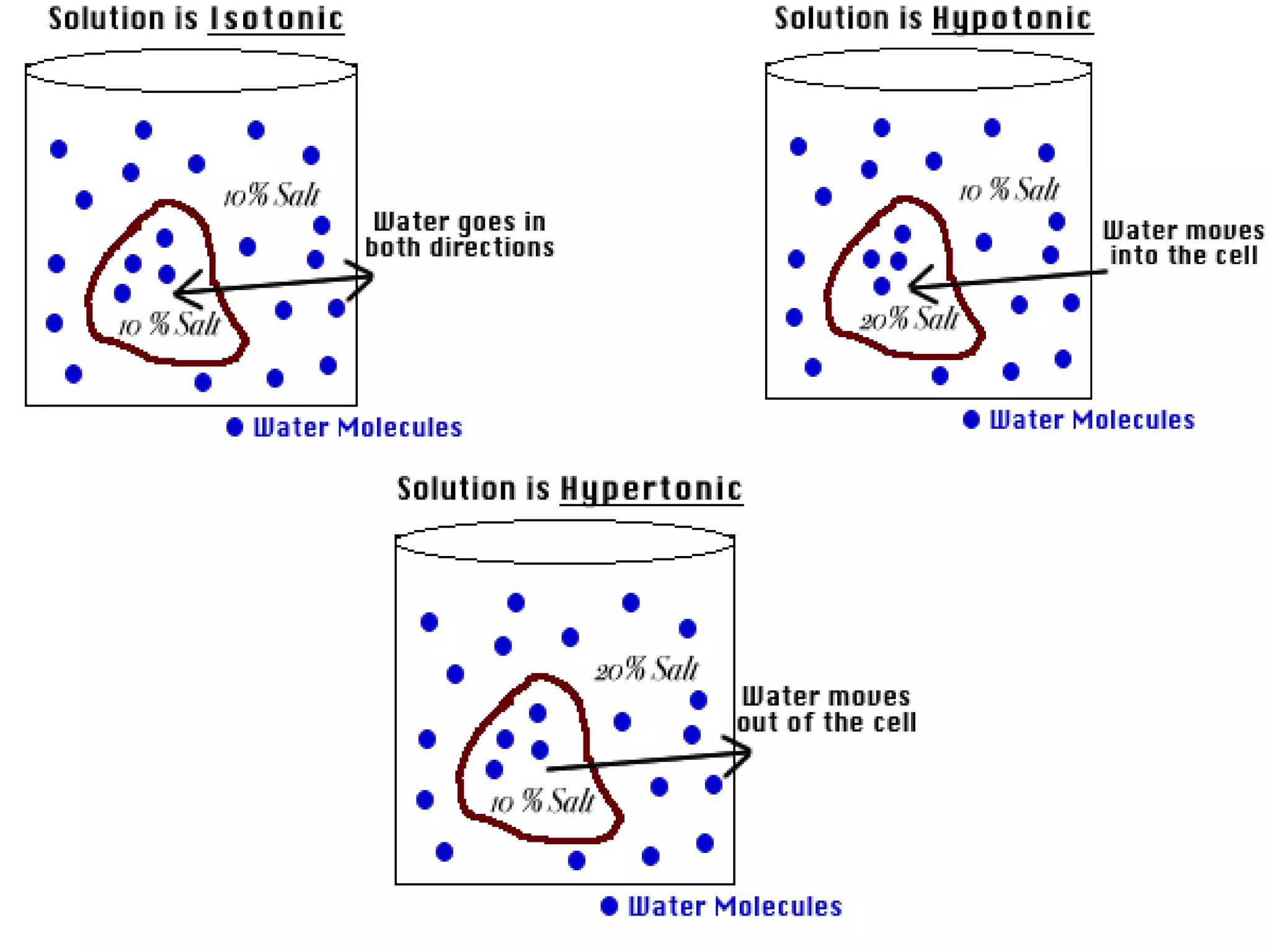
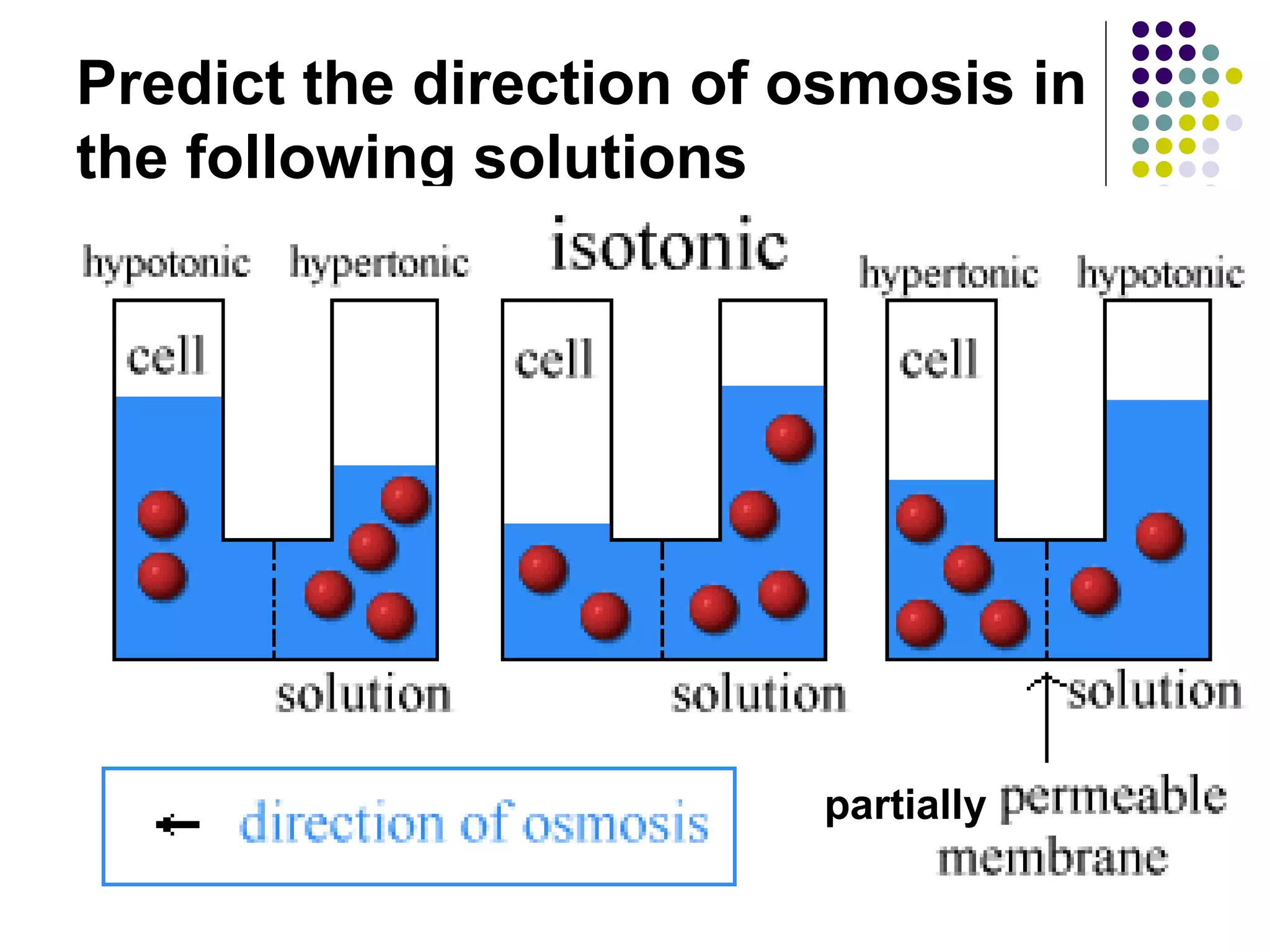
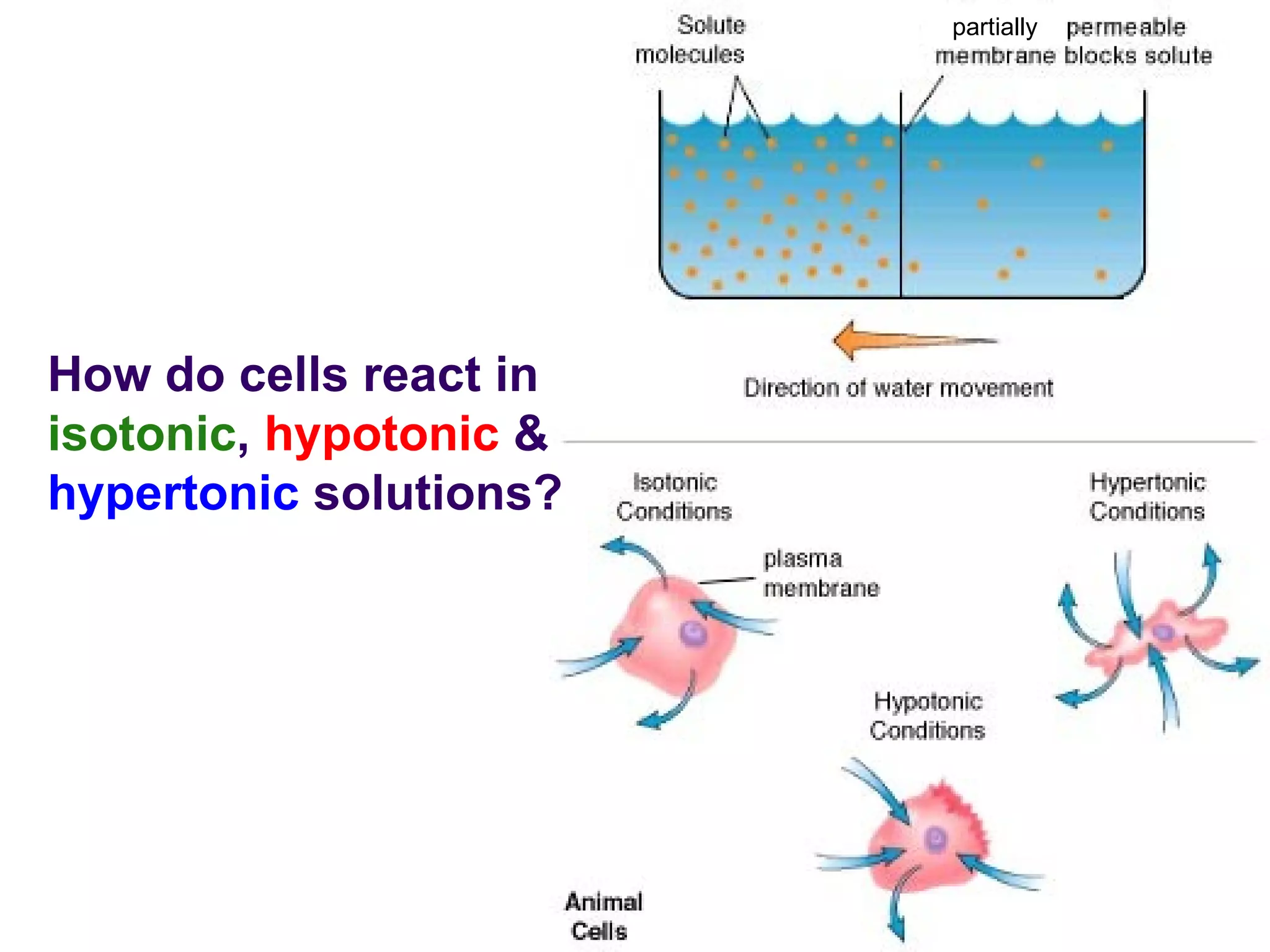
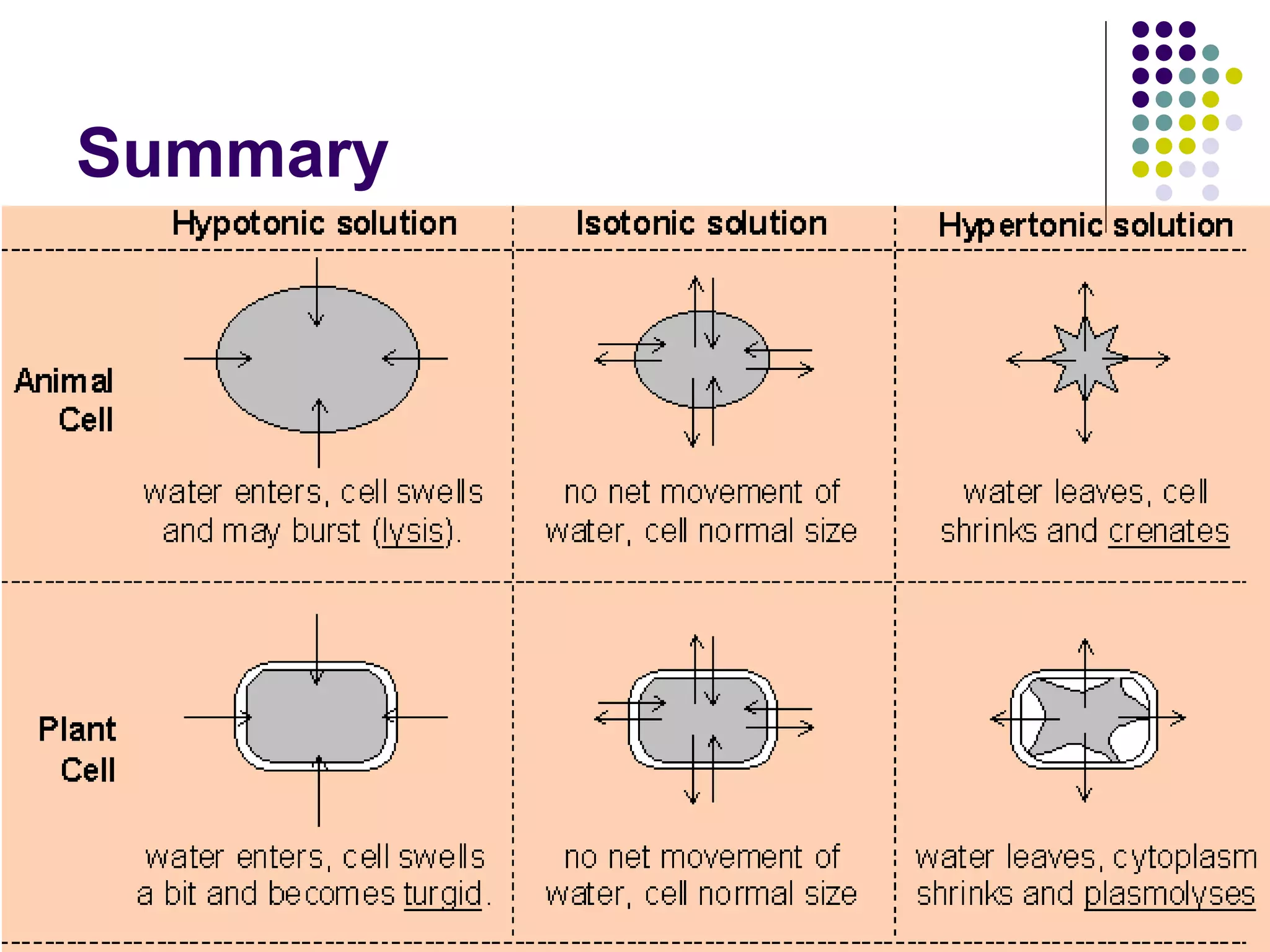
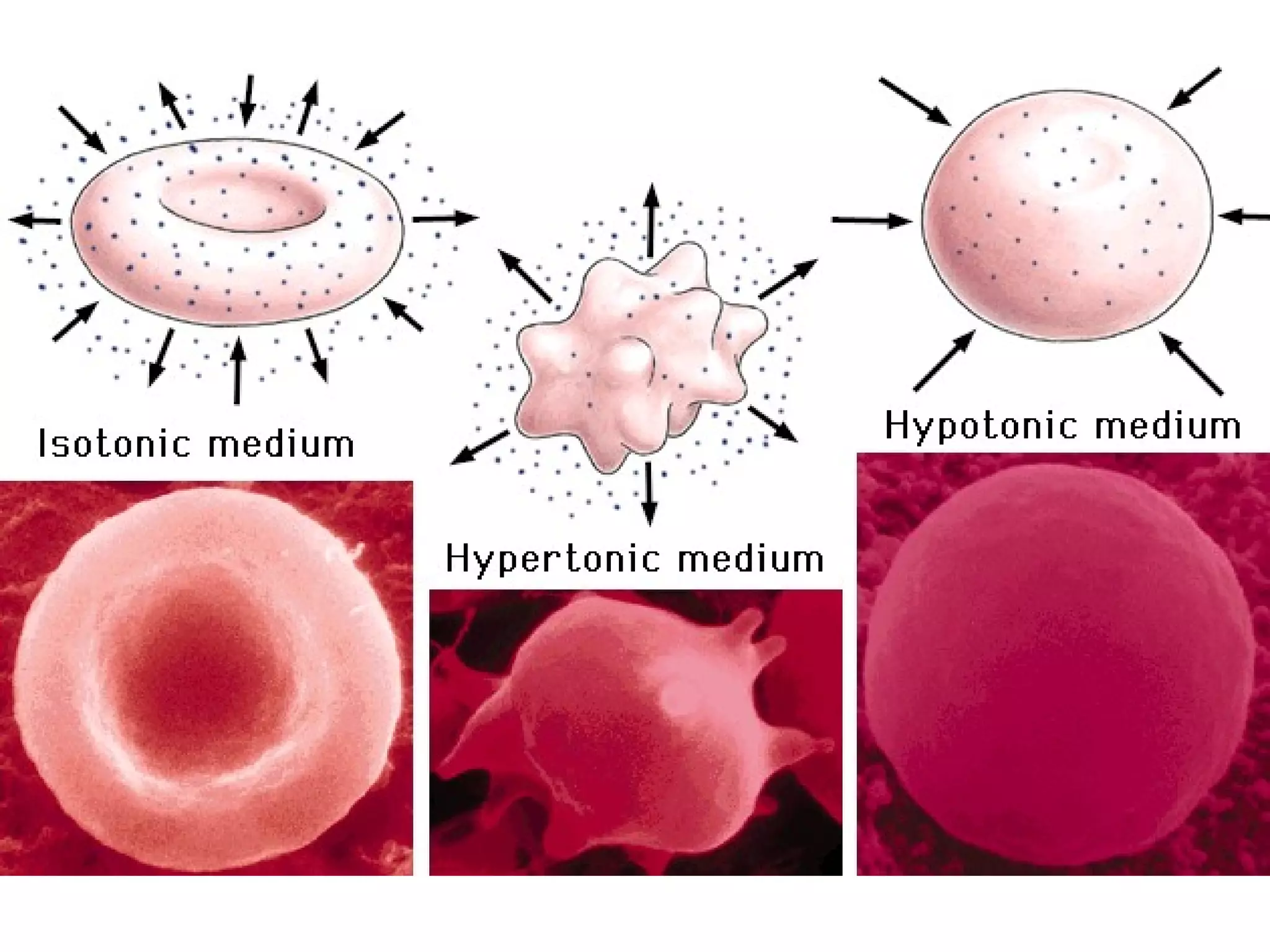
Isotonic ,  Hypotonic ,  Hypertonic  solutions iso  tonic = a solution of  equal  concentration to a cell hypo  tonic = a solution of  lower  concentration than a cell (higher water potential) hyper  tonic = a solution of  higher  concentration than a cell (lower water potential) Note:   Using these terms always involve comparison between 2 different solutions!
 
 
Predict the direction of osmosis in the following   solutions   partially
Osmosis in cells
How do cells react in  isotonic ,  hypotonic  &  hypertonic  solutions? partially
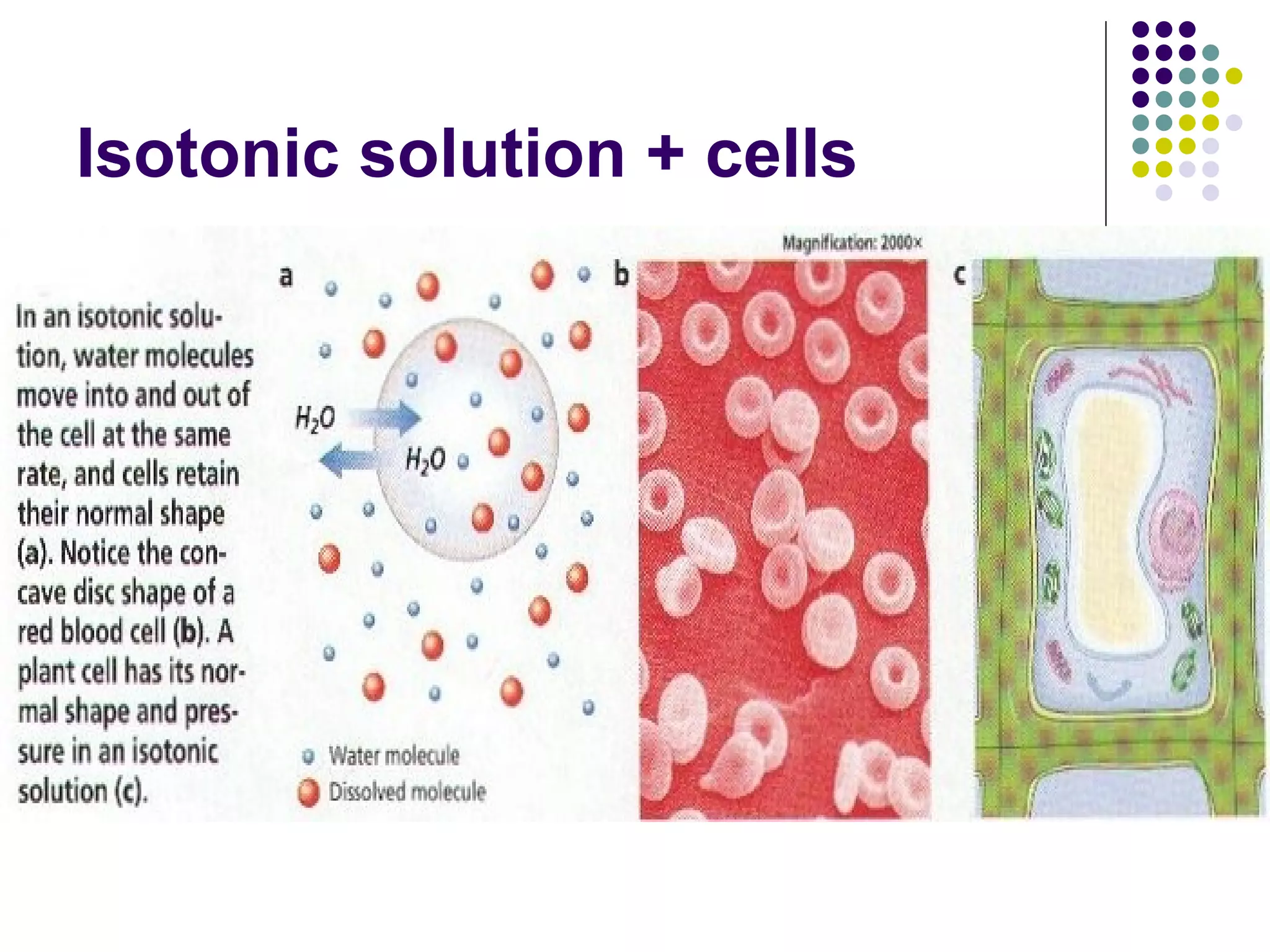
Isotonic solution + cells
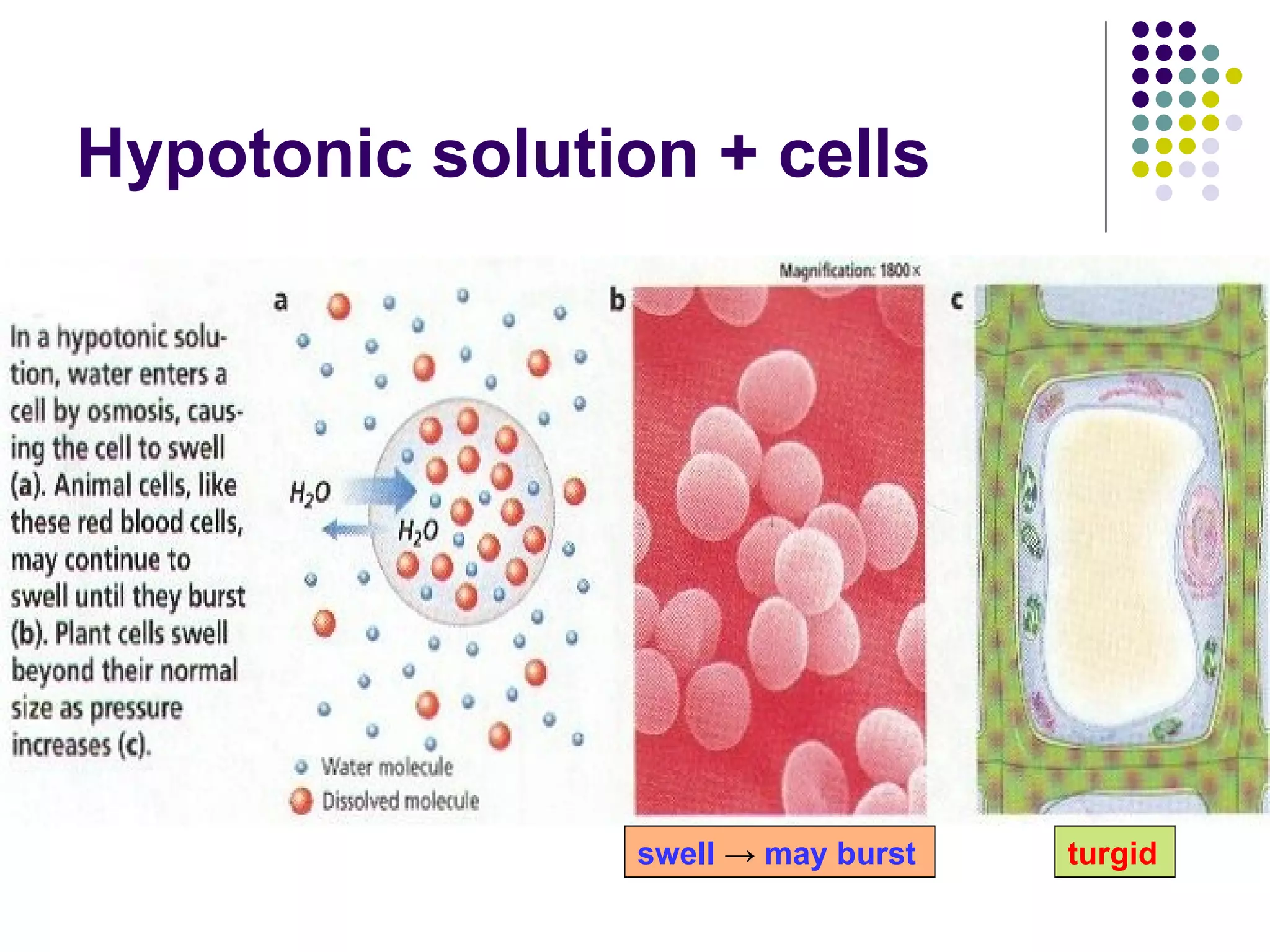
Hypotonic solution + cells swell  ->  may burst turgid
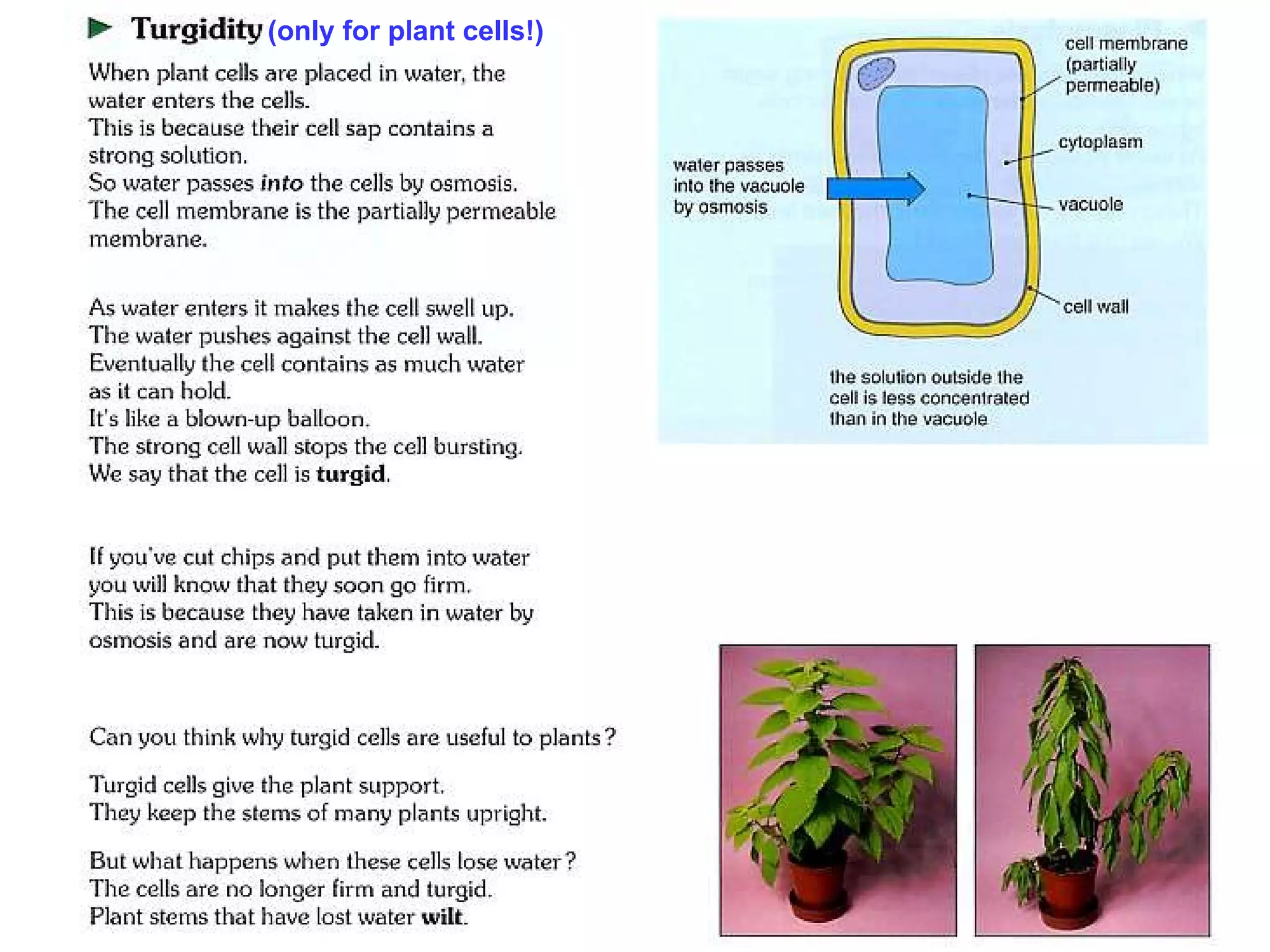
(only for plant cells!)
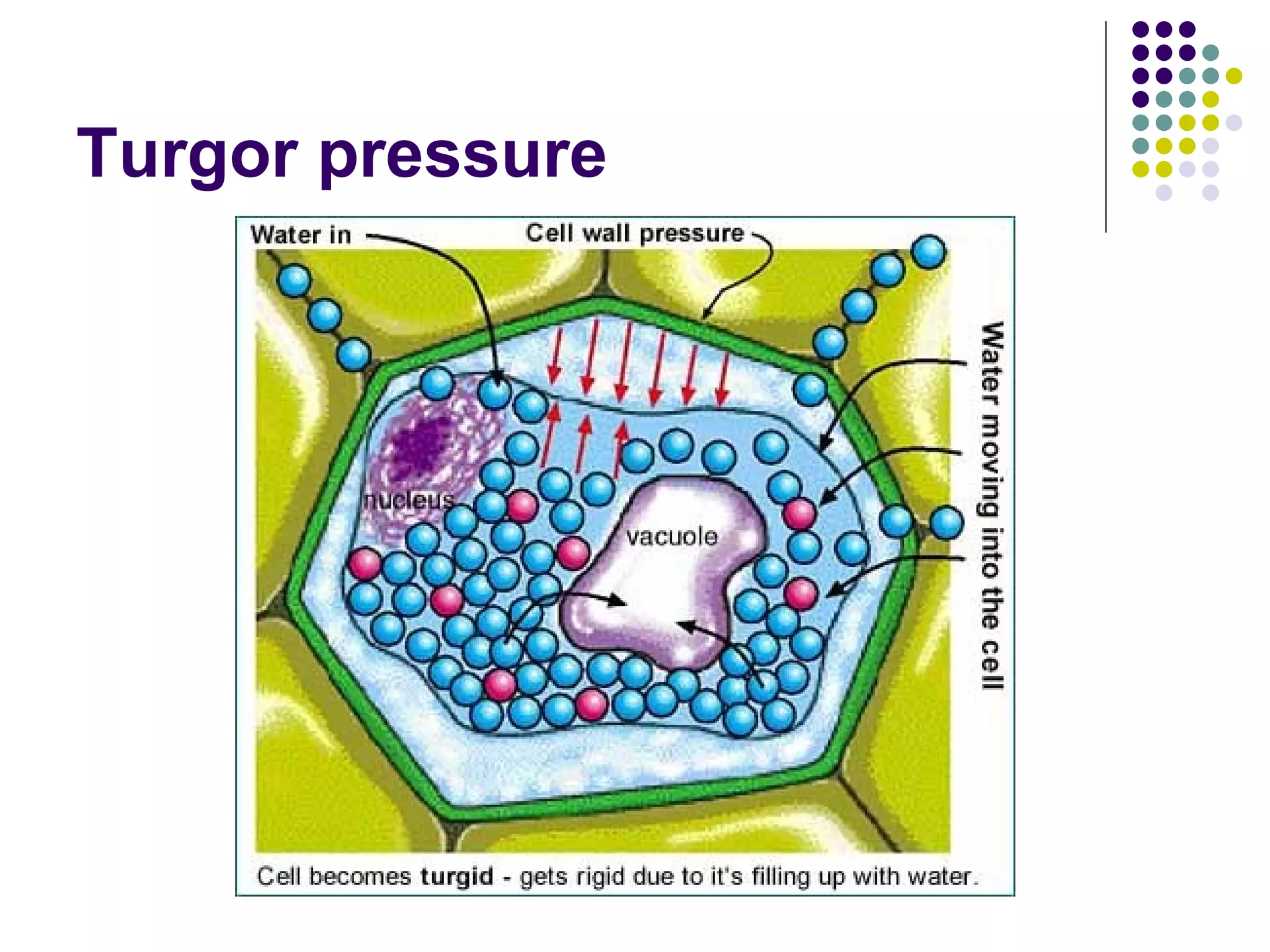
Turgor pressure
Turgidity Maintains shape of soft plant tissues [provides support (water sufficient)/ wilts (lack of water  -> control fertilizer input )] Responsible for movement in plants  e.g. mimosa  -> changes in turgor in small swellings at the base of leaflets   e.g. flowers opening in day and closing at night/ bending of petals
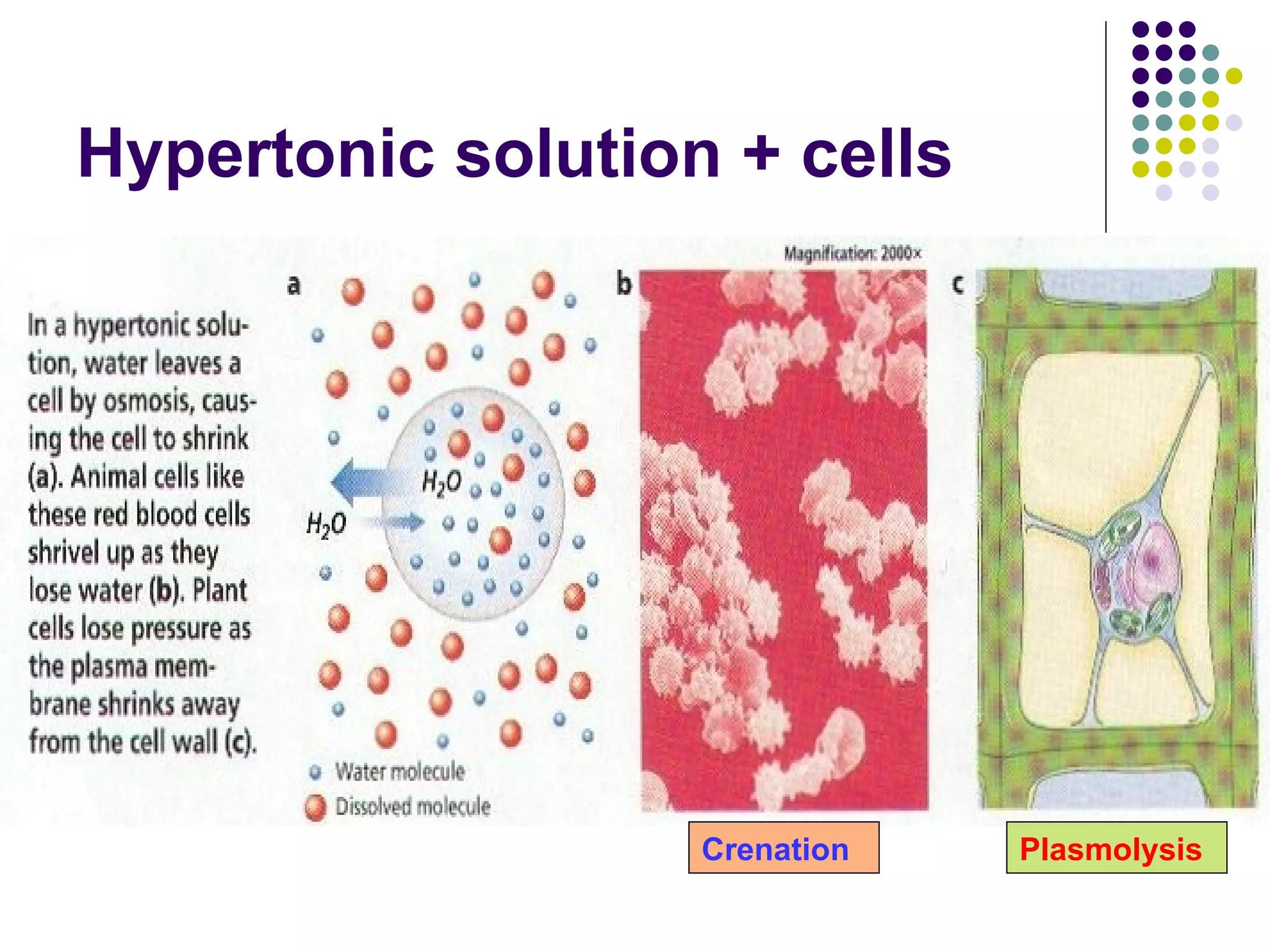
Hypertonic solution + cells Crenation Plasmolysis
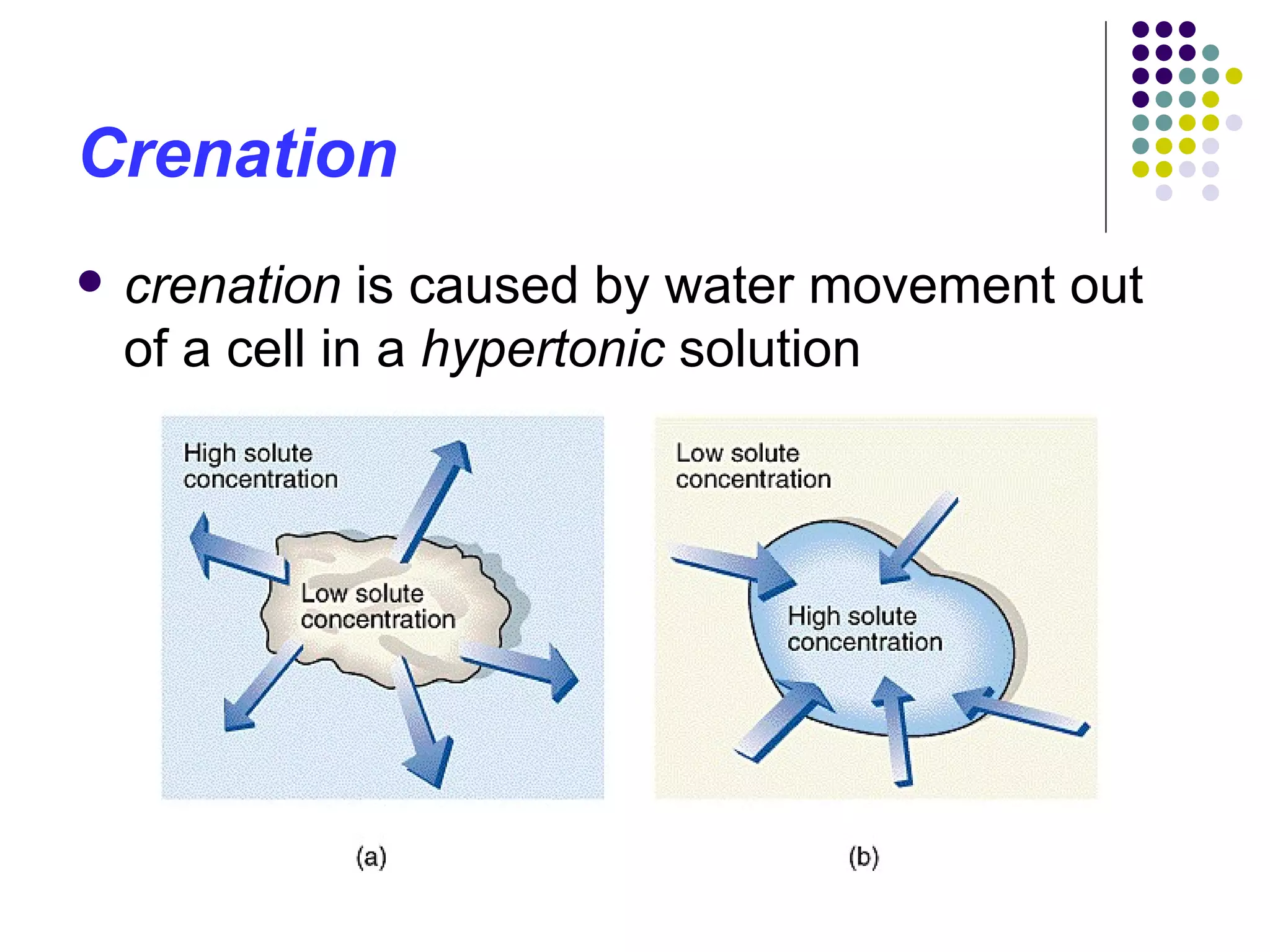
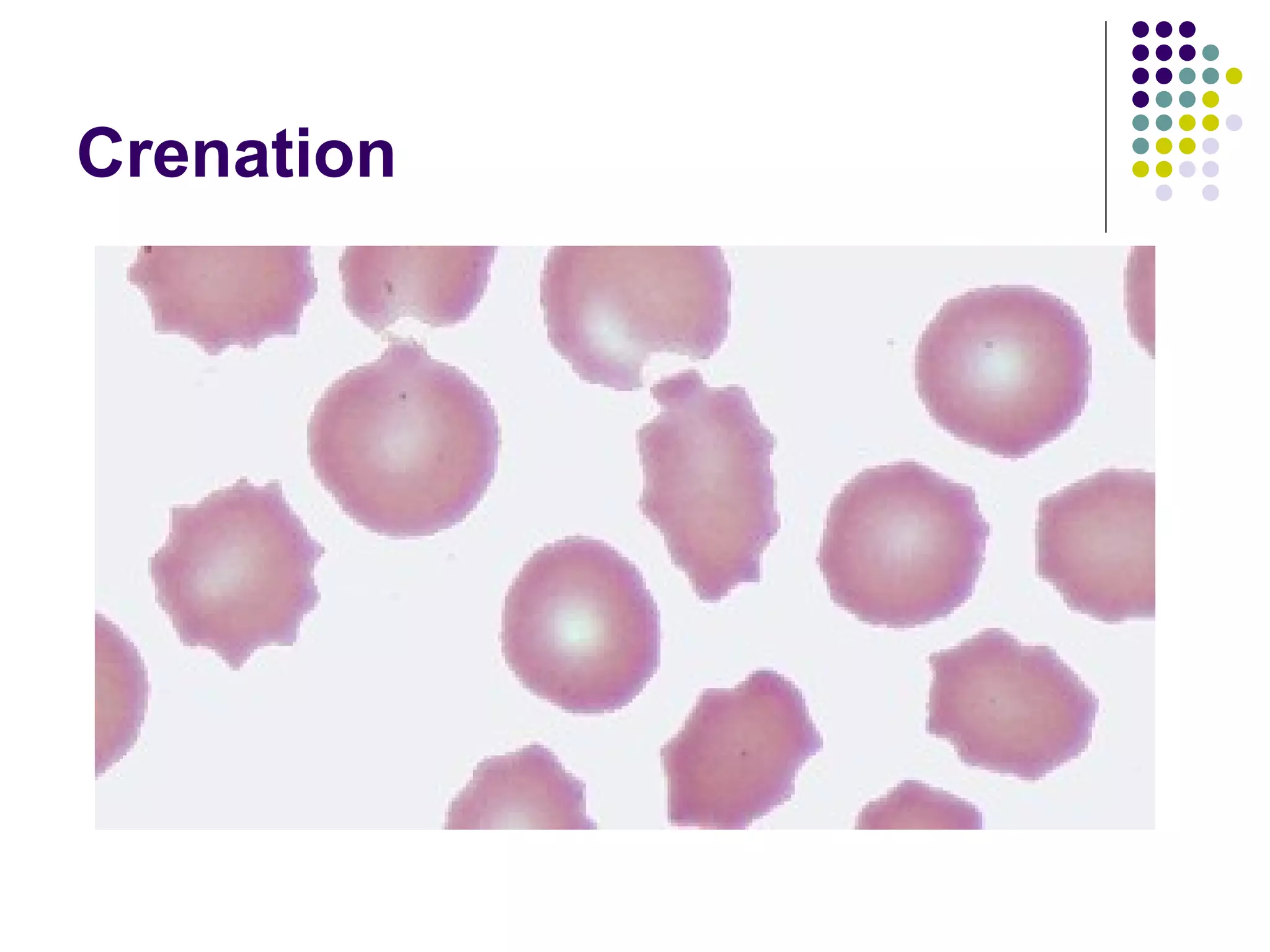
Crenation crenation  is caused by water movement out of a cell in a  hypertonic  solution
Crenation
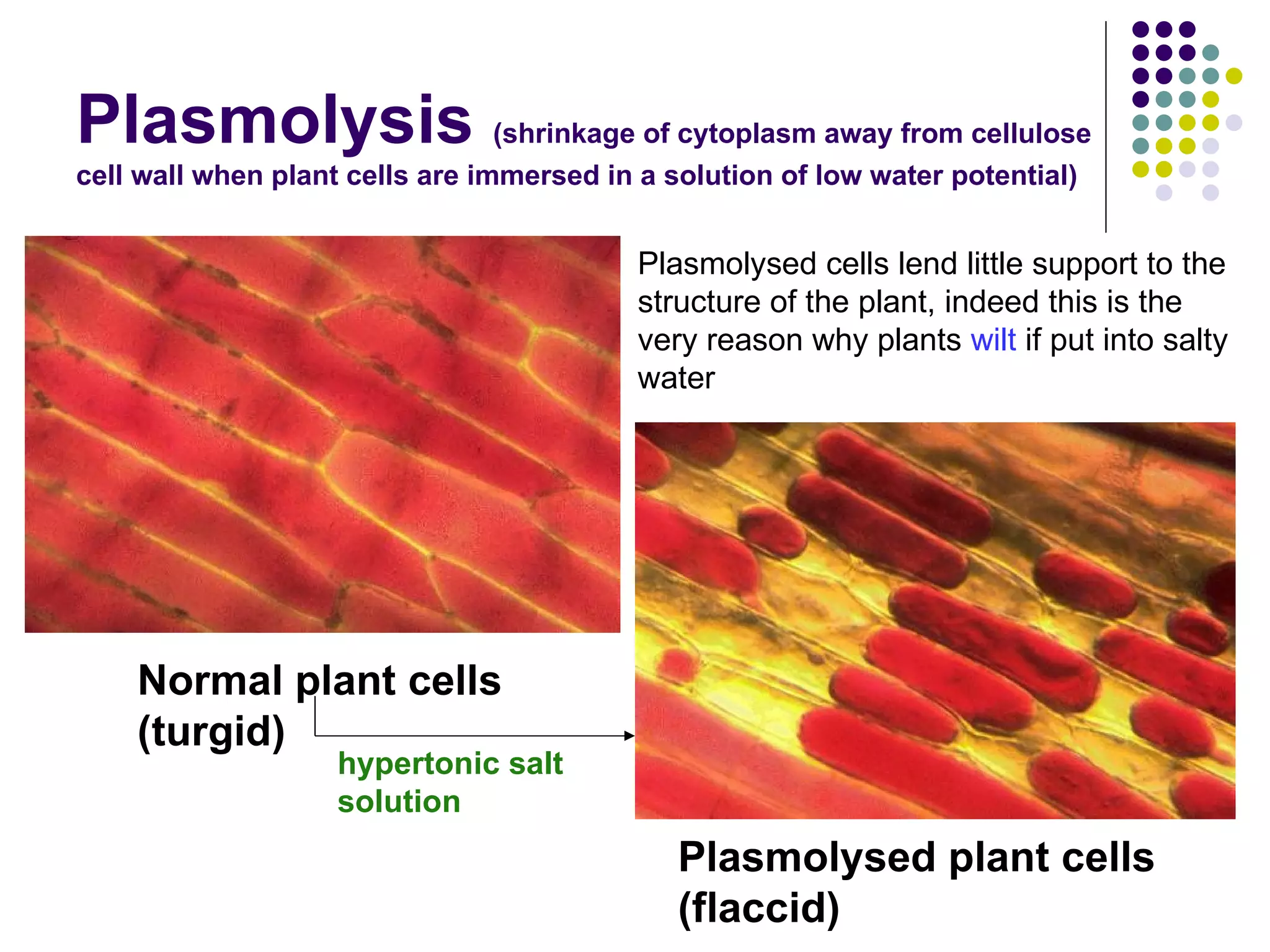
Plasmolysis  (shrinkage of cytoplasm away from cellulose cell wall when plant cells are immersed in a solution of low water potential) Normal plant cells (turgid) Plasmolysed plant cells (flaccid) hypertonic salt solution Plasmolysed cells lend little support to the structure of the plant, indeed this is the very reason why plants  wilt  if put into salty water
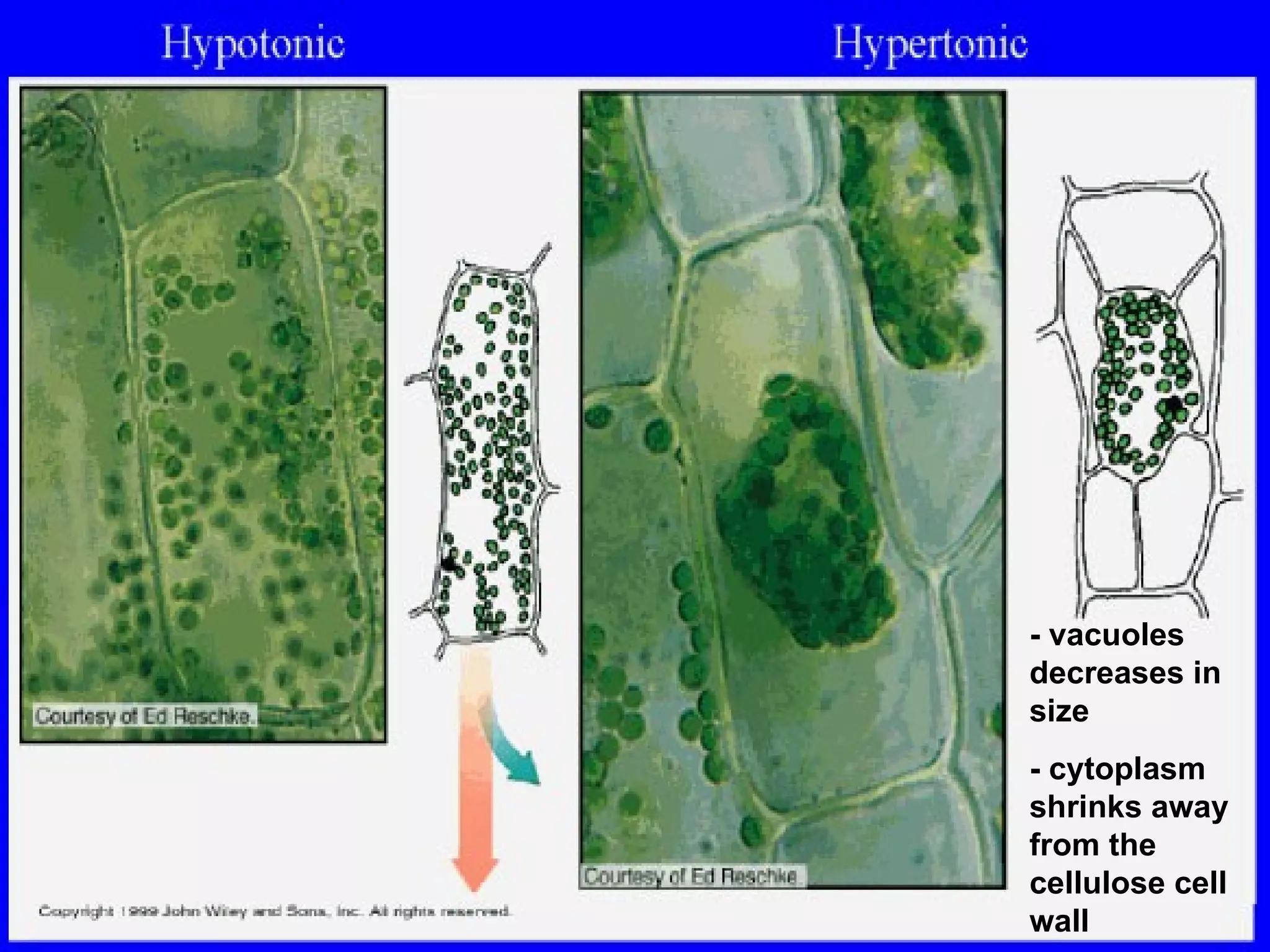
- vacuoles decreases in size - cytoplasm shrinks away from the cellulose cell wall
Summary
 
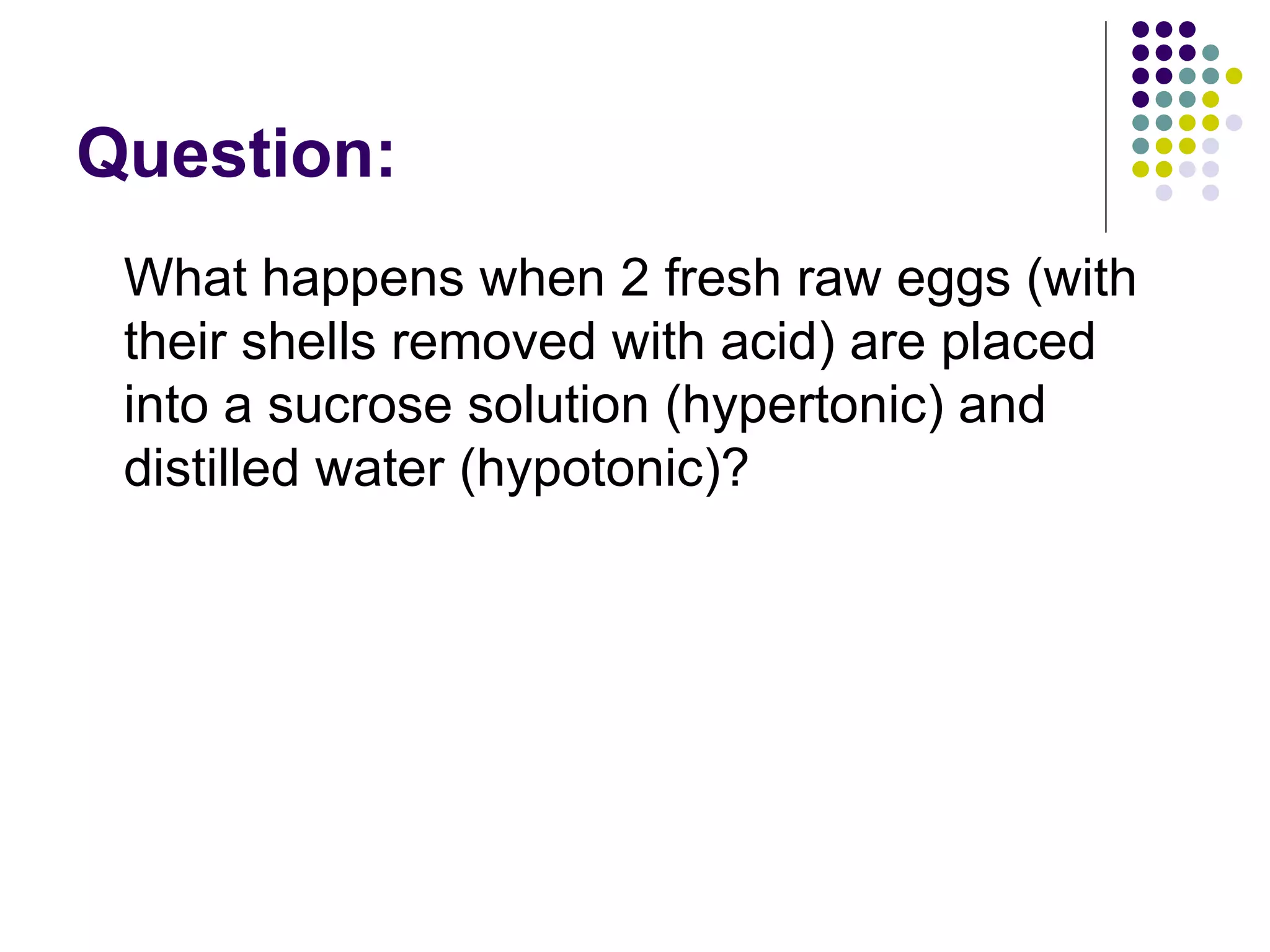
Question: What happens when 2 fresh raw eggs (with their shells removed with acid) are placed into a sucrose solution (hypertonic) and distilled water (hypotonic)?
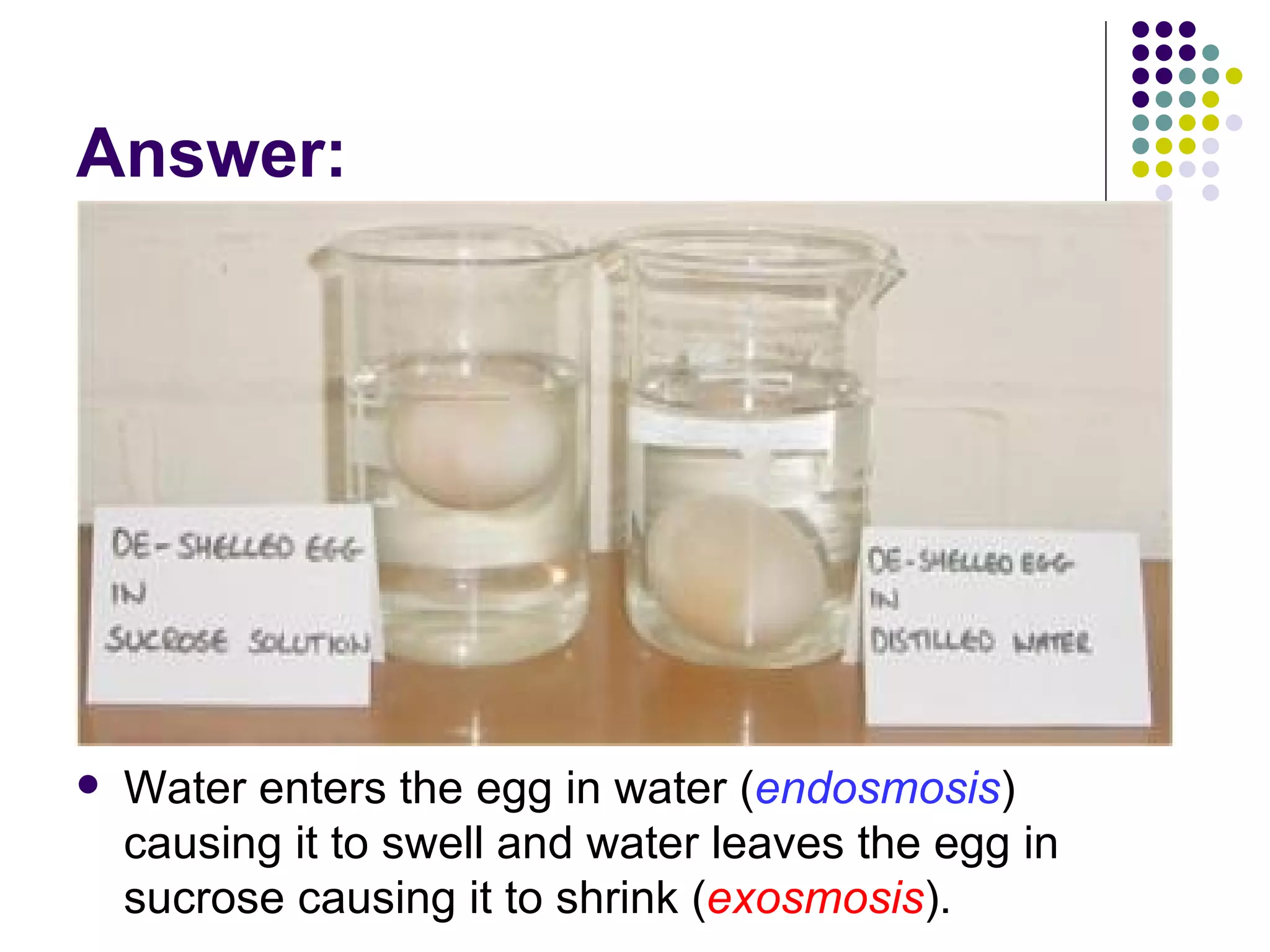
Answer: Water enters the egg in water ( endosmosis ) causing it to swell and water leaves the egg in sucrose causing it to shrink ( exosmosis ).
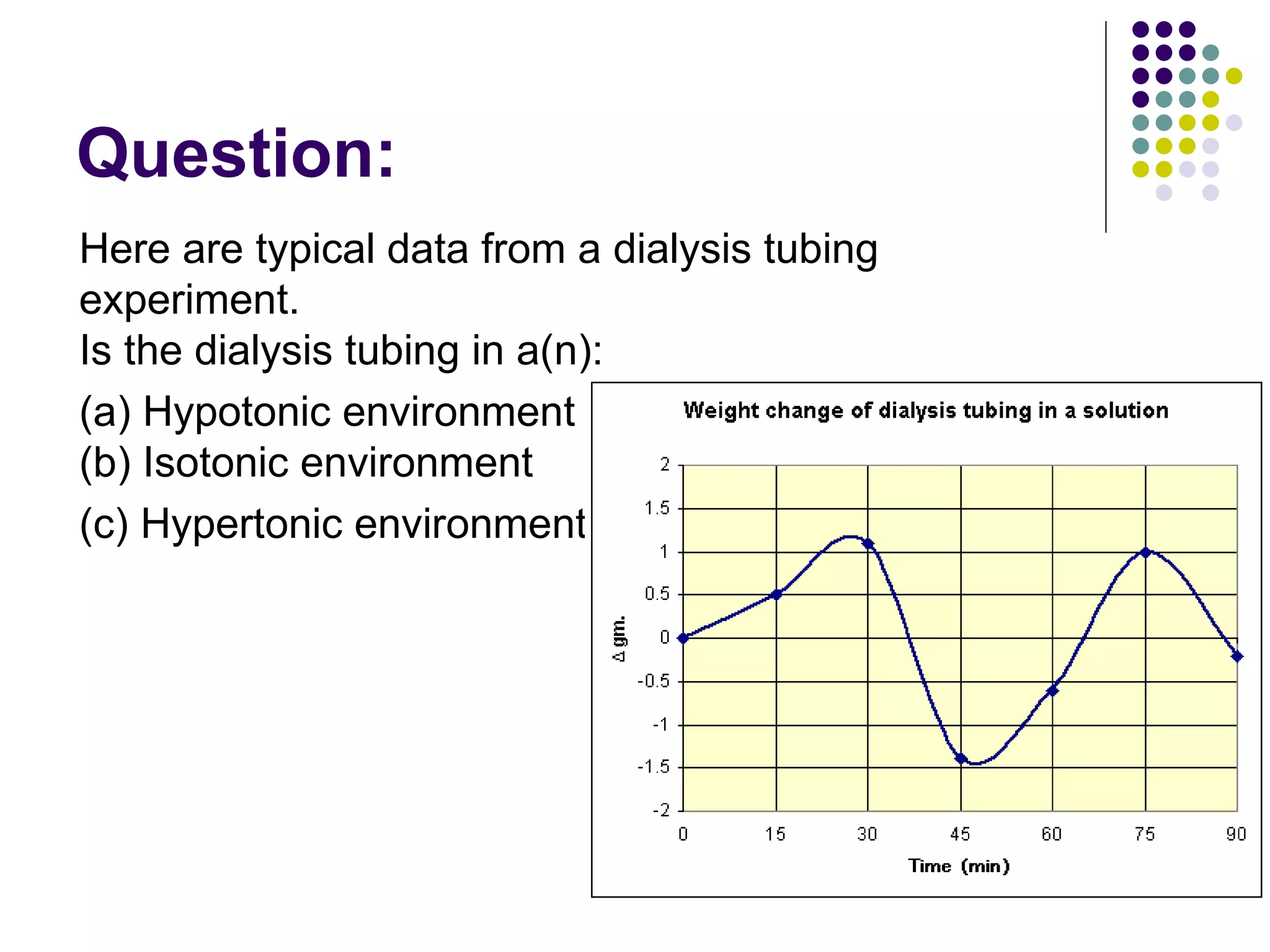
Question: Here are typical data from a dialysis tubing experiment.  Is the dialysis tubing in a(n): (a) Hypotonic environment (b) Isotonic environment (c) Hypertonic environment

Chapter 3 Movement of Substances Lesson 2 - Effects of isotonic, hypotonic & hypertonic solutions on cells

  • 1.
    Isotonic , Hypotonic , Hypertonic solutions
  • 2.
    Isotonic , Hypotonic , Hypertonic solutions iso tonic = a solution of equal concentration to a cell hypo tonic = a solution of lower concentration than a cell (higher water potential) hyper tonic = a solution of higher concentration than a cell (lower water potential) Note: Using these terms always involve comparison between 2 different solutions!
  • 3.
  • 4.
  • 5.
    Predict the directionof osmosis in the following solutions partially
  • 6.
  • 7.
    How do cellsreact in isotonic , hypotonic & hypertonic solutions? partially
  • 8.
  • 9.
    Hypotonic solution +cells swell -> may burst turgid
  • 10.
  • 11.
  • 12.
    Turgidity Maintains shapeof soft plant tissues [provides support (water sufficient)/ wilts (lack of water -> control fertilizer input )] Responsible for movement in plants e.g. mimosa -> changes in turgor in small swellings at the base of leaflets e.g. flowers opening in day and closing at night/ bending of petals
  • 13.
    Hypertonic solution +cells Crenation Plasmolysis
  • 14.
    Crenation crenation is caused by water movement out of a cell in a hypertonic solution
  • 15.
  • 16.
    Plasmolysis (shrinkageof cytoplasm away from cellulose cell wall when plant cells are immersed in a solution of low water potential) Normal plant cells (turgid) Plasmolysed plant cells (flaccid) hypertonic salt solution Plasmolysed cells lend little support to the structure of the plant, indeed this is the very reason why plants wilt if put into salty water
  • 17.
    - vacuoles decreasesin size - cytoplasm shrinks away from the cellulose cell wall
  • 18.
  • 19.
  • 20.
    Question: What happenswhen 2 fresh raw eggs (with their shells removed with acid) are placed into a sucrose solution (hypertonic) and distilled water (hypotonic)?
  • 21.
    Answer: Water entersthe egg in water ( endosmosis ) causing it to swell and water leaves the egg in sucrose causing it to shrink ( exosmosis ).
  • 22.
    Question: Here aretypical data from a dialysis tubing experiment. Is the dialysis tubing in a(n): (a) Hypotonic environment (b) Isotonic environment (c) Hypertonic environment