Download as PDF, PPTX
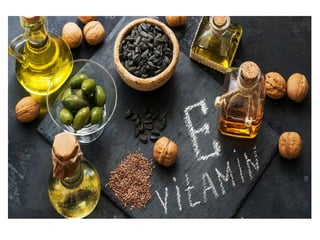
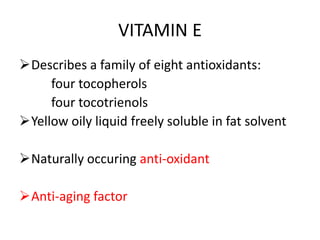
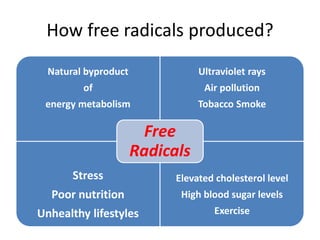
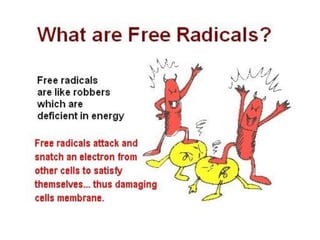
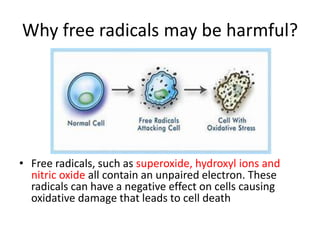
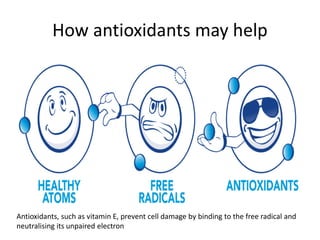
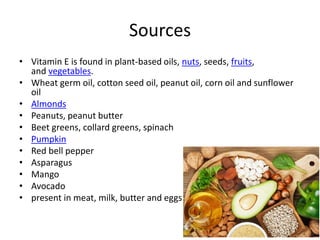
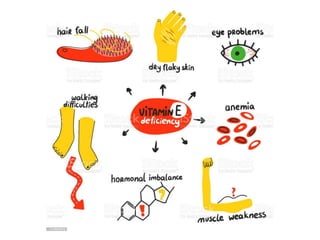

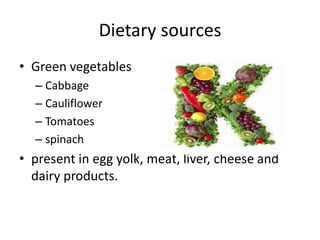
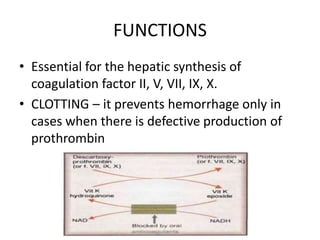
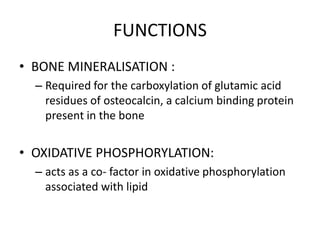
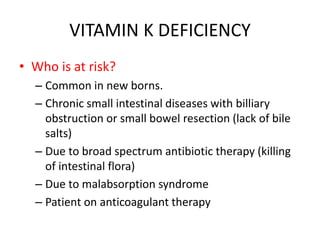
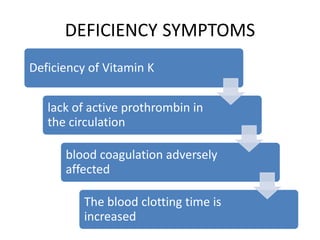
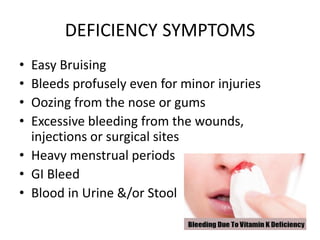
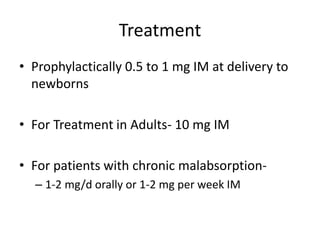


This document discusses vitamin E, including its structure, sources, absorption, functions, and deficiency. Some key points: - Vitamin E refers to a family of antioxidants that protect cell membranes from free radical damage. Major food sources include plant oils, nuts, and green vegetables. - It is absorbed along with fat in the small intestine and transported by lipoproteins in the bloodstream. Stores primarily in liver, adipose tissue, and muscle. - Functions include protecting PUFAs from oxidation, maintaining cell membrane integrity, and supporting neurological and reproductive health. - Deficiency is rare in humans but may cause fragile red blood cells. Toxicity is also rare, with no adverse effects


![Hypothalamus short ppt by Dr. Neha [PT].pptx](https://cdn.slidesharecdn.com/ss_thumbnails/hypothalamusbydr-260124145759-b9f94a93-thumbnail.jpg?width=640&height=640&fit=bounds)


