Bhawna
MPT
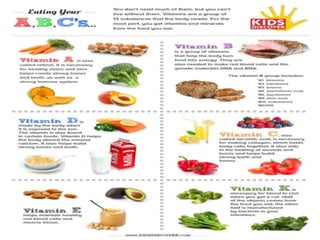
What are vitamins ?
 Vitamins are naturally occurring organic substance.
 Organic compound required in small amounts.
 Their coenzyme forms are essential in metabolic processes.
 They are essential for providing good health and are necessary
for many life functions.
 Thus we must obtain them from the foods we eat, or via
vitamin supplements.
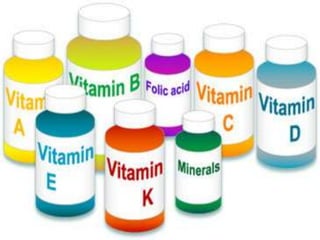
VITAMINS ARE CLASSIFIED
 Into two groups:-
 Fat- soluble vitamins A D E & K , Foods that contain
these vitamins will not lose them when cooked.
 Water-soluble vitamins B complex & vitamin C.
videoThe ABCD’s of Vitamins.mp4
Vitamin A (Retinol)
 Mc Collum, Simmonds and Kennedy isolated vitamin
A in 1913.
 Paul Karrer in 1931 elucidated the structure of vitamin
A1.
 Fat-soluble
 Retinol
 One of the most active, usable forms
 Vitamin A1 is most common.
 Vitamin A2 is found in fish oils and has an extra
double bond in in the ring.
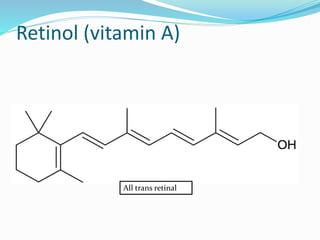
Retinol (vitamin A)
All trans retinal
 Intestine is the major site of absorption.
 In the liver, vitamin is stored as retinol palmitate.
 A special transport protein, retinol binding protein
(RBP), transports vitamin A from the liver to other
tissues.
 The active forms of vitamin A have three basic
functions:
1. Vision
2. Growth and Development of tissues
3. Immunity
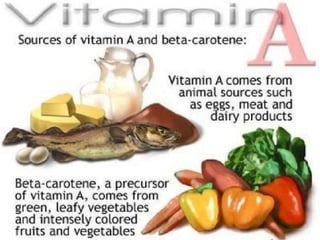
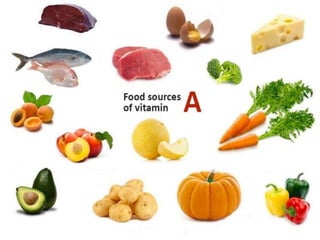
Animal Sources
 Eggs
 Meat
 Cheese
 Milk
 Liver
 Kidney
 Cod
 Halibut fish oil
Plant Sources
• Carrots
• Sweet Potatoes
• Cantaloupe
• Pink Grapefruit
• Apricots
• Broccoli
• Spinach
• Pumpkin
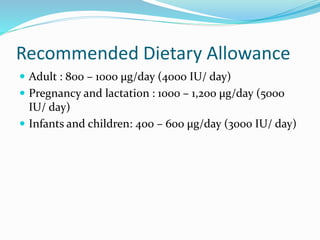
Recommended Dietary Allowance
 Adult : 800 – 1000 μg/day (4000 IU/ day)
 Pregnancy and lactation : 1000 – 1,200 μg/day (5000
IU/ day)
 Infants and children: 400 – 600 μg/day (3000 IU/ day)
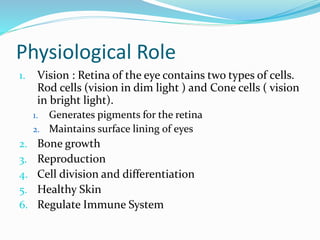
Physiological Role
1. Vision : Retina of the eye contains two types of cells.
Rod cells (vision in dim light ) and Cone cells ( vision
in bright light).
1. Generates pigments for the retina
2. Maintains surface lining of eyes
2. Bone growth
3. Reproduction
4. Cell division and differentiation
5. Healthy Skin
6. Regulate Immune System
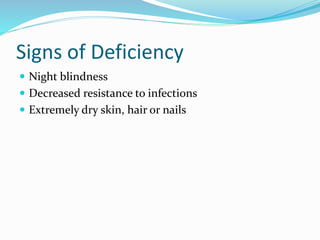
Signs of Deficiency
 Night blindness
 Decreased resistance to infections
 Extremely dry skin, hair or nails
Causes for Vitamin A Deficiency
1. Decreased intake
2. Obstructive jaundice causing defective absorption.
3. Cirrhosis of liver.
4. Sever malnutrition.
5. Chronic nephrosis.
Assessment of Deficiency
 Dark adaptation test
 RBP level in serum is decreased.
 Vitamin A in serum is decreased.
 Normal blood level of vitamin A is 25 to 50
mg/dl.
Too Much Can Be Toxic!!
 Hypervitaminosis A leads to toxic symptoms:
 Dry, itchy skin
 Headaches and fatigue
 Hair loss
 Liver damage
 Blurred vision
 Loss of appetite
 Skin coloration
 Peeling of Skin
Who Is At Risk For Deficiency?
 Young children
 Children with inadequate health care
 Adults in countries with high incidences of vitamin A
deficiency.
 Adults or children with diseases of the pancreas, liver,
intestines, or inadequate fat digestion/absorption
 videovitamin A.mp4
 videoNutritional Deficiency Disease - Vitamin A.mp4
Vitamin D (Cholecalciferol)
 Angus and coworkers isolated vitamin Din 1931.
 Vitamin D is called sun-shine vitamin.
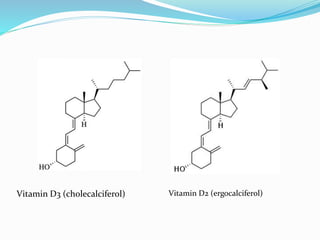
 The cis double bond between 5th and 6th carbon atoms,
is to give rise to vitamin D3 or cholecalciferol.
 The ergosterol when treated with ultraviolet light,
ergocalciferol or vitaminD2 is produced.
 The calcitriol thus formed is the active form of
vitamin.
 D2 in plants.
 D3 in fish , egg and liver.
Vitamin D3 (cholecalciferol) Vitamin D2 (ergocalciferol)
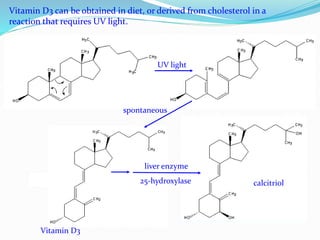
Vitamin D3 can be obtained in diet, or derived from cholesterol in a
reaction that requires UV light.
UV light
spontaneous
liver enzyme
25-hydroxylase
Vitamin D3
calcitriol
 Calcitriol promotes the absorption of calcium and
phosphorus from the intestine.
 Calcitriol acts like a steroid hormone.
 The production of vitamin D in the skin is directly
proportional to the exposure to sunlight and inversiely
proportional to the pigmentation of skin.
 Vitamin deficiency is seen in winters.
Recommended Dietary Allowance
 Children : 10 μg/day (400 IU/day)
 Adults : 5 – 10 μg/day (400 IU/day)
 Pregnancy and lactation : 10 μg/day (400 IU/day)
vitamin D2 or D3 are not active biological, but
converted to active form by hydroxilation.
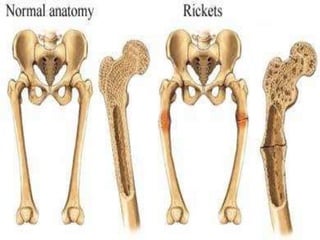
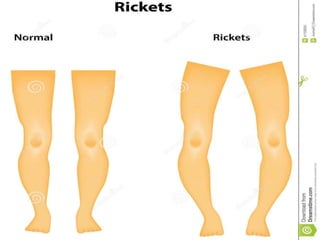
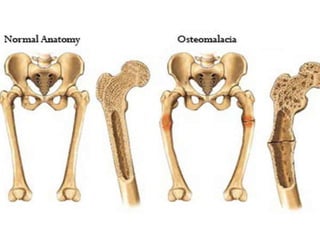
Deficiency of Vitamin D
 Rickets in children.
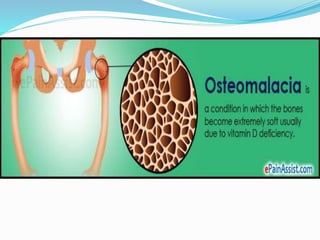
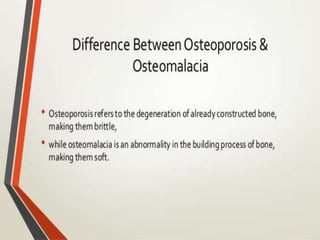
 Osteomalacia in adults.
Rickets
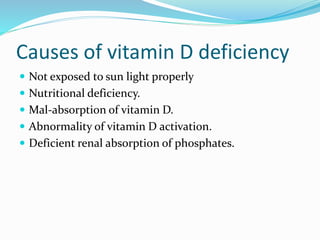
Causes of vitamin D deficiency
 Not exposed to sun light properly
 Nutritional deficiency.
 Mal-absorption of vitamin D.
 Abnormality of vitamin D activation.
 Deficient renal absorption of phosphates.
Sources of vitamin D
 Sunlight
 Fish liver oil
 Fish
 Egg yolk
 Milk contains moderate quantity of the vitamin
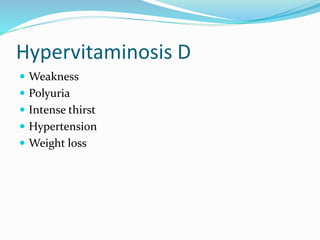
Hypervitaminosis D
 Weakness
 Polyuria
 Intense thirst
 Hypertension
 Weight loss
 videoThe Health Benefits of Vitamin D.mp4
 videovitamin D.mp4
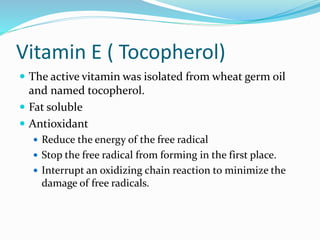
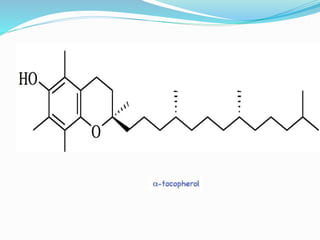
Vitamin E ( Tocopherol)
 The active vitamin was isolated from wheat germ oil
and named tocopherol.
 Fat soluble
 Antioxidant
 Reduce the energy of the free radical
 Stop the free radical from forming in the first place.
 Interrupt an oxidizing chain reaction to minimize the
damage of free radicals.
 Protects cell membranes and other fat-soluble parts of the
body from oxidation
 May reduce the risk of heart disease
 May also discourage development of some types of cancer
 Promotes normal growth and development
 Promotes normal red blood cell formation
 Acts as anti-blood clotting agent
 Plays some role in the body’s ability to process glucose
 Also been known to aid the process of wound healing
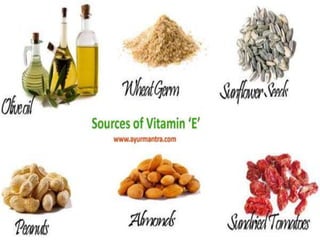
Source
 wheat germ oil
 vegetable oils
 nuts and seeds
 whole grains
 egg yolk
 leafy green vegetables
Specific Food Sources
 vegetable oils
 Corn, cottonseed, and peanut oil
 nuts and seeds
 Almonds, hazelnuts, sunflower seeds,
walnuts, and margarine
 whole grains
 whole-wheat flour, wheat germ
 Vegetables and fruits
 Spinach, lettuce, onions, blackberries,
apples, and pears
Recommended Dietary Allowance
 Adult male: 10 mg/day (30 IU/ day)
 Female: 12 mg/day (25 IU/ day)
 Children: 9 mg/day (10-20 IU/ day)
Function of Vitamin E
 Antioxidant
 Prevent liver necrosis
 Prevent muscular dystrophy
 Optimal absorption of amino acid
 Proper storage of creatine in skeletal muscle
 Protect cellular and sub-cellular membranes
 Protects erythrocytes
Deficiency
 Anemia
 Muscular weakness
 Fragile red blood cells
 videovitamin E.mp4
Vitamin K (koagulation vitamin)
 The important forms of vitamin K are:
1. Phylloquinone (K1)
2. Menaquinone (K2)
3. Menadione (K3)
 Vitamin K is necessary for coagulation.
 Factors dependent on vitamin K are Factor II
(prothrombin), Factor VII (SPCA), Factor IX
(christmas factor) and Factor X (stuart power factor).
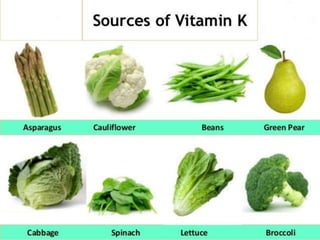
Source
 Green leafy vegetables
 Tomato
 Fish meal
 It is also synthesized by microorganisms in the
intestinal tract.
Recommended Dietary Allowance
 Intestinal bacteria synthesizes vitamin K
 40 – 140 μg is adequate in infancy.
Biochemical Functions
 Blood clotting
Deficiency
 Normally does not occur
 Excessive bleeding
 Blood clotting time is increased
 videovitamin K.mp4
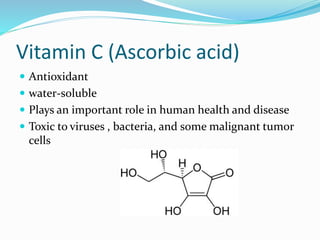
Vitamin C (Ascorbic acid)
 Antioxidant
 water-soluble
 Plays an important role in human health and disease
 Toxic to viruses , bacteria, and some malignant tumor
cells
Biochemical function
 Necessary for maintenance of normal connective tissue and
wound healing process.
 Bone formation
 Iron and hemoglobin metabolism
 Folic acid metabolism
 Peptide hormone synthesis
 Corticosteroid hormones synthesis
 Immunological function
 Cataract prevention
 Reduces the risk of cancer
 Reduces the risk of coronary heart disease
Recommended Dietary Allowance
 Adults : 60 mg/day
 Children : 40 mg/day
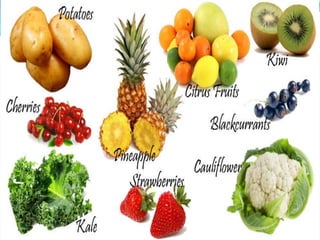
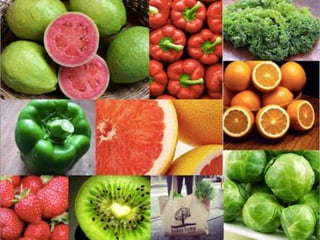
Sources
 Citrus fruits
 Gooseberry
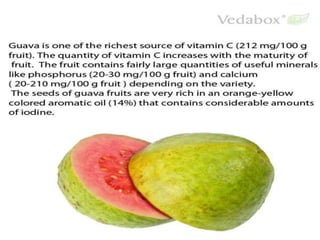
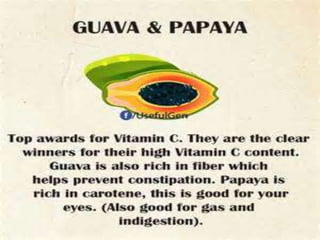
 Guava
 Green vegetables
 Tomatoes
 Potatoes
 Milk is poor source of vitamin C
Deficiency of C causes
 Weight loss
 fatigue and joint pain
 Spongy gums
 Loose teeth
 Fragile blood vessels
 Aching swollen joints
 Anemia
 reduced resistance to colds and infections
 slow healing of wounds and fractured bones
Scurvy
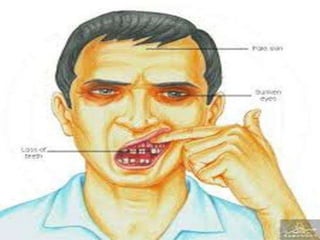
 This disease is characterized by spongy and sore gums,
loose teeth.
 Scurvy is the name for a vitamin C deficiency. It can
lead to anemia, debility, exhaustion, spontaneous
bleeding, pain in the limbs, and especially the legs,
swelling in some parts of the body, and sometimes
ulceration of the gums and loss of teeth.
Symptoms
 Early signs include a loss of appetite, weight loss, fatigue,
irritability, and lethargy.
 anemia
 myalgia, or pain, including bone pain
 swelling, or edema
 petechiae, or small red spots resulting from bleeding under
the skin
 corkscrew hairs
 gum disease and loss of teeth
 poor wound healing
 shortness of breath
 mood changes, and depression
Causes and risk factors
 a poor diet lacking in fresh fruits and vegetables,
possibly due to low income or famine
 illnesses such as anorexia or loss of appetite and
other mental health issues
 restrictive diets, due to allergies, difficulty orally
ingesting foods, or other reasons
 older age
 excessive consumption of alcohol or use of illegal
drugs
 videoScurvy, its causes, symptoms, treatment, and
how to avoid the disease.mp4
 videovitamin C.mp4
B Complex vitamins
1. Vitamin B1 (Thiamine)
2. Vitamin B2 (Riboflavin)
3. Vitamin B3 ( Niacin or Nicotinic acid)
4. Vitamin B5 ( Pantothenic)
5. Vitamin B6 ( Pyridoxine)
6. Vitamin B7 ( Biotin)
7. Vitamin B9 ( Folic acid )
8. Vitamin B12 ( Cobalamin)
 These vitamin chemically not related to one another.
 They are grouped together because all of them
function in cell as coenzymes.
 Vitamin B complex plays an important role in keeping
our bodies running like well oiled machines.
 Convert our food into fuel.
 Allowing us to stay energized throughout the day.
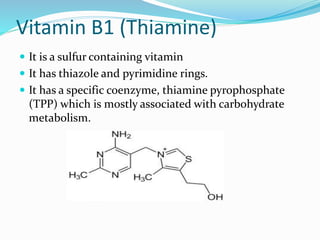
Vitamin B1 (Thiamine)
 It is a sulfur containing vitamin
 It has thiazole and pyrimidine rings.
 It has a specific coenzyme, thiamine pyrophosphate
(TPP) which is mostly associated with carbohydrate
metabolism.
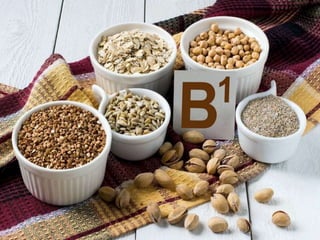
Sources
 Cereals
 Pulses
 Oil seeds
 Nuts
 Meat
 Pork
 Bananas
 Soybeans
 Whole grains (unpolished rice, wheat)
Recommended dietary sources
 Children : 1.2 mg/day
 Adults : 1.5 mg/day
 Pregnancy and lactation : 2.0 mg/day
Function
 TPP plays an important role in the transmission of
nerve impulse.
 TPP is required for acetylcholine synthesis.
 Carbohydrate metabolism.
 Producing energy from carbohydrates
 stabilizing the appetite
 promoting growth and good muscle tone
 ATP production
Deficiency
 Loss of appetite
 Weakness & Feeling tired
 Insomnia
 Loss of weight
 Depression
 Heart & Gastrointestinal problems
 Deficiency of vitamin B1 results in a condition called
Beri-beri.
 Beri-beri is of four types.
1. Dry beriberi (peripheral neuritis)
2. Wet beriberi ( cardiac manifestation)
3. Cerebral beriberi ( wernicke Korsa koff syndrome)
4. Infantile beriberi
Vitamin B2 (Riboflavin)
 This vitamin is synthesized by green plants and micro-
organisms.
 Riboflavin is heat stable but sensitive to light.
 Riboflavin exists in tissues tightly bound with
enzymes.
 Flavin mononucleotide (FMN) and flavin adenine
dinucleotide (FAD) are the two coenzyme forms of
riboflavin.
Sources
 Animal liver
 Green leafy vegetables
 Milk
 Eggs
Recommended dietary sources
 Adults : 2 mg/day
 Children : 1.2 mg/day
 Pregnancy and lactation : 2 mg/day
Biochemical function
 energy production
 carbohydrate, fat, and protein metabolism
 formation of antibodies and red blood cells
 cell respiration
 maintenance of good vision, skin, nails, and hair
Deficiency
 Itching and burning eyes
 Cracks and sores in mouth and lips
 Bloodshot eyes
 Dermatitis
 Oily skin
 Digestive disturbances
 Glossitis (smooth and purplish tongue)
 Cheilosis (fissures at the corners of mouth)
 Angular stomatitis (inflammation at the corner of
mouth)
Vitamin B3(Niacin or Nicotinic acid)
 Also known as pellagra preventive.
 The niacin is stable in nature.
 Nicotinic acid should not be confused with nicotine.
 Nicotinic acid is vitamin but nicotine is the potent
poison from tobacco.
 Two Types
 Niacinamide (Nicotinamide)
 does not regulate cholesterol
 Niacin (Nicotinic Acid)
 highly toxic in large doses
 Inosital Hexaniacinate is a supplement that gives the
cholesterol regulation without high toxicity
Sources
 Liver
 Peanuts
 Rice
 Cereals
 Pulses
 Milk
 Fish
 Eggs
Recommended dietary allowance
 Adult : 15-20 mg/day
 Children : 10-15 mg/day
 Infants : 5-8 mg/day
Deficiency
 Pellagra
 disease caused by B-3 deficiency
 rare in Western societies
 The symptoms of pellagra are commonly referred to as three

Ds.
 If three Ds not treated may rarely lead to Death (4th D)
 Dermatitis
 Diarrhea
 Dementia
 Death
 gastrointestinal disturbance, loss of appetite
 headache, insomnia, mental depression
 fatigue, aches, and pains
 nervousness, irritability
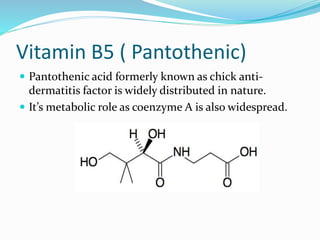
Vitamin B5 ( Pantothenic)
 Pantothenic acid formerly known as chick anti-
dermatitis factor is widely distributed in nature.
 It’s metabolic role as coenzyme A is also widespread.
Sources
 Eggs
 Animal liver
 Meat
 Milk
 Vegetables
 Grains
Recommended dietary allowance
 Adults : 5-10 mg/day
 Children : 4-5 mg/day
 Infants : 1-2 mg/day
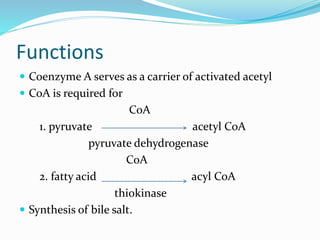
Functions
 Coenzyme A serves as a carrier of activated acetyl
 CoA is required for
CoA
1. pyruvate acetyl CoA
pyruvate dehydrogenase
CoA
2. fatty acid acyl CoA
thiokinase
 Synthesis of bile salt.
Deficiency
 It is rare disease in human.
 Gopalan’s Burning Foot Syndrome is manifested as
paresthesia in lower extremities.
 Staggering gait due to impaired coordination and sleep
disturbances.
Vitamin B6 ( Pyridoxine)
 B6 is an energy releasing vitamin.
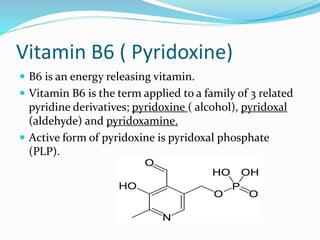
 Vitamin B6 is the term applied to a family of 3 related
pyridine derivatives; pyridoxine ( alcohol), pyridoxal
(aldehyde) and pyridoxamine.
 Active form of pyridoxine is pyridoxal phosphate
(PLP).
Sources
 Whole grains
 Fish
 Potatoes
 Organ meats
 Eggs
 Legumes
Recommended dietary allowance
 Adults : 2.2 mg/day
 Children : 1.2 mg/day
 Infants : 3 mg/day
Function
 Pyridoxal phosphate participates in reactions like
1. Transamination: converting amino acid to keto acids.
The keto acids enter the citric acid cycle and get
oxidized to generate energy.
2. Decarboxylation : Require PLP as coenzyme. Eg.
Histamine is a vasodilator and lowers blood pressure.
3. Production of niacin (one vitamin is necessary for
synthesis of another vitamin)
4. Helps in protein metabolism and absorption
5. Red blood cell formation
Deficiency
 Neurological symptoms
1. Depression
2. Irritability
3. Nervousness
4. Mental confusion
 Anemia
 Cracks at corners of mouth
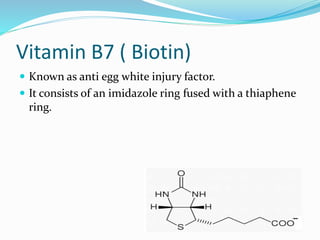
Vitamin B7 ( Biotin)
 Known as anti egg white injury factor.
 It consists of an imidazole ring fused with a thiaphene
ring.
Source
 Egg yolk
 Liver and kidney
 Milk
 Legumes
 Nuts
RDA
 200 to 300 mg/day for adults
Function
 Fatty acid synthesis
 Energy production
Deficiency
 Dermatitis
 Hyperesthesia
 Muscle pain
 Anorexia
 Hallucination
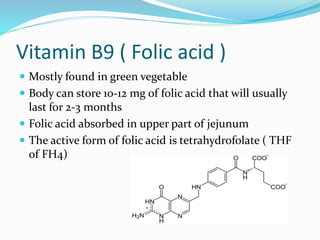
Vitamin B9 ( Folic acid )
 Mostly found in green vegetable
 Body can store 10-12 mg of folic acid that will usually
last for 2-3 months
 Folic acid absorbed in upper part of jejunum
 The active form of folic acid is tetrahydrofolate ( THF
of FH4)
Source
 Green leafy vegetables
 Milk is poor source of folic acid
 Cereals, pulses, oil seeds and egg are moderate sources
Function
 Red blood cell formation
 Proper brain function
 Plays an important role in mental and emotional
health
 DNA production
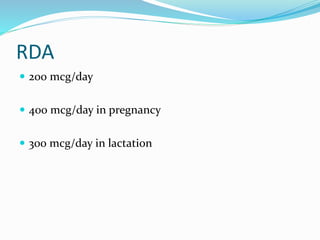
RDA
 200 mcg/day
 400 mcg/day in pregnancy
 300 mcg/day in lactation
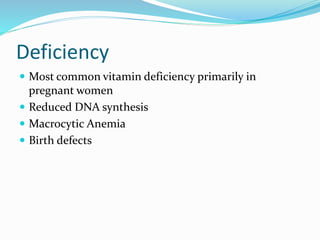
Deficiency
 Most common vitamin deficiency primarily in
pregnant women
 Reduced DNA synthesis
 Macrocytic Anemia
 Birth defects
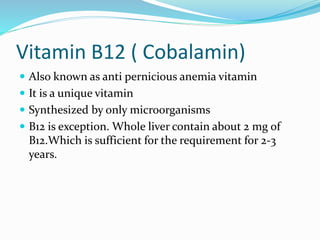
Vitamin B12 ( Cobalamin)
 Also known as anti pernicious anemia vitamin
 It is a unique vitamin
 Synthesized by only microorganisms
 B12 is exception. Whole liver contain about 2 mg of
B12.Which is sufficient for the requirement for 2-3
years.
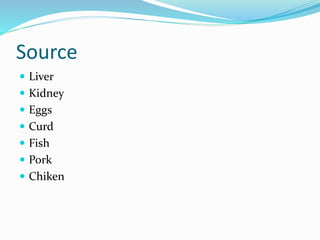
Source
 Liver
 Kidney
 Eggs
 Curd
 Fish
 Pork
 Chiken
RDA
 1-2 mcg/day for adults
 2 mcg/day during pregnancy and lactation
 O.4 – 1.8 mcg/day for children
Function
 Maintaining healthy nerve cell
 Helps in production of DNA and RNA
 Works closely with vitamin B9
 To help make red blood cells
Deficiency
 Pernicious anemia
 Demyelination
 Achlorhydria ( absence of acid in gastric juice is
associated with vitamin B12 deficiency)
References
 Text book of biochemistry for medical students
- DM Vasudevan
 Biochemistry
- U.Satyanarayana, U.Chakrapani

Vitamins

  • 1.
  • 2.
    What are vitamins?  Vitamins are naturally occurring organic substance.  Organic compound required in small amounts.  Their coenzyme forms are essential in metabolic processes.  They are essential for providing good health and are necessary for many life functions.  Thus we must obtain them from the foods we eat, or via vitamin supplements.
  • 3.
    VITAMINS ARE CLASSIFIED Into two groups:-  Fat- soluble vitamins A D E & K , Foods that contain these vitamins will not lose them when cooked.  Water-soluble vitamins B complex & vitamin C.
  • 9.
  • 10.
    Vitamin A (Retinol) Mc Collum, Simmonds and Kennedy isolated vitamin A in 1913.  Paul Karrer in 1931 elucidated the structure of vitamin A1.  Fat-soluble  Retinol  One of the most active, usable forms  Vitamin A1 is most common.  Vitamin A2 is found in fish oils and has an extra double bond in in the ring.
  • 11.
  • 12.
     Intestine isthe major site of absorption.  In the liver, vitamin is stored as retinol palmitate.  A special transport protein, retinol binding protein (RBP), transports vitamin A from the liver to other tissues.  The active forms of vitamin A have three basic functions: 1. Vision 2. Growth and Development of tissues 3. Immunity
  • 13.
    Animal Sources  Eggs Meat  Cheese  Milk  Liver  Kidney  Cod  Halibut fish oil
  • 14.
    Plant Sources • Carrots •Sweet Potatoes • Cantaloupe • Pink Grapefruit • Apricots • Broccoli • Spinach • Pumpkin
  • 17.
    Recommended Dietary Allowance Adult : 800 – 1000 μg/day (4000 IU/ day)  Pregnancy and lactation : 1000 – 1,200 μg/day (5000 IU/ day)  Infants and children: 400 – 600 μg/day (3000 IU/ day)
  • 18.
    Physiological Role 1. Vision: Retina of the eye contains two types of cells. Rod cells (vision in dim light ) and Cone cells ( vision in bright light). 1. Generates pigments for the retina 2. Maintains surface lining of eyes 2. Bone growth 3. Reproduction 4. Cell division and differentiation 5. Healthy Skin 6. Regulate Immune System
  • 19.
    Signs of Deficiency Night blindness  Decreased resistance to infections  Extremely dry skin, hair or nails
  • 20.
    Causes for VitaminA Deficiency 1. Decreased intake 2. Obstructive jaundice causing defective absorption. 3. Cirrhosis of liver. 4. Sever malnutrition. 5. Chronic nephrosis.
  • 21.
    Assessment of Deficiency Dark adaptation test  RBP level in serum is decreased.  Vitamin A in serum is decreased.  Normal blood level of vitamin A is 25 to 50 mg/dl.
  • 22.
    Too Much CanBe Toxic!!  Hypervitaminosis A leads to toxic symptoms:  Dry, itchy skin  Headaches and fatigue  Hair loss  Liver damage  Blurred vision  Loss of appetite  Skin coloration  Peeling of Skin
  • 23.
    Who Is AtRisk For Deficiency?  Young children  Children with inadequate health care  Adults in countries with high incidences of vitamin A deficiency.  Adults or children with diseases of the pancreas, liver, intestines, or inadequate fat digestion/absorption
  • 24.
     videovitamin A.mp4 videoNutritional Deficiency Disease - Vitamin A.mp4
  • 25.
    Vitamin D (Cholecalciferol) Angus and coworkers isolated vitamin Din 1931.  Vitamin D is called sun-shine vitamin.  The cis double bond between 5th and 6th carbon atoms, is to give rise to vitamin D3 or cholecalciferol.  The ergosterol when treated with ultraviolet light, ergocalciferol or vitaminD2 is produced.  The calcitriol thus formed is the active form of vitamin.  D2 in plants.  D3 in fish , egg and liver.
  • 26.
    Vitamin D3 (cholecalciferol)Vitamin D2 (ergocalciferol)
  • 27.
    Vitamin D3 canbe obtained in diet, or derived from cholesterol in a reaction that requires UV light. UV light spontaneous liver enzyme 25-hydroxylase Vitamin D3 calcitriol
  • 28.
     Calcitriol promotesthe absorption of calcium and phosphorus from the intestine.  Calcitriol acts like a steroid hormone.  The production of vitamin D in the skin is directly proportional to the exposure to sunlight and inversiely proportional to the pigmentation of skin.  Vitamin deficiency is seen in winters.
  • 29.
    Recommended Dietary Allowance Children : 10 μg/day (400 IU/day)  Adults : 5 – 10 μg/day (400 IU/day)  Pregnancy and lactation : 10 μg/day (400 IU/day) vitamin D2 or D3 are not active biological, but converted to active form by hydroxilation.
  • 30.
    Deficiency of VitaminD  Rickets in children.  Osteomalacia in adults.
  • 31.
  • 37.
    Causes of vitaminD deficiency  Not exposed to sun light properly  Nutritional deficiency.  Mal-absorption of vitamin D.  Abnormality of vitamin D activation.  Deficient renal absorption of phosphates.
  • 38.
    Sources of vitaminD  Sunlight  Fish liver oil  Fish  Egg yolk  Milk contains moderate quantity of the vitamin
  • 39.
    Hypervitaminosis D  Weakness Polyuria  Intense thirst  Hypertension  Weight loss
  • 40.
     videoThe HealthBenefits of Vitamin D.mp4  videovitamin D.mp4
  • 42.
    Vitamin E (Tocopherol)  The active vitamin was isolated from wheat germ oil and named tocopherol.  Fat soluble  Antioxidant  Reduce the energy of the free radical  Stop the free radical from forming in the first place.  Interrupt an oxidizing chain reaction to minimize the damage of free radicals.
  • 43.
     Protects cellmembranes and other fat-soluble parts of the body from oxidation  May reduce the risk of heart disease  May also discourage development of some types of cancer  Promotes normal growth and development  Promotes normal red blood cell formation  Acts as anti-blood clotting agent  Plays some role in the body’s ability to process glucose  Also been known to aid the process of wound healing
  • 45.
    Source  wheat germoil  vegetable oils  nuts and seeds  whole grains  egg yolk  leafy green vegetables
  • 46.
    Specific Food Sources vegetable oils  Corn, cottonseed, and peanut oil  nuts and seeds  Almonds, hazelnuts, sunflower seeds, walnuts, and margarine  whole grains  whole-wheat flour, wheat germ  Vegetables and fruits  Spinach, lettuce, onions, blackberries, apples, and pears
  • 48.
    Recommended Dietary Allowance Adult male: 10 mg/day (30 IU/ day)  Female: 12 mg/day (25 IU/ day)  Children: 9 mg/day (10-20 IU/ day)
  • 49.
    Function of VitaminE  Antioxidant  Prevent liver necrosis  Prevent muscular dystrophy  Optimal absorption of amino acid  Proper storage of creatine in skeletal muscle  Protect cellular and sub-cellular membranes  Protects erythrocytes
  • 50.
    Deficiency  Anemia  Muscularweakness  Fragile red blood cells
  • 51.
  • 52.
    Vitamin K (koagulationvitamin)  The important forms of vitamin K are: 1. Phylloquinone (K1) 2. Menaquinone (K2) 3. Menadione (K3)  Vitamin K is necessary for coagulation.  Factors dependent on vitamin K are Factor II (prothrombin), Factor VII (SPCA), Factor IX (christmas factor) and Factor X (stuart power factor).
  • 53.
    Source  Green leafyvegetables  Tomato  Fish meal  It is also synthesized by microorganisms in the intestinal tract.
  • 55.
    Recommended Dietary Allowance Intestinal bacteria synthesizes vitamin K  40 – 140 μg is adequate in infancy.
  • 56.
  • 57.
    Deficiency  Normally doesnot occur  Excessive bleeding  Blood clotting time is increased
  • 58.
  • 60.
    Vitamin C (Ascorbicacid)  Antioxidant  water-soluble  Plays an important role in human health and disease  Toxic to viruses , bacteria, and some malignant tumor cells
  • 61.
    Biochemical function  Necessaryfor maintenance of normal connective tissue and wound healing process.  Bone formation  Iron and hemoglobin metabolism  Folic acid metabolism  Peptide hormone synthesis  Corticosteroid hormones synthesis  Immunological function  Cataract prevention  Reduces the risk of cancer  Reduces the risk of coronary heart disease
  • 62.
    Recommended Dietary Allowance Adults : 60 mg/day  Children : 40 mg/day
  • 63.
    Sources  Citrus fruits Gooseberry  Guava  Green vegetables  Tomatoes  Potatoes  Milk is poor source of vitamin C
  • 68.
    Deficiency of Ccauses  Weight loss  fatigue and joint pain  Spongy gums  Loose teeth  Fragile blood vessels  Aching swollen joints  Anemia  reduced resistance to colds and infections  slow healing of wounds and fractured bones
  • 69.
    Scurvy  This diseaseis characterized by spongy and sore gums, loose teeth.  Scurvy is the name for a vitamin C deficiency. It can lead to anemia, debility, exhaustion, spontaneous bleeding, pain in the limbs, and especially the legs, swelling in some parts of the body, and sometimes ulceration of the gums and loss of teeth.
  • 70.
    Symptoms  Early signsinclude a loss of appetite, weight loss, fatigue, irritability, and lethargy.  anemia  myalgia, or pain, including bone pain  swelling, or edema  petechiae, or small red spots resulting from bleeding under the skin  corkscrew hairs  gum disease and loss of teeth  poor wound healing  shortness of breath  mood changes, and depression
  • 71.
    Causes and riskfactors  a poor diet lacking in fresh fruits and vegetables, possibly due to low income or famine  illnesses such as anorexia or loss of appetite and other mental health issues  restrictive diets, due to allergies, difficulty orally ingesting foods, or other reasons  older age  excessive consumption of alcohol or use of illegal drugs
  • 73.
     videoScurvy, itscauses, symptoms, treatment, and how to avoid the disease.mp4  videovitamin C.mp4
  • 75.
    B Complex vitamins 1.Vitamin B1 (Thiamine) 2. Vitamin B2 (Riboflavin) 3. Vitamin B3 ( Niacin or Nicotinic acid) 4. Vitamin B5 ( Pantothenic) 5. Vitamin B6 ( Pyridoxine) 6. Vitamin B7 ( Biotin) 7. Vitamin B9 ( Folic acid ) 8. Vitamin B12 ( Cobalamin)
  • 76.
     These vitaminchemically not related to one another.  They are grouped together because all of them function in cell as coenzymes.  Vitamin B complex plays an important role in keeping our bodies running like well oiled machines.  Convert our food into fuel.  Allowing us to stay energized throughout the day.
  • 77.
    Vitamin B1 (Thiamine) It is a sulfur containing vitamin  It has thiazole and pyrimidine rings.  It has a specific coenzyme, thiamine pyrophosphate (TPP) which is mostly associated with carbohydrate metabolism.
  • 78.
    Sources  Cereals  Pulses Oil seeds  Nuts  Meat  Pork  Bananas  Soybeans  Whole grains (unpolished rice, wheat)
  • 80.
    Recommended dietary sources Children : 1.2 mg/day  Adults : 1.5 mg/day  Pregnancy and lactation : 2.0 mg/day
  • 81.
    Function  TPP playsan important role in the transmission of nerve impulse.  TPP is required for acetylcholine synthesis.  Carbohydrate metabolism.  Producing energy from carbohydrates  stabilizing the appetite  promoting growth and good muscle tone  ATP production
  • 82.
    Deficiency  Loss ofappetite  Weakness & Feeling tired  Insomnia  Loss of weight  Depression  Heart & Gastrointestinal problems
  • 83.
     Deficiency ofvitamin B1 results in a condition called Beri-beri.  Beri-beri is of four types. 1. Dry beriberi (peripheral neuritis) 2. Wet beriberi ( cardiac manifestation) 3. Cerebral beriberi ( wernicke Korsa koff syndrome) 4. Infantile beriberi
  • 84.
    Vitamin B2 (Riboflavin) This vitamin is synthesized by green plants and micro- organisms.  Riboflavin is heat stable but sensitive to light.  Riboflavin exists in tissues tightly bound with enzymes.  Flavin mononucleotide (FMN) and flavin adenine dinucleotide (FAD) are the two coenzyme forms of riboflavin.
  • 85.
    Sources  Animal liver Green leafy vegetables  Milk  Eggs
  • 86.
    Recommended dietary sources Adults : 2 mg/day  Children : 1.2 mg/day  Pregnancy and lactation : 2 mg/day
  • 87.
    Biochemical function  energyproduction  carbohydrate, fat, and protein metabolism  formation of antibodies and red blood cells  cell respiration  maintenance of good vision, skin, nails, and hair
  • 88.
    Deficiency  Itching andburning eyes  Cracks and sores in mouth and lips  Bloodshot eyes  Dermatitis  Oily skin  Digestive disturbances  Glossitis (smooth and purplish tongue)  Cheilosis (fissures at the corners of mouth)  Angular stomatitis (inflammation at the corner of mouth)
  • 89.
    Vitamin B3(Niacin orNicotinic acid)  Also known as pellagra preventive.  The niacin is stable in nature.  Nicotinic acid should not be confused with nicotine.  Nicotinic acid is vitamin but nicotine is the potent poison from tobacco.  Two Types  Niacinamide (Nicotinamide)  does not regulate cholesterol  Niacin (Nicotinic Acid)  highly toxic in large doses  Inosital Hexaniacinate is a supplement that gives the cholesterol regulation without high toxicity
  • 90.
    Sources  Liver  Peanuts Rice  Cereals  Pulses  Milk  Fish  Eggs
  • 91.
    Recommended dietary allowance Adult : 15-20 mg/day  Children : 10-15 mg/day  Infants : 5-8 mg/day
  • 92.
    Deficiency  Pellagra  diseasecaused by B-3 deficiency  rare in Western societies  The symptoms of pellagra are commonly referred to as three Ds.  If three Ds not treated may rarely lead to Death (4th D)  Dermatitis  Diarrhea  Dementia  Death  gastrointestinal disturbance, loss of appetite  headache, insomnia, mental depression  fatigue, aches, and pains  nervousness, irritability
  • 93.
    Vitamin B5 (Pantothenic)  Pantothenic acid formerly known as chick anti- dermatitis factor is widely distributed in nature.  It’s metabolic role as coenzyme A is also widespread.
  • 94.
    Sources  Eggs  Animalliver  Meat  Milk  Vegetables  Grains
  • 95.
    Recommended dietary allowance Adults : 5-10 mg/day  Children : 4-5 mg/day  Infants : 1-2 mg/day
  • 96.
    Functions  Coenzyme Aserves as a carrier of activated acetyl  CoA is required for CoA 1. pyruvate acetyl CoA pyruvate dehydrogenase CoA 2. fatty acid acyl CoA thiokinase  Synthesis of bile salt.
  • 97.
    Deficiency  It israre disease in human.  Gopalan’s Burning Foot Syndrome is manifested as paresthesia in lower extremities.  Staggering gait due to impaired coordination and sleep disturbances.
  • 98.
    Vitamin B6 (Pyridoxine)  B6 is an energy releasing vitamin.  Vitamin B6 is the term applied to a family of 3 related pyridine derivatives; pyridoxine ( alcohol), pyridoxal (aldehyde) and pyridoxamine.  Active form of pyridoxine is pyridoxal phosphate (PLP).
  • 99.
    Sources  Whole grains Fish  Potatoes  Organ meats  Eggs  Legumes
  • 100.
    Recommended dietary allowance Adults : 2.2 mg/day  Children : 1.2 mg/day  Infants : 3 mg/day
  • 101.
    Function  Pyridoxal phosphateparticipates in reactions like 1. Transamination: converting amino acid to keto acids. The keto acids enter the citric acid cycle and get oxidized to generate energy. 2. Decarboxylation : Require PLP as coenzyme. Eg. Histamine is a vasodilator and lowers blood pressure. 3. Production of niacin (one vitamin is necessary for synthesis of another vitamin) 4. Helps in protein metabolism and absorption 5. Red blood cell formation
  • 102.
    Deficiency  Neurological symptoms 1.Depression 2. Irritability 3. Nervousness 4. Mental confusion  Anemia  Cracks at corners of mouth
  • 103.
    Vitamin B7 (Biotin)  Known as anti egg white injury factor.  It consists of an imidazole ring fused with a thiaphene ring.
  • 104.
    Source  Egg yolk Liver and kidney  Milk  Legumes  Nuts
  • 105.
    RDA  200 to300 mg/day for adults
  • 106.
    Function  Fatty acidsynthesis  Energy production
  • 107.
    Deficiency  Dermatitis  Hyperesthesia Muscle pain  Anorexia  Hallucination
  • 108.
    Vitamin B9 (Folic acid )  Mostly found in green vegetable  Body can store 10-12 mg of folic acid that will usually last for 2-3 months  Folic acid absorbed in upper part of jejunum  The active form of folic acid is tetrahydrofolate ( THF of FH4)
  • 109.
    Source  Green leafyvegetables  Milk is poor source of folic acid  Cereals, pulses, oil seeds and egg are moderate sources
  • 110.
    Function  Red bloodcell formation  Proper brain function  Plays an important role in mental and emotional health  DNA production
  • 111.
    RDA  200 mcg/day 400 mcg/day in pregnancy  300 mcg/day in lactation
  • 112.
    Deficiency  Most commonvitamin deficiency primarily in pregnant women  Reduced DNA synthesis  Macrocytic Anemia  Birth defects
  • 113.
    Vitamin B12 (Cobalamin)  Also known as anti pernicious anemia vitamin  It is a unique vitamin  Synthesized by only microorganisms  B12 is exception. Whole liver contain about 2 mg of B12.Which is sufficient for the requirement for 2-3 years.
  • 114.
    Source  Liver  Kidney Eggs  Curd  Fish  Pork  Chiken
  • 115.
    RDA  1-2 mcg/dayfor adults  2 mcg/day during pregnancy and lactation  O.4 – 1.8 mcg/day for children
  • 116.
    Function  Maintaining healthynerve cell  Helps in production of DNA and RNA  Works closely with vitamin B9  To help make red blood cells
  • 117.
    Deficiency  Pernicious anemia Demyelination  Achlorhydria ( absence of acid in gastric juice is associated with vitamin B12 deficiency)
  • 118.
    References  Text bookof biochemistry for medical students - DM Vasudevan  Biochemistry - U.Satyanarayana, U.Chakrapani