
VITAMINS
Prepared by:
Ms. Shivanee Vyas
Assistant Professor
VITAMINS
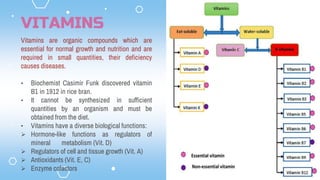
Vitamins are organic compounds which are
essential for normal growth and nutrition and are
required in small quantities, their deficiency
causes diseases.
• Biochemist Casimir Funk discovered vitamin
B1 in 1912 in rice bran.
• It cannot be synthesized in sufficient
quantities by an organism and must be
obtained from the diet.
• Vitamins have a diverse biological functions:
 Hormone-like functions as regulators of
mineral metabolism (Vit. D)
 Regulators of cell and tissue growth (Vit. A)
 Antioxidants (Vit. E, C)
 Enzyme cofactors
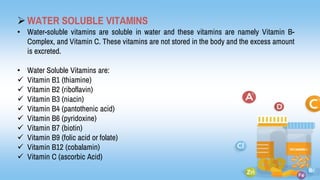
WATER SOLUBLE VITAMINS
• Water-soluble vitamins are soluble in water and these vitamins are namely Vitamin B-
Complex, and Vitamin C. These vitamins are not stored in the body and the excess amount
is excreted.
• Water Soluble Vitamins are:
 Vitamin B1 (thiamine)
 Vitamin B2 (riboflavin)
 Vitamin B3 (niacin)
 Vitamin B4 (pantothenic acid)
 Vitamin B6 (pyridoxine)
 Vitamin B7 (biotin)
 Vitamin B9 (folic acid or folate)
 Vitamin B12 (cobalamin)
 Vitamin C (ascorbic Acid)
 FAT-SOLUBLE VITAMINS
• Fat-soluble vitamins are those vitamins that are soluble in fats and these vitamins are
present in foods that contain fats. These vitamins are not soluble in water. There are four
vitamins in this group namely A, D, E and K.
• Fat-Soluble Vitamins are:
 Vitamin A
 Vitamin D
 Vitamin E
 Vitamin K
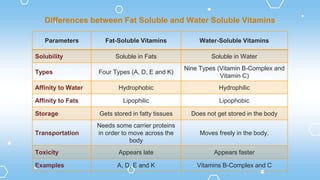
Parameters Fat-Soluble Vitamins Water-Soluble Vitamins
Solubility Soluble in Fats Soluble in Water
Types Four Types (A, D, E and K)
Nine Types (Vitamin B-Complex and
Vitamin C)
Affinity to Water Hydrophobic Hydrophilic
Affinity to Fats Lipophilic Lipophobic
Storage Gets stored in fatty tissues Does not get stored in the body
Transportation
Needs some carrier proteins
in order to move across the
body
Moves freely in the body.
Toxicity Appears late Appears faster
Examples A, D, E and K Vitamins B-Complex and C
Differences between Fat Soluble and Water Soluble Vitamins
ABOUT US
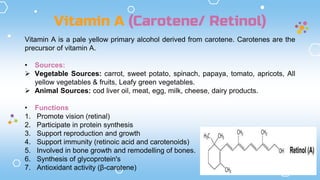
Vitamin A (Carotene/ Retinol)
Vitamin A is a pale yellow primary alcohol derived from carotene. Carotenes are the
precursor of vitamin A.
• Sources:
 Vegetable Sources: carrot, sweet potato, spinach, papaya, tomato, apricots, All
yellow vegetables & fruits, Leafy green vegetables.
 Animal Sources: cod liver oil, meat, egg, milk, cheese, dairy products.
• Functions
1. Promote vision (retinal)
2. Participate in protein synthesis
3. Support reproduction and growth
4. Support immunity (retinoic acid and carotenoids)
5. Involved in bone growth and remodelling of bones.
6. Synthesis of glycoprotein's
7. Antioxidant activity (β-carotene)
• Daily Requirements:
 Infants: 1500 IU
 Children: 2000-3000 IU
 Adult: 5000 IU
Children 1 to 3 years of age: 300 mg/d
Children 4 to 8 years of age: 400 mg/d
 Males & Females: 9 to 13 years of age: 600 mg/d
 14 to 18 years of age: 700mg/d for females & 900mg/d for males
• DEFICIENCY of Vitamin A
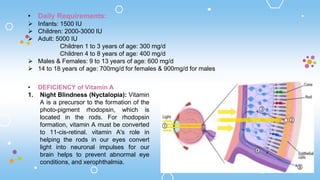
1. Night Blindness (Nyctalopia): Vitamin
A is a precursor to the formation of the
photo-pigment rhodopsin, which is
located in the rods. For rhodopsin
formation, vitamin A must be converted
to 11-cis-retinal. vitamin A's role in
helping the rods in our eyes convert
light into neuronal impulses for our
brain helps to prevent abnormal eye
conditions, and xerophthalmia.
2. Cell keratinization -Dry skin, scaly & rough Xeropthalmia (dryness of cornea & conjunctiva)
3. Abnormal skeletal development/maintenance
4. Growth retardation in children
5. Immune dysfunction
6. Kidney stone
7. Defects in the teeth and bone formation
8. Reproductive disorders
-In females: Increased abortions
-Neonates born dead/weak
Vitamin D is also called Calciferol, Cholecalciferol or sunshine vitamin.
It is a group of steroids chiefly occurring in animals but also in plants & yeast.
• Sources: Sunlight (sunbathing), various fish species (salmon, sardines, mackerel, tuna,
catfish), fish oil, cod liver, eggs, mushrooms, milk
• Daily Requirements:
 Infants & children: 400 IU
 Adults: 200 IU.
• Vitamin D Function Vit. D3 :cholecalciferol
1. Produced photo-chemically by the action of sunlight or ultraviolet light from the precursor
sterol 7-dehydrocholesterol.
2. Has a role in the handling of Phosphorous in serum & kidney.
3. Required for the development of bones & normal growth of the body.
4. It stimulates the transcription of mRNA for Ca transport.
5. Decrease the pH in the lower intestine, increasing calcium and phosphorus absorption.
6. Essential for the development of bones and normal growth of the body.
Vitamin D
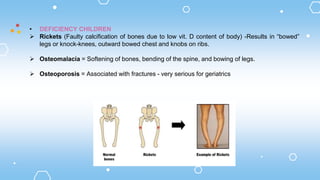
• DEFICIENCY CHILDREN
 Rickets (Faulty calcification of bones due to low vit. D content of body) -Results in “bowed”
legs or knock-knees, outward bowed chest and knobs on ribs.
 Osteomalacia = Softening of bones, bending of the spine, and bowing of legs.
 Osteoporosis = Associated with fractures - very serious for geriatrics
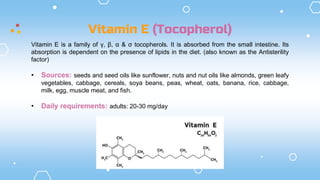
Vitamin E (Tocopherol)
Vitamin E is a family of γ, β, α & σ tocopherols. It is absorbed from the small intestine. Its
absorption is dependent on the presence of lipids in the diet. (also known as the Antisterility
factor)
• Sources: seeds and seed oils like sunflower, nuts and nut oils like almonds, green leafy
vegetables, cabbage, cereals, soya beans, peas, wheat, oats, banana, rice, cabbage,
milk, egg, muscle meat, and fish.
• Daily requirements: adults: 20-30 mg/day
• Vitamin E Functions
1. Act as Antioxidant: (Free radical scavenger )
2. Protects cell membranes/stabilization of cellular membrane
3. Protects LDL from oxidation
4. Protection of double bonds in polyunsaturated fatty acids
5. Works in conjunction with selenium
6. Nucleic acid and protein metabolism, protecting DNA
7. it protects the lungs tissue from damage by oxidants in the air
8. Acts as a cofactor in the e- transfer system between cytochromes b & c.
• Deficiency of Vitamin E
1. Erythrocyte haemolysis and haemolytic anaemia
2. Prolonged deficiency causes neuromuscular dysfunction; affects the spinal cord and the retina
3. Reproductive failure: Ovarian failure, Testes degeneration, Fetal resorption
4. Derangement of cell permeability: Brain necrosis, hepatic necrosis
5. Muscular lesions, Muscle weakness
6. Failure to growth
7. Hair fall, skin rashes
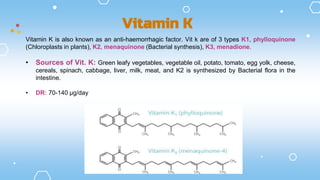
Vitamin K is also known as an anti-haemorrhagic factor. Vit k are of 3 types K1, phylloquinone
(Chloroplasts in plants), K2, menaquinone (Bacterial synthesis), K3, menadione.
• Sources of Vit. K: Green leafy vegetables, vegetable oil, potato, tomato, egg yolk, cheese,
cereals, spinach, cabbage, liver, milk, meat, and K2 is synthesized by Bacterial flora in the
intestine.
• DR: 70-140 µg/day
Vitamin K
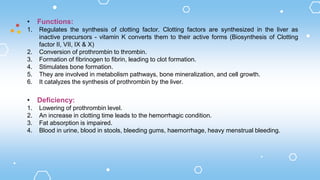
• Functions:
1. Regulates the synthesis of clotting factor. Clotting factors are synthesized in the liver as
inactive precursors - vitamin K converts them to their active forms (Biosynthesis of Clotting
factor II, VII, IX & X)
2. Conversion of prothrombin to thrombin.
3. Formation of fibrinogen to fibrin, leading to clot formation.
4. Stimulates bone formation.
5. They are involved in metabolism pathways, bone mineralization, and cell growth.
6. It catalyzes the synthesis of prothrombin by the liver.
• Deficiency:
1. Lowering of prothrombin level.
2. An increase in clotting time leads to the hemorrhagic condition.
3. Fat absorption is impaired.
4. Blood in urine, blood in stools, bleeding gums, haemorrhage, heavy menstrual bleeding.
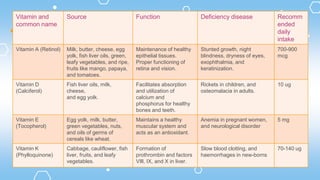
Vitamin and
common name
Source Function Deficiency disease Recomm
ended
daily
intake
Vitamin A (Retinol) Milk, butter, cheese, egg
yolk, fish liver oils, green,
leafy vegetables, and ripe,
fruits like mango, papaya,
and tomatoes.
Maintenance of healthy
epithelial tissues.
Proper functioning of
retina and vision.
Stunted growth, night
blindness, dryness of eyes,
exophthalmia, and
keratinization.
700-900
mcg
Vitamin D
(Calciferol)
Fish liver oils, milk,
cheese,
and egg yolk.
Facilitates absorption
and utilization of
calcium and
phosphorus for healthy
bones and teeth.
Rickets in children, and
osteomalacia in adults.
10 ug
Vitamin E
(Tocopherol)
Egg yolk, milk, butter,
green vegetables, nuts,
and oils of germs of
cereals like wheat.
Maintains a healthy
muscular system and
acts as an antioxidant.
Anemia in pregnant women,
and neurological disorder
5 mg
Vitamin K
(Phylloquinone)
Cabbage, cauliflower, fish
liver, fruits, and leafy
vegetables.
Formation of
prothrombin and factors
VIll, IX, and X in liver.
Slow blood clotting, and
haemorrhages in new-borns
70-140 ug
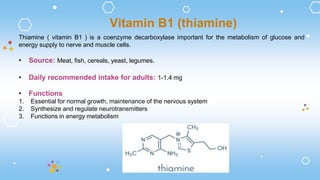
Thiamine ( vitamin B1 ) is a coenzyme decarboxylase important for the metabolism of glucose and
energy supply to nerve and muscle cells.
• Source: Meat, fish, cereals, yeast, legumes.
• Daily recommended intake for adults: 1-1.4 mg
• Functions
1. Essential for normal growth, maintenance of the nervous system
2. Synthesize and regulate neurotransmitters
3. Functions in energy metabolism
Vitamin B1 (thiamine)
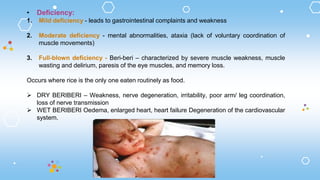
• Deficiency:
1. Mild deficiency - leads to gastrointestinal complaints and weakness
2. Moderate deficiency - mental abnormalities, ataxia (lack of voluntary coordination of
muscle movements)
3. Full-blown deficiency - Beri-beri – characterized by severe muscle weakness, muscle
wasting and delirium, paresis of the eye muscles, and memory loss.
Occurs where rice is the only one eaten routinely as food.
 DRY BERIBERI – Weakness, nerve degeneration, irritability, poor arm/ leg coordination,
loss of nerve transmission
 WET BERIBERI Oedema, enlarged heart, heart failure Degeneration of the cardiovascular
system.
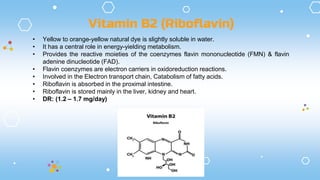
Vitamin B2 (Riboflavin)
• Yellow to orange-yellow natural dye is slightly soluble in water.
• It has a central role in energy-yielding metabolism.
• Provides the reactive moieties of the coenzymes flavin mononucleotide (FMN) & flavin
adenine dinucleotide (FAD).
• Flavin coenzymes are electron carriers in oxidoreduction reactions.
• Involved in the Electron transport chain, Catabolism of fatty acids.
• Riboflavin is absorbed in the proximal intestine.
• Riboflavin is stored mainly in the liver, kidney and heart.
• DR: (1.2 – 1.7 mg/day)
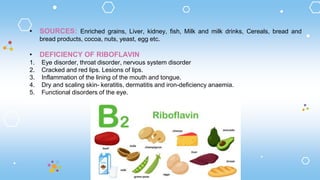
• SOURCES: Enriched grains, Liver, kidney, fish, Milk and milk drinks, Cereals, bread and
bread products, cocoa, nuts, yeast, egg etc.
• DEFICIENCY OF RIBOFLAVIN
1. Eye disorder, throat disorder, nervous system disorder
2. Cracked and red lips. Lesions of lips.
3. Inflammation of the lining of the mouth and tongue.
4. Dry and scaling skin- keratitis, dermatitis and iron-deficiency anaemia.
5. Functional disorders of the eye.
Vitamin B3 - Niacin
• Active form – nicotinic acid and nicotinamid.
• NAD & NADP → key components of the metabolic
pathways of carbohydrates, lipids, and amino acids.
• NAD and NADP participate in 200+ reactions in the body
(Nicotinamide Adenine Dinucleotide)
• Nicotinic acid prevents the release of fatty acids from
adipose tissue and decreases lipoproteins VLDL, IDL &
LDL.
• It is involved in the electron transfer chain.
• A high dose of niacin dilates blood vessels.
• Needed for general metabolism, health of skin, nervous &
digestive system.
• Vitamins B3, B5, B6 and biotin are thought to promote
healthy hair and prevent hair loss.
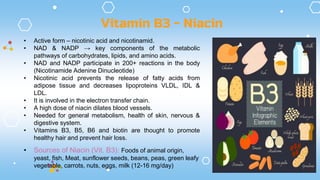
• Sources of Niacin (Vit. B3): Foods of animal origin,
yeast, fish, Meat, sunflower seeds, beans, peas, green leafy
vegetable, carrots, nuts, eggs, milk (12-16 mg/day)
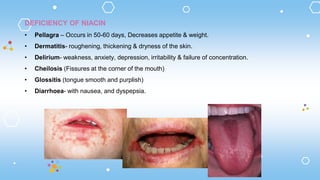
DEFICIENCY OF NIACIN
• Pellagra – Occurs in 50-60 days, Decreases appetite & weight.
• Dermatitis- roughening, thickening & dryness of the skin.
• Delirium- weakness, anxiety, depression, irritability & failure of concentration.
• Cheilosis (Fissures at the corner of the mouth)
• Glossitis (tongue smooth and purplish)
• Diarrhoea- with nausea, and dyspepsia.
FUNCTIONS
1. Component of Coenzyme-A, involved in TCA cycle.
2. essential for the growth of infants & children.
3. Essential for metabolism of Carbohydrate, fat, and protein
SOURCES: Widespread in leafy vegetables & fruits • Meat, liver, egg, yeast, Mushrooms, milk,
Whole grains, wheat germ ( 5-10 mg/day)
DEFICIENCY
1. Inadequate growth, loss of hair.
2. Burning foot syndrome, fatigue, headache, sleep disturbance, nausea, abdominal distress,
irritability.
3. Anemia frequently occurs in pantothenic acid deficiency.
Vitamin B5 (Pantothenic Acid)
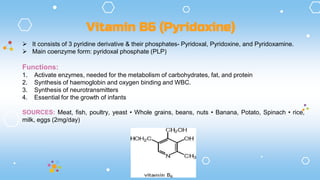
 It consists of 3 pyridine derivative & their phosphates- Pyridoxal, Pyridoxine, and Pyridoxamine.
 Main coenzyme form: pyridoxal phosphate (PLP)
Functions:
1. Activate enzymes, needed for the metabolism of carbohydrates, fat, and protein
2. Synthesis of haemoglobin and oxygen binding and WBC.
3. Synthesis of neurotransmitters
4. Essential for the growth of infants
SOURCES: Meat, fish, poultry, yeast • Whole grains, beans, nuts • Banana, Potato, Spinach • rice,
milk, eggs (2mg/day)
Vitamin B6 (Pyridoxine)
Deficiency of Vitamin B6
1. Microcytic hypochromic Anemia
2. Impaired growth
3. Convulsion, depression, confusion
4. Reduce immune response
5. Peripheral nerve damage
6. Oedema of connective tissue layer of skin.
7. Skin: Dermatitis (skin inflammation), Stomatitis (inflammation of the mucous lining of any of
the structures in the mouth), Glossitis (inflammation or infection of the tongue ).
Functions
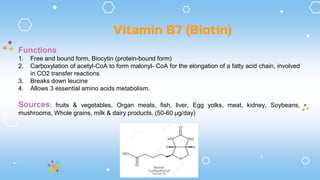
1. Free and bound form, Biocytin (protein-bound form)
2. Carboxylation of acetyl-CoA to form malonyl- CoA for the elongation of a fatty acid chain, involved
in CO2 transfer reactions
3. Breaks down leucine
4. Allows 3 essential amino acids metabolism.
Sources: fruits & vegetables, Organ meats, fish, liver, Egg yolks, meat, kidney, Soybeans,
mushrooms, Whole grains, milk & dairy products. (50-60 µg/day)
Vitamin B7 (Biotin)
DEFICIENCY OF BIOTIN
• High intake of raw egg white diet (Avidon combines with biotin, preventing its absorption.) Anti-
egg white injury factor.
• Egg white injury
• Signs & symptoms: skin rash, hair loss, convulsion, muscle pain
• Neurological disorders, depression
• Impaired growth in children, Dermatitis, nausea, anaemia
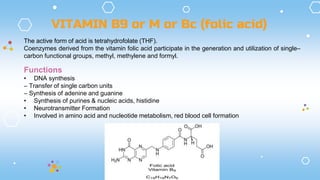
The active form of acid is tetrahydrofolate (THF).
Coenzymes derived from the vitamin folic acid participate in the generation and utilization of single–
carbon functional groups, methyl, methylene and formyl.
VITAMIN B9 or M or Bc (folic acid)
Functions
• DNA synthesis
– Transfer of single carbon units
– Synthesis of adenine and guanine
• Synthesis of purines & nucleic acids, histidine
• Neurotransmitter Formation
• Involved in amino acid and nucleotide metabolism, red blood cell formation
Sources: Shellfish, liver, kidney, milk and milk products, yeast, bread, green leafy vegetables,
citrus fruit, whole grains.
Deficiency
• Megaloblastic anaemia
• Neural tube defects
• Deficiency results in elevated levels of homocysteine.
• Deficiency in pregnant women can lead to birth defects.
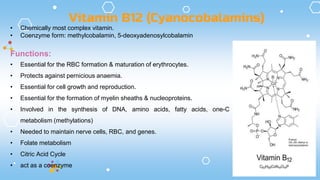
• Chemically most complex vitamin.
• Coenzyme form: methylcobalamin, 5-deoxyadenosylcobalamin
Functions:
• Essential for the RBC formation & maturation of erythrocytes.
• Protects against pernicious anaemia.
• Essential for cell growth and reproduction.
• Essential for the formation of myelin sheaths & nucleoproteins.
• Involved in the synthesis of DNA, amino acids, fatty acids, one-C
metabolism (methylations)
• Needed to maintain nerve cells, RBC, and genes.
• Folate metabolism
• Citric Acid Cycle
• act as a coenzyme
Vitamin B12 (Cyanocobalamins)
Sources: Fish and shellfish, meat (especially liver), poultry, seafood, eggs, grains, milk, and
milk products, synthesized by bacteria, fungi and algae, stored primarily in the liver (3µg/day)
Deficiency of vitamin b-12
• Pernicious Anaemia
• Nerve degeneration, weakness
• Looks like folate deficiency, usually due to decreased absorption ability
• Achlorhydria especially in elderly
VITA
MIN
C
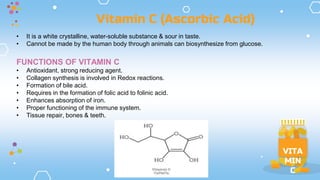
• It is a white crystalline, water-soluble substance & sour in taste.
• Cannot be made by the human body through animals can biosynthesize from glucose.
FUNCTIONS OF VITAMIN C
• Antioxidant, strong reducing agent.
• Collagen synthesis is involved in Redox reactions.
• Formation of bile acid.
• Requires in the formation of folic acid to folinic acid.
• Enhances absorption of iron.
• Proper functioning of the immune system.
• Tissue repair, bones & teeth.
Vitamin C (Ascorbic Acid)
Sources: Citrus fruits, amla, lemon, grapes, tomatoes, berries, dark green leafy
vegetables, mangos, melons, degraded by cooking
DR: 75-90 mg/day
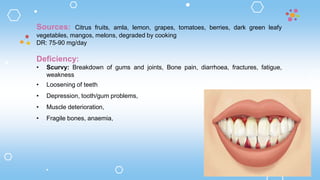
Deficiency:
• Scurvy: Breakdown of gums and joints, Bone pain, diarrhoea, fractures, fatigue,
weakness
• Loosening of teeth
• Depression, tooth/gum problems,
• Muscle deterioration,
• Fragile bones, anaemia,
THANK
YOU!

Vitamins

  • 1.
    VITAMINS Prepared by: Ms. ShivaneeVyas Assistant Professor
  • 2.
    VITAMINS Vitamins are organiccompounds which are essential for normal growth and nutrition and are required in small quantities, their deficiency causes diseases. • Biochemist Casimir Funk discovered vitamin B1 in 1912 in rice bran. • It cannot be synthesized in sufficient quantities by an organism and must be obtained from the diet. • Vitamins have a diverse biological functions:  Hormone-like functions as regulators of mineral metabolism (Vit. D)  Regulators of cell and tissue growth (Vit. A)  Antioxidants (Vit. E, C)  Enzyme cofactors
  • 3.
    WATER SOLUBLE VITAMINS •Water-soluble vitamins are soluble in water and these vitamins are namely Vitamin B- Complex, and Vitamin C. These vitamins are not stored in the body and the excess amount is excreted. • Water Soluble Vitamins are:  Vitamin B1 (thiamine)  Vitamin B2 (riboflavin)  Vitamin B3 (niacin)  Vitamin B4 (pantothenic acid)  Vitamin B6 (pyridoxine)  Vitamin B7 (biotin)  Vitamin B9 (folic acid or folate)  Vitamin B12 (cobalamin)  Vitamin C (ascorbic Acid)
  • 4.
     FAT-SOLUBLE VITAMINS •Fat-soluble vitamins are those vitamins that are soluble in fats and these vitamins are present in foods that contain fats. These vitamins are not soluble in water. There are four vitamins in this group namely A, D, E and K. • Fat-Soluble Vitamins are:  Vitamin A  Vitamin D  Vitamin E  Vitamin K
  • 5.
    Parameters Fat-Soluble VitaminsWater-Soluble Vitamins Solubility Soluble in Fats Soluble in Water Types Four Types (A, D, E and K) Nine Types (Vitamin B-Complex and Vitamin C) Affinity to Water Hydrophobic Hydrophilic Affinity to Fats Lipophilic Lipophobic Storage Gets stored in fatty tissues Does not get stored in the body Transportation Needs some carrier proteins in order to move across the body Moves freely in the body. Toxicity Appears late Appears faster Examples A, D, E and K Vitamins B-Complex and C Differences between Fat Soluble and Water Soluble Vitamins
  • 6.
  • 7.
    Vitamin A (Carotene/Retinol) Vitamin A is a pale yellow primary alcohol derived from carotene. Carotenes are the precursor of vitamin A. • Sources:  Vegetable Sources: carrot, sweet potato, spinach, papaya, tomato, apricots, All yellow vegetables & fruits, Leafy green vegetables.  Animal Sources: cod liver oil, meat, egg, milk, cheese, dairy products. • Functions 1. Promote vision (retinal) 2. Participate in protein synthesis 3. Support reproduction and growth 4. Support immunity (retinoic acid and carotenoids) 5. Involved in bone growth and remodelling of bones. 6. Synthesis of glycoprotein's 7. Antioxidant activity (β-carotene)
  • 8.
    • Daily Requirements: Infants: 1500 IU  Children: 2000-3000 IU  Adult: 5000 IU Children 1 to 3 years of age: 300 mg/d Children 4 to 8 years of age: 400 mg/d  Males & Females: 9 to 13 years of age: 600 mg/d  14 to 18 years of age: 700mg/d for females & 900mg/d for males • DEFICIENCY of Vitamin A 1. Night Blindness (Nyctalopia): Vitamin A is a precursor to the formation of the photo-pigment rhodopsin, which is located in the rods. For rhodopsin formation, vitamin A must be converted to 11-cis-retinal. vitamin A's role in helping the rods in our eyes convert light into neuronal impulses for our brain helps to prevent abnormal eye conditions, and xerophthalmia.
  • 9.
    2. Cell keratinization-Dry skin, scaly & rough Xeropthalmia (dryness of cornea & conjunctiva) 3. Abnormal skeletal development/maintenance 4. Growth retardation in children 5. Immune dysfunction 6. Kidney stone 7. Defects in the teeth and bone formation 8. Reproductive disorders -In females: Increased abortions -Neonates born dead/weak
  • 10.
    Vitamin D isalso called Calciferol, Cholecalciferol or sunshine vitamin. It is a group of steroids chiefly occurring in animals but also in plants & yeast. • Sources: Sunlight (sunbathing), various fish species (salmon, sardines, mackerel, tuna, catfish), fish oil, cod liver, eggs, mushrooms, milk • Daily Requirements:  Infants & children: 400 IU  Adults: 200 IU. • Vitamin D Function Vit. D3 :cholecalciferol 1. Produced photo-chemically by the action of sunlight or ultraviolet light from the precursor sterol 7-dehydrocholesterol. 2. Has a role in the handling of Phosphorous in serum & kidney. 3. Required for the development of bones & normal growth of the body. 4. It stimulates the transcription of mRNA for Ca transport. 5. Decrease the pH in the lower intestine, increasing calcium and phosphorus absorption. 6. Essential for the development of bones and normal growth of the body. Vitamin D
  • 11.
    • DEFICIENCY CHILDREN Rickets (Faulty calcification of bones due to low vit. D content of body) -Results in “bowed” legs or knock-knees, outward bowed chest and knobs on ribs.  Osteomalacia = Softening of bones, bending of the spine, and bowing of legs.  Osteoporosis = Associated with fractures - very serious for geriatrics
  • 12.
    Vitamin E (Tocopherol) VitaminE is a family of γ, β, α & σ tocopherols. It is absorbed from the small intestine. Its absorption is dependent on the presence of lipids in the diet. (also known as the Antisterility factor) • Sources: seeds and seed oils like sunflower, nuts and nut oils like almonds, green leafy vegetables, cabbage, cereals, soya beans, peas, wheat, oats, banana, rice, cabbage, milk, egg, muscle meat, and fish. • Daily requirements: adults: 20-30 mg/day
  • 13.
    • Vitamin EFunctions 1. Act as Antioxidant: (Free radical scavenger ) 2. Protects cell membranes/stabilization of cellular membrane 3. Protects LDL from oxidation 4. Protection of double bonds in polyunsaturated fatty acids 5. Works in conjunction with selenium 6. Nucleic acid and protein metabolism, protecting DNA 7. it protects the lungs tissue from damage by oxidants in the air 8. Acts as a cofactor in the e- transfer system between cytochromes b & c. • Deficiency of Vitamin E 1. Erythrocyte haemolysis and haemolytic anaemia 2. Prolonged deficiency causes neuromuscular dysfunction; affects the spinal cord and the retina 3. Reproductive failure: Ovarian failure, Testes degeneration, Fetal resorption 4. Derangement of cell permeability: Brain necrosis, hepatic necrosis 5. Muscular lesions, Muscle weakness 6. Failure to growth 7. Hair fall, skin rashes
  • 14.
    Vitamin K isalso known as an anti-haemorrhagic factor. Vit k are of 3 types K1, phylloquinone (Chloroplasts in plants), K2, menaquinone (Bacterial synthesis), K3, menadione. • Sources of Vit. K: Green leafy vegetables, vegetable oil, potato, tomato, egg yolk, cheese, cereals, spinach, cabbage, liver, milk, meat, and K2 is synthesized by Bacterial flora in the intestine. • DR: 70-140 µg/day Vitamin K
  • 15.
    • Functions: 1. Regulatesthe synthesis of clotting factor. Clotting factors are synthesized in the liver as inactive precursors - vitamin K converts them to their active forms (Biosynthesis of Clotting factor II, VII, IX & X) 2. Conversion of prothrombin to thrombin. 3. Formation of fibrinogen to fibrin, leading to clot formation. 4. Stimulates bone formation. 5. They are involved in metabolism pathways, bone mineralization, and cell growth. 6. It catalyzes the synthesis of prothrombin by the liver. • Deficiency: 1. Lowering of prothrombin level. 2. An increase in clotting time leads to the hemorrhagic condition. 3. Fat absorption is impaired. 4. Blood in urine, blood in stools, bleeding gums, haemorrhage, heavy menstrual bleeding.
  • 16.
    Vitamin and common name SourceFunction Deficiency disease Recomm ended daily intake Vitamin A (Retinol) Milk, butter, cheese, egg yolk, fish liver oils, green, leafy vegetables, and ripe, fruits like mango, papaya, and tomatoes. Maintenance of healthy epithelial tissues. Proper functioning of retina and vision. Stunted growth, night blindness, dryness of eyes, exophthalmia, and keratinization. 700-900 mcg Vitamin D (Calciferol) Fish liver oils, milk, cheese, and egg yolk. Facilitates absorption and utilization of calcium and phosphorus for healthy bones and teeth. Rickets in children, and osteomalacia in adults. 10 ug Vitamin E (Tocopherol) Egg yolk, milk, butter, green vegetables, nuts, and oils of germs of cereals like wheat. Maintains a healthy muscular system and acts as an antioxidant. Anemia in pregnant women, and neurological disorder 5 mg Vitamin K (Phylloquinone) Cabbage, cauliflower, fish liver, fruits, and leafy vegetables. Formation of prothrombin and factors VIll, IX, and X in liver. Slow blood clotting, and haemorrhages in new-borns 70-140 ug
  • 17.
    Thiamine ( vitaminB1 ) is a coenzyme decarboxylase important for the metabolism of glucose and energy supply to nerve and muscle cells. • Source: Meat, fish, cereals, yeast, legumes. • Daily recommended intake for adults: 1-1.4 mg • Functions 1. Essential for normal growth, maintenance of the nervous system 2. Synthesize and regulate neurotransmitters 3. Functions in energy metabolism Vitamin B1 (thiamine)
  • 18.
    • Deficiency: 1. Milddeficiency - leads to gastrointestinal complaints and weakness 2. Moderate deficiency - mental abnormalities, ataxia (lack of voluntary coordination of muscle movements) 3. Full-blown deficiency - Beri-beri – characterized by severe muscle weakness, muscle wasting and delirium, paresis of the eye muscles, and memory loss. Occurs where rice is the only one eaten routinely as food.  DRY BERIBERI – Weakness, nerve degeneration, irritability, poor arm/ leg coordination, loss of nerve transmission  WET BERIBERI Oedema, enlarged heart, heart failure Degeneration of the cardiovascular system.
  • 19.
    Vitamin B2 (Riboflavin) •Yellow to orange-yellow natural dye is slightly soluble in water. • It has a central role in energy-yielding metabolism. • Provides the reactive moieties of the coenzymes flavin mononucleotide (FMN) & flavin adenine dinucleotide (FAD). • Flavin coenzymes are electron carriers in oxidoreduction reactions. • Involved in the Electron transport chain, Catabolism of fatty acids. • Riboflavin is absorbed in the proximal intestine. • Riboflavin is stored mainly in the liver, kidney and heart. • DR: (1.2 – 1.7 mg/day)
  • 20.
    • SOURCES: Enrichedgrains, Liver, kidney, fish, Milk and milk drinks, Cereals, bread and bread products, cocoa, nuts, yeast, egg etc. • DEFICIENCY OF RIBOFLAVIN 1. Eye disorder, throat disorder, nervous system disorder 2. Cracked and red lips. Lesions of lips. 3. Inflammation of the lining of the mouth and tongue. 4. Dry and scaling skin- keratitis, dermatitis and iron-deficiency anaemia. 5. Functional disorders of the eye.
  • 21.
    Vitamin B3 -Niacin • Active form – nicotinic acid and nicotinamid. • NAD & NADP → key components of the metabolic pathways of carbohydrates, lipids, and amino acids. • NAD and NADP participate in 200+ reactions in the body (Nicotinamide Adenine Dinucleotide) • Nicotinic acid prevents the release of fatty acids from adipose tissue and decreases lipoproteins VLDL, IDL & LDL. • It is involved in the electron transfer chain. • A high dose of niacin dilates blood vessels. • Needed for general metabolism, health of skin, nervous & digestive system. • Vitamins B3, B5, B6 and biotin are thought to promote healthy hair and prevent hair loss. • Sources of Niacin (Vit. B3): Foods of animal origin, yeast, fish, Meat, sunflower seeds, beans, peas, green leafy vegetable, carrots, nuts, eggs, milk (12-16 mg/day)
  • 22.
    DEFICIENCY OF NIACIN •Pellagra – Occurs in 50-60 days, Decreases appetite & weight. • Dermatitis- roughening, thickening & dryness of the skin. • Delirium- weakness, anxiety, depression, irritability & failure of concentration. • Cheilosis (Fissures at the corner of the mouth) • Glossitis (tongue smooth and purplish) • Diarrhoea- with nausea, and dyspepsia.
  • 23.
    FUNCTIONS 1. Component ofCoenzyme-A, involved in TCA cycle. 2. essential for the growth of infants & children. 3. Essential for metabolism of Carbohydrate, fat, and protein SOURCES: Widespread in leafy vegetables & fruits • Meat, liver, egg, yeast, Mushrooms, milk, Whole grains, wheat germ ( 5-10 mg/day) DEFICIENCY 1. Inadequate growth, loss of hair. 2. Burning foot syndrome, fatigue, headache, sleep disturbance, nausea, abdominal distress, irritability. 3. Anemia frequently occurs in pantothenic acid deficiency. Vitamin B5 (Pantothenic Acid)
  • 24.
     It consistsof 3 pyridine derivative & their phosphates- Pyridoxal, Pyridoxine, and Pyridoxamine.  Main coenzyme form: pyridoxal phosphate (PLP) Functions: 1. Activate enzymes, needed for the metabolism of carbohydrates, fat, and protein 2. Synthesis of haemoglobin and oxygen binding and WBC. 3. Synthesis of neurotransmitters 4. Essential for the growth of infants SOURCES: Meat, fish, poultry, yeast • Whole grains, beans, nuts • Banana, Potato, Spinach • rice, milk, eggs (2mg/day) Vitamin B6 (Pyridoxine)
  • 25.
    Deficiency of VitaminB6 1. Microcytic hypochromic Anemia 2. Impaired growth 3. Convulsion, depression, confusion 4. Reduce immune response 5. Peripheral nerve damage 6. Oedema of connective tissue layer of skin. 7. Skin: Dermatitis (skin inflammation), Stomatitis (inflammation of the mucous lining of any of the structures in the mouth), Glossitis (inflammation or infection of the tongue ).
  • 26.
    Functions 1. Free andbound form, Biocytin (protein-bound form) 2. Carboxylation of acetyl-CoA to form malonyl- CoA for the elongation of a fatty acid chain, involved in CO2 transfer reactions 3. Breaks down leucine 4. Allows 3 essential amino acids metabolism. Sources: fruits & vegetables, Organ meats, fish, liver, Egg yolks, meat, kidney, Soybeans, mushrooms, Whole grains, milk & dairy products. (50-60 µg/day) Vitamin B7 (Biotin)
  • 27.
    DEFICIENCY OF BIOTIN •High intake of raw egg white diet (Avidon combines with biotin, preventing its absorption.) Anti- egg white injury factor. • Egg white injury • Signs & symptoms: skin rash, hair loss, convulsion, muscle pain • Neurological disorders, depression • Impaired growth in children, Dermatitis, nausea, anaemia
  • 28.
    The active formof acid is tetrahydrofolate (THF). Coenzymes derived from the vitamin folic acid participate in the generation and utilization of single– carbon functional groups, methyl, methylene and formyl. VITAMIN B9 or M or Bc (folic acid) Functions • DNA synthesis – Transfer of single carbon units – Synthesis of adenine and guanine • Synthesis of purines & nucleic acids, histidine • Neurotransmitter Formation • Involved in amino acid and nucleotide metabolism, red blood cell formation
  • 29.
    Sources: Shellfish, liver,kidney, milk and milk products, yeast, bread, green leafy vegetables, citrus fruit, whole grains. Deficiency • Megaloblastic anaemia • Neural tube defects • Deficiency results in elevated levels of homocysteine. • Deficiency in pregnant women can lead to birth defects.
  • 30.
    • Chemically mostcomplex vitamin. • Coenzyme form: methylcobalamin, 5-deoxyadenosylcobalamin Functions: • Essential for the RBC formation & maturation of erythrocytes. • Protects against pernicious anaemia. • Essential for cell growth and reproduction. • Essential for the formation of myelin sheaths & nucleoproteins. • Involved in the synthesis of DNA, amino acids, fatty acids, one-C metabolism (methylations) • Needed to maintain nerve cells, RBC, and genes. • Folate metabolism • Citric Acid Cycle • act as a coenzyme Vitamin B12 (Cyanocobalamins)
  • 31.
    Sources: Fish andshellfish, meat (especially liver), poultry, seafood, eggs, grains, milk, and milk products, synthesized by bacteria, fungi and algae, stored primarily in the liver (3µg/day) Deficiency of vitamin b-12 • Pernicious Anaemia • Nerve degeneration, weakness • Looks like folate deficiency, usually due to decreased absorption ability • Achlorhydria especially in elderly
  • 32.
    VITA MIN C • It isa white crystalline, water-soluble substance & sour in taste. • Cannot be made by the human body through animals can biosynthesize from glucose. FUNCTIONS OF VITAMIN C • Antioxidant, strong reducing agent. • Collagen synthesis is involved in Redox reactions. • Formation of bile acid. • Requires in the formation of folic acid to folinic acid. • Enhances absorption of iron. • Proper functioning of the immune system. • Tissue repair, bones & teeth. Vitamin C (Ascorbic Acid)
  • 33.
    Sources: Citrus fruits,amla, lemon, grapes, tomatoes, berries, dark green leafy vegetables, mangos, melons, degraded by cooking DR: 75-90 mg/day Deficiency: • Scurvy: Breakdown of gums and joints, Bone pain, diarrhoea, fractures, fatigue, weakness • Loosening of teeth • Depression, tooth/gum problems, • Muscle deterioration, • Fragile bones, anaemia,
  • 34.