OH 1
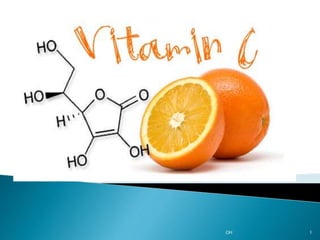
 Vitamin C is a water-soluble vitamin that is
necessary for normal growth and
development.
 Water-soluble vitamins dissolve in water.
Leftover amounts of the vitamin leave the
body through the urine. That means you need
a continuous supply of such vitamins in your
diet.
 water-soluble and fat-soluble.
OH 2
Vitamin C is needed for the growth and
repair of tissues in all parts of your body
Vitamin C is one of many
antioxidants
Vitamin C has been a popular
remedy for the common cold.
OH 3
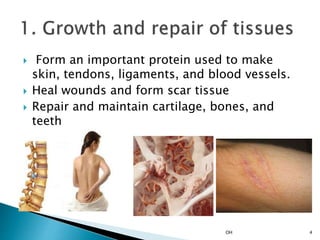
 Form an important protein used to make
skin, tendons, ligaments, and blood vessels.
 Heal wounds and form scar tissue
 Repair and maintain cartilage, bones, and
teeth
OH 4
OH 5
antioxidant
s
OH 6
OH 7
•vitamin C supplements
or vitamin C-rich foods
do not reduce the risk of
getting the common
cold.
• slightly shorter colds or
somewhat milder
symptoms.
OH 8
The body is not able to make vitamin C on
its own, and it does not store vitamin C. It is
therefore important to include plenty of
vitamin C-containing foods in your daily diet.
OH 9
OH 10
OH 11
 Cantaloupe
 Citrus fruits and
juices, such as orange
and grapefruit
 Kiwi fruit
 Mango
 Papaya
 Pineapple
 Strawberries,
raspberries,
blueberries,
cranberries
 Watermelon
 Broccoli, cauliflower
 Green and red
peppers
 Cabbage, turnip
greens, and other
leafy greens
 Sweet and white
potatoes
 Tomatoes and tomato
juice
 Winter squash
OH 12
grape-fruit
orange
lemon
OH 13
Papaya
Pineapple
Kiwi-fruit
mango
14
blueberry
Cherry
strawberry
OH 15
OH 16
Cereals Beverages
OH 17
 Cooking vitamin C-rich foods or storing them
for a long period of time can reduce the
vitamin C content. Microwaving and steaming
vitamin C-rich foods may reduce cooking
losses. The best food sources of vitamin C
are uncooked or raw fruits and vegetables.
OH 18
 Scurvy is an avitaminosis resulting from lack
of vitamin C
 Symptoms:
Adults: gingivitis, bleeding tooth; under
periosteal hematoma, petechiae, increased
thickening of the hair follicle. If left untreated
can be fatal due to massive bleeding or
ischemic cardiomyopathy.
OH 19
 Babies: usually due to artificial diet, bleeding
under the periosteum, especially in the lower
limbs; easy bleeding under the skin; wound
healing
OH 20
OH 21
 Vitamin C is a less accrued but if high doses
for a long time, can create oxalate stones
(oxalic acid from dehydroascorbic converted),
or urate stones, sometimes on both stones;
come loose, digestive disorders
OH 22
OH 23
 The Recommended Dietary Allowance (RDA) for
vitamins reflects how much of each vitamin most
people should get each day. The RDA for
vitamins may be used as goals for each person.
 How much of each vitamin you need depends on
your age and gender. Other factors, such as
pregnancy and illnesses, are also important.
 The best way to get the daily requirement of
essential vitamins, including vitamin C, is to eat a
balanced diet that contains a variety of foods.
OH 24
 Enfants:
 0 - 6 months: 40*
milligrams/day
(mg/day)
 7 - 12 months: 50*
mg/day
OH 25
 Children
 1 - 3 years: 15 mg/day
 4 - 8 years: 25 mg/day
 9 - 13 years: 45
mg/day
OH 26
Adolescents
 Girls 14 - 18 years: 65
mg/day
 Pregnant teens: 80
mg/day
 Breastfeeding teens:
115 mg/day
 Boys 14 - 18 years: 75
mg/day
OH 27
 Adults
 Men age 19 and older:
90 mg/day
 Women age 19 year
and older: 75 mg/day
 Pregnant women: 85
mg/day
 Breastfeeding women:
120 mg/day
OH 28
 Prevention and treatment of scurvy, the
bleeding caused by lack of vitamin C,
increases resistance to infections, poisoning,
fatigue, pregnancy, anemia, allergies, drug
addicts alcoholics ...
OH 29
 Take 0.2 to 0.5 g / day (not to exceed 1 g /
day)
 Children dose half this dose, should be
divided into several times a day.
OH 30
 Relatively large doses of ascorbic acid may
cause indigestion, particularly when taken on
an empty stomach.
 When taken in large doses, ascorbic acid
causes diarrhea in healthy subjects
 With the higher doses, toxic manifestations
were observed in five adults and four infants.
The signs and symptoms in adults were
nausea, vomiting, diarrhea, flushing of the
face, headache, fatigue and disturbed sleep
OH 31
OH 32
 effervescent tablet
 tablets suck
 solution for injection
OH 33
Chemical structure
 Vitamin B12, vitamin
B12 or vitamin B-12,
also called cobalamin,
is a water-
soluble vitamin with a
key role in the normal
functioning of
the brain and nervous
system, and for the
formation of blood.
OH 34
 Vitamin B12 plays several important roles in
keeping our cardiovascular system on track
OH 35
 A second important role for B12 in
cardiovascular support involves prevention of
excessive homocysteine build-up. A long list
of cardiovascular diseases have been
associated with excessive accumulation of
homocysteine in the bloodstream, including
coronary heart disease, peripheral vascular
disease, and stroke. Vitamin B12 helps
normalize levels of homocysteine in the blood
by allowing conversion of homocysteine to
methionine
OH 36
OH 37
 Vitamin B12 is a
necessary co-factor for
the production of DNA,
the genetic material
that acts as the
backbone of all life.
This process requires
folate and vitamin B6
as well, and
disruptions of any of
these nutrients can
lead to problems.

 The diagnosis of vitamin
B12 deficiency is often
dependent on problems
with DNA production. When
vitamin B12 is low, normally
rapidly dividing blood cells
are not able to effectively
reproduce their DNA,
leading to abnormally big
cells. This phenomenon,
called macrocytosis, is
often the first way doctors
suspect problems with the
vitamin.
OH 38
 As described earlier in
the Cardiovascular
Support section, one
role that B12 plays is
maintenance of
hemoglobin in red
blood cells to allow
successful transport of
oxygen. This process is
especially important in
brain health.
OH 39
 One such place is the brain and nervous
system, where movement of methyl groups is
a key process. Some of the nervous system
messengers (neurotransmitters) cannot be
produced without the help of enzymes called
methyl-transferases, and these enzymes in
turn cannot be produced without the
availability of methyl groups. This area of
methyl metabolism is another key way in
which vitamin B12 plays a major role in the
health of our brain and nervous system.
OH 40
OH 41
 While mentioned earlier, it's important to
underscore the role of B12 in support of
oxygen-based energy production (called
aerobic energy). At the heart of this process
is a metabolic cycle called the citric acid cycle
and included within this cycle is a molecule
called succinyl-coA. Since vitamin B12 is
important for maintaining proper supplies of
succinyl-coA in the citric acid cycle, it is
important for supporting all aerobic energy
metabolism.
OH 42
 Still under debate by researchers is the exact role of B12 in
support of bone health. On the one hand, B12 deficiency
appears to be associated with increased risk of
osteoporosis. This connection involves the positive role of
B12 (in several of its cobalamin forms) in supporting the
activity of the osteoblast (bone-forming) cells. At the same
time, B12 also appears to help regulate activity of tumor
necrosis factor (TNF). TNF overactivity can result in too
much bone breakdown and remodeling by a second type
of bone cells called osteoclasts. Too much osteoclast
activity—regardless of the reason for its occurrence—is
also associated with increased risk of osteoporosis.
Despite these logical connections between B12 deficiency
and osteoporosis risk, however, actual research findings
are inconsistent in making the B12 connection to bone
status.
OH 43
OH 44
 The best sources of Vitamin B12 include: eggs,
milk, cheese, milk products, meat, fish,
shellfish and poultry. Some soy and rice
beverages as well as soy based meat
substitutes are fortified with vitamin B12.
OH 45
OH 46
Table 1: Recommended Dietary Allowances (RDAs)
for Vitamin B12 [5]
Age Male Female
Pregnanc
y Lactation
0–6
months*
0.4 mcg 0.4 mcg
7–12
months*
0.5 mcg 0.5 mcg
1–3 years 0.9 mcg 0.9 mcg
4–8 years 1.2 mcg 1.2 mcg
9–13
years
1.8 mcg 1.8 mcg
14+
years
2.4 mcg 2.4 mcg 2.6 mcg 2.8 mcg
OH 47
Symptoms of Anemia
 Anaemia caused by a
lack of vitamin B12 can
result in symptoms
which include:
 Extreme tiredness or
fatigue
 A lack of energy or
lethargy
 Being out of breath
 Feeling faint
 Headache
 Ringing in
the ears ( tinnitus)
 Lack of appetite
OH 48
 Yellowing of the skin
 Sore, red tongue
 Mouth ulcers
 Changes or loss of some
sense of touch
 Feeling less pain
 Walking problems
 Vision problems
 Mood changes,
irritability, depression or
psychosis
 Symptoms of dementia
OH 49
OH 50
 Blood tests and examination of blood cells under the
microscope assess haemoglobin levels, the size of
red blood cells and the level of vitamin B12 in the
blood. The levels of folate are also usually checked
for the related condition folate deficiency anaemia.
Once the diagnosis is confirmed, further tests may be
carried out to try to find out what's causing the
anaemia.
A referral may be made to a specialist, such as a
haematologist for blood conditions, a
gastroenterologist for digestive disorders or a
dietitian for advice on eating food containing more
vitamin B12.
OH 51
OH 52
 Pernicious anemia,
anemia after gastric
resection or hookworm
anemia.
 The inflammation,
nerve pain.
OH 53
 Unexplained anemia.
 Hypersensitivity to Vitamin B12
 Cancers.
OH 54
OH 55
Read the instructions
carefully before
using!!!
OH 56
 Thank for your attention!
OH 57

Vitamin C

  • 1.
  • 2.
     Vitamin Cis a water-soluble vitamin that is necessary for normal growth and development.  Water-soluble vitamins dissolve in water. Leftover amounts of the vitamin leave the body through the urine. That means you need a continuous supply of such vitamins in your diet.  water-soluble and fat-soluble. OH 2
  • 3.
    Vitamin C isneeded for the growth and repair of tissues in all parts of your body Vitamin C is one of many antioxidants Vitamin C has been a popular remedy for the common cold. OH 3
  • 4.
     Form animportant protein used to make skin, tendons, ligaments, and blood vessels.  Heal wounds and form scar tissue  Repair and maintain cartilage, bones, and teeth OH 4
  • 5.
  • 6.
  • 7.
  • 8.
    •vitamin C supplements orvitamin C-rich foods do not reduce the risk of getting the common cold. • slightly shorter colds or somewhat milder symptoms. OH 8
  • 9.
    The body isnot able to make vitamin C on its own, and it does not store vitamin C. It is therefore important to include plenty of vitamin C-containing foods in your daily diet. OH 9
  • 10.
  • 11.
    OH 11  Cantaloupe Citrus fruits and juices, such as orange and grapefruit  Kiwi fruit  Mango  Papaya  Pineapple  Strawberries, raspberries, blueberries, cranberries  Watermelon  Broccoli, cauliflower  Green and red peppers  Cabbage, turnip greens, and other leafy greens  Sweet and white potatoes  Tomatoes and tomato juice  Winter squash
  • 12.
  • 13.
  • 14.
  • 15.
  • 16.
  • 17.
  • 18.
     Cooking vitaminC-rich foods or storing them for a long period of time can reduce the vitamin C content. Microwaving and steaming vitamin C-rich foods may reduce cooking losses. The best food sources of vitamin C are uncooked or raw fruits and vegetables. OH 18
  • 19.
     Scurvy isan avitaminosis resulting from lack of vitamin C  Symptoms: Adults: gingivitis, bleeding tooth; under periosteal hematoma, petechiae, increased thickening of the hair follicle. If left untreated can be fatal due to massive bleeding or ischemic cardiomyopathy. OH 19
  • 20.
     Babies: usuallydue to artificial diet, bleeding under the periosteum, especially in the lower limbs; easy bleeding under the skin; wound healing OH 20
  • 21.
  • 22.
     Vitamin Cis a less accrued but if high doses for a long time, can create oxalate stones (oxalic acid from dehydroascorbic converted), or urate stones, sometimes on both stones; come loose, digestive disorders OH 22
  • 23.
  • 24.
     The RecommendedDietary Allowance (RDA) for vitamins reflects how much of each vitamin most people should get each day. The RDA for vitamins may be used as goals for each person.  How much of each vitamin you need depends on your age and gender. Other factors, such as pregnancy and illnesses, are also important.  The best way to get the daily requirement of essential vitamins, including vitamin C, is to eat a balanced diet that contains a variety of foods. OH 24
  • 25.
     Enfants:  0- 6 months: 40* milligrams/day (mg/day)  7 - 12 months: 50* mg/day OH 25
  • 26.
     Children  1- 3 years: 15 mg/day  4 - 8 years: 25 mg/day  9 - 13 years: 45 mg/day OH 26
  • 27.
    Adolescents  Girls 14- 18 years: 65 mg/day  Pregnant teens: 80 mg/day  Breastfeeding teens: 115 mg/day  Boys 14 - 18 years: 75 mg/day OH 27
  • 28.
     Adults  Menage 19 and older: 90 mg/day  Women age 19 year and older: 75 mg/day  Pregnant women: 85 mg/day  Breastfeeding women: 120 mg/day OH 28
  • 29.
     Prevention andtreatment of scurvy, the bleeding caused by lack of vitamin C, increases resistance to infections, poisoning, fatigue, pregnancy, anemia, allergies, drug addicts alcoholics ... OH 29
  • 30.
     Take 0.2to 0.5 g / day (not to exceed 1 g / day)  Children dose half this dose, should be divided into several times a day. OH 30
  • 31.
     Relatively largedoses of ascorbic acid may cause indigestion, particularly when taken on an empty stomach.  When taken in large doses, ascorbic acid causes diarrhea in healthy subjects  With the higher doses, toxic manifestations were observed in five adults and four infants. The signs and symptoms in adults were nausea, vomiting, diarrhea, flushing of the face, headache, fatigue and disturbed sleep OH 31
  • 32.
    OH 32  effervescenttablet  tablets suck  solution for injection
  • 33.
  • 34.
    Chemical structure  VitaminB12, vitamin B12 or vitamin B-12, also called cobalamin, is a water- soluble vitamin with a key role in the normal functioning of the brain and nervous system, and for the formation of blood. OH 34
  • 35.
     Vitamin B12plays several important roles in keeping our cardiovascular system on track OH 35
  • 36.
     A secondimportant role for B12 in cardiovascular support involves prevention of excessive homocysteine build-up. A long list of cardiovascular diseases have been associated with excessive accumulation of homocysteine in the bloodstream, including coronary heart disease, peripheral vascular disease, and stroke. Vitamin B12 helps normalize levels of homocysteine in the blood by allowing conversion of homocysteine to methionine OH 36
  • 37.
  • 38.
     Vitamin B12is a necessary co-factor for the production of DNA, the genetic material that acts as the backbone of all life. This process requires folate and vitamin B6 as well, and disruptions of any of these nutrients can lead to problems.   The diagnosis of vitamin B12 deficiency is often dependent on problems with DNA production. When vitamin B12 is low, normally rapidly dividing blood cells are not able to effectively reproduce their DNA, leading to abnormally big cells. This phenomenon, called macrocytosis, is often the first way doctors suspect problems with the vitamin. OH 38
  • 39.
     As describedearlier in the Cardiovascular Support section, one role that B12 plays is maintenance of hemoglobin in red blood cells to allow successful transport of oxygen. This process is especially important in brain health. OH 39
  • 40.
     One suchplace is the brain and nervous system, where movement of methyl groups is a key process. Some of the nervous system messengers (neurotransmitters) cannot be produced without the help of enzymes called methyl-transferases, and these enzymes in turn cannot be produced without the availability of methyl groups. This area of methyl metabolism is another key way in which vitamin B12 plays a major role in the health of our brain and nervous system. OH 40
  • 41.
  • 42.
     While mentionedearlier, it's important to underscore the role of B12 in support of oxygen-based energy production (called aerobic energy). At the heart of this process is a metabolic cycle called the citric acid cycle and included within this cycle is a molecule called succinyl-coA. Since vitamin B12 is important for maintaining proper supplies of succinyl-coA in the citric acid cycle, it is important for supporting all aerobic energy metabolism. OH 42
  • 43.
     Still underdebate by researchers is the exact role of B12 in support of bone health. On the one hand, B12 deficiency appears to be associated with increased risk of osteoporosis. This connection involves the positive role of B12 (in several of its cobalamin forms) in supporting the activity of the osteoblast (bone-forming) cells. At the same time, B12 also appears to help regulate activity of tumor necrosis factor (TNF). TNF overactivity can result in too much bone breakdown and remodeling by a second type of bone cells called osteoclasts. Too much osteoclast activity—regardless of the reason for its occurrence—is also associated with increased risk of osteoporosis. Despite these logical connections between B12 deficiency and osteoporosis risk, however, actual research findings are inconsistent in making the B12 connection to bone status. OH 43
  • 44.
  • 45.
     The bestsources of Vitamin B12 include: eggs, milk, cheese, milk products, meat, fish, shellfish and poultry. Some soy and rice beverages as well as soy based meat substitutes are fortified with vitamin B12. OH 45
  • 46.
  • 47.
    Table 1: RecommendedDietary Allowances (RDAs) for Vitamin B12 [5] Age Male Female Pregnanc y Lactation 0–6 months* 0.4 mcg 0.4 mcg 7–12 months* 0.5 mcg 0.5 mcg 1–3 years 0.9 mcg 0.9 mcg 4–8 years 1.2 mcg 1.2 mcg 9–13 years 1.8 mcg 1.8 mcg 14+ years 2.4 mcg 2.4 mcg 2.6 mcg 2.8 mcg OH 47
  • 48.
    Symptoms of Anemia Anaemia caused by a lack of vitamin B12 can result in symptoms which include:  Extreme tiredness or fatigue  A lack of energy or lethargy  Being out of breath  Feeling faint  Headache  Ringing in the ears ( tinnitus)  Lack of appetite OH 48
  • 49.
     Yellowing ofthe skin  Sore, red tongue  Mouth ulcers  Changes or loss of some sense of touch  Feeling less pain  Walking problems  Vision problems  Mood changes, irritability, depression or psychosis  Symptoms of dementia OH 49
  • 50.
  • 51.
     Blood testsand examination of blood cells under the microscope assess haemoglobin levels, the size of red blood cells and the level of vitamin B12 in the blood. The levels of folate are also usually checked for the related condition folate deficiency anaemia. Once the diagnosis is confirmed, further tests may be carried out to try to find out what's causing the anaemia. A referral may be made to a specialist, such as a haematologist for blood conditions, a gastroenterologist for digestive disorders or a dietitian for advice on eating food containing more vitamin B12. OH 51
  • 52.
  • 53.
     Pernicious anemia, anemiaafter gastric resection or hookworm anemia.  The inflammation, nerve pain. OH 53
  • 54.
     Unexplained anemia. Hypersensitivity to Vitamin B12  Cancers. OH 54
  • 55.
  • 56.
  • 57.
     Thank foryour attention! OH 57