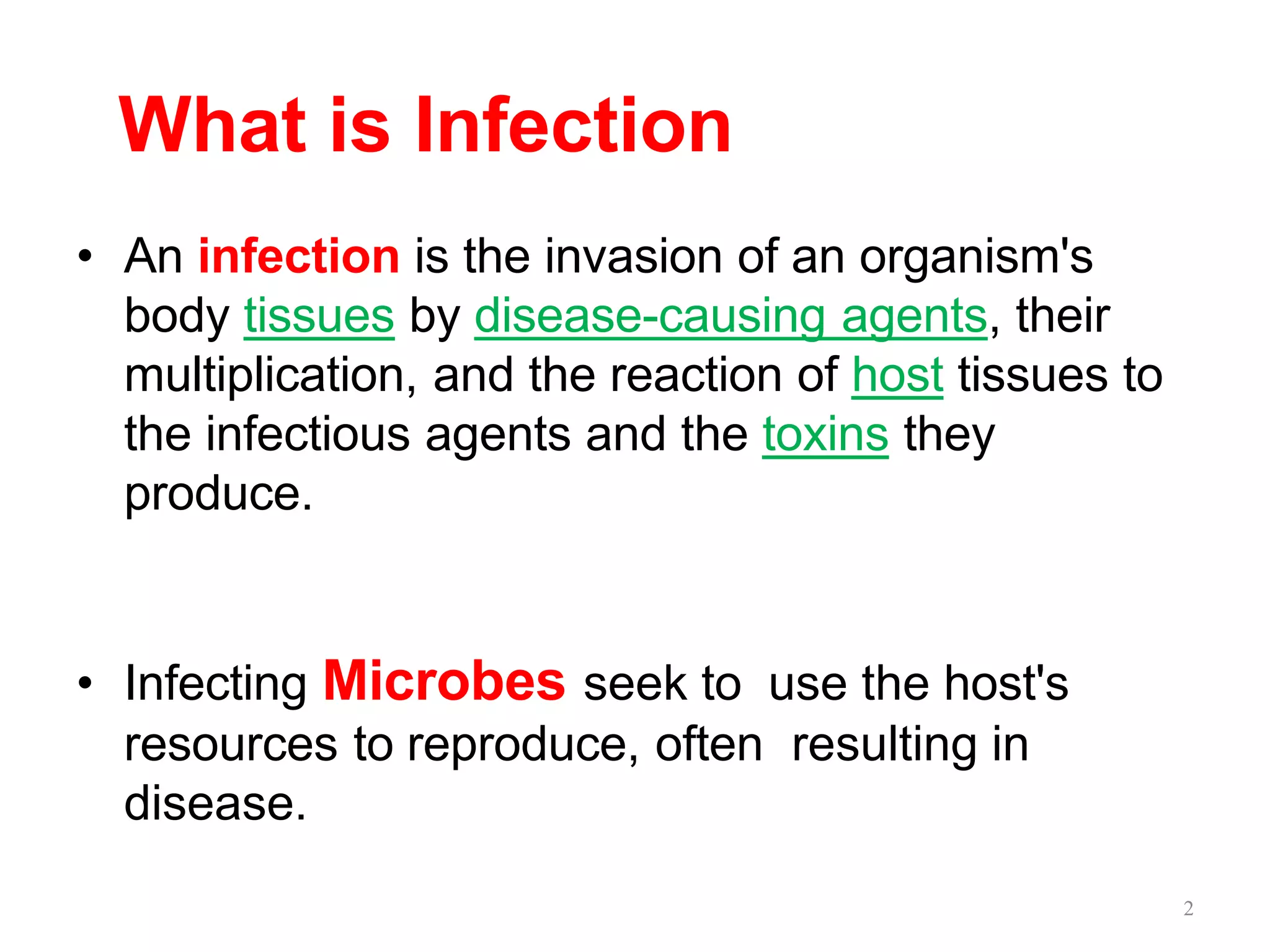
INFECTION
1
DR SHAHNAWAZ F SHAH
MD, FPM, FIAPM,FCPM (MUHS)
Interventional Spine & Pain Physician
Surat
2
What is Infection
• An infection is the invasion of an organism's
body tissues by disease-causing agents, their
multiplication, and the reaction of host tissues to
the infectious agents and the toxins they
produce.
• Infecting Microbes seek to use the host's
resources to reproduce, often resulting in
disease.
Infections are usually considered to be
caused by
microscopic organisms
viruses,
prions,
bacteria, and
viroids,
larger organisms
macro parasites and
fungi
4
Understanding ……
Infection and Disease
A.Definitions
B.The Normal Flora of
Humans
C.Generalized Stages of
Infection
What Causes an Infectious
Disease?
• An infectious disease, also
known as a transmissible
disease or communicable
disease, is an illness resulting
from an infection.
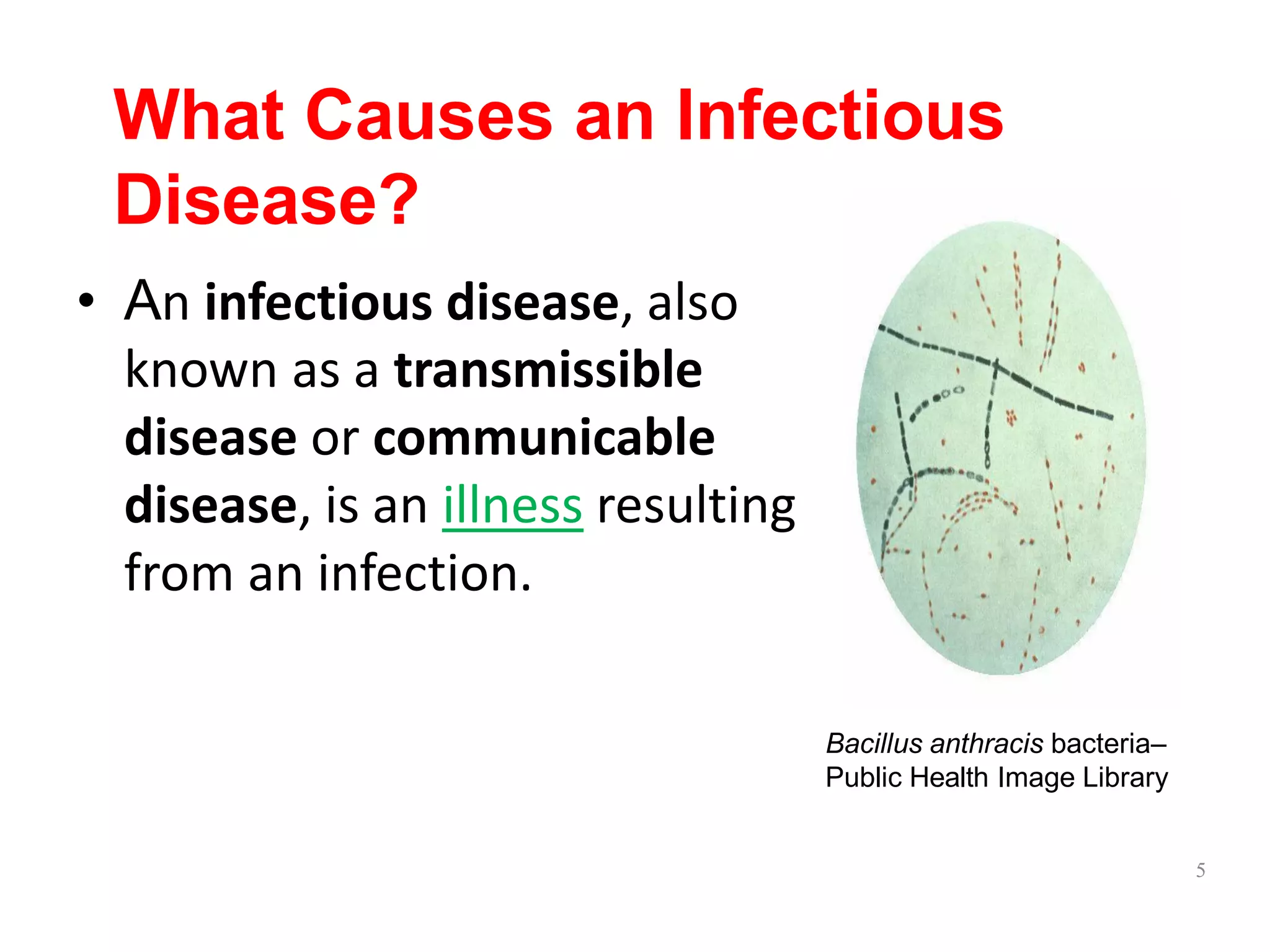
Bacillus anthracis bacteria–
Public Health Image Library
5
6
Conditions required for infection to spread
from one person to another
1) One person must be infected with a
microorganism
2) The other person must be susceptible
to infection with that microorganism
3) The microorganism must be able to leave
the body of the infected person and enter
the body of the susceptible person.
7
Basis of Classification of Infections
• Infections are classified in multiple ways
• Classified
• the causative agent
• the constellation of symptoms and
medical signs that are produced.
• Organ involved
8
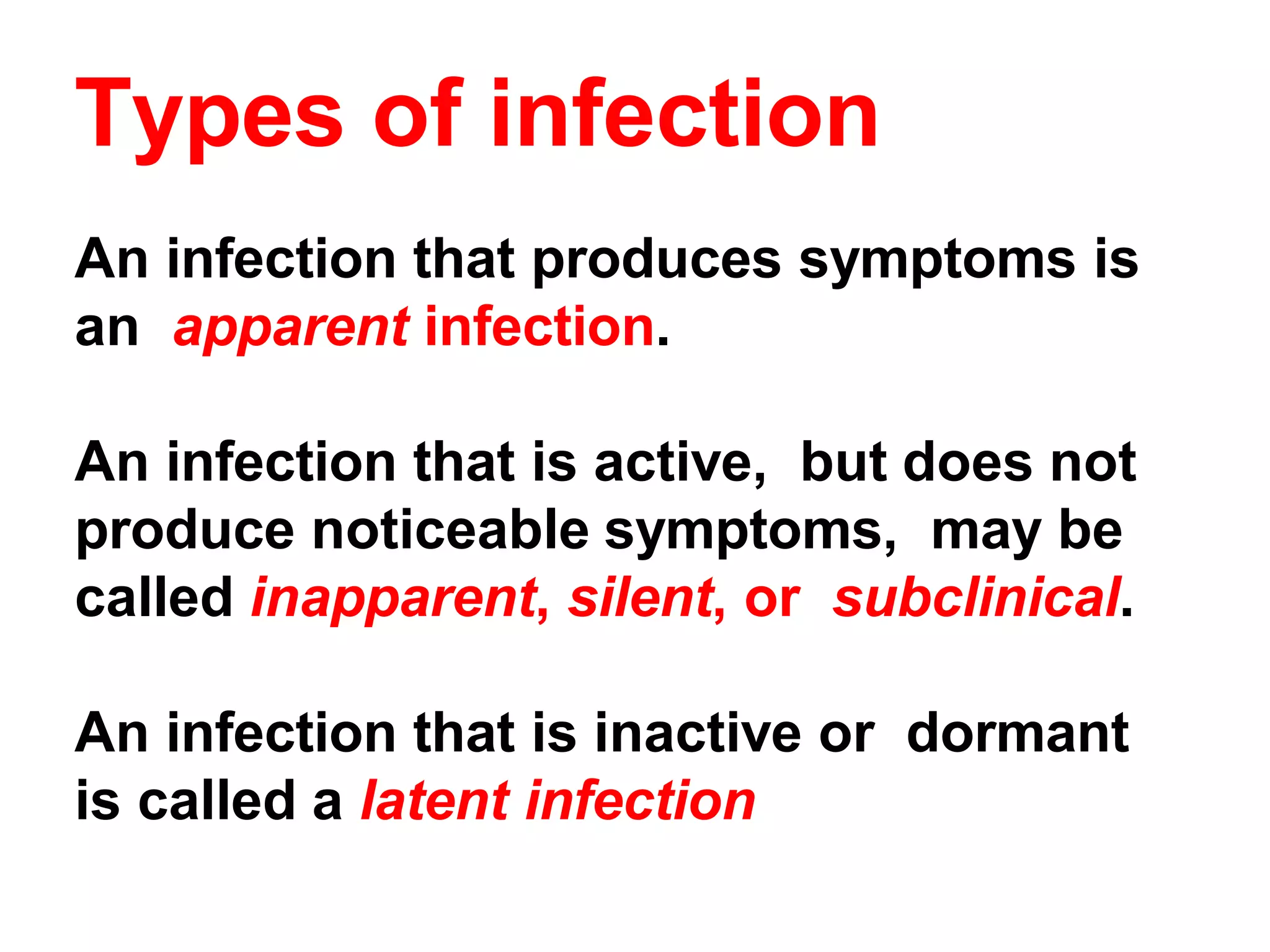
Types of infection
• Colonization – infection present on surface of
body –
– Organism propagating at a rate sufficient to maintain its
numbers without producing identifiable evidence of any
reaction in host
• Inapparent or subclinical infection
– organism not only multiplying but also causes a
measurable reaction that is however not clinically
detectable
• Symptomatic infection
– Organism causes clinically detectable reaction
Types of infection
An infection that produces symptoms is
an apparent infection.
An infection that is active, but does not
produce noticeable symptoms, may be
called inapparent, silent, or subclinical.
An infection that is inactive or dormant
is called a latent infection
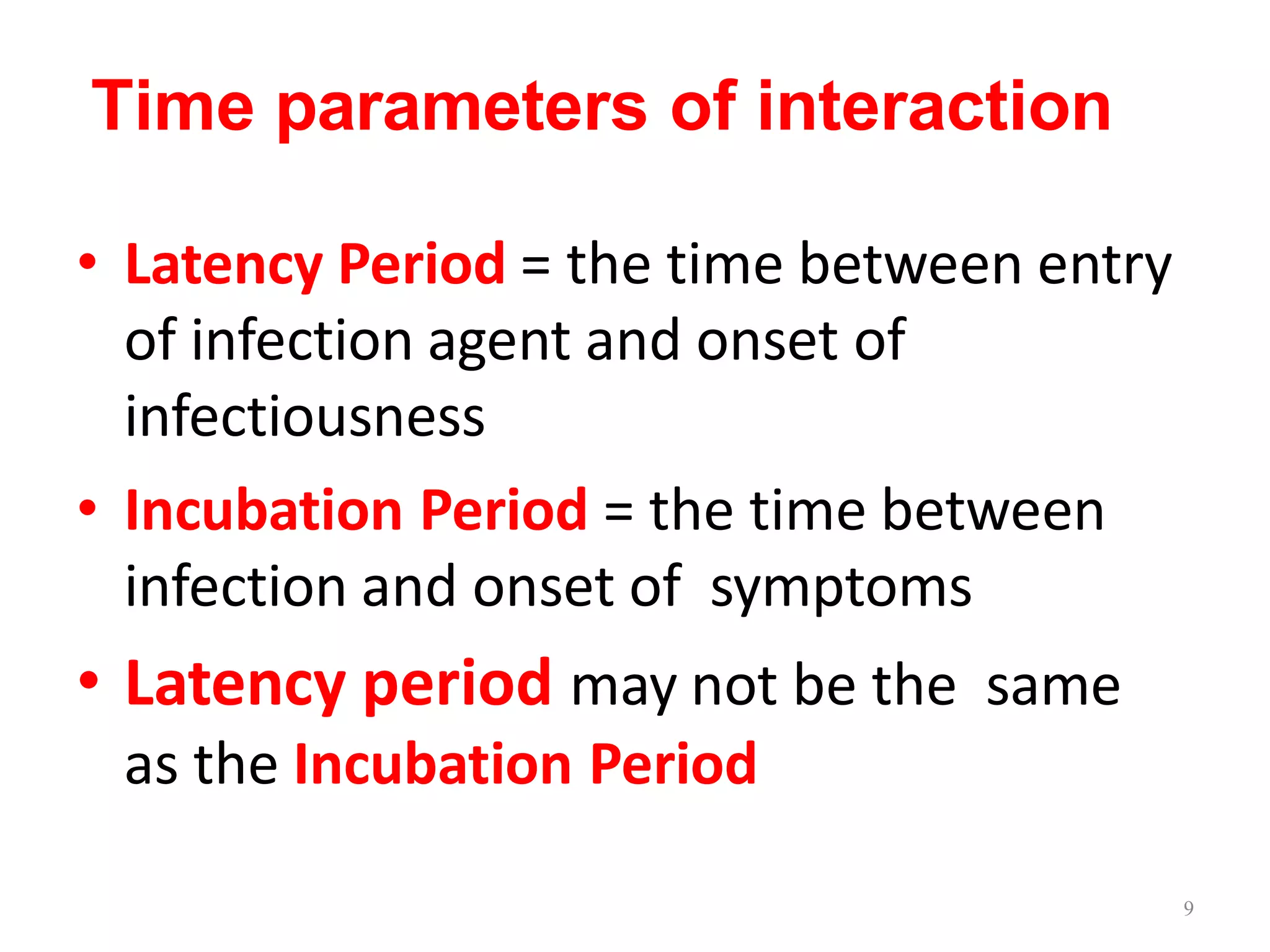
Time parameters of interaction
• Latency Period = the time between entry
of infection agent and onset of
infectiousness
• Incubation Period = the time between
infection and onset of symptoms
• Latency period may not be the same
as the Incubation Period
9
11
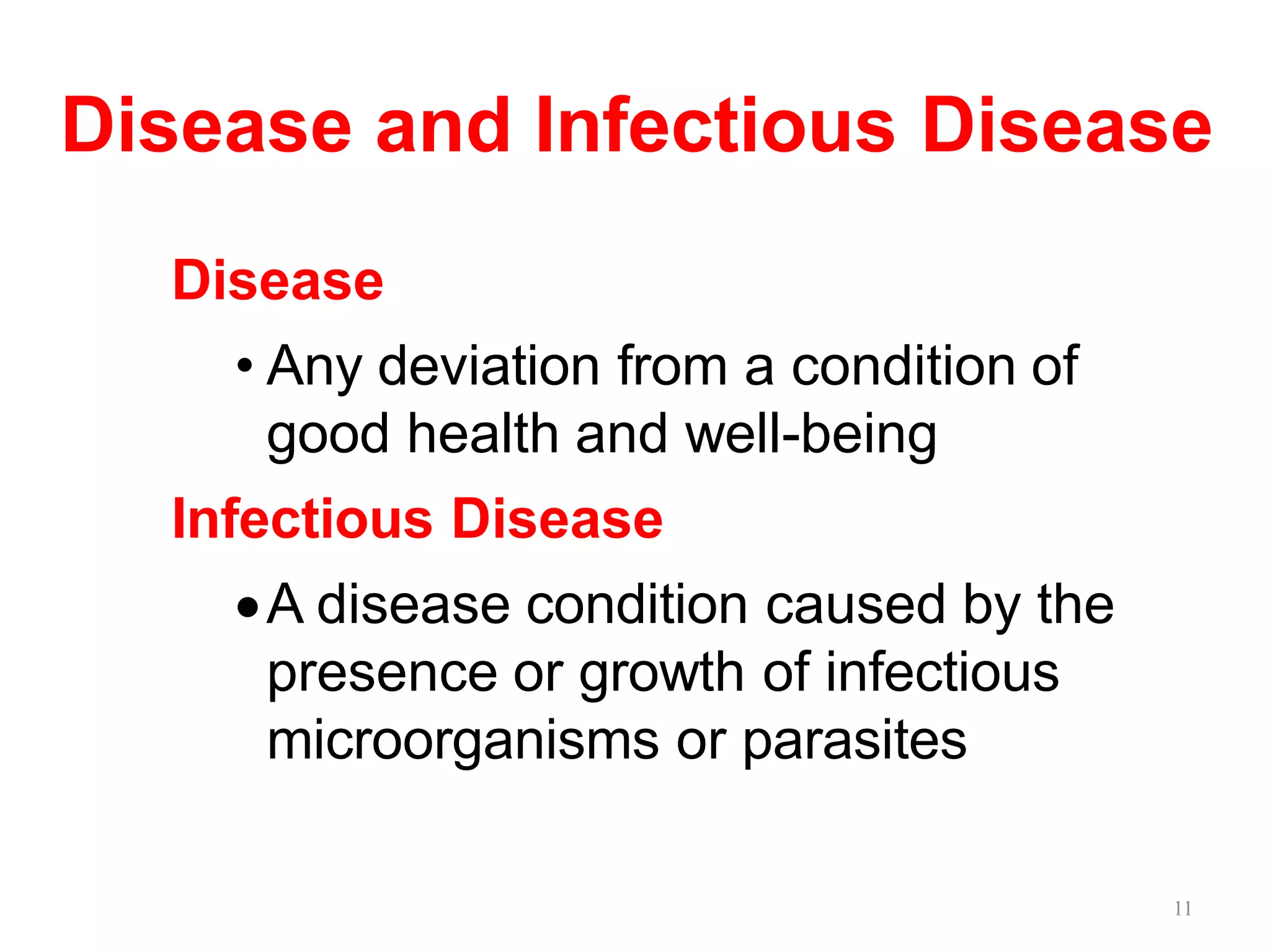
Disease and Infectious Disease
Disease
• Any deviation from a condition of
good health and well-being
Infectious Disease
A disease condition caused by the
presence or growth of infectious
microorganisms or parasites
12
Pathogenicity and Virulence
Pathogenicity
• The ability of a microbe to cause disease
• This term is often used to describe or
compare species
Virulence
• The degree of pathogenicity in a
microorganism
• This term is often used to describe or
compare strains within a species
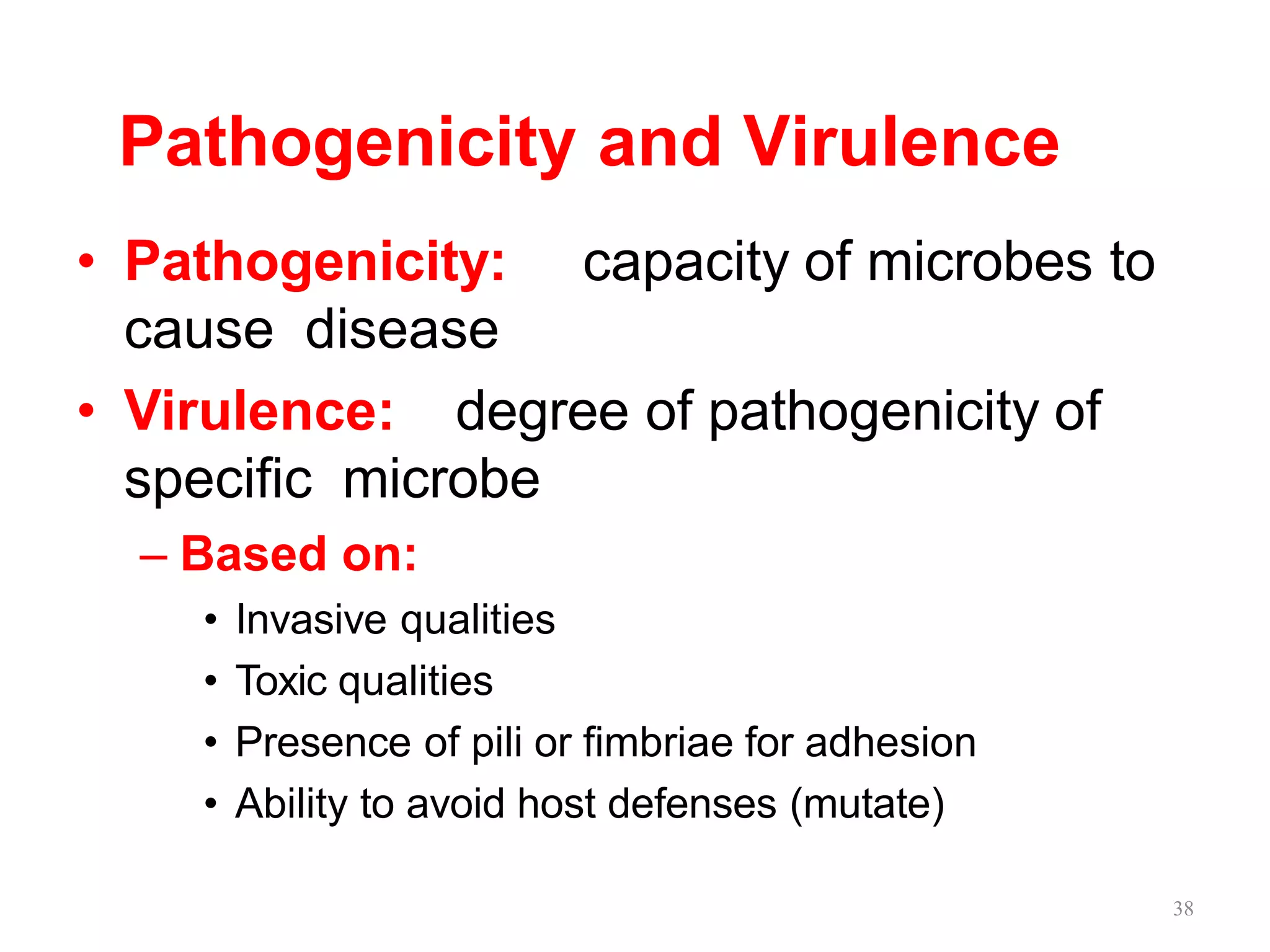
Pathogenicity and Virulence
• Pathogenicity: capacity of microbes to
cause disease
• Virulence: degree of pathogenicity of
specific microbe
– Based on:
• Invasive qualities
• Toxic qualities
• Presence of pili or fimbriae for adhesion
• Ability to avoid host defenses (mutate)
38
14
Acute infection v/s Chronic
infection
Acute Infection
• An infection characterized by sudden
onset, rapid progression, and often with
severe symptoms
Chronic Infection
• An infection characterized by delayed
onset and slow progression
15
Primary Infection v/s
Secondary infection
Primary Infection
• An infection that develops in an
otherwise healthy individual
Secondary Infection
• An infection that develops in an
individual who is already infected with
a different pathogen
16
Localized infection v/s
Systemic infection
Localized Infection
• An infection that is restricted to a specific
location or region within the body of the host
Systemic Infection
• An infection that has spread to several
regions or areas in the body of the host
Clinical infection v/s
Subclinical infection
Clinical Infection
• An infection with obvious observable or
detectable symptoms
Subclinical Infection
• An infection with few or no obvious
symptoms
15
Definitions
• Opportunistic infection
 An infection caused by
microorganisms that are
commonly found in the
host’s environment
 This term is often used to
refer to infections caused
by organisms in the normal
flora
18
19
Infections can be classified by the anatomic location
or organ system infected, including:
 Urinary tract infection
 Skin infection
 Respiratory tract infection
 Odontogenic infection (an infection that originates
within a tooth or in the closely surrounding
tissues)
 Vaginal infections
 Intra-amniotic infection
21
Defining
• Thesuffix “-emia”
–A suffix meaning “presence of an
infectious agent”
• Bacteremia = Presence of infectious
bacteria
• Viremia = Presence of infectious virus
• Fungemia = Presence of infectious fungus
• Septicemia = Presence of an infectious
agent in the bloodstream
22
Definitions
• Thesuffix “-itis”
– A suffix meaning “inflammation of”
• Examples:
–Pharyngitis = Inflammation of the
pharynx
–Endocarditis = Inflammation of the
heart chambers
–Gastroenteritis = Inflammation of
the gastrointestinal tract
23
Definitions
• Epidemiology
– The study of the transmission of disease
• Communicable Disease
– A disease that can be transmitted from one
individual to another
• Contagious Disease
– A communicable disease that is easily spread
from one individual to another
• Non communicable Disease
– A disease that is not transmitted from one
individual to another
24
Definitions
• Endemic Disease
– A disease condition that is normally found
in a certain percentage of a population
• Epidemic Disease
– A disease condition present in a greater
than usual percentage of a specific
population
• Pandemic Disease
– An epidemic affecting a large geographical
area; often on a global scale
25
Definitions
• Reservoir of Infection
– The source of an infectious agent
• Carrier
– An individual who carries an infectious
agent without manifesting symptoms, yet
who can transmit the agent to another
individual
• Fomites
– Any inanimate object capable of being an
intermediate in the indirect transmission of
an infectious agent
26
Definitions
• Animal Vectors
– An animal (nonhuman) that can transmit
an infectious agent to humans
– Two types: mechanical and biological
Animal Vectors
• Biological animal vectors: The infectious agent
must incubate in the animal host as part of the
agent’s developmental cycle; eg, the
transmission of malaria by infected mosquitoes
• Mechanical animal vectors: The infectious agent
is physically transmitted by the animal vector, but
the agent does not incubate or grow in the animal;
eg, the transmission of bacteria sticking to the feet
of flies
The Normal Flora of Humans
• Types of Symbiosis
– Mutualism
• A symbiotic relationship in which both species
benefit
– Commensalism
• A symbiotic relationship in which one species
benefits, and the other species is neither helped
nor harmed
28
29
The Normal Flora of Humans
• Types of Symbiosis (cont.)
– Parasitism
• A symbiotic relationship in which
one species benefits, and the
other species is harmed
• Generally, the species that benefits
(the parasite) is much smaller than
the species that is harmed (the
host)
The Normal Flora of Humans
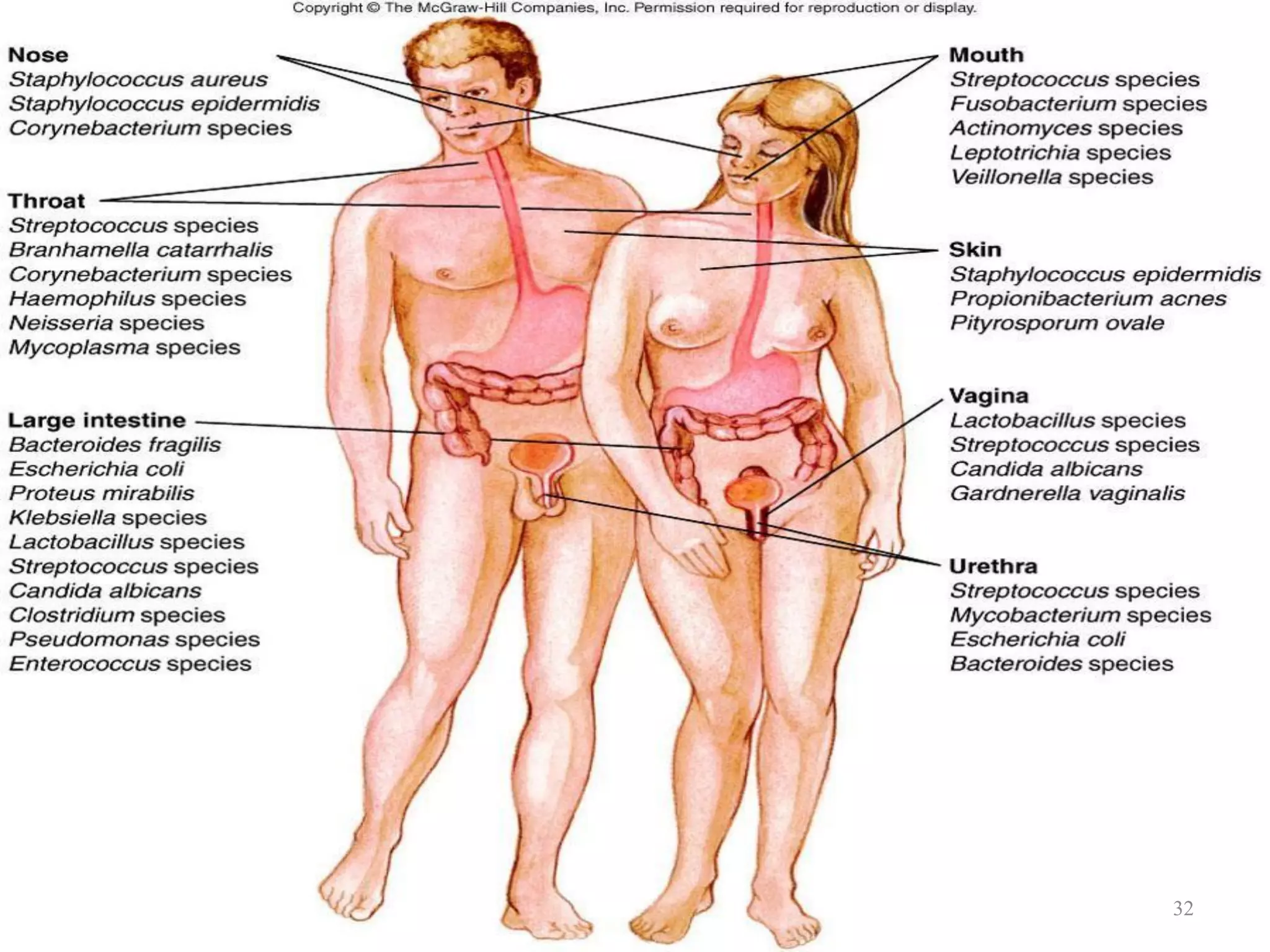
• Normal flora is
present in
– skin
– upper respiratory tract
– oral cavity
– intestine, especially
large intestine
– vaginal tract
• Very little normal
flora in eyes &
stomach
30
The Normal Flora of Humans
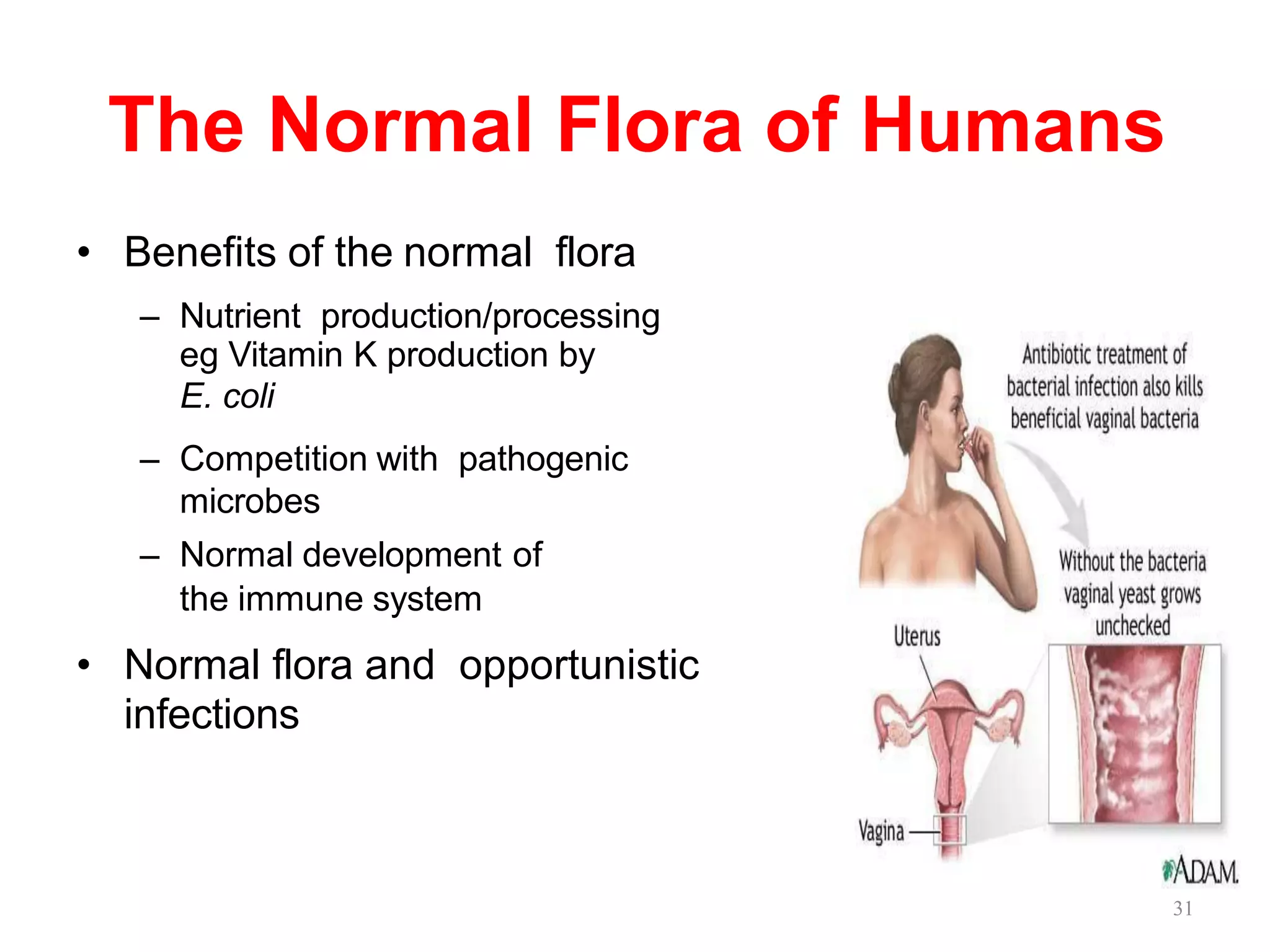
• Benefits of the normal flora
– Nutrient production/processing
eg Vitamin K production by
E. coli
– Competition with pathogenic
microbes
– Normal development of
the immune system
• Normal flora and opportunistic
infections
31
32
The Normal Flora is absent
• Notably absent in most all
internal organs
– Absent in:
• lower respiratory tract
• muscle tissue
• blood & tissue fluid
• cerebrospinal fluid
• peritoneum
• pericardium
• meninges 33
Development of Infection:
Onset and Course
• Incubation period
– Organism present; no
clinical signs, symptoms
• Prodromal period
– Symptoms; don’t feel like
yourself
• Acute period
– Fully developed
infection
34
Development of Infection:
Clinical Signs and Symptoms
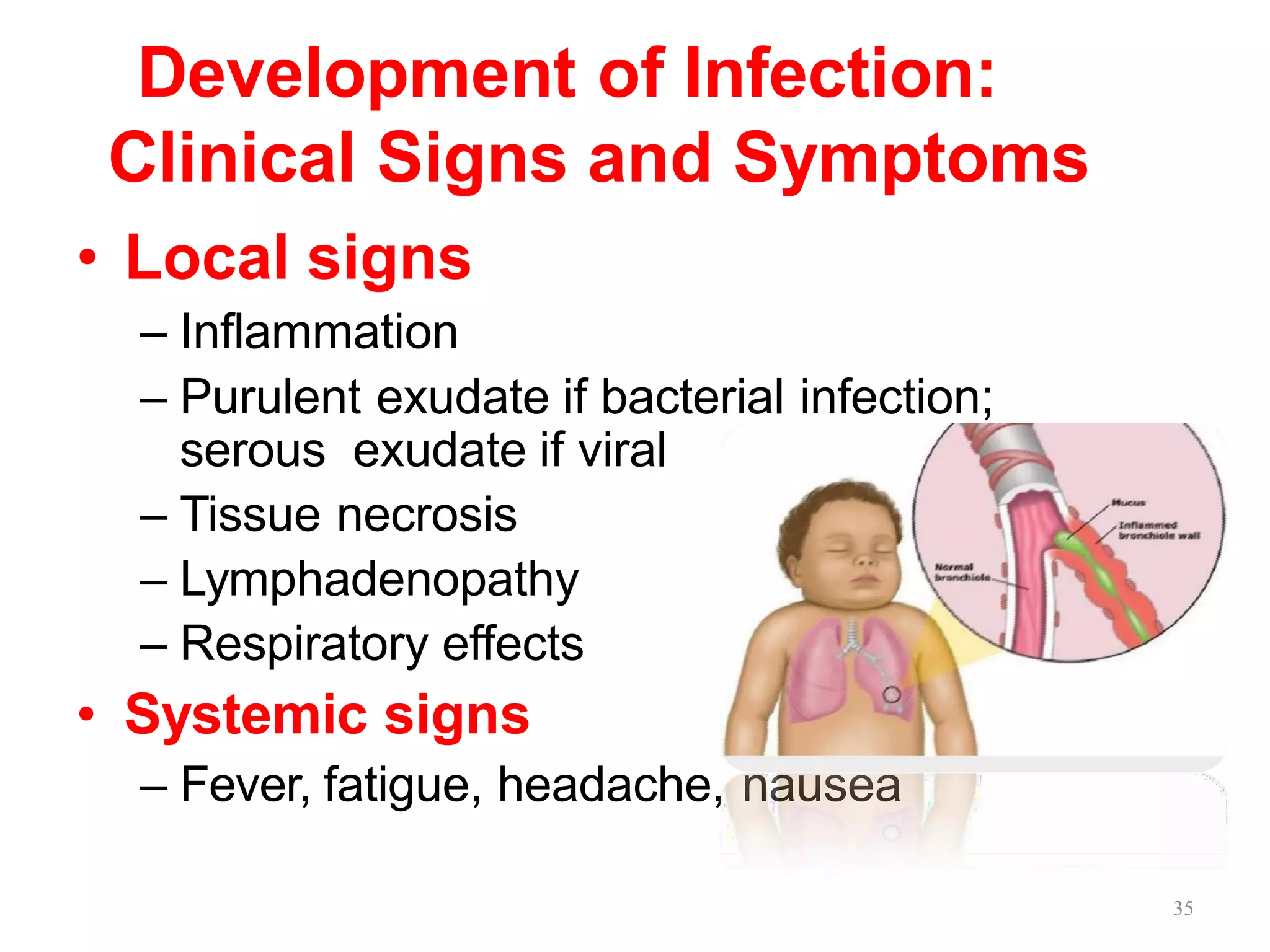
• Local signs
– Inflammation
– Purulent exudate if bacterial infection;
serous exudate if viral
– Tissue necrosis
– Lymphadenopathy
– Respiratory effects
• Systemic signs
– Fever, fatigue, headache, nausea
35
Generalized Stages of
Infection
1. Entry of Pathogen
– Portal of Entry
2. Colonization
– Usually at the site of entry
3. Incubation Period
– Asymptomatic period
– Between the initial contact with the
microbe and the appearance of the first
symptoms
36
Generalized Stages of
Infection
4. Prodromal Symptoms
– Initial Symptoms
5. Invasive period
– Increasing Severity of Symptoms
– Fever
– Inflammation and Swelling
– Tissue Damage
– Infection May Spread to
Other Sites
37
Characteristic VIRAL INFECTION BACTERIAL INFECTION
Typical symptoms
SYSTEMIC
This means they involve many different
parts of the body or more than one body
system at the same time; i.e. a runny
nose, sinus congestion, cough, body
aches etc.
They can be local at times as in
viral conjunctivitis or "pink eye" and
herpes.
Only a few viral infections are painful, like
herpes. The pain of viral infections is
often described as itchy or burning.
Localized redness,
heat, swelling and
pain.
One of the hallmarks of a
bacterial infection is local pain,
pain that is in a specific part of
the body.
Bacterial throat pain is often
characterized by more pain on
one side of the throat.
An ear infection is more likely to
be diagnosed as bacterial if the
pain occurs in only one ear.[19]
A cut that produces pus and
milky-colored liquid is most
likely infected.
Cause Pathogenic viruses Pathogenic bacteria
Modes of Transmission
39
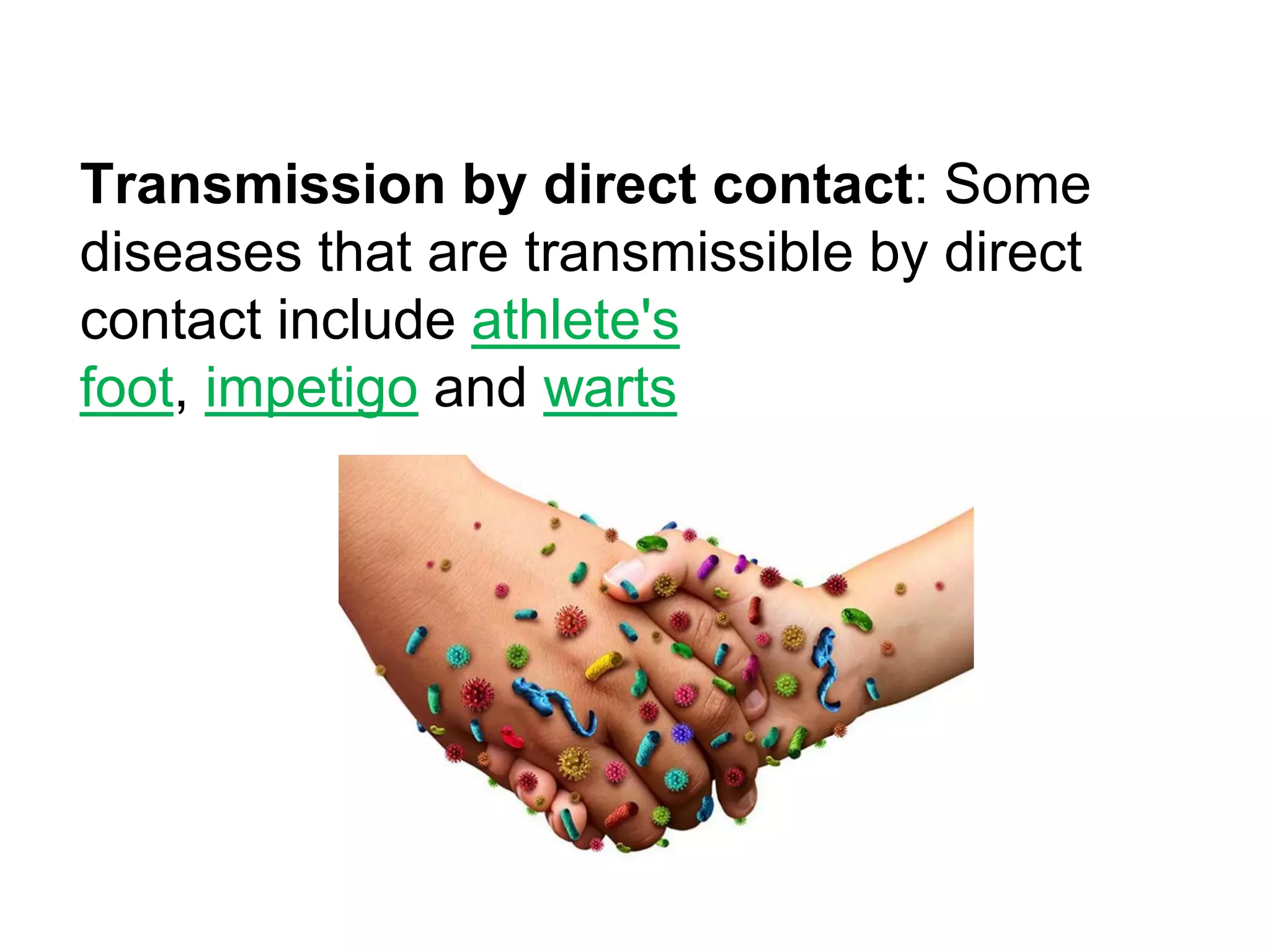
Transmission by direct contact: Some
diseases that are transmissible by direct
contact include athlete's
foot, impetigo and warts
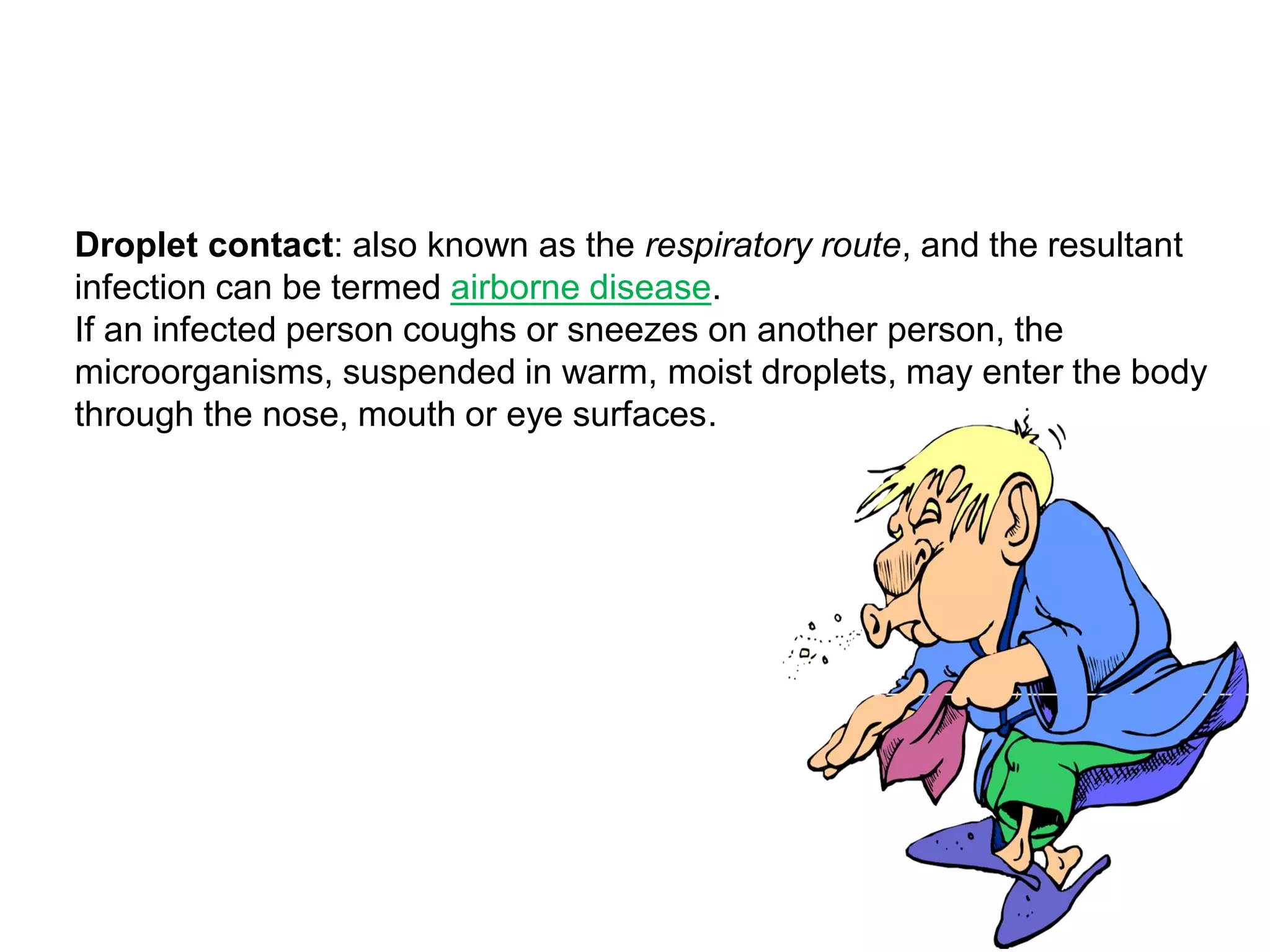
Droplet contact: also known as the respiratory route, and the resultant
infection can be termed airborne disease.
If an infected person coughs or sneezes on another person, the
microorganisms, suspended in warm, moist droplets, may enter the body
through the nose, mouth or eye surfaces.
Fecal-oral transmission: wherein foodstuffs or water
become contaminated (by people not washing their hands
before preparing food, or untreated sewage being released
into a drinking water supply) and the people who eat and
drink them become infected. Common fecal-oral
transmitted pathogens include Vibrio
cholerae, Giardia species, rotaviruses, Entameba
histolytica, Escherichia coli, and tape worms.
Most of these pathogens cause gastroenteritis.
Sexual transmission: with the resulting disease
being called sexually transmitted disease
Oral transmission: Diseases that are transmitted
primarily by oral means may be caught through
direct oral contact such as kissing, or by indirect
contact such as by sharing a drinking glass or a
cigarette.
Vehicle transmission: transmission by an
inanimate reservoir (food, water, soil).
Vector-borne transmission: transmitted by
a vector, which is an organism that does not
cause disease itself but that transmits
infection by conveying pathogens from
one host to another.
Vertical Transmission: directly from
the mother to an embryo, fetus or baby
during pregnancy or childbirth.
It can occur as a result of a pre-existing
infection or one acquired during
pregnancy.
Iatrogenic transmission: due to medical
procedures such
as injection or transplantation of infected
material.
Development of Infection:
Diagnostic Tests
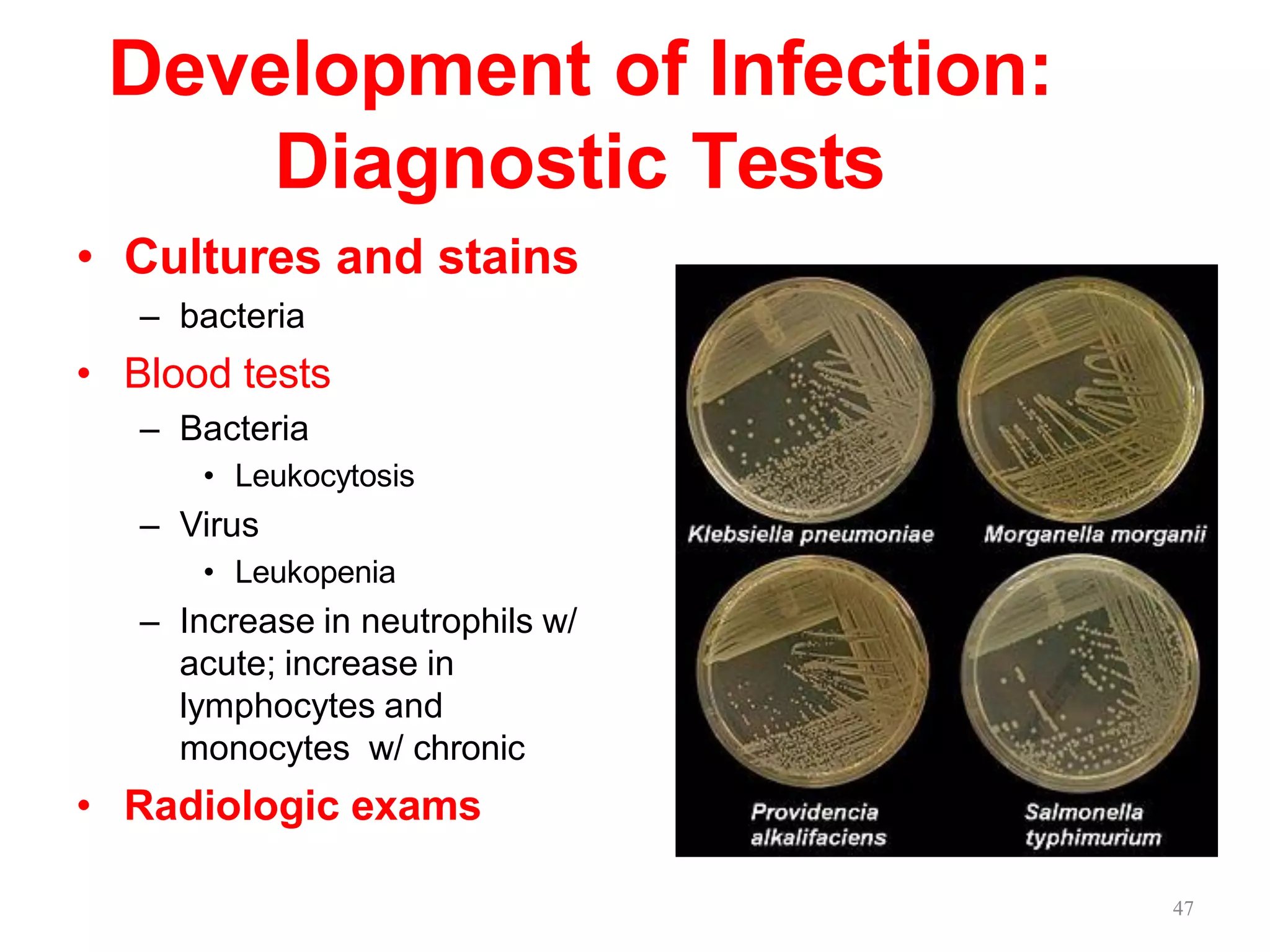
• Cultures and stains
– bacteria
• Blood tests
– Bacteria
• Leukocytosis
– Virus
• Leukopenia
– Increase in neutrophils w/
acute; increase in
lymphocytes and
monocytes w/ chronic
• Radiologic exams
47
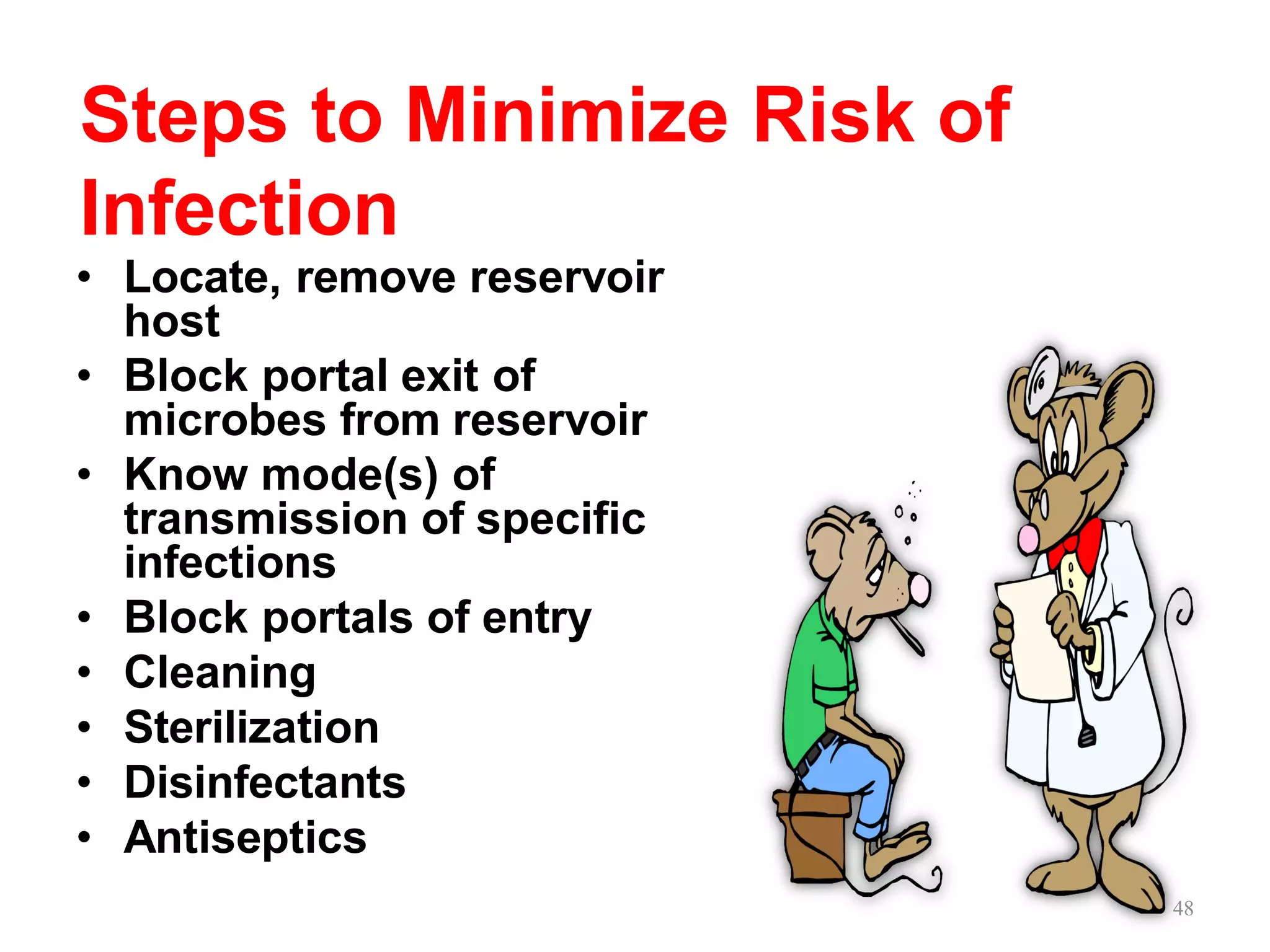
Steps to Minimize Risk of
Infection
• Locate, remove reservoir
host
• Block portal exit of
microbes from reservoir
• Know mode(s) of
transmission of specific
infections
• Block portals of entry
• Cleaning
• Sterilization
• Disinfectants
• Antiseptics
48
Hospital acquired infections
• Infection which was neither present
nor incubating at the time of
admission
• Includes infection which only becomes
apparent after discharge from hospital
but which was acquired during
hospitalisation
• Also called nosocomial infection
49
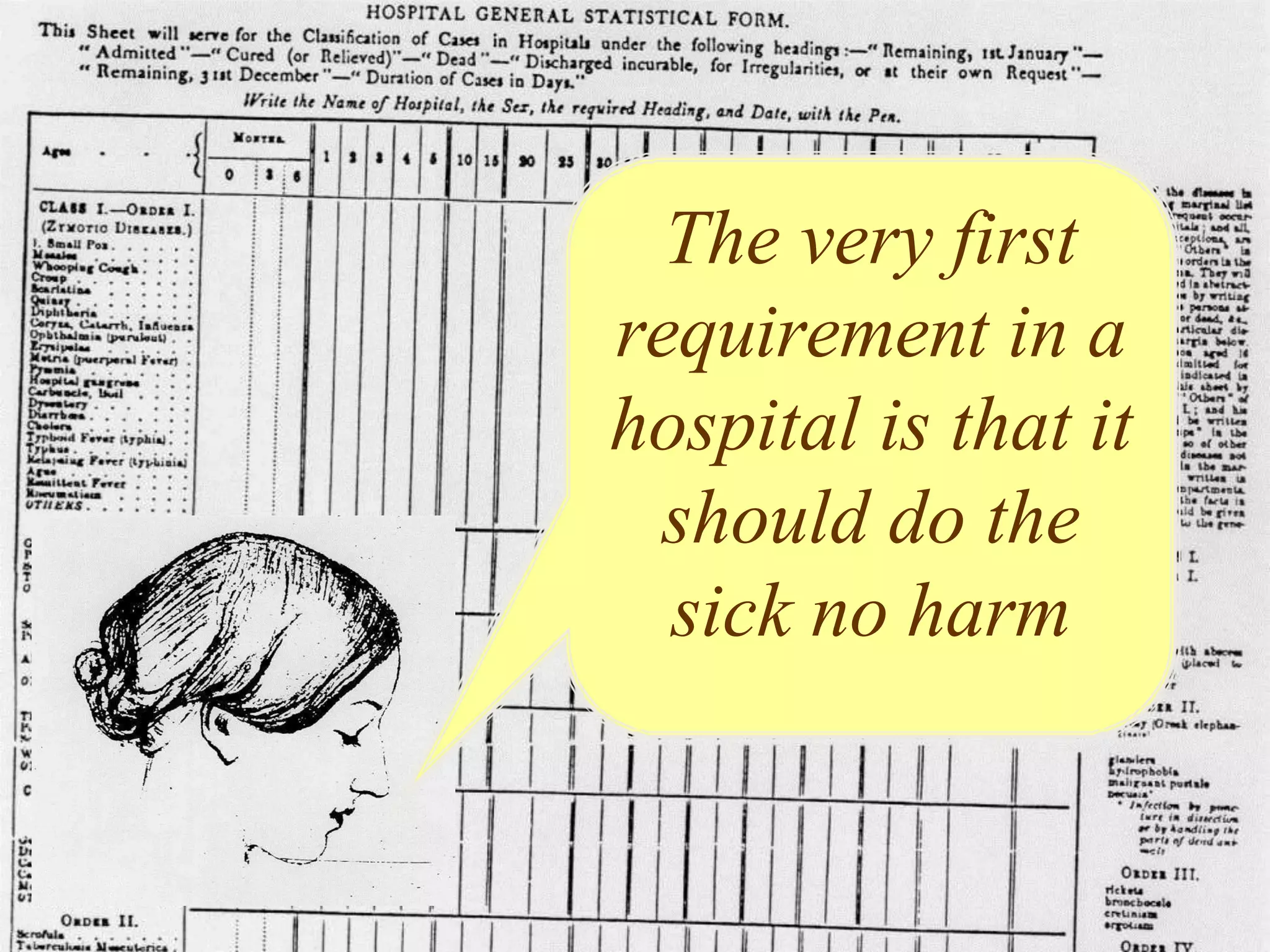
The very first
requirement in a
hospital is that it
should do the
sick no harm
51
Modes of spread
Two sources of infection:
• Endogenous or self-infection - organisms
which are harmless in one site can be
pathogenic when transferred to another
site e.g., E. coli
• Exogenous or cross-infection - organisms
transmitted from another source e.g.,
nurse, doctor, other patient, environment
52
1st principle of infection
prevention
at least 35-50% of all nosocomial infections are
associated with patient care practices:
• Use and care of urinary catheters
• Use and care of vascular access lines
• Therapy and support of pulmonary functions
• Experience with surgical procedures
• Hand hygiene and standard precautions
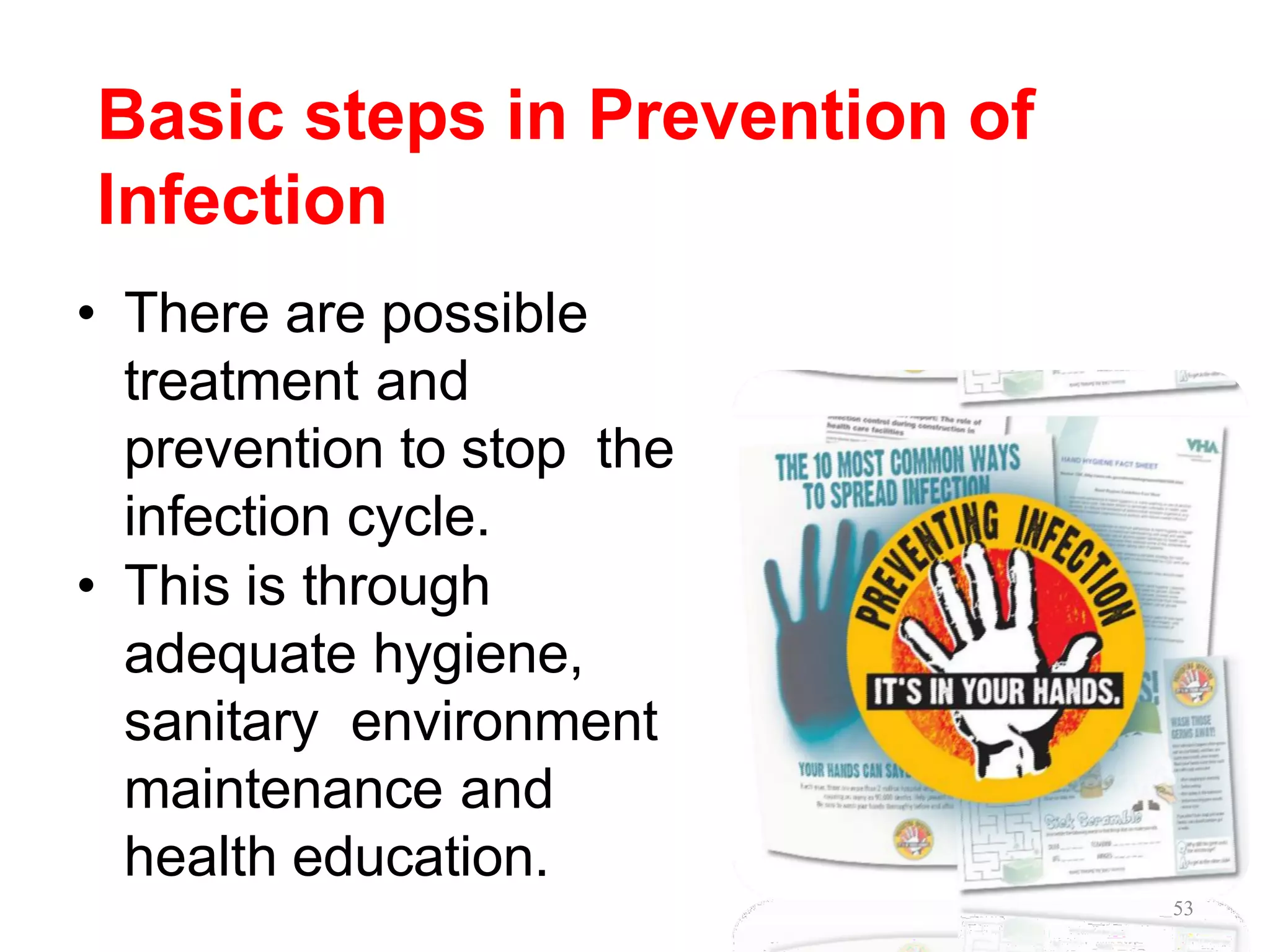
Basic steps in Prevention of
Infection
• There are possible
treatment and
prevention to stop the
infection cycle.
• This is through
adequate hygiene,
sanitary environment
maintenance and
health education.
53
54
Antimicrobial agents In
Infection
• Anti-infective drugs: suppress infection
• Antibiotics
• Antiviral
• Antifungal
• anti tubercular drugs
Antibiotics only work for bacterial infection and
have no effect on viral ones.
Mode of administration
Anti-infective medications
It can be administered by
mouth,
topically or
Intravenously(IV)
depending on the infection extent
and severity
Sometimes, if drug resistance is
known, multiple drugs are used to
stop drug resistance and increase
drug effectiveness.
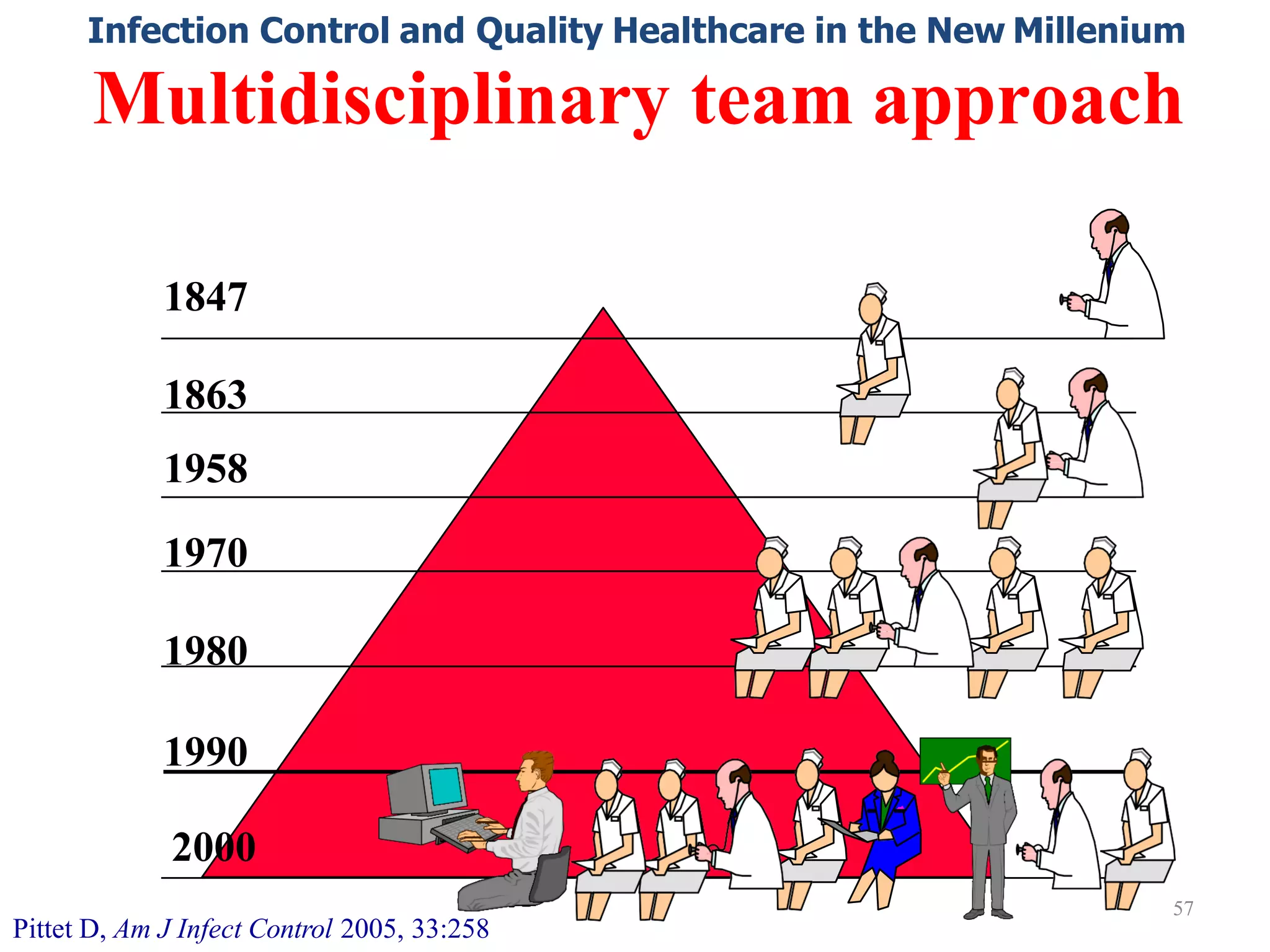
Infection Control and Quality Healthcare in the New Millenium
Multidisciplinary team approach
1990
2000
1847
1863
1958
1970
1980
57
Pittet D, Am J Infect Control 2005, 33:258
For more updates:
thepainkillerMD

Infection intro

  • 1.
    INFECTION 1 DR SHAHNAWAZ FSHAH MD, FPM, FIAPM,FCPM (MUHS) Interventional Spine & Pain Physician Surat
  • 2.
    2 What is Infection •An infection is the invasion of an organism's body tissues by disease-causing agents, their multiplication, and the reaction of host tissues to the infectious agents and the toxins they produce. • Infecting Microbes seek to use the host's resources to reproduce, often resulting in disease.
  • 3.
    Infections are usuallyconsidered to be caused by microscopic organisms viruses, prions, bacteria, and viroids, larger organisms macro parasites and fungi
  • 4.
    4 Understanding …… Infection andDisease A.Definitions B.The Normal Flora of Humans C.Generalized Stages of Infection
  • 5.
    What Causes anInfectious Disease? • An infectious disease, also known as a transmissible disease or communicable disease, is an illness resulting from an infection. Bacillus anthracis bacteria– Public Health Image Library 5
  • 6.
    6 Conditions required forinfection to spread from one person to another 1) One person must be infected with a microorganism 2) The other person must be susceptible to infection with that microorganism 3) The microorganism must be able to leave the body of the infected person and enter the body of the susceptible person.
  • 7.
    7 Basis of Classificationof Infections • Infections are classified in multiple ways • Classified • the causative agent • the constellation of symptoms and medical signs that are produced. • Organ involved
  • 8.
    8 Types of infection •Colonization – infection present on surface of body – – Organism propagating at a rate sufficient to maintain its numbers without producing identifiable evidence of any reaction in host • Inapparent or subclinical infection – organism not only multiplying but also causes a measurable reaction that is however not clinically detectable • Symptomatic infection – Organism causes clinically detectable reaction
  • 9.
    Types of infection Aninfection that produces symptoms is an apparent infection. An infection that is active, but does not produce noticeable symptoms, may be called inapparent, silent, or subclinical. An infection that is inactive or dormant is called a latent infection
  • 10.
    Time parameters ofinteraction • Latency Period = the time between entry of infection agent and onset of infectiousness • Incubation Period = the time between infection and onset of symptoms • Latency period may not be the same as the Incubation Period 9
  • 11.
    11 Disease and InfectiousDisease Disease • Any deviation from a condition of good health and well-being Infectious Disease A disease condition caused by the presence or growth of infectious microorganisms or parasites
  • 12.
    12 Pathogenicity and Virulence Pathogenicity •The ability of a microbe to cause disease • This term is often used to describe or compare species Virulence • The degree of pathogenicity in a microorganism • This term is often used to describe or compare strains within a species
  • 13.
    Pathogenicity and Virulence •Pathogenicity: capacity of microbes to cause disease • Virulence: degree of pathogenicity of specific microbe – Based on: • Invasive qualities • Toxic qualities • Presence of pili or fimbriae for adhesion • Ability to avoid host defenses (mutate) 38
  • 14.
    14 Acute infection v/sChronic infection Acute Infection • An infection characterized by sudden onset, rapid progression, and often with severe symptoms Chronic Infection • An infection characterized by delayed onset and slow progression
  • 15.
    15 Primary Infection v/s Secondaryinfection Primary Infection • An infection that develops in an otherwise healthy individual Secondary Infection • An infection that develops in an individual who is already infected with a different pathogen
  • 16.
    16 Localized infection v/s Systemicinfection Localized Infection • An infection that is restricted to a specific location or region within the body of the host Systemic Infection • An infection that has spread to several regions or areas in the body of the host
  • 17.
    Clinical infection v/s Subclinicalinfection Clinical Infection • An infection with obvious observable or detectable symptoms Subclinical Infection • An infection with few or no obvious symptoms 15
  • 18.
    Definitions • Opportunistic infection An infection caused by microorganisms that are commonly found in the host’s environment  This term is often used to refer to infections caused by organisms in the normal flora 18
  • 19.
  • 20.
    Infections can beclassified by the anatomic location or organ system infected, including:  Urinary tract infection  Skin infection  Respiratory tract infection  Odontogenic infection (an infection that originates within a tooth or in the closely surrounding tissues)  Vaginal infections  Intra-amniotic infection
  • 21.
    21 Defining • Thesuffix “-emia” –Asuffix meaning “presence of an infectious agent” • Bacteremia = Presence of infectious bacteria • Viremia = Presence of infectious virus • Fungemia = Presence of infectious fungus • Septicemia = Presence of an infectious agent in the bloodstream
  • 22.
    22 Definitions • Thesuffix “-itis” –A suffix meaning “inflammation of” • Examples: –Pharyngitis = Inflammation of the pharynx –Endocarditis = Inflammation of the heart chambers –Gastroenteritis = Inflammation of the gastrointestinal tract
  • 23.
    23 Definitions • Epidemiology – Thestudy of the transmission of disease • Communicable Disease – A disease that can be transmitted from one individual to another • Contagious Disease – A communicable disease that is easily spread from one individual to another • Non communicable Disease – A disease that is not transmitted from one individual to another
  • 24.
    24 Definitions • Endemic Disease –A disease condition that is normally found in a certain percentage of a population • Epidemic Disease – A disease condition present in a greater than usual percentage of a specific population • Pandemic Disease – An epidemic affecting a large geographical area; often on a global scale
  • 25.
    25 Definitions • Reservoir ofInfection – The source of an infectious agent • Carrier – An individual who carries an infectious agent without manifesting symptoms, yet who can transmit the agent to another individual • Fomites – Any inanimate object capable of being an intermediate in the indirect transmission of an infectious agent
  • 26.
    26 Definitions • Animal Vectors –An animal (nonhuman) that can transmit an infectious agent to humans – Two types: mechanical and biological
  • 27.
    Animal Vectors • Biologicalanimal vectors: The infectious agent must incubate in the animal host as part of the agent’s developmental cycle; eg, the transmission of malaria by infected mosquitoes • Mechanical animal vectors: The infectious agent is physically transmitted by the animal vector, but the agent does not incubate or grow in the animal; eg, the transmission of bacteria sticking to the feet of flies
  • 28.
    The Normal Floraof Humans • Types of Symbiosis – Mutualism • A symbiotic relationship in which both species benefit – Commensalism • A symbiotic relationship in which one species benefits, and the other species is neither helped nor harmed 28
  • 29.
    29 The Normal Floraof Humans • Types of Symbiosis (cont.) – Parasitism • A symbiotic relationship in which one species benefits, and the other species is harmed • Generally, the species that benefits (the parasite) is much smaller than the species that is harmed (the host)
  • 30.
    The Normal Floraof Humans • Normal flora is present in – skin – upper respiratory tract – oral cavity – intestine, especially large intestine – vaginal tract • Very little normal flora in eyes & stomach 30
  • 31.
    The Normal Floraof Humans • Benefits of the normal flora – Nutrient production/processing eg Vitamin K production by E. coli – Competition with pathogenic microbes – Normal development of the immune system • Normal flora and opportunistic infections 31
  • 32.
  • 33.
    The Normal Florais absent • Notably absent in most all internal organs – Absent in: • lower respiratory tract • muscle tissue • blood & tissue fluid • cerebrospinal fluid • peritoneum • pericardium • meninges 33
  • 34.
    Development of Infection: Onsetand Course • Incubation period – Organism present; no clinical signs, symptoms • Prodromal period – Symptoms; don’t feel like yourself • Acute period – Fully developed infection 34
  • 35.
    Development of Infection: ClinicalSigns and Symptoms • Local signs – Inflammation – Purulent exudate if bacterial infection; serous exudate if viral – Tissue necrosis – Lymphadenopathy – Respiratory effects • Systemic signs – Fever, fatigue, headache, nausea 35
  • 36.
    Generalized Stages of Infection 1.Entry of Pathogen – Portal of Entry 2. Colonization – Usually at the site of entry 3. Incubation Period – Asymptomatic period – Between the initial contact with the microbe and the appearance of the first symptoms 36
  • 37.
    Generalized Stages of Infection 4.Prodromal Symptoms – Initial Symptoms 5. Invasive period – Increasing Severity of Symptoms – Fever – Inflammation and Swelling – Tissue Damage – Infection May Spread to Other Sites 37
  • 38.
    Characteristic VIRAL INFECTIONBACTERIAL INFECTION Typical symptoms SYSTEMIC This means they involve many different parts of the body or more than one body system at the same time; i.e. a runny nose, sinus congestion, cough, body aches etc. They can be local at times as in viral conjunctivitis or "pink eye" and herpes. Only a few viral infections are painful, like herpes. The pain of viral infections is often described as itchy or burning. Localized redness, heat, swelling and pain. One of the hallmarks of a bacterial infection is local pain, pain that is in a specific part of the body. Bacterial throat pain is often characterized by more pain on one side of the throat. An ear infection is more likely to be diagnosed as bacterial if the pain occurs in only one ear.[19] A cut that produces pus and milky-colored liquid is most likely infected. Cause Pathogenic viruses Pathogenic bacteria
  • 39.
  • 40.
    Transmission by directcontact: Some diseases that are transmissible by direct contact include athlete's foot, impetigo and warts
  • 41.
    Droplet contact: alsoknown as the respiratory route, and the resultant infection can be termed airborne disease. If an infected person coughs or sneezes on another person, the microorganisms, suspended in warm, moist droplets, may enter the body through the nose, mouth or eye surfaces.
  • 42.
    Fecal-oral transmission: whereinfoodstuffs or water become contaminated (by people not washing their hands before preparing food, or untreated sewage being released into a drinking water supply) and the people who eat and drink them become infected. Common fecal-oral transmitted pathogens include Vibrio cholerae, Giardia species, rotaviruses, Entameba histolytica, Escherichia coli, and tape worms. Most of these pathogens cause gastroenteritis.
  • 43.
    Sexual transmission: withthe resulting disease being called sexually transmitted disease Oral transmission: Diseases that are transmitted primarily by oral means may be caught through direct oral contact such as kissing, or by indirect contact such as by sharing a drinking glass or a cigarette.
  • 44.
    Vehicle transmission: transmissionby an inanimate reservoir (food, water, soil). Vector-borne transmission: transmitted by a vector, which is an organism that does not cause disease itself but that transmits infection by conveying pathogens from one host to another.
  • 45.
    Vertical Transmission: directlyfrom the mother to an embryo, fetus or baby during pregnancy or childbirth. It can occur as a result of a pre-existing infection or one acquired during pregnancy.
  • 46.
    Iatrogenic transmission: dueto medical procedures such as injection or transplantation of infected material.
  • 47.
    Development of Infection: DiagnosticTests • Cultures and stains – bacteria • Blood tests – Bacteria • Leukocytosis – Virus • Leukopenia – Increase in neutrophils w/ acute; increase in lymphocytes and monocytes w/ chronic • Radiologic exams 47
  • 48.
    Steps to MinimizeRisk of Infection • Locate, remove reservoir host • Block portal exit of microbes from reservoir • Know mode(s) of transmission of specific infections • Block portals of entry • Cleaning • Sterilization • Disinfectants • Antiseptics 48
  • 49.
    Hospital acquired infections •Infection which was neither present nor incubating at the time of admission • Includes infection which only becomes apparent after discharge from hospital but which was acquired during hospitalisation • Also called nosocomial infection 49
  • 50.
    The very first requirementin a hospital is that it should do the sick no harm
  • 51.
    51 Modes of spread Twosources of infection: • Endogenous or self-infection - organisms which are harmless in one site can be pathogenic when transferred to another site e.g., E. coli • Exogenous or cross-infection - organisms transmitted from another source e.g., nurse, doctor, other patient, environment
  • 52.
    52 1st principle ofinfection prevention at least 35-50% of all nosocomial infections are associated with patient care practices: • Use and care of urinary catheters • Use and care of vascular access lines • Therapy and support of pulmonary functions • Experience with surgical procedures • Hand hygiene and standard precautions
  • 53.
    Basic steps inPrevention of Infection • There are possible treatment and prevention to stop the infection cycle. • This is through adequate hygiene, sanitary environment maintenance and health education. 53
  • 54.
    54 Antimicrobial agents In Infection •Anti-infective drugs: suppress infection • Antibiotics • Antiviral • Antifungal • anti tubercular drugs Antibiotics only work for bacterial infection and have no effect on viral ones.
  • 55.
    Mode of administration Anti-infectivemedications It can be administered by mouth, topically or Intravenously(IV) depending on the infection extent and severity
  • 56.
    Sometimes, if drugresistance is known, multiple drugs are used to stop drug resistance and increase drug effectiveness.
  • 57.
    Infection Control andQuality Healthcare in the New Millenium Multidisciplinary team approach 1990 2000 1847 1863 1958 1970 1980 57 Pittet D, Am J Infect Control 2005, 33:258
  • 58.