• Veterinary Gastrointestinal surgery
                                     (Part-I)


                             • Presented by
                               • Dr. Rekha Pathak
                                •   Senior scientist , IVRI


The photographs have been collected from
 different sources i.e. Internet, text books
                     etc
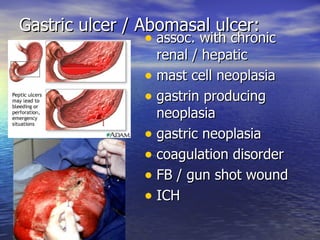
Gastric ulcer / Abomasal ulcer:
                 • assoc. with chronic
                    renal / hepatic
                  • mast cell neoplasia
                  • gastrin producing
                    neoplasia
                  • gastric neoplasia
                  • coagulation disorder
                  • FB / gun shot wound
                  • ICH
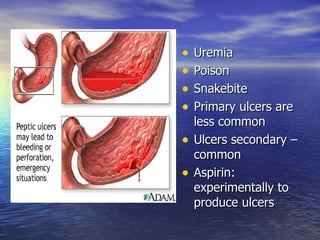
•   Uremia
•   Poison
•   Snakebite
•   Primary ulcers are
    less common
•   Ulcers secondary –
    common
•   Aspirin:
    experimentally to
    produce ulcers
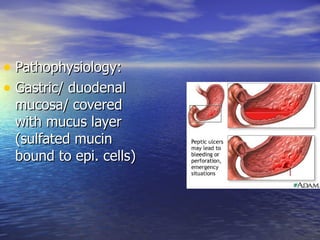
• Pathophysiology:
• Gastric/ duodenal
 mucosa/ covered
 with mucus layer
 (sulfated mucin
 bound to epi. cells)
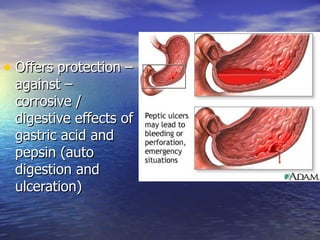
• Offers protection –
 against –
 corrosive /
 digestive effects of
 gastric acid and
 pepsin (auto
 digestion and
 ulceration)
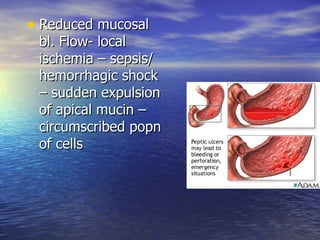
• Reduced mucosal
 bl. Flow- local
 ischemia – sepsis/
 hemorrhagic shock
 – sudden expulsion
 of apical mucin –
 circumscribed popn
 of cells
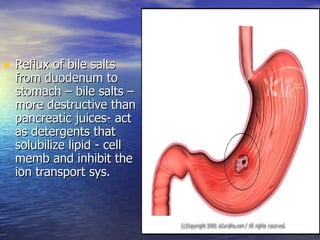
• Reflux of bile salts
  from duodenum to
  stomach – bile salts –
  more destructive than
  pancreatic juices- act
  as detergents that
  solubilize lipid - cell
  memb and inhibit the
  ion transport sys.
• bile content – greatest – pyloric antrum –
  ulcer region of stomach
• hyper secretion of HCL
  – gastrinoma ie non beta islets cell tumour of
    pancreas and hypergastinemia
  – in renal failure (gastrin is removed by
    kidneys)
– increased histamine: mastocytoma and Endotoxemia
      and hemorrhagic shock
    – NSAIDS- reduced secretion of mucus
        • alters the biochemical composition of mucin
• ingestion of chemicals(arsenic ,cresote)
• Signs: vomiting (not immediately after
    ingestion)
•   eating – gastric pain- relieved by vomiting
•   Hemet emesis and melena
•   slow bleeding: coffee colored blood
•   sudden - massive and semi clotted blood
• generalized peritonitis: gastric perforation
    (mostly doesn’t occur due to effective sealing
    with omentum)
•   wt. loss – hepatic/ neoplastic
•   additionally in calves : due to bleeding ulcers –
    recumbent suddenly – cold extremity- subnormal
    temp. tachycardia and dehydration- hypovolemic
    shock and death 24 hrs
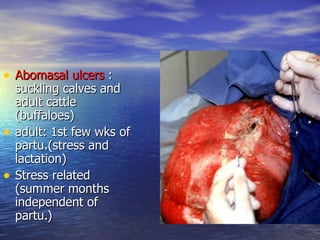
• Abomasal ulcers :
    suckling calves and
    adult cattle
    (buffaloes)
•   adult: 1st few wks of
    partu.(stress and
    lactation)
•   Stress related
    (summer months
    independent of
    partu.)
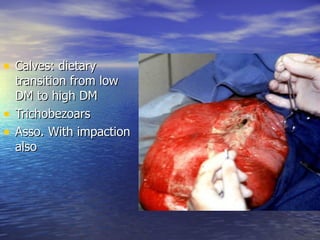
• Calves: dietary
    transition from low
    DM to high DM
•   Trichobezoars
•   Asso. With impaction
    also
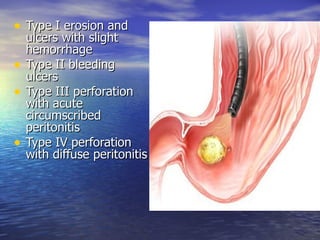
• Type I erosion and
    ulcers with slight
    hemorrhage
•   Type II bleeding
    ulcers
•   Type III perforation
    with acute
    circumscribed
    peritonitis
•   Type IV perforation
    with diffuse peritonitis
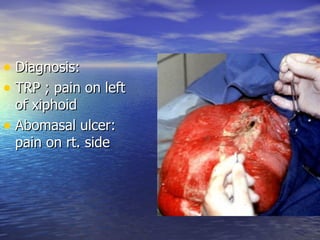
• Diagnosis:
• TRP ; pain on left
  of xiphoid
• Abomasal ulcer:
  pain on rt. side
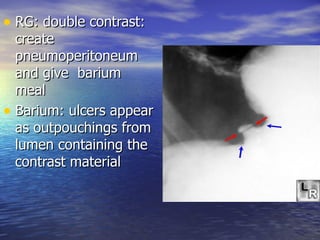
• RG: double contrast:
  create
  pneumoperitoneum
  and give barium
  meal
• Barium: ulcers appear
  as outpouchings from
  lumen containing the
  contrast material
• Fluoroscopy: helps in variable
 positioning and pin point the site
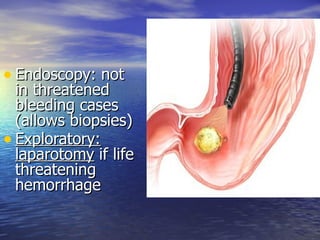
• Endoscopy: not
  in threatened
  bleeding cases
  (allows biopsies)
• Exploratory:
  laparotomy if life
  threatening
  hemorrhage
Treatment

• Surgical excision
• Cranial midline incision
• Carefully palpate from fundus to pylorus
• If ulcers then – adhesion, serosal scarring
 and irregular thickened areas on gastric
 wall
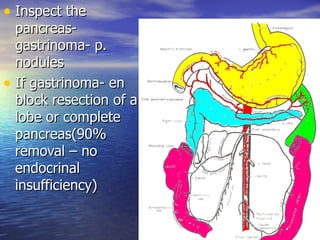
• Inspect the
  pancreas-
  gastrinoma- p.
  nodules
• If gastrinoma- en
  block resection of a
  lobe or complete
  pancreas(90%
  removal – no
  endocrinal
  insufficiency)
• If no ulcers found
• Open stomach- find the bleeding site- also
  on pyloric antrum(equidistant from lesser /
  greater curvature)
• Extend to duodenum if necessary
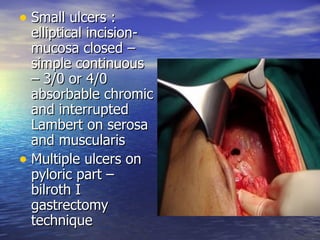
• Small ulcers :
  elliptical incision-
  mucosa closed –
  simple continuous
  – 3/0 or 4/0
  absorbable chromic
  and interrupted
  Lambert on serosa
  and muscularis
• Multiple ulcers on
  pyloric part –
  bilroth I
  gastrectomy
  technique
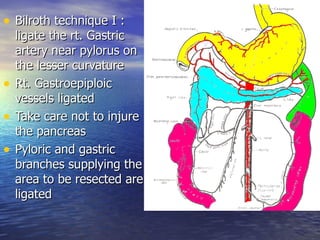
• Bilroth technique I :
    ligate the rt. Gastric
    artery near pylorus on
    the lesser curvature
•   Rt. Gastroepiploic
    vessels ligated
•   Take care not to injure
    the pancreas
•   Pyloric and gastric
    branches supplying the
    area to be resected are
    ligated
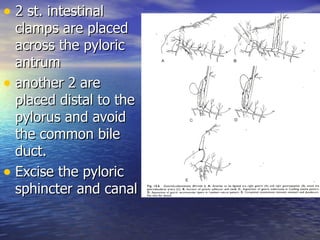
• 2 st. intestinal
  clamps are placed
  across the pyloric
  antrum
• another 2 are
  placed distal to the
  pylorus and avoid
  the common bile
  duct.
• Excise the pyloric
  sphincter and canal
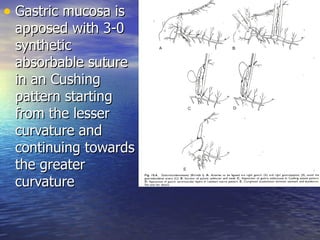
• Gastric mucosa is
 apposed with 3-0
 synthetic
 absorbable suture
 in an Cushing
 pattern starting
 from the lesser
 curvature and
 continuing towards
 the greater
 curvature
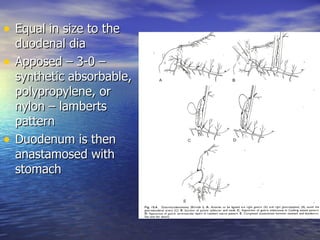
• Equal in size to the
    duodenal dia
•   Apposed – 3-0 –
    synthetic absorbable,
    polypropylene, or
    nylon – lamberts
    pattern
•   Duodenum is then
    anastamosed with
    stomach

Veterinary Gastrointestinal surgery part-I

  • 1.
    • Veterinary Gastrointestinalsurgery (Part-I) • Presented by • Dr. Rekha Pathak • Senior scientist , IVRI The photographs have been collected from different sources i.e. Internet, text books etc
  • 2.
    Gastric ulcer /Abomasal ulcer: • assoc. with chronic renal / hepatic • mast cell neoplasia • gastrin producing neoplasia • gastric neoplasia • coagulation disorder • FB / gun shot wound • ICH
  • 3.
    Uremia • Poison • Snakebite • Primary ulcers are less common • Ulcers secondary – common • Aspirin: experimentally to produce ulcers
  • 4.
    • Pathophysiology: • Gastric/duodenal mucosa/ covered with mucus layer (sulfated mucin bound to epi. cells)
  • 5.
    • Offers protection– against – corrosive / digestive effects of gastric acid and pepsin (auto digestion and ulceration)
  • 6.
    • Reduced mucosal bl. Flow- local ischemia – sepsis/ hemorrhagic shock – sudden expulsion of apical mucin – circumscribed popn of cells
  • 7.
    • Reflux ofbile salts from duodenum to stomach – bile salts – more destructive than pancreatic juices- act as detergents that solubilize lipid - cell memb and inhibit the ion transport sys.
  • 8.
    • bile content– greatest – pyloric antrum – ulcer region of stomach • hyper secretion of HCL – gastrinoma ie non beta islets cell tumour of pancreas and hypergastinemia – in renal failure (gastrin is removed by kidneys)
  • 9.
    – increased histamine:mastocytoma and Endotoxemia and hemorrhagic shock – NSAIDS- reduced secretion of mucus • alters the biochemical composition of mucin • ingestion of chemicals(arsenic ,cresote) • Signs: vomiting (not immediately after ingestion) • eating – gastric pain- relieved by vomiting • Hemet emesis and melena • slow bleeding: coffee colored blood • sudden - massive and semi clotted blood
  • 10.
    • generalized peritonitis:gastric perforation (mostly doesn’t occur due to effective sealing with omentum) • wt. loss – hepatic/ neoplastic • additionally in calves : due to bleeding ulcers – recumbent suddenly – cold extremity- subnormal temp. tachycardia and dehydration- hypovolemic shock and death 24 hrs
  • 11.
    • Abomasal ulcers: suckling calves and adult cattle (buffaloes) • adult: 1st few wks of partu.(stress and lactation) • Stress related (summer months independent of partu.)
  • 12.
    • Calves: dietary transition from low DM to high DM • Trichobezoars • Asso. With impaction also
  • 13.
    • Type Ierosion and ulcers with slight hemorrhage • Type II bleeding ulcers • Type III perforation with acute circumscribed peritonitis • Type IV perforation with diffuse peritonitis
  • 14.
    • Diagnosis: • TRP; pain on left of xiphoid • Abomasal ulcer: pain on rt. side
  • 15.
    • RG: doublecontrast: create pneumoperitoneum and give barium meal • Barium: ulcers appear as outpouchings from lumen containing the contrast material
  • 16.
    • Fluoroscopy: helpsin variable positioning and pin point the site
  • 17.
    • Endoscopy: not in threatened bleeding cases (allows biopsies) • Exploratory: laparotomy if life threatening hemorrhage
  • 18.
    Treatment • Surgical excision •Cranial midline incision • Carefully palpate from fundus to pylorus • If ulcers then – adhesion, serosal scarring and irregular thickened areas on gastric wall
  • 19.
    • Inspect the pancreas- gastrinoma- p. nodules • If gastrinoma- en block resection of a lobe or complete pancreas(90% removal – no endocrinal insufficiency)
  • 20.
    • If noulcers found • Open stomach- find the bleeding site- also on pyloric antrum(equidistant from lesser / greater curvature) • Extend to duodenum if necessary
  • 21.
    • Small ulcers: elliptical incision- mucosa closed – simple continuous – 3/0 or 4/0 absorbable chromic and interrupted Lambert on serosa and muscularis • Multiple ulcers on pyloric part – bilroth I gastrectomy technique
  • 22.
    • Bilroth techniqueI : ligate the rt. Gastric artery near pylorus on the lesser curvature • Rt. Gastroepiploic vessels ligated • Take care not to injure the pancreas • Pyloric and gastric branches supplying the area to be resected are ligated
  • 23.
    • 2 st.intestinal clamps are placed across the pyloric antrum • another 2 are placed distal to the pylorus and avoid the common bile duct. • Excise the pyloric sphincter and canal
  • 24.
    • Gastric mucosais apposed with 3-0 synthetic absorbable suture in an Cushing pattern starting from the lesser curvature and continuing towards the greater curvature
  • 25.
    • Equal insize to the duodenal dia • Apposed – 3-0 – synthetic absorbable, polypropylene, or nylon – lamberts pattern • Duodenum is then anastamosed with stomach