Teat Surgery
Adarsh Kumar
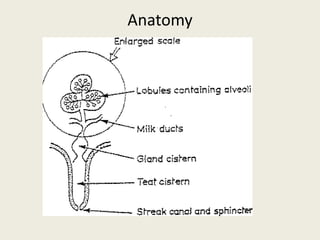
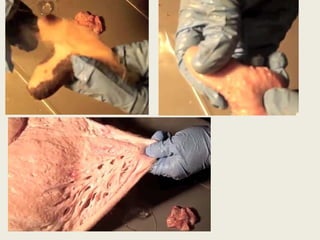
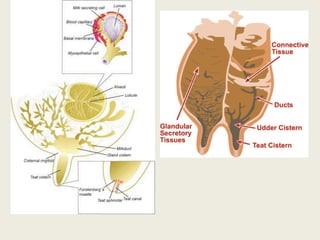
Anatomy
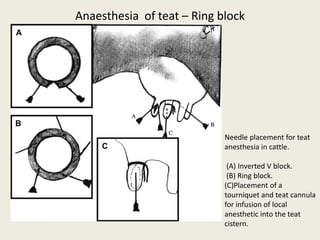
Anaesthesia of teat – Ring block
Needle placement for teat
anesthesia in cattle.
(A) Inverted V block.
(B) Ring block.
(C)Placement of a
tourniquet and teat cannula
for infusion of local
anesthetic into the teat
cistern.
•Use plain Lignocaine
without adrenaline
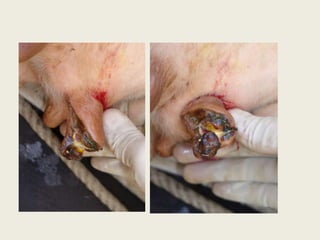
Teat Lacerations
• Teat lacerations are categorized as
• Acute
• Chronic (more than 12 hours old).
• Surgical intervention on the teat is best
performed during the first 12 hours following
the injury.
• Teat lacerations are classified as simple or complex (inverted “Y”
or “U”),
• Longitudinal or transverse, and proximal or distal.
• The orientation of the blood supply of the teat is longitudinal.
• A transverse laceration results in more damage to the blood
supply resulting in more edema, avascular necrosis and
dehiscence post-operatively compared with a longitudinal
laceration.
• The more circumference is involved, the worse is the prognosis.
• Distal injuries involving the streak canal are also regarded as
having a poor prognosis.
• Proximal and transverse lacerations are difficult to repair. At this
location, the mucosa is difficult, the suture and the teat swell
more post-operatively.
• Teat lacerations are classified as being partial
thickness (skin to submucosa)
• Full thickness (skin to mucosa with milk
leaking out of the incision).
• recommended to
• apply cold hydrotherapy on the injured teat
while waiting for the veterinarian.
• The hydrotherapy helps decrease the
inflammation and helps clean the teat for
surgery.
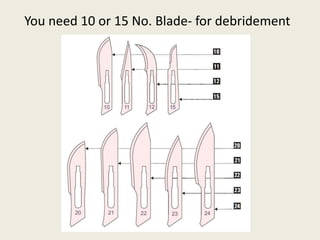
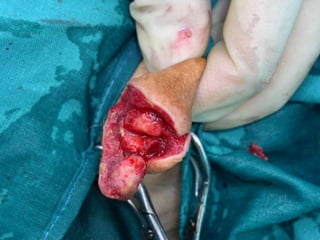
You need 10 or 15 No. Blade- for debridement
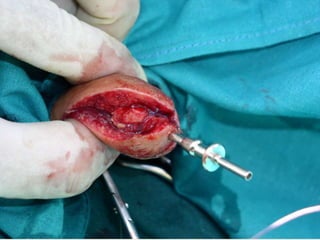
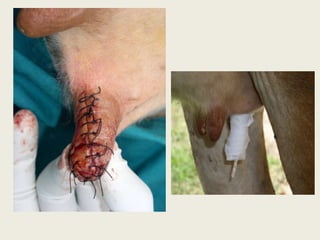
Laceration repair
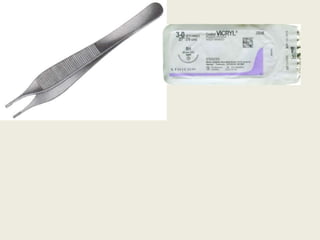
• Mucosa and the submucosa are first reconstructed using a
simple continuous pattern.
• The muscular and subcutaneous layers are closed with a
simple continuous pattern
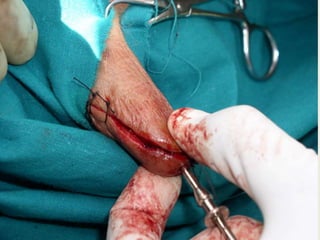
• The skin is carefully apposed using a simple interrupted.
• Care is taken to leave the skin sutures slightly loose because
swelling is expected at the surgery site.
• Throughout the procedure, the surgery site is frequently
lavaged with saline.
• Antibiotics can be added to the lavage solution.
• Hemostasis is performed to avoid formation of mural
hematoma that may obstruct the teat cistern.
Post operative
• self-retaining plastic teat canula with a cap into the
streak canal
• Antibiotic umbrella.
• Severe post-operative edema can be treated by
applying ice around the teat for a few days.
• Crushed ice in a rectal sleeve can be placed around the
teat. Daily Twenty minute application.
• The skin sutures are removed no more then 9 days
after the surgery.
• If the sutures are left in place longer, excessive
fibrosis and suture tract infection may occur.
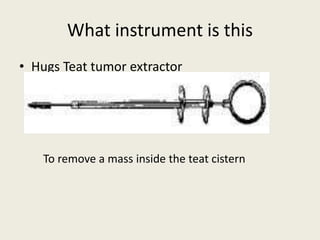
What instrument is this
• Hugs Teat tumor extractor
To remove a mass inside the teat cistern
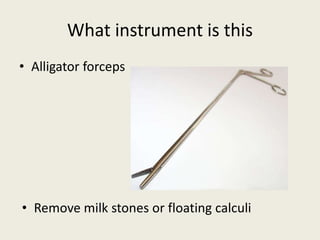
What instrument is this
• Alligator forceps
• Remove milk stones or floating calculi
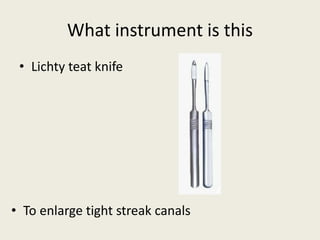
What instrument is this
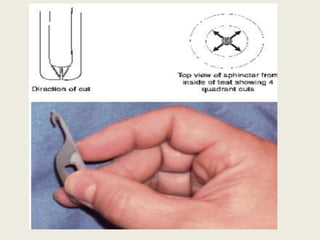
• Lichty teat knife
• To enlarge tight streak canals
What instrument is this
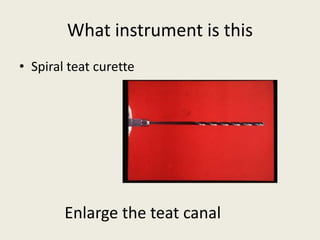
• Spiral teat curette
Enlarge the teat canal
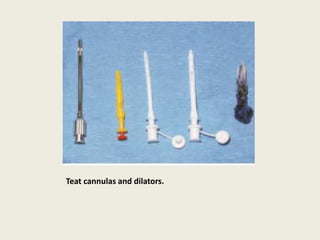
Teat cannulas and dilators.
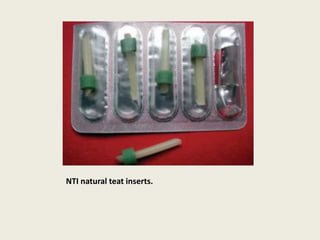
NTI natural teat inserts.
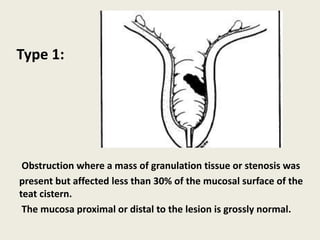
Obstruction where a mass of granulation tissue or stenosis was
present but affected less than 30% of the mucosal surface of the
teat cistern.
The mucosa proximal or distal to the lesion is grossly normal.
Type 1:
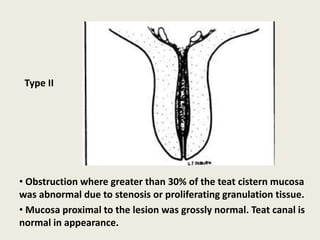
• Obstruction where greater than 30% of the teat cistern mucosa
was abnormal due to stenosis or proliferating granulation tissue.
• Mucosa proximal to the lesion was grossly normal. Teat canal is
normal in appearance.
Type II
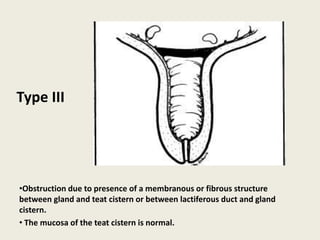
•Obstruction due to presence of a membranous or fibrous structure
between gland and teat cistern or between lactiferous duct and gland
cistern.
• The mucosa of the teat cistern is normal.
Type III
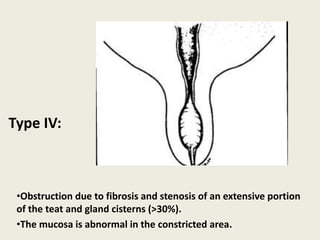
•Obstruction due to fibrosis and stenosis of an extensive portion
of the teat and gland cisterns (>30%).
•The mucosa is abnormal in the constricted area.
Type IV:
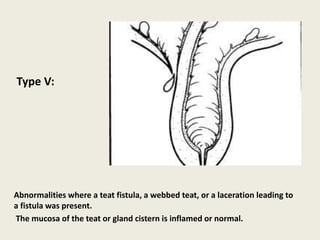
Abnormalities where a teat fistula, a webbed teat, or a laceration leading to
a fistula was present.
The mucosa of the teat or gland cistern is inflamed or normal.
Type V:
What does chemical destruction of the
teat involve
• 100 cc of (10% formalin diluted in 500 cc of
saline)
• Or 100 cc of 3% silver nitrate solution
• 250 ml of acriflavine (1ml in 500 ml of NSS)
• 20 ml of 5% Copper sulfate
• 60 ml of chlorhexidine
• Pre-treat with Megludyne

Teat surgery

  • 1.
  • 2.
  • 5.
    Anaesthesia of teat– Ring block Needle placement for teat anesthesia in cattle. (A) Inverted V block. (B) Ring block. (C)Placement of a tourniquet and teat cannula for infusion of local anesthetic into the teat cistern.
  • 6.
  • 7.
    Teat Lacerations • Teatlacerations are categorized as • Acute • Chronic (more than 12 hours old). • Surgical intervention on the teat is best performed during the first 12 hours following the injury.
  • 8.
    • Teat lacerationsare classified as simple or complex (inverted “Y” or “U”), • Longitudinal or transverse, and proximal or distal. • The orientation of the blood supply of the teat is longitudinal. • A transverse laceration results in more damage to the blood supply resulting in more edema, avascular necrosis and dehiscence post-operatively compared with a longitudinal laceration. • The more circumference is involved, the worse is the prognosis. • Distal injuries involving the streak canal are also regarded as having a poor prognosis. • Proximal and transverse lacerations are difficult to repair. At this location, the mucosa is difficult, the suture and the teat swell more post-operatively.
  • 9.
    • Teat lacerationsare classified as being partial thickness (skin to submucosa) • Full thickness (skin to mucosa with milk leaking out of the incision). • recommended to • apply cold hydrotherapy on the injured teat while waiting for the veterinarian. • The hydrotherapy helps decrease the inflammation and helps clean the teat for surgery.
  • 10.
    You need 10or 15 No. Blade- for debridement
  • 12.
    Laceration repair • Mucosaand the submucosa are first reconstructed using a simple continuous pattern. • The muscular and subcutaneous layers are closed with a simple continuous pattern • The skin is carefully apposed using a simple interrupted. • Care is taken to leave the skin sutures slightly loose because swelling is expected at the surgery site. • Throughout the procedure, the surgery site is frequently lavaged with saline. • Antibiotics can be added to the lavage solution. • Hemostasis is performed to avoid formation of mural hematoma that may obstruct the teat cistern.
  • 13.
    Post operative • self-retainingplastic teat canula with a cap into the streak canal • Antibiotic umbrella. • Severe post-operative edema can be treated by applying ice around the teat for a few days. • Crushed ice in a rectal sleeve can be placed around the teat. Daily Twenty minute application. • The skin sutures are removed no more then 9 days after the surgery. • If the sutures are left in place longer, excessive fibrosis and suture tract infection may occur.
  • 19.
    What instrument isthis • Hugs Teat tumor extractor To remove a mass inside the teat cistern
  • 20.
    What instrument isthis • Alligator forceps • Remove milk stones or floating calculi
  • 21.
    What instrument isthis • Lichty teat knife • To enlarge tight streak canals
  • 23.
    What instrument isthis • Spiral teat curette Enlarge the teat canal
  • 24.
  • 25.
  • 26.
    Obstruction where amass of granulation tissue or stenosis was present but affected less than 30% of the mucosal surface of the teat cistern. The mucosa proximal or distal to the lesion is grossly normal. Type 1:
  • 27.
    • Obstruction wheregreater than 30% of the teat cistern mucosa was abnormal due to stenosis or proliferating granulation tissue. • Mucosa proximal to the lesion was grossly normal. Teat canal is normal in appearance. Type II
  • 28.
    •Obstruction due topresence of a membranous or fibrous structure between gland and teat cistern or between lactiferous duct and gland cistern. • The mucosa of the teat cistern is normal. Type III
  • 29.
    •Obstruction due tofibrosis and stenosis of an extensive portion of the teat and gland cisterns (>30%). •The mucosa is abnormal in the constricted area. Type IV:
  • 30.
    Abnormalities where ateat fistula, a webbed teat, or a laceration leading to a fistula was present. The mucosa of the teat or gland cistern is inflamed or normal. Type V:
  • 31.
    What does chemicaldestruction of the teat involve • 100 cc of (10% formalin diluted in 500 cc of saline) • Or 100 cc of 3% silver nitrate solution • 250 ml of acriflavine (1ml in 500 ml of NSS) • 20 ml of 5% Copper sulfate • 60 ml of chlorhexidine • Pre-treat with Megludyne